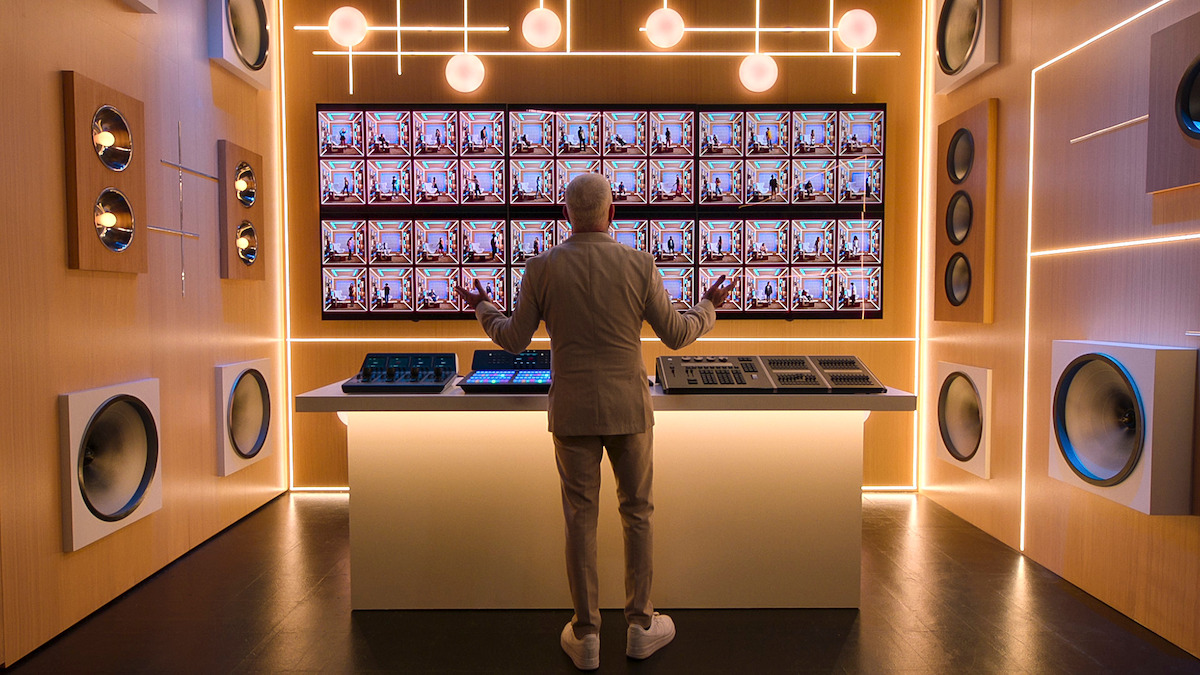
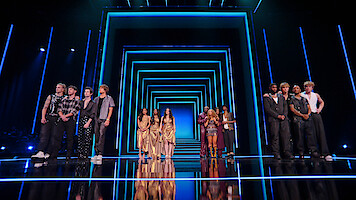
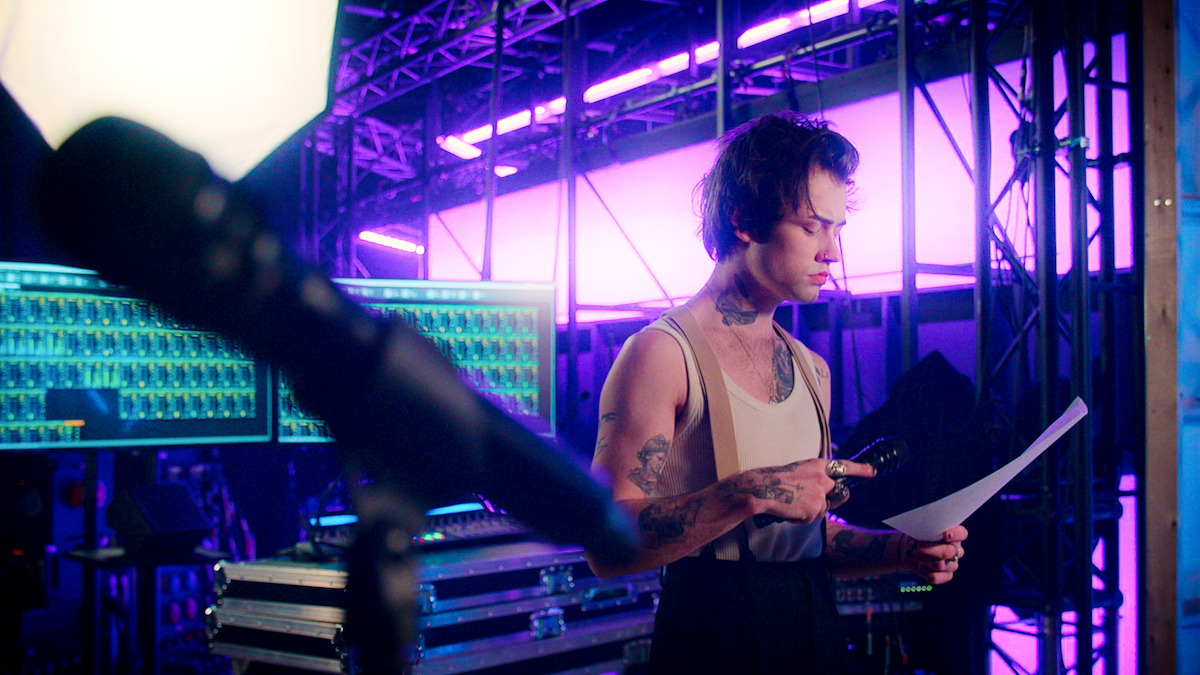
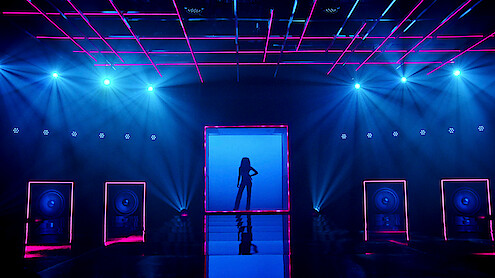
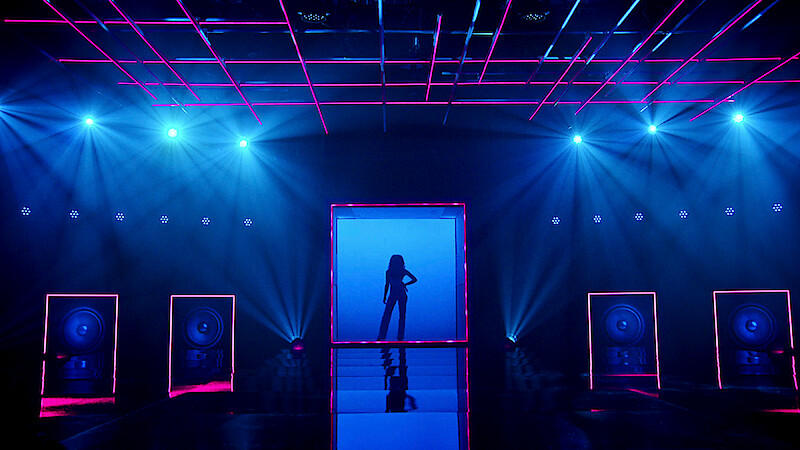
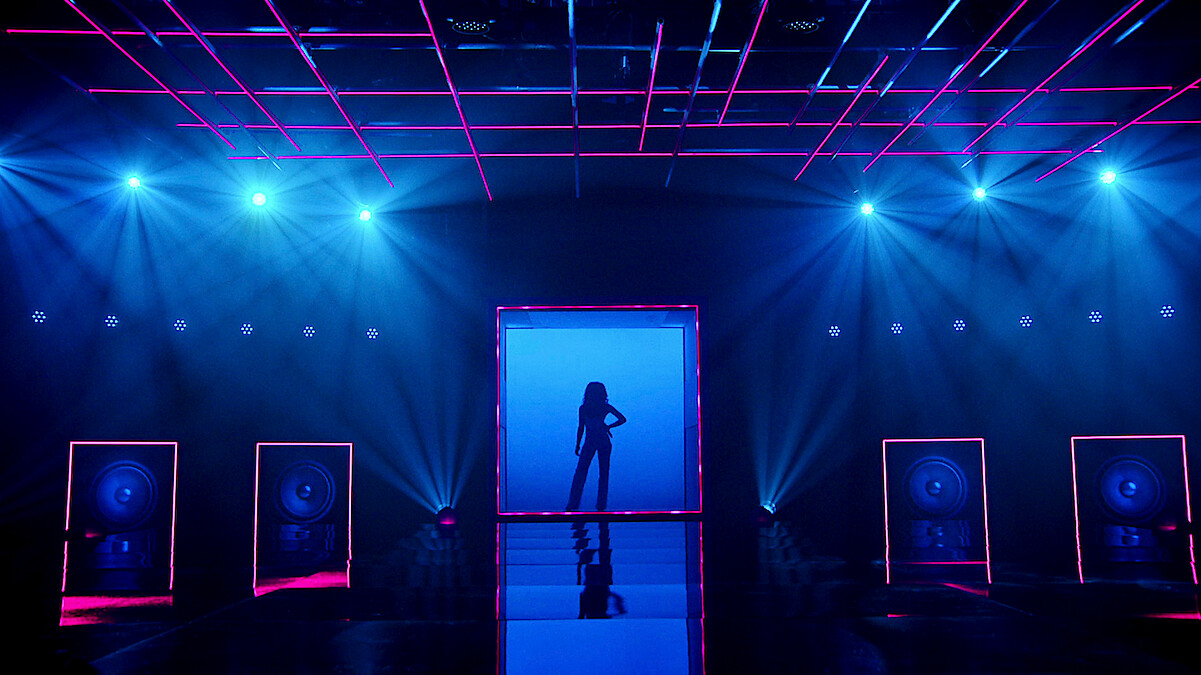
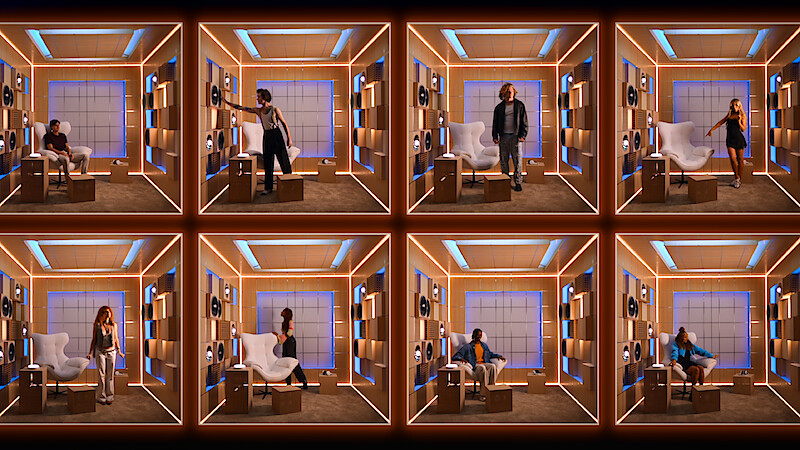
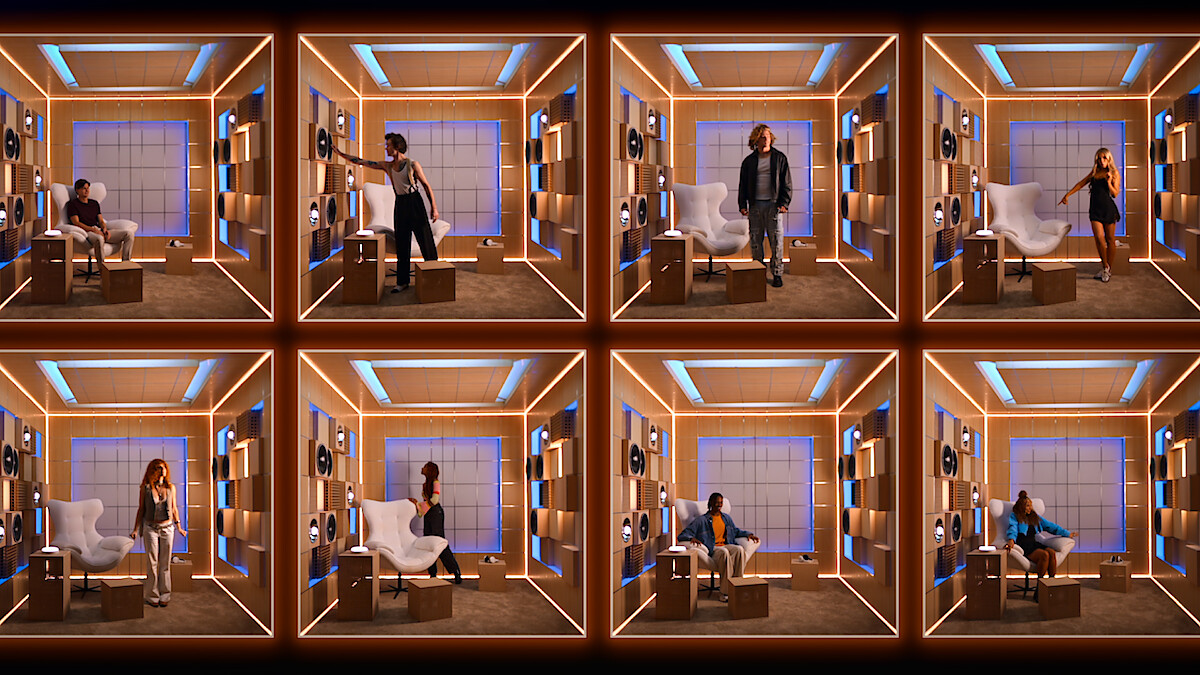
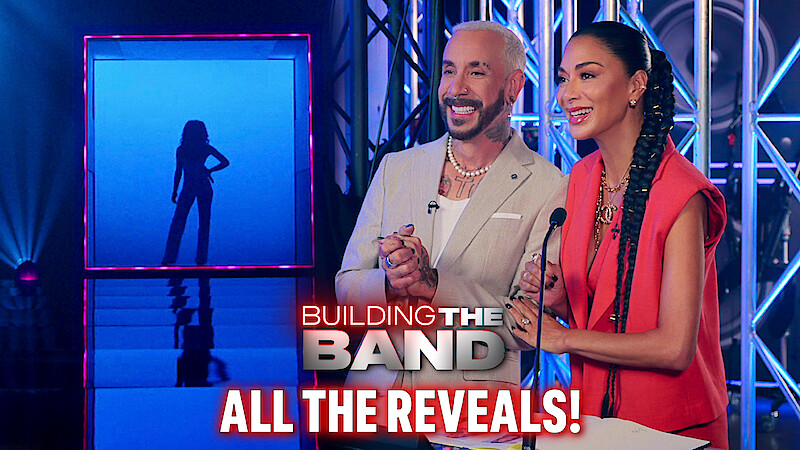
To reality television veterans, the premise of Building the Band might seem simple enough: a group of singers form bands, sight unseen. But bringing a first-of-its-kind music competition to life — from building high-tech sound booths and complex algorithms to finding next-level talented singers and superstar judges — took years to perfect.
“I’ve been trying to work out what the next big singing show feels and looks like for the last 10 years,” executive producer Cat Lawson, who previously worked on music series like The X Factor UK, tells Tudum. That’s why the team decided to adopt an experimental approach to a well-worn genre. At the start of Building the Band, the participants take part in blind vocal auditions, judging each other from isolated sound booths based on talent alone. Only then must they decide who they want to build a band with despite never seeing the person behind the voice.
“The bands aren’t manufactured. These singers put them together, and are in complete control,” she says. “Turns out, they know themselves really well, and exactly what they’re doing.”
But since Building the Band is breaking the mold, you may be wondering how the competition works from the booths and beyond. Keep reading for answers to all your burning questions about the series, like: What are the bands competing for? How do the participants communicate through the sound booths? Do the singers get to choose which song they perform?
What was the audition process like for the show?
Kicking off a competition with 50 contestants is a massive feat — especially when none of them are allowed to see each other. “There was a casting call to begin with,” Lawson shares. “So some people obviously got in touch with us, but we also had scouts out looking at venues, gigs, and social media.” Interested singers applied by sending in videos, and from there, the team behind Building the Band picked 150 people to try out in person. “We held auditions in LA. We met 150 singers and had to somehow try and pick 50.”
What are the bands competing for?
Once the bands are built, they will compete against one another for the winning title and $500,000, which is shared evenly between the members. “They can spend it on whatever they want, whether that’s for their career or for their lives, whatever,” Lawson says.
Unlike other music competition series, the prize for the winning band comes with no strings attached. “They don’t have to sign to a particular label decided by us or a management company,” she adds. “This is a platform for them to go and now do what they want to do with complete freedom.”
Do the singers choose what songs they perform?
Any musical artist knows that song choice is key in making or breaking a performance. In this competition, the singers have a say, selecting from around 400 songs that were cleared for use in the show. “We cleared a whole batch of songs of different genres that would suit different types of singers,” Lawson explains. “Then when we meet the singers, and we get to know them a little bit more, we ask them, ‘Who do you love? What are your favorite songs? What’s your genre? If you could liken yourself to an artist, who would it be? Is there a song in the world that you love more than anything?’ If it’s on the list, we go there.”
The song selection process continued after bands were formed and operating as a collective. Lawson says, “We’d have this sort of round table and go, ‘What are you thinking? What are you feeling?’ … It was always a round-table conversation between the producers, the band, the vocal coach, and the musical director. It was very collaborative.”
How do the booths work?
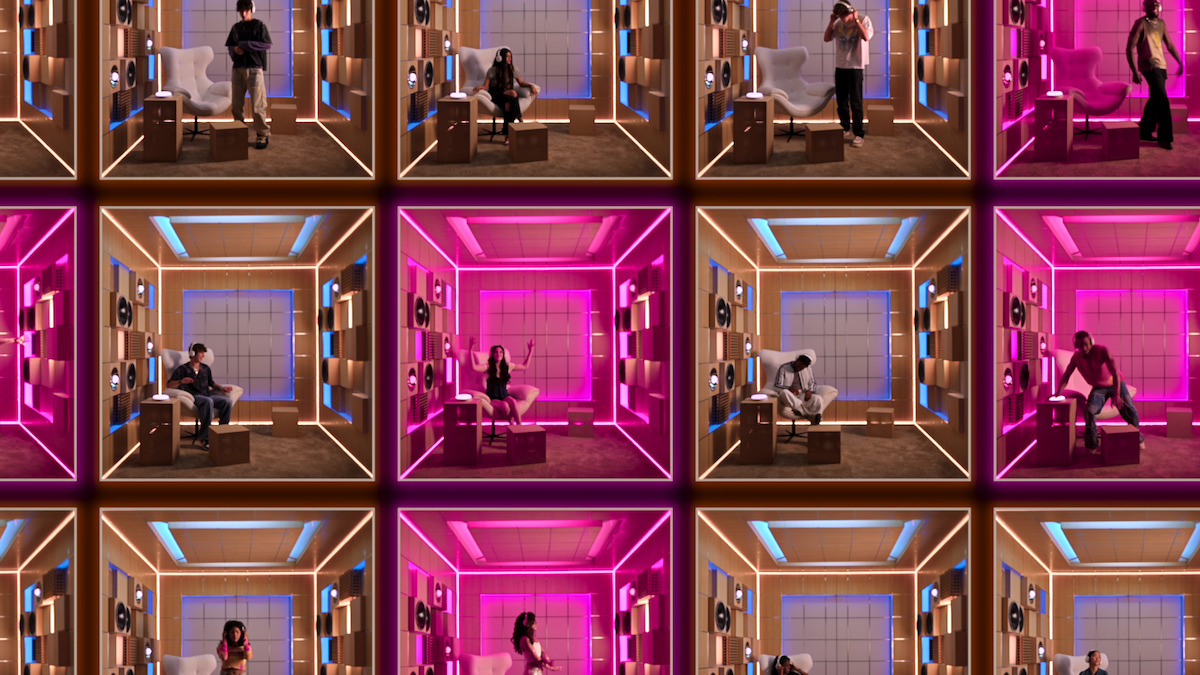
According to Lawson, “Phase 1 was logistically very difficult to pull off.” When it came to keeping the identities of all 50 singers a mystery, the team looked to other competition shows for inspiration. “On The Masked Singer, nobody can see who the celebrity is, so they all walk around with hoods. We did the same thing, but we had even more people,” she explains. “We had people living in an apartment block, and they couldn’t meet each other at any point. So we had to walk everybody separately, house them separately, schedule it all, and they were also wearing cloaks. They looked like The Traitors. It was really funny.” Even when a contestant would put up their hand and say they needed a bathroom break, those trusty cloaks would come on.
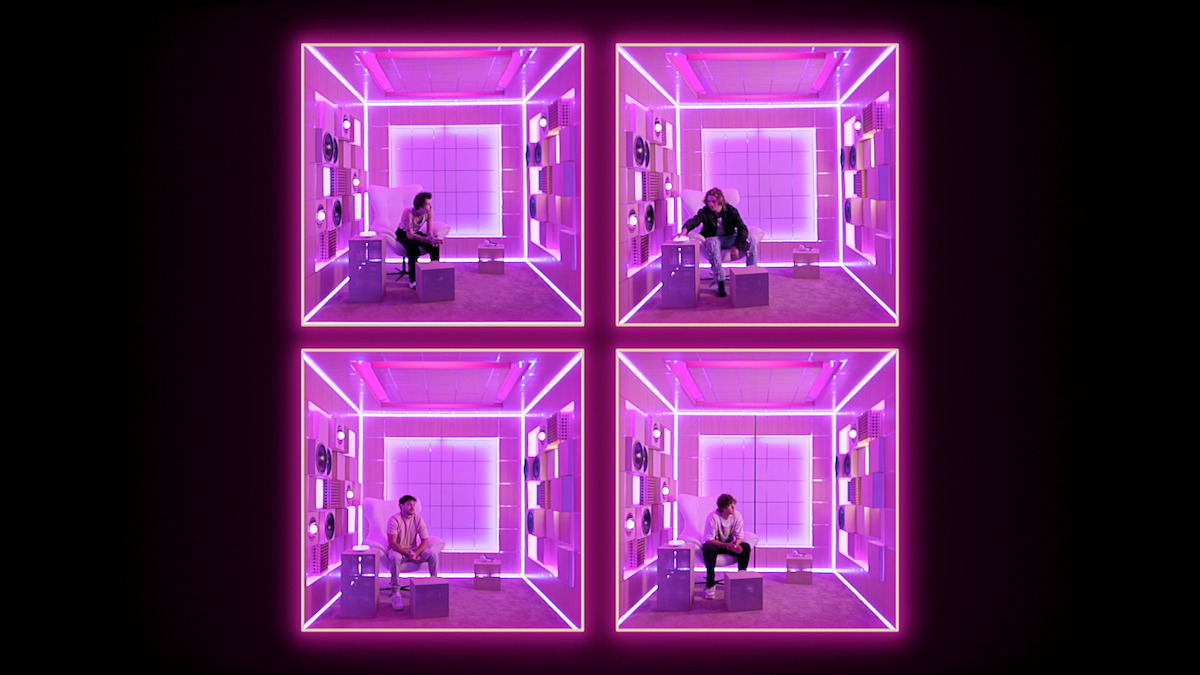
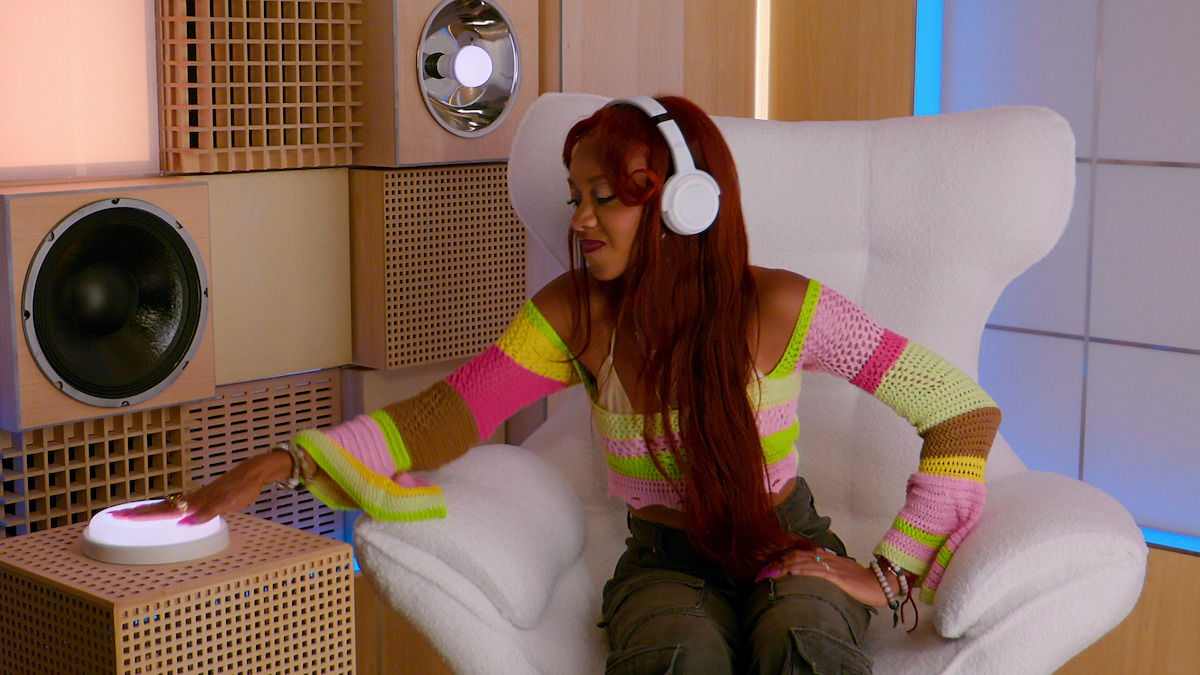
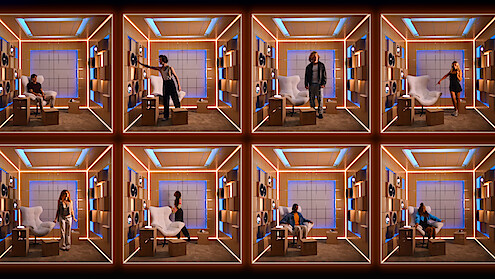
All that complicated coordination and concealment was, of course, in service of the show’s main purpose — allowing singers to connect solely on sound and personal connection. This started with listening. “Everybody got to hear everybody and decide who they wanted to press their ‘Like’ button to,” she says. Since the booths themselves were completely soundproof, communication between the singers was captured and transmitted through microphones, even if the singers were in close proximity. “They might be in booths next door to each other, but they couldn’t hear each other through the booths.”
The anonymity the booths provided led to some very honest interactions, and allows the audience at home to see what each singer is really thinking. “It’s like a confessional booth,” says Lawson, pointing out that in typical face-to-face conversations, a speaker can’t help but adjust what they say based on seeing the other people’s reactions. “[The participants] don’t have a filter. They just say what they feel because they’re not making any judgments about who’s listening or how that listener is responding. They’re just saying what they think.”
The interior design of the sound booths also fostered candor among the group. “It’s really quiet in there. It’s really womb-like,” Lawson explains. But the booths were also meant to feel like a place you’d want to just hang out. “It was designed to have a recording booth feel about it,” she says. “The sort of place you get in the chair, put your headphones on, listen to music, and have a great time chatting with friends.” That very comfortable chair the singers sit in while chilling in the booths, which Lawson found online at the last minute, specifically contributed to that “safe” feeling. “The chair kind of cocoons you, and we had people curling up in it,” she says. “They were happy to be in there.”
How long do the singers spend in the booths?
According to Lawson, the first phase of the competition –– from the initial performance to the final band’s formation –– took place over about six days, while the entire series was filmed over a total of six weeks. “The first couple of days are listening. You’ve got 50 songs to hear, so there’s a bit of a process there,” she explains. “Then we start having one-on-one chats, and then we had three-way chats, then we had four-way chats. And in between, we had other chats that didn’t lead anywhere.”
How many likes does it take to advance?
Upon entering the sound booths, each contestant was given 10 likes, which meant they were allowed to hit their button for the performances they enjoyed most a total of 10 times. Each singer needed to receive at least five likes in order to advance and be given a chance to speak with others. According to Lawson, those very specific numbers were determined by an algorithm. “It’s actually using quite a lot of game show technology to run data and get results,” she explains. Those results showed how many likes would ensure the competition wouldn’t lose too many or too few participants in the sound booth phase. “We can’t carry [every singer] the entire way. So yeah, trust in the data.”
How do the singers communicate?
For the opportunity to speak with others, it wasn’t enough for a singer to simply hit that big button. Meticulous scheduling was vital throughout this first phase of the competition. “We would schedule chats based on their favorites,” says the EP. “We would get people to rank each other, so if you’d ranked me really high, and I’d ranked you really high, then we’re immediately going to chat. So you end up with a sort of priority line of people who are going to chat first.”
These rankings happened every night and would dictate the finite number of chats that were scheduled the following day, since there simply wasn’t enough time for all 50 of them to speak to one another. “We would essentially put all the data into an algorithm, and it would give us an order,” Lawson explains. “We would start from the top. The most compatible got the most time, and then we worked our way down.”
Before the bands formed, singers didn’t have access to personal devices, since a social media search could easily ruin the experiment. Instead, each contestant had a tablet with proprietary apps, which they could use to replay performances and take notes. “As chats went on, sometimes people found that they liked people more than they thought, and then they listen back to their voice and go, ‘Oh yeah, actually, they are really good. Maybe they should go up in my list.’ ”
There was also an app designed to connect contestants to the outside world throughout the process. “There’s 50 people all living in apartments keeping separate. So they had another app which was direct to our team. If they needed anything, if it was a ‘I need a chat,’ or ‘I’ve run out of lemons for my voice,’ or ‘I need a toilet roll,’ they’d just go on the app, and then somebody on the corridor would be there in seconds.”
How many bands can be formed and how many members can be in each?
Building the Band stands out among other musical competitions because the singers have control over nearly every aspect of the groups they’re forming. There are, however, a few parameters. “Everybody in the booths was told that there would be six bands formed, and bands could be anything between three and five members,” Lawson says. “So it was up to them if they wanted a three-piece, a four-piece, or a five-piece, and it was up to them if they wanted to be in a girl band, boy band, mixed.”
According to the EP, all the singers entered the booths with a pretty clear idea of what they wanted their band to look, sound, and feel like. While some were very adamant about their initial vision throughout, the organic nature of the building phase caused some to change their minds, producing a “nice variety” of groups.
What happens after a band is formed?
During the week that these singers spent inside their booths, bands formed one at a time. Lawson says this made production planning even more complicated. “They weren’t allowed to form too early because we wanted to make sure they talked to lots of people, but when it looked like it was ready to land with a band, we would allow them,” she says. After each band was formed, the singers then returned to their apartments to pack up before entering the next phase of the competition.
What happens after the booths?
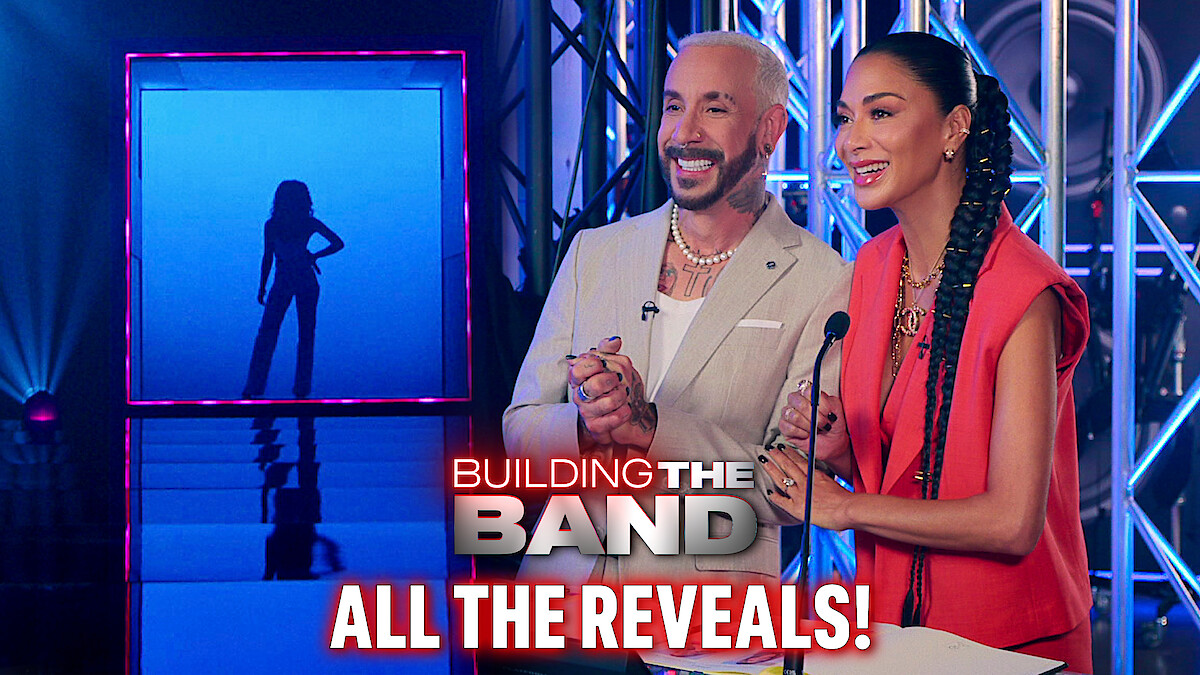
The booths are just the beginning. After all the bands are formed, the six groups will then enter the next phase of the competition, where they’ll hone their craft and band identity under the guidance of host and mentor Nicole Scherzinger and other industry heavyweights. Plus, viewers will watch what unfolds when each of the bands moves into an apartment together, pressure-testing their personal and musical compatibility.
“We want [the competition] to always change. If the same thing happens every episode — there’s a winner and a loser, and then they go home — it just starts to become really predictive,” Lawson explains. “The idea was that we would always shift gear every few episodes to offer something different.”
How much time did the bands spend practicing?
After the six bands were assembled and settled into their new shared living quarters, the next challenge was performing — first in intimate sessions for Scherzinger and choreographers Brian and Scott Nicholson, then in larger showcases for a live audience and judges Scherzinger, Kelly Rowland, and Liam Payne. Between rehearsals, the cast had time to bond, build chemistry, and in some cases, spark a romance — but the focus stayed on putting in the work and leveling up their skills.
“They had long days, but what I found is they ended up doing more of their own accord,” Lawson says. “We would have set time with the choreography team and vocal coaching team; then we’d find out they were going back to the apartments and doing more work off their own bat. They were really committed.”
And despite being in the midst of competition, the bands made time to fraternize. Lawson recalls, “There was still enough time for hanging out with [other] bands. A little romance, a little chitchat, which they all enjoyed.”
How were the judges selected?
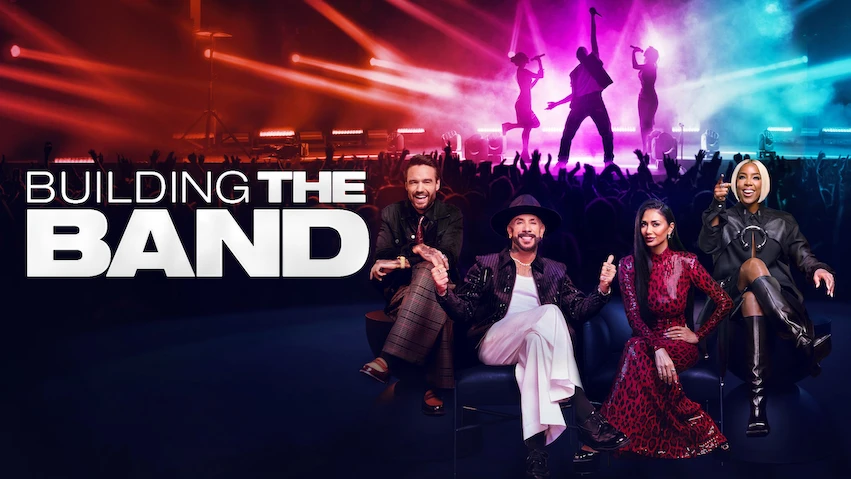
As the bands performed in front of live audiences, judges Nicole Scherzinger, Kelly Rowland, and Liam Payne evaluated their stage presence and concert potential — each bringing a unique perspective shaped by their own experiences in iconic music groups. Lawson says the selection of the judges was intentional.
“I think Netflix felt quite rightly that it would be amazing to have a panel who all had that band experience,” she says. “We talked about lots of different people, but we got who we wanted, and they all brought something different, which I think was really valid.” Lawson also praises host AJ McLean’s insight and reliability throughout the competition. “He’s very much that sort of big brother who’s been there, done it, and knows what it’s like to work in a band.”
What happens during the final episodes of Building the Band?
The final phase of the competition is where the stakes and the drama go into overdrive. The remaining bands will be put to the ultimate test, as they must impress a studio audience and the panel of judges to claim the prize.