Culture
Going Viral: Zaddy Ken Sato
Shannon Tindle unpacks Ken Sato’s viral superpower in Ultraman: Rising.
By Miranda Tsang
Jan. 17, 2025
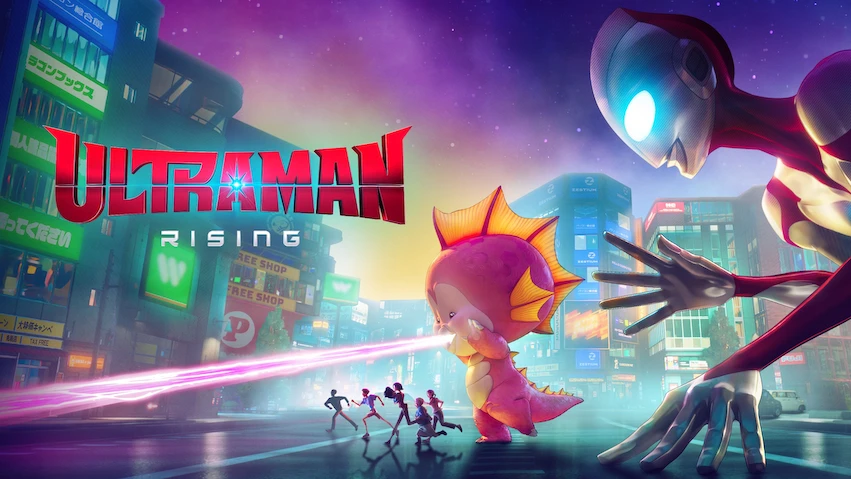
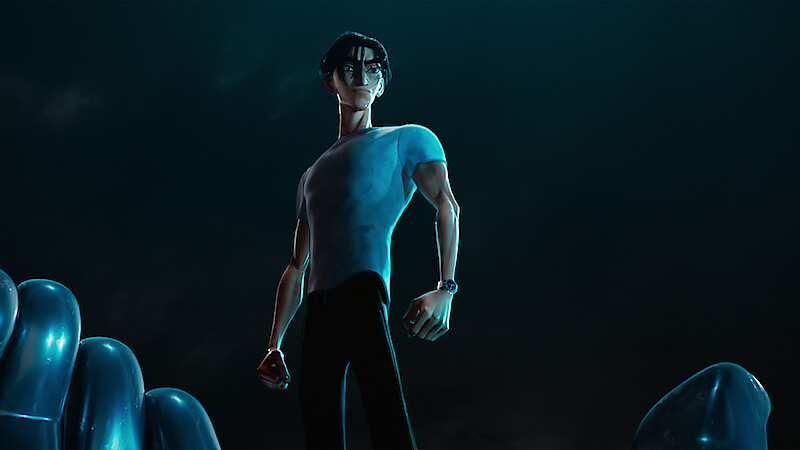
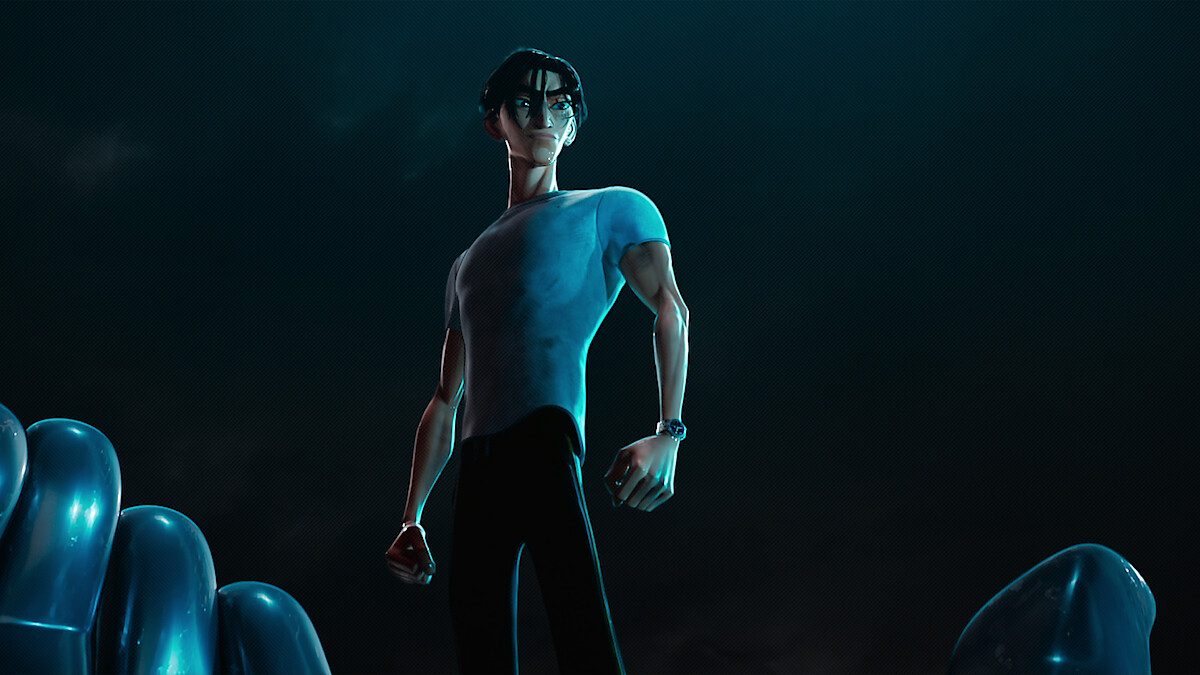
Creator and director Shannon Tindle expected fans to connect with Ken Sato, the charismatic main character of Ultraman: Rising, but social media has taken his reception to another level. The animated film follows the professional baseball star as he returns home to Tokyo to take up the family mantle of being the world-famous, kaiju-fighting hero Ultraman — only to find himself the reluctant father figure to an adorable yet demanding baby kaiju named Emi.
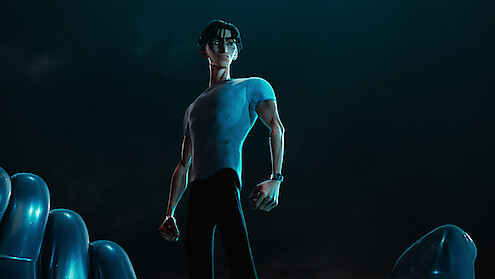
Once the film was released on Netflix, audiences were drawn in by the action and fell in love with the heartwarming father-daughter relationship at its core. But more surprisingly, fans began swooning over Ken as a “hot dad,” creating videos with heart-eye emojis honoring the character. While this wasn’t exactly the reaction Tindle anticipated, it wasn’t entirely unwarranted. Ken’s creator had modeled him after Toshiro Mifune, the star of Akira Kurosawa’s Rashomon and Seven Samurai, who Tindle describes as a “legendary actor” and “the ultimate dreamboat.”
“Guilty as charged,” Tindle jokes, when asked whether he purposefully gave Ken looks to kill. “Ken is a world-class athlete and a superstar, so he needed to have that swagger,” he explains. “[Character art director] Keiko Murayama and I worked hard to make Ken appealing. When our cultural consultant, Mayumi Yoshida, first saw Ken’s design, she said, ‘Uh-oh, he looks like trouble!’”
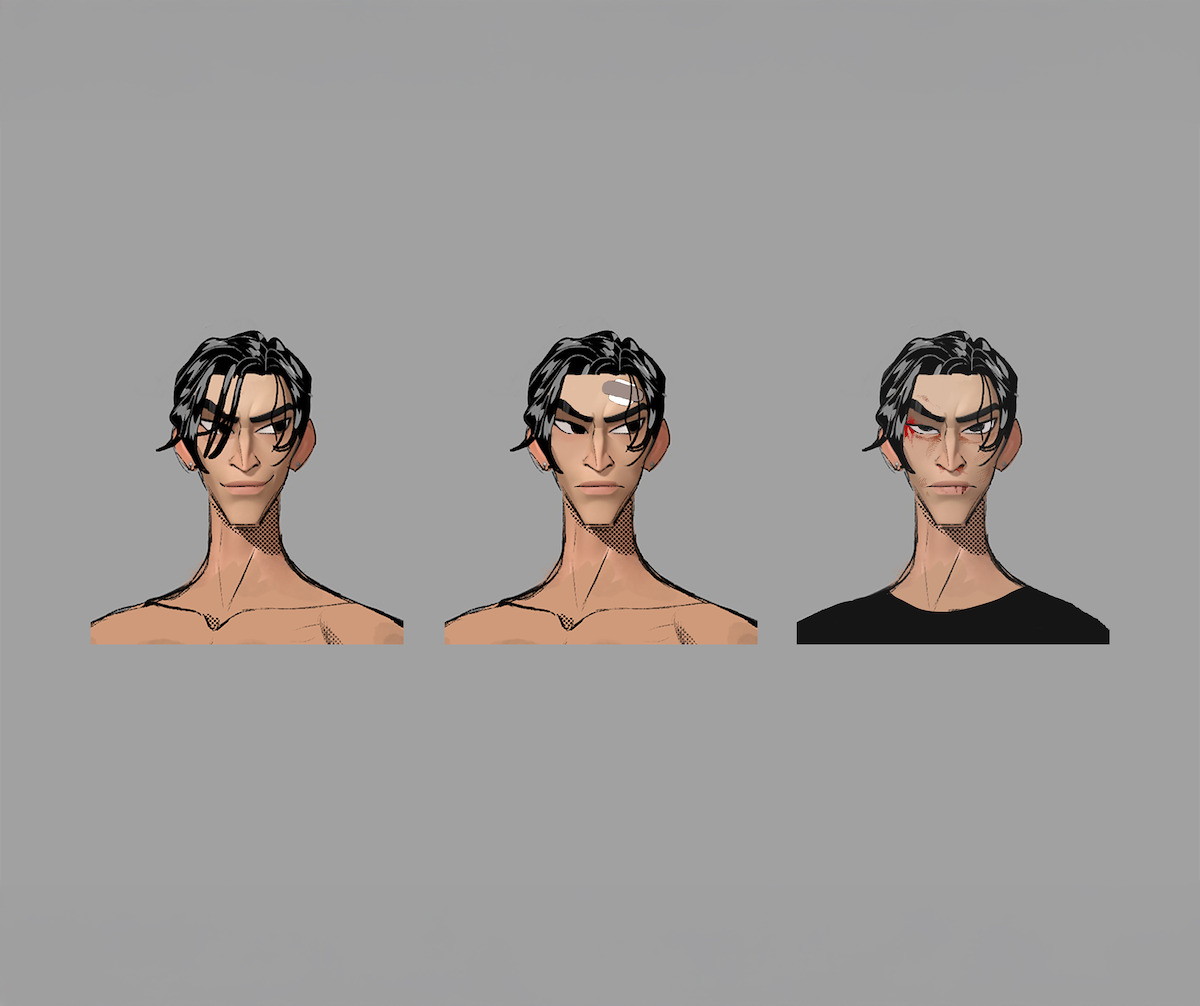
Three development drawings of Ken Sato's head, with his hair in various levels of dishelvement.
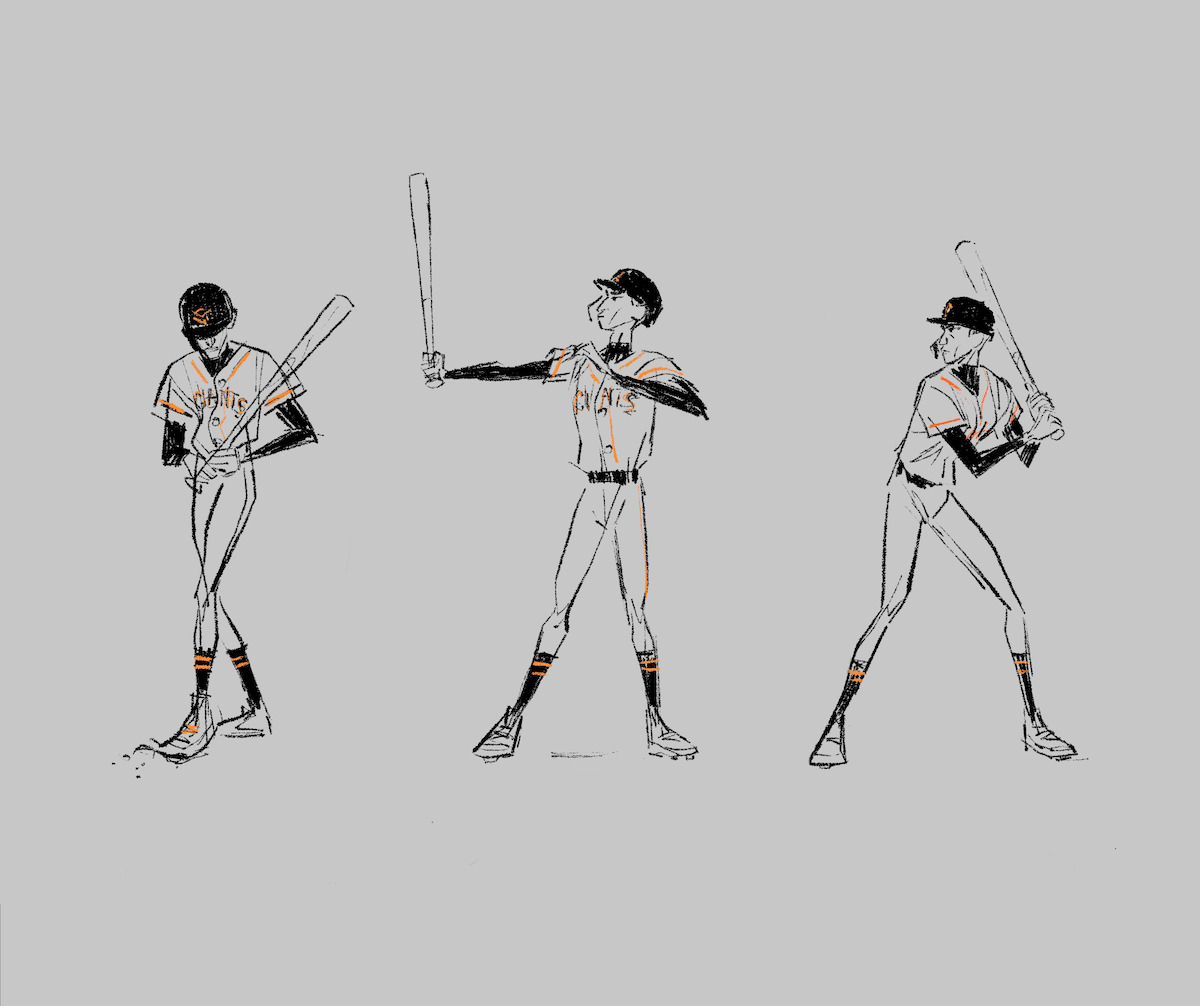
Sketches of Ken Sato in his baseball uniform.
While Ken starts out Ultraman: Rising as a cocky pro athlete with head-turning looks, his initial bravado transforms into tenderness as he becomes a father figure to Emi, the giant pink offspring of his enemy, Gigantron. His appearance, coupled with his nurturing side, makes him such a loveable and relatable hero. “To see so many people all over the world connect with Ken and his relationship with Emi is a dream come true,” says Tindle. “There are several moments in the film drawn directly from my personal experience [as a parent] and the experiences of the team, and the overwhelming response from the audience has been, ‘I went through that.’ You can’t ask for more than that.”
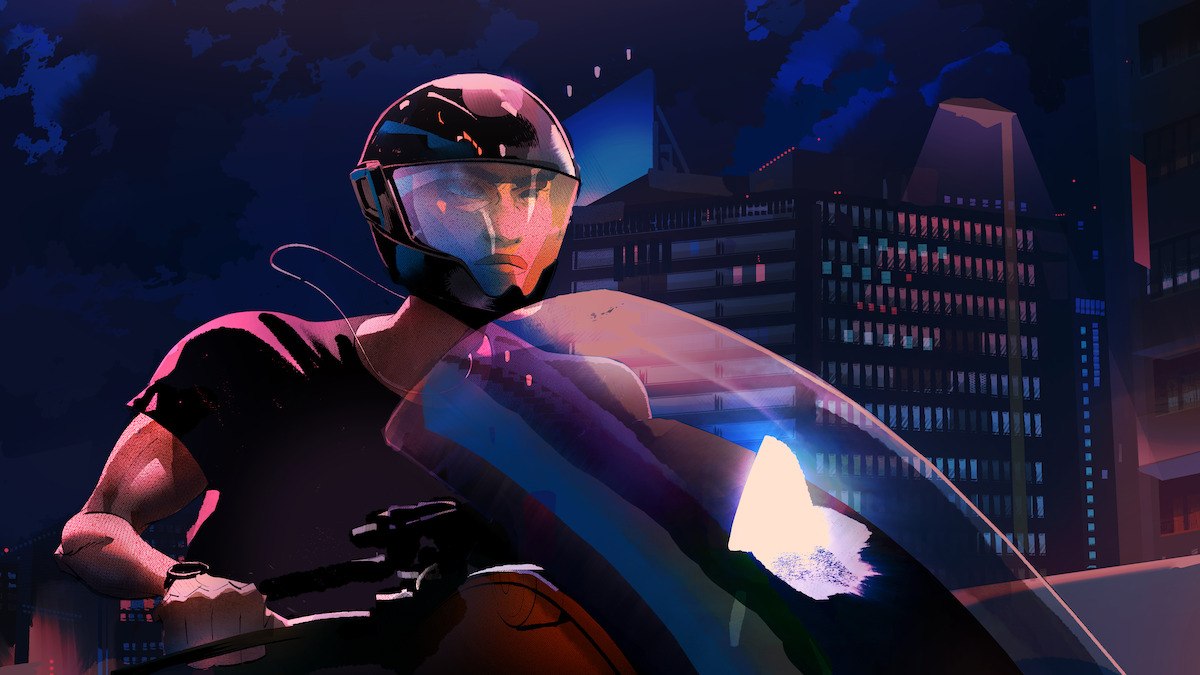
Visual development drawing.
To Tindle, who dreamed for years of directing an Ultraman film, the public reactions to Ken signify a greater achievement: crafting a character that resonates beyond the screen. “When you create a character, especially in animation, you want folks to believe they are a living and breathing person,” Tindle says. “To see people reacting to Ken in this way, a guy entirely made of imagination and pixels, it’s pretty thrilling.”