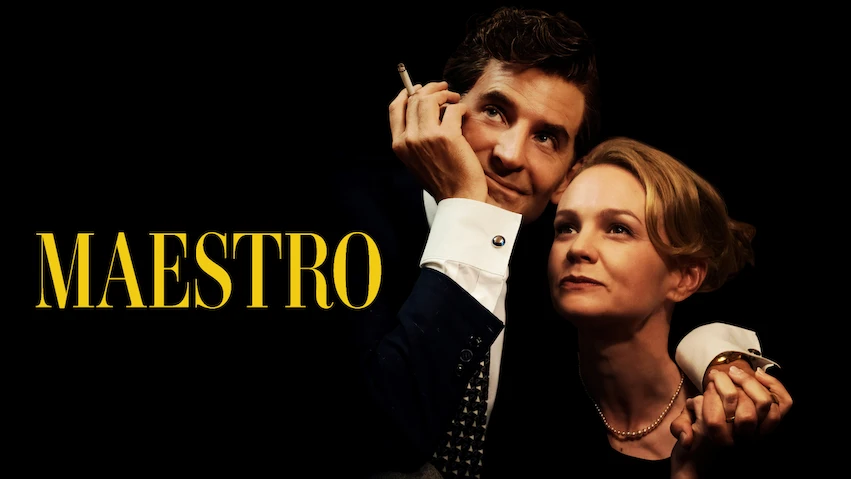
It wouldn’t be a Leonard Bernstein film without great music. For Bradley Cooper’s new film Maestro (which the nine-time Oscar nominee co-wrote, directed, and starred in), the filmmaker knew he had to do justice to the iconic composer and conductor. “In A Star Is Born, the nuclear weapon was always Lady Gaga’s voice,” Cooper told Netflix of his 2018 directorial debut. “For Maestro, I figured it was mine to mess up because I had a nuclear weapon, and that’s Leonard Bernstein’s music. Just the breadth of it, how diverse it is, and how moving it is.”
Bernstein was famous both as a conductor and public advocate for classical music, and as a multitalented composer who worked across disciplines: symphonies; musicals; and scores for ballets, films, and television. So naturally, Cooper set out to include as many pieces of Bernstein’s music in the film as possible — music both conducted by Bernstein and composed by him. The songs complement the love story between Bernstein and his wife, Felicia Montealegre (Carey Mulligan) — we see her watching as Bernstein teaches students and conducts Mahler’s Symphony No. 2, and music from West Side Story and On the Town acts as commentary on their complicated relationship.
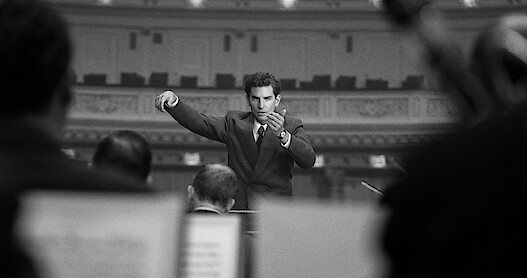
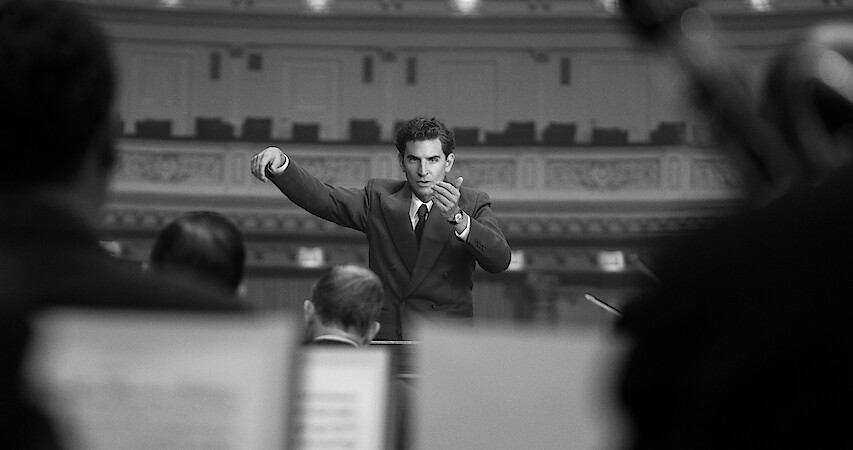
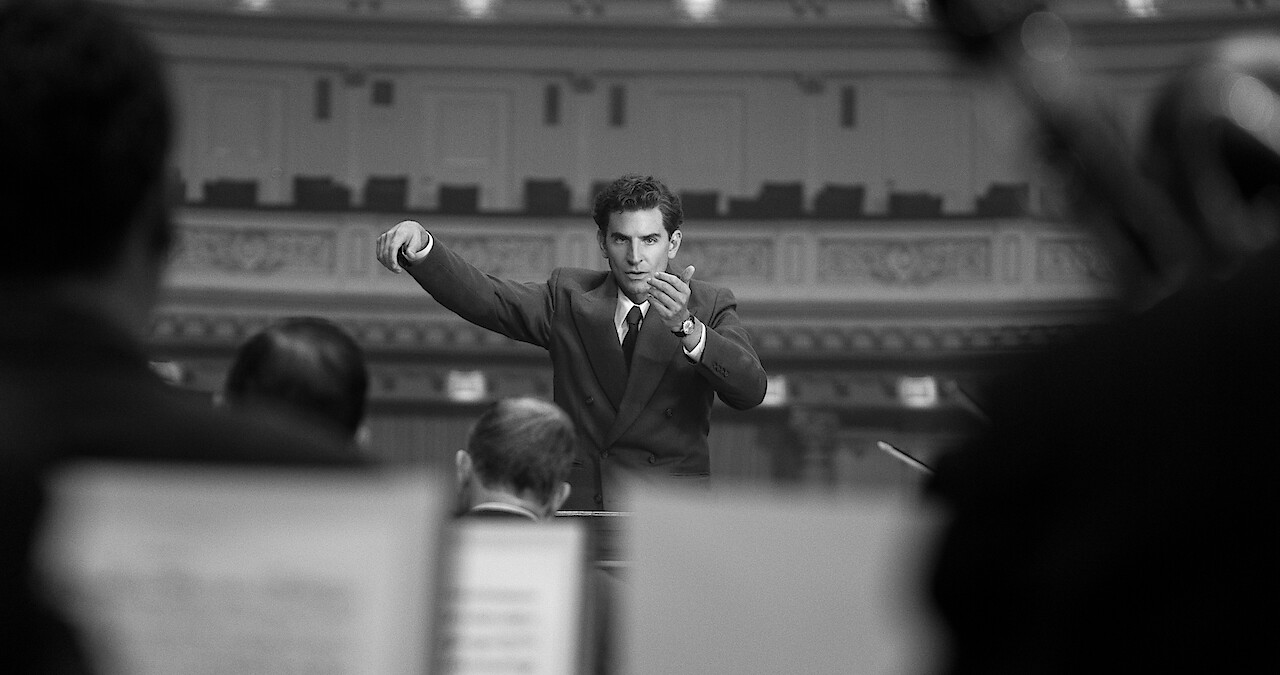
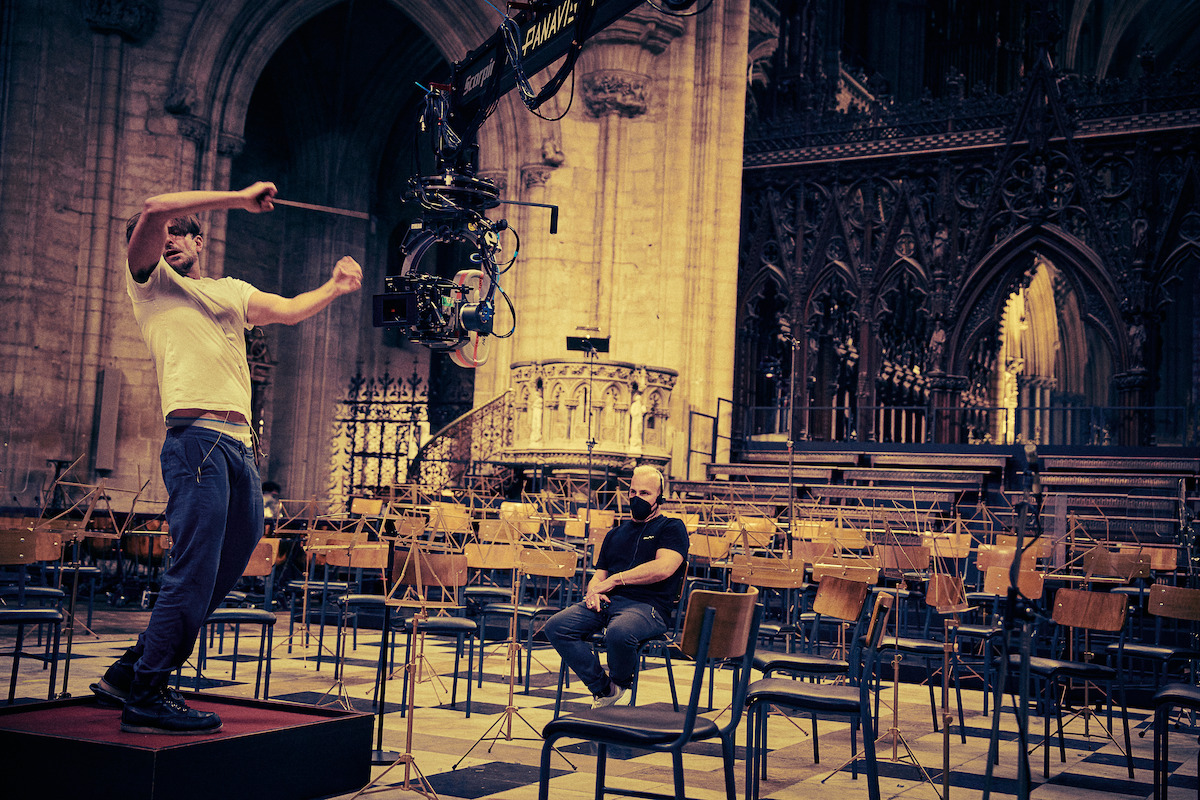
Cooper also spent months preparing for the physical part of Bernstein’s musical life, a strenuous proposition considering the conductor’s infamously active style. “One of my favorite Bernstein quotes is, ‘I need to conduct with every part of my body, with my shoulders, with my wrists, with my knees,’ ” the Metropolitan Opera music director and Maestro musical consultant Yannick Nézet-Séguin said. “So many conductors just stopped with their wrists. Lenny’s face, it was so important.” Cooper watched hours upon hours of orchestra rehearsals, going so far as to plant himself between the violas and violins during an eight-day rehearsal with the Philadelphia Orchestra. The work paid off, according to the experts: “He really got Bernstein,” Nézet-Séguin said. “It was insane — every gesture, every facial expression. What I needed to do was to guide him with how it relates exactly with the orchestra in real time.”
You can see every song included in Maestro below. Maestro is now streaming on Netflix.
Maestro soundtrack
“Symphonic Suite from On the Waterfront / Manfred, Op. 115: Overture / Fancy Free: Var. 1 (Galop)” — Written by Bernstein and Robert Schumann; performed and conducted by London Symphony Orchestra, Nézet-Séguin, Victoria Ruggiero
“On the Town: Lonely Town. Pas de deux” — Written by Bernstein; performed and conducted by London Symphony Orchestra, Nézet-Séguin
“I Get Carried Away / You’ve Got That Look (That Leaves Me Weak)” — Written by Bernstein; performed and conducted by Nick Blaemire, Mallory Portnoy, Kate Eastman
“Trouble in Tahiti: Interlude” — Written by Bernstein; performed and conducted by Antonia Butler, Michael Clarke, Mark Brown, the London Symphony Orchestra, Nézet-Séguin
“Candide: Paris Waltz” — Written by Bernstein; performed and conducted by London Symphony Orchestra, Nézet-Séguin
“Facsimile: Molto adagio” — Written by Bernstein; performed and conducted by London Symphony Orchestra, Nézet-Séguin
“Fancy Free: Enter Three Sailors / Fancy Free: Var. 3 (Danzon) / On the Town: New York, New York” — Written by Bernstein; performed and conducted by Tony Yazbeck, Clyde Alves, Jay Armstrong Johnson, Ruth Mense, Dicky Tarrach, Thissy Thiers, London Symphony Orchestra, Nézet-Séguin, New York Philharmonic Orchestra, Bernstein
“Anniversaries for Orchestra: X. for Felicia Montealegre / Interview (Dialogue) / Songfest: To What You Said” — Written by Bernstein; performed and conducted by London Symphony Orchestra, Nézet-Séguin
“St. Louis Blues (Concerto Grosso) / Symphony No. 5 in C-Sharp Minor, Pt. 3: Adagietto” — Written by W.C. Handy, Gustav Mahler; performed and conducted by
Louis Armstrong Quintet, Lewisohn Stadium Symphony Orchestra, Vienna Philharmonic, Bernstein
“Candide: Make Our Garden Grow” — Written by Bernstein; performed and conducted by Bradley Cooper, Alex Lacamoire, Philadelphia Symphonic Choir, Nézet-Séguin
“West Side Story: Prologue” — Written by Bernstein; performed and conducted by London Symphony Orchestra, Nézet-Séguin
“Mass: XVII. Pax Communion” — Written by Bernstein; performed and conducted by Ann De Renais, Philip John Sheffield, Samuel Oladeinde, London Symphony Chorus, London Symphony Orchestra, Nézet-Séguin
“Façade – An Entertainment: Sir Beelzebub” — Written by William Walton; performed and conducted by Carey Mulligan, Zachary Booth
“Symphony No. 2 in C Minor “Resurrection”: V. Finale. In Tempo des Scherzos” — Written by Mahler; performed and conducted by Cooper, Rosa Feola, Isabel Leonard, London Symphony Chorus, London Symphony Orchestra, Nézet-Séguin
“Symphony No. 2 “The Age of Anxiety,” Pt. 1. A. The Prologue” — Written by Bernstein; performed and conducted by New York Philharmonic Orchestra, Bernstein
“The Clapping Song (Clap Pat Clap Slap)” — Written by Lincoln Chase; performed by Shirley Ellis
“A Quiet Place: Postlude” — Written by Bernstein; performed by Victoria Ruggiero
“Symphony No. 8 in F Major, Op. 93” — Written by Ludwig van Beethoven; performed and conducted by Cooper, London Symphony Orchestra, Nézet-Séguin
“Chichester Psalms: Psalm 23” — Written by Bernstein; performed and conducted by London Symphony Orchestra, London Symphony Chorus, Nézet-Séguin
“Candide: Overture” — Written by Bernstein; performed and conducted by London Symphony Orchestra, Nézet-Séguin
“Symphony No. 3 ‘Kaddish’: II. Din-Torah” — Written by Bernstein; performed and conducted by London Symphony Orchestra, Anne De Renais, Nézet-Séguin