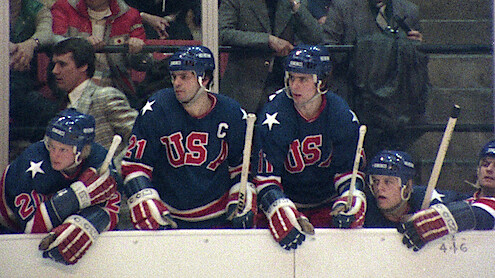
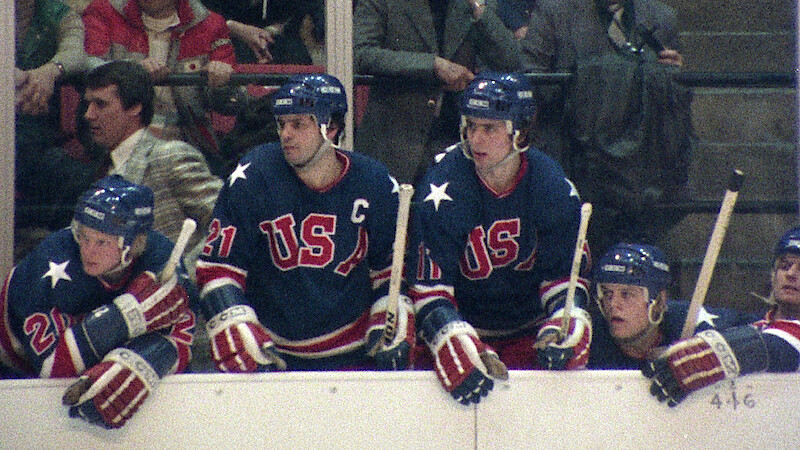
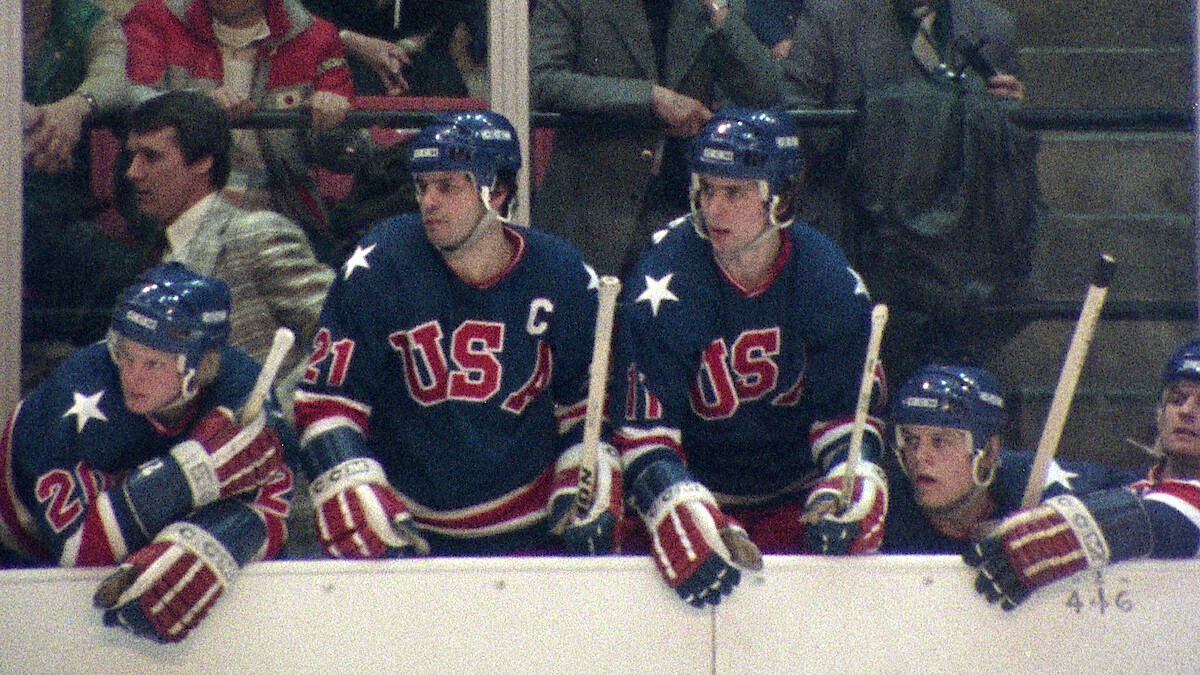
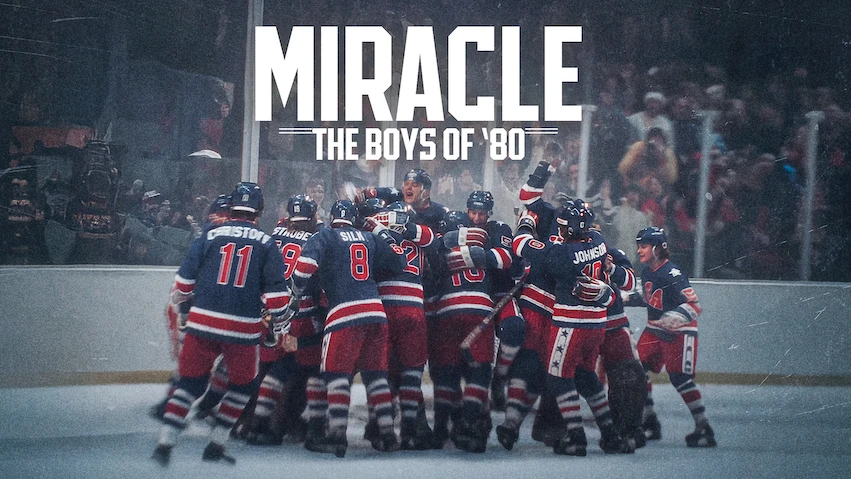
In the midst of the Cold War, a new battleground emerged, one that neither America nor the Soviet Union had anticipated: the 1980 Winter Olympics at Lake Placid. The USA men’s ice hockey team, with a roster full of amateurs, entered the Games as underdogs — only to pull off one of the biggest upsets in Olympic history. In Miracle: The Boys of ’80, directors Max Gershberg and Jacob Rogal (Court of Gold) take sports fans behind the scenes of the game that became known as the Miracle on Ice, with newly unearthed footage and recollections from the team more than four decades later.
When will Miracle: The Boys of ’80 be released?
Stream it now.
Which teams played in the Miracle on Ice?
The American team faced the Soviet Union team in the 1980 semifinal Olympic game, which is now known as the Miracle on Ice. Finland played Sweden in the other semifinal round, and the winner of each bracket advanced to the gold medal game.
Who is interviewed in Miracle: The Boys of ’80?
Many members of the 1980 USA men’s hockey Olympic team are interviewed in the documentary, including:
- Jim Craig
- Mark “Magic” Johnson
- Steve Janaszak
- Buzz Schneider
- Rob McClanahan
- Ken Morrow
- Dave Christian
- Eric Strobel
- Phil Verchota
- Bill Baker
- Mike Ramsey
- Neal Broten
- Dave Silk
- Jack O’Callahan
- John Harrington
- Mike Eruzione
Who is Herb Brooks?
Herb Brooks was the coach of the American team during the 1980 Winter Olympics, and he changed the way the nation played the sport. He infused the American hockey players’ very physical style of play with the creativity and fluidity of the European players, introducing a hybrid that’s still seen in the NHL today.
“That was the first time I’d ever seen it,” Buzz Schneider, a former 1980 Team America hockey player, said to the Pioneer Press in 2020. “It was never done by an American coach. He was the one who started changing it for the Americans. It was puck control and interchanging positions, and it made it a lot of fun.”
Brooks’s two children, Danny Brooks and Kelly Paradise, are interviewed in the documentary about the team’s historic run and about their father, who died in 2003.
What happens in Miracle: The Boys of ’80?
In 1980, the Olympic rules were very specific: No athlete who played for their national team could be a paid professional in their sport. At the time, all Olympic teams were made up of amateurs, mostly college athletes looking for one more big accolade before attempting to go pro. The Soviet Union players, on the other hand, were paid professionals. They held jobs in government — in name only — so they could instead spend all their time training. The apparent loophole, which was widely known and caused controversy within the sports world, ensured that the Soviet Union hockey team was untouchable worldwide. As sportscaster Al Michaels notes in the doc, the Soviets cultivated the best players in the world — no amateur teams could match them, and they won five of the previous six Winter Olympics.
Enter Brooks, the former head coach at the University of Minnesota, who believed that the American team could catch up. All they needed was to train like the Soviets. Brooks decided that, to unite the mishmash of college rivalries that made up Team USA, they would play 61 exhibition games over the five months leading up to the Olympics. Due to its intensity, the previously unheard of training and exhibition schedule pitted players against each other, their coach, and the rest of the world’s elite hockey teams. And while Team USA improved steadily, they still weren’t considered a contender. Their last exhibition match before the Olympic Games was against the Soviets, who crushed them 10-3. While the chilling reality of the Soviet team, aka the Red Machine, might have been enough to shake any other Olympic hopeful, Team USA went into the Games determined to make their mark. Check out the documentary to see how the boys battled their way to the semifinals, racked up a series of historic wins, and captured America’s hearts.
Is Miracle: The Boys of ’80 based on a true story?
Yes, the doc is based on a true story. It’s the same one that inspired the 2004 Kurt Russell film Miracle. In shaping the documentary, creators Gershberg and Rogal partnered with the International Olympic Committee.
“[The IOC] had this treasure trove of old 16-millimeter film, never-before-seen footage, really gritty, beautiful,” Gershberg told Sports Business Journal in an interview about the film. Gershberg notes that so few people have ever seen the footage that even the players were surprised to find out about it.
“Showing them moments on the ice from those angles and that film, they loved it,” said Gershberg. “One of the things that excited us most in the interviews throughout production was watching them react to those moments.”