Explainer
Who Was Bayard Rustin? Learn More About His Incredible True Story
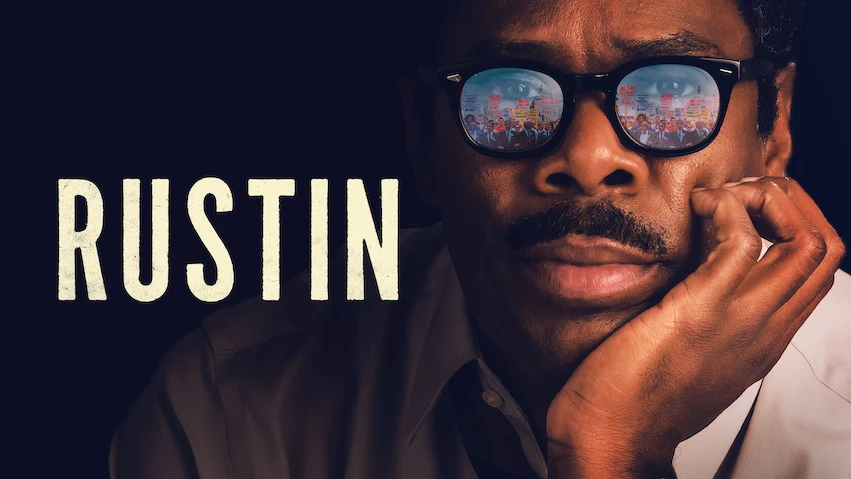
Colman Domingo portrays a Civil Rights icon in Rustin, now streaming.
By Malcolm Venable
March 5, 2024
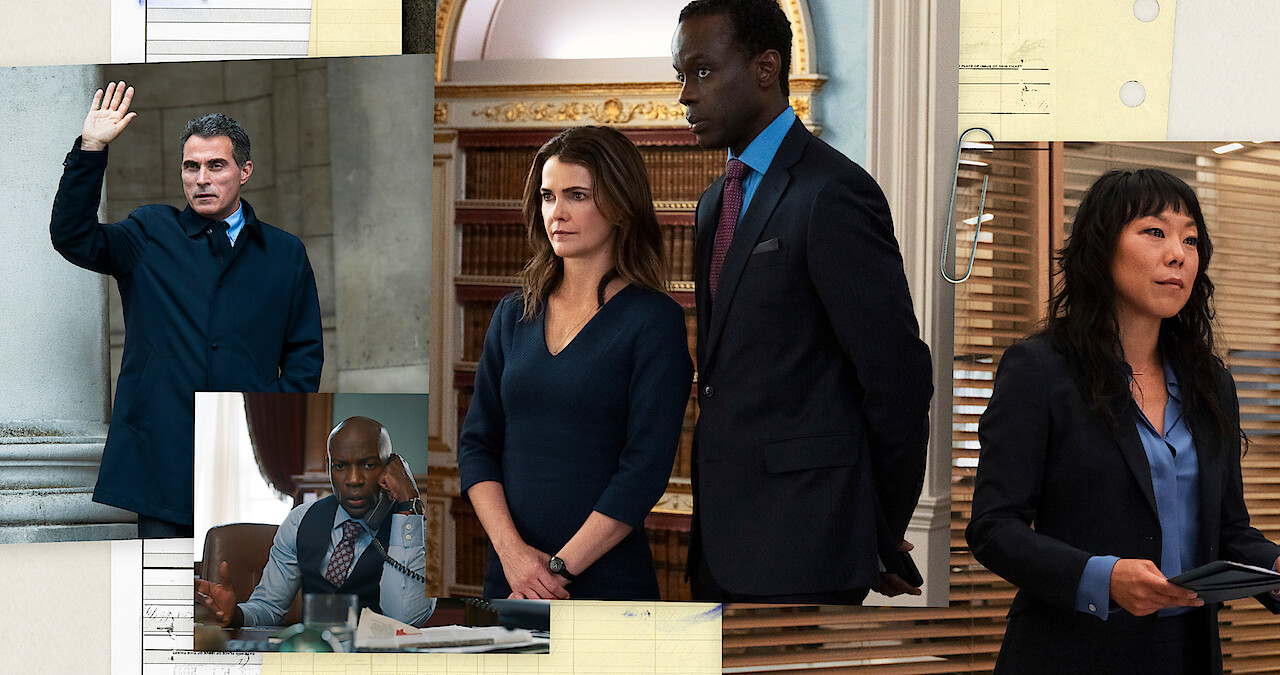
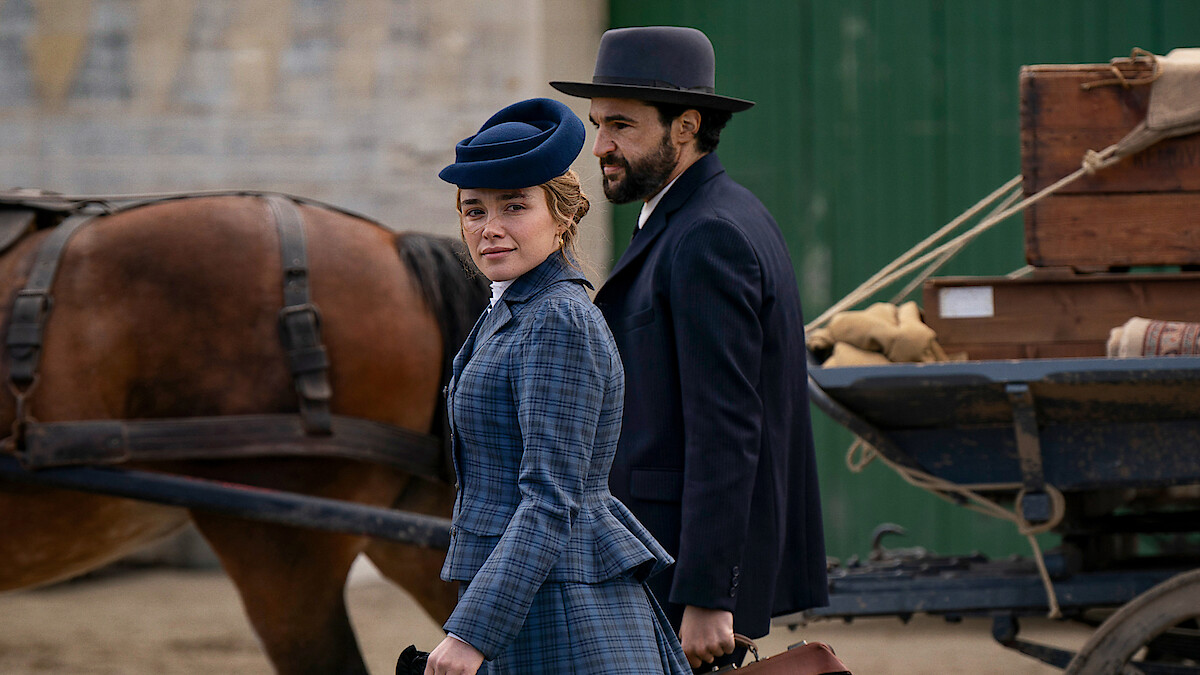
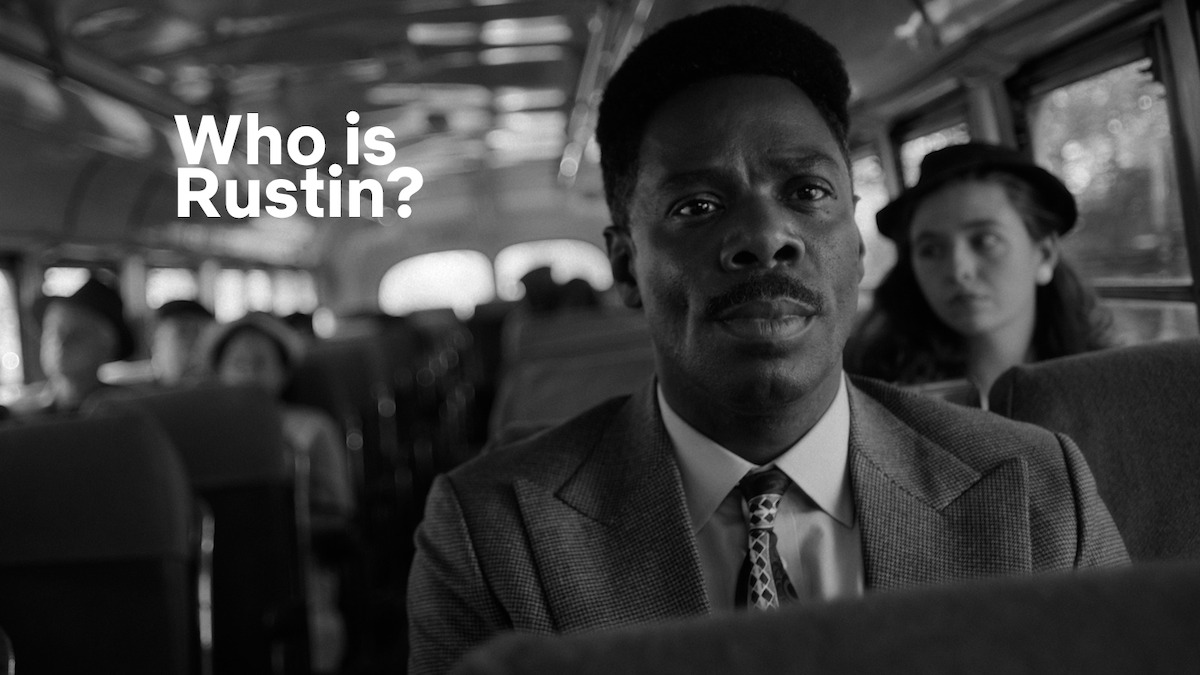
For many people, Dr. Martin Luther King Jr.’s “I Have a Dream” speech is synonymous with the struggle for Black civil rights. But for far too long, the man who orchestrated the march where King gave the speech remained unknown by most. That unsung freedom fighter, Bayard Rustin, gets his overdue flowers in Rustin. With Colman Domingo playing the activist under the direction of George C. Wolfe (Ma Rainey’s Black Bottom), with a script from Julian Breece and Academy Award winner Dustin Lance Black (Milk), Rustin hones in on a specific slice of Rustin’s life: planning, organizing, and executing the 1963 March on Washington for Jobs and Freedom.
Rustin shows all that Rustin did to make the impossible happen: He honed his vision, built teams, navigated egos and politics within the Civil Rights Movement, raised money, persuaded naysayers, and dodged threats — all while fighting homophobia as an openly gay man pre-Stonewall. And he managed a slightly messy love life. Yet Rustin’s on-screen journey is just one chapter in his stunning story. So who was the real Bayard Rustin? Here’s a primer.
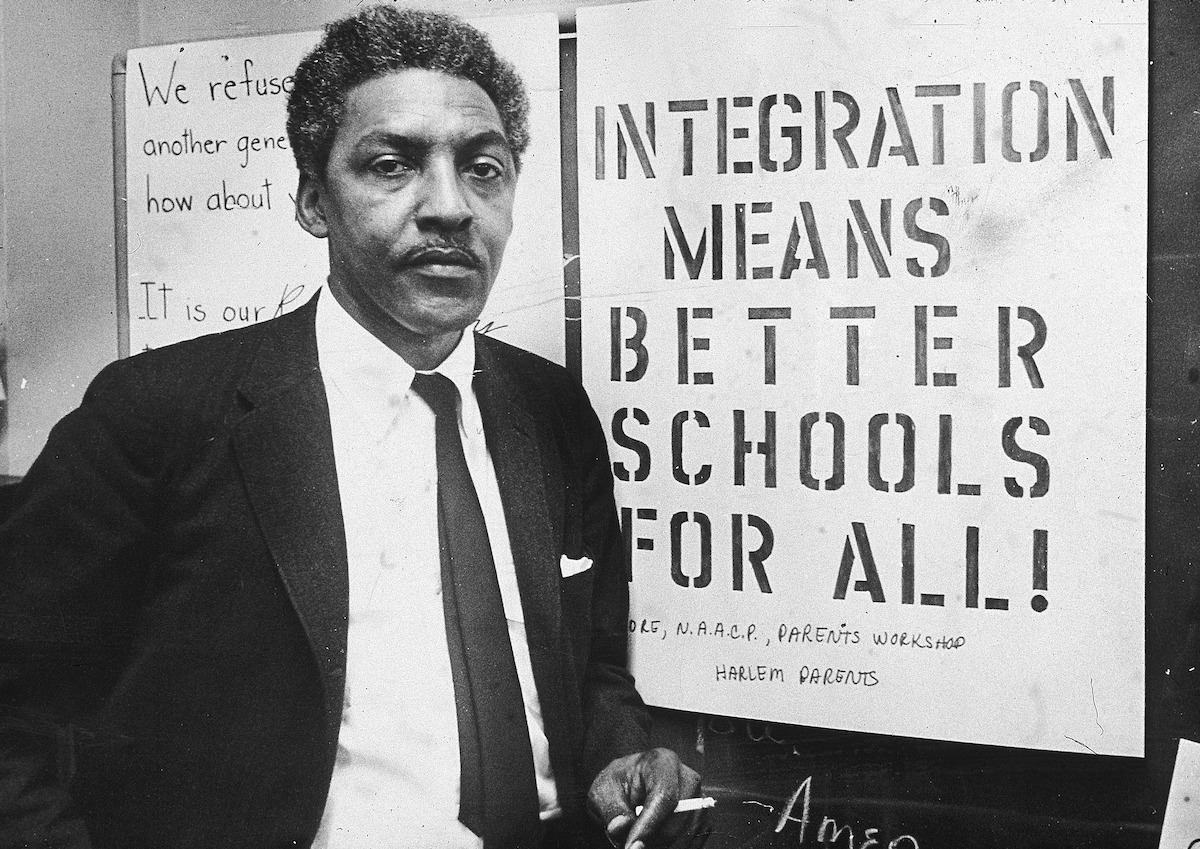
The March on Washington was the culmination of Rustin’s lifelong commitment to the Civil Rights Movement. Born in 1912, Rustin was raised by Quaker grandparents devoted to civil rights causes, who regularly hosted legends including W.E.B. Du Bois and Mary McLeod Bethune in their West Chester, Pennsylvania, home. Rustin started organizing protests and demonstrations against segregation as a youth; he was arrested for the first time — but not the last — before he’d even finished high school, for sitting in the white section of a movie theater.
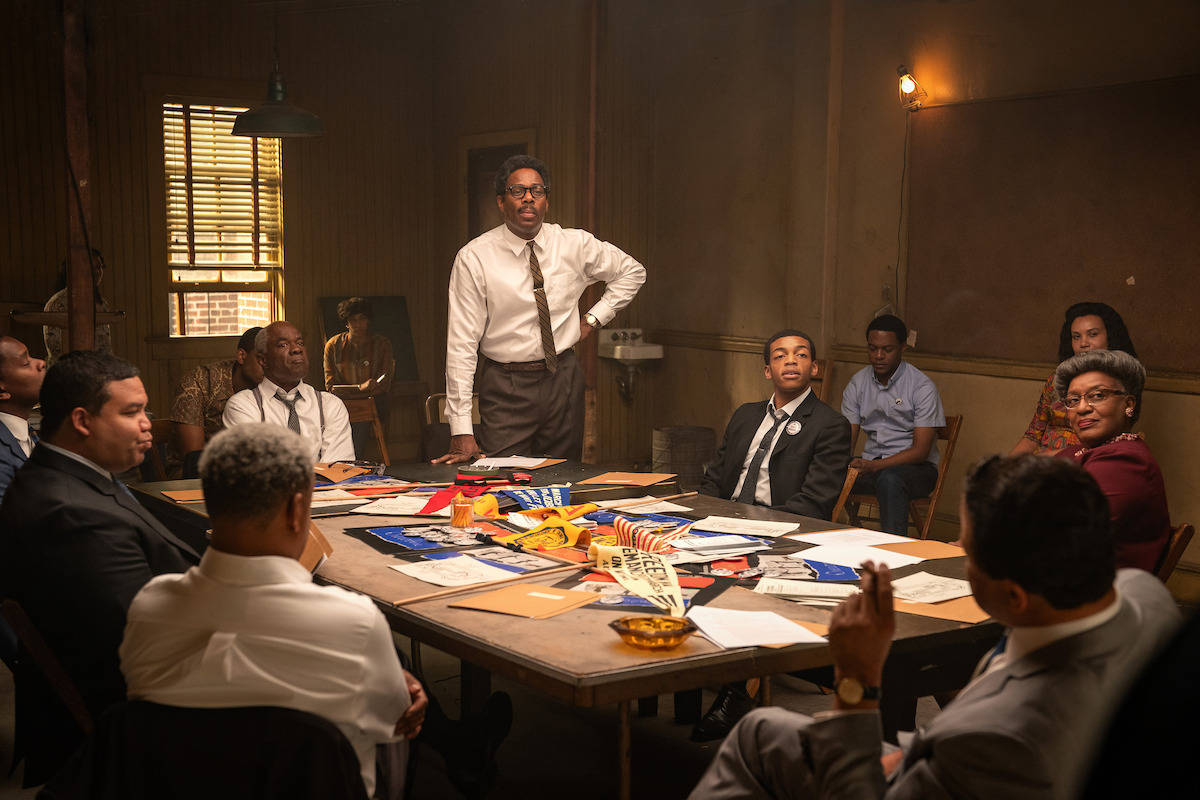
Colman Domingo told Netflix that playing Rustin was an “extraordinary honor” and a challenge. “I’ve been preparing to play Bayard Rustin for a very long time,” said Domingo, who’s also openly gay and has considered Rustin a hero since high school. “Once I knew the film was green-lit, I dove in. I read biographies. I watched documentaries, everything I could get my hands on. I looked at the way he used his hands. We get every element of Bayard Rustin [in the script], so it’s a complete man. I tried to ensure that every moment was filled with honesty.”
Rustin lived a remarkably full life, in which activism went hand in hand with art. His powerful tenor voice earned him a music scholarship to Ohio’s Wilberforce University — from which he was subsequently expelled for organizing a strike (in protest against bad food in the cafeteria). Settling in New York City during the later years of the Great Depression, at a time and place of great enthusiasm for Civil Rights activism, left-wing politics, and the arts, Rustin joined forces with an array of progressive groups, including the Young Communist League, the Quaker society, and the Congress of Racial Equality. He was also in a Broadway show, John Henry, starring the great Paul Robeson, and performed at Café Society, New York City’s first integrated nightclub in Greenwich Village.
Rustin recorded several albums, one of which, Elizabethan Songs & Negro Spirituals, featured him accompanied by a harpsichord. For Wolfe, that album is more than a recording. “This piece of vinyl thrills me to no end,” the director told Netflix, “because it brilliantly captures the expansive view he had of himself and his place in the world, or should I say worlds, which existed in joyful defiance of other people’s limited view of who he was, where he belonged, and what he should desire. And it is for this reason, among a myriad of others, that Black-queer-Quaker Bayard Taylor Rustin is, to my mind, the ultimate American.”
In this period of Rustin’s life, he studied the philosophies of activists such as Mohandas Gandhi and developed the strategies and relationships that laid the groundwork for the events of Rustin. In 1941, he partnered with labor leader A. Philip Randolph (played in the film by Glynn Turman) to plan a march on Washington that, although ultimately not held, inspired the 1963 march. And in 1942, as depicted in the film, he was beaten and arrested for sitting in the second row of a bus traveling from Louisville, Kentucky, to Nashville, Tennessee, pioneering the techniques of nonviolent resistance and targeted focus on segregated institutions that would bear fruit in the coming decades.
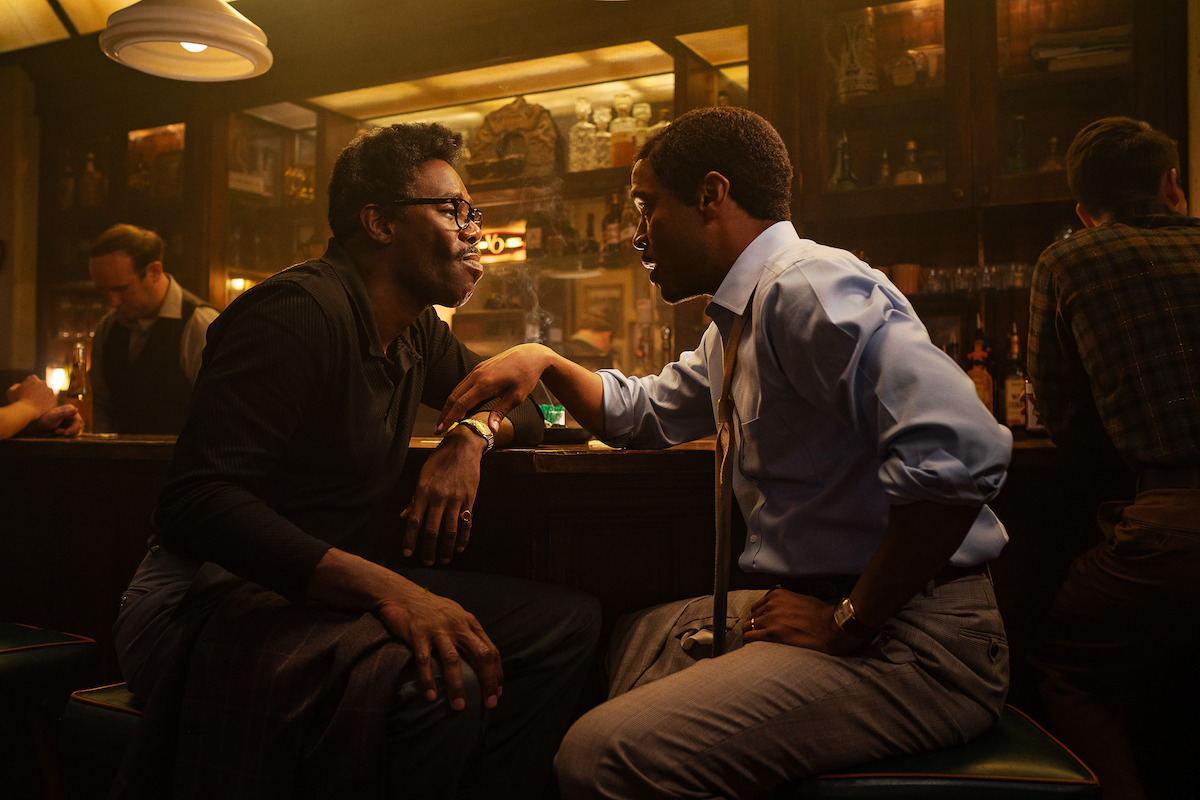
In Rustin, Rustin reveals to his lover Elias Taylor (Johnny Ramey) that, as a youth, he told his grandmother he preferred men over women, and she told him, “I suppose that’s what you need to do.” Although Elias is a composite character, this sentiment is true to life, as Rustin discovered his sexuality as a teenager and never knew shame.
By the 1950s, Rustin had been jailed several more times, including a two-year stint in prison for refusing military service. In one case, he was targeted as a gay man, rather than as a Black activist: In 1953, Rustin was arrested in Pasadena, California, for having sex in a parked car with two men, and eventually pleaded guilty to “lewd vagrancy.” Adam Clayton Powell Jr. (Jeffrey Wright) repeatedly mentions this incident in Rustin, during disputes over the March on Washington.
Amid both the Red Scare and the Lavender Scare of the post–World War II years –– witch hunts to expose Communists and LGBTQ people and get them fired or arrested –– Rustin was under increased scrutiny for his sexuality and previous affiliations with Communists. Rustin knew his 1953 arrest would be weaponized, so he resigned from leadership roles in a number of organizations and opted to work behind the scenes so as not to distract from the movement. Yet the arrest hardly tempered Rustin’s libido; he continued to be what we’d now call “sex-positive,” taking on lovers including Tom Kahn (Gus Halper). No freedom without sexual freedom, right?
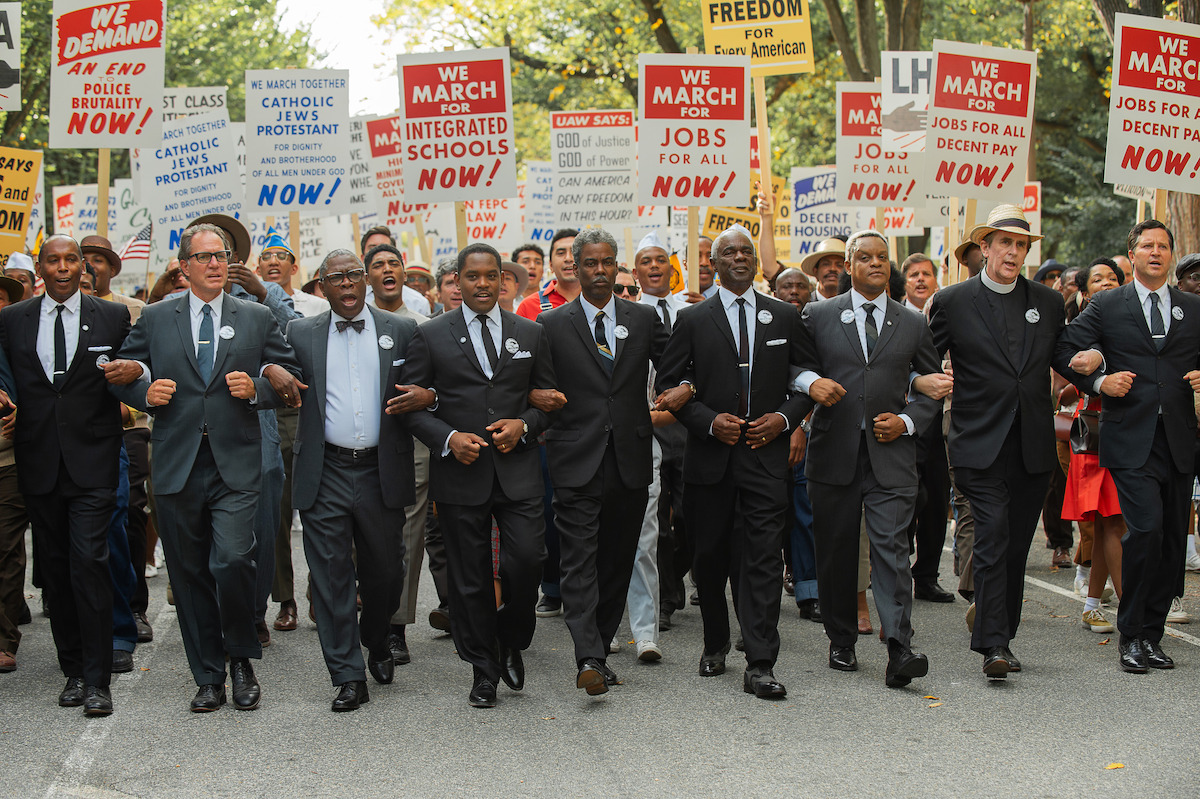
All of Rustin’s personal and professional experience swirl together in Rustin. Though respected by power players in the Civil Rights Movement for his strategic acumen, he remained an outsider, cunning enough to work with old-guard politicos like Roy Wilkins (Chris Rock) of the NAACP but too radical to obey their rules. As racial issues moved to the forefront of the national consciousness in the 1960s, Rustin was thinking bigger. He knew King’s charisma and celebrity could garner massive attention, which is why he proposed the march adjacent to the 1960 Democratic National Convention in the beginning of Rustin. That plan was complicated by pressure against it from Rep. Powell, who threatened to spread the lie that Rustin and King were lovers. Though hurt by the way events unfolded Rustin eventually reconciled with King — and the rest is literally history. The two remained friends until King’s assassination in 1968.
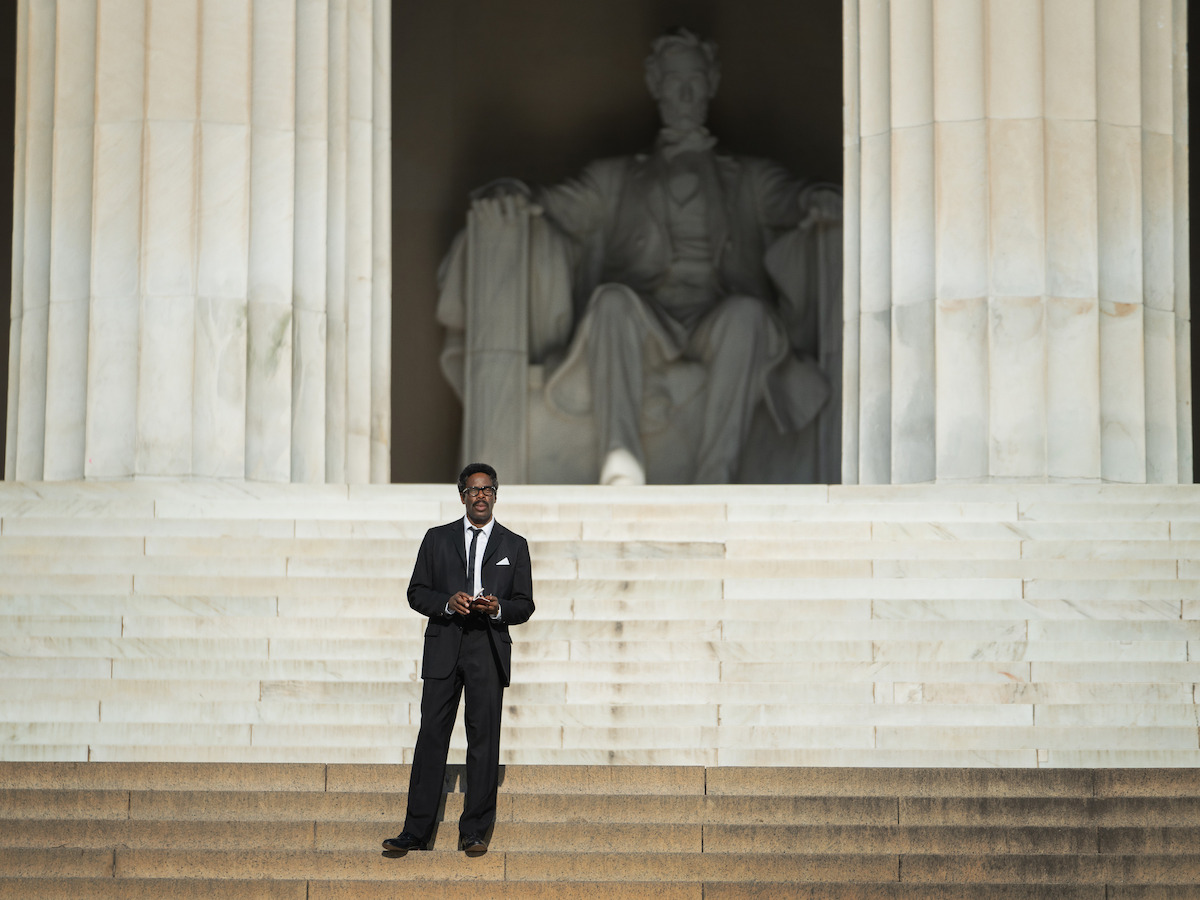
Rustin kept on marching and demonstrating until his death in 1987. In 2013, President Barack Obama posthumously awarded him the Presidential Medal of Freedom, and in 2020, California governor Gavin Newsom pardoned Rustin for his Pasadena conviction. And now, with an epic film in his honor, Bayard Rustin may finally join the ranks of the familiar Civil Rights leaders everybody knows by name.
“He is,” Wolfe said, “what every American should strive to be. I am grateful and forever in awe of all that he accomplished, and deeply proud, as is everyone who worked on the making of Rustin, to share his remarkable story with the world.”
Rustin is now streaming on Netflix. It’s the 60th anniversary of the March on Washington in 2023. New York City Mayor Eric Adams recently proclaimed Nov. 3 as the official Bayard Rustin Day.