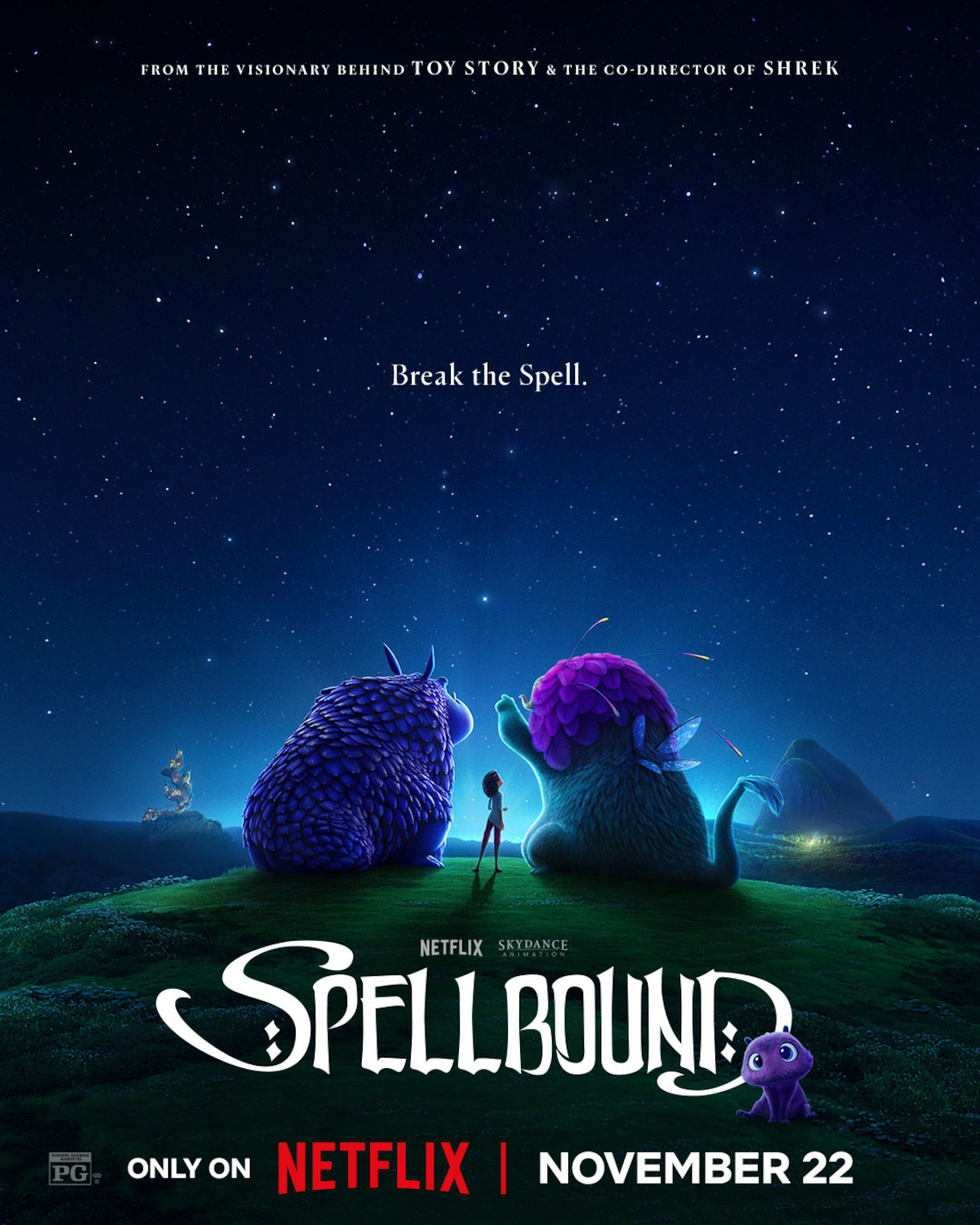
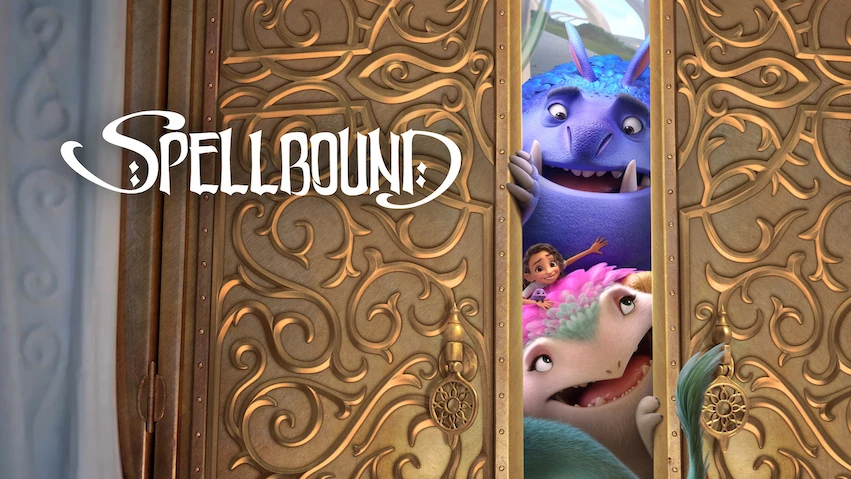
Hankering for your family’s new favorite movie? We’ve got just the thing for you: Spellbound is a fantasy adventure with all the animation pedigree you could wish for. Directed by Vicky Jenson (Shrek), featuring songs by Alan Menken (The Little Mermaid), lyrics by Glenn Slater (Tangled), and starring Rachel Zegler (West Side Story), this is a dream come true for anyone longing to enter a magical new animated world.
Read on for more information about Spellbound, now streaming on Netflix.
What is Spellbound about?
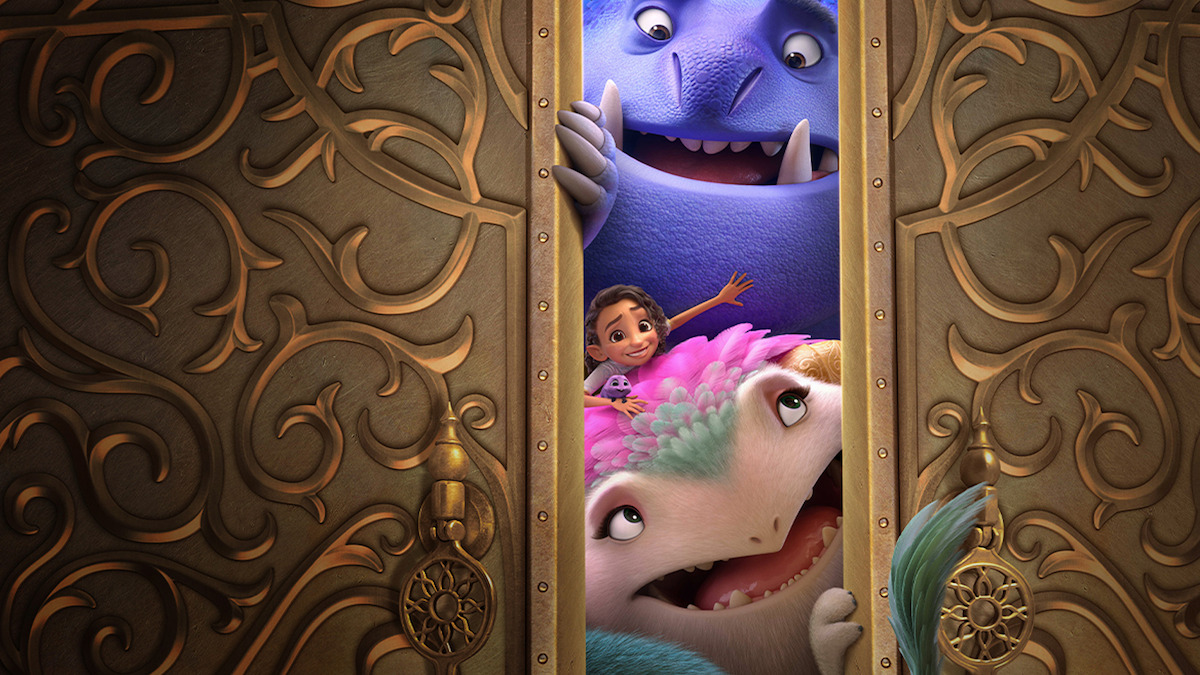
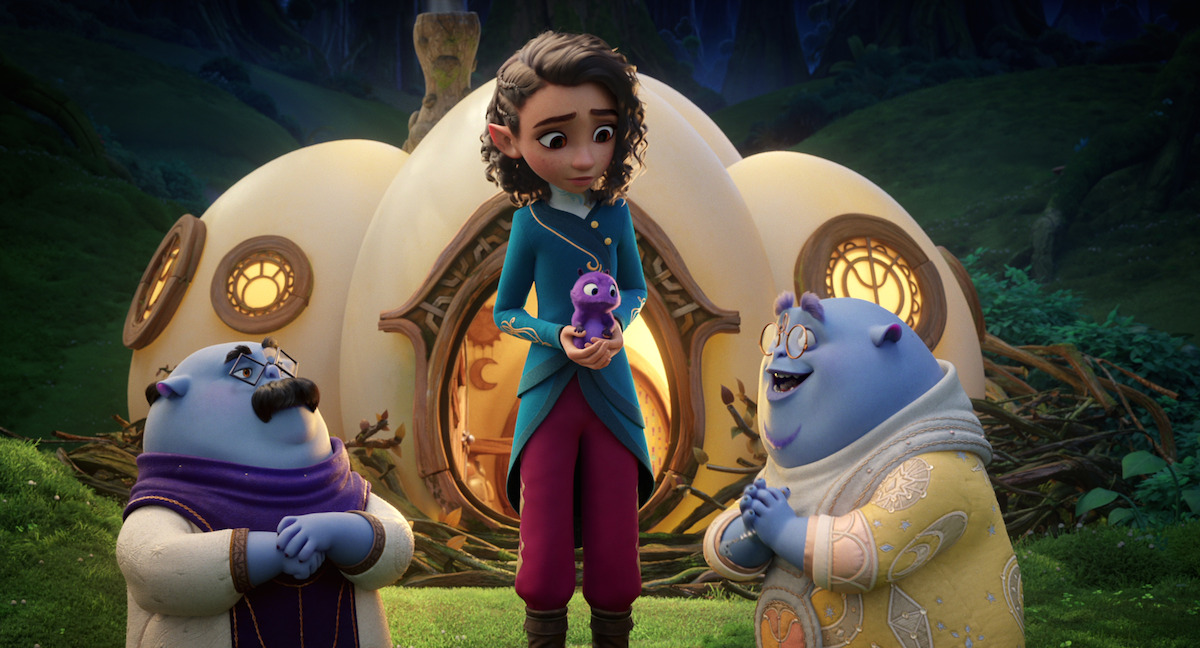
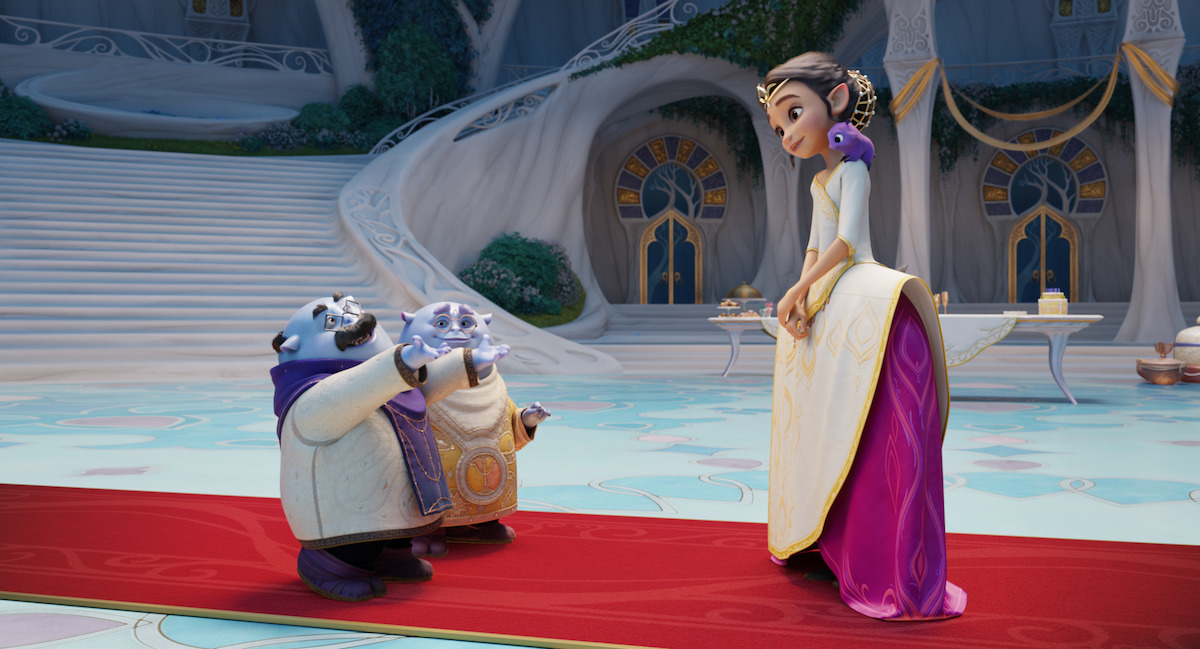
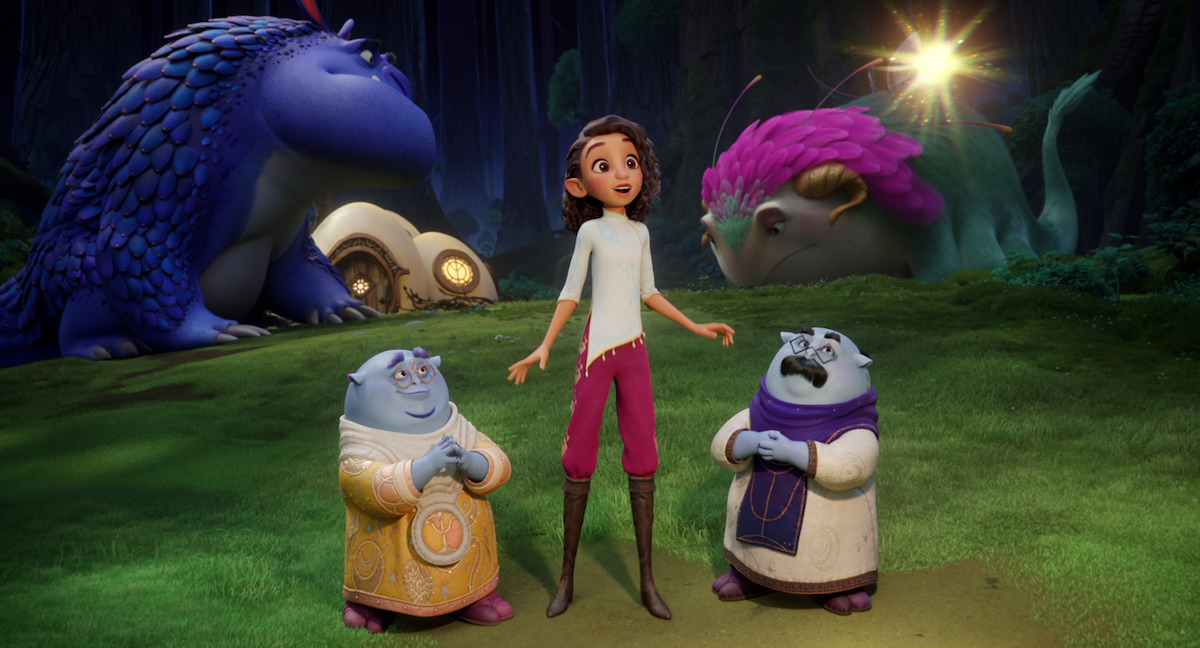
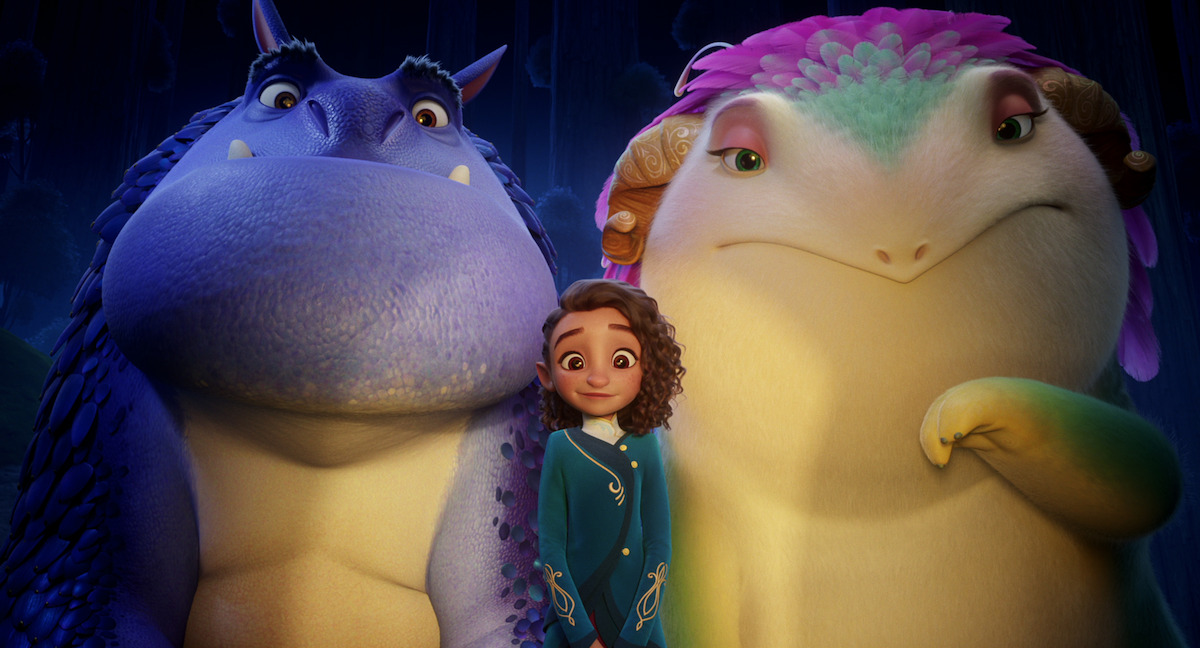
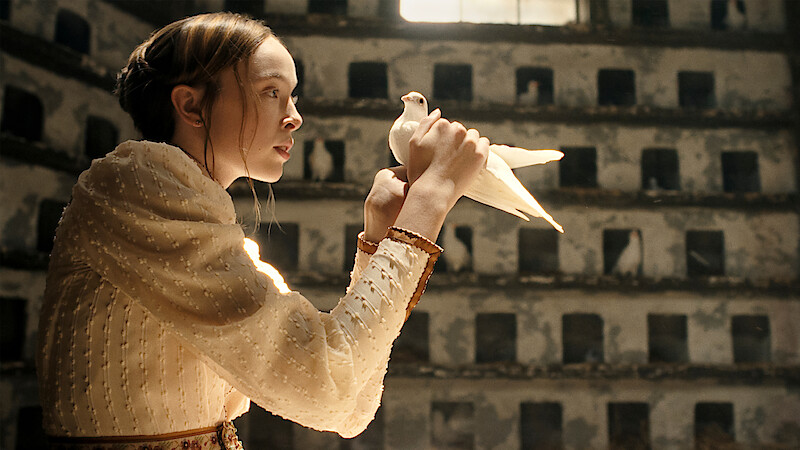
On the eve of her 15th birthday, Ellian (Zegler) should be celebrating like royalty. Instead, the tenacious young daughter of the rulers of Lumbria harbors a secret: a mysterious spell has transformed her parents, Queen Ellsmere (Nicole Kidman) and King Solon (Javier Bardem), into monsters. When they escape the palace, panic spreads throughout the kingdom and Ellian must go on a daring quest to undo the spell before it’s too late. But she quickly learns that even if she succeeds, her family may still be changed forever.
“Taking on this job was so cool for my inner child,” Zegler tells Tudum about playing Ellian. “I was obsessed with so many animated films as a child, including Beauty and the Beast, which had such a gorgeous, sweeping score by Alan Menken, who did the music for our film … Films like these made me fall in love with musical theater, which ended up changing my life entirely.”
But Spellbound isn’t your traditional fairy tale. With this film, Jenson was eager to ground the genre with a modern twist. “If we start with the familiar — the kingdom, a princess, a king, a queen, and a spell — we could use that to express the story of this family,” she told Netflix.
When will Spellbound be on Netflix?
Spellbound is now streaming on Netflix. Press play and prepare to be enthralled.
Who’s in the cast of Spellbound?
The cast of Spellbound includes:
- Rachel Zegler as Princess Ellian of Lumbria, who has been hiding the secret that her parents are destructive monsters from the kingdom.
- Nicole Kidman as Queen Ellesmere
- Javier Bardem as King Solon
- Dee Bradley Baker as Flink, Ellian’s fuzzy purpose pet sidekick
- John Lithgow as Minister Bolinar, who has been helping Ellian rule the kingdom in her parents’ absence. Lithgow also voices Flink, who body-swaps with Bolinar after being hit by a spell.
- Jenifer Lewis as Minister Nazara, a royal adviser who thinks Ellian should take the crown.
- Nathan Lane as Luno, one of the oracles who sends Ellian on a quest through the Dark Forest of Eternal Darkness to find the Lake of Light, where she can break the spell on her parents.
- Tituss Burgess as Sunny, an oracle and Luno’s polar opposite. Where the latter is a grumpy pessimist, Sunny is an eternal optimist.
Who is behind the music in Spellbound?
Spellbound reunites musical legends Alan Menken and Glenn Slater, whose long partnership has yielded more than 400 song compositions for theater, film, and television. After years of collaboration, the duo was excited to take on a new challenge, crafting a musical that taps into fairy-tale elements to tell a story grounded in real-life issues.
“What was presented to us was both really exciting and really challenging,” Menken told Netflix. “The story was based on a very specific way of looking at this particular issue, a therapeutic model that looked at the problem from a specific angle and had a series of steps with which you view that social situation.”
“It was a story idea that was not only meaningful and untapped, but something that we knew would have a big impact on our audience, and that gave us the opportunity to work in a mode that we hadn’t really worked in before,” Slater added. “Spellbound has an underlying layer to it which gives it a groundedness and a meaningfulness in our regular world that felt like something new and different, something that nobody had really attempted in an animated film before. And we jumped at that opportunity.”
Does Rachel Zegler sing in Spellbound?
Yes! Zegler’s Spellbound journey began five years ago, when she started recording scratch vocals in her attic even before being officially cast as Princess Ellian. “I was just helping out Alan Menken, which was a dream come true,” she told Netflix. “And then when I got the part officially, it was very, very exciting.”
“There are still parts of ‘What About Me?’ that were actually recorded in my attic that made it into the final cut of the film,” Zegler added.
For Slater, having Zegler in the part was a no-brainer. “Rachel is one of those rare talents in that she has a sensational voice, but she’s also an extremely smart and intuitive actress who just got the character and understood the style of the character’s singing very quickly,” Slater told Netflix. “Having a performer like Rachel immediately enabled us to move forward [and] to feel that safety that we had an actress who got the character and would be able to take that journey with us naturally. Also, once we knew it was her, we absolutely were thinking of her voice and how to write best for her voice, where we could give her big notes and where we knew that she’d be able to really pull on the heartstrings.”
What are the songs in Spellbound?
Spellbound features nine original songs, including:
“My Parents Are Monsters”
“The song really welcomes you into the world of Princess Ellian, the kingdom of Lumbria, and all of the tasks she’s taken on as the child of the king and queen who are no longer in charge of their own faculties,” Zegler said. “It’s so much fun, and it introduces you to what you’re sitting down for [over] the next hour and a half or so.
“Step by Step”
“Vicky and our story team came up with this really interesting way of addressing [the Ministers], which is to make them obstacles but not villains,” Slater said. “They have Ellian’s best interest at heart. They have the kingdom’s best interest at heart. Unfortunately, in the early stages, that puts them in opposition to what Ellian wants. And that’s a tricky thing to convey to the audience. How do Bolinar and Nazara navigate between doing what’s best for the kingdom, doing what’s best for them, doing what’s best for Ellian, and doing what’s best for the situation? That suggested to me a dance, sort of a push and pull with each character leading the other in different directions. Once that word came up, Vicky jumped on that and said, ‘Ooh, what about flamenco?’ Alan grabbed that and just ran with it.”
“How to Break the Spell”
“What Alan does so well is he created that kind of a song where you are completely expecting [it to] ramp up, and then cuts it off at the exact moment to pull the prize away from you,” Slater said. “Here, it’s part of that dynamic of letting the audience know that this is not a typical animated film. We’re not going to be doing the same things that you’re used to.”
“The Way It Was Before”
“ ‘The Way It Was Before’ is probably one of the more emotional songs in the film,” Zegler said. “It always makes me cry. The way that it’s animated is heartbreaking. It’s a really beautiful ballad where Princess Ellian is longing for what her life used to be like when her parents were humans and when she felt like they really loved her. So, it’s really sad, but very beautiful.”
“Look for the Light”
“With ‘Look for the Light,’ we wanted a very simple folk feel, almost like Peter, Paul and Mary,” Menken said. It has, in a way, a childlike, disarming simplicity. But despite that simplicity, the structural ambition of the number is actually really big, because it goes through all these different sections that build towards explaining what the journey will be and what the journey needs to be. And also being the underpinnings of a big magical animation montage.”
“Remembering”
“This is not a traditional song moment and writing it as a traditional song with a verse and a chorus felt wrong,” Slater said. “In trying to find the underlying emotions to this, Alan just sat at the piano and started playing these themes and connecting them. It’s not soaring and it’s not driving. It’s not funny. It’s a very quiet and reflective interior moment.”
“I Could Get Used to This”
“We basically went for New Orleans and a carnival [style],” Menken said. “It’s that delightful moment where an uptight character lets loose. One thing that was interesting about it is we had orchestrations and a band play it, but it was like, ‘This feels too organized.’ And I said, ‘Let’s bring in real street musicians.’ We did it in London, but brought in street musicians. And having that color to mix into the arrangement made an enormous difference in that number firing off.”
“What About Me?”
“ ‘What About Me?’ is the flip side of Ellian’s ‘I-want’ song,” Slater said. “This is the moment where she demands what she wants, even though she can’t have it. She’s not a villain, she’s human, but it’s part of the journey that she has to go on. In order to get Ellian into a place where she can really come full circle, she has to let out that anger about having had to be the parent and having had to carry their emotions, at being neglected, at being ignored, and having to grow up too fast. That has to come out and that all comes out. It feels cathartic and it feels real.”
“My Monsters Are Parents”
“We have to bookend the movie with the number we start with. We have to get back to that energy,” Menken said.
Why are Ellian’s parents monsters in Spellbound?
This article contains major character or plot details.
At the end of Spellbound, viewers finally understand why Ellian’s parents have turned into monsters: an unhappy marriage. After arriving at the Lake of Light, Ellesmere and Solon are confronted with the hard truth that they can’t be together anymore. Their constant arguing and anger is what has turned them into otherworldly beasts. But when they ask Ellian to give them a minute to figure things out, she has a dark moment of her own before launching into her most emotional number, “What About Me?”
Stunned, Ellian’s parents realized that they’ve been selfish. This situation isn’t just about them; their decision also affects their daughter. Only after recognizing that they have to move forward and face change as a family can they regain their true forms.
Including the theme of separation in an animated fairy tale may seem like a surprising choice, but for Jenson it’s been long overdue.
“For me, the story is even more universal than the specifics of this family dynamic that’s changing, because it also speaks to kids and their parents about the kind of alienation and separation that can happen, even just as we grow up,” she said. “And then the steps we have to make towards each other to weather it together and come through to the other side with better understanding. Yes, there’s many of us who have lived through families going through separation, or we know people that are. But I think this is the best allegory of what this means in your life. All the great myths help people understand the stages of being a human. Whether it’s a young person coming of age or coming into their own sense of being. Or, as we grow older, there are myths that speak to the loss of the nest and having young children at home. Spellbound speaks to the evolution of parents and children.”
Additional reporting by Troy Pozirekides.