Since its beginning, Stranger Things has showcased both lighthearted fun and absolute terror. Scenes set in a roller rink, video store or ice cream shop offer heaping scoops of nostalgia as the show’s beloved teenage characters can just be kids. But when horror strikes as those same kids become experimental test subjects, descend into the Upside Down or come face-to-face with past traumas that manifest as literal monsters, the mood changes in an instant. It’s not only the actors who experience both the light and dark sides of Stranger Things, the makeup artists do, too — in fact, they help create it.
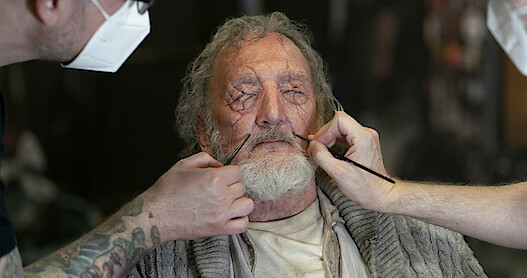
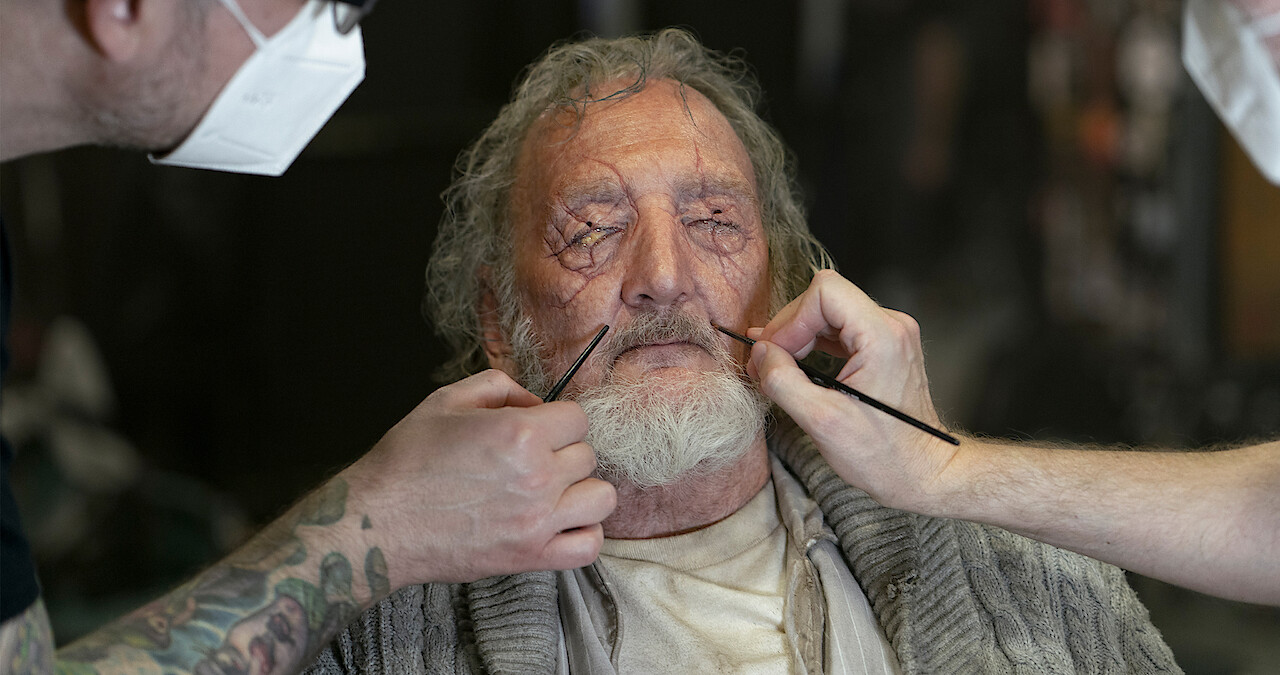
In the last scene of the first episode of Season 4, a Hawkins cheerleader named Chrissy (Grace Van Dien) has a horrifying supernatural vision featuring her tortured parents inside an uncanny version of their home. As Chrissy desperately tries to make sense of what she’s experiencing, she sees her father (Christopher Strand) tightly bound to his easy chair, mouth sewn shut and eyes gouged out. According to Amy L. Forsythe, the series’ head makeup artist, the twisted setup was designed by Academy Award-winning makeup artist Bill Corso and executed by Forsythe and her team. “[Corso] sent us a very, very specific layout of how all of the strings needed to be attached to the chair,” Forsythe tells Tudum. “It was wild.”
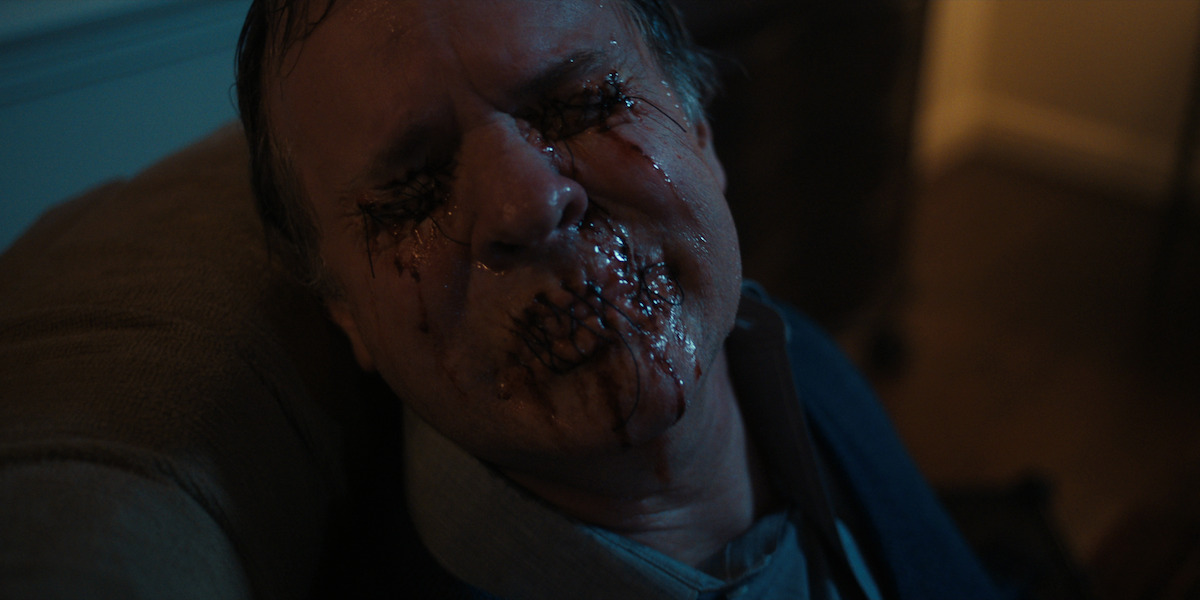
Chrissy’s dad (Christopher Strand) mutilated and sewn into his chair.
How wild? Strand’s mouth and eyes were sealed with prosthetics for the scene. He was then driven to the set and fastened to the chair. “He couldn’t see, he couldn’t speak. All he could do was hear,” Forsythe says. “When we were breaking for lunch, I was like, ‘You better let him know that he’s done for the day before you call lunch because he might just be sitting there thinking that you’re abandoning him.’”
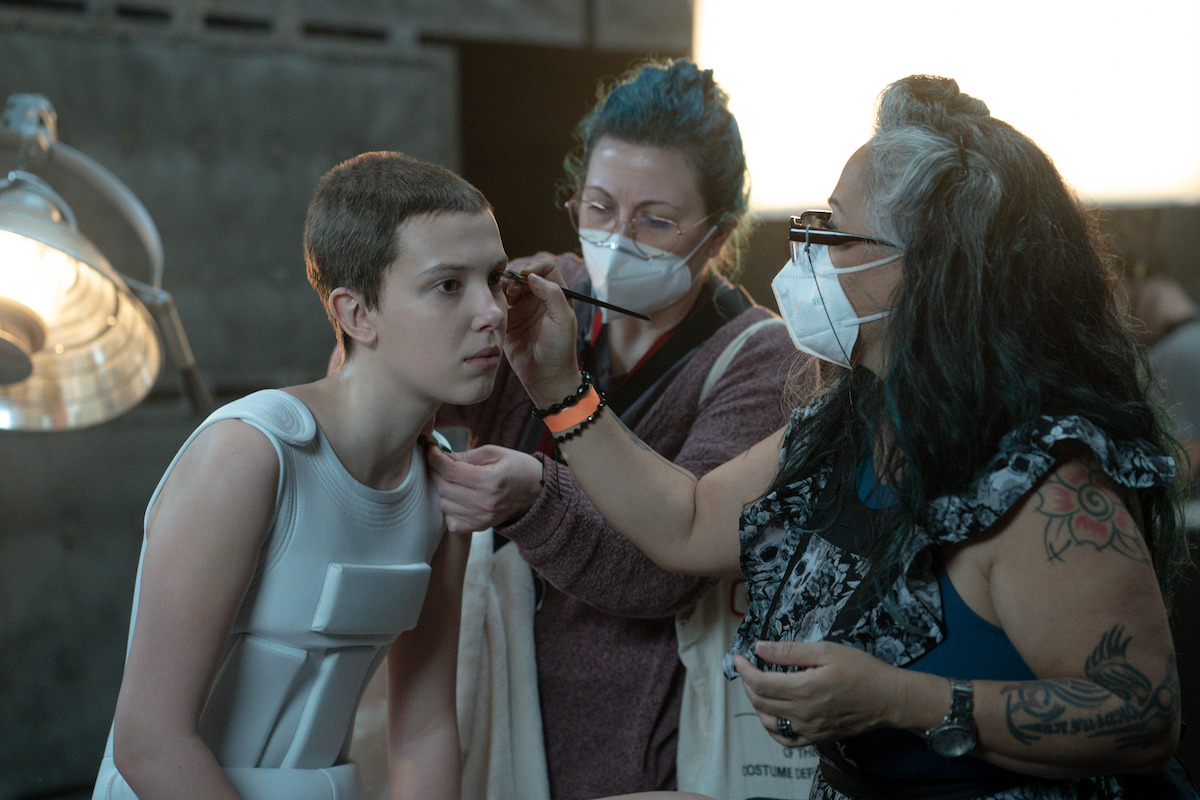
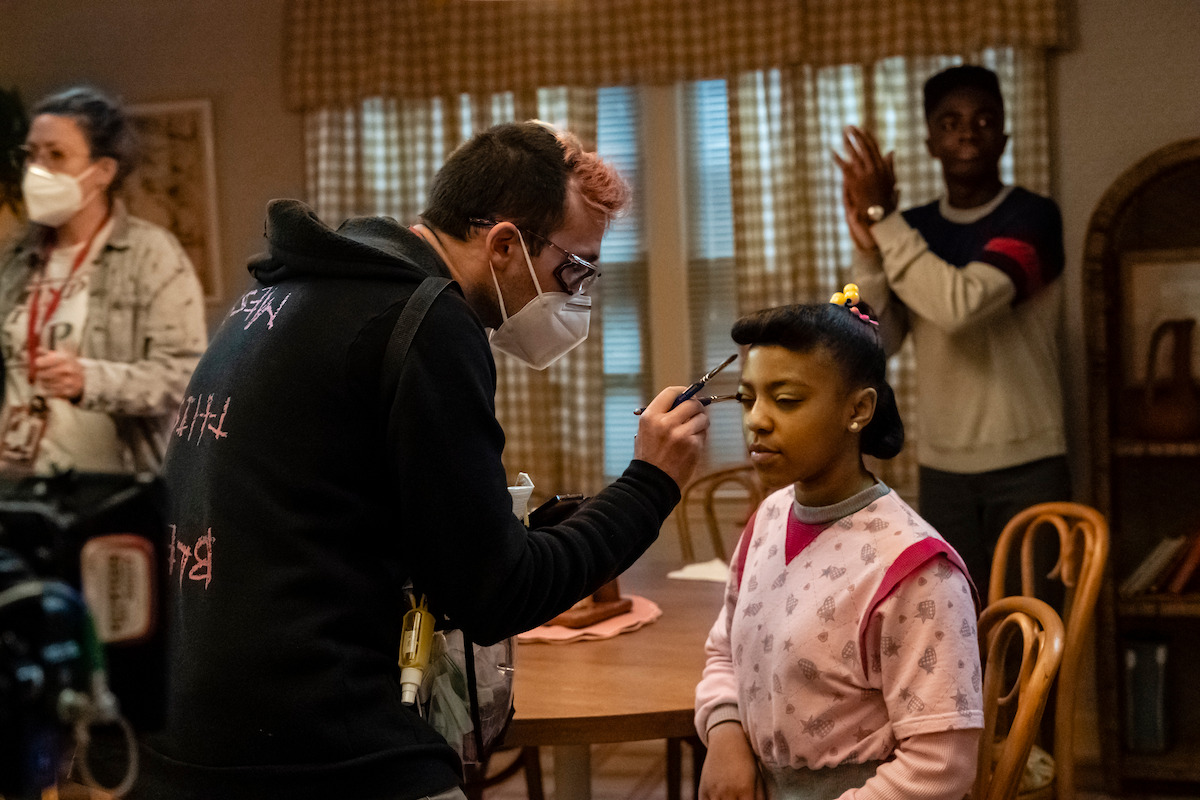
This type of physical manipulation isn’t only scary for viewers — playing at being dead and actually having your senses restricted is hard for the actors as well. So, the makeup team does everything they can to put them at ease. “You ask them to be very communicative with you on their experience so that you can help make adjustments if need be,” Forsythe explains. “No one knows their comfort level like they do.” Because Strand’s mouth and eyes were covered, the makeup team helped him get used to communicating through nodding and asked a lot of yes or no questions about how he was feeling. “It’s just a very intimate connection that you have with your actors when you’re helping them to perform,” Forsythe says.
It’s a connection she knows is important. On another series Forsythe worked on, an actor had a panic attack because of the claustrophobic nature of the makeup. Now, she makes it a point to try and understand exactly what the actors are experiencing when she transforms them into characters. “I need to see what people are going through,” she says. “I need to be able to talk to them and tell them exactly what it will be like.”
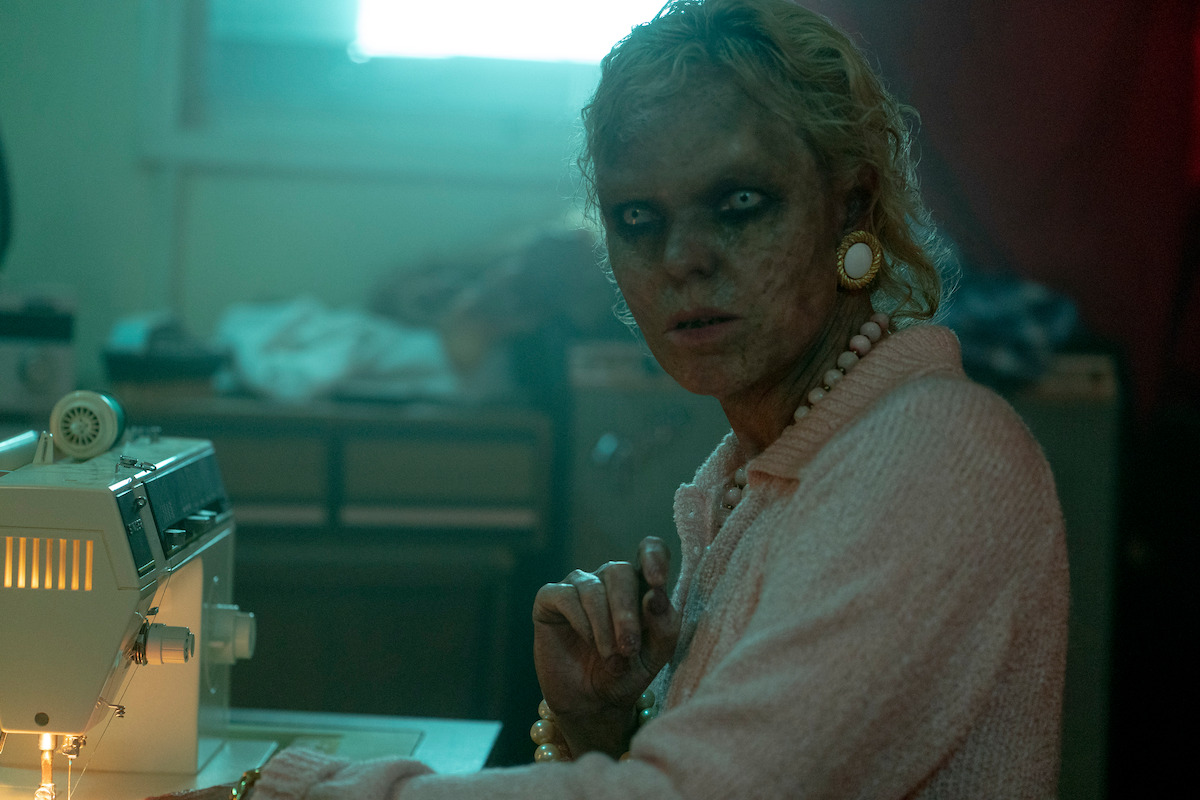
Throughout Season 4 of Stranger Things, various characters go into trances and that hypnotic state is depicted through their eyes turning milky white. This look was achieved through contacts, which Forsythe first tested out on herself. “It’s like you’re in a bright white room all by yourself,” she says of the experience, “but you can hear the people around you. It’s bonkers.” Knowing that, she was able to prepare the actors for the experience and reassure them along the way. “I took a lot of videos of people putting their contacts in for the first time to get the reactions and try to make it a little fun experience for them,” she says.
Of course, the makeup transformation process is also filled with some playful moments thanks to Forsythe and her team, who are known for using unconventional products to create the show’s many looks. One thing she always has in her kit is Monistat chafing gel, an anti-fungal product that makes makeup less shiny and tacky — and whose use gets lots of laughs from the actors, even when they’re using it when covered in fake blood.
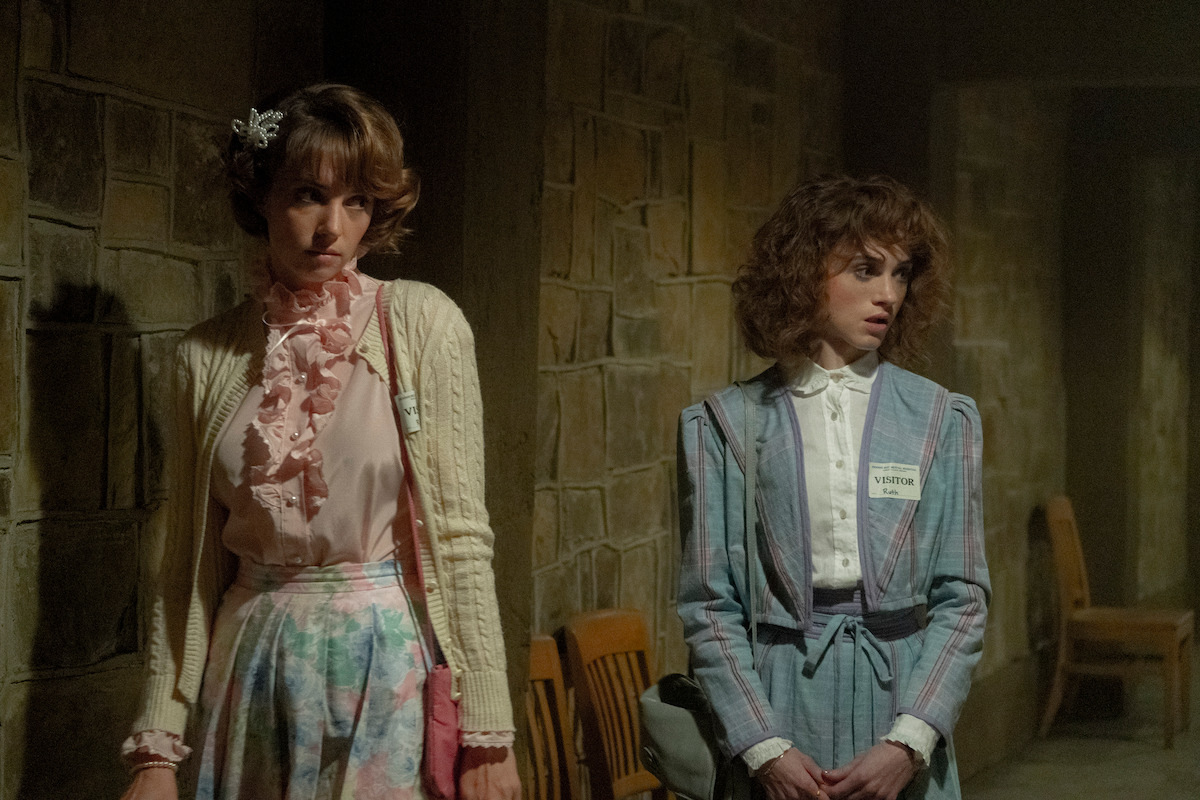
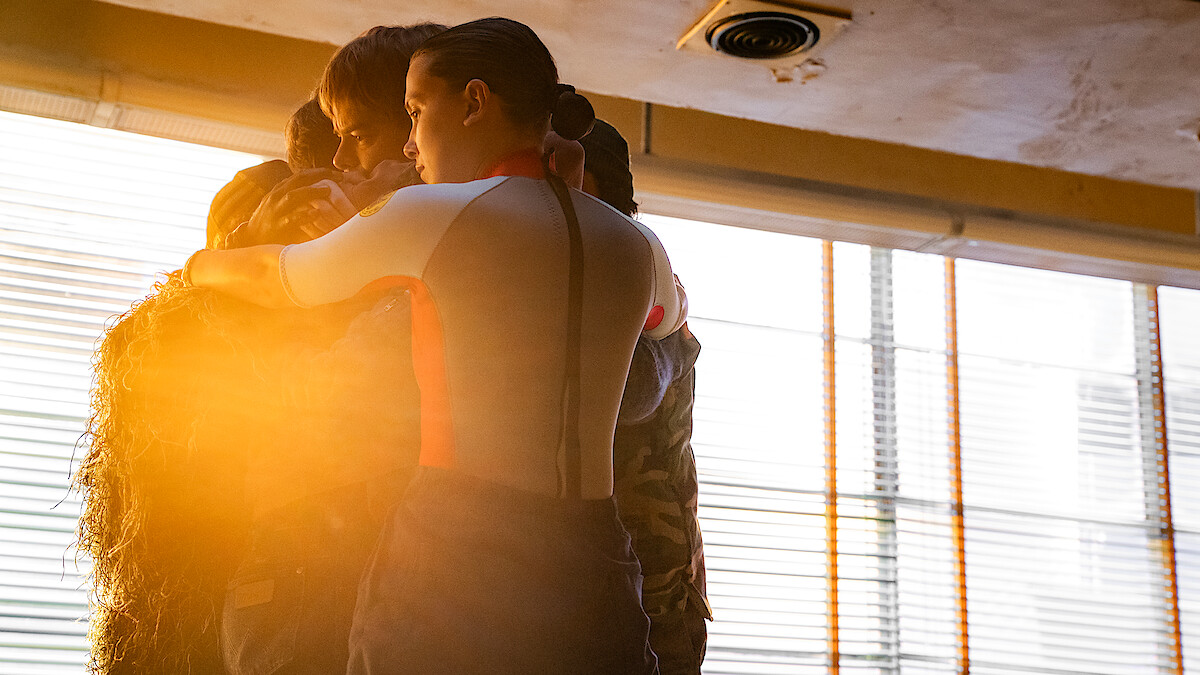
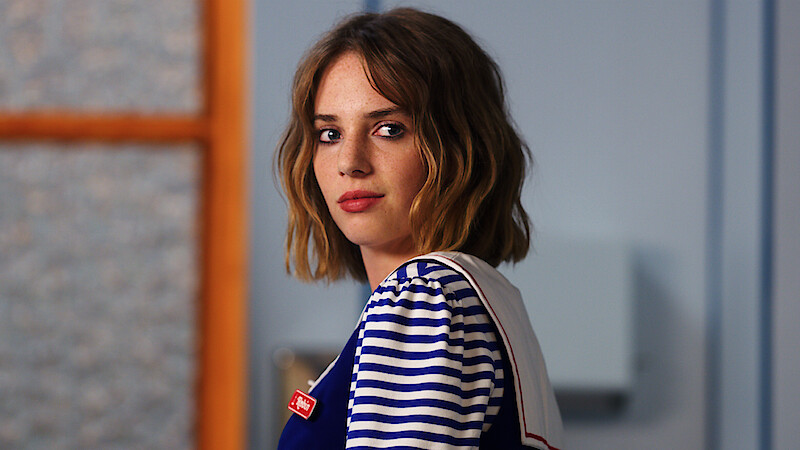
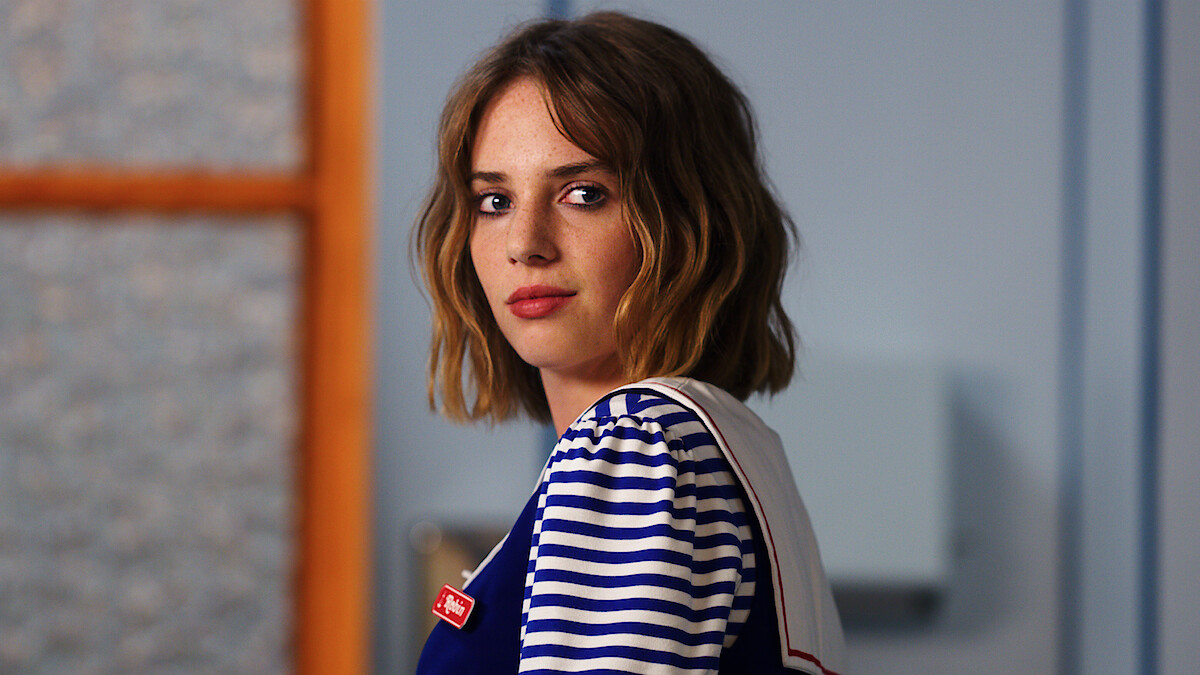
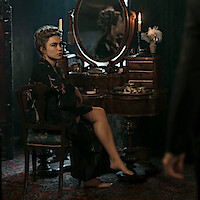
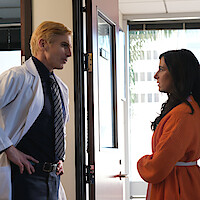
Nancy (Natalia Dyer) and Robin (Maya Hawke) undercover at the asylum.
Tina Rowden/Netflix
It’s not all blood and mutilated bodies, though. There is a much brighter side to Stranger Things and its makeup looks. Interestingly, despite it being the era of neon and New Wave, everyday ’80s looks weren’t that bright, according to Forsythe. “The ’80s were a cool time, but they didn’t have the highly pigmented makeup that we have today,” she points out. “So, the makeup tends to be a little bit more on the duller side of the color spectrum.”
The makeup’s vibrancy also varies depending on where the scene is set. The production design team created different palettes for each location featured in Season 4, including Lenora Hills, California, where Joyce (Winona Ryder), Jonathan (Charlie Heaton), Will (Noah Schnapp) and Eleven (Millie Bobby Brown) have recently moved. “We did more plums, hunter greens and navies — those kinds of duller, darker colors in Hawkins, Indiana. Then the pastels and the vibrant colors ended up being used in California, because we were trying to really set the worlds apart,” Forsythe says.
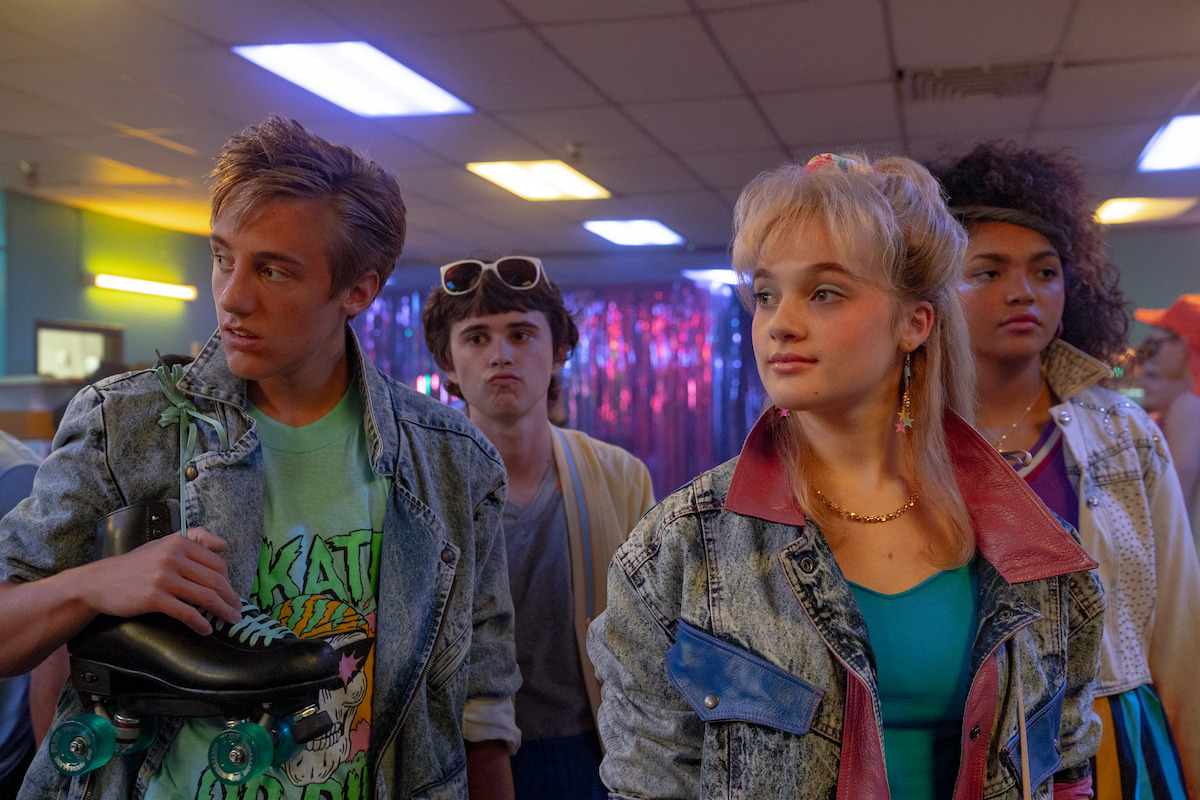
Angela (Elodie Orkin) and friends at the roller rink in Lenora Hills.
Ursula Coyote/Netflix
The difference in how the kids view their hometown of Hawkins versus California is reflected in the makeup. “It’s like, ‘OK, well, this is the drab world we live in, and then, when I get to California, everyone looks a little perfect,’” Forsythe explains. “Even someone with acne, they look like a movie version of someone with acne.”