News
The Dinosaurs Roar Back to Life
Witness the rise and fall of their prehistoric reign in the new documentary series, now streaming.
March 11, 2026
About 235 million years ago, on the sun-blasted supercontinent of Pangaea, a tiny, fleet‑footed creature known as Marasuchus emerged from its egg. Standing on two legs, with advanced lungs, light bones, and warm blood, this unassuming animal carried the blueprint for a lineage that would become nature’s greatest empire: the dinosaurs, who held dominion over Earth for 150 million years.
Now, from executive producer Steven Spielberg and Amblin Entertainment, in collaboration with the creators of Our Planet, comes a four-episode documentary series charting the rise and fall of the dinosaurs — where they came from, why they mattered, how they evolved, and how they met their ultimate fate.
The Dinosaurs builds on the groundwork laid in Life on Our Planet, which blends nature cinematography with photorealistic visual effects to tell the history of life on Earth from 4 billion years ago to present day. Showrunner Dan Tapster, who also worked on Life on Our Planet, saw the new series as an opportunity to go deeper and finally give the dinosaur story the space and scale it deserved.
“We had eight 50-minute episodes to tell the entire story of life on Earth [in Life on Our Planet], so there were lots of things where we could only scratch the surface — and the dinosaur story was absolutely one of them,” Tapster says. “With The Dinosaurs, we finally get to tell that story in full and celebrate it like no one has ever done before.”
“It was a natural progression,” series director Nick Shoolingin‑Jordan adds. “Life on Our Planet was almost a little tease for this series — here, we really tell the full chronology all the way through and take the audience on a rip‑roaring adventure.”
Get a first look at the awe-inspiring world of The Dinosaurs — as narrated by the unmistakable voice of Academy Award winner Morgan Freeman — in the trailer at the top of the page. Then read on for everything to know about the docuseries, including standout dinosaurs from each episode, plus a breakdown of potentially scary moments for families watching with young children.
Parents looking for an educational companion to the series can download The Dinosaurs activity guide here. Created for kids ages 6–10, the guide invites young explorers to discover the world of dinosaurs through hands-on activities and fascinating facts.
The Dinosaurs premiered on Netflix on March 6 — stream it now.
The Dinosaurs reunites executive producer Steven Spielberg and Amblin Entertainment with Silverback Films and Industrial Light & Magic (ILM) — who previously collaborated on Life on Our Planet — to bring the age of dinosaurs to life with cutting-edge visual effects.

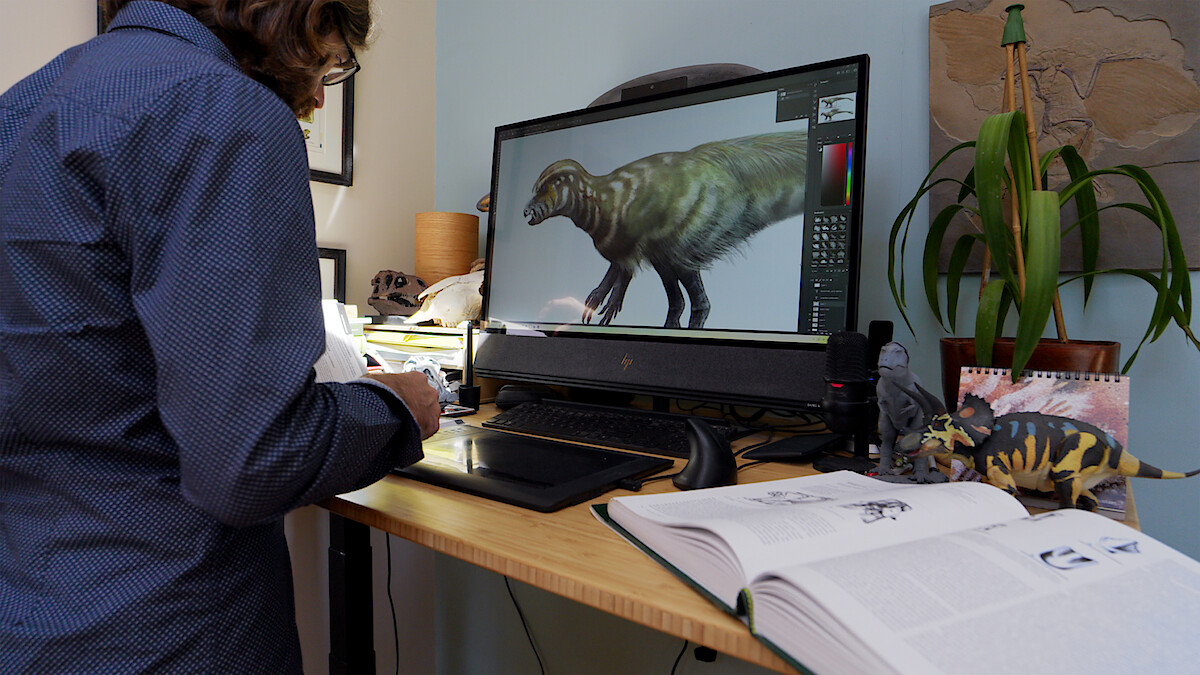
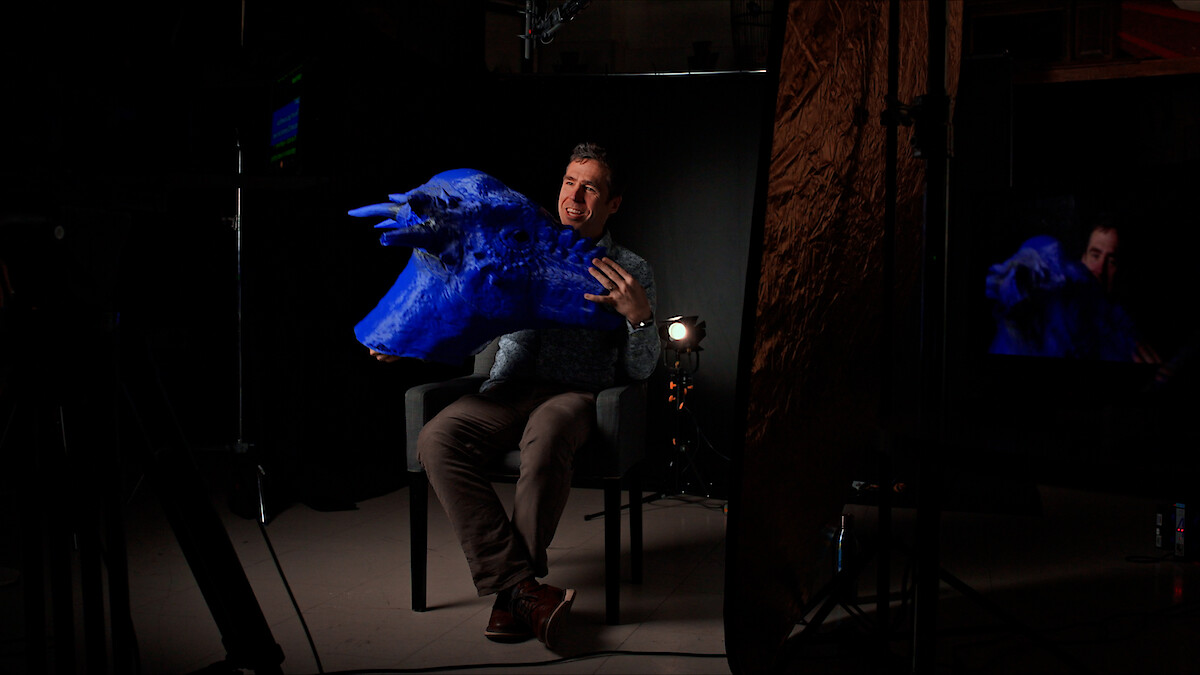
Academy Award winner Morgan Freeman, who previously lent his voice to nature documentaries Life on Our Planet and Our Universe, narrates the docuseries.
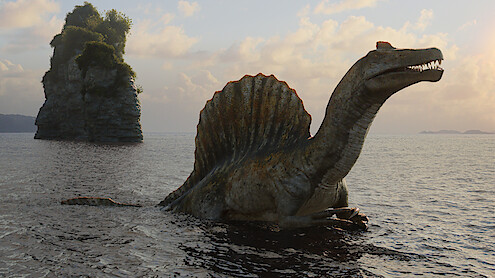
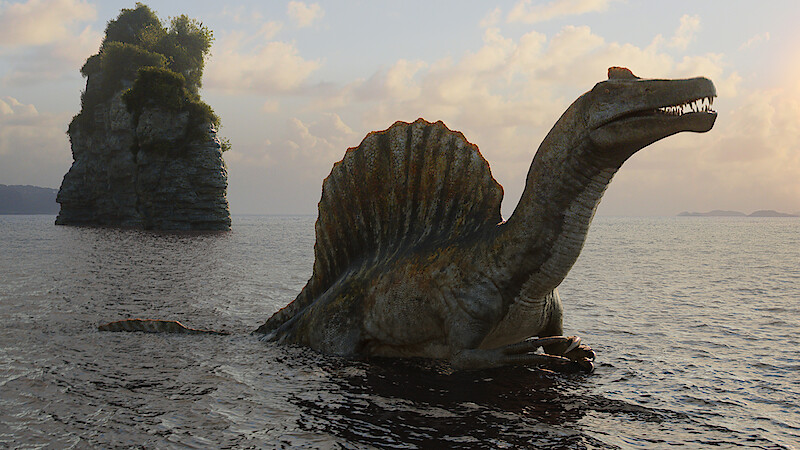
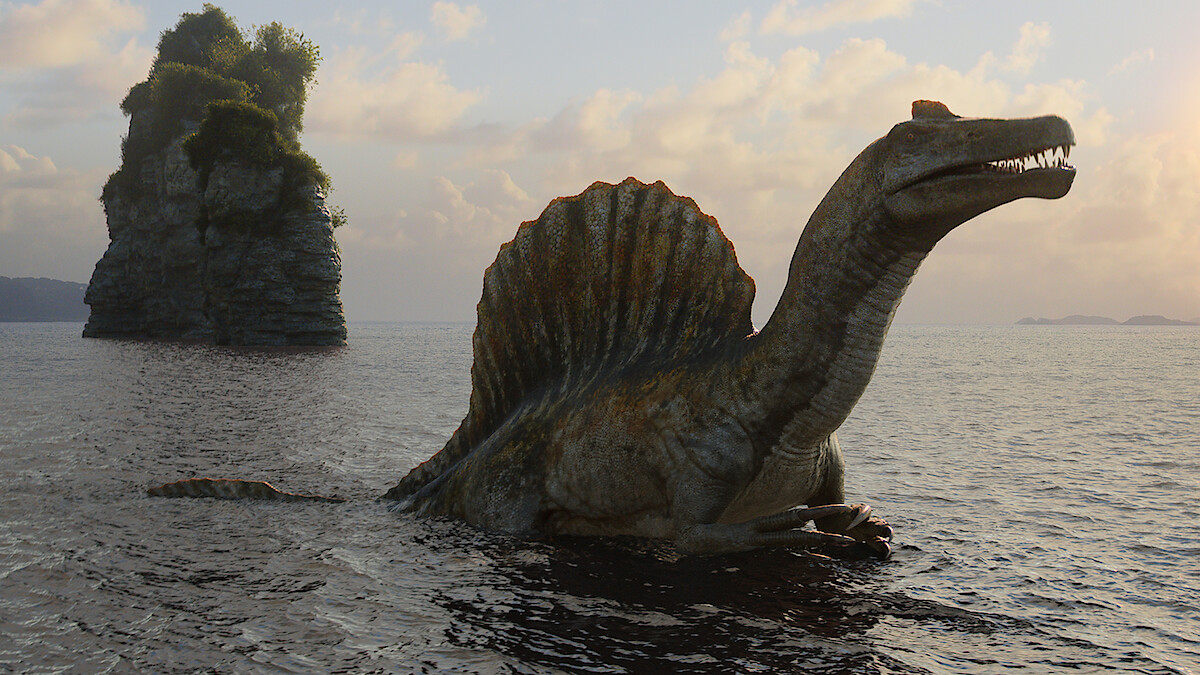
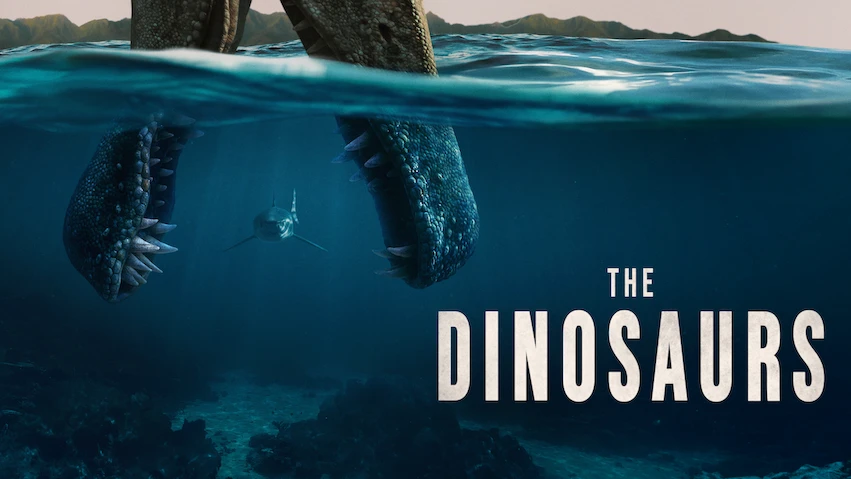
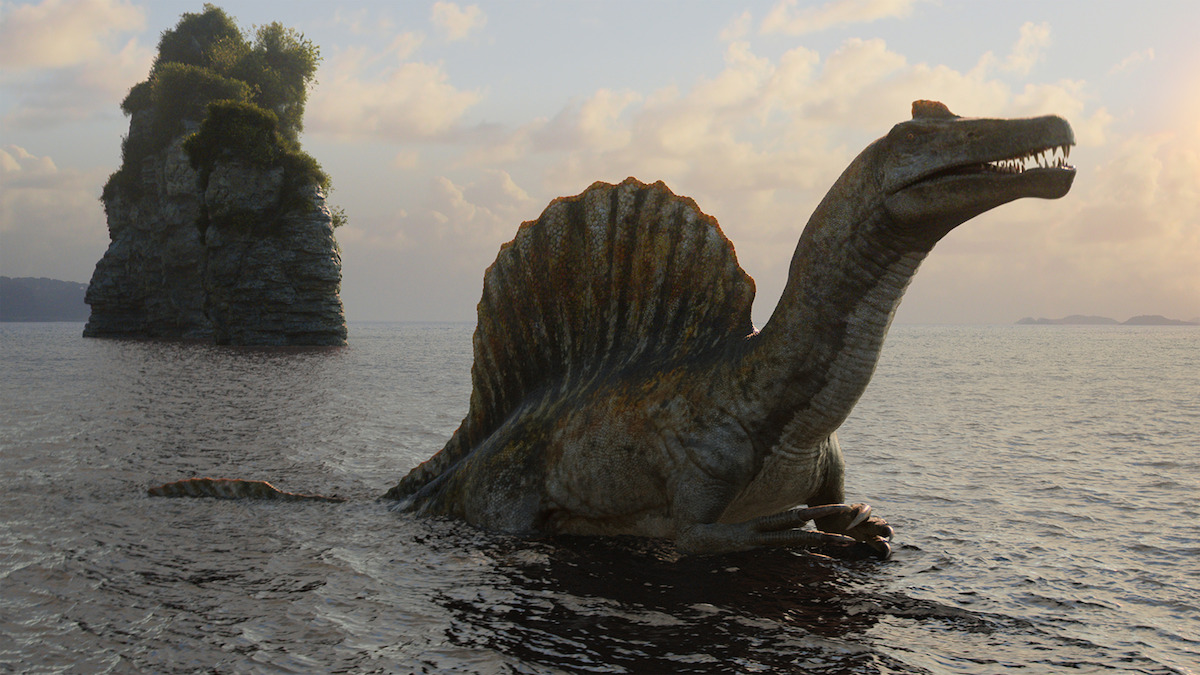
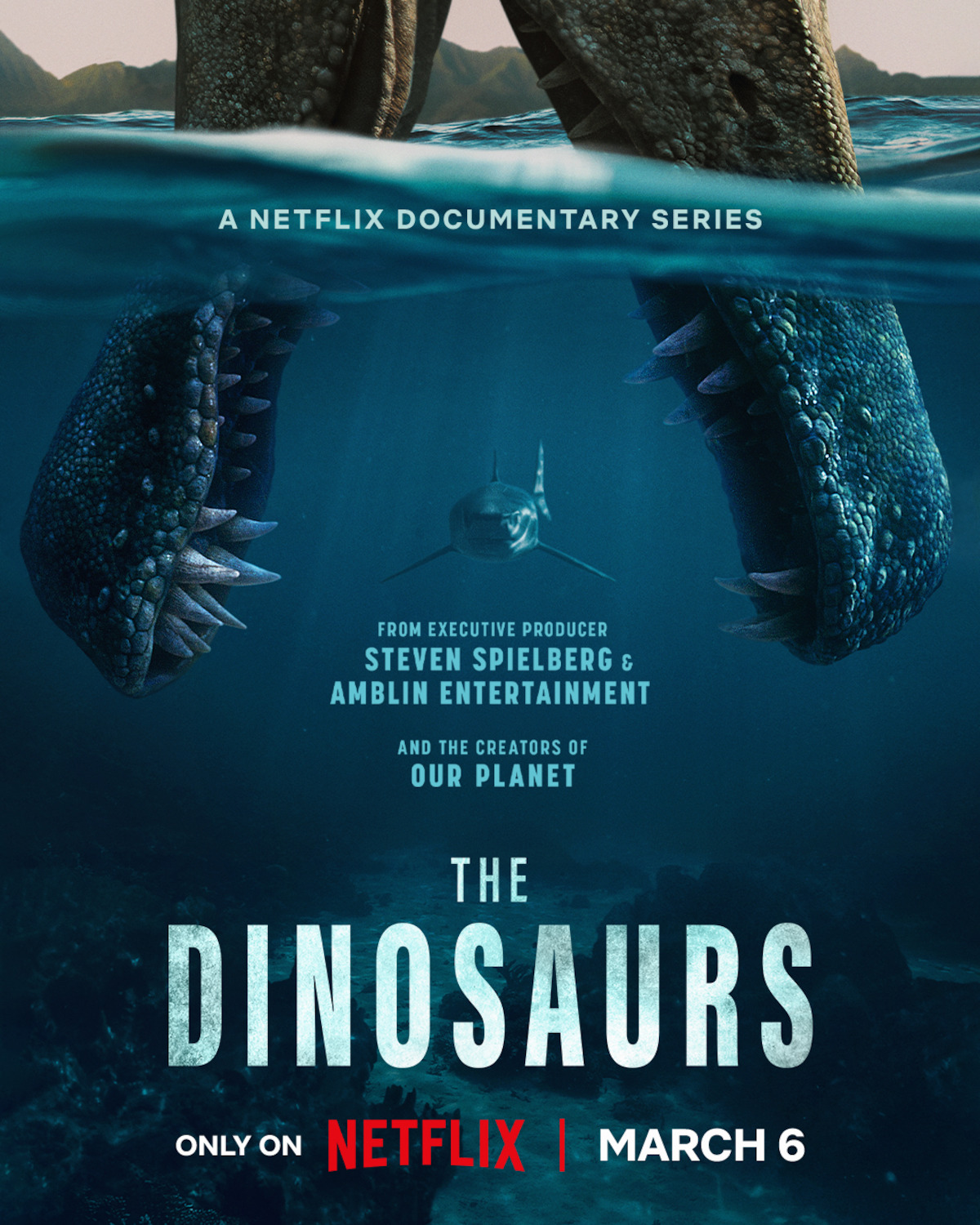
Across four episodes, The Dinosaurs packs in a deep roster of prehistoric stars and many lesser-known species drawn from the latest fossil research. From tiny proto‑dinosaurs like Marasuchus to giants like Plateosaurus and Mamenchisaurus, The Dinosaurs runs the gamut, illustrating how dinosaurs evolved across millennia in response to a volatile world. Armored icons such as Stegosaurus and Ankylosaurus square off against apex predators like Allosaurus and Tyrannosaurus rex, while leviathans from Pliosaurus to Mosasaurus prowl the oceans, and Spinosaurus (whose jaws are shown in the key art) traverse both land and sea. Early feathered fliers, including Anchiornis and Longipteryx, point toward the dinosaurs still with us today: birds.
Here are the highlights from each episode:
Episode One: “Rise” (Beginning around 235 million years ago, Triassic period)
This episode explores how dinosaurs first emerge and begin to outcompete other reptiles in the Triassic. Key creatures include:
Episode Two: “Conquest” (beginning around 201 million years ago, Jurassic period)
The second episode follows how dinosaurs diversify and dominate new environments in the Jurassic. Key creatures include:
Episode Three: “Empire” (beginning around 125 million years ago, Cretaceous period)
This episode looks at the height of dinosaur power as brutal winters, rising seas, and rapidly changing ecosystems force species to adapt or disappear. Key creatures include:
Episode Four: “Fall” (beginning around 72 million years ago, late-Cretaceous period)
The final episode traces the cataclysmic end of the story of the dinosaurs, who are thriving across land, sea, and sky like never before — all the while unaware that a colossal asteroid is about to bring their reign to a violent close. Key creatures include:
While the TV-PG series unfolds like a nature documentary — with plenty of awe‑inspiring and even playful moments — it also doesn’t shy away from the harsher side of prehistoric life. Some sequences feature animal predation, peril, and gore that may feel scary for kids under 6 years old. Here’s a breakdown of the series’ most intense moments to help families decide what to watch with younger children.
Episode One: “Rise”
Episode Two: “Conquest”
Episode Three: “Empire”
Episode Four: “Fall”
This informative, captivating, and exciting documentary series plays like an evolutionary epic, using cutting-edge visual effects to chart the rise and fall of nature’s greatest empire. Blending scientific insight with cinematic set pieces, it follows the dinosaurs’ 150‑million‑plus‑year journey as they adapt to an ever‑changing environment and reach astonishing heights of diversity and power — before ultimately facing a cataclysmic extinction.