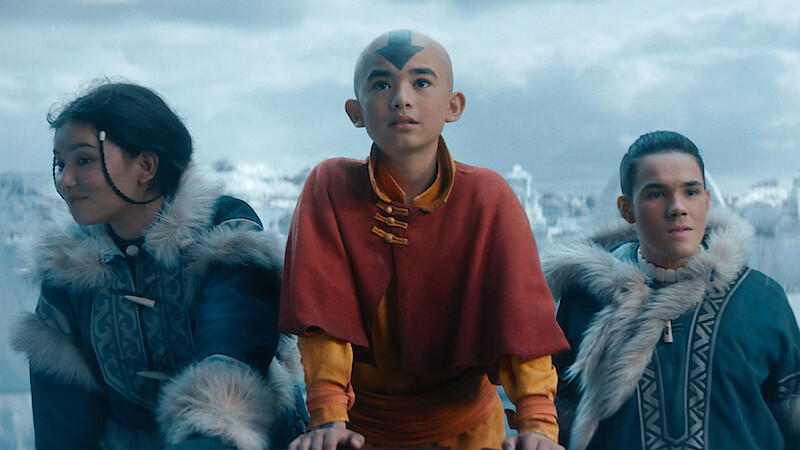
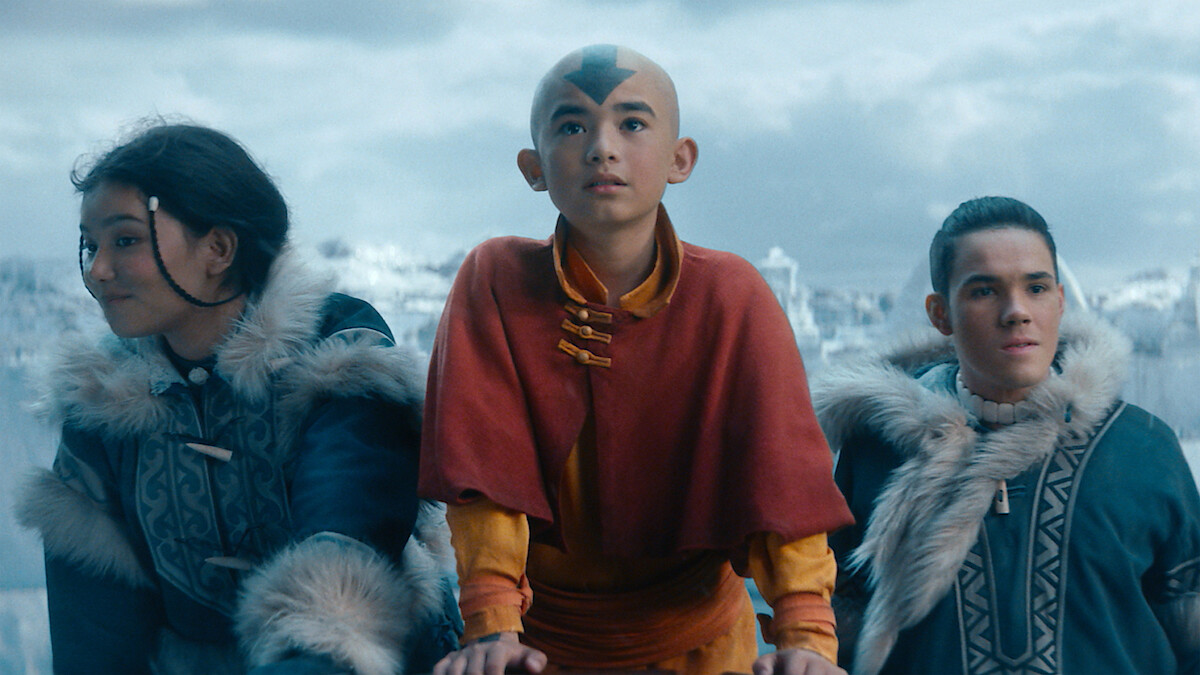
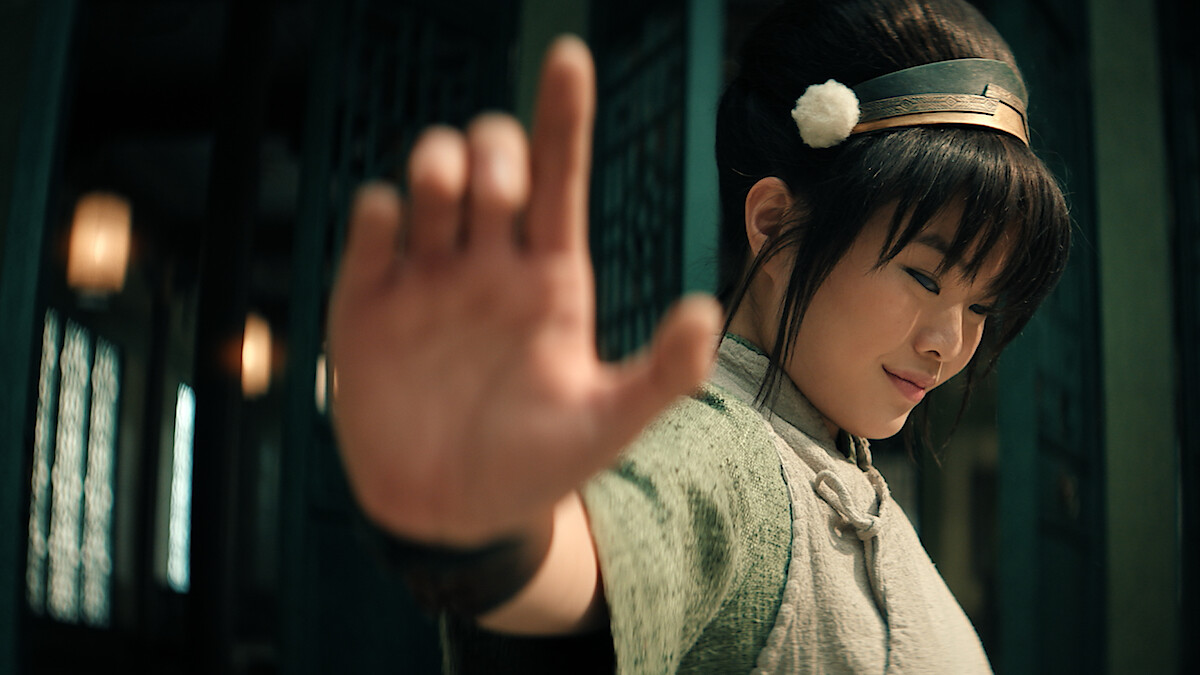
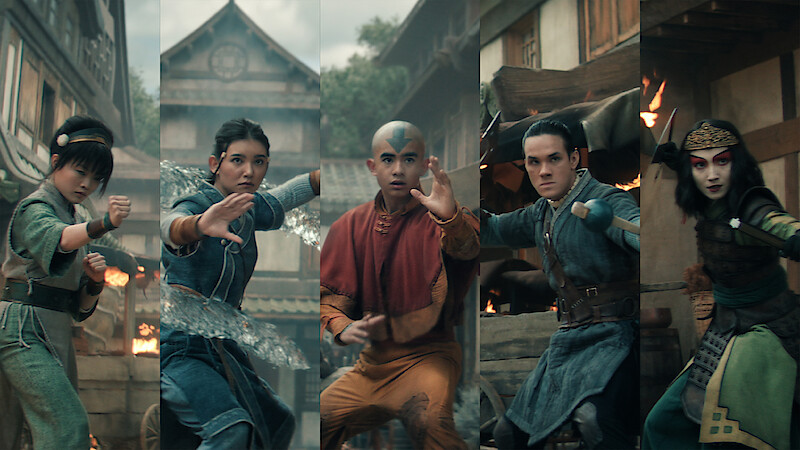
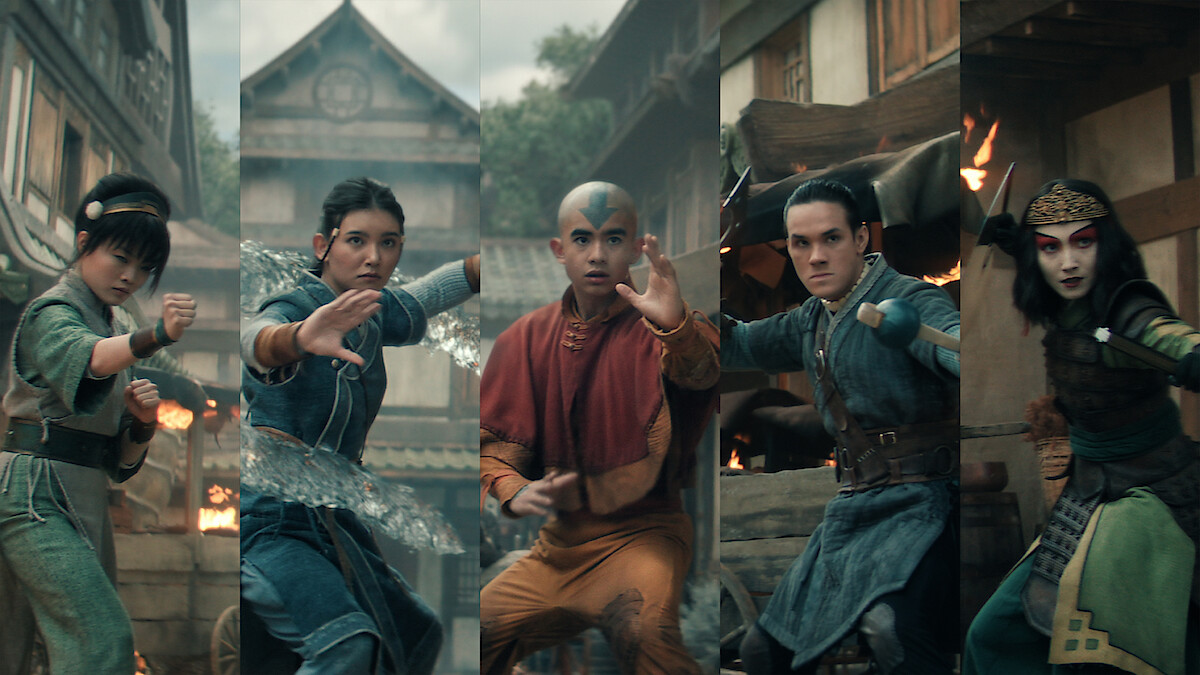
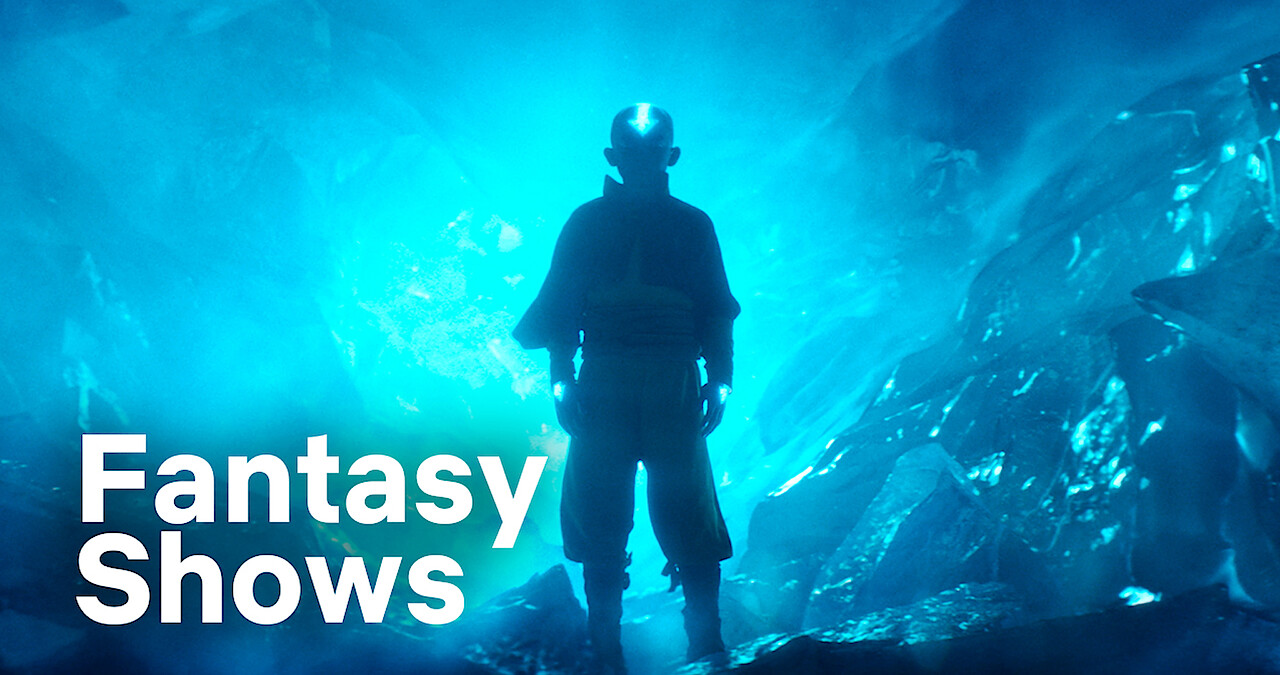
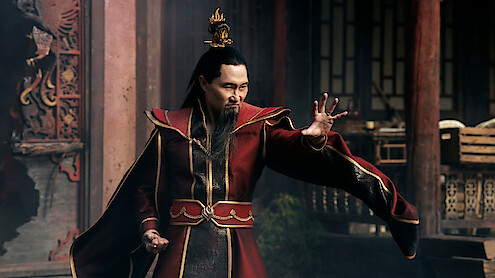
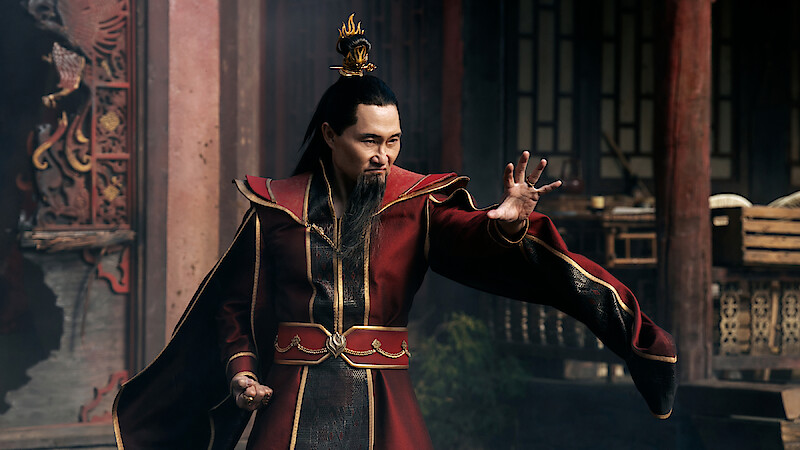
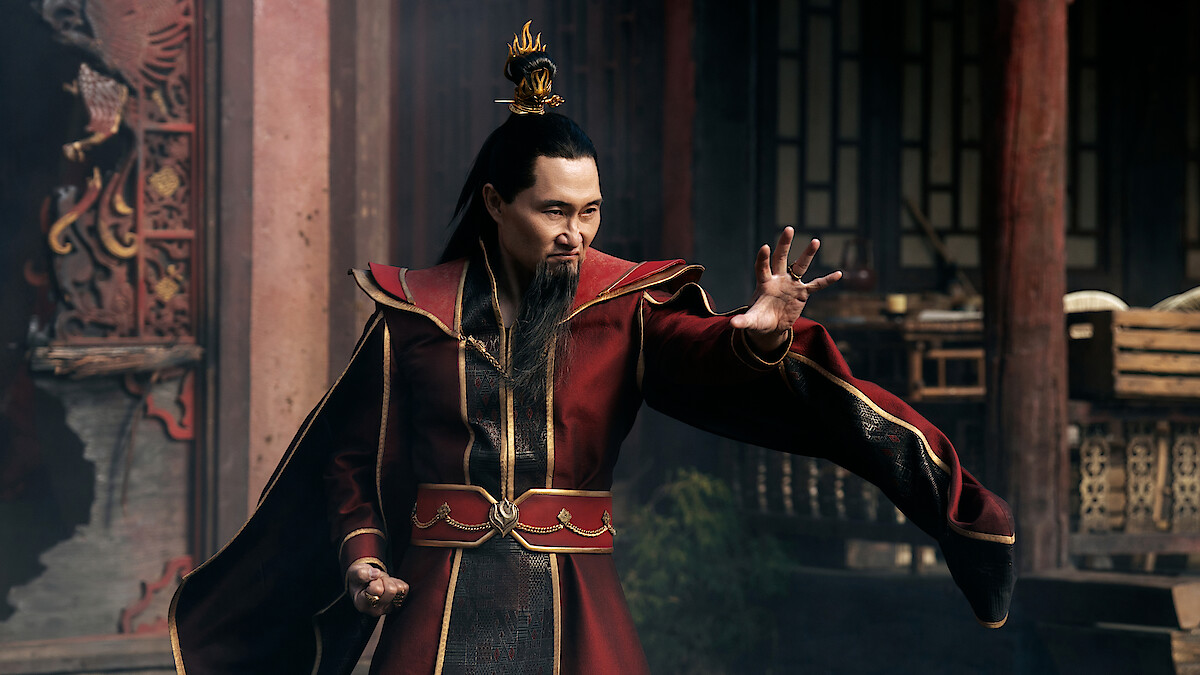
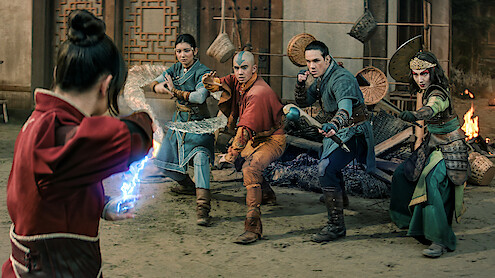
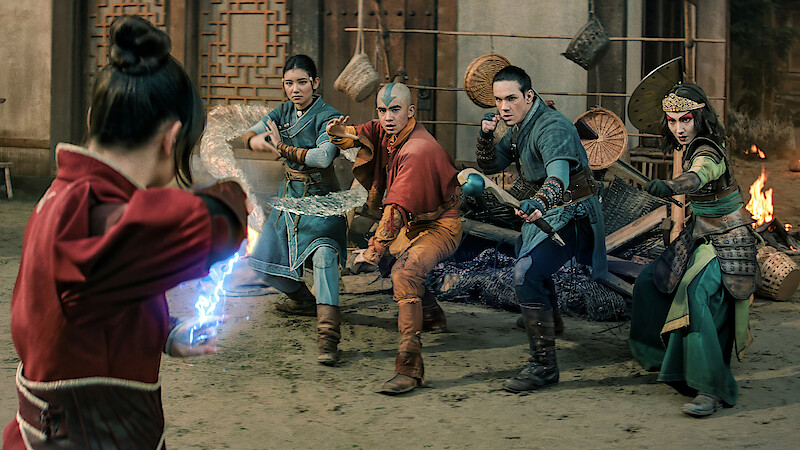
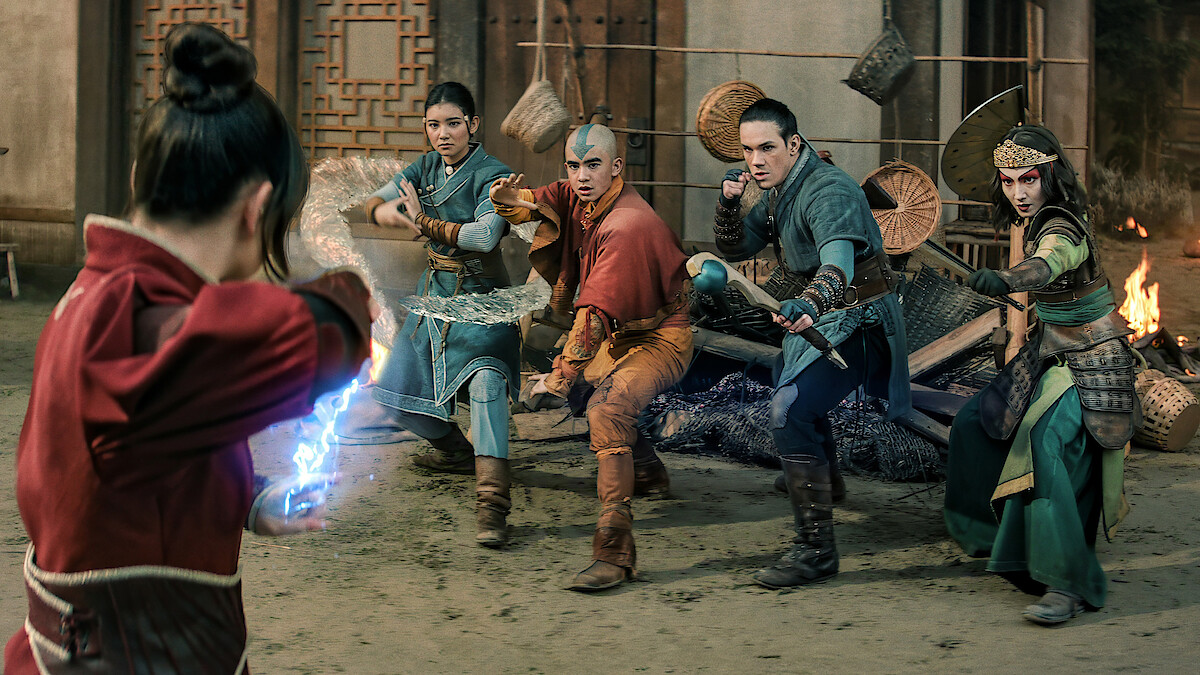
Utkarsh Ambudkar (as Bumi): One final game to play, Avatar. You versus me. To the death.
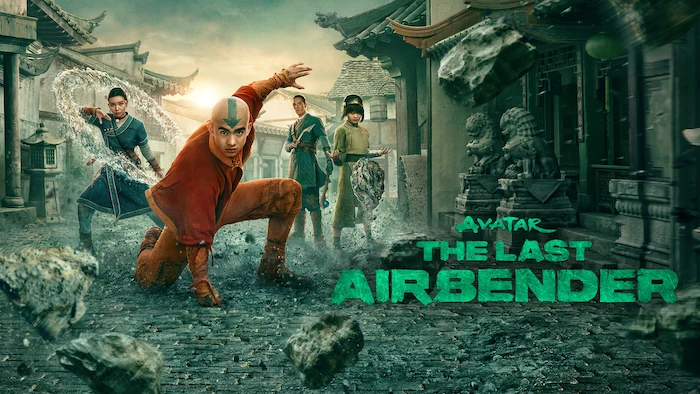
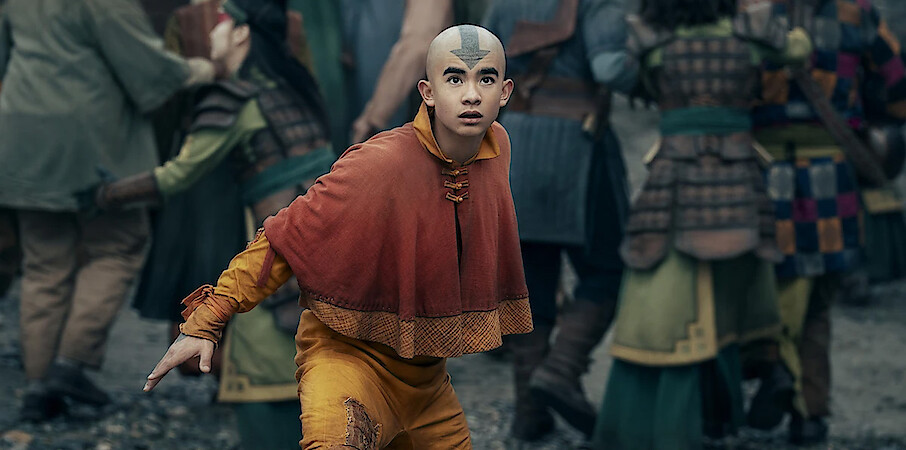
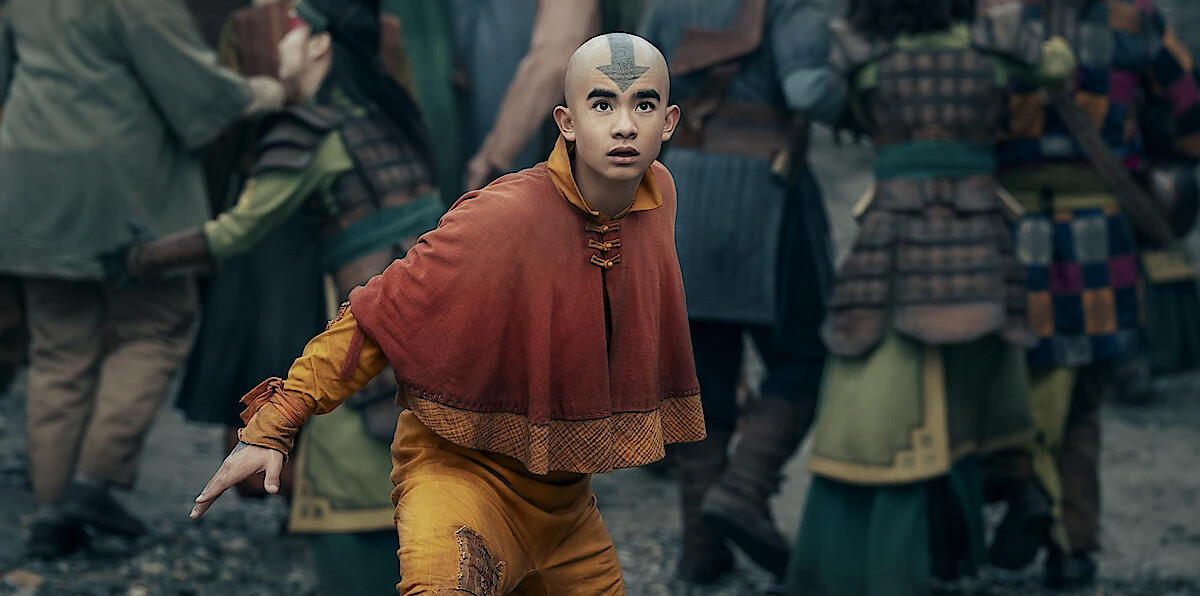
Jeff Aro: A favorite fight of this season of The Last Avatar for me would be Bumi versus Aang.
Marion Spates: I am a big fan of the Bumi fight.
Alex Kyshkovych: I really enjoyed Aang versus Bumi.
Jabbar Raisani: We’ve got Gordon, and we had Utkarsh, and a lot of what was really important to us was figuring out how these two characters could interact with one another. When it comes to executing a sequence from start to finish, it really starts months in advance. I just break down the entire action beat by beat, and then I provide that to our stunt team. Simultaneously, I go work with the visual effects team. Then we come together and everybody shows their version. And we end up with this hybrid edit, which is some shots are stunts, some shots are VFX, and we have a real blueprint for what the final sequence should be.
Crew: Action!
Gordon Cormier: 1, 2, 3, 4, 5.
Crew: There we go!
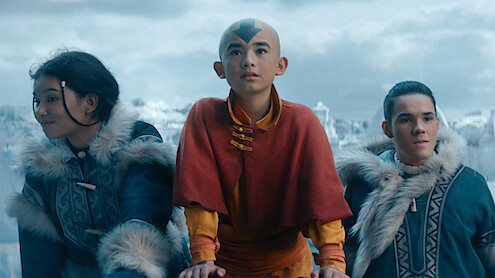
Aro: Gordon. Gordon is energy. Gordon came to us with very little martial arts training, but a very strong athletic background. Alan Tang, we brought him to help guide Gordon and help give him a foundation. What we were aiming to do was not just train Gordon and teach him the moves. We wanted Gordon to understand what each move was and give him the ability to understand it and perform it.
Cormier: I had a one month bootcamp. I studied bagua and wushu, which is basically my airbending.
Alan Tang: The style of the martial arts involved with The Last Airbender is primarily devised from the Chinese martial art more commonly known as wushu. Aang’s personal style of fighting is unique to him because, as the Avatar, he is required to master all four elements.
Cormier (as Aang): Please, Bumi, you don’t have to do this.
Ambudkar (as Bumi): Oh, but I do. Some of us have to fight, even when we don’t want to.
Kyshkovych: This is a very unique opportunity, doing it live-action. It’s really fun to create a battle, because you need to have space between them. The story needs to be told with camera movements and things like that. And we’ll know, OK, for example, in this beat, that’s when the strike is happening. And in that moment, we’ll have a light cue. And it will help, in post, to paint out the blast. So that was a really interesting process to figure it all out.
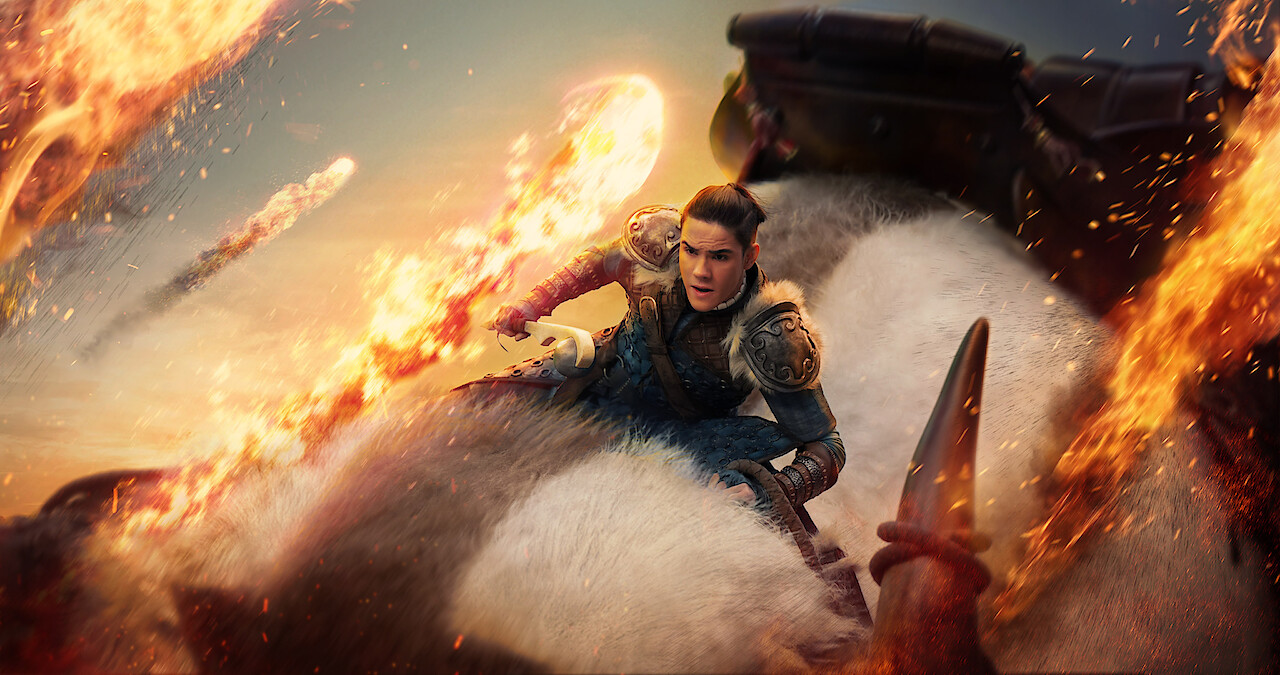
Spates: Obviously, all the bending starts with the performances of our characters. What we do then, we’ll just lean into their moves to help drive what type of effect it is. We did not want it to look like there’s preexisting boulders. When they’re earthbending, it’s actually grabbing all of the earth, collapsing it into one boulder. So that way, we’ll have different types of materials, give it more variation, within the boulder itself.
Crew: Action! 3, 2, 1, go!
Spates: Jabbar’s a VFX supervisor. He thinks of things like a VFX supervisor, so you’re always starting with a good point, right? And then from there on, we work off Bumi’s actions, and/or Aang’s action. It’s really about making it feel physical and it’s in the real world.
Ambudkar (as Bumi): Huh?
Kiawentiio (as Katara): Aang, no!
Aro: With the Bumi-Aang fight, we had a real opportunity to show where Aang was in the middle of his journey. It was nice to be able to understand where they were traveling so that we could help tell that story with their fights and their physical dialogue.
Ambudkar (as Bumi): You didn’t do it on your own, so you didn’t learn anything at all.
Raisani: I hope that fans watch this and they get the series they’ve been waiting for. That’s what we want, is they watch it, and they say, “That is the live-action adaptation that we’ve always wanted.”
Cormier (as Aang): That’s the only way I’m going to save the world. With my friends.
Ambudkar (as Bumi): You think like a child.
Cormier (as Aang): Is that really so bad?