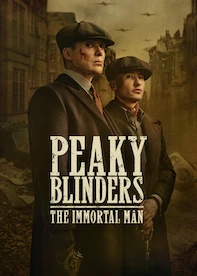
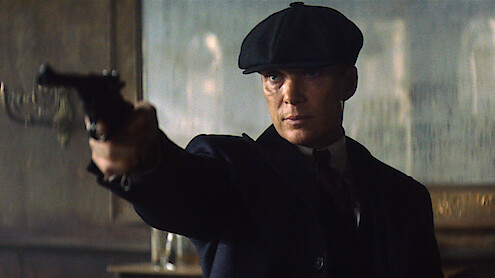
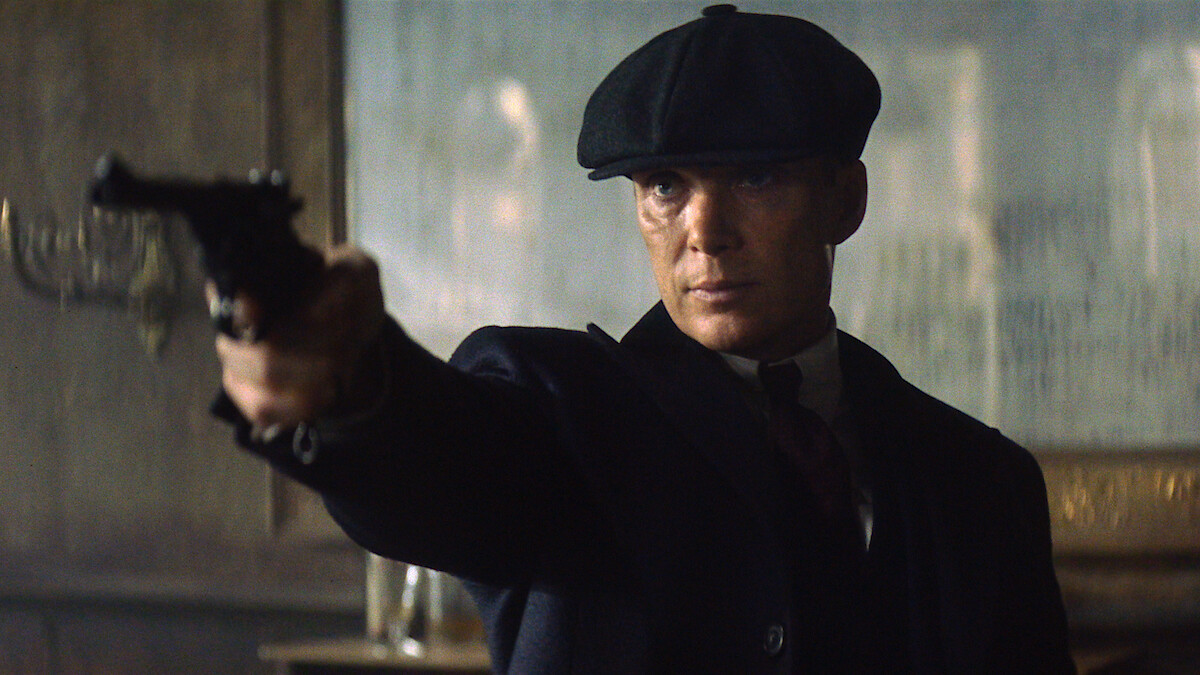
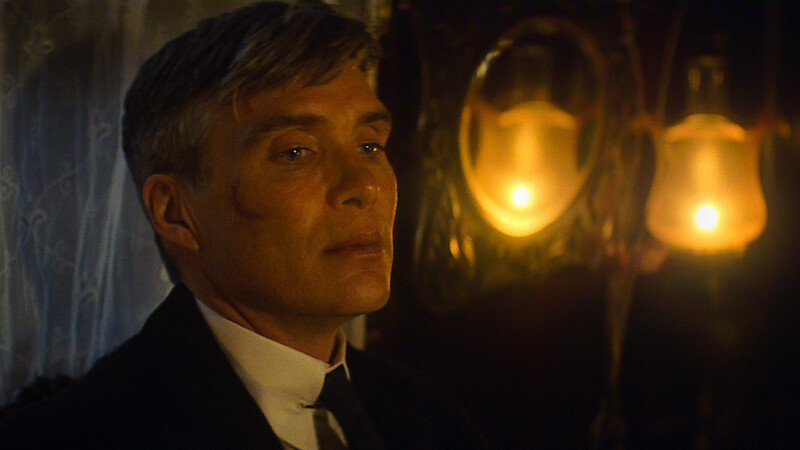
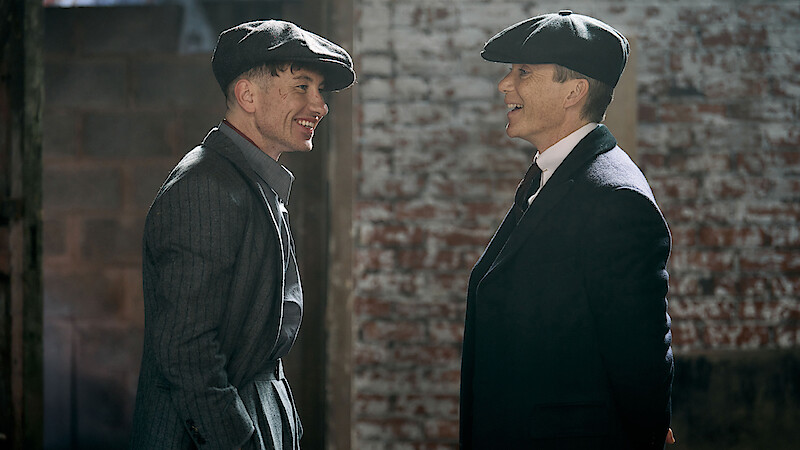
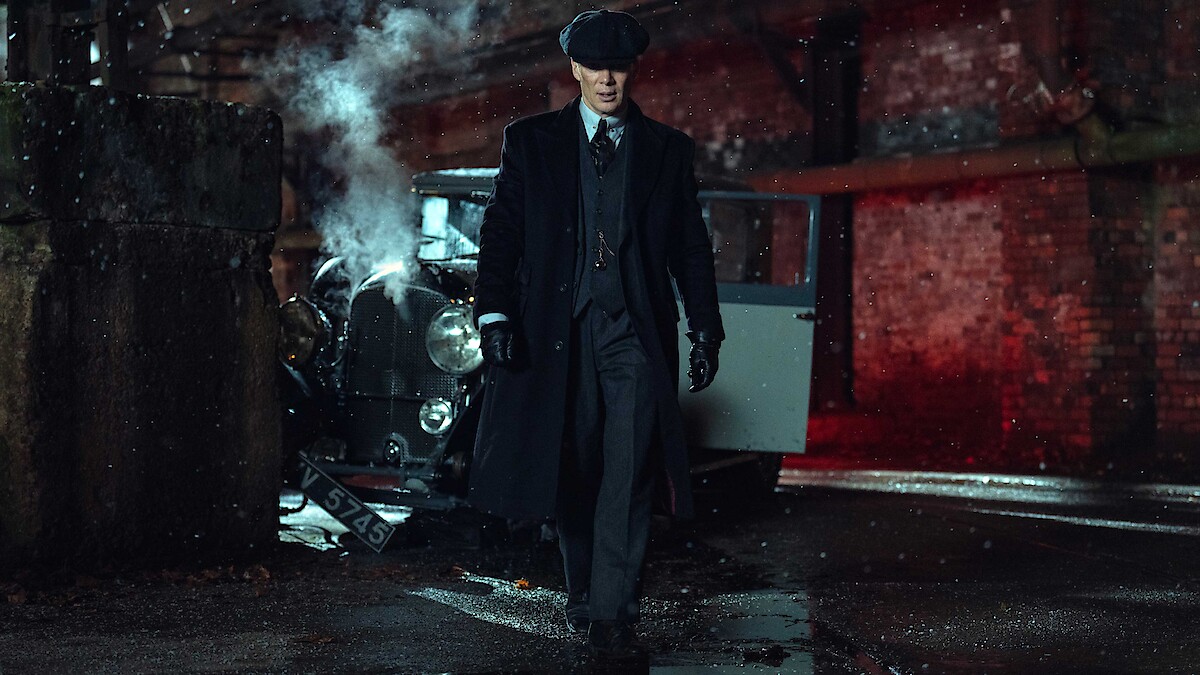
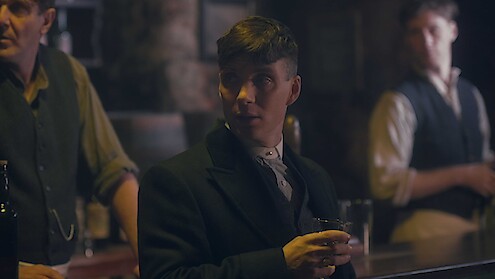
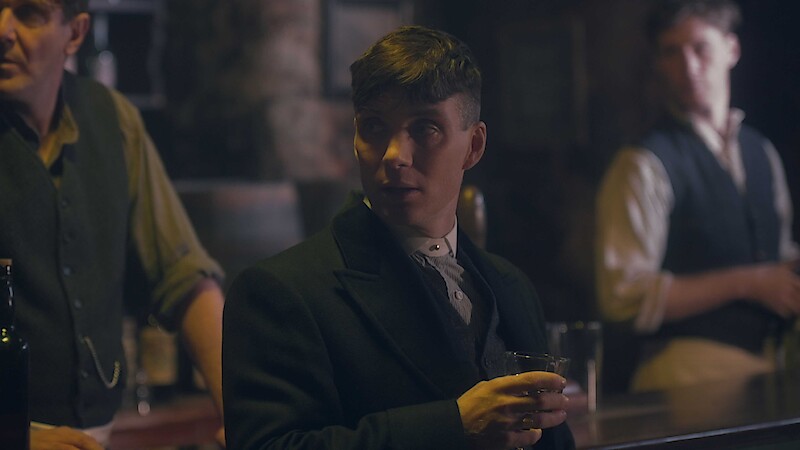
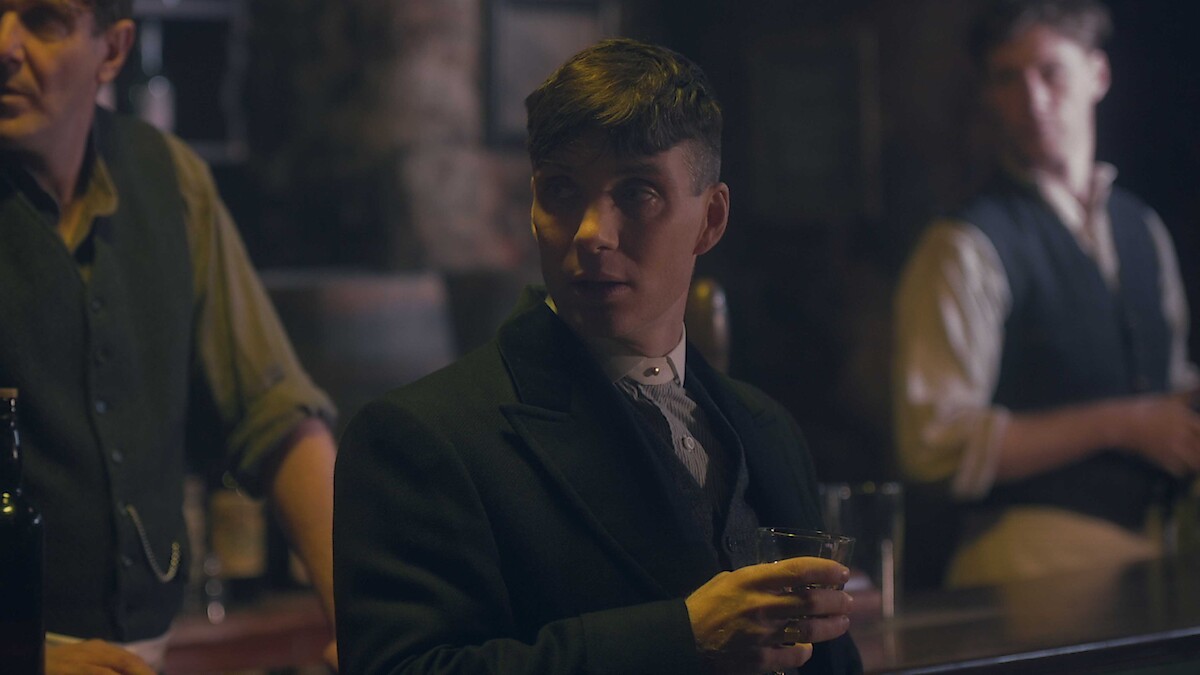
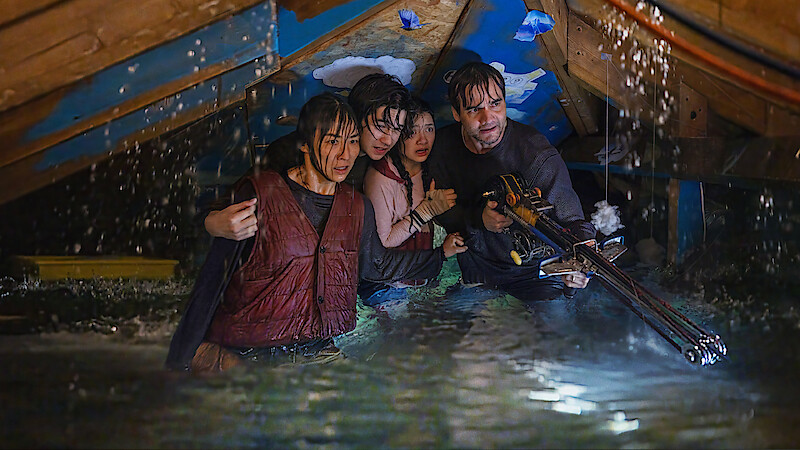
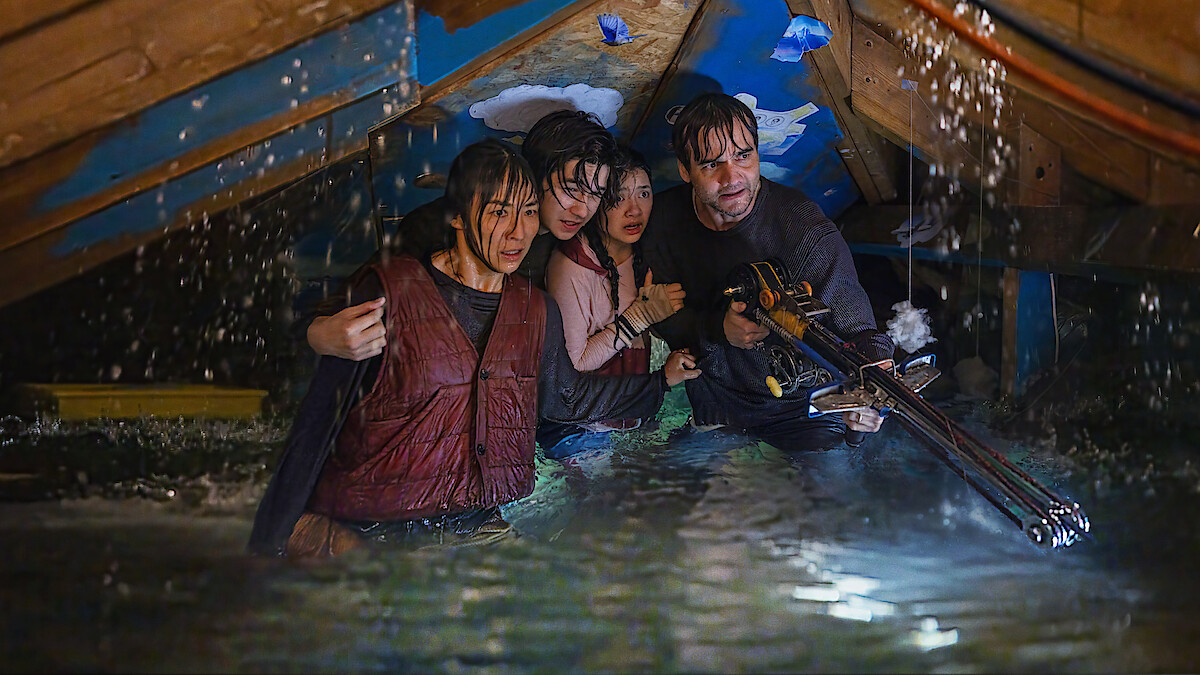
Soldier: Who the fuck is Tommy Shelby?
Tommy Shelby: Perhaps someone should explain to him who I am.
[tense music plays]
Polly: You have your mother's common sense, but your father's devilment. I see them fighting. Let your mother win.
Edith: Relationships are so at the heart of Tommy's story and the whole show, you know, outside of his relationships. He seems to really value and respect the advice of women, um, in this show. How do you think they've shaped his view on power, family, femininity, love?
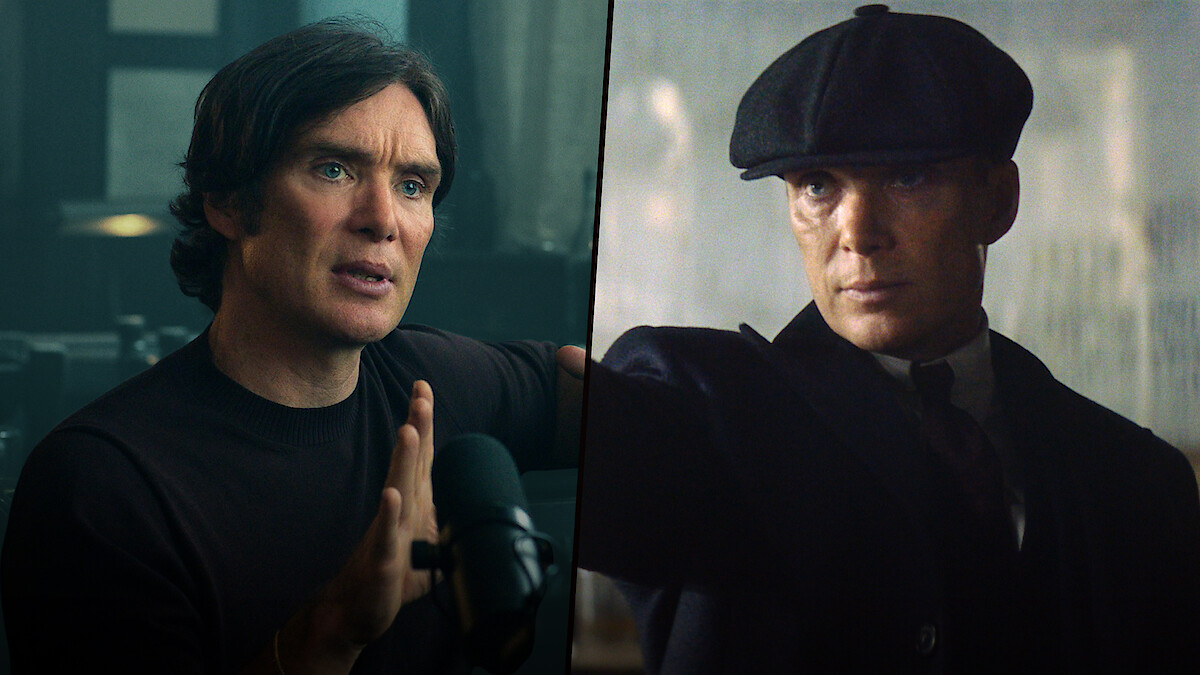
Cillian Murphy: Yes, I mean, I think it's massive. And I think the most important character was Polly Gray, his aunt, uh, because he didn't have a mother and didn't have a father. You know, he just legged it. Um, so she was the most important person. And she was very much the kind of conduit to the whole gypsy world. And, you know, like, she's his aunt, but they're very close in age.
Edith: Yeah.
Cillian: So it's this kind of odd relationship that's almost sometimes like a marriage, but it's not. Almost something like a sister, but not. Almost something like a mom, but not. So it's brilliantly complex. Like the story goes, like when Tommy goes off to war, it was the women [who] just ran everything. And then [the men] came back, and it's very hard for the women to go, "Well, why are the men taking over?"
Edith: Yeah.
Cillian: It didn't make any sense. But Polly was, yeah, was everything to him, I think.
Ada Shelby: You know, Tommy, you have family who are not ghosts.
Cillian: Ada is huge. Huge.
Edith: Yeah.
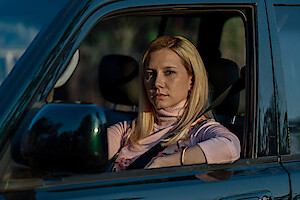
Cillian: I think she … she sees him like nobody, because she remembers him as a little kid and, you know, um, she's practical, but she loves him, and they love each other. He can't express himself. She can. Yeah, that scene in the car that they have in the film, it's just excellent. And Sophie Rundle is so brilliant in that. Again, he can never tell them how much they mean to him, or he can never say it, because he just doesn't have the language for it. Uh, but he … you know, he would … he would take Ada and Polly over Arthur and John any day, yeah. He's like a kind of a proto or like a kind of a twisted feminist that he has no … he has no … he doesn't care about gender. He's like, uh, "Whoever is the smartest person in the room is the person I wanna talk to." And they generally tend to be women in his life, you know? And … and so his … I think Tommy's philosophy is like the smart people make the decisions and the less smart people carry them out.
Cillian: You know, that's a very kind of binary black and white approach to, uh, life. But the women, they're the smart ones. They're the people he trusts. And also they're emotionally available, whereas he's not emotionally available.
Edith: Yeah.
Cillian: Um … And I think he sees that he needs that connection with that emotion, but he can't manufacture it. But he needs … So he needs those women in his life to, um, to provide that.
[somber music plays]
Kaulo: You live in a house haunted with ghosts of people who died because of you.
Cillian: I think he's a bit lost. And I think he's like, um … It's almost like he's in a purgatory, you know? I think the house kind of represents purgatory. And he's like in this liminal state between living and dying, and he's not really present. I think it goes back probably to the First World War, probably goes back to not having a father, you know what I mean? The mother dying young. It's all very sort of … You know, what happens to you in childhood happens to you forever, you know? And I think … I believe that to be the case, not just with fictional characters, but with real people.
Edith:Yeah. But that's an interesting thing then, considering him being a father.
Cillian: Yeah. And how that then bleeds into how much of a father he is or how much he isn't a father.
Edith: Yeah.
Cillian: And how he sees that role as well.
Edith: Yeah. He's not learned anything in a way.
Cillian: No. Yeah, he's a terrible father, I could say. Terrible. And that's why Duke is in the shape he's in when we … when we meet him. But yeah, it's all learned behavior, isn't it?
Edith: Yeah.
Cillian: He can't … Even though he loves these children, he can't connect with them. And he's haunted then by, obviously, the death of Ruby, and she's very prominent at the beginning of the film. Even though he feels it, I think he can only express it transactionally.
Edith: Yeah. There's a really significant moment, I think, where we learn about the murder of Arthur.
Cillian: Yeah. And what changes in Tommy after Arthur's death. Yeah.
Edith: What do you think that is?
Cillian: I think that's the real reason that he has, um, retreated from the world, and he can't look at himself, um, is because of what happened. Uh, and he is like … It's grief upon grief upon grief, but, um, I feel like he will never ever be at peace until he's no longer on this world because of that.
Tommy Shelby: To family.
Guests: To family.
Tommy Shelby: Family. Sometimes it is shelter from the storm, sometimes it is the storm itself.
Edith: The Peaky crown is passed to Duke at the end of the film. Do you think Tommy sees this as inheritance, um, punishment, or salvation for his son?
Cillian: I mean, I think it can potentially be all three. I mean, he whispers in his ear, like, um, "Heavy lies the crown." Yeah, I think he's like, "This is what you want, but believe me, it's not gonna give you any … peace."
Edith: Yeah.
Cillian: I feel that's what he's saying. Yeah. "If this is what you're craving, and I know that you've been …"
[inhales] "I know what you're up to." Because the thing about Tommy is that he's always ahead. He always knows what people are after.
Tommy Shelby: I promise you, sister. I promise, Arthur. I promise, Ruby. From this bad will come some good.
Edith: The intention of that book was … You know, was it therapy? Was there an intention for it to be published? What's the kind of intention of that?
Cillian: Yeah, there is ambiguity. I think it's probably … In my head, it was always meant to be given to his sons. You know, "Don't do what I did, do what I say," you know? And I think because if you think about the evolution of the character morally, it's been pretty big, a big journey. And I think that that exercise in kind of exploring his life and exploring the motivations and like what the First World War did to him and then rising through the ranks of British society, becoming an MP, all of that stuff, becoming a "Sir," all of that stuff, and then trying to distill that into some sort of, you know, coherent meaning.
Edith: Yeah. I feel like it's been passed on to Duke and the other son.
Cillian: Yeah.