I always say there's a difference between eye candy and eye protein. Eye candy is just pretty. Eye protein is telling the story, and it's pretty. Is it a majestic moment? Is it a moving moment? Is it a godlike appearance of a character? And then you say, "Okay, how are we staging that particular piece of the opera?" Stop! Do not harm him! I'm here.
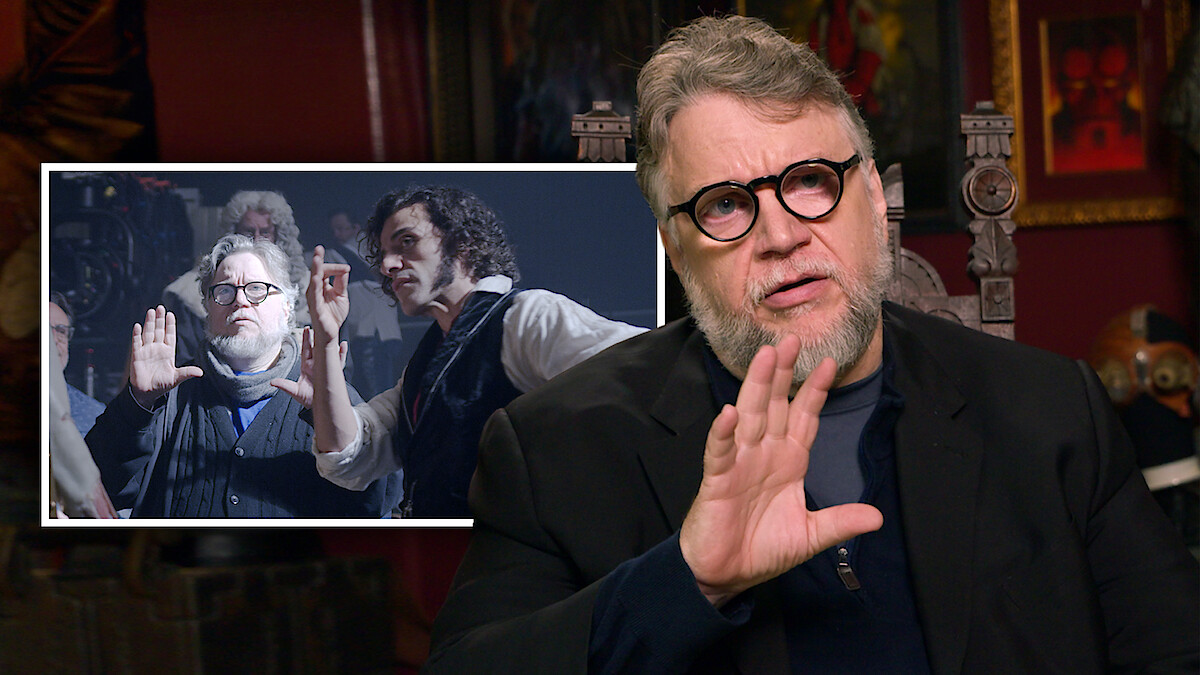
[dramatic music playing] Today we're gonna be discussing the process of making movies, referring to my latest movie, Frankenstein. Let's get in. And action! For me, every part of the process has to be emotion. What do I feel about it? Because if you feel about an image, then the audience will react to that image emotionally. I try to first think about that before I think of the aesthetics. And then they start informing each other. Cut! Cut!
Very, very good!
[bell rings] I'm like a high school kid on a date. I make a playlist. The worst part is the screenplay. So what I do is I put a soundtrack, or a piece of Baroque music, or a romantic composer. When you're listening to that, you're listening to emotion. Every image aspires to have music in it. Every dialogue has rhythm. Ignite a divine spark in these young students' minds. You need to know how a story is constructed. You can look at a great joke, a great book, a great novel, they have structure. Set up, development, and punchline, so to speak. Are my ideas not clear? You certainly expressed them loudly enough.
[Guillermo] Director's notebooks are very much like as if you're an entomologist, and you're out in the world, and you find a little butterfly, you pin it, and you keep it. And I think when you're in the world, you can hear a bit of dialogue, and you write it down. Or you make a note or do a quick sketch. There's so many things that you can be inspired by, and you collect them, and then later you can refer to them. Quite literally, every frame in the movie is a painting. Now you have to treat it like a painting, but unlike a painting, it also needs to move. It deploys the emotion, and you have to move to the next one. It's a part of a puzzle. Absolutely delighted. The cheapest thing anyone can afford is preparation. Any filmmaker, if you're starting and you're doing it with your iPhone, or you have a crew of 120, preparation, preparation, preparation, and then open yourself to the accident and to what happens. Cut. Very nice. Now, let's move it that way.
The whole thing?
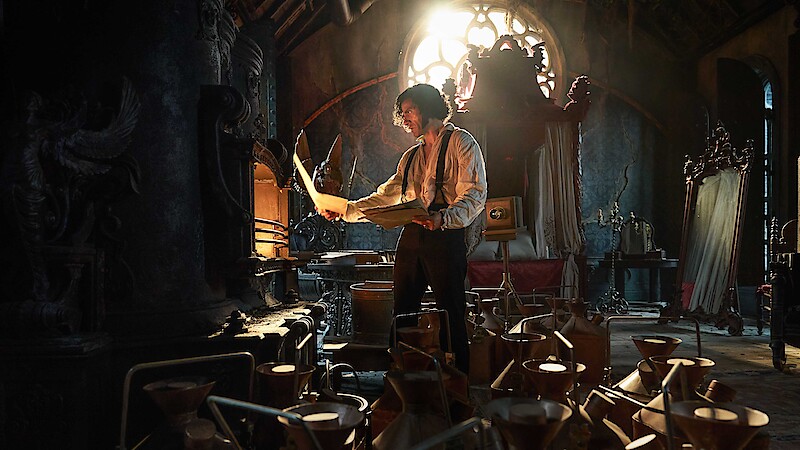
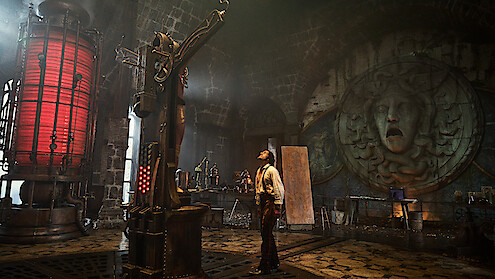
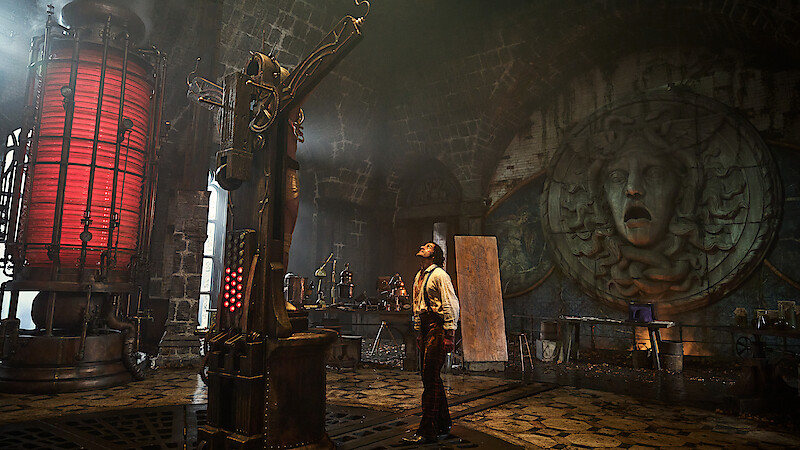
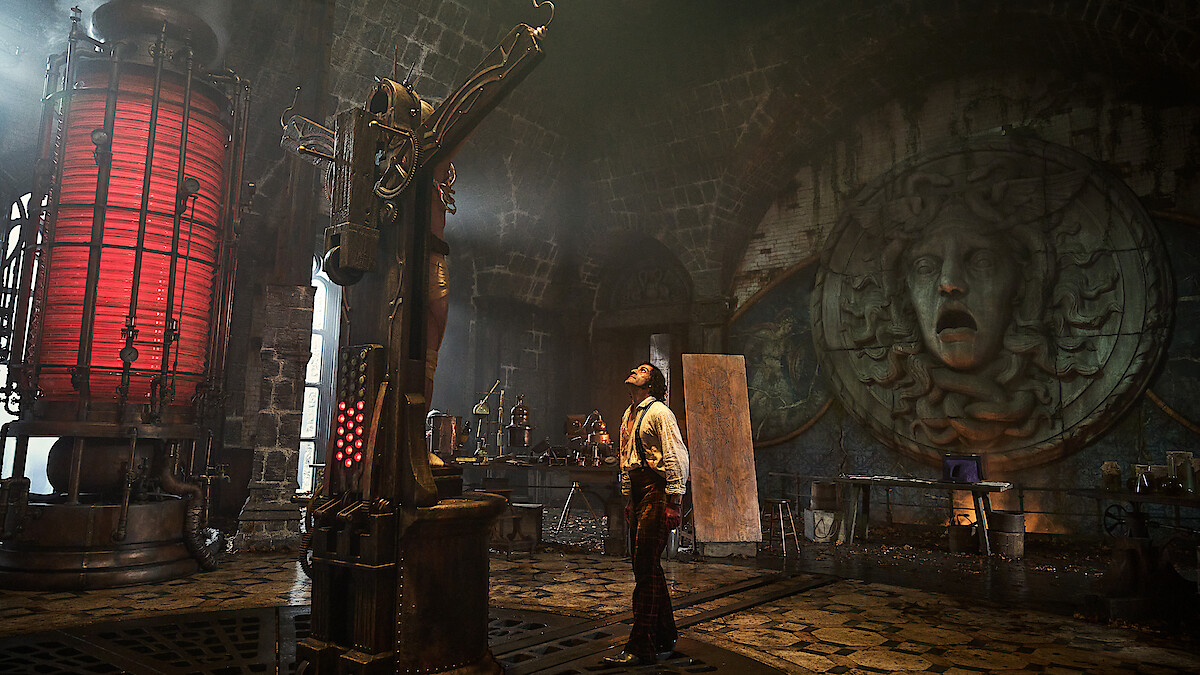
Whole thing. Like an actor, a set has to change every time you're doing a scene with it. For example, the lab is not only one design. Every time you go in, it changes. You have a huge window and the face of Medusa on the other side. That window can have, uh, overcast blue. Then you add the batteries, but they're green. They're not turned on. Then the batteries are on, and they're red, and it's raining outside. That's a different set. Then the operating table is laying flat with the cadaver horizontal. That's another set. Then it raises like a crucifixion in the shape of a Y. That's another set. Everything has to work together. Cinematography is wardrobe. Wardrobe is set design. Set design is wardrobe and cinematography. What the director does is conduct these things to join together in a single emotion. People get up. Look curious. And you sort of inspire, dictate, lead the audiovisual shape of the movie. Wait until you get to the table to save your life. And everything joins into a moment. When Victor sees The Creature for the first time, and the camera is pulling back, and you reveal the shoulder, and then it goes down, and then you cross the canopy bed, that has been thought from the beginning. And you try to coordinate the color of the sheets, which is red, and his gloves, which are red, because he's doing all of this because his mother died, and his mother was red. So all of this information is there. I believe that the center of the bullseye of a movie is the monster. Where does this monster live? And you design the movie around it. For example, I don't want it to look like an accident victim. I want it to look like something newly minted, firstborn. So I do no scars with stitches or blood. And we wanted to make him beautiful, because if Victor has been looking forward to creating that, it should look superior to men.
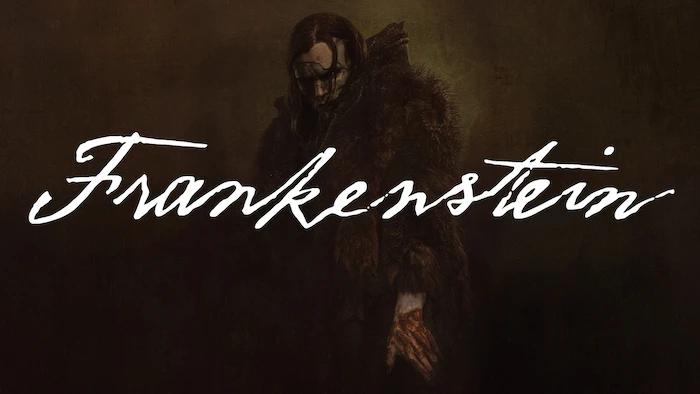
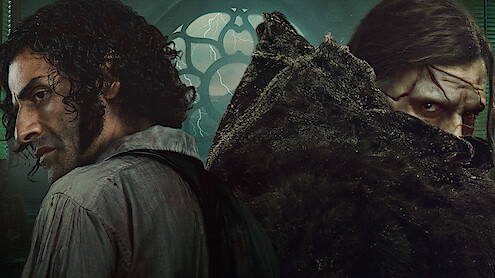
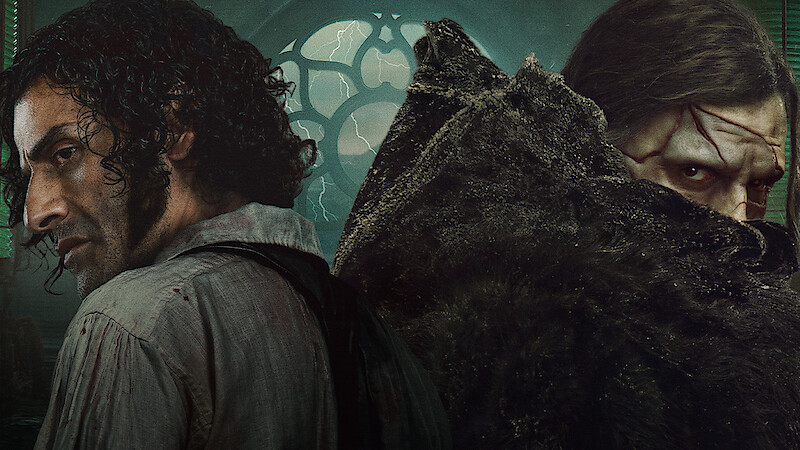
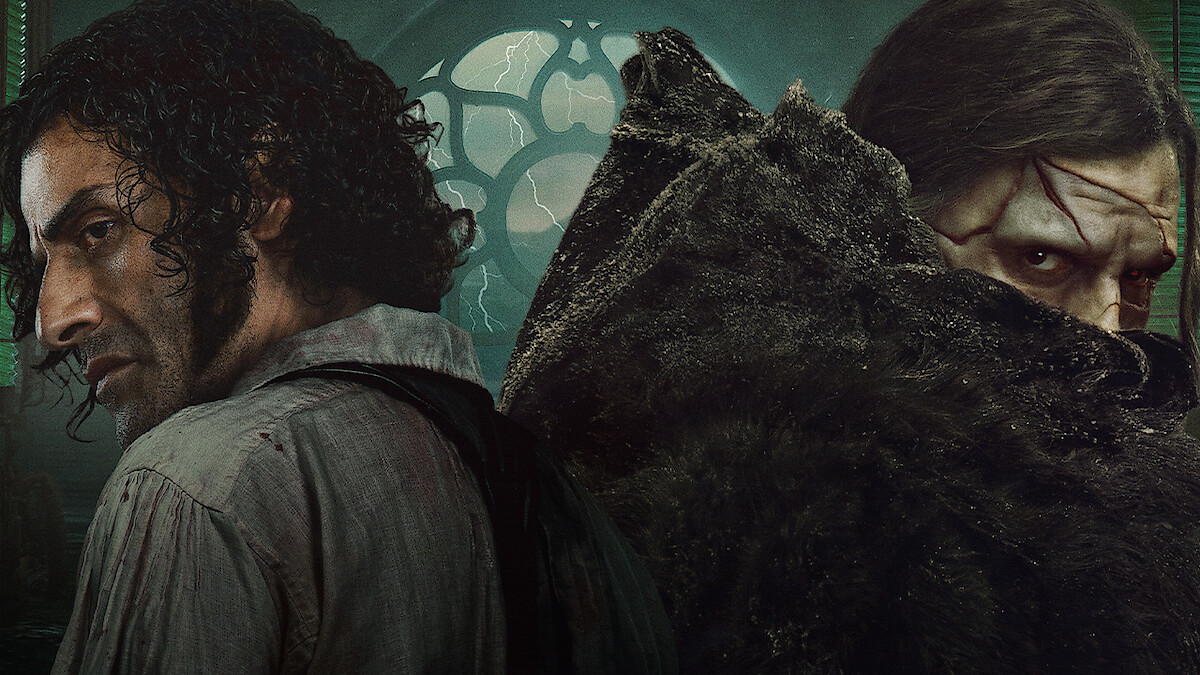
[roaring] Again, the monster has to change every time you see him. First, we start almost like a polar bear coming out of the fog and the ice to attack the ship. Then you don't see him for another 30, 40 minutes, and when he comes out, he's in bandages. And then you see without bandages, and he's bald. And then he starts growing the hair, and he has a cassock. And then he has long hair and the cassock, and then he's covered in fur and woods. There has to be an evolution to a monster. It's you. The monsters I tried to design have an aesthetic signature that makes them all feel that they came from the same hand and the same mind. There's a beauty, an ornamental quality to the pictures that makes them almost like moving sculptures. I added some glyphs to the design of Hellboy. Those glyphs are also in the font in Pan's Labyrinth. The smoothness of the Pale Man in Pan's Labyrinth is similar to the smoothness of the body of The Creature in Frankenstein, and they are very much operatic. Victor! With them steps in a whole world. I just love them. I tried to, in designing the creatures, to look at solutions that came from painting or sculpture. It comes from admiration. I favor everything real as much as you can. I believe that people can tell when a set is real, when a makeup is real, when a prop has been made by human hands. There is a level of awe when you are in front of something real.
[grunts, yells] When we open the movie, all the stunts where The Creature throwing people around, none of them is digital. All of them are real cable stunts. I said, "I don't want to take over with a digital double." "I want it to be real." The beauty and the way a real set, a beautiful wardrobe made of silk, interacts with an actor in their body, the way they fit in a set, where they look and see stone rendered, it informs everything. There's not a single static shot on Frankenstein. Most of the camera work is done at the height of the eyes of a child. The camera always stays low. I wanted the camera to be a character that was constantly trying to take a better look. I wanted it to feel like a circular motion from beginning to end. It never stops. It completes the tale, and that's the end of the movie. And what you do is you try to move the camera symphonically. If the character is running and it's an emergency, you run with that character. A storm is coming! The decisions are made in the same way that you would write a piece of music. Largo, allegro, allegro non troppo. Do I want something pastoral? Do I want something frantic? And most of the camera is mounted on a techno crane. All right, we got it. Check the gate. If you lay out the workshop very carefully over nine months of preparation, when an accident happens, it's not an accident. It's an opportunity. When I was younger, I would say it has to be the way I ordered.
[man] He followed my instructions to the letter. As you get older, you say, "Let's see if this is the best way." And I listen. I listen to the movie, I listen to the actors, I listen to the cameraman, and then the best solution comes up. Yeah. And a lot of the things that happened on Frankenstein happened on the day. I like to have a family. You know, in Mexico, when you have a dinner, everybody's passing the salsa, everybody's passing the plates, and everybody's having dinner together. I think directing like that is much, much better. But you have to also be able to say, "Sh, put that down." "Don't ruin the meat."
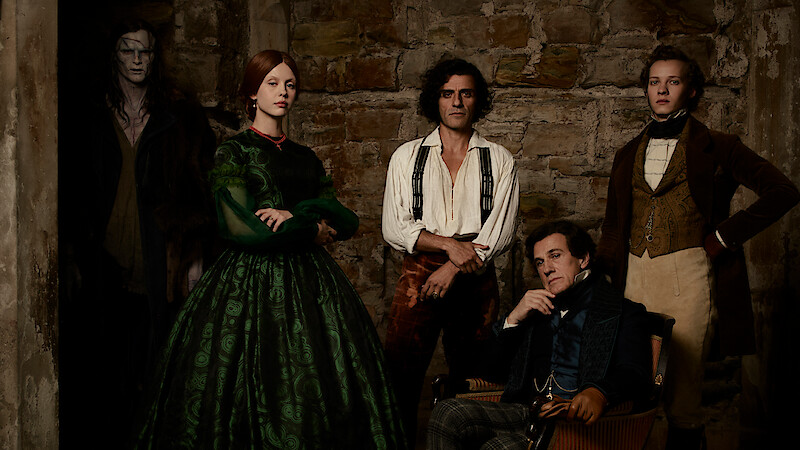
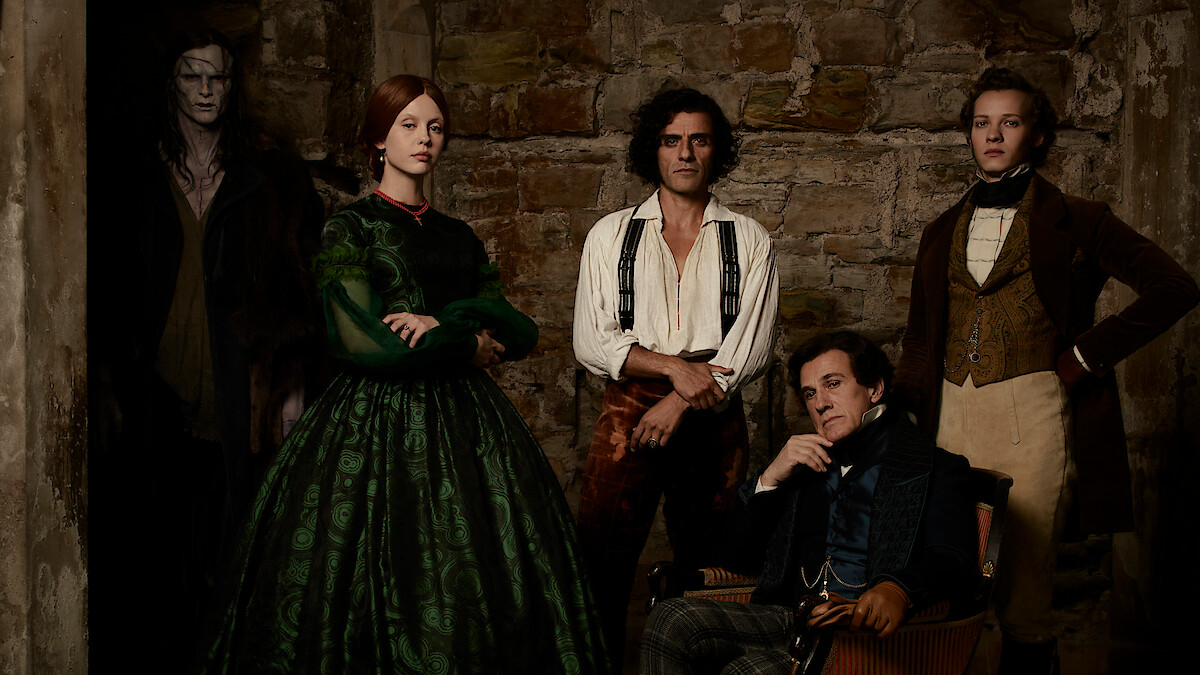
[laughs] "Don't put ketchup on it." 50% of the work with actors is casting them. And I always say, and I mean it, I cast eyes. The eyes of the actor is what makes the character. In order to know that Victor is a genius and he thinks he's doing good and he's driven, you need Oscar's eyes. In order for the creature to have innocence, you need Jacob's eyes. In order to understand that she understands the designs of God, you need Mia's eyes. Then what I do is I talk to them and I send them books. I send them six, seven, eight, ten books that are pertinent to the character. I sent Mia a wardrobe from the 1800s. And then, if they want it, you send them a biography. And the biography includes everything from their birth to the end of their life. And then, if they want rehearsal, Oscar and Mia, we did a lot of rehearsals. Then what I do systematically is as many social dinners as we can. I know, because I don't like the personality of the director, the star. I don't like mystique. I think mystique is a lie. You have to be a human being that screws up. And then, on the day, actors are completely different. Can you try it again? Yeah, you-- Yes, yes, that's you. Yes, that's you. That's you, right?
[Guillermo] Some actors are good on the first take. Some actors are good on the fourth take. Some actors are good changing from one take to the other. And the director is there, honestly, not to cramp their style, but to harmonize it and conduct it. You tell the guy that's good on the first one, "Wait until we get to take three, and then give me one." You try to coordinate their tempos. Jim Cameron gave me a piece of advice that I said to him one day. "What's the first rule of directing?" And he said, "Eight hours of sleep." And he's absolutely right. The machine needs recharge, because every pore has to be open. Every piece of the mind has to be awake. If the credits of a film were the correct ones, it would read "A film by the film." Listen. Listen to the film. Listen to everything that goes wrong. And you understand that you're not playing chess. You're surfing. I think a good piece of advice for a director is you are always directing. And that means you can never be bored. Listening, listening. And then he goes here. If you are in the supermarket, you're observing people. The way a father pulls a kid closer to the shopping cart. Is he gentle? Is it violent? Is the kid on the cart? Those are all decisions people made and became characters. So a director is never off.
[thunder crashes]
[dramatic music playing]
[electricity crackling] However many years I stay active, I always say, "What am I gonna do different as a human being in this movie?" "What am I gonna try? Where am I gonna be scared?" And I have to find something scary that I'm not completely sure of. So go to a scary place in your craft.
[thunder crashes]
[dramatic music playing]