Thomas Coyne: I'm a survival guy, so maybe use your urine.
Andrea Armani: Yeah, it's a great idea. No.
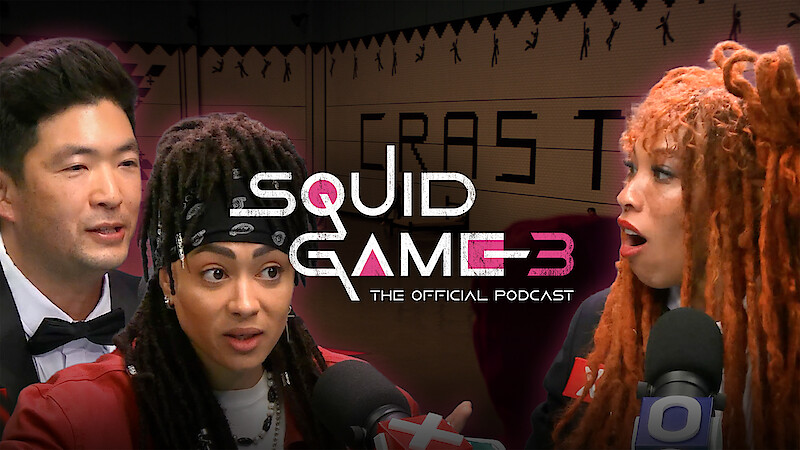
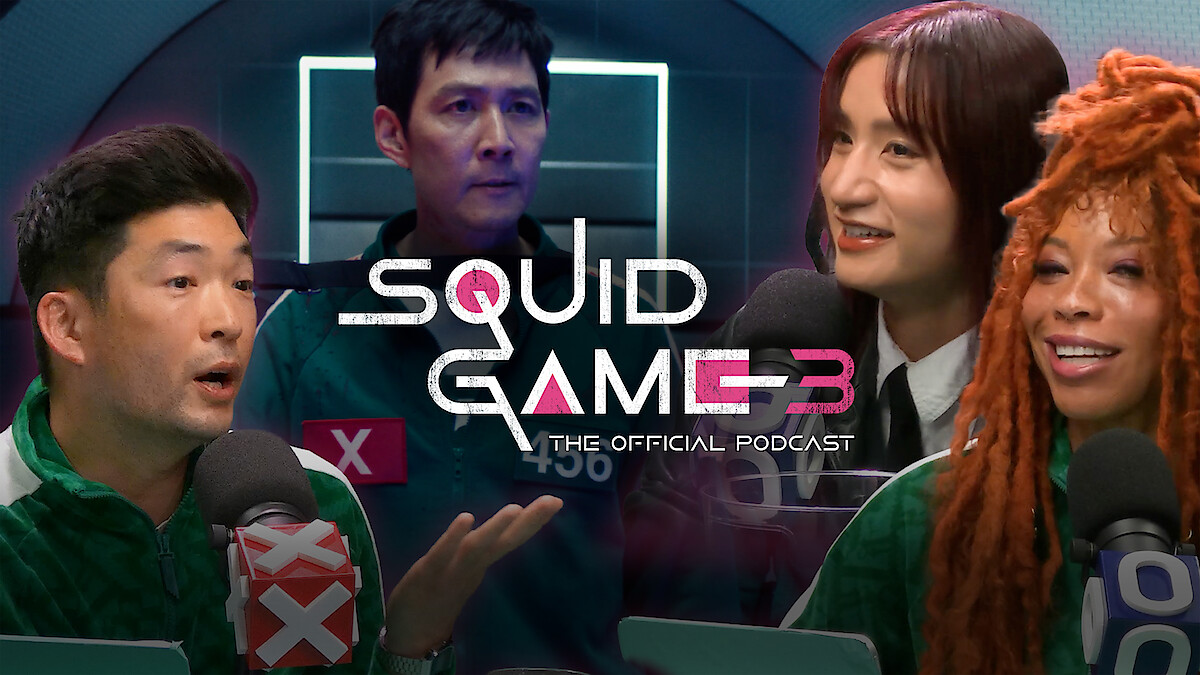
Dr. Judy Ho: Attention, players. I'm Dr. Judy Ho, clinical and forensic neuropsychologist.
Andrea Armani: Hi, I'm Andrea Armani, professor of chemical engineering and material science.
Colin Camerer: I'm Colin Camerer, professor of behavioral economics at Caltech.
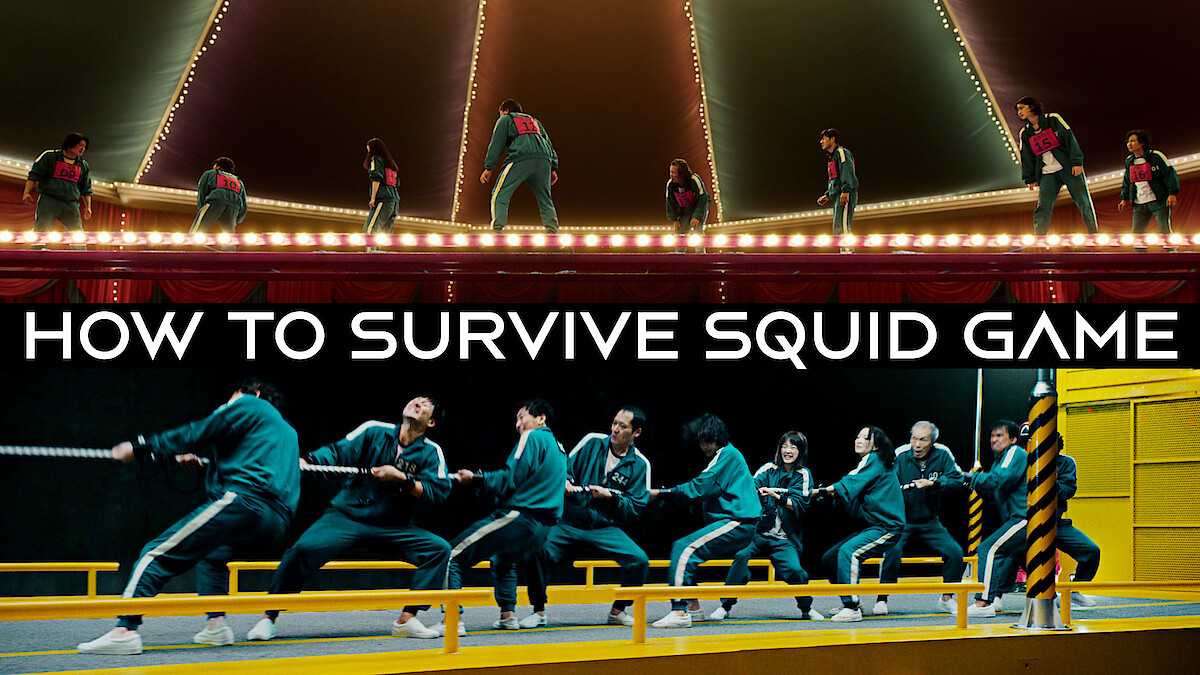
Thomas Coyne: I am Thomas Coyne, professional survival instructor. And today, we're breaking down Squid Game fan theories. Which ones will win you the game and which ones will send you home in a box? This is ‘How to survive Squid Game.”
Automated voice: Red Light, Green Light.
Andrea Armani: One fan theory is instead of running to rush to the finish line, all the players need to do is “hold hands and take one step at a time.”
[dramatic sting]
Andrea Armani: This type of theory makes sense. You definitely could walk slowly. It allows you to take smaller steps, make your entire body rigid, especially during the red light phase, which as we all saw was incredibly important to not move.
Colin Camerer: Red Light, Green Light is a classic example of what's called in cognitive psychology the Stop Signal Reaction Time task, SSRT. And the idea is you're driving a car, for example. You want to go as fast as possible during a green light but be prepared to brake when the light turns yellow or red.
[tires screech]
Colin Camerer: And what makes Red Light, Green Light interesting is a group of people doing it at the same time. And if you make a mistake, then you might be dead.
Andrea Armani: One kind of challenge with all of the players holding hands is that you can have a dominoes type effect where if one player moves, they take all of the players around them out as well.
[CLIP] Thanos: [in Korean] Bye.
Colin Camerer: The best strategy is what a lot of the groups evolve upon, which is to go single file, very much like in an army.
Automated voice: Six-Legged Pentathlon.
Dr. Judy Ho: In the pentathlon, “do not celebrate if you succeed at a minigame because it costs time. Bro, you’re on a timer. You don’t need to cheer every time.” I totally get that it is time-consuming to celebrate every minigame. But also, remember, we are social beings. We actually need to rely on one another for survival. And the reason why people celebrate is because it activates neurochemicals like dopamine and serotonin. These are feel-good chemicals, but also, especially dopamine, is a motivational chemical. It's saying, "You did something right, and do more of this so you can have more success and happiness." And so those mini celebrations could actually help them to work better as a team and give them fuel for the future challenges.
[CLIP] Group [in Korean]: One, two, one, two.
Automated voice: Mingle.
Thomas Coyne: In Mingle, ‘aim to form an alliance of 10 to 12 members.’ It's much easier for a large group to break into smaller ones than smaller ones' to suddenly recruit new members.
Colin Camerer: I think the fan idea of 10 or 12 is interesting. I think the number's a little off, especially under time pressure. I think it's pretty difficult to shed players and divide groups up, especially if they're not easily divisible. So if you have a group of 11 and suddenly they call out six, you have to decide which five leave. And there's a lot of what's called the combinatorial explosion. There's a lot of combinations that can be entertained. So in this kind of game of coordination, you want something like a flexible number. For me, an ideal group might be six, because six is factored into two and three and one, two times three times one. So if they call out three, it's pretty easy to split the group in half. It's easier to add people than to subtract, because subtracting feels like social exclusion. It is social exclusion. The larger the group you have, if a low number is called, you have to do a lot of exclusion. And that may be very hard to do, especially under time pressure. It could often be very emotional, given that somebody left behind is at risk of death.
[gunshot echoes]
Automated voice: Dalgona.
Andrea Armani: “Spit in the tin and then place the sugar wafer back in the tin.” This would allow the sugar wafer to soften before removing the pattern.
Dr. Judy Ho: This tactic sounds gross but theoretically could be effective. However, when you're under situations of high stress, your parasympathetic nervous system is not activated. You are going to be in a fight or flight response. And during those times, your digestive system, things like eating, processing the food that you're eating, which of course saliva and producing saliva is a big part of that, it's going to essentially be inhibited. And so I don't think that anybody, when they're under high stress, could even drool or spit and produce enough saliva to make this effective.
Andrea Armani: I thought you'd ask if someone could pee on it.
Thomas Coyne: Maybe use your urine.
[ding]
Andrea Armani: The one challenge with putting a lot of spit on the bottom and putting it back in that container is that you can end up with suction. So then when you try to take the wafer back out, it's gonna stick and you aren't gonna be able to actually pull it out. I might flip the container over and just create a flat surface so that you can put a bunch of spit on it, put it on top, but then slide it off the top surface so that you avoid the suction effect.
Automated voice: Tug-of-War.
Dr. Judy Ho: "The players should remove their shoes and socks during this challenge in order to gain better traction with their bare feet."
Thomas Coyne: Now that is the worst idea you could do here, and for two reasons. So our rubber soles give us much more traction. We have less tactile feel. Of course, our feet have all these nerve endings. That's why they're ticklish, right? However, they don't have good traction on these man-made surfaces. There's a reason that rock climbers wear very specific shoes, and that's for traction.
Andrea Armani: Traction is determined by something called the coefficient of friction or the amount of roughness there is between two surfaces. In this case, it would be between the floor and your foot. And your foot is actually pretty smooth, and it becomes even smoother when you become stressed and you sweat. And I think we can all agree that all of the Squid Game participants are fairly stressed.
Thomas Coyne: So our skin can be sweaty. And when you're barefoot, you're gonna slide right down that thing and off the edge.
[screaming]
Automated voice: Glass Stepping Stones. [Glass Bridge]
Andrea Armani: “Instead of jumping on the glass panels, players should walk across the two bars in the middle of the glass panel sets.” This is a fabulous idea. Uh, my main concern is would it even comply with the rules? The rules are fairly clearly articulated that players have to jump on the panels. So taking a kind of balance beam approach might not be allowed.
[CLIP] Deer Mask VIP: Well, that's no fun.
Colin Camerer: The Glass Bridge Game is interesting because it's a sequential game. So you have to plan ahead. Statistically, it's possible that a player could get all the way through without crashing through the thin glass. But it's statistically very unlikely. It's not a difficult number to compute. It's one half to the N. And so if N is 10, it's one in a thousand.
Andrea Armani: Another approach might be to form like a safety line from your clothes. Clothing, especially when woven together, can be really, really strong. So if you think about a rope, you could have kind of your canary go out first and wrap a rope made out of clothing around him, and then have two or three people kind of hold the other end of the line. So when that person jumps from one tile to the other tile, if they pick the wrong one, you can save them because there was nothing in the rules about bringing the person back up.
[CLIP] Panther Mask VIP: Any objections?
[CLIP] Lion Mask VIP: Not at all.
Automated voice: Rock, Paper, Scissors, Minus One.
Dr. Judy Ho: “Rock, Paper, Scissors is more strategic than it first appears. Rookies play rock, so use that to your advantage and go with paper.”
Colin Camerer: Rock, Paper, Scissors is a good example of a game which is mathematically not very interesting, but actually playing it, it may be interesting because human behavior doesn't always conform exactly to the abstract mathematics. So we work on a theory called cognitive hierarchy. And the idea of a cognitive hierarchy is some people who are level zero might just think, "What's the most obvious salient thing to do?" Like, rock. Rock is strong.
Dr. Judy Ho: Some of the signs and tells that I would look for is generally if you're going to strike rock, you're gonna have a tighter facial expression. Maybe even be clenching your jaw more because it matches the actual gesture. Or sometimes this, because it's an easy gesture to do and it's a very, very simple motor gesture. Most people will not do this because again, it's more of a vulnerability. So if you're trying to read somebody while at the same time thinking about what symbol to do, you're not most likely going to use the paper.
Automated voice: Special Game.
Andrea Armani: “Either pick a corner of the dorm and fortify your position with the beds, or try to find the highest elevation.”
Thomas Coyne: So look, it's nice to think I could just put my back into the corner and I can fight off the whole room. But that's just not gonna happen. People come to me to learn independence. And what I always instruct people, if you're in any kind of emergency, especially something as dangerous as Squid Game, you want to team up with others.
Andrea Armani: You could also create a light armor out of bedding that could provide you a certain degree of protection.
Thomas Coyne: Think of the Greek and Roman phalanx. And those were the ones that overcame the barbarians. So whatever weapons you use, you would want to use them in concert with your team.
Andrea Armani: There's a strategy called the Fabian strategy in which you go to the highest position, you fortify the highest position, and then you essentially let everybody at low positions kill each other so that you have less enemies to fight in the future. And that is exactly what this fan is suggesting. It's a great idea. It's a proven strategy, and it's very effective.
Dr. Judy Ho: Now you know the tactics. Some clever.
Thomas Coyne: Some crazy.
Andrea Armani: And some scientifically sound to survive Squid Game.
Colin Camerer: Good luck.