On Set
How ‘Black Mirror’ Made an ‘Existential Nightmare’
Charlie Brooker, Annie Murphy and Salma Hayek Pinault take us behind the scenes of “Joan Is Awful.”
June 20, 2023
🤐 SPOILER ALERT 🤐
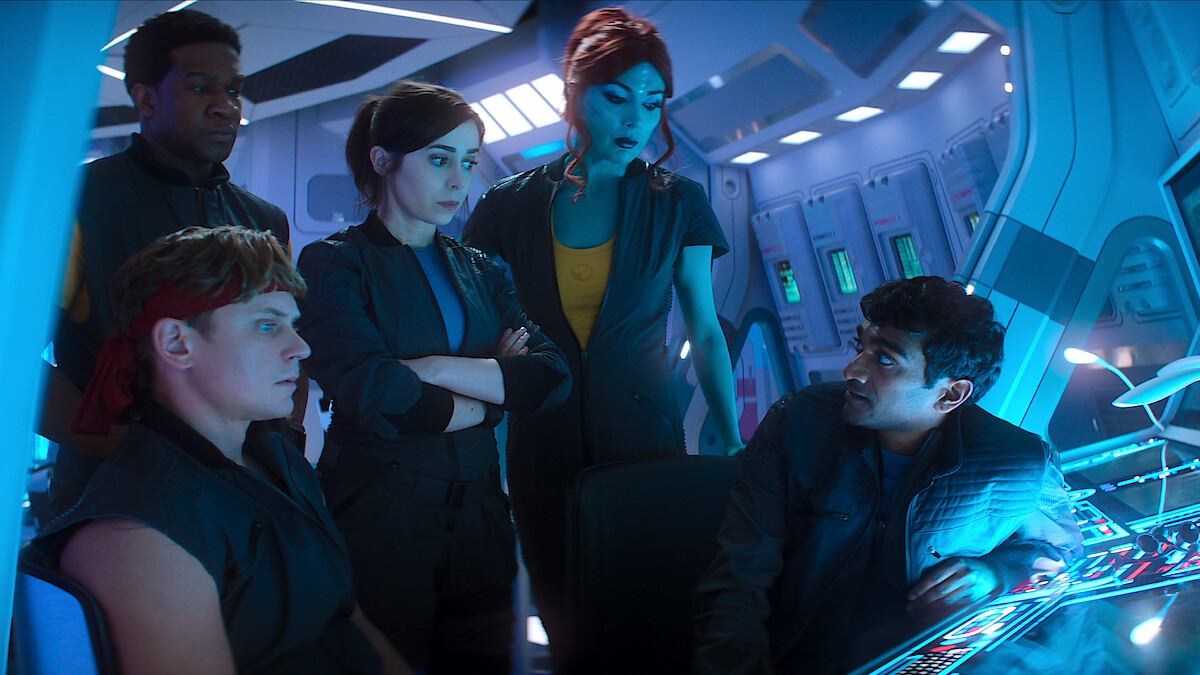
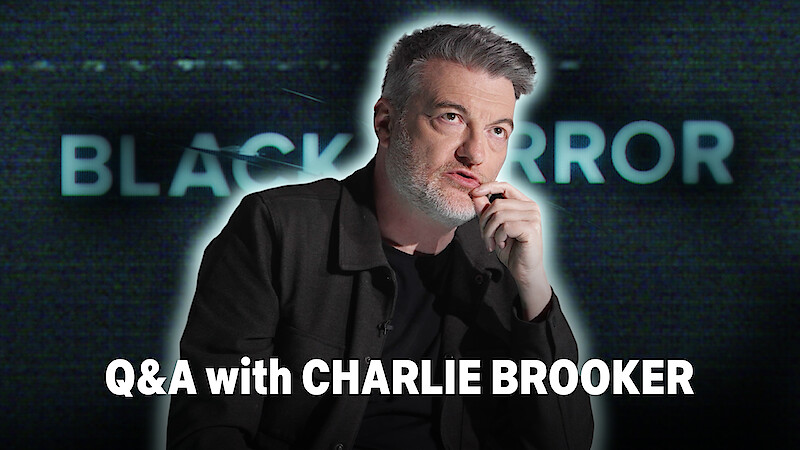
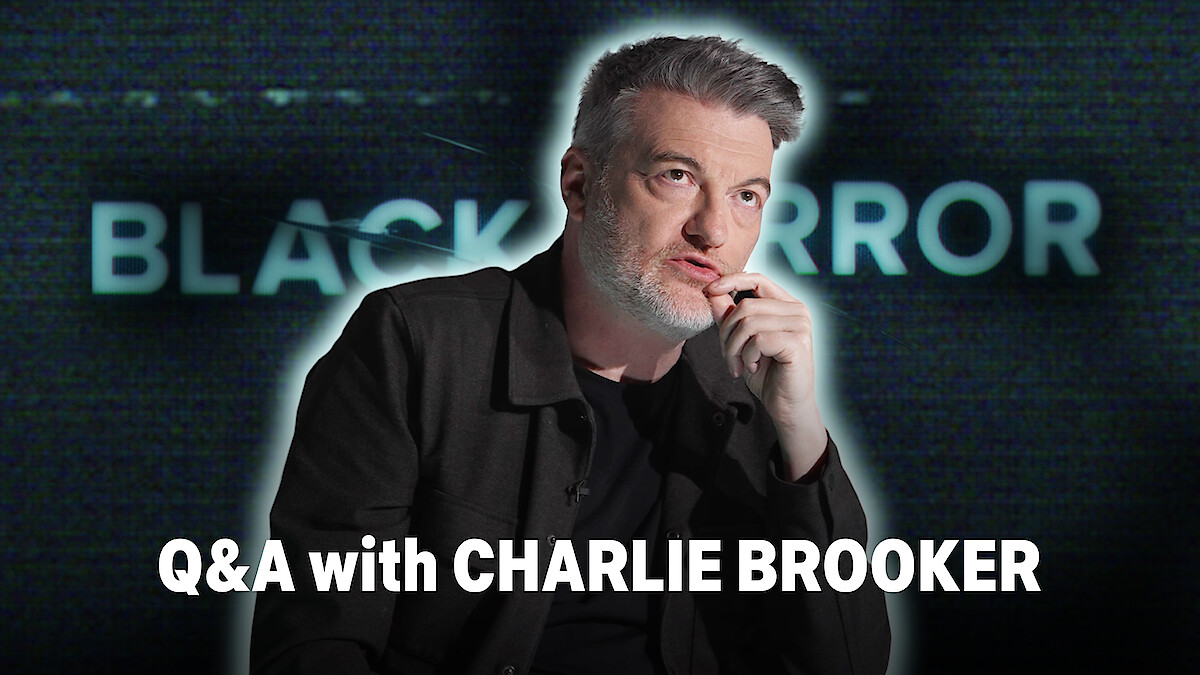
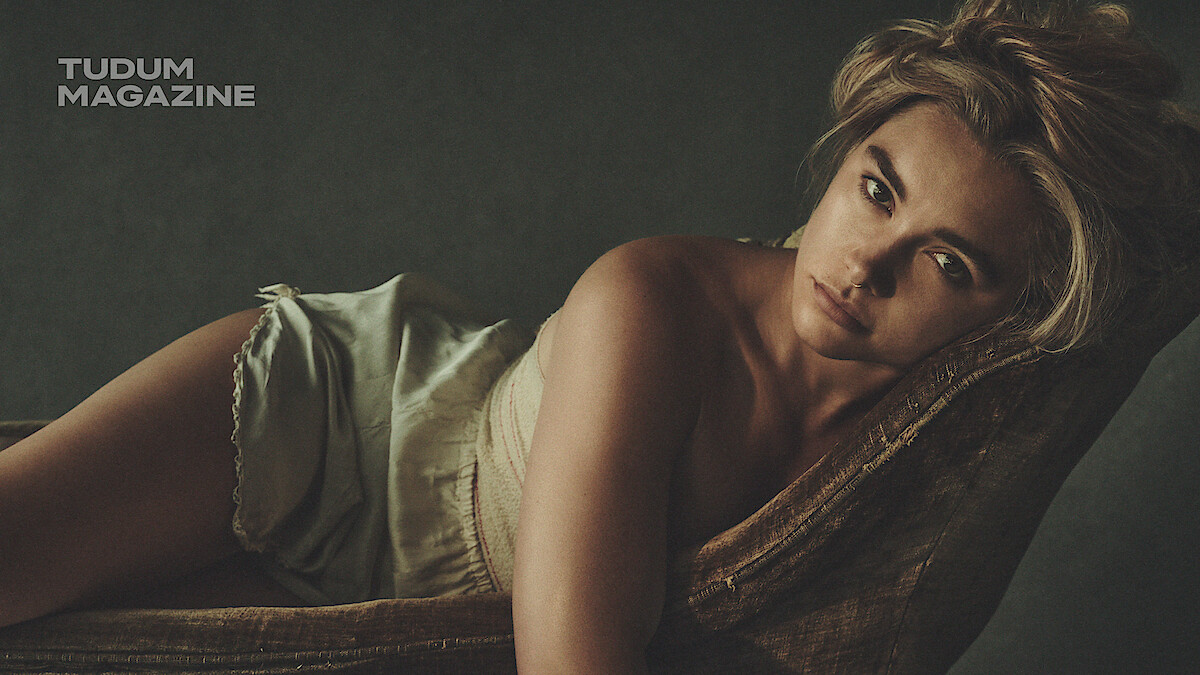
“This is one of the most f**ked-up seasons we’ve ever done,” Black Mirror creator Charlie Brooker tells Tudum from a Notting Hill coffee shop on a drizzly September 2022 afternoon. On a break from filming, Brooker sips a Coke Zero and reveals what fans can expect from Season 6. “Of all the seasons to tune in and not know what's going to happen, this is definitely up there.”
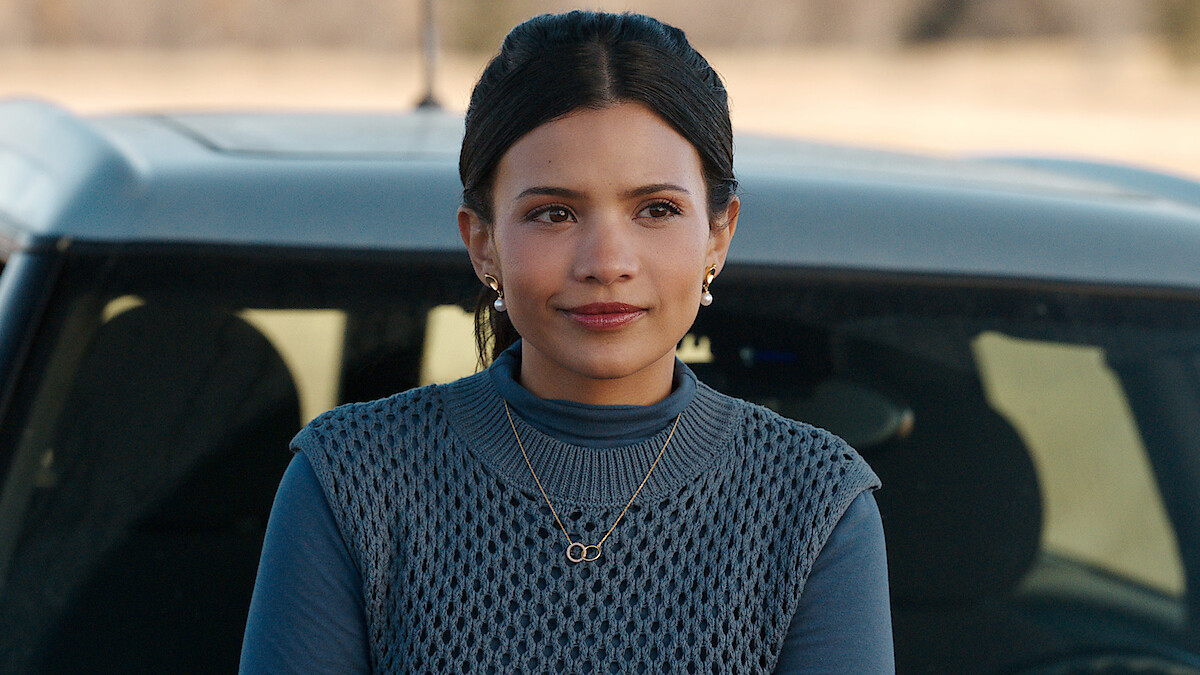
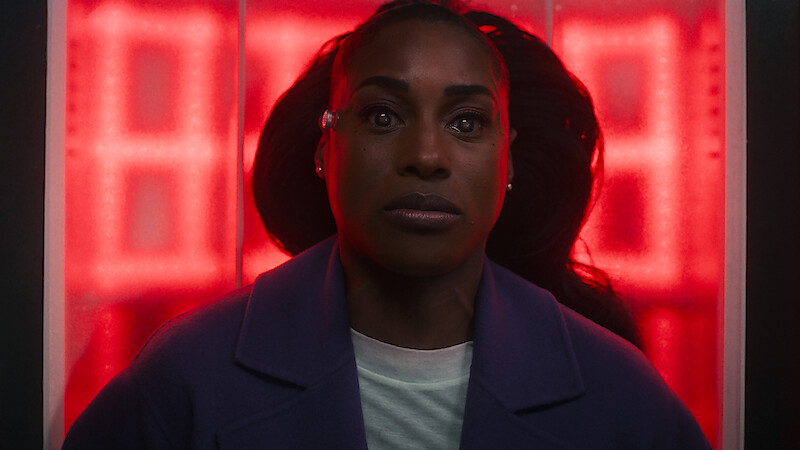
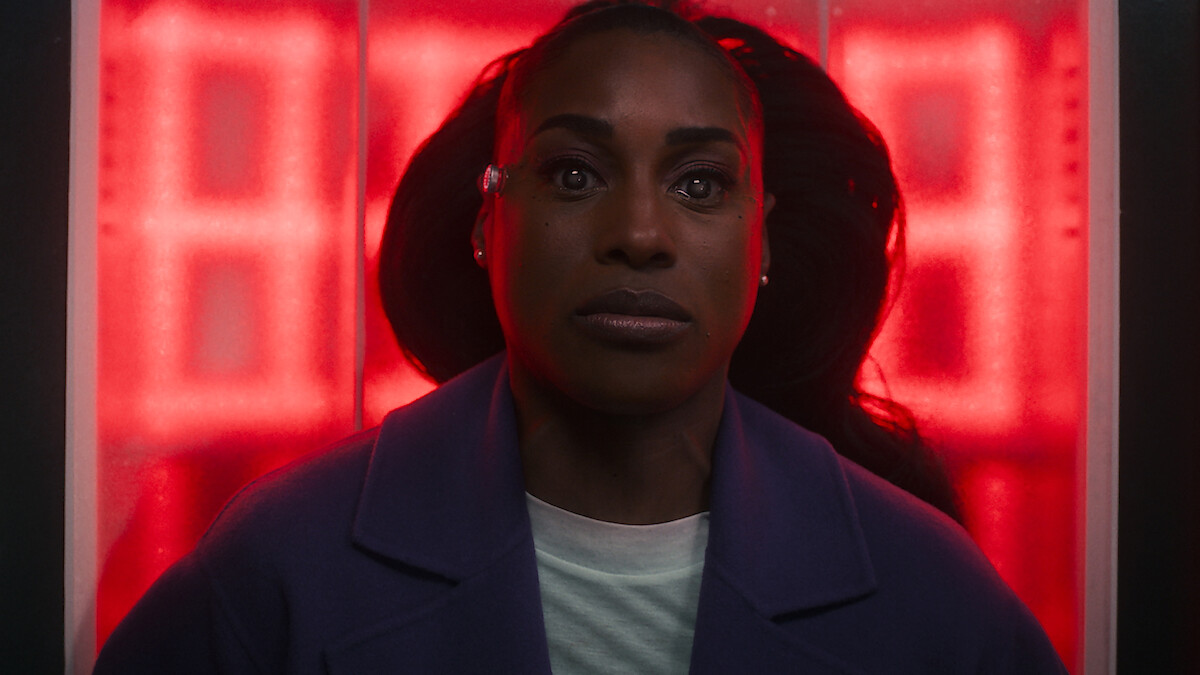
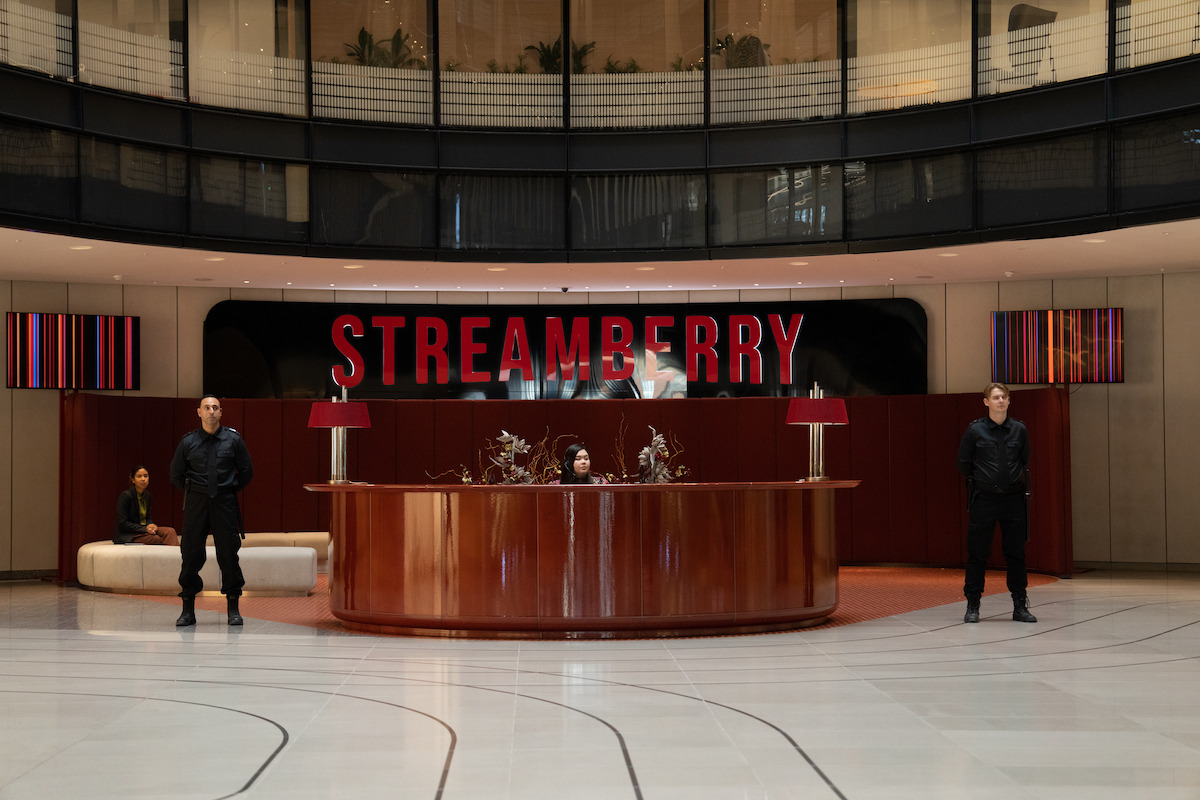
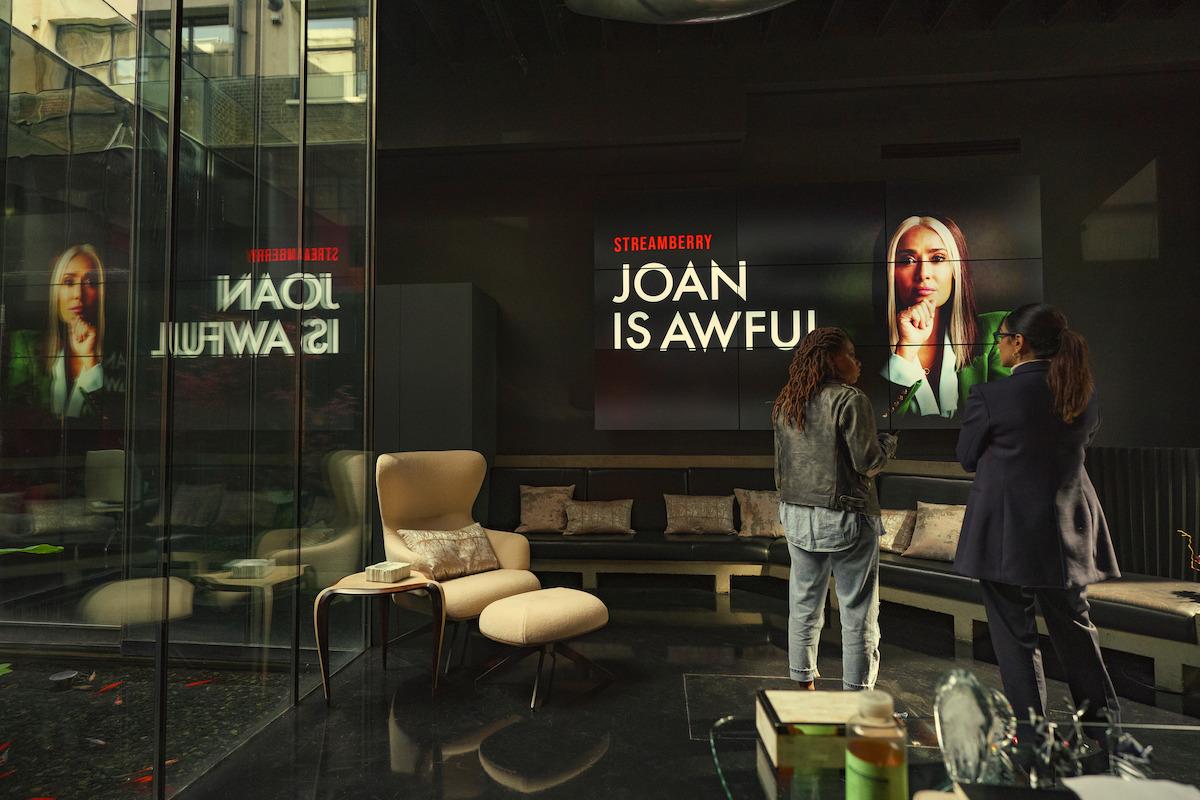
The sometimes terrifying, sometimes tear-jerking, always brilliantly absurd anthology series opens its newest season with “Joan Is Awful,” an installment about an average woman, Joan (Annie Murphy), who realizes that a streaming service has created a prestige drama series based on her life starring Salma Hayek Pinault. But when she and her fiancé press play on Joan Is Awful, her real life begins falling apart. And there’s very little she can do to stop it because it’s all legally above board, thanks to her signature on the user agreement for Streamberry, a streaming service that should look very familiar. Naturally, it’s a comedy.
“ ‘Joan Is Awful’ is one of the most overtly comic Black Mirrors we’ve ever done,” says Brooker. Still, it is an episode of Black Mirror, so it’s also “a bit of an existential nightmare — but a fun existential nightmare!”
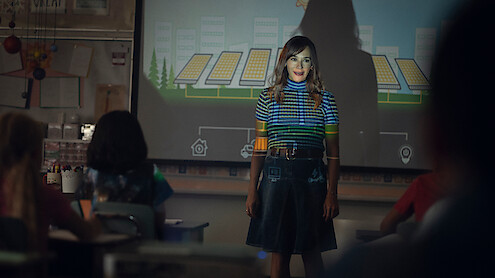
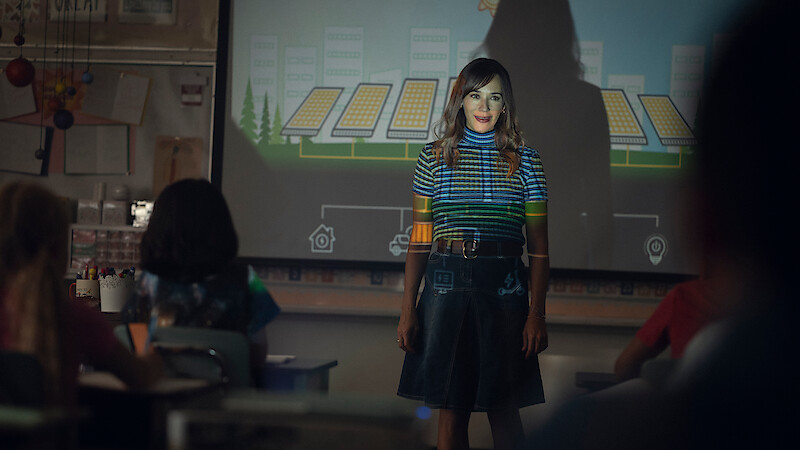
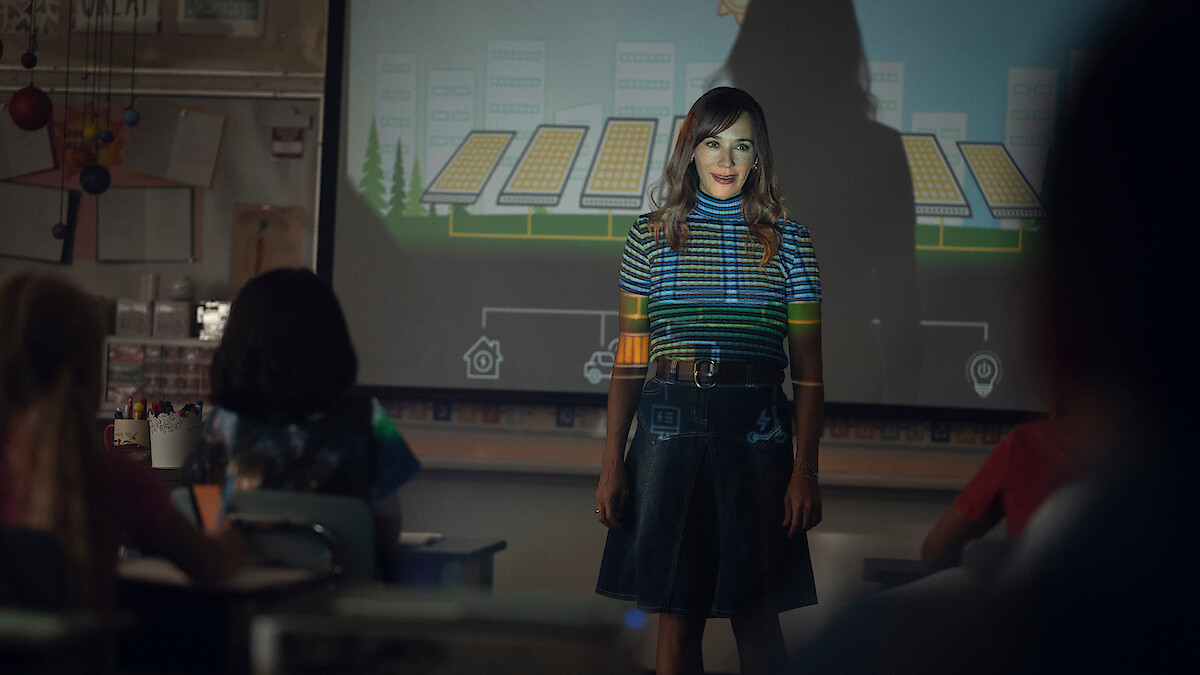
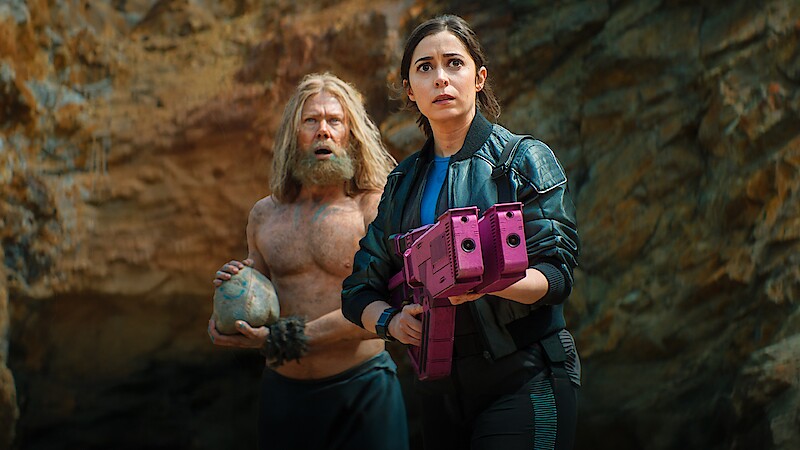
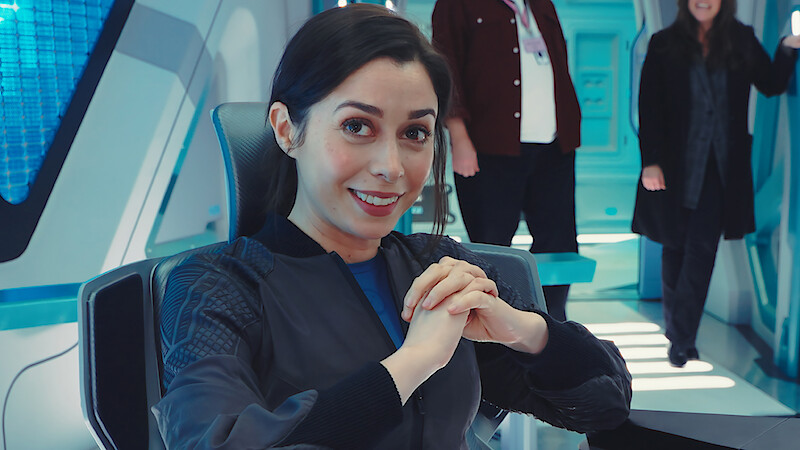
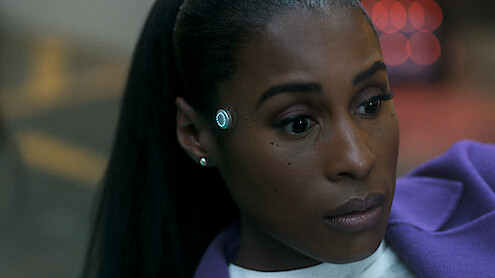
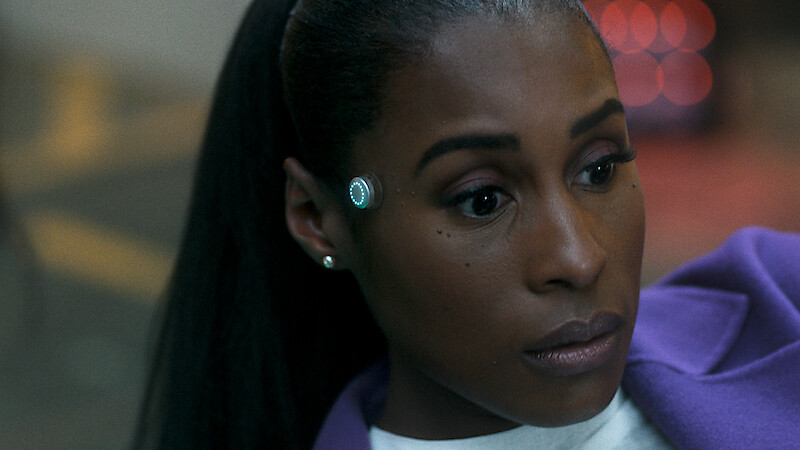
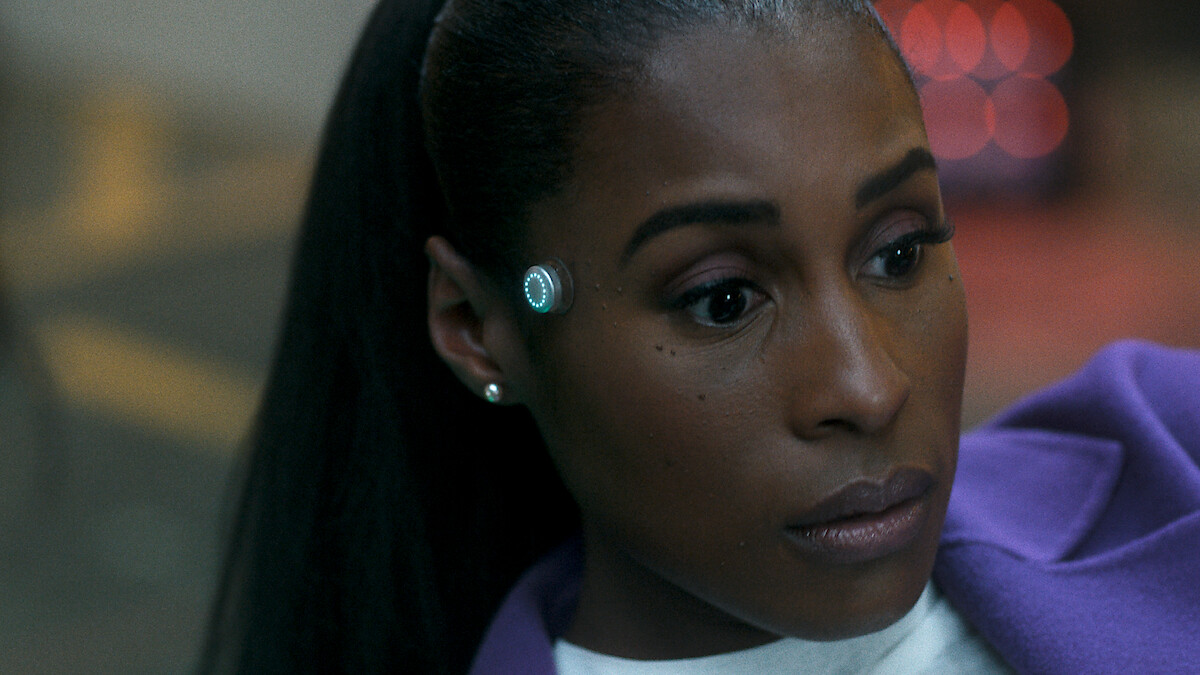
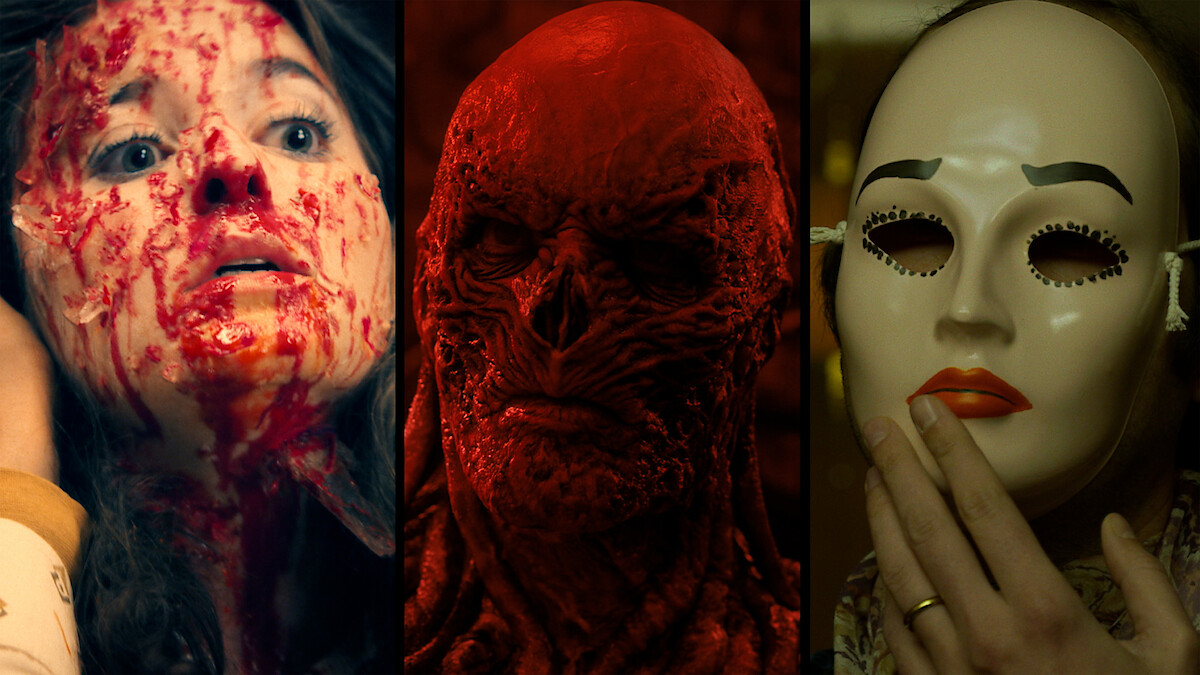
With three layers of reality, three actors playing the same character and one very distinct hair streak, Tudum visited the set of “Joan Is Awful” to find out how Brooker, director Ally Pankiw and the rest of the creative team brought that Black Mirror existential nightmare to life — and your screen.
“What if Netflix started doing a prestige drama based on your life?”
While there’s definitely a lesson in “Joan Is Awful” about the Byzantine terms and conditions we all blindly agree to on a regular basis, the actual genesis for the episode came when Brooker and his wife were watching Amanda Seyfried in the Elizabeth Holmes series The Dropout.
“We were just commenting on how it’d be really weird if you were that woman and you were watching the dramatization of your life, one of the most disturbing bits would be scenes where she was just goofing around, dancing to music,” he says. “I’d think, ‘How do you know that?’ It just struck me as a funny existential nightmare. What if Netflix started doing a prestige drama based on your life, and there was nothing you could do about it?”
But, unsurprisingly, the episode has more layers to it. “It captures how hard it is to be a woman and be perceived and seen by the rest of the world, to be judged in every situation slightly differently than you intended, obviously to an exaggerated degree in Joan, but there’s a truth to it,” Black Mirror executive producer Jessica Rhoades told Netflix in April.
“We’ve taken some big swings.”
When Brooker created Black Mirror back in 2011, he’d noticed that all the stories he was reading and watching painted new technology in a positive light. “It seemed to be going against the grain to do something that was a bit sinister and lots of people frowning at iPhones while their lives fell apart,” he tells Tudum. “Now it feels like there’s a lot of shows that do that. So I thought, ‘OK, we’ve got to slightly zig away from the zag.’ ”
Black Mirror wasn’t necessarily inspired by the creeping influence of technology in our lives, but rather old horror and sci-fi anthologies like The Twilight Zone and other shows Brooker watched growing up. “Sometimes I see the show written up as, ‘Oh, it’s a cautionary tale about technology,’ and that’s not really what it was intended to be,” he says. “It was more that we used technology in place of the supernatural, to open the door to fantastical ideas.”
But for Season 6, Brooker wanted to try something different. At first, every episode he wrote took place in the past. Now, some installments do, but others, like “Joan Is Awful,” are in our very real present.
“I don’t think anyone’s going to watch this season and think, ‘Well, they’ve watered this down,’ ” he says. “We’ve taken some big swings. I mean, it was a show that started with a prime minister fucking a pig. That was our opening mission statement.”
“The main thing was not giving too much away when contacting actors.”
The theme of “Joan Is Awful” might be an existential nightmare, but putting together a production with so many layers and cast members was also a “logistical nightmare,” says Brooker. “There’s a bananas cast. Quite a lot of it are cameos. There’s something like 42 speaking parts in this episode because of the logic of it — because of course you’ve got the real world, and then you’ve got the world above that, and then [we] reveal there’s a world below what you think.”
Black Mirror casting director Jina Jay told Netflix in April that Brooker had an icon in mind when he wrote the story. “Salma was a fan of Charlie’s writing and instantly understood his singular vision and what he wanted to say on-screen about the world,” she said.
And she wasn’t the only one. Jeanie Bacharach, the co-casting director on “Joan Is Awful,” said it was one of the easiest projects she’s ever worked on because people are “eager to be a part of Black Mirror,” but it was a bit difficult to put out feelers without revealing the twists of the episode. “The main thing was not giving too much away when contacting actors and agents,” she told Netflix. “I would engage their interest, but I wanted to walk the right line of not giving too much information. It was hard because I tried explaining the episode without telling them what happened, and after you have seen the episode, you will understand why it was such a challenge.”
A challenge certainly, but for Hayek Pinault the whole experience of “Joan Is Awful” was also “absurd and a lot of fun.” She told Netflix that it was a “once-in-a-lifetime opportunity” to play an interpretation of herself. “I got to explore the concepts and clichés people have about me and be self-deprecating,” she said. “It’s as if I created an alter ego where I could do the most disgusting, grotesque things that you would never do in real life, and have permission to do that. It’s been surreal, and I think only a mind like Charlie Brooker’s could have come up with such a concept.”
Then there was Murphy, agreeing to do the episode without even reading the script. “If I’m being completely honest with you, there are many Black Mirror episodes that still haunt me and I think will until the day I die,” she tells Tudum between takes back in September. “I just agreed to it because I love the show so much, but I hadn’t read the script yet. And then I kind of realized, ‘Oh, shit. What if this is one of those episodes that just rocks me to my very soul?’ And it is, but in a much more lighthearted, bizarro way.” (We’ll get to that part in a minute.)
“It’s very cool to see the different iterations of all of us scampering around on set.”
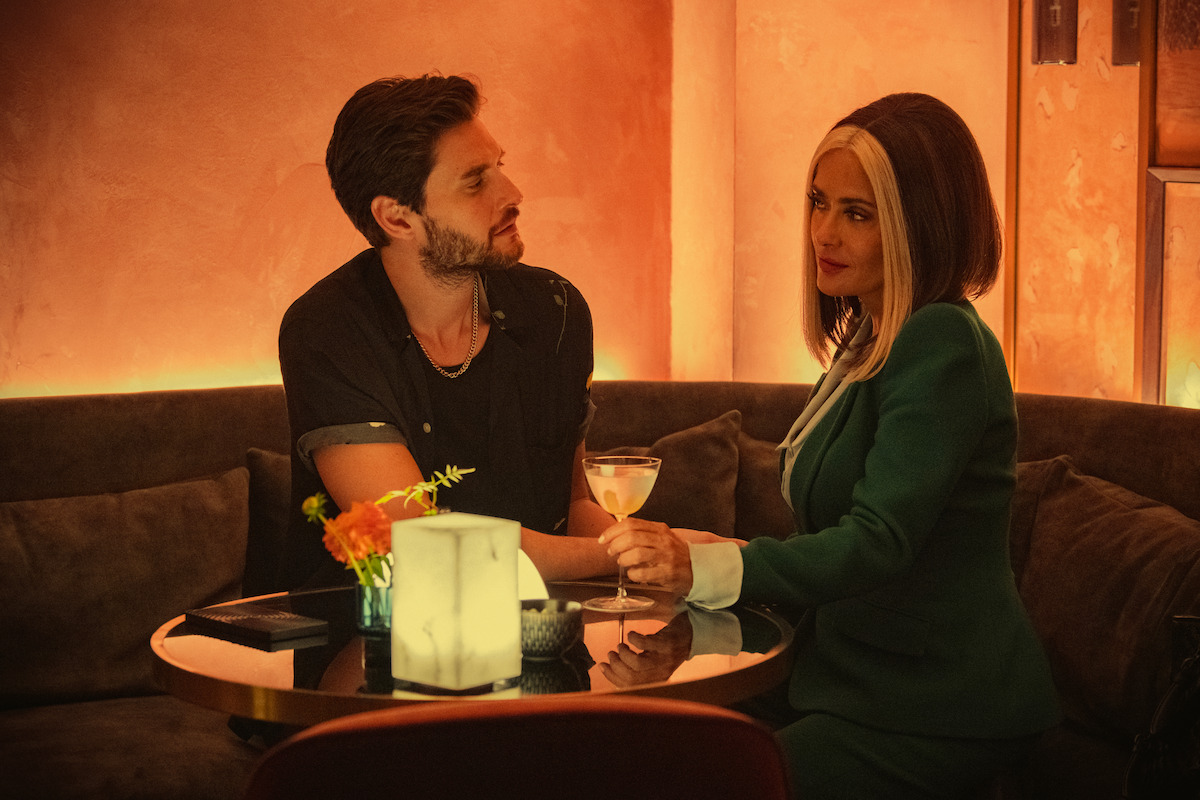
A block away from the Notting Hill coffee shop, Hayek Pinault and Murphy are nestled inside the velvet and marble Caractère Restaurant, ready to film concurrent scenes as everyday Joan (Murphy) and the woman who plays her on TV (Hayek Pinault). Caractère stands in for a hotel bar where Joan and her ex-boyfriend, Mac (Rob Delaney), are having an ill-advised meeting that might end in regret.
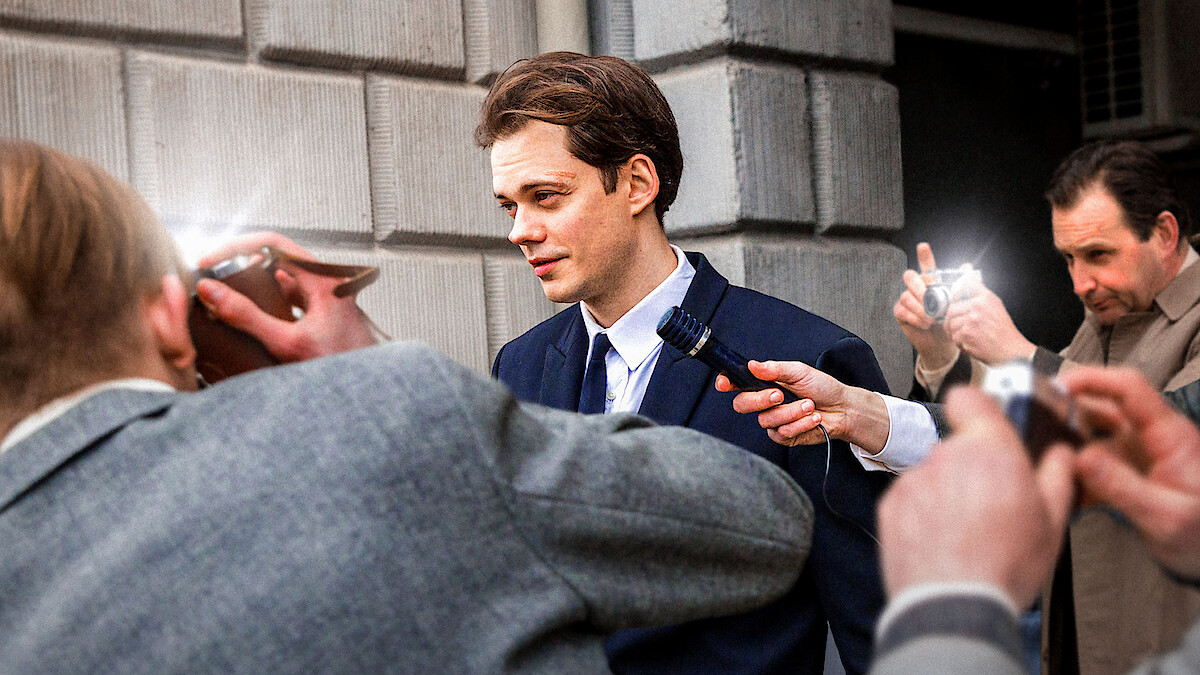
Hayek Pinault isn’t filming her version until after lunch, but she’s here early to observe Murphy play the scene. Later, the Darkling himself, Shadow and Bone star Ben Barnes, will swoop in to play TV Mac.
Since Hayek Pinault films her scenes after lunch, she hasn’t yet donned the wig with Joan’s signature face-framing hair streak, but Murphy’s fully in character. “It’s very cool to see the different iterations of all of us scampering around on set,” she says, sitting in a cozy restaurant booth on set.
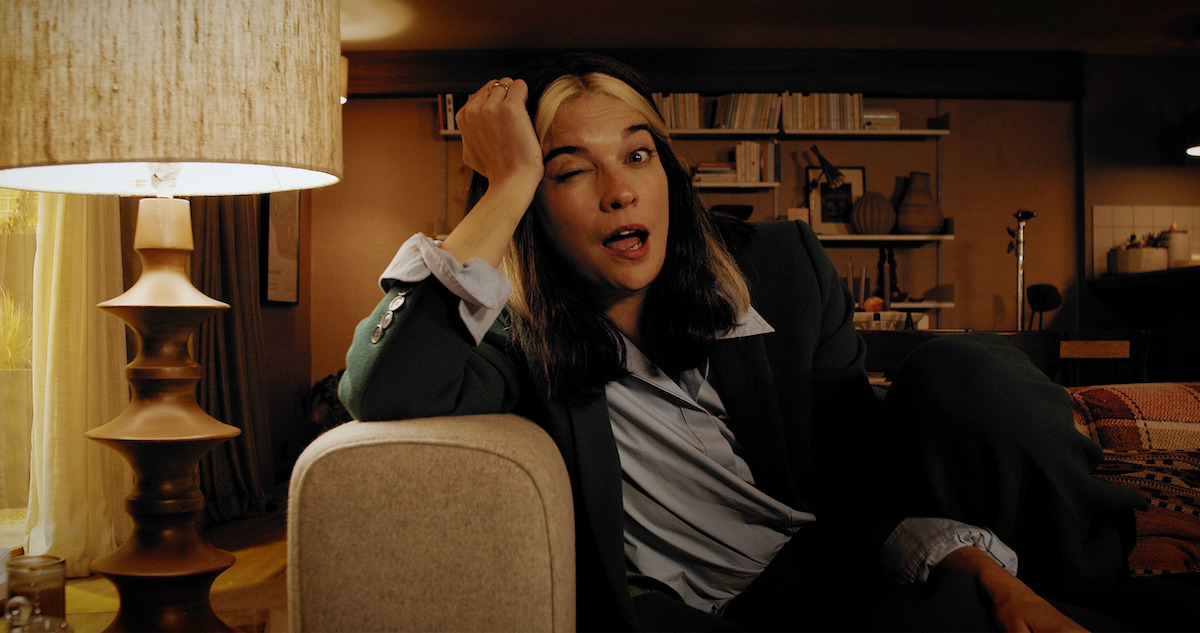
Hair and makeup head Lucy Cain tells Tudum that she specifically made sure to vary the tone of the blonde and the styling of each Joan’s hair, starting at the bottom with Source Joan (Kayla Lorette), then working up to Joan (Murphy) and TV Joan (Hayek Pinault).
Source Joan, whom we only meet at the very end of the episode, “was meant to feel the most of our world, the least glamorous,” Lorette tells Tudum. While Lorette’s hair was actually dyed — the remains were still visible when Tudum chatted with her months after the shoot — Murphy and Hayek Pinault had custom wigs that Cain started working on weeks before she actually met the actors.
“Source Joan had her own fringe lightened,” Cain explains. “I wanted it to be golden, so it looked like it had been done at home. To complement this DIY feel, her makeup was minimal and natural. I wanted her look to feel experimental, as if she was still finding her identity — as many people of her age are.”
Joan (Murphy) “had a bolder blonde streak with a slight warmth to it. This was more of a statement look than Kayla’s, but done in such a way to imply that she wasn’t fully owning it yet and was not entirely confident in the look,” says Cain. “As the episode continues, [Murphy’s hair] becomes more disheveled and reflects her life imploding.”
Finally, there’s the movie star glamour of TV Joan (Hayek Pinault). Her blonde streak “was cooler in tone and had a professional feel,” Cain says. “Her hair was always sleek and looked maintained as you’d expect of someone on TV. Salma’s character looked like she created the look, completely in control, and this added to her power. Her makeup was a heightened version of Annie’s, very polished and camera ready.”
TV Joan couldn’t have a “more perfect hairdo” or a “more beautifully fitted suit,” as Murphy puts it. “And then there’s me and Kayla, who are just frumping around.”
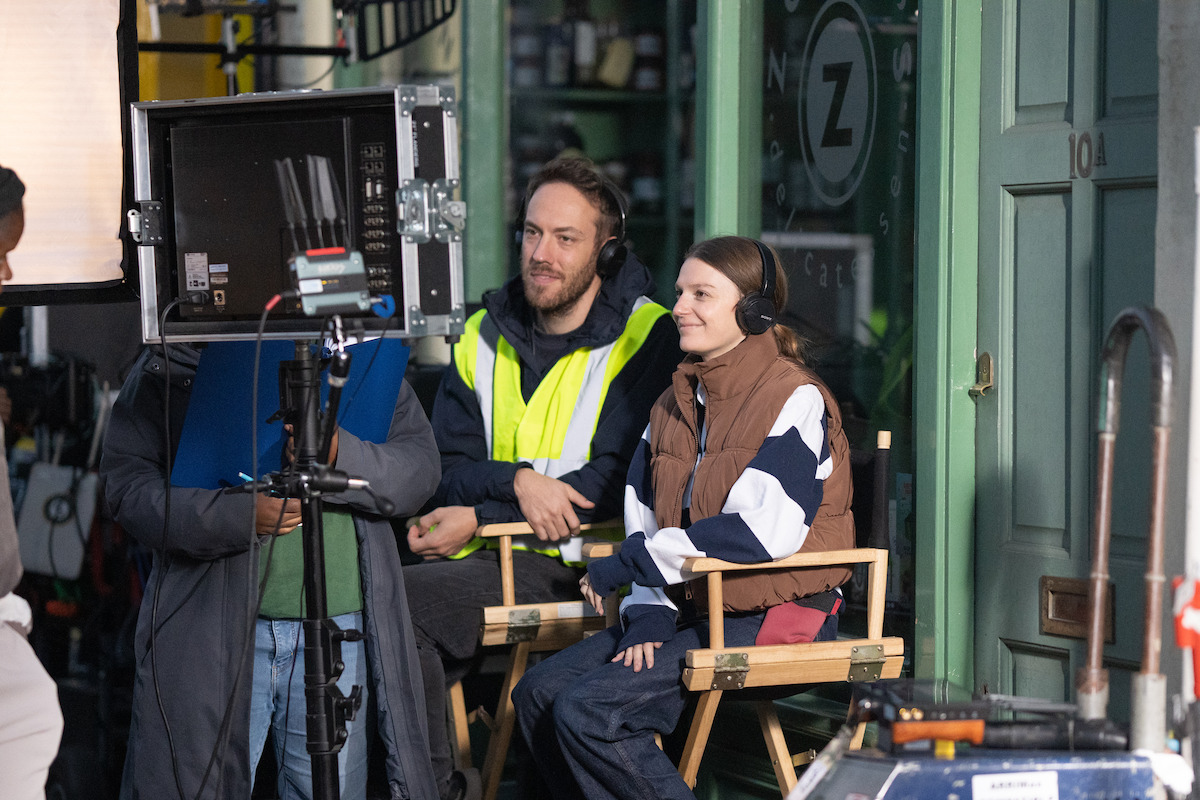
‘Joan Is Awful’ director Ally Pankiw on the set of ‘Black Mirror’ Season 6.
“Every time I read it was like peeling back another layer of an onion.”
Even while auditioning for the episode, Lorette didn’t know what greater role Source Joan would play in the story. “You’re desperately grasping at context rules,” she says. “There’s so many different ways that Black Mirror can go. When I finally did get my eyes on the entire script, I didn’t guess it. Got close! But didn’t guess it, which just speaks to how brilliant Charlie Brooker is.”
For director Pankiw, the episode “says a lot about the true horror women feel when their image is consumed by other people or society, especially when that control is taken away.”
That’s why, as the episode goes on, Murphy’s Joan tries to do whatever she can to get Hayek Pinault to demand Streamberry cancel the show — including dressing up in a cheerleader outfit, painting a lipstick penis on her forehead and pooping in the middle of a church while a wedding is taking place. Yep, you read that correctly. However, it turns out it’s not Hayek Pinault herself playing TV Joan — it’s a deepfake version. Hayek Pinault has signed her own rights away to the streaming service. “This episode is a wild ride,” said Pankiw. “Every time I read it was like peeling back another layer of an onion.”
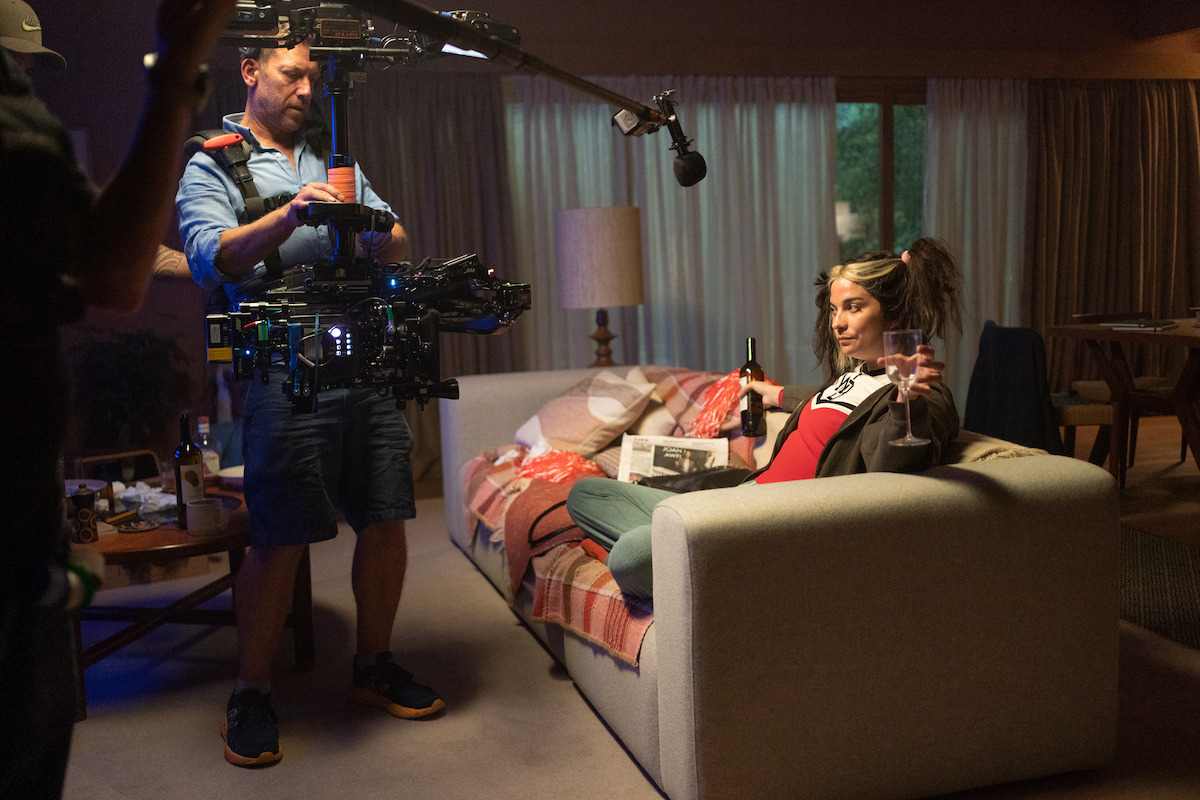
Ensuring the different layers were distinct came down to design choices. Lorette says that director of photography Catherine Lutes made sure that her level felt like “the most loose,” with natural lighting so that it was “the least cinematic” of the three and felt “grounded compared to the other two.”
But Lorette, Murphy and Hayek Pinault also made sure there was an overlap in character traits in each of their Joan iterations. “Even though Source Joan would never directly touch the Salma tone, literally and narratively, [Pankiw] had us all sit together and read scenes to inform small ticks and gestures, things that I’m sure are too subtle to be perceived,” Lorette says. “But it was nice just to share space and try to create something cohesive between all the Joans.”
Not only did the Joan actors have to overlap, each of their surroundings also had to speak to each other. Production designer Udo Kramer, who’s no stranger to mind-bending layers thanks to his work on Dark and 1899, tells Tudum that he thinks of the episode as “a multilayered web.”
“First, you get the levels right in your brain,” Kramer, who helmed the design of each episode of Black Mirror Season 6, explains. “Then you see how every level might communicate through the other levels. You have certain props that you [see] on level 2, and then you find it would be cool if this is on level 1, and then develop how the level 2 prop would look on level 3.”
For the broader setting, Kramer wanted to create a generic, every town-style backdrop so that “Joan Is Awful” could appear to take place anywhere in the world. Interestingly, his inspiration came from an unusual source: car commercials. “You have a fancy car, you go to this big city, you don’t see advertising at all, you rarely see people — it’s this cleaned-up version of a city that can be everywhere,” he says. “Every audience would find a way to see themselves. It’s not specific for one country — that’s more difficult than you would imagine to design.”
While some elements of the production are deliberately open to interpretation to make the episode widely relatable, others have to be exact. Take the flooring in the episode’s memorable church scene, for example. “You have a universal location [like a church], and then you add the elements that amplify the script beats,” explains Kramer. “If you have a brown church and you kind of… release yourself on the brown tile floor, it’s less funny than if you see a perfect white carpet lining up to the priest ending in the explosion of a white floral arrangement.”
“You don’t have to resign yourself to any fate.”
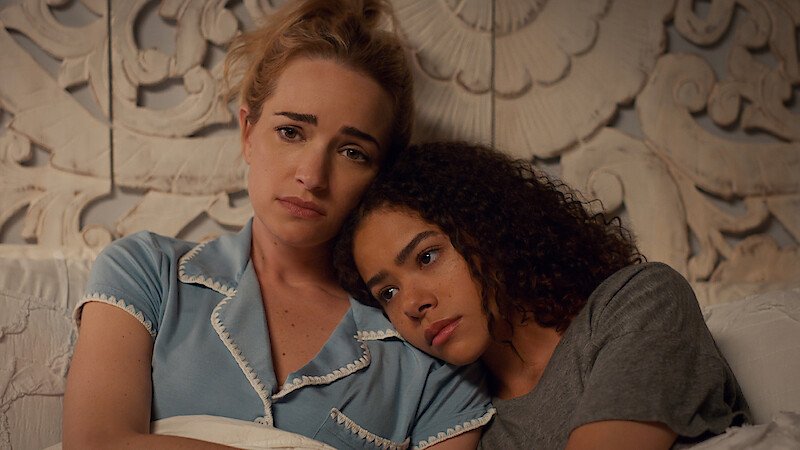
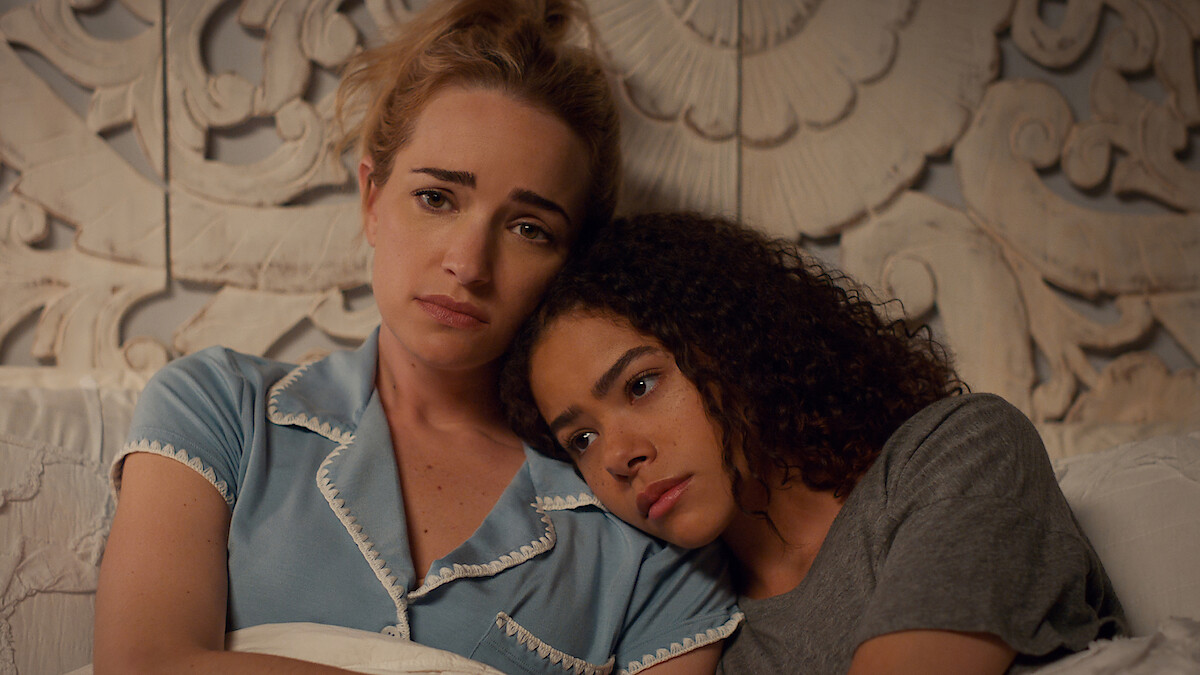
At the end of the episode, we learn that what we’ve been watching — Murphy as Joan watching Hayek Pinault play her on TV — is actually a false reality. Murphy has also signed over her likeness to Streamberry, so an AI-generated version of her has been playing a TV version of Joan too. The real Joan, or the Joan one “fictive level” down from Murphy, is a relatively average woman (Lorette) who’s been watching AI Murphy play out her life on-screen. Or, as Murphy puts it, “it’s such a mindf**k.”
Confusing, for sure, but the episode raises important concerns. “ ‘Joan Is Awful’ is ultimately about consent,” Pankiw told Netflix. “It’s about how women are consumed by media and by society. It’s not heavy-handed, though, because it’s also about poop jokes and female friendship. ‘Joan Is Awful’ is an episode that I hope people watch more than once because the themes reveal themselves over time. We’ve tried to weave those themes through in a subtle way, as opposed to bashing you over the head with it.”
And even if you don’t fully understand the story the first time you watch, there’s one very easy lesson to take away from the episode. “Always remember to read the terms and conditions before [you] sign something,” said Pankiw. “I’d also love audiences to be reminded that you don’t have to resign yourself to any fate, whether it’s the relationship you’re in, your job or just about anything in your life that you feel like you don’t have control over. Maybe you don’t need Salma Hayek to remind you of that. Instead, you can find the strength in your heart.”
Stream Black Mirror Season 6 now.