Video
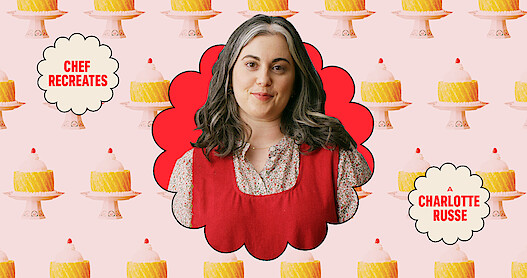
Claire Saffitz Recreates a Charlotte Russe Worthy of ‘Bridgerton’
“It’s a really romantic and light and airy dessert.”
By Jamie Beckman
March 29, 2022
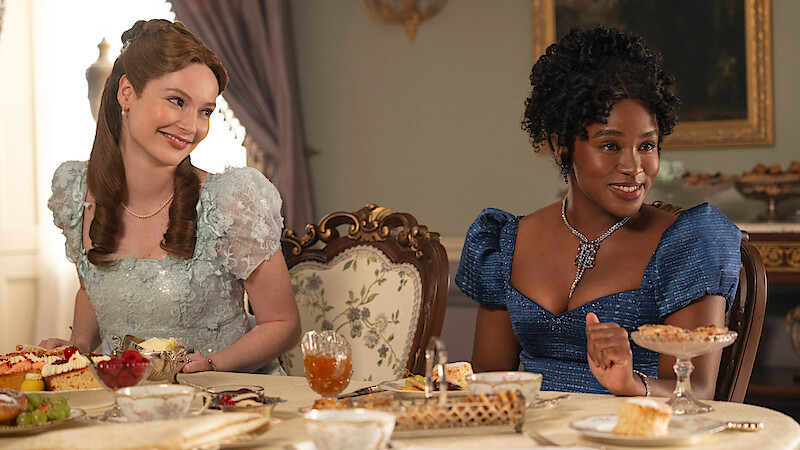
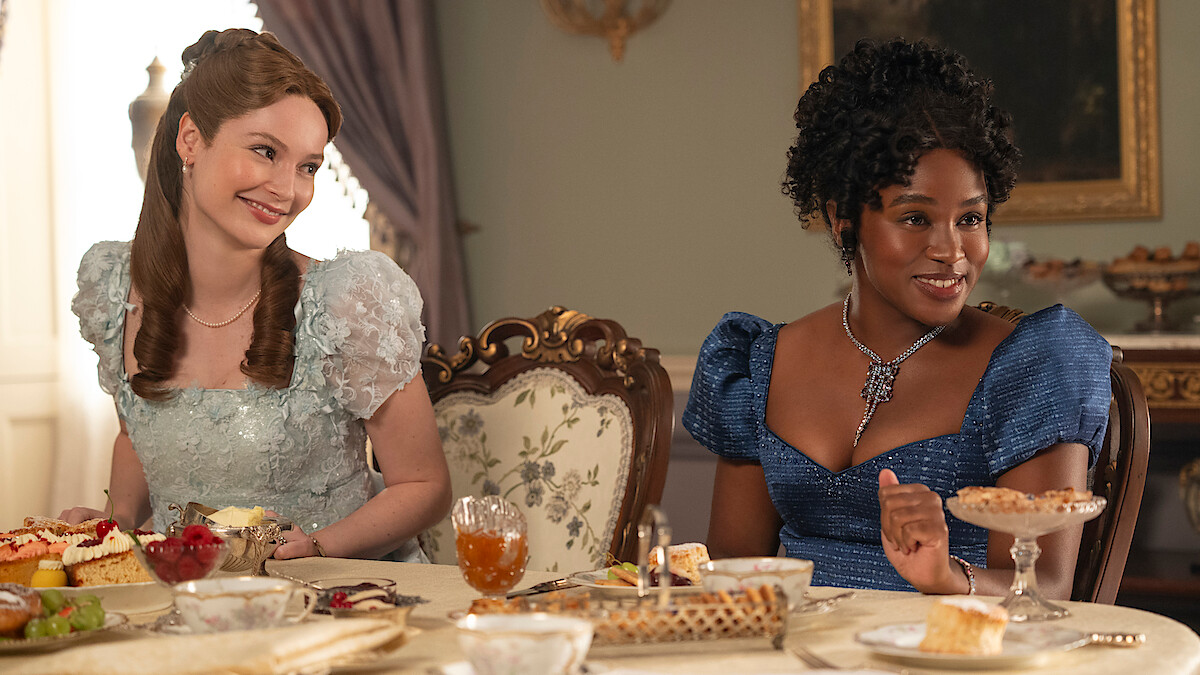
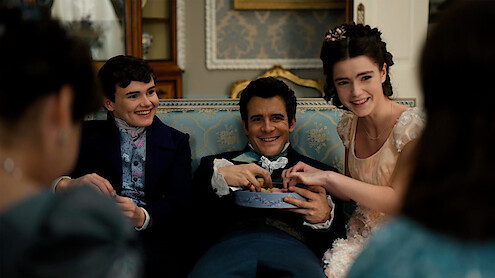
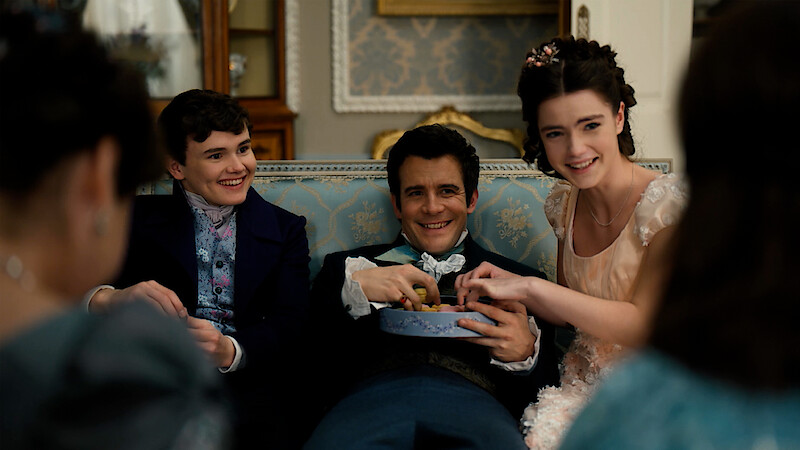
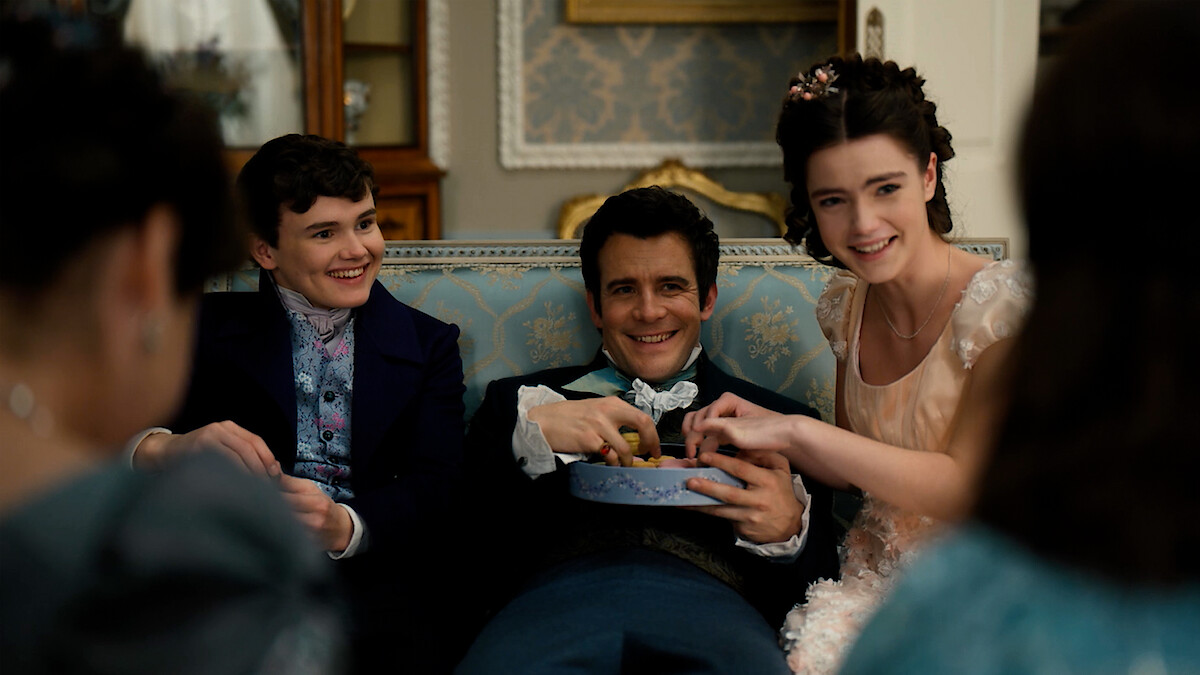
Dearest reader: Perhaps even more comforting than savoring the plot of Bridgerton’s newest season is gazing upon the tiers of sumptuous confections featured so prominently in the show. Everywhere from modest drawing rooms to the most extravagant of balls, there are treats for the taking — and tasting.
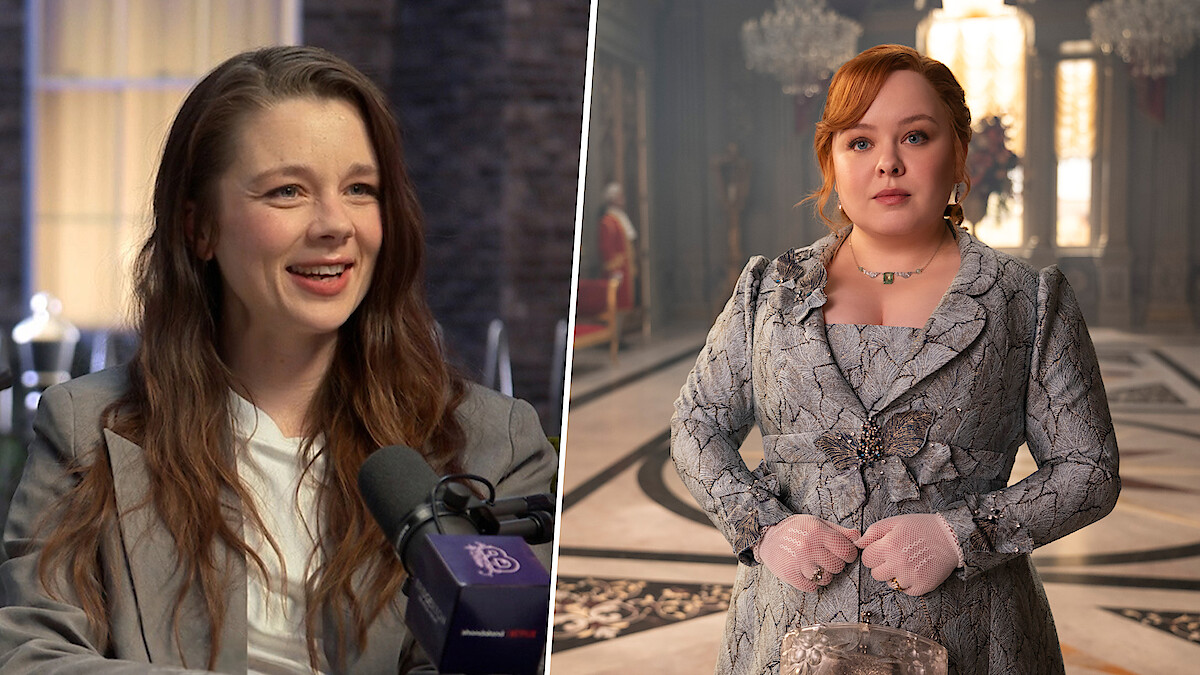
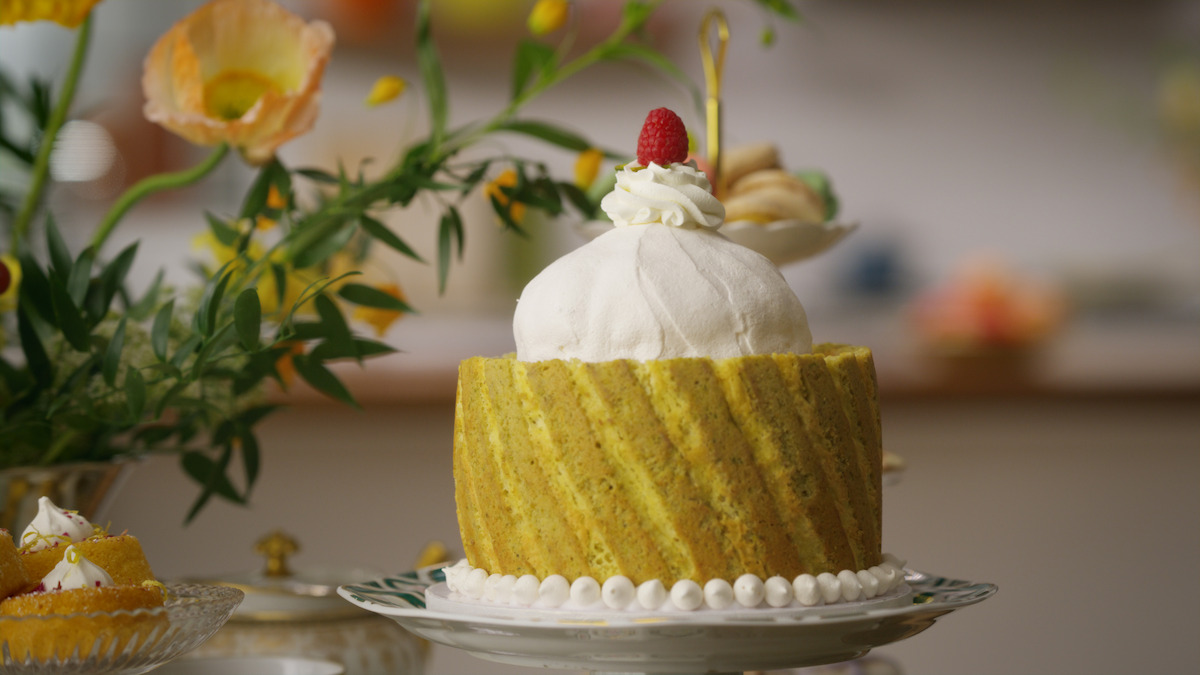
Now you can make a lavish dessert worthy of Bridgerton in your own home by following this recipe for a raspberry charlotte russe with pistachio and rose water from chef Claire Saffitz. A Bridgerton fan herself, Saffitz was inspired by all the desserts in the show to create this sculptural cake fit for, well, Queen Charlotte.
“I love the Bridgerton series because it just creates the most lavish, extravagant, colorful, beautiful landscape,” Saffitz says. “And I love being able to go into that world and really appreciate the costumes — and especially the food.”
The layered cake, vibrant in pastel green and pink, fits neatly into that universe, both visually and from a story perspective.
“It’s a really romantic and light and airy dessert,” Saffitz says. “It has a very vertical look, so I think it would be right at home in the show.”
As for the cake’s (edible) finishing touches, like handmade meringue pearls dotting the border and a hollow dome to lend extra height, Saffitz dreamed them up with Regency-era drawing rooms in mind.
“One really defining quality of all of the desserts of the Bridgerton era is refinement,” Saffitz says. “We’re in the Bridgerton world, so of course it cannot just be, like, a plain charlotte russe. It has to be highly decorated and ornate.”
While making this extraordinary confection — or just observing Saffitz as she demonstrates — let’s take a moment to appreciate today’s kitchen conveniences, like electric mixers. In the early 1800s, as Saffitz points out, one would have no choice but to beat the meringue by hand.
Serves 8 Special equipment: 7-inch cake pan with 4-inch sides, plastic wrap, serrated knife
French meringue decoration Unsalted butter, at room temperature, and all-purpose flour, for the mold 2 large egg whites, at room temperature (70 grams) pinch of cream of tartar pinch of kosher salt ⅔ cup granulated sugar
Pistachio sponge 1 cup all-purpose flour, divided 3 ounces blanched pistachios ¼ teaspoon baking powder 3 tablespoons unsalted butter, at room temperature 2 tablespoons pistachio paste ½ cup confectioners’ sugar 75 grams egg whites, at room temperature 5 large eggs, whites and yolks separated ½ cup plus 2 tablespoons granulated sugar ½ teaspoon vanilla extract ½ teaspoon kosher salt
Raspberry rose Bavarian filling and assembly 1 tablespoon powdered unflavored gelatin 10 ounces frozen raspberries ½ cup granulated sugar Pinch of kosher salt ¼ teaspoon rose water 2 ⅔ cups heavy cream, chilled, divided 6 ounces fresh raspberries ¼ cup plus ½ cup raspberry jam Royal icing, for decorating Slivered pistachios, for garnish
Butter and flour the meringue mold: Use a pastry brush to evenly coat the exterior of a 3-inch-diameter bowl with room-temperature butter. Cover the exterior in a piece of parchment paper, cutting slits all the way around and overlapping the strips so it takes the form of the bowl, also buttering the parchment so the strips lie flat and smoothing to eliminate air bubbles. Lightly dust the parchment with flour and set the bowl aside.
Prepare the baking sheet and preheat the oven: Line a rimmed baking sheet with a silicone baking mat or parchment paper and set aside. Arrange an oven rack in the center position and preheat to 200 F.
Make the French meringue: Combine the egg whites, salt and cream of tartar in the bowl of a stand mixer fitted with the whisk attachment and beat on medium-low speed until the whites are broken up and frothy, about 20 seconds. Increase the speed to medium and continue to beat until the whites are foamy and opaque, about 30 seconds, then gradually add the sugar in a slow, steady stream. Once all the sugar is added, continue to beat, scraping down the sides occasionally, until the meringue is very dense and glossy and forms a very firm peak, about 2 minutes.
Make the decorations: Transfer the meringue to a pastry bag fitted with a small round tip. Pipe several dozen pea-sized beads of meringue across the prepared baking sheet, spacing them apart so they don’t stick during baking. Pipe a thin layer of meringue around the parchment-covered bowl, starting at the top and piping in a tight spiral outward, until you’ve covered the whole bowl. Use a small offset spatula to smooth the meringue to form an even dome. Place the bowl on the baking sheet and transfer it to the oven and bake until the meringue is crisp and very dry, 75 to 90 minutes. Remove it from the oven and set aside to cool.
Prepare the baking sheet and preheat the oven: Line a rimmed baking sheet with a silicone baking mat and lightly butter the mat. Increase the oven temperature to 400 F.
Make the pistachio sponge layer: Combine the ½ cup of flour, pistachios and baking powder in the bowl of a food processor and process until the pistachios are very finely ground. Transfer the flour mixture to a small bowl and set aside. Add the butter and pistachio paste to the food processor and process until the mixture is smooth. Add the confectioners’ sugar and process until the mixture is lightened, about 30 seconds. Add the 75 grams of egg white and process again until the mixture is thick and smooth, about 30 seconds. Add the reserved flour mixture and process just until combined.
Pipe the pistachio layer: Transfer the pistachio mixture to a pastry bag fitted with a round tip with a ¼-inch opening. Pipe tight parallel lines running diagonally across the prepared baking sheet, covering about two-thirds. Transfer the baking sheet to the refrigerator while you make the sponge.
Make the sponge: In a medium bowl, combine the egg yolks and ½ cup of granulated sugar and beat with the hand mixer fitted with the beaters, starting on medium-low and slowly increasing to high, until the mixture is very pale, is tripled in volume, and forms a slowly dissolving ribbon as it falls off the end of the beaters back into the bowl, about 4 minutes. Beat in the vanilla.
Meanwhile, combine the remaining 5 egg whites and salt in the clean bowl of the stand mixer fitted with the whisk attachment and beat on medium-low speed until the whites are broken up and frothy, about 20 seconds. Increase the speed to medium and continue to beat until the whites are foamy and opaque, about 30 seconds, then gradually add the remaining 2 tablespoons of sugar in a slow, steady stream. Beat the egg whites just until they form a firm peak.
Remove the bowl from the stand mixer and sift the remaining ½ cup flour over top of the egg whites. Scrape the yolk mixture into the stand mixer bowl and fold the mixture with a large flexible spatula just until all the flour is incorporated and the mixture is streak-free. Remove the baking sheet from the refrigerator and pour the sponge batter over top, then use an offset spatula to smooth the sponge in an even layer all the way to the sides and corners.
Bake the sponge: Transfer the baking sheet to the oven and bake until the surface of the sponge is an even golden brown and springy to the touch, 8 to 10 minutes. Remove from the oven and let cool.
Cut and fit the sponge into the mold: Center 2 stacked 6-inch cake rounds in the bottom of a 7-inch cake pan with 4-inch sides (tape in place if necessary), then line the pan with plastic wrap, leaving overhang all the way around. Use a serrated knife to cut around all 4 sides of the baking sheet to loosen the sponge, then, starting at one of the shorter ends, trim the sponge crosswise with a serrated knife so you have 2 rectangular pieces measuring 11 inches long and 4 inches wide. Cut a 6-inch circle from the remaining sponge. Carefully peel the 2 rectangular pieces of sponge away from the baking sheet and fit around the inside of the lined cake pan, pressing them against the sides with the striped sides facing outward. They should fit together to line the mold in a single, circular layer. Set the mold and the round of sponge aside.
Make the Bavarian filling: Place ¼ cup of cold water in a small bowl and sprinkle the gelatin over top (do not stir). Set it aside. While the gelatin is hydrating, combine the thawed frozen raspberries, sugar and a pinch of salt in a small saucepan and bring to a boil over medium-high heat, stirring to dissolve the sugar. Boil the mixture for 8 to 10 minutes, then remove the saucepan from the heat and scrape in the softened gelatin mixture and stir thoroughly to dissolve it. Pour the mixture through a mesh strainer set over a large bowl and use a flexible spatula to press the mixture through the strainer, scraping the solids to extract any pulp (discard solids). Set the bowl inside a larger bowl filled partially with ice water and stir, scraping the bottom and sides of the bowl, until the raspberry mixture is cold and thickened to the consistency of applesauce. Stir in the rose water. Remove the bowl from the ice water. Whip the cream: Place 2 cups of cream in the bowl of the stand mixer fitted with the whisk attachment and beat, starting on low and then increasing the speed as the cream thickens, until you have firm peaks. Scrape about a third of the whipped cream into the raspberry mixture and fold to combine, then gently fold in the remaining cream in 2 additions until the mixture is streak-free.
Assemble the charlotte: Set aside the nicest fresh raspberry for garnishing the top, then combine the remaining raspberries in a small bowl with ¼ cup of the raspberry jam and fold gently to combine. Scrape about half of the Bavarian mixture into the lined mold and smooth the surface. Scatter the raspberry and jam mixture across the surface in an even layer, then top with the remaining Bavarian and smooth the surface (it should come to just below the top of the sponge). Place the round of sponge on top of the Bavarian so it’s flush with the outer pieces of sponge and press gently to flatten. Cover the mold in plastic and refrigerate until the Bavarian is cold and set, at least 6 hours.
Unmold: Warm the remaining ½ cup of raspberry preserves in a small saucepan, whisking occasionally, until it’s fluid, then strain through a mesh strainer to remove the seeds. Remove the mold from the refrigerator and uncover. Invert it onto a serving platter or cake round, then pull down on the plastic to help dislodge the charlotte from the mold. Remove the mold, then peel away the plastic. Pour the strained raspberry jam onto the surface of the Bavarian filling and spread it around with a small offset spatula to cover the entire surface inside the sponge border.
Decorate: Tug on the ends of the parchment strips to dislodge the cooled dome of meringue from the bowl. Fill the inside of the dome with the whipped cream and invert the cream-filled dome and place it in the center of the charlotte. Place the remaining cream in a piping bag fitted with a star tip and set aside. Pipe small pearls of royal icing around the bottom of the charlotte and press a bead of meringue into each circle, working all the way around. Repeat the process around the base of the meringue dome. Pipe a rosette of cream on top of the meringue dome and place the reserved raspberry on top. Decorate around the raspberry with the slivered pistachios.