Culture
‘Don’t Look Up’ Is the Perfect Satire for Our Current Moment
What happens when we stop believing in science?
By Maria Sherman
Dec. 24, 2021
Within 10 minutes of Adam McKay’s Don’t Look Up, a harrowing discovery is made: The world will end in six months and 14 days once a massive comet collides with Earth, according to the exacting calculations of space brains across the country. A major question looms over all: Uhhh, is anyone going to do something about it?
When McKay began writing Don’t Look Up, he conceived the film as an allegory for climate change. Would politicians act on an impending apocalypse if it were as visible and tactile as, say, a comet hurtling toward Earth? Of course, the devastating effects of climate change are already happening, and we’re still struggling to get people in power to take the threat seriously. Now with the COVID-19 pandemic, it’s impossible not to read the movie in those terms. The greatest virologists, epidemiologists and scientists on the planet have determined how COVID spreads, and they stress the importance of getting vaccinated, wearing masks and social distancing in order to stop ceaseless human suffering and death. Yet it has become a politicized culture war. Doing the right thing is an ideological matter, the facts be damned. Don’t Look Up manages to directly address those issues, albeit with a completely absurdist lens.
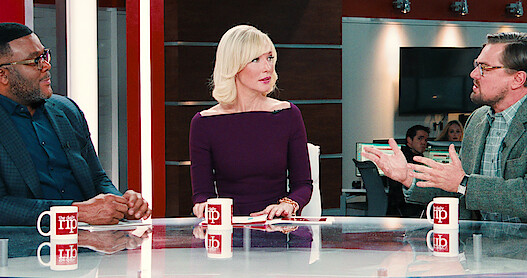
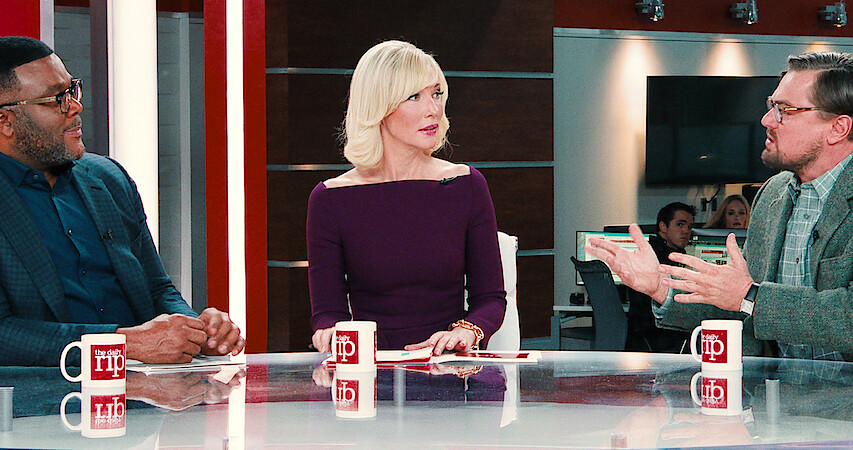
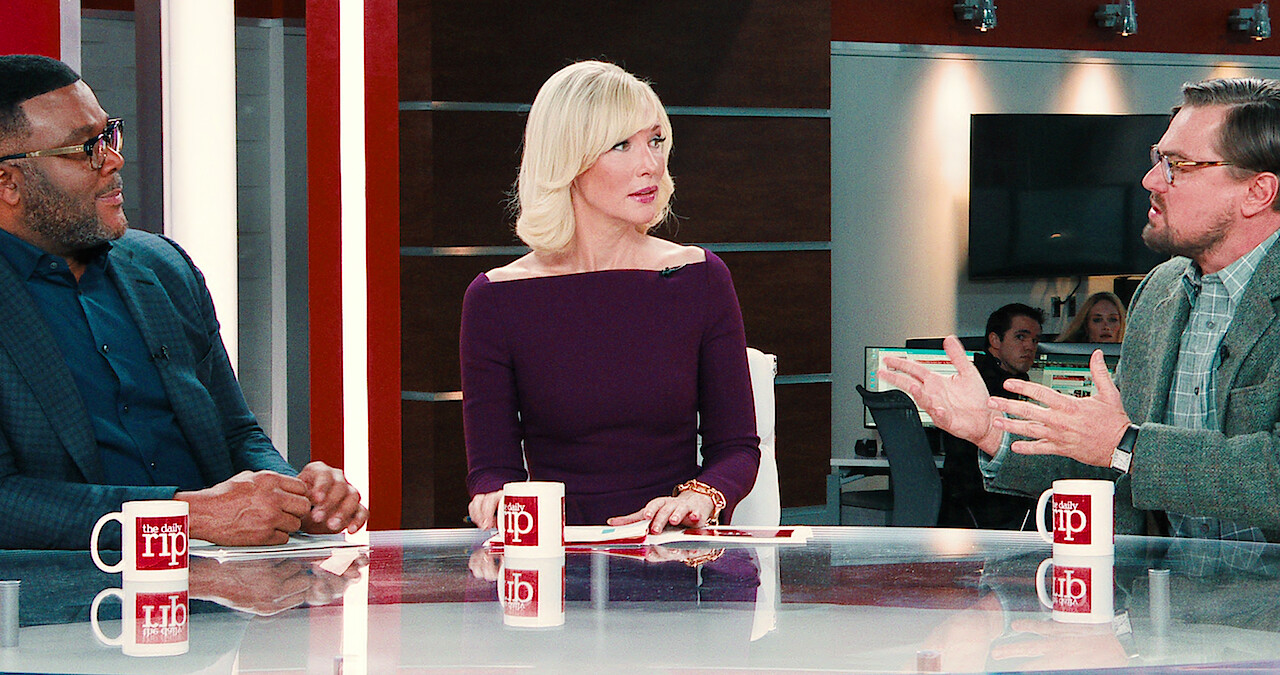
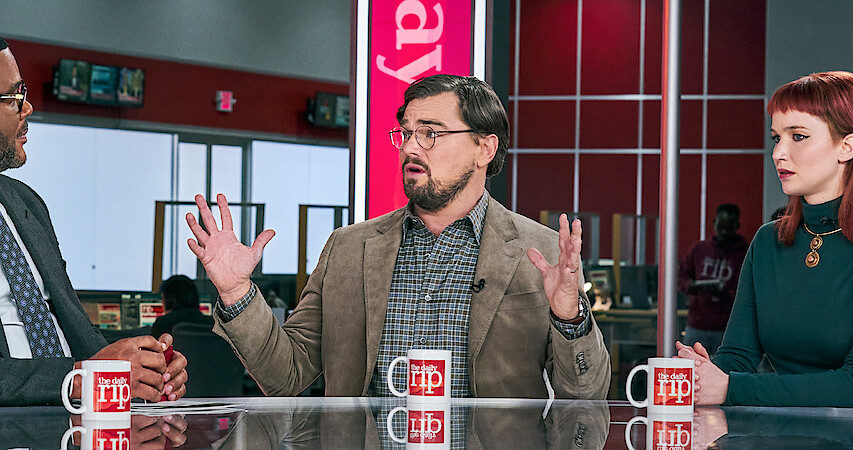
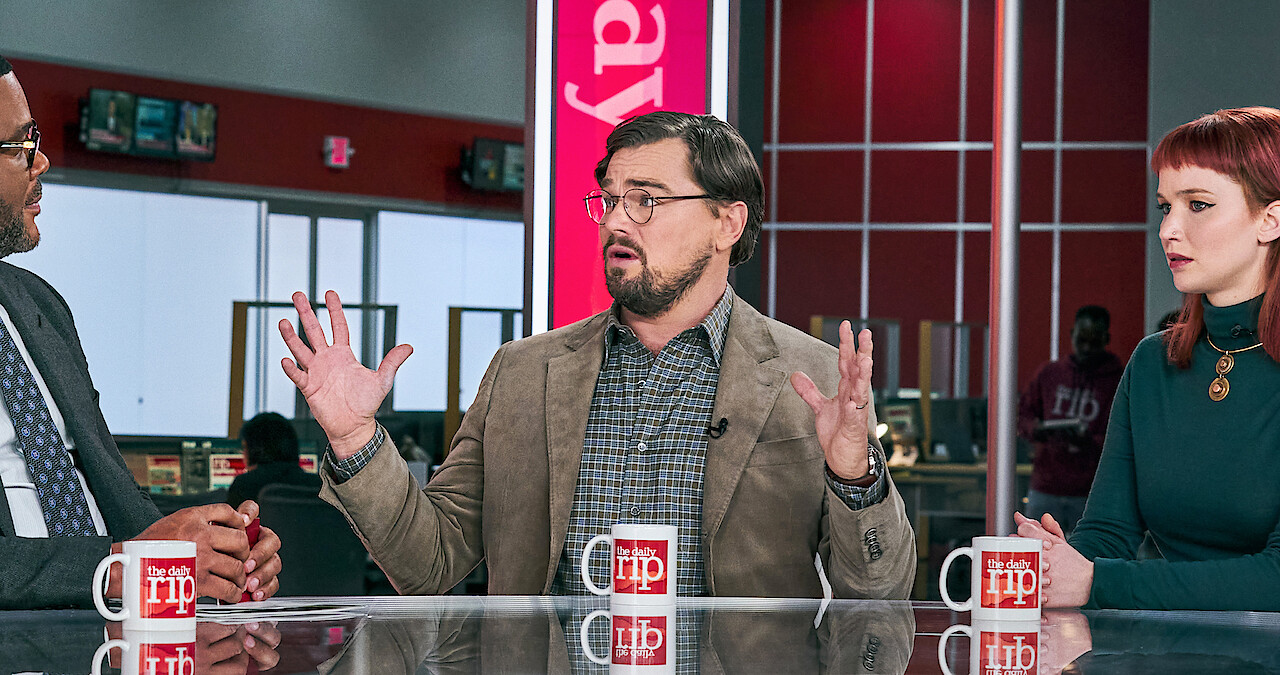
In the film, astronomer Dr. Randall Mindy (Leonardo DiCaprio) and his brilliant stoner PhD student, Kate Dibiasky (a mulleted Jennifer Lawrence), represent science. Armed with the knowledge of the impending, humanity-eradicating apocalypse, they go to the White House to plead with self-interested President Janie Orlean (Meryl Streep) and her son, mindless chief of staff Jason Orlean (Jonah Hill), to save the world from impending extinction. But as it goes with egotistical and dangerously vapid leaders, the president is dismissive of the cataclysmic threat looming over mankind — that is, until doing the right thing benefits her reelection campaign. You laugh so you don’t cry. The film is a direct reflection of our current frustrating existence.

In the years leading up to the current climate, we’ve dealt with endless discourse around cold, hard facts. Capitalism and diplomacy get in the way of our understanding and acceptance of science because of personal and party interests. People simply refuse to accept reality when it isn’t convenient to their needs or desires. McKay faces that notion head on in Don’t Look Up, and in the process, calls out the anti-science nonbelievers among us. When the federal government fails to take action, Randall, Kate and other members of the scientific community (including the kind-spirited Dr. Teddy Oglethorpe, played by Rob Morgan) turn to the media to get their message across. However, news of a celebrity couple (Ariana Grande and Kid Cudi) breaking up and then making up overshadows the confirmation that the world is ending.
When NASA discovers a solution and puts it into action, the richest man in the world bypasses humanity’s only option for existence so he can accumulate more wealth, then manages to convince the public that this will actually benefit them. On social media, it’s worse: Misinformation and disinformation spread like wildfire, leading to mass hysteria and total denial of the comet’s existence. The film doesn’t offer any solutions. It simply demands that its viewers confront what is actually happening to the planet and how politics skew the truth. As in real life, there are too many distractions — sometimes concocted for the sole purpose of creating a diversion — leaving the world at large confused, afraid or in the dark.

If the movie didn’t poke fun at the absurdity of it all, it would be a drudge — a direct reflection of our current sociopolitical situation, which lacks the cleverness needed to swallow such a bitter pill. It’s the filmic version of poking a wound. But McKay's ability to highlight the inanity of our times and the dangers of overpoliticization is what makes Don’t Look Up such a perfect satire. Make no mistake: Don’t Look Up isn’t a film from a leftist point of view about the follies of the conservative right in America. It’s an argument for science, which should be able to exist without a political lens attached. If we all listened, the comet would be destroyed, and humanity could continue. Replace “comet” with any of our modern disasters — COVID, climate change, gun violence, you name it — and it works. It is a commentary on what happens when we stop believing in science and, perhaps most distressing of all, recognize that we’re already there.