

Ask an Expert
Aleeza’s Handy Guide to Modern Jewish Dating and Beyond
“When in doubt, go out.”
May 3, 2023
With a history stretching back centuries, the Jewish tradition of matchmaking has a love language all its own. So whether you’ve been through the process yourself or regularly confuse a mikvah with a mitzvah, rest assured that we all have more to learn.
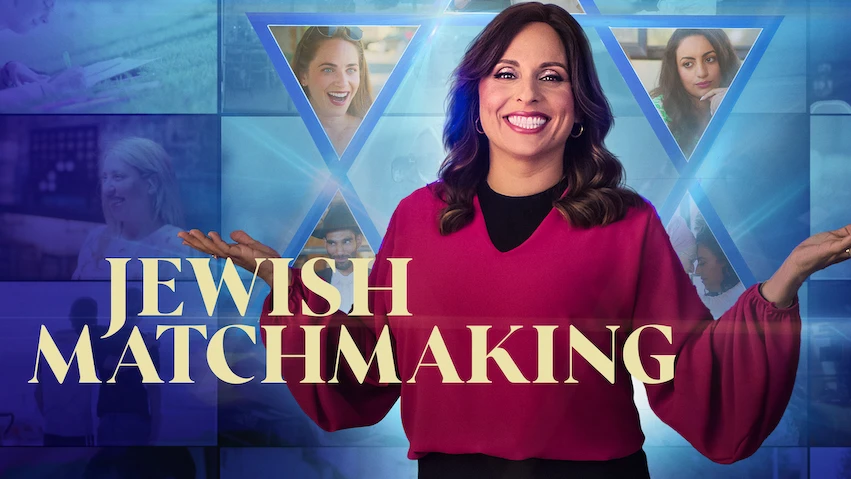
Luckily, there’s no better teacher than Aleeza Ben Shalom. The matchmaker and dating coach at the center of Jewish Matchmaking has helped guide more than 200 singles to their soulmate — and she’s not slowing down anytime soon.
“A common myth is that a matchmaker sets you up and, ta-da, that’s your person,” Aleeza tells Tudum. “But that’s just one of three jobs. The second is coaching. They mentor you, talk and walk you through and help you when you’re having challenges. The third job is what I call the closer. It’s closing the deal and either you get married or if it’s the wrong match, they help you to realize that you should walk away from it.”
Which job does she have? All of them, of course. With so many responsibilities and a range of clientele who identify as everything from Orthodox to Flexidox (more on that later) and beyond, who better to give us a crash course in Jewish dating than the expert herself? Below, in Aleeza’s own words, are her own relationship mantras, relevant Jewish terms, and the customs and practices that come up within this season’s love stories.
Ashkenazi Jews: These are the Jews who hail from Eastern European countries like Poland and Russia, and who brought with them to America some of the most delicious and comforting Jewish foods you can imagine, like brisket, gefilte fish and matzah ball soup.
baal teshuva: A fancy way of saying “late bloomer” in the Jewish world. These are people who didn’t have a religious upbringing and started their religious journey later in life.
bashert: Bashert is the Yiddish term for soulmate, your honey bunny, your partner in crime. But it’s not just any old match — it’s the person who’s going to help you fulfill your divine purpose. (Like, no pressure or anything). They’ll challenge you, support you and make you a better person. So if you find your bashert, hold onto them tight and don’t let go.
chavrusa: When two Torah-loving pals get together to study, it’s called a chavrusa. It’s like a buddy system for your brain. You can discuss, debate and learn together — just make sure your chevrusa doesn’t turn into a “chatter-usa”!
chuppah: The chuppah is like a Jewish wedding tent, but instead of camping gear, you get a piece of cloth on four poles. The chuppah represents the home that the bride and groom will build together. During the ceremony, the bride and groom stand under the chuppah, along with their families and the officiating rabbi. It’s a great way to test whether everyone can stand being in close quarters with each other for an extended period of time.

“Date ’em till you hate ’em”: When it comes to dating, it can be tough to know when to cut your losses and run. That’s why I’ve got a little slogan to help you out: “Date ’em till you hate ’em.” It’s like a dating version of “try it before you buy it.” But instead of trying out a new blender, you’re trying out a new partner.
Think of it like a dating experiment. By continuing to date someone even when you’re not sure, you’re gathering data and gaining clarity. And who knows, maybe you’ll discover something unexpected and end up falling even more in love. But if not, at least you’ll know that you gave it your all and won’t have any regrets. And remember, it’s not you, it’s them. Or maybe it is you, but that’s OK too.
dating baggage: It’s like carrying around a suitcase full of emotional leftovers from your past relationships. And let’s face it, no one wants to date someone who’s still holding onto their moldy sandwiches of love gone wrong.
Flexidox: A term for those who keep some Jewish laws but don’t quite identify as Orthodox. But let me tell you, in Judaism, we don’t play that labeling game. We’re all part of the same tribe, whether you’re a kosher-keeping maven or a bagel-loving schmear enthusiast. As long as you’re living a meaningful Jewish life and connecting with your faith, who cares about labels? You don’t need to be a full-blown Torah scholar to be part of our mishpachah (family.)
frum: Frum is a Yiddish term that describes Jews who strictly observe religious practices. But it’s not just about strictness — it’s about going all-in on the religious experience. Think of it as being a spiritual superhero: From the way they dress to the way they eat, frum Jews have a superpower for keeping kosher and following Jewish law.
frumkeit: Frumkeit is the whole shebang of being an observant Jew. It encompasses everything from keeping kosher to wearing modest clothing — and even includes the occasional kvetching about the weather.
High Holidays: Rosh Hashanah marks the Jewish New Year and Yom Kippur is the day of atonement — and we refer to these days as the High Holidays. Why? Because it’s a time for us to reflect, repent and renew our spiritual selves. Think of it as a kind of Jewish spring cleaning — except instead of dusting the bookshelves, we’re dusting off our souls. And let me tell you, those spiritual cobwebs can really accumulate over the course of a year (oy!).
But fear not, for during this holy time, we have a direct line to the one above. It’s like the ultimate customer service hotline — no waiting on hold, no automated menus, just a direct connection to the CEO of the universe. It’s like our own little spiritual halftime show.

hishtadlut: Hishtadlut is like putting in effort to achieve your goals, but still remembering to leave room for God to do the heavy lifting. It’s like saying, “I’ll do my best, but I’ll leave the miracle-making to the One above.”
kosher: Kosher, or kashruth if you want to impress your friends, is all about following the divine food laws set out in the Torah. That means avoiding the non-kosher foods like pork, shellfish and the unholy marriage of meat and dairy — sorry, no cheeseburgers. Keeping kosher is like being on a spiritual diet, with more matzo balls and less bacon. So if you want to keep it holy, keep it kosh!
maariv: It’s like the Jewish version of a bedtime story. It’s the evening prayers we recite after sunset to thank God for the day and ask for a good night’s sleep. Just like a bedtime story, it has a central focus — the Shema, the holiest prayer in Judaism that reminds us of the oneness of God. So don’t forget to say your maariv before hitting the hay, or you might have some holy nightmares!
middos: Middos, the Jewish concept of character traits, is like a buffet of virtues — you want a little bit of everything, but not too much of anything! Just like how you balance your plate at a buffet, you want to balance your own middos to live a fulfilling life. And when it comes to dating, forget about looks and focus on middos! After all, a person’s character is like a fine wine — it gets better with time.

mezuzah: Have you ever seen a tiny box on a door frame that looks like it’s been installed by a tipsy handyman? That’s a mezuzah, a Jewish ritual item that contains a special scroll with the biblical Shema prayer about God. It’s like a spiritual doorbell that announces our presence to the Big Guy upstairs. And when we walk through that door, we touch the mezuzah, it’s our way of saying, “Hi God!”
minyan: In Judaism, praying alone is like eating a plain bagel with no spread — it gets the job done, but it’s not very satisfying. That’s why we have minyan, a group of at least 10 men who come together to pray and get their spiritual fix. And the Talmud, Jewish oral tradition, says that when 10 get together the higher power is right there with you.
“mystery in your history”: Feeling like you’ve dated more frogs than you can count? It’s time to dig into your history and find the hidden treasure. It’s about discovering a potential date from your past even when you think there is nobody there. Ready for the shock? Among the people that I work with, 35% end up marrying a mystery from their history.
Orthodox: It’s the fancy term for observant Jewish people who practice their religion daily. But did you know that the word “Orthodox” doesn’t appear anywhere in the Torah, the Jewish [scripture]? That’s right, it’s a modern term that other people came up with to describe us God-loving folks.
Now, let me be clear: There’s no one-size-fits-all when it comes to Orthodox Judaism. But at the end of the day, we all share a love for our faith and a dedication to living in accordance with Jewish law and tradition. Don’t let our seriousness fool you — we know how to have a good time too. We have close-knit communities and love getting together for Shabbat (Sabbath) dinners and holiday celebrations.
schlump: Schlump is a Yiddish word that lovingly describes someone who’s a little sloppy and inept. You know, the kind of person who shows up to a fancy dinner date wearing a wrinkled shirt and mismatched socks. But hey, we all have our schlumpy moments, right?
Sephardic Jews: Sephardic Jews bring the heat. These are the Jews who trace their roots back to Spain and North Africa.
Shabbat: Shabbat is like a weekly spiritual spa day. You kick off your shoes, light some candles and bask in the glow of your own awesomeness (and the candles, of course). It’s a time for relaxation, reflection and lots of delicious food, and time with family and friends. Think of it as the Jewish version of Netflix and chill, but with a lot more challah.
Shabbat takes place between sundown Friday and sundown Saturday. I know Christmas never began at exactly 6:32 pm Friday afternoon, but Shabbat did this week.

shidduch: It’s like Tinder, but for Jewish grandmothers. The shidduch system is our matchmaking. It’s a way of outsourcing the headache of finding a mate to the experienced — highly opinionated — members of our community. And when it works out, we call it a “shidduch made in heaven”— because we all know that’s the only way it could have happened!
shomer negiah: The act of not touching anyone of the opposite sex until you’re married. It helps you focus on building a deep romantic connection without any physical distractions.

tefillin: Also known as “Jewish Fitbit,” tefillin are like spiritual workouts for Jewish men. It’s like hitting the gym for the soul! You strap on a set of black leather boxes containing sacred scriptures and flex your spiritual muscles during morning prayers. And just like a good workout, it’s all about balance — one for the brain and one for the bicep that faces the heart.
tikkun olam: In Judaism, there’s a big job to be done: tikkun olam, or repairing the world. It’s like being a handyman, but instead of fixing leaky faucets, we’re fixing and healing the world. And like any good handyman, we take our job seriously — even if we can’t fix everything, we still give it our all.
“When in doubt, go out”: Listen, when it comes to dating, I like to say, “When in doubt, go out!” Because if it’s not a firm no, it’s a yes for another date. Even if you’re not feeling it just yet. Even if you’re not totally into them. KEEP GOING OUT. Who knows, maybe they’ll surprise you with a hidden talent, like being a great kazoo player or knowing how to juggle flaming pineapples — and you’ll fall madly in love.