Behind the Scenes
KPop Demon Hunters’ Golden Girl is Rumi
At the center of the global phenomenon is a hero defined by her heart and soul.
By Alex Frank
Oct. 30, 2025
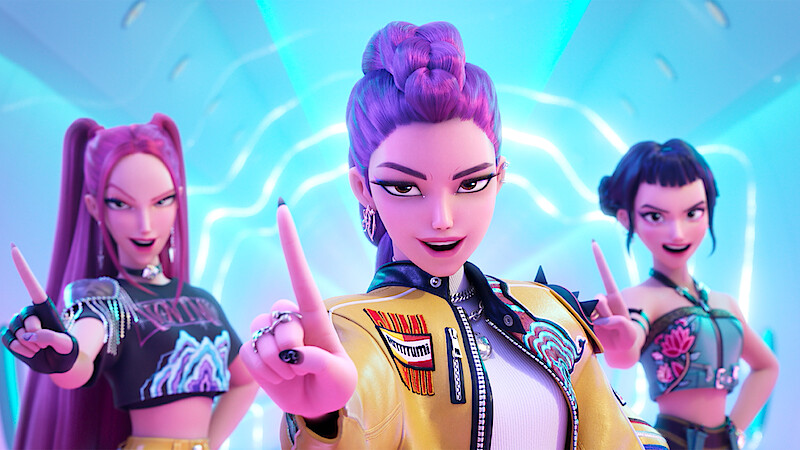
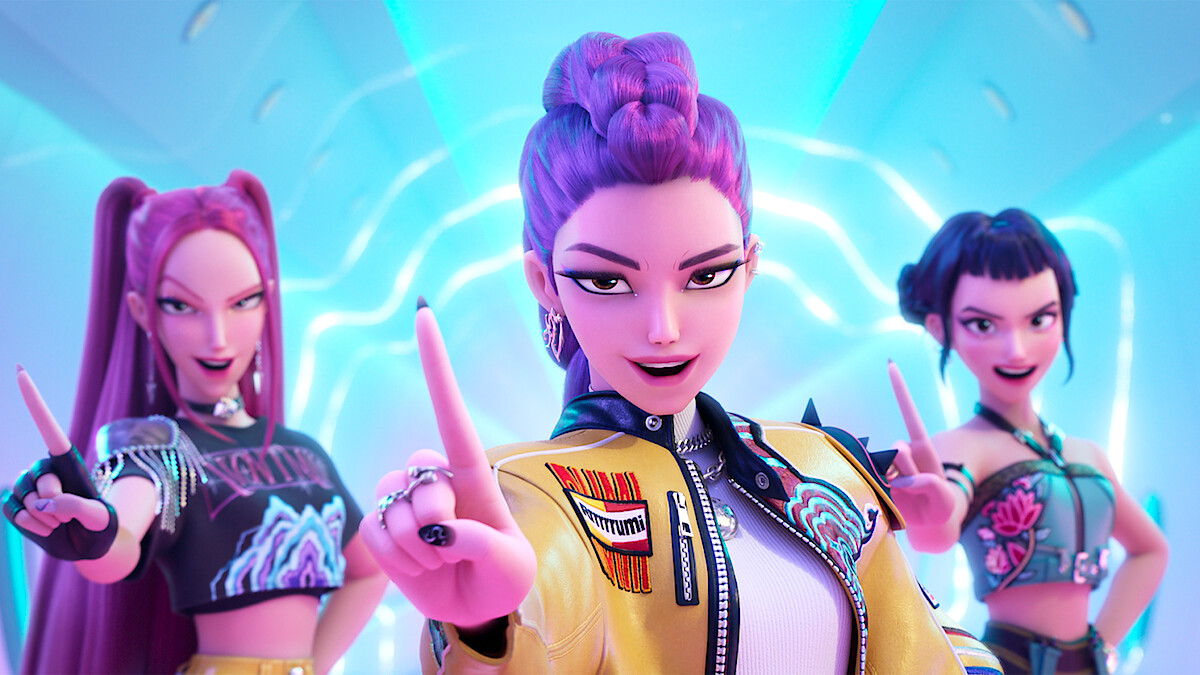
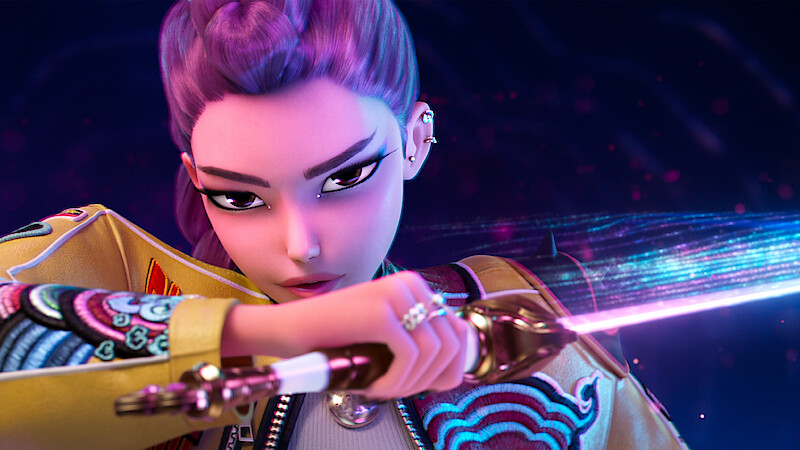
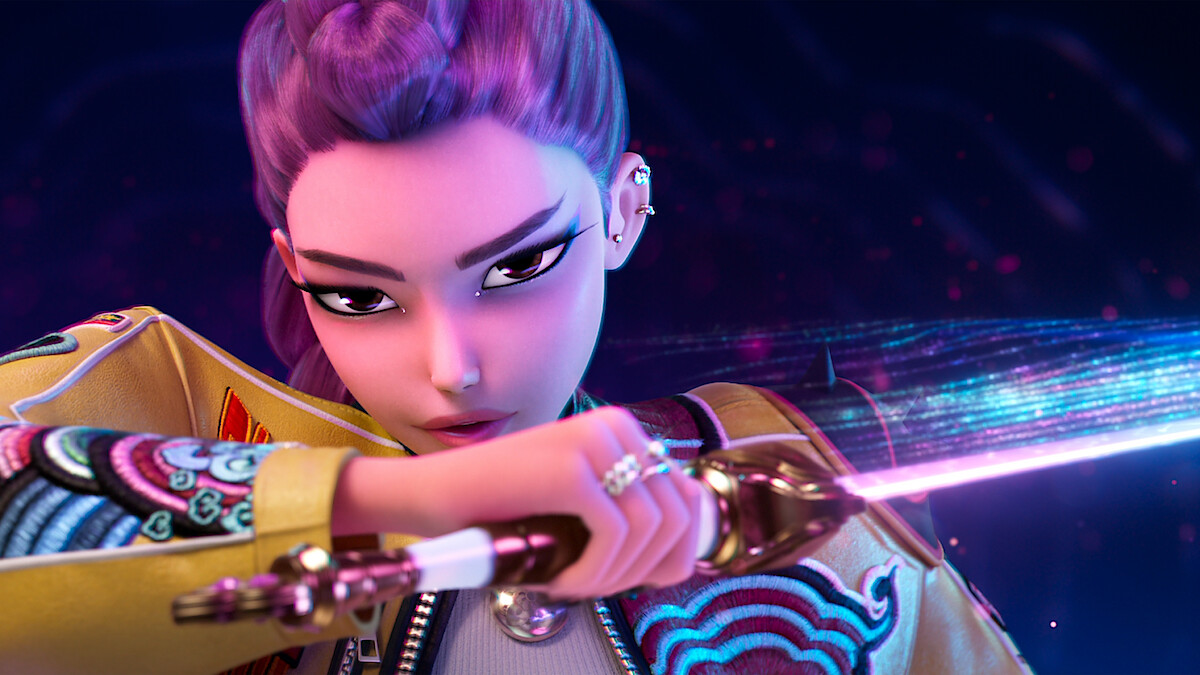
For fans of KPop Demon Hunters — the animated blockbuster that’s shattered streaming records worldwide — it’s almost impossible to imagine the hero, Rumi, sounding any other way than exactly as she does. But for voice actor Arden Cho, stepping into the role of K-pop girl group HUNTR/X’s lead vocalist and demon slayer wasn’t a given. “I actually auditioned for [Rumi’s parental figure] Celine. And when it came back as Rumi, I didn’t know if I’d be right for it. Like, am I cool enough to be Rumi?” Cho remembers. It was her first time doing voice work for a feature film, and the anxiety was real. “There was definitely nerves and uncertainty. I also felt a lot of pressure because Rumi was the No. 1 idol, she’s a star,” she says. “I just felt like I had to be perfect.”
Of course, Cho — the former Teen Wolf star who has also acted in the series Partner Track and the live-action adaptation of Avatar: The Last Airbender — brings Rumi to life with razor-sharp wit, an infectious sense of humor, and powerful vulnerability. As it turns out, her worry about getting things “perfect” prepared her immeasurably for the role: The real heart of Rumi isn’t faultlessness; it’s the impossible weight of trying to be immaculate even when reality is a bit trickier. “She has to hide her flaws, and she has to be perfect. She has to be the leader, she has to be good at everything. And I feel like this is a very cultural thing. I feel like I grew up with similar pressures. And I think when you grow up feeling like you have to be so perfect, you don’t really get a chance to figure out who you really are,” Cho says. “Rumi's fighting to figure that out for herself.”
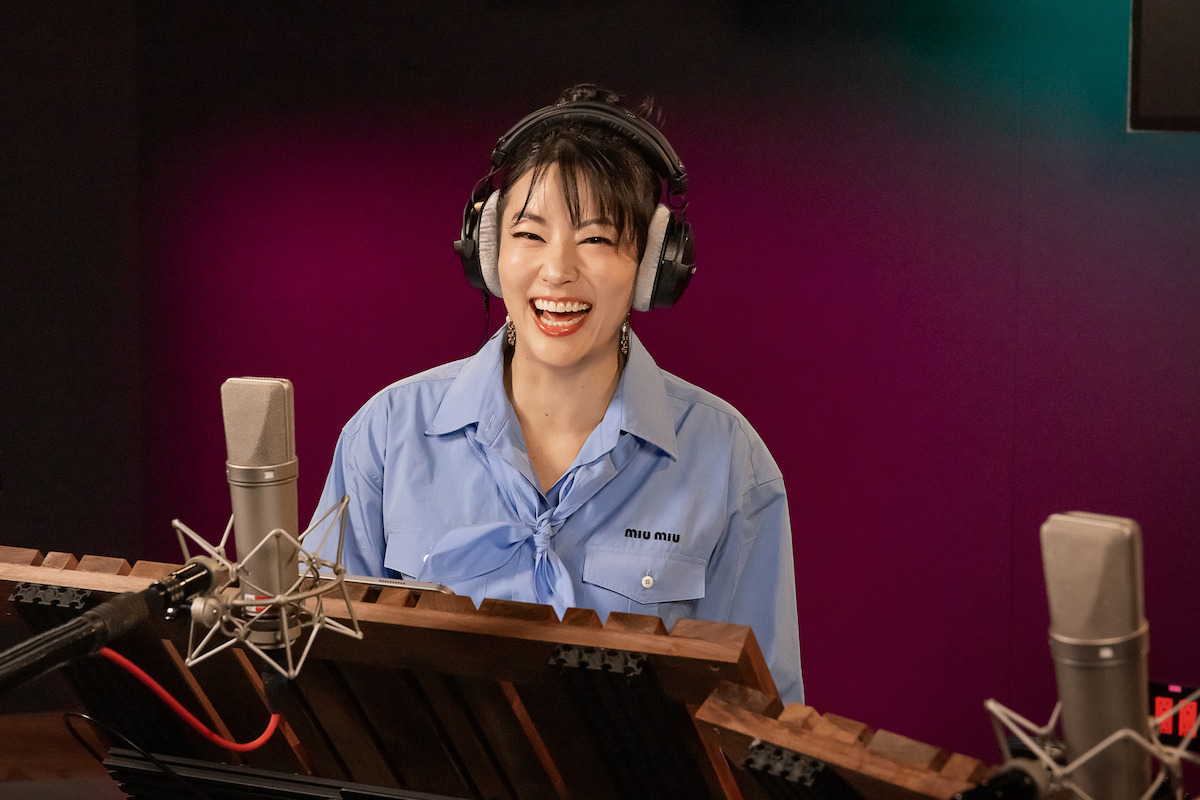
Arden Cho in the recording booth capturing the voice of Rumi.
In the film, conceived by Maggie Kang and directed by Kang and Chris Appelhans, Rumi has a profound point of difference from her fellow bandmates, one that she has to conceal from those closest to her: she has demon heritage herself. Though she hides in plain sight as one of the world’s biggest K-pop stars, Rumi carries a hidden lineage. On one side of her family, she descends from the same otherworldly predators that she and her bandmates, Mira and Zoey, have been trained to fight. “She spends most of her life working really hard to cure herself of this thing that she's ashamed of, which is admirable but also sad,” says Appelhans. Ultimately, Rumi is able to harness her secret into a strength. “We were very intrigued by the idea of inner demons, because it’s something that I think everybody has. It’s that little voice in your head that is telling you negative things when you don’t really want to hear it. And it never goes away — it’s just always going to be there. The idea of Rumi having her inner demon be an actual demon was a really interesting idea,” says Kang. “We wanted to tell people you can make a choice about how you want to live your life — even though there's this little voice that's nagging you.”
Cho only inhabits one half of Rumi’s identity — for her singing voice, the creators turned to singer-songwriter EJAE, born Kim Eun-jae, who not only voices Rumi in the film’s many musical segments, but in some cases co-wrote the melodies and lyrics behind her hits. That includes HUNTR/X’s ode to empowerment “Golden,” which has topped the charts in more than 15 countries, including the US. The track’s origins were as humble as they come. “I was on my way to the dentist, and I heard a melody [in my head]. I’m like, I have to record this — literally on my phone,” she remembers. “Those are moments as a songwriter that’s just a miracle.” What started as a brief voice note is today a song without borders — an emotional touchstone cherished by listeners across the globe. “When I’m on my TikTok and I see people who I don’t know in their homes singing songs that we wrote — there’s nothing that can explain it. I feel connected to people I don’t know,” EJAE says. “It's such a hopeful song. I feel like we need hope right now.”

EJAE, now based in Brooklyn, New York, was born in Seoul and once trained to be a K-pop artist herself, enduring the famously rigorous programs that drill everything from vocals to dance to music production. Though she ultimately moved to New York to strike out on her own, those early experiences in Korean entertainment gave her a visceral understanding of Rumi, a K-pop superstar, on a deep level. “It’s very competitive. You can’t show weakness. You gotta put your best foot forward all the time. Be great at singing, dancing, and look great physically. I think that made me push a lot of my insecurities down,” she says. “But if you do that, the insecurity grows — and I think that I really try to bring that emotion into the singing and the writing.”
In Rumi’s climactic moment — when she must embrace her own imperfections one final time to vanquish the demons and save the world — she sings ”What It Sounds Like,” a soaring anthem for anyone who has ever felt different from everyone else, who has faced life’s trials and emerged triumphant. It’s a track about finding “the beauty in the broken glass,” which EJAE imbues with a fiery sense of purpose. “[Rumi] decides her mission is to acknowledge the fact that we’re all unique, and that we’re all individuals — and get to be individuals. That is what creates harmony. Trying to [communicate] that with her voice,” says Ian Eisendrath, the film’s executive music producer. “She is singing in her most authentic, rich, not-squeaky-clean K-pop sound. What she’s saying is, ‘This is my voice without the lies. This is who I really am. This is what I look like.’ We wanted it to almost be like a battle cry.”
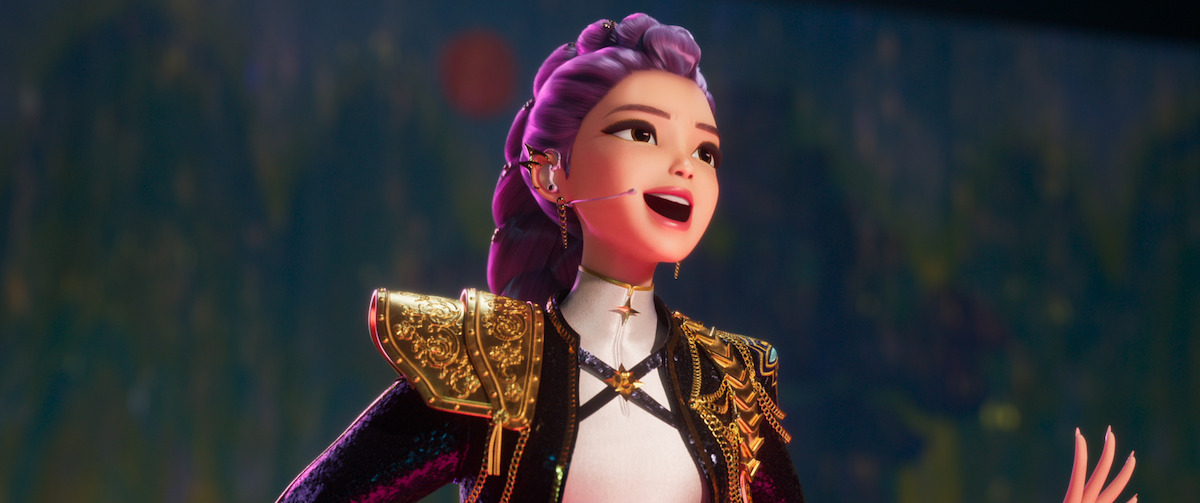
Ultimately, Rumi’s power is not just in how remarkable she strives to be, but in how relatable she already is. “Maggie created this story, and she has a daughter. And so, when she would share about this, I was like, Yeah, this is why I became an actor, so that one day I hope that girls growing up like me wouldn’t think, ‘I want to be someone different,’ that they would want to be who they are,” says Cho. In that way, Rumi becomes less a character than a compass — a role model whose reach spans generations. “I am much older than Rumi, but I feel like it's still something you have to remind yourself of — just to be happy with who you are and not try to be someone else. Rumi's fighting to figure that out,” Cho says, “and I love that journey.”
This feature originally appeared in Issue 22 of Tudum Magazine.