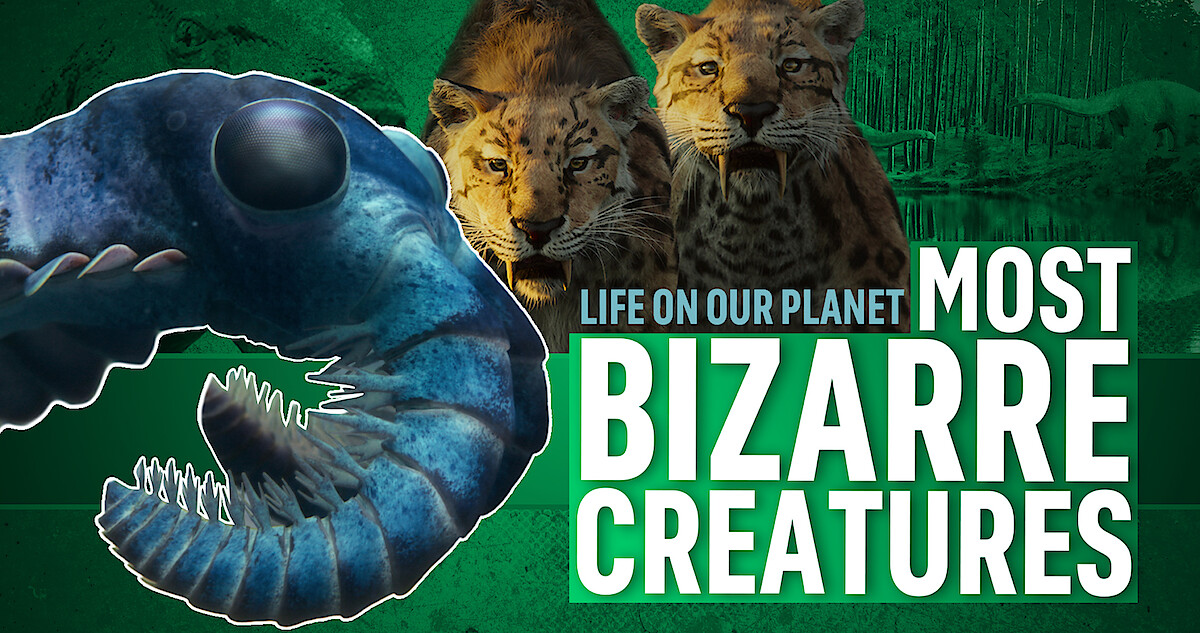
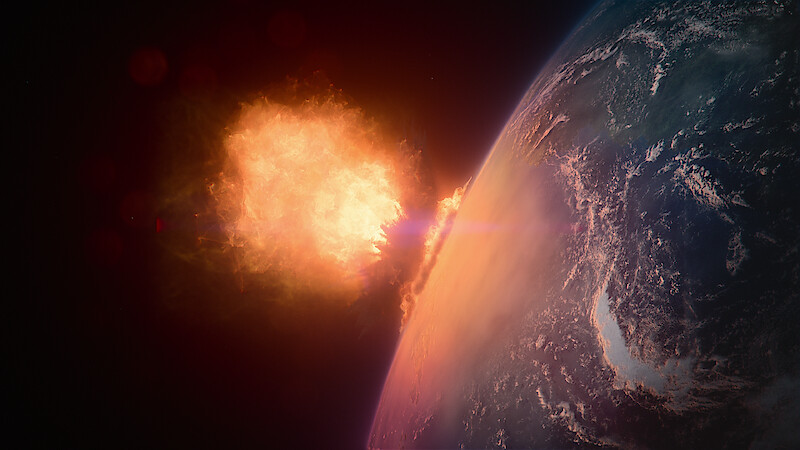
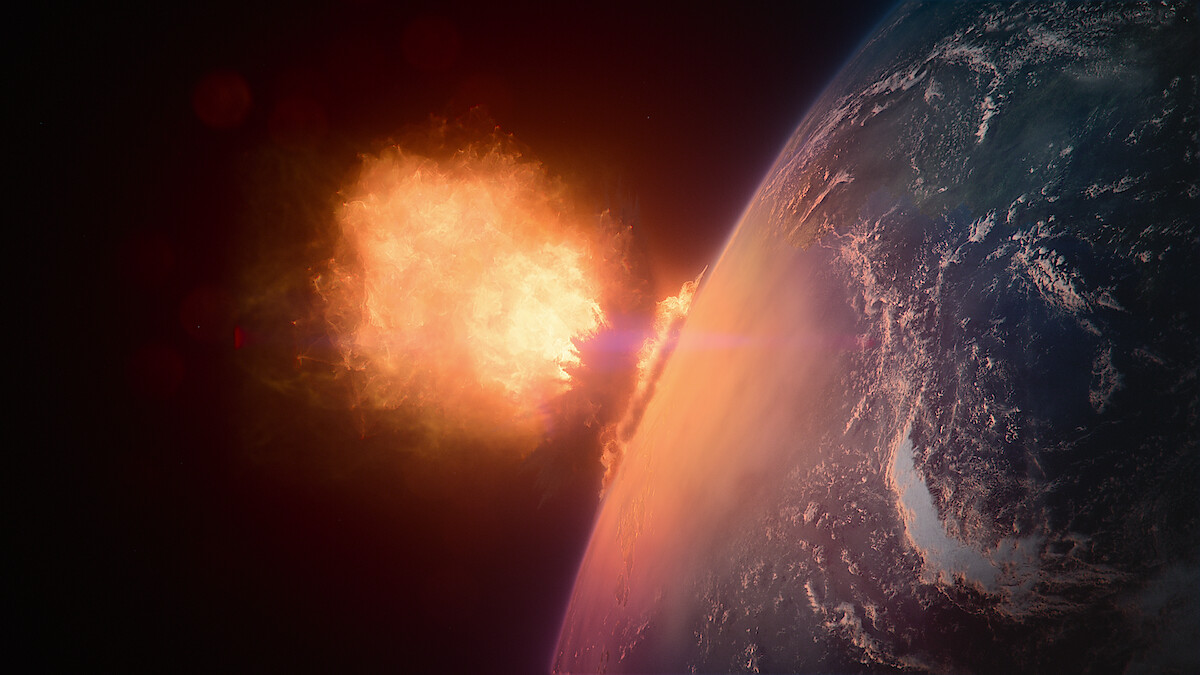
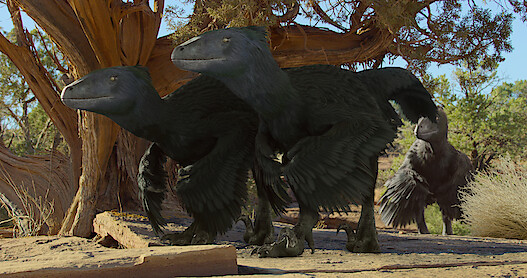
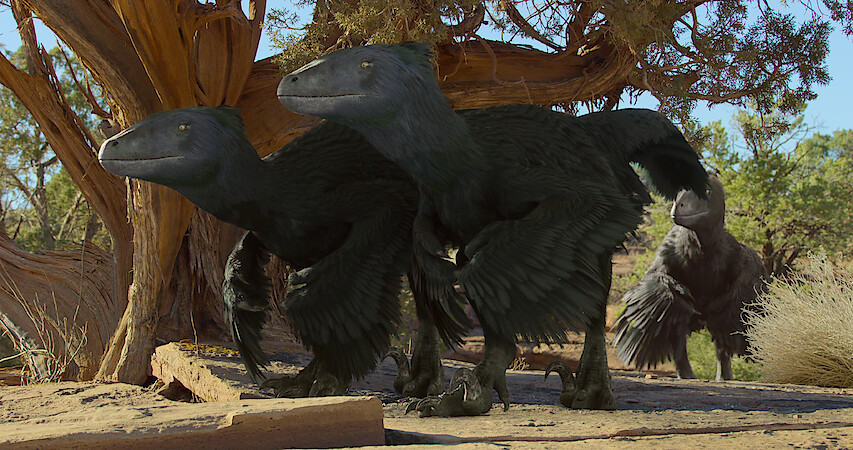
It’s the world’s biggest, oldest story: how life on Earth unfolded. Life on Our Planet explores all of it, from the early microbes and plankton to T. rex and terror birds and, yes, even today’s humans. It’s also the story of mass extinction: the five cataclysmic events that wiped out most living things — and the sixth that we may be hurtling toward.
As narrator Morgan Freeman says in the opening episode of Life on Our Planet, while there are an estimated 10 million species of plants and animals populating our globe now, that represents only 1% of all species that have ever existed. The other 99%, including the fearsome dinosaurs that once walked the Earth? Gone for good.
To bring this expansive tale to life with stunningly realistic visuals (helped by the might of executive producer Steven Spielberg and the computer graphics wizardry of Lucasfilm’s storied VFX studio Industrial Light & Magic), Life on Our Planet needed to answer a 66 million-year-old question:
What did dinosaurs actually look like?
There are the dinos of our imagination, of course, which many of us have dreamed about since we were in diapers. And then there’s Hollywood’s rendering of the prehistoric predators and prey, indelibly influenced by Spielberg himself in a little movie called Jurassic Park. But there’s also the scientific understanding of dinosaurs’ appearance, everything down to their color, eyes, movement, skeletal structure, skin texture, gait, speed, the gape of their maw, and how (in addition to who) they ate.
For Life on Our Planet, filmmakers from nature doc producers Silverback Films (Our Planet) consulted a total of 165 paleontologists and other Earth scientists to refine the depictions of these long-extinct animals to be as accurate as possible. For every single scale, feather, and battle outcome, they always had at least three references to back their storytelling (they often had many more). The latest science guided just about every choice you see on the screen.
Tom Fletcher, the lead scientific researcher on Life on Our Planet and a paleontologist and honorary fellow at the University of Leicester in England, explains the effort that went into getting it right.
“The opportunity to reach millions and millions of people was wonderful, if a little daunting,” he told Tudum. “But four years later, I’m very happy to be telling four billion years of life history and delighted with how our creatures and their stories have panned out.”
But even science has its limits here, as he happily admits. Not everything we see in the eight episodes can be 100% verified. “The scientist’s answer is: We will never know.”
At least, not completely — but his job is to follow all the available evidence. He and other researchers read thousands of scientific papers, sussing out various competing hypotheses on what really went down. If you’ve ever argued with your friends about who would win a fight between a raptor and a protoceratops, know that this kind of stuff forms the foundations of legitimate academic debate (sort of).
“An animal like T. rex, for example — there’s so much attention on it, because it’s such a large, charismatic animal. Yet so many parts of its life are still hugely controversial,” Fletcher says. Behind the scenes of Life on Our Planet, the debated details range from T. rex’s size and teeth to exactly how ripped the infamously muscular predator really was. (It turns out: very ripped indeed… but perhaps not as ripped as cinematic blockbusters lead us to believe).
Of course, not everything is as well studied or as well preserved as the infamous predator. Plenty of Life on Our Planet’s creatures have much more limited fossil evidence. In certain cases, while bone structure was clear enough, science had no clue what the color of a species was. So the filmmakers used their imaginations, and their backgrounds studying wildlife, to help come up with something that “felt right” — a feeling that was always backed up by their consultant team. Harder still were those prehistoric animals that left no bones behind — forcing Fletcher and his collaborators to look at modern-day relatives for inspiration.
“We always tried to go with the consensus,” according to showrunner Dan Tapster. “Following the science is what gives the show a feeling of being ‘real.’ That said, resisting the temptation to go for style over substance was hard!”
If you’re wondering what’s true to life in the sweeping vision of dinosaurs and other prehistoric creatures realized by Life on Our Planet, and how we know, read on for details about the long-extinct animals in the series.
T. rex vs. triceratops (Episode 1)
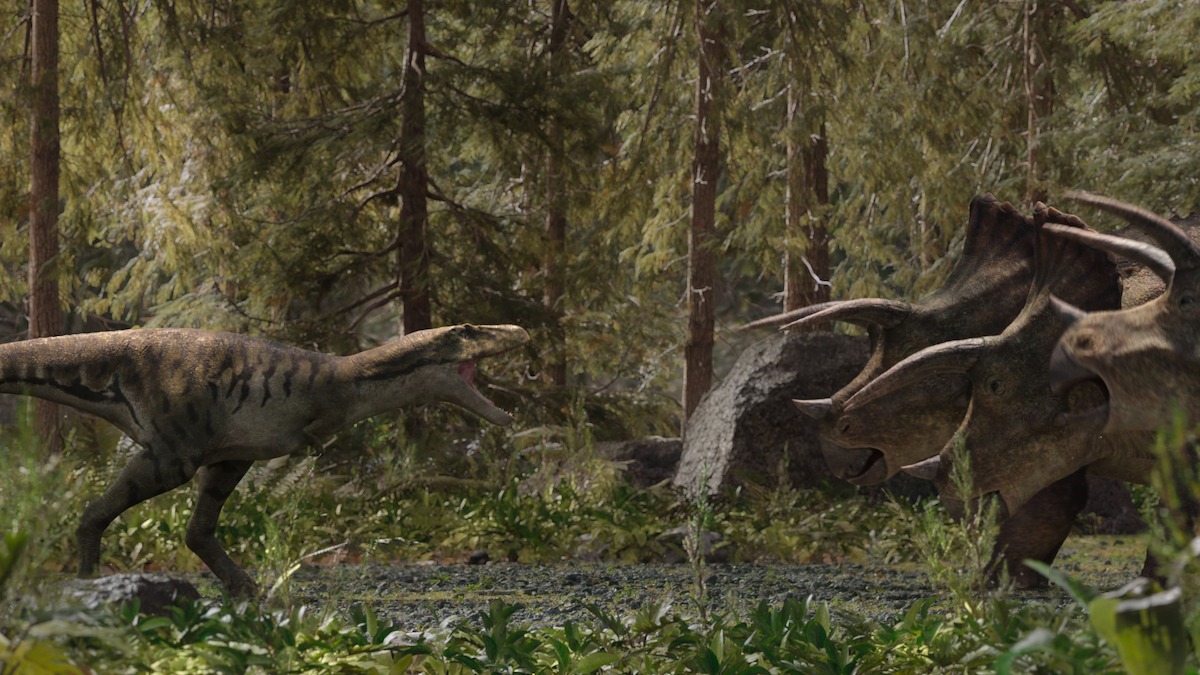
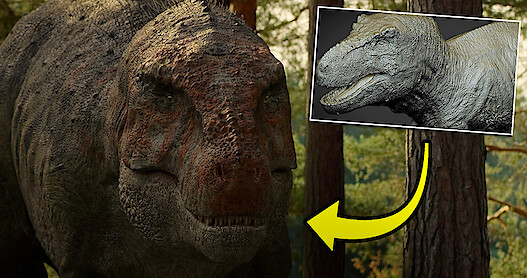
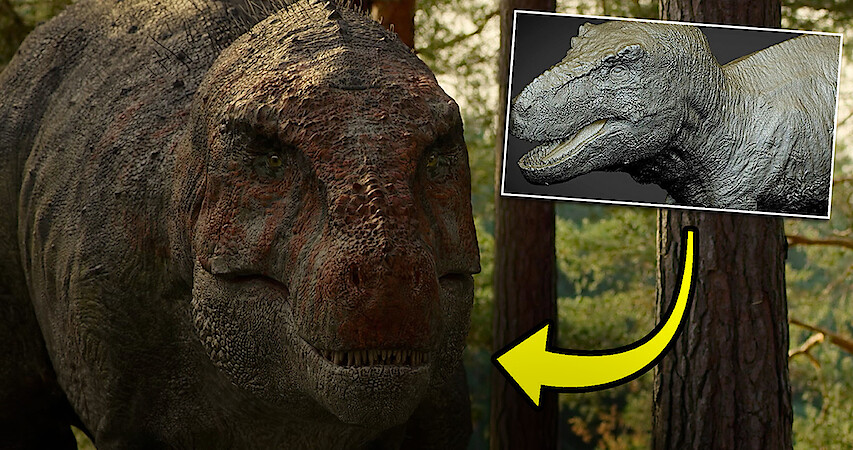
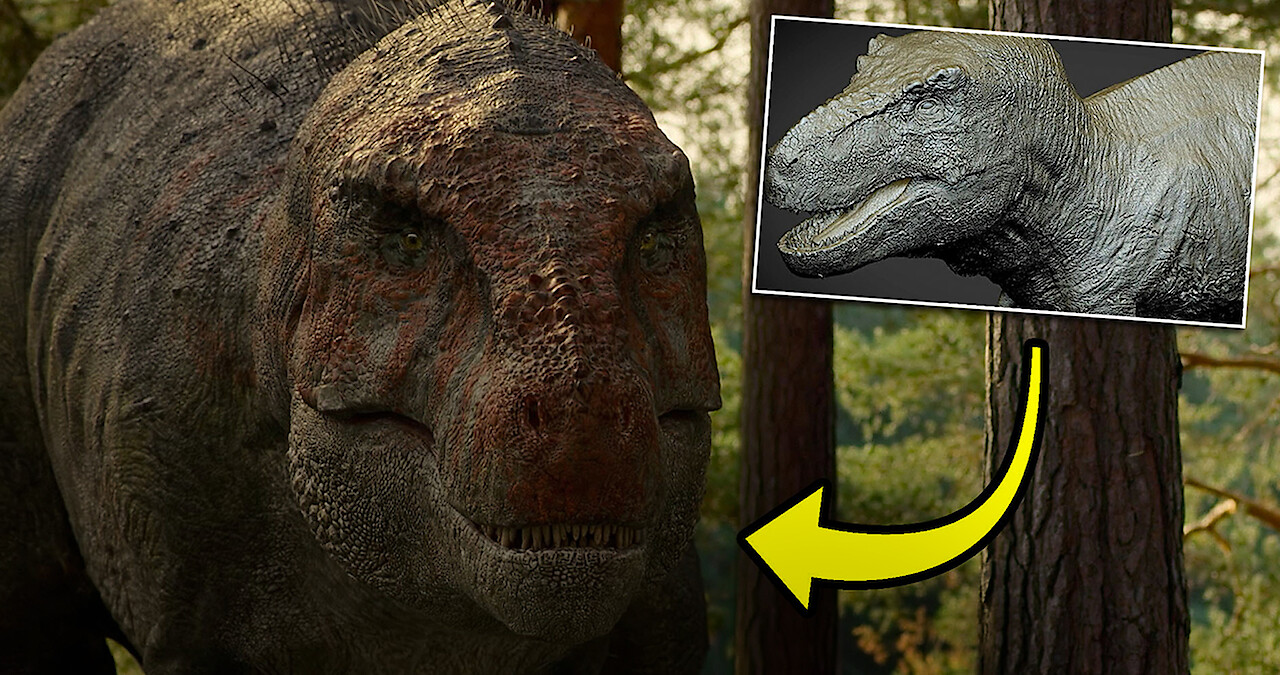
The first major dino-vs.-dino battle in Life on Our Planet is between the legendary T. rex and the triceratops, some 68 million years ago. T. rex is a ruthless carnivore, and triceratops is an herbivore. But it’s not at all certain that T. rex would always be able to take down the gigantic, solid, well-armored triceratops with its three-horned head. An adult T. rex would have been slow and lumbering, making the chase that much harder.
Showcasing their T. rex was possibly the filmmakers’ most grueling challenge. “T. rex is a very controversial animal to design, and in many ways it’s impossible to design one that all paleontologists would agree on,” the filmmakers told Netflix. Drawing on the latest evidence, this one is big but not all that tall (definitely not the skyscraper size seen in certain fictional films), with puny arms. And she’s muscular, just not to a “shrink-wrapped” level that only Hollywood’s dinos seem to be able to achieve. And despite having one of the most powerful bites in history, its prey is so well-armored that there’s not always a clear winner.
Arandaspis (Episode 2)
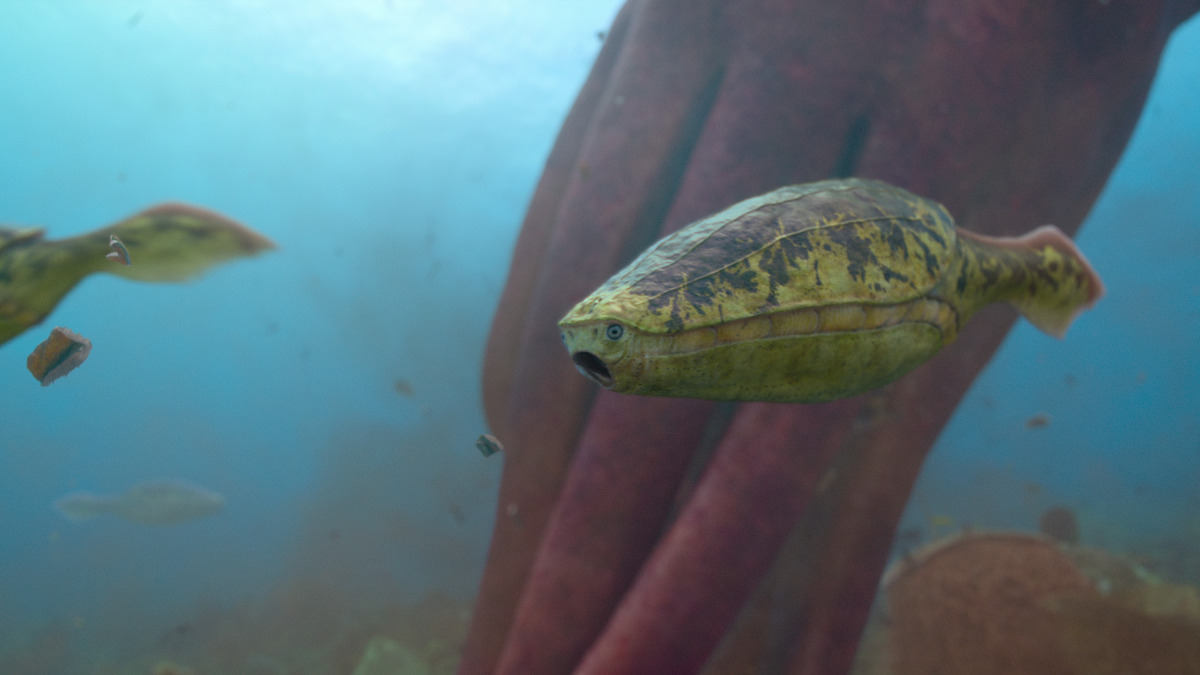
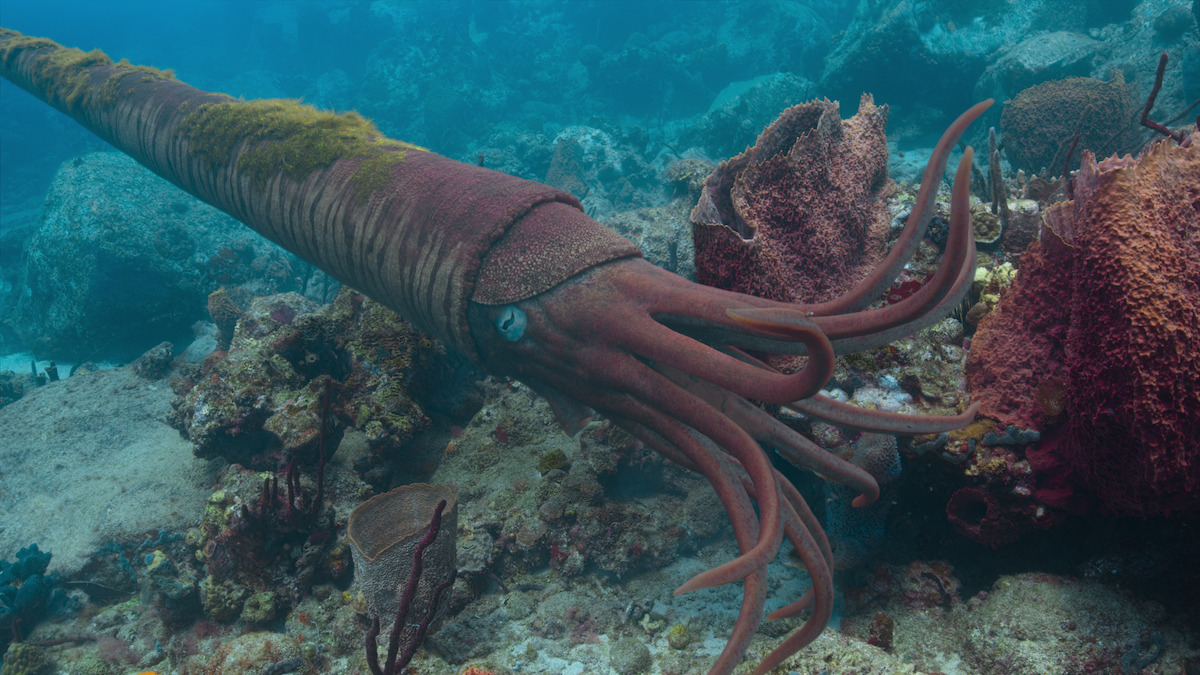
Life on Our Planet follows the dramatic rise and fall of animal “dynasties’’ across Earth’s history: how a group would come from the shadows to dominate and how they would then be squashed. One that emerged seemingly from nowhere: Arandaspis, among the very first fish, who swam alongside hard-shelled trilobites, sponges (ancient animals that are still around today), and the freaky-looking giant shelled squid-like Cameroceras (more on that below). “He’s almost the definition of an underdog — tiny, seemingly useless,” Tapster said. (Sorry, Arandaspis, but you know it’s true.) Yet perhaps in part because of its diminutive nature, the backboned fish survived the impending ice age. “And 470 million years later, we exist because of him.”
Cameroceras (Episode 2)
A personal favorite of Fletcher’s, the shelled cephalopod didn’t leave much of a physical footprint behind, but it was “the largest thing around” about 468 million years ago, he said. The squid-like creature is not only enormous, but there’s also something uniquely menacing about those slimy tentacles and the glassy stare of its eyes.
Arthropleura aka giant millipede (Episode 3)
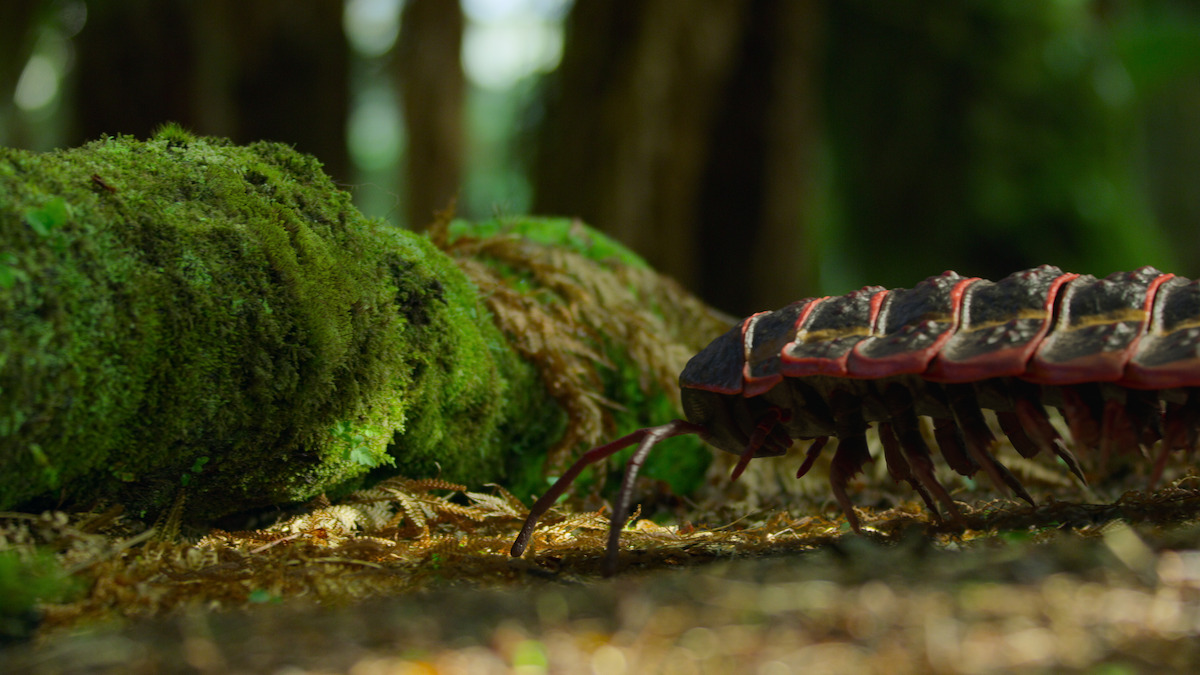
This ancient arthropod (technically not an insect, though related) was the length of a car, and its numerous not-so-little legs skittered like machinery. The filmmakers worked with scientists to create the most accurate — and terrifying — computer model yet of this giant millipede. Don’t worry: the Arthropleura went extinct over 250 million years ago — though you might wish it was 260 million, just to be safe.
Lobe-finned fish (Episode 3)
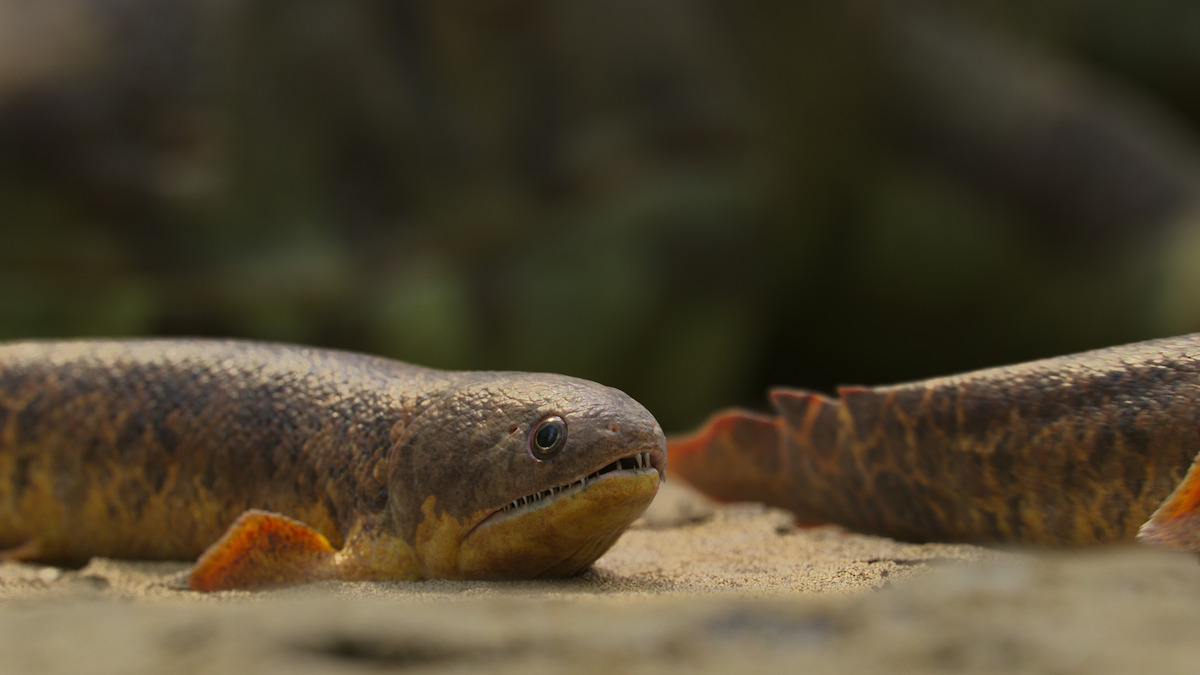
It doesn’t look like much, but the lobe-finned fish is a momentous transitional creature. We ended up on land because our vertebrate ancestors stepped out of the water. In reality, this took place gradually over millions of years, but the Life on Our Planet filmmakers searched for an image to convey that process. They came across the work of scientist Per Ahlberg, who described a moment when such a fish crawled up onto land using strong front fins, making use of the primitive lungs it had in addition to gills. (Though this journey wouldn’t end well when they came up against much larger amphibians who had already beaten them to the punch.) The show’s VFX team worked especially hard to accurately model the movements of the fish’s fins pushing their way through the sand.
Gorgonopsid (Episode 3)
The monstrous Gorgonopsid is proof that life before dinosaurs was just as terrifying. Pre-dating them by nearly 50 million years they were the apex predators of their day, and importantly for our story, they were also a precursor to the mammals. In addition to being uniquely ugly, the Gorgonopsid had dangerous saber-like teeth. But since the “the latest scientific thinking is that its teeth would not be seen unless the jaw was open,” the filmmakers say, they kept the chompers hidden… at least until the moment of attack.
Lystrosaurus (Episode 3, 4)
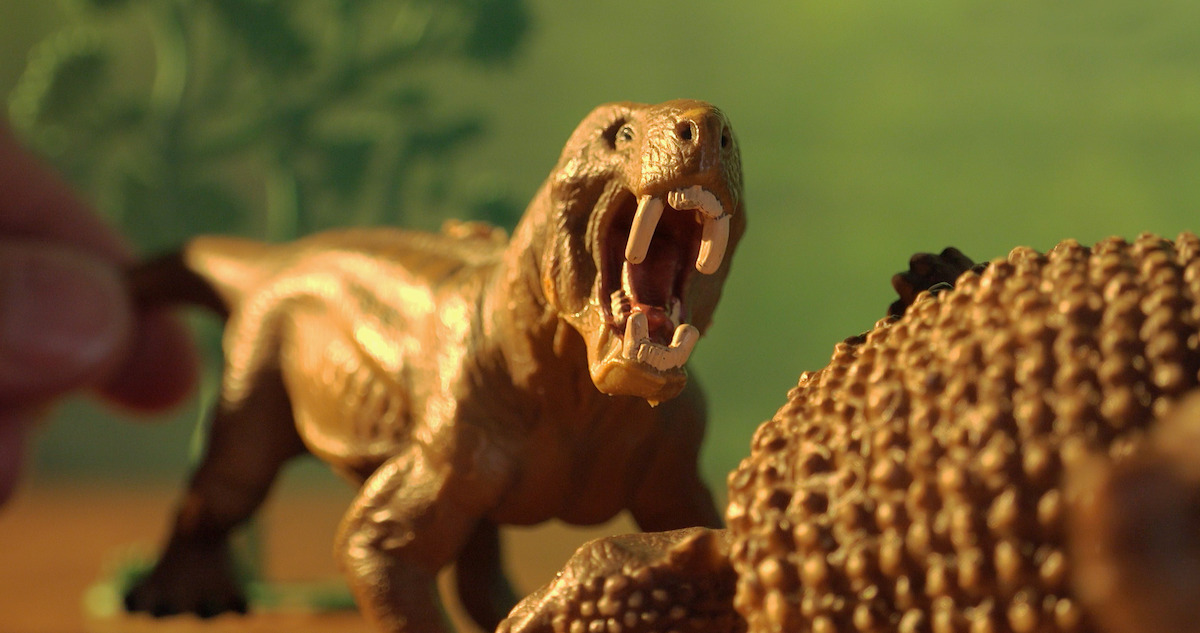
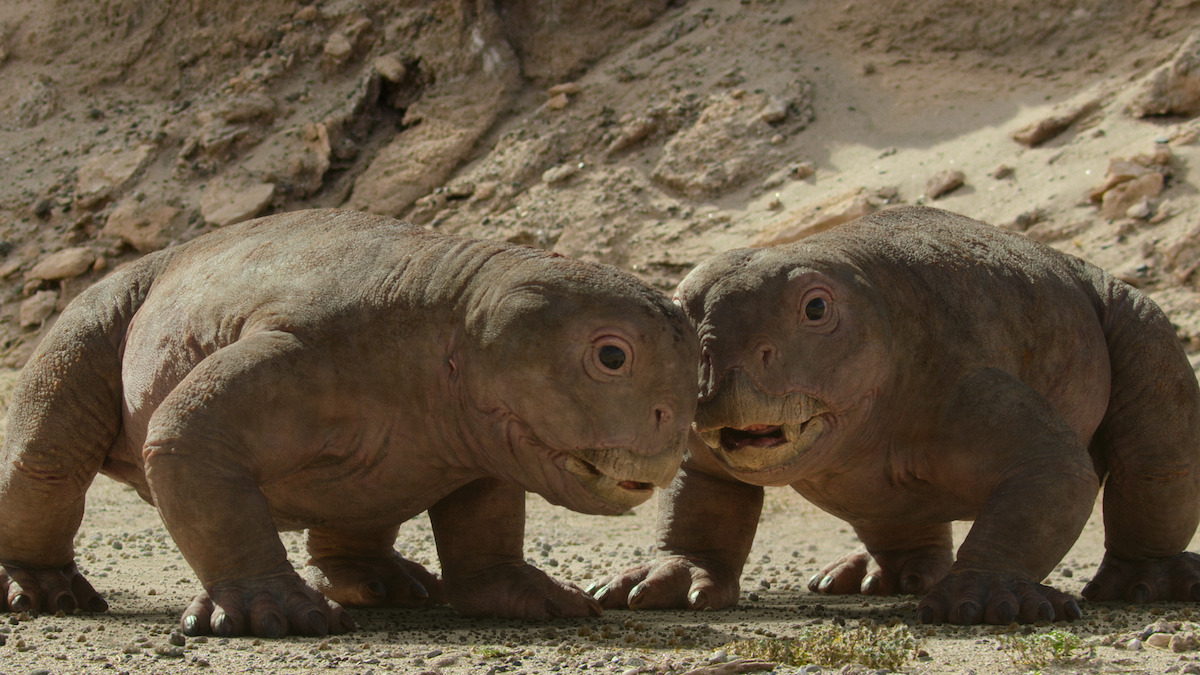
Another underdog that emerged victorious, Lystrosaurus was a small pig-like creature who, scientists believe, could burrow into the ground and would eat whatever scraps it could find. Another mammalian precursor, Lystrosaurus could hardly be called cute, but it survived the armageddon that took down countless other creatures. And, as a good bit of trivia, Lystrosaurus was the subject of the first visual effects sequence the filmmakers worked out, starting with pre-visualizations using plastic toys and scraps of papers for trees and water.
Plateosaurus (Episode 4)
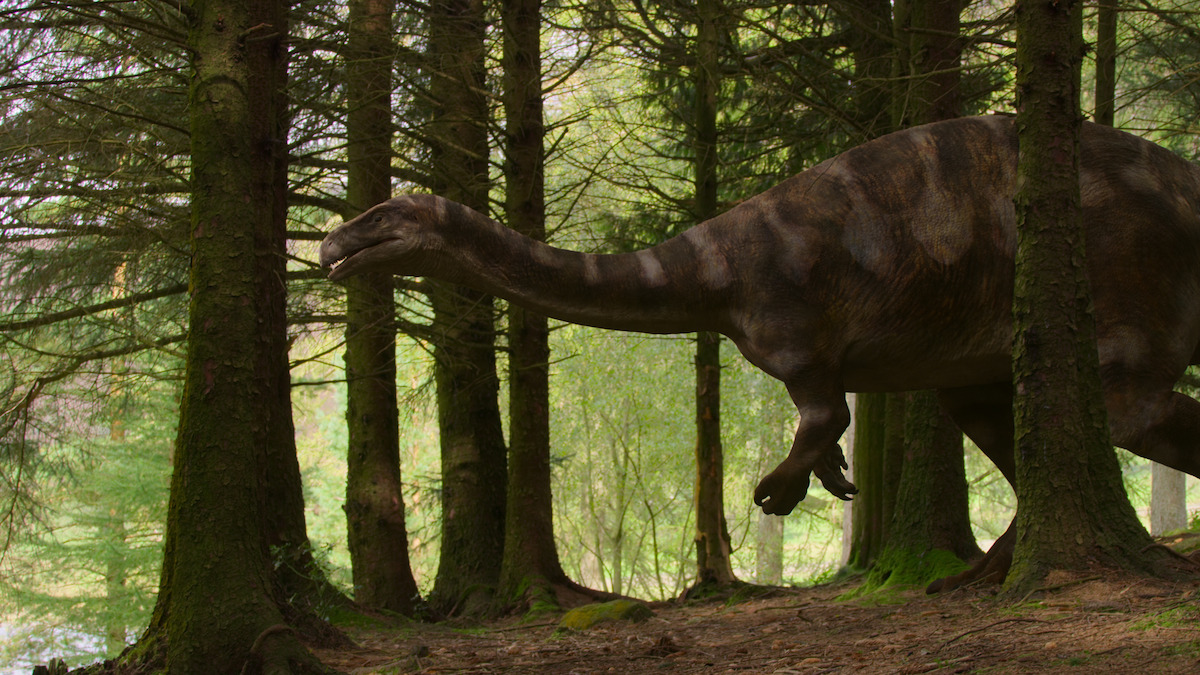
Among the early dinosaurs to hatch in the Triassic period (before the Jurassic period), Plateosaurus has had its skeleton picked over by scientists for almost 200 years. To honor that research, dozens of people were involved in the dino’s design in Life on Our Planet. The fact file that steered the process, the filmmakers note, was 55 pages long. Particularly perceptive viewers (and/or die-hard Spielberg fans) will notice the wink to Jurassic Park in the tilt-up shot that unveils the adult Plateosaurus, one of the cinematic Easter eggs planted throughout the show.
Diplodocus vs. allosaurus (Episode 5)
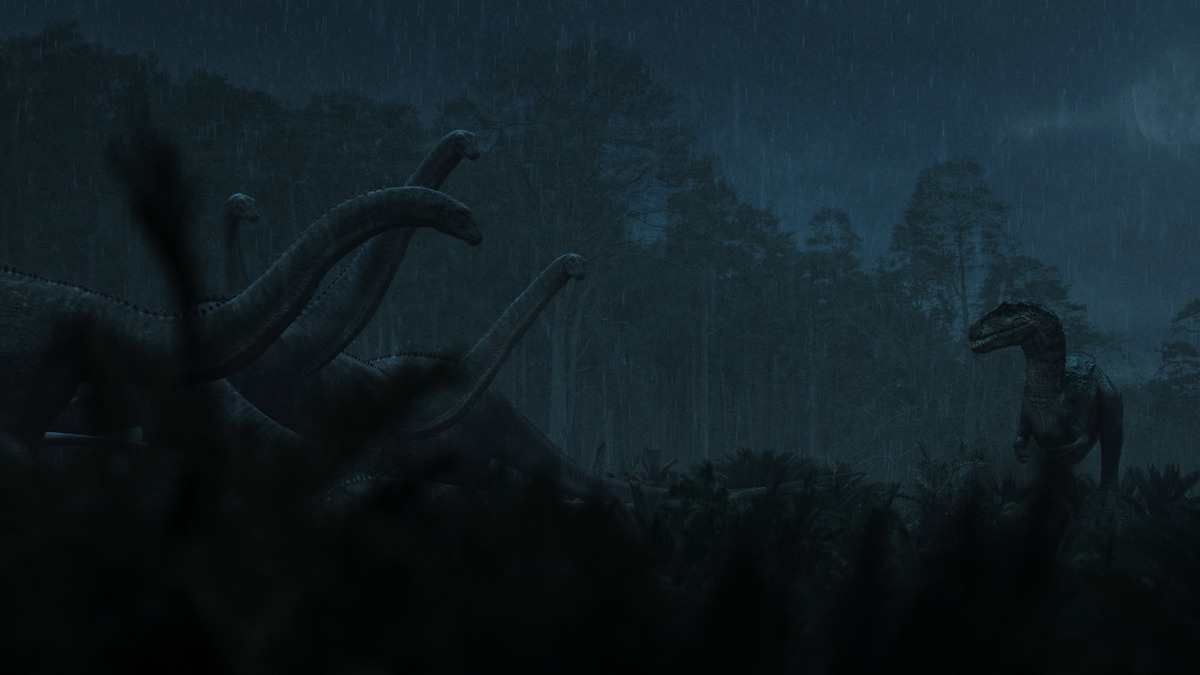
Here’s another battle between heavyweights of the dinosaur world. Dippie vs. Allo, as the filmmakers took to calling the sequence, would prove to be probably the most technically complicated visual effects sequence on the show. It involved rendering not only the extinct dinosaurs, but also the vegetation from the late Jurassic period approximately 152 million years ago, that could feed giant herbivores like diplodocus, with its long, sloping neck. As we see, while adult diplodocus might have been more or less predator-proof, diplo babies were very vulnerable to predators, including the monstrous allosaurus. Scientists believe the diplodocus babies adopted a hiding posture similar to modern-day antelopes to safeguard themselves. “That was one of the most exciting [hunt scenes],” says cinematographer Jamie McPherson. The filmmakers conceived the sequence to take place on a rainy night, to up the terror to the max. It worked.
Anchiornis (Episode 6)
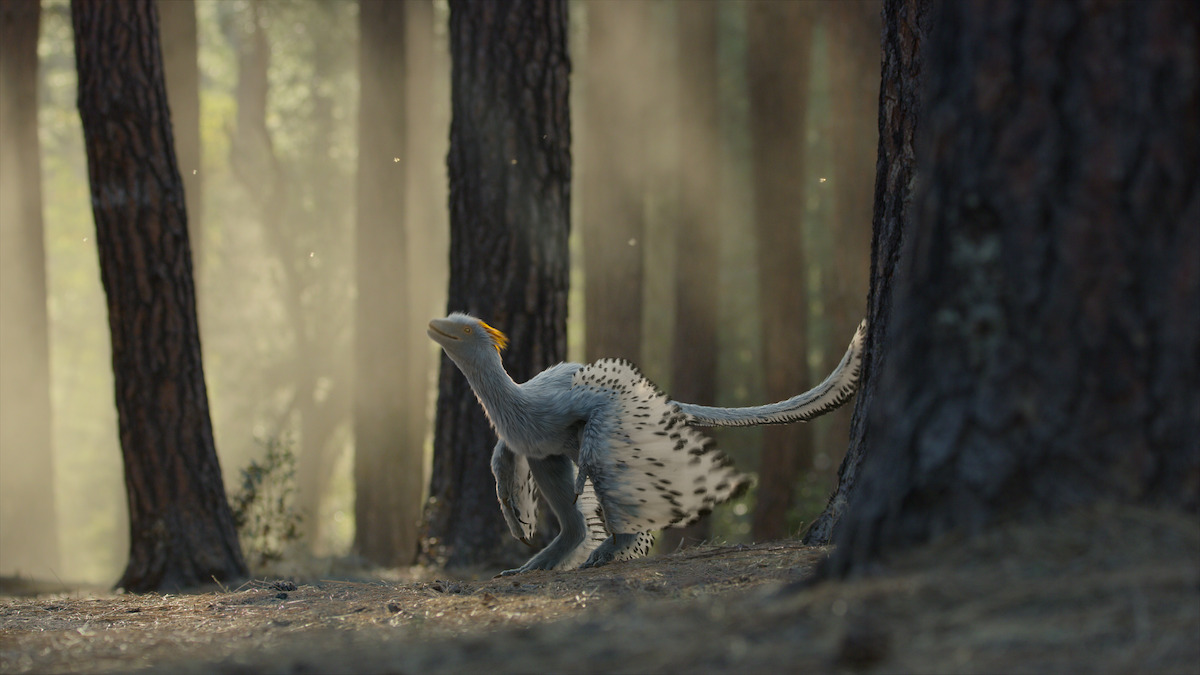
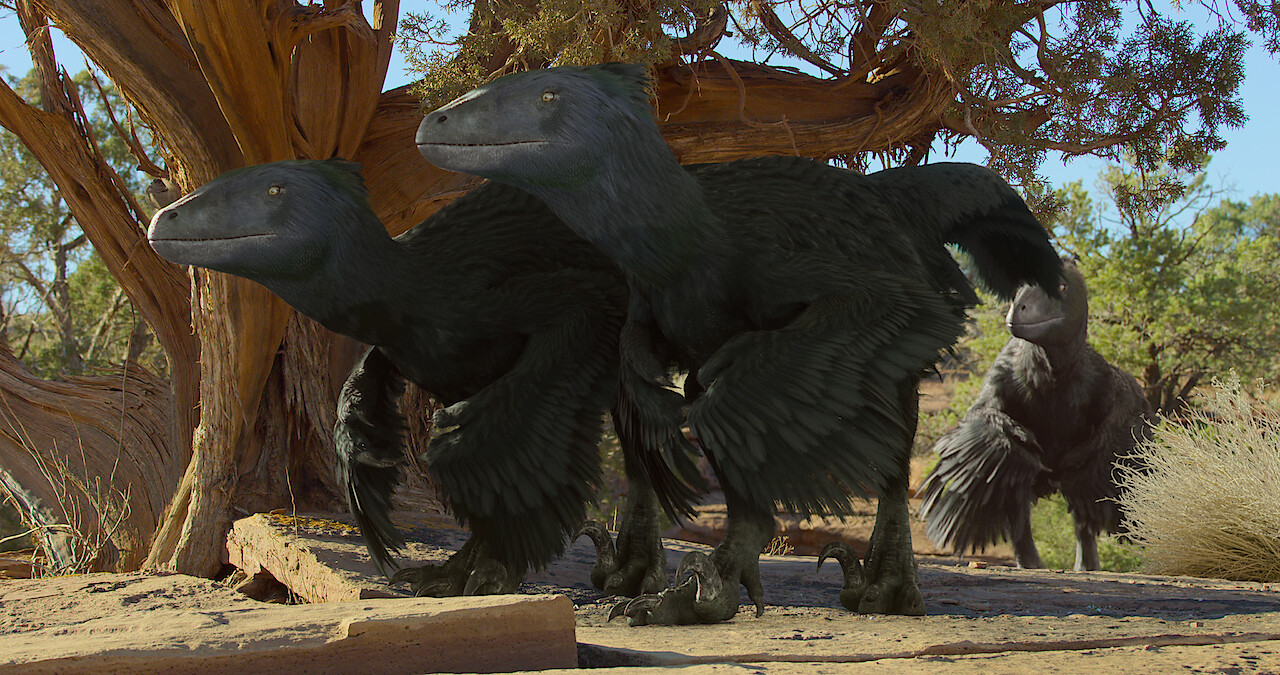
No trek through the different dinosaur dynasties would be complete without a focus on the famed flying dinos. Among the first to take to the air, Anchiornis is a cousin of the better-known archaeopteryx. The researchers and filmmakers on Life on Our Planet were lucky that Anchiornis left behind pristinely preserved fossils (at least by prehistoric standards). Even its color is completely preserved. The visual effects artists labored over the colorful feathers that make this 160-million-year-old creature so striking… even, you might say, fashion-forward.
Terror bird vs. Theosodon (Episode 6)
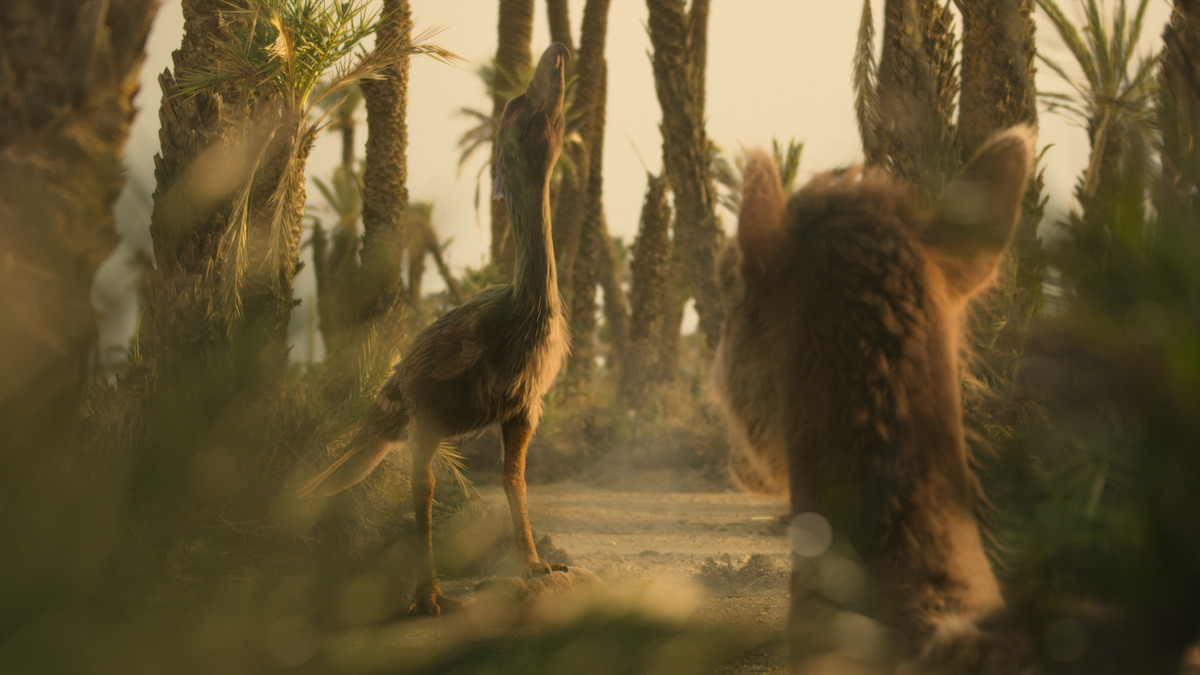
Early birds are also depicted in Life on Our Planet. In this episode, the aptly named terror bird preys on the mammal Theosodon. Though unable to fly, the terror bird traded that skill for “raw power,” as Freeman says, some 20 million years ago. That means a brawny neck, a massive killer beak, and sharp talons that make hawks look sweet by comparison.
Megacerops (Episode 7)
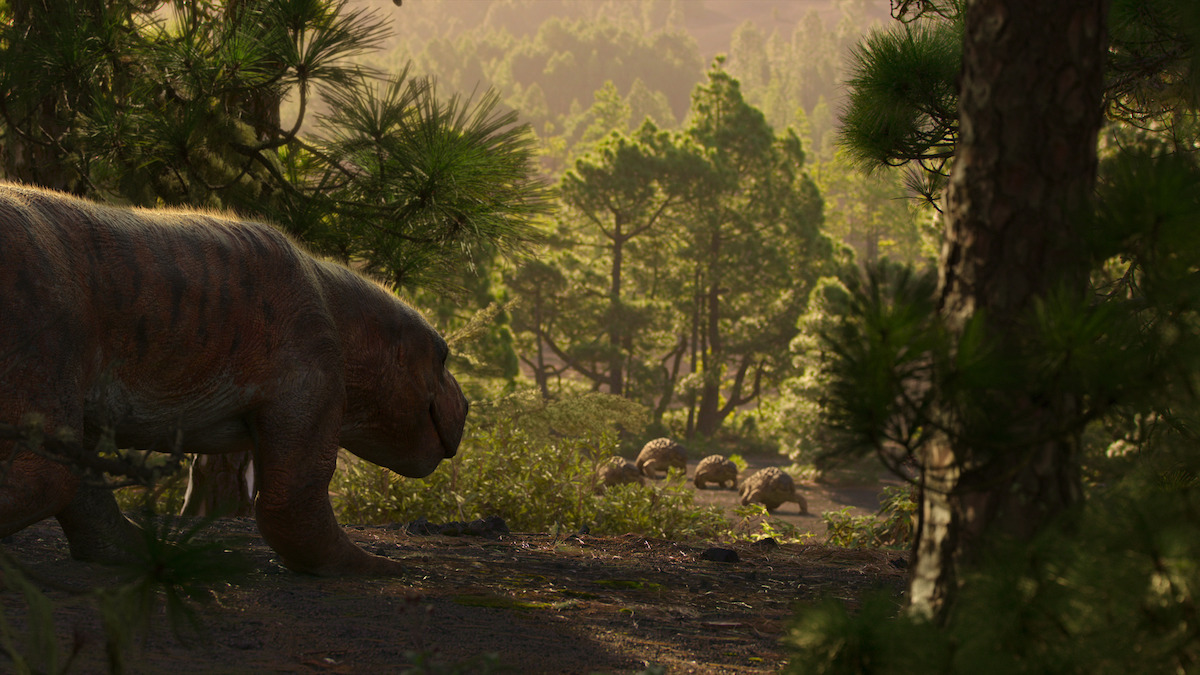
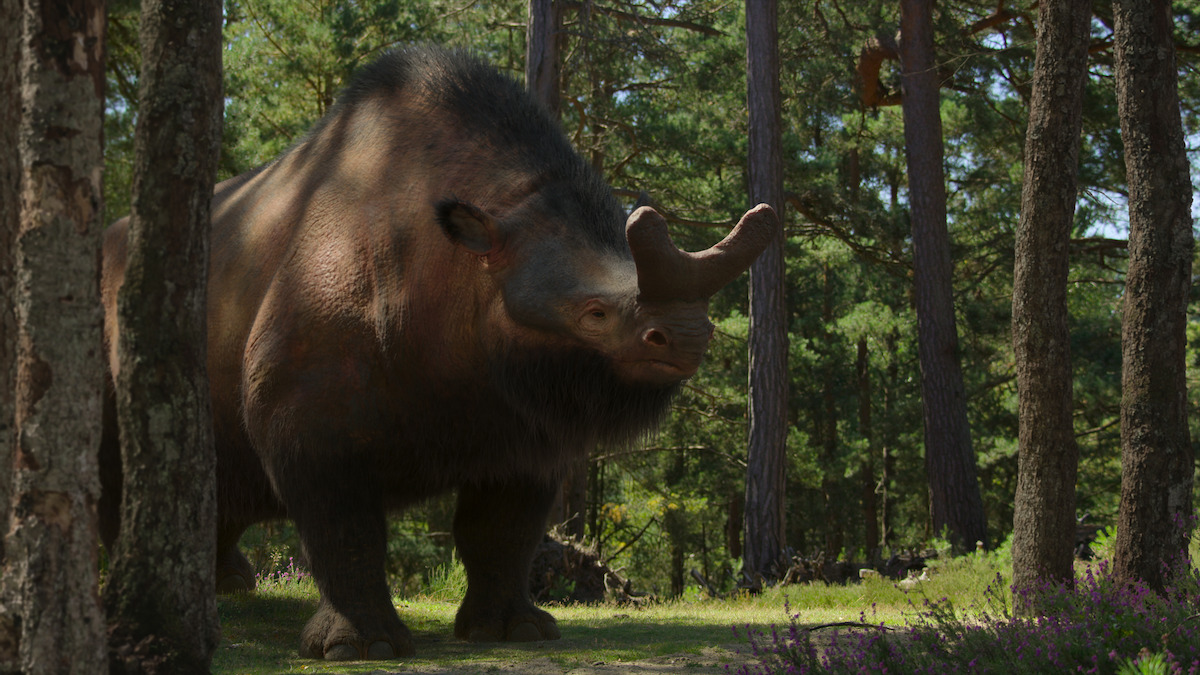
As it winds its way closer to the modern day, Life on Our Planet uncovers the fascinating, diverse story of mammals. This dynasty, which we humans belong to, has roots going back 250 million years. After the six-mile-wide asteroid that ended the dinosaurs’ reign 66 million years ago, mammals quite literally inherited earth, coming down from the trees and into the light. Millions of years later, the Megacerops, a beastly, rhino-like mammal roamed North America, eating leaves and looking for a mate. Because Megacerops so closely resembles animals still around, Industrial Light & Magic had to be especially meticulous in bringing its majestic physicality back to life. Fletcher traded copious notes with the studio, whose artists paid extra attention to bring out its nuances that separate it from today’s mammals, like its peculiar horn structure.
Smilodon vs. Doedicurus (Episode 7)
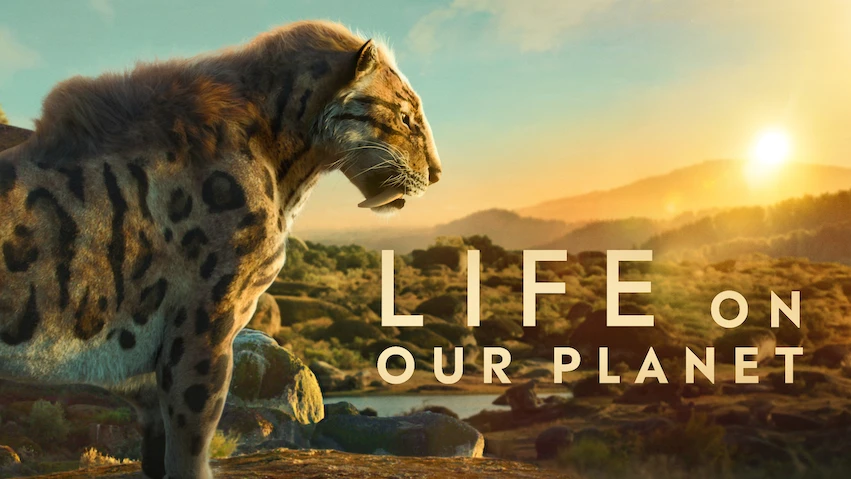
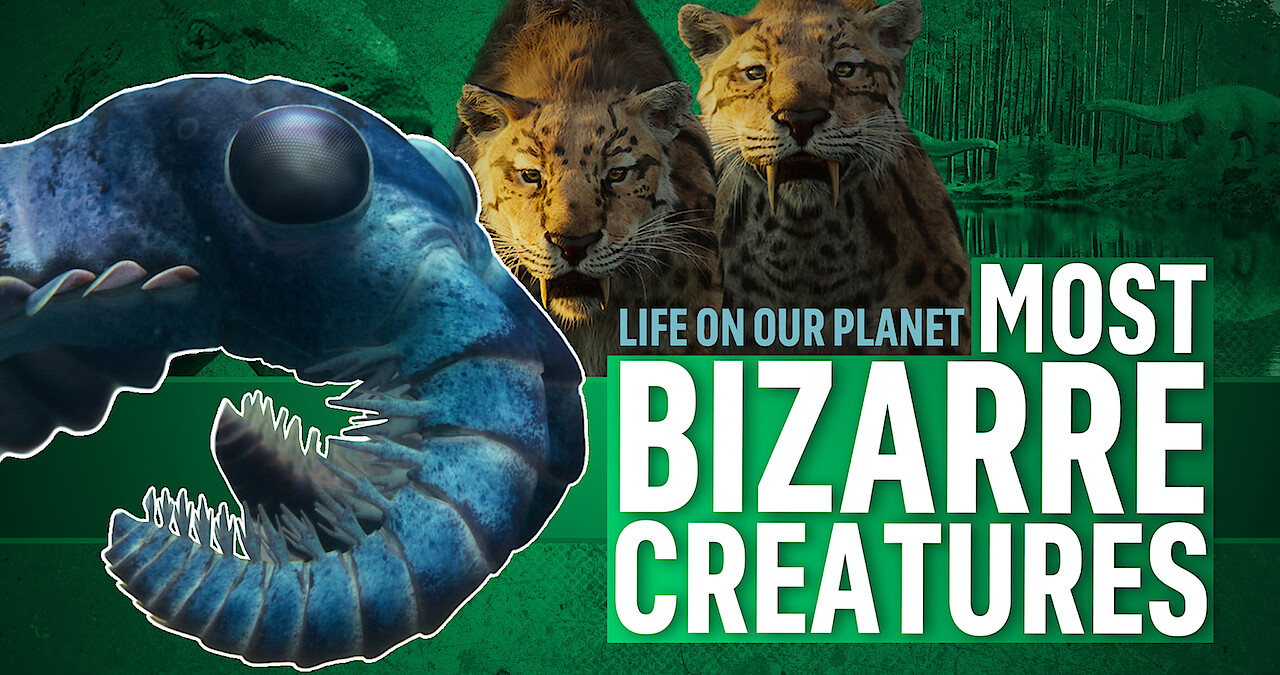
The most preposterous of all the animal standoffs in Life on Our Planet, this one contrasts the threatening-looking saber-toothed cat Smilodon with… an armadillo. Or more precisely, Doedicurus, an unusual armadillo-like creature the size of a Volkswagen Beetle. But however adorably slow the creature was, it’s crucially protected by its impenetrable armor and killer tail. For its part, the juvenile big cat’s behaviors were modeled on modern-day animals like cheetahs and lions, who first slink around and test potential prey. Note for paleo-specialists: This Smilodon is a different species from the more intimidating adult we glimpse in Episode 1.
Woolly mammoth (Episode 8)
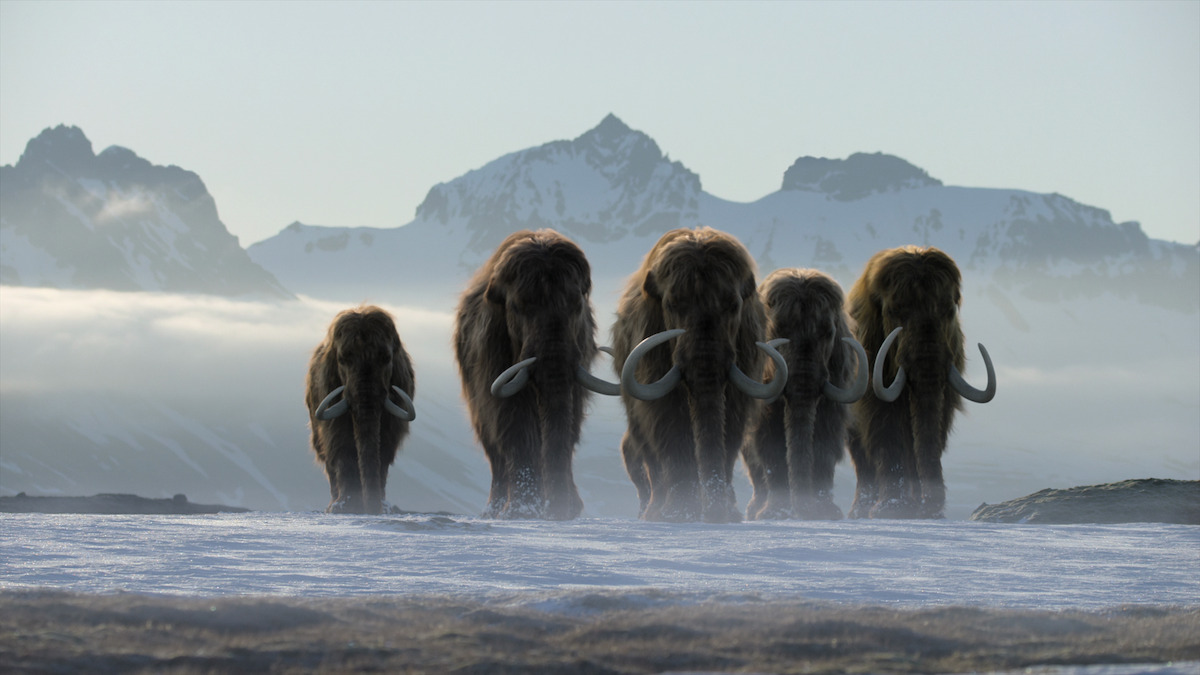
Can you believe the woolly mammoth, so often shown trudging through a snowy wasteland in movies, still existed only 4,000 years ago? Sure, that’s a pretty long time, but in the grand scheme of Earth’s four-plus billion years, it basically went extinct yesterday. This monumental mammal, with its shag carpet-like fur and ornate tusks, managed to flourish through the last ice age and beyond before petering out, for reasons that may be down to our ancestors. And as the Life on Our Planet filmmakers explained, because scientists have discovered the woolly mammoth’s frozen remains in the permafrost, the idea of bringing these beasts back to life for real is… well, it’s not impossible. Keep that in mind as you drift off to all new Jurassic dreams.
Watch Life on Our Planet on Netflix now.
For more scoops from Geeked Week 2023, head to geekedweek.com and follow Netflix Geeked on X.