

François Duhamel
Deep Dive
Inside the Haunting Ending of ‘May December’ with Todd Haynes
The director, and actor Charles Melton, discuss the film.
Dec. 5, 2023
Midway through Todd Haynes’ May December, television star Elizabeth (Natalie Portman) is taking questions from a room full of high school acting students. The first question is predictably sophomoric: The class clown weighs in to ask her if she’s ever filmed a sex scene. But Elizabeth takes the query seriously. “Sometimes there’s real chemistry between two people, and you start feeling like it’s real,” she says. “You start losing the line of, like, am I pretending that I’m experiencing pleasure, or am I pretending that I’m not experiencing pleasure?”
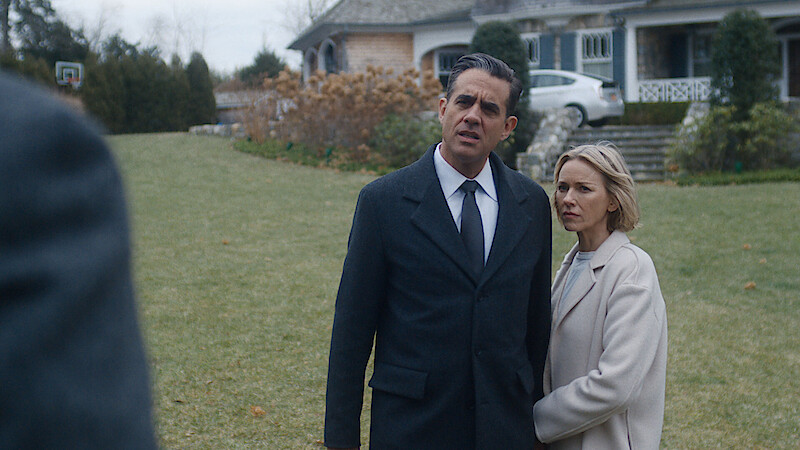
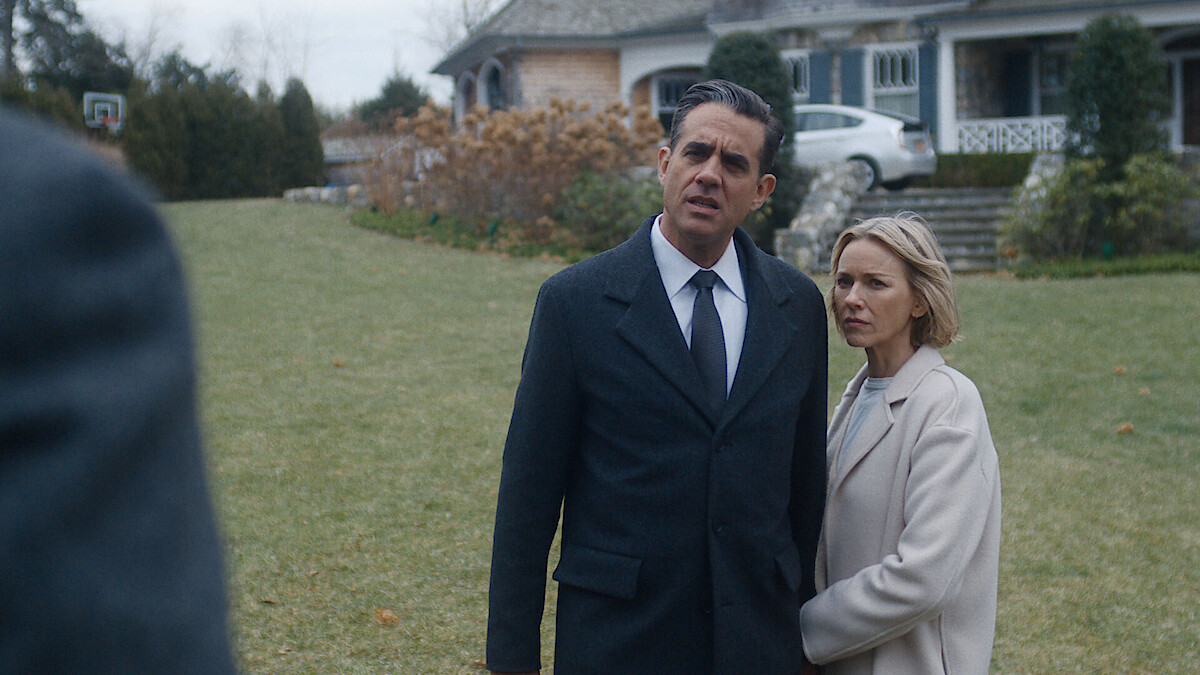
That confusion between performance and reality could just as easily describe the seemingly picture-perfect relationship between Gracie (Julianne Moore) and Joe (Charles Melton), as seen at the start of May December. Two decades prior, though, Joe was a 13-year-old working his first job at a local pet store, and Gracie was his 36-year-old co-worker. The pair had a workplace affair that landed Gracie in prison and made national news; after her release, Gracie and Joe get married and have three children. Joe takes on the role of a caring husband and father, and things sink into a swampy rhythm in their Georgia town.
All of that changes when Elizabeth visits to research a part — she’s playing Gracie in a new film about the two-decades-old story that took the tabloids by storm. Elizabeth’s arrival leads Joe to examine his own reality — and the performance he’s lived with for more than half his life now. Old feelings emerge, and as Elizabeth grows closer to Joe, things fall apart — and are put back together.
Melton’s Joe is the heart of May December; in many ways, the story revolves around his journey from being a loving but distant father to becoming a man shaken by trauma he’s never confronted. “You kind of see this child rising to the surface where there really wasn’t anything resolved,” Melton says.
In many ways, Joe’s reality is a mystery even to himself. Is he pretending that he’s experiencing pleasure? Who is he when he isn’t a father, a role and responsibility thrust upon him when he was a child himself? “I think it just goes back to his arrested development that he’s repressed for so long and he’s never really acknowledged,” Melton continues. “Being a great father, being a loving husband, being a provider — all these things come before he does, and he’s never really had the chance to really look at himself.”
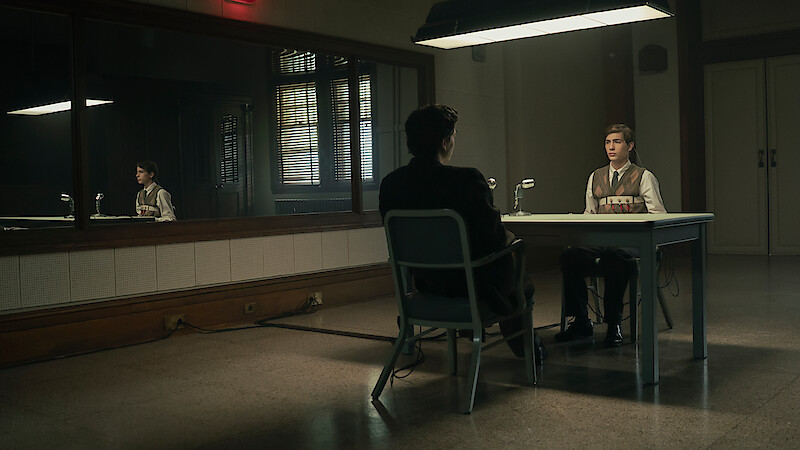
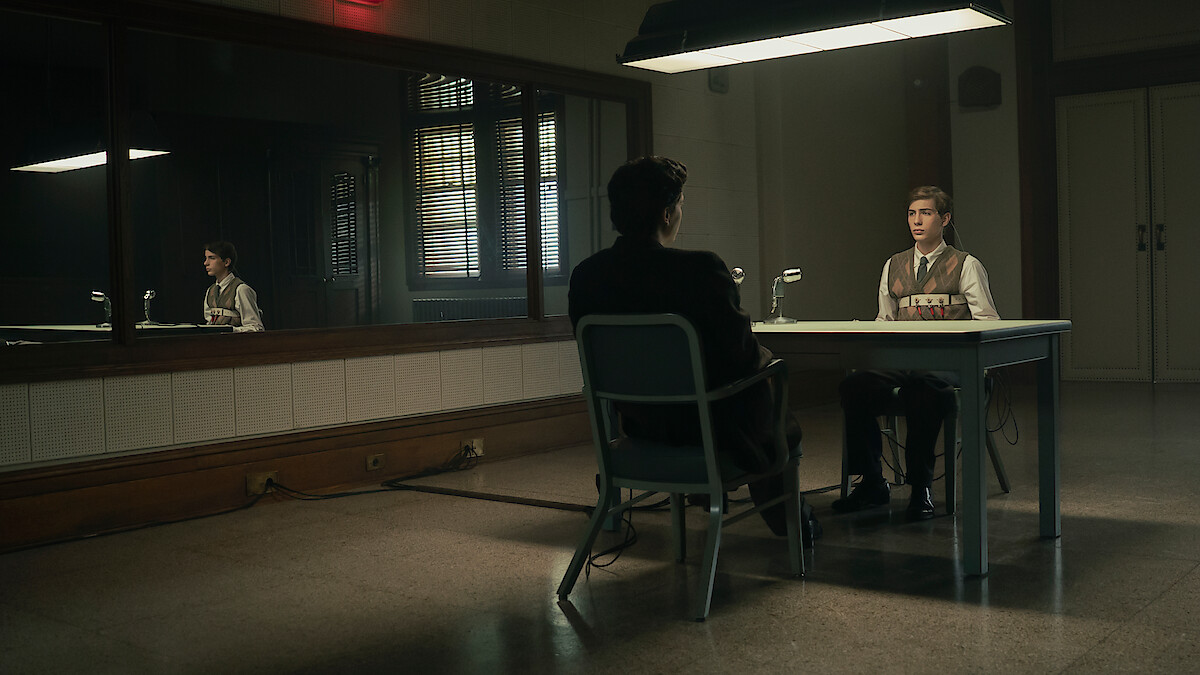
Joe’s finally able to look at himself, in part, because Elizabeth’s study of Gracie reminds him of what their sickly courtship was like. As the actor further unravels the relationship between Joe and Gracie, she starts “losing the line,” as she herself would put it, and her performance becomes part of her reality. “The merging and mirroring of these two women and the discomfort you feel as you watch that process unfold… made me think of Persona,” Haynes says, referring to one of his touchstones for the film, Ingmar Bergman’s 1966 psychological drama. In Persona, a nurse (Bibi Andersson) cares for an actor (Liv Ullmann) who has suddenly gone mute; as the film proceeds, the nurse’s sense of self begins to overlap with her patient, to the point of even sleeping with the actor’s husband.

May December includes a similar scene, which sees Elizabeth lure Joe into her rental home under the pretense of fixing her asthma nebulizer. They have brief, unsatisfying sex. It’s a disturbing sequence, a love scene between two consenting adults that still feels somehow wrong. At multiple points in the film, Elizabeth makes allusions to Joe’s history with Gracie; she winkingly acknowledges “sneaking around with” him when she visits Joe at work, and in one memorable scene acts out a sex scene on her own in the storeroom of the pet shop. For Elizabeth, this is all a great story; for Joe, it’s his life. Melton’s keenly observed physicality in the role makes it clear that Joe is still a child in an adult’s body — the actor looked at Heath Ledger’s Brokeback Mountain performance as an example of how to carry his repressed pain in his body and voice.
The sex scene between Elizabeth and Joe is all the more upsetting with the understanding that Portman’s Elizabeth is invested in the relationship for wholly different reasons. As soon as Joe leaves the room, she returns to her “research,” diving into a love letter from Gracie written during her original affair with Joe. “It’s disturbing to watch how far she goes in her pursuit,” Haynes acknowledges. But the scene also inspires Joe to express himself in a way he hasn’t been able to — discussing his relationship with Gracie in frank, upsetting terms. “The very fact that somebody is telling this story to this family is the only possible way that a character like Joe is given the possibility of looking at himself and questioning his life,” Haynes continues.
Joe returns home and confronts Gracie in their bedroom, a room that earlier scenes in the film have established as the one place where Gracie can allow herself to cry, whether it’s about a cake order cancellation or the smell of smoke on Joe’s clothes. But where Joe is carefully consoling in those moments, Gracie has no such sympathy for her husband in his moment of desperation. “He’s really looking at himself for the first time, and [he] musters that courage to ask the question we, as the audience, maybe are asking — and the question he’s never asked himself,” Melton says. “Which is ‘What if I wasn’t ready to be making those kinds of decisions?’ ”

As Joe crumbles, Gracie storms out in disbelief. Throughout the film, Moore’s lisping matriarch is resolutely determined to avoid exactly the kind of self-examination Joe is going through. She seems bemused by Elizabeth’s interest in her inner life. But perhaps that’s a defense against confronting the same questions Elizabeth inspires Joe to ask. In the film’s final moments, she seems to have a moment of clarity, spotting a fox in the woods while on a hunt: one predator looking another in the eyes.
The penultimate scene of the film is a graduation: the first moment of Joe’s life with Gracie as an empty-nester, and a chance to acknowledge — if only to himself — the abuse he suffered and the childhood that was stolen from him. Watching his children from behind the bleachers, Joe has a moment of release. For the first time in his adult life, he won’t have to perform his role as a father anymore. He finally allows himself to cry. On set, the image of Joe in tears was a spur-of-the-moment decision. “In the script, I don’t think it was even identified where he was at the graduation,” Haynes says. “It was a tough day. It was our biggest extras day. But I think it produced some remarkable moments.”
It’s the last we see of Joe in May December, a question mark at the end of the film’s sentence. What will become of him? It’s open-ended, but Melton is optimistic. “It’s a joyful moment for Joe, but there is no joy, really, without some sort of pain or suffering,” he says. “I think he’ll be OK.”

If Joe finds himself unmoored by Elizabeth’s visit, Elizabeth, like Gracie, seems unwilling to look at herself in the same way. She’s an empty vessel, taking on Gracie’s lisp and studying her love letter without ever turning her studied eye inward. In the film’s final scene, we see all of the actor’s research come to bear as she films her role as Gracie. “The film couldn’t be too sophisticated, and it couldn’t be too lame,” Haynes says about the movie-within-the-movie. “You had to feel like [the actors] were taking it quite seriously.”
Maybe a little too seriously? Near the end of May December, Portman delivers a blistering monologue to the camera, drawn from Gracie’s letter to Joe. “I knew that we’d crossed a line,” she says, “and I felt in my heart that we would cross it again.” The words recall Elizabeth’s acting class visit. Where is the line between who we are and who we pretend to be? For Elizabeth, desperately begging her director for another take, the line may not exist anymore.
May December is streaming on Netflix now.