Deep Dive
How a Team of Scientists and Animators Created the Extraordinary Visuals in ‘Our Universe’
Cosmic billiards, anyone?
By David Levin
Dec. 7, 2022
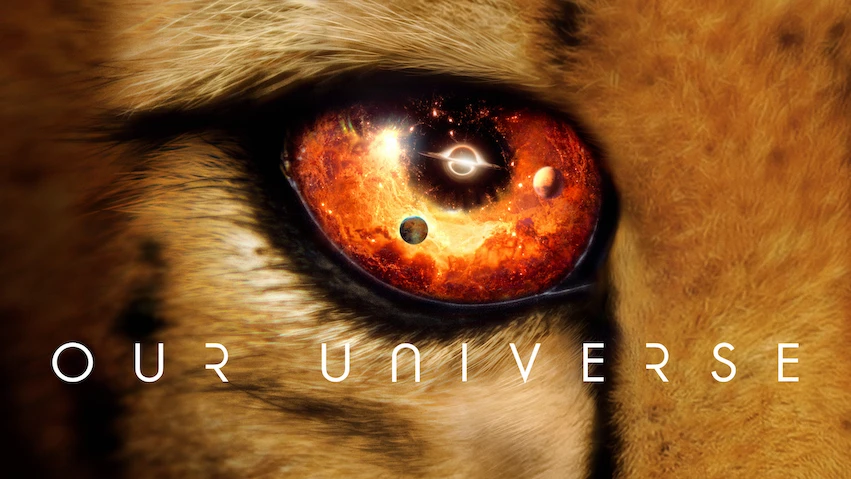
Getting high-resolution video of exotic wildlife is hard enough, but how do you re-create events that play out on a massive, interstellar scale, especially if no human eyes have ever actually seen them — like the beginning of time? In Our Universe, each scene links everyday events on our planet to grand cosmic-level phenomena: A cheetah and her cubs in the African savanna maintains its existence by hunting wildebeest, which survive by eating seasonal grasses, which in turn grow by harnessing energy from the sun’s light. In other words, the formation of our closest star leads directly to the graceful plodding of a cheetah cutting through dry underbrush. It’s a profound connection, and for the filmmakers, drawing these throughlines is a bit of a visual conundrum.
“As an artist, you always want to start with science as a grounding for your effects,” Paul Silcox, VFX Director of Lux Aeterna, the visual effects company that worked with the series’ filmmakers to create hyper-detailed animations of cosmic events, tells Tudum. “Without that, [an animation] never looks as good as it might have,”
For Our Universe, Silcox and his team reproduced scenes and visuals as unique as the formation of galaxies, the churning edges of a black hole and the slow development of early planets from countless bits of dust and rock. Images like these appear dozens of times throughout the series, and each one is informed by real science. For a shot that explains how the Earth got its moon, for example, Lux Aeterna drew on the work of astrophysicists at Durham University in the UK— a group that uses supercomputers to simulate planetary collisions in our early solar system.
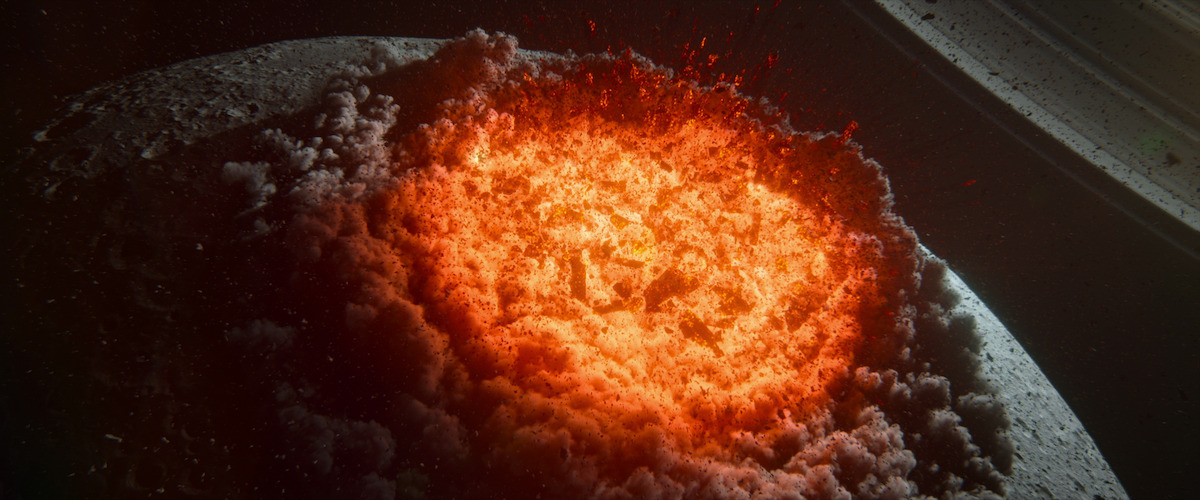
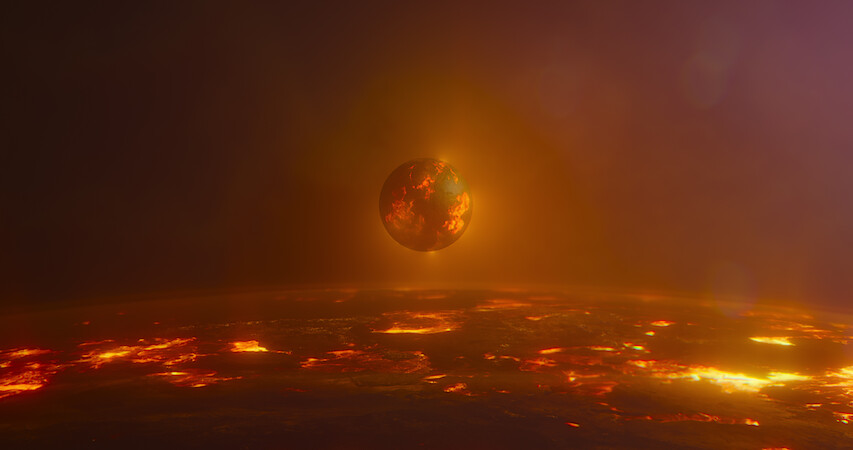
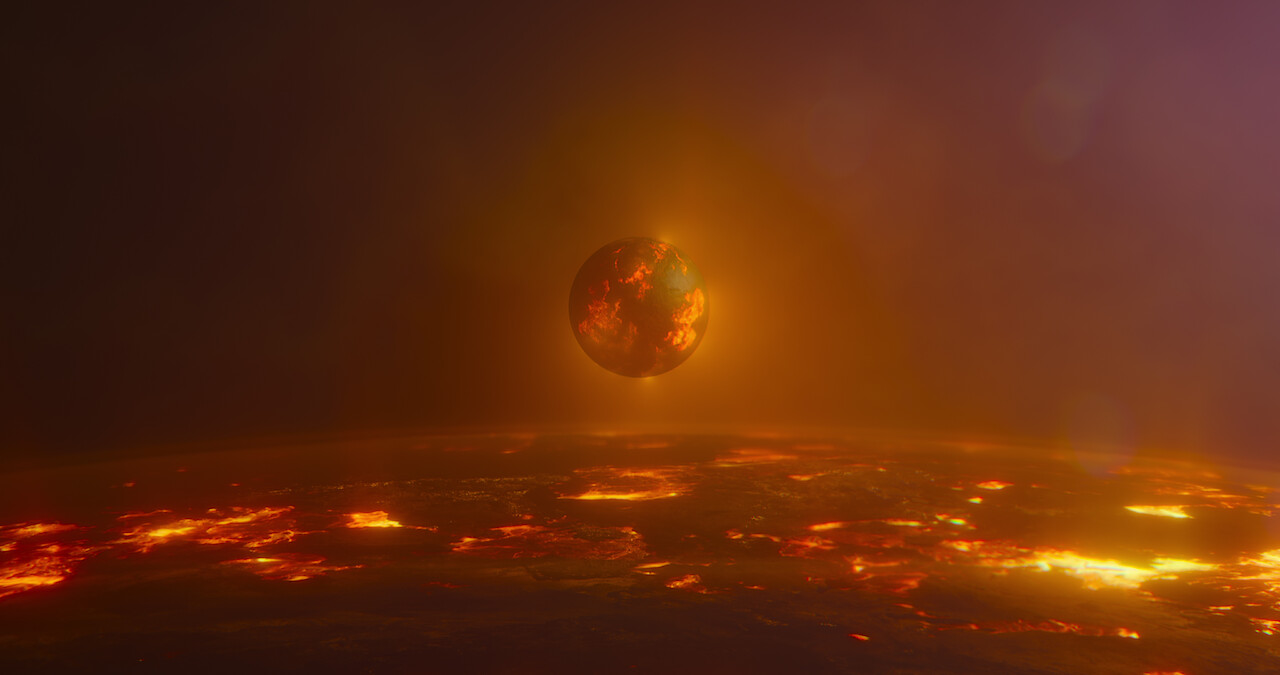
“Those sorts of giant collisions are really important in shaping the planets as we know them today,” says Jacob Kegerreis, a scientist who worked on the simulations at Durham. In the giant-impact hypothesis, the early Earth — which was then just a loosely organized ball of rock — smashed into a protoplanet called Theia. The resulting collision obliterated both planets, leaving the surviving chunks of rock and dust circling each other in space. Over time, the cloud of spinning debris glommed back together in new ways, forming the rough shapes of our planet and its moon.
In his software, Kegerreis represents each planet as a sphere made from millions of individual points, or “particles.” As the two celestial bodies collide, these points all affect the others around them, altering their temperature, speed, spin, velocity and so on. With the help of a supercomputer, he’s able to calculate all these changes at any given moment during a collision, creating a massive spreadsheet that contains a timeline of events for each particle.
With Kegerreis’ help, Lux Aeterna imported some of that data into a powerful 3D graphics program called Houdini, then using it to steer the movement, texture and color of the animated representations of planets as they crash into each other.
The results are unlike any space-based explosion you’ve ever seen on screen. Instead of smacking together like cosmic billiard balls, the two planetoids stretch and deform as they move, pulling apart into egg-like shapes that splash into each other in a spray of debris. The effect looks more like a liquid than a solid — perhaps, surprisingly, because it is. In the early solar system, semi-formed planets were still largely molten, Kegerreis notes.
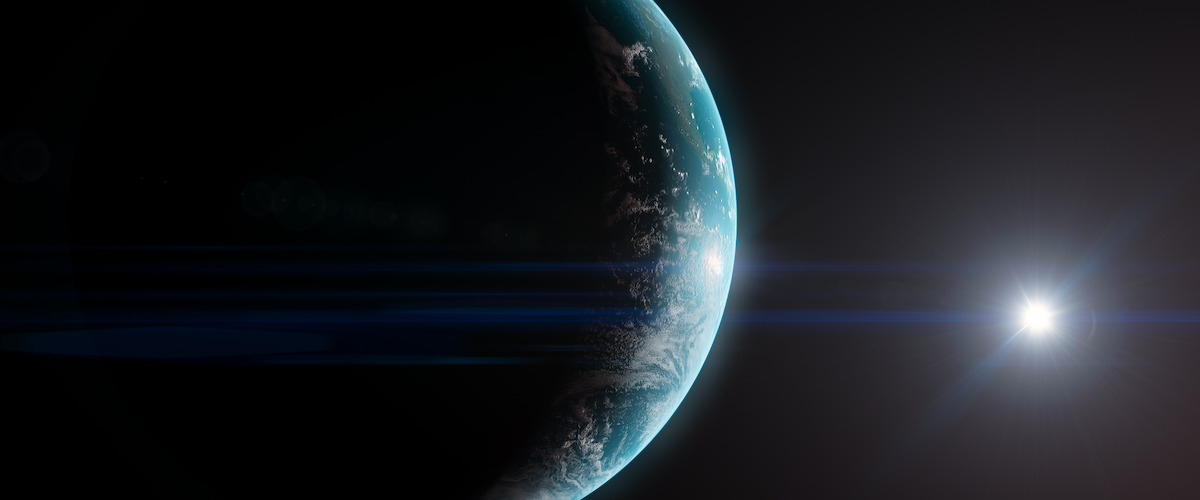
Silcox says that creating a rendering of the Earth-Theia collision this accurate and unique would have been impossible without the help of astrophysicists. By working hand in hand with those researchers, however, he’s able to show viewers events from billions of years ago in a way that is visually stunning, entertaining and educational.
“Jacob’s simulation gave us about 1.4 trillion individual data points that we had to process. It took up 30 terabytes of hard disk space [for context, that’s enough space to store around 300 million books, or roughly 10,000 full-length movies], so you can imagine the amount of pressure that put on our network — but it was a brilliant challenge, because the end result was something that I think we would really struggle to ever come up with on our own,” Silcox says. “The action happening in that data set is already beautiful. It’s already extraordinary. It’s already epic. That is not a bad place to start in any visual effect.”
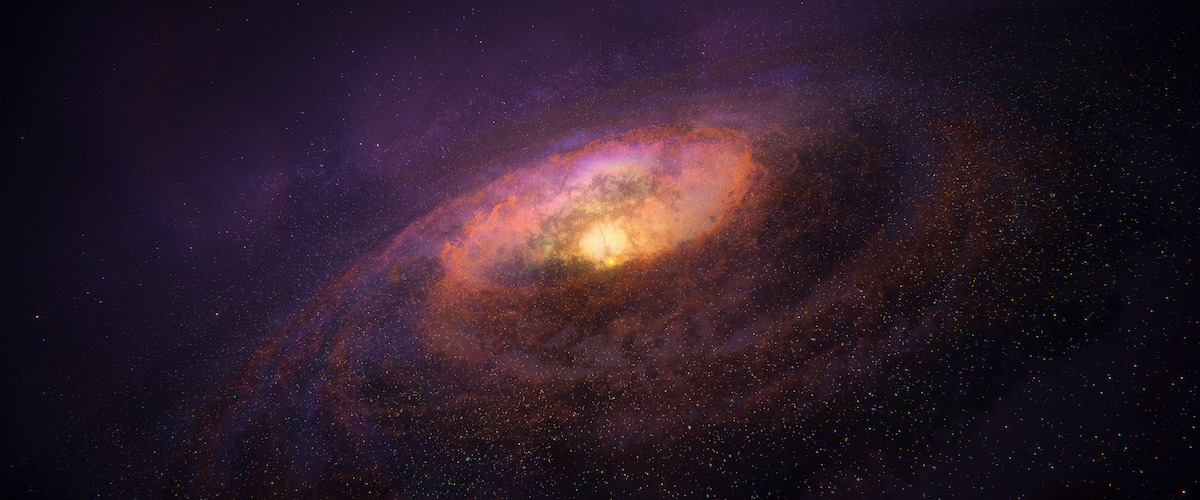
With this goal in mind, the Lux Aeterna team used scientific data for much more than just rendering planetary collisions. Silcox’s team was able to animate events at an even more enormous scale, like the expansion of the early universe after the big bang, and the formation of galaxies in its wake.
For a separate scene involving a black hole, animators turned to a paper that Nobel Prize–winning physicist Kip Thorne co-wrote on the film Interstellar. This time, Lux Aeterna didn’t use Thorne’s complex equations directly, but rather worked from his basic concepts: Gravity is so powerful around black holes, Thorne said, that beams of light actually bend and twist — a phenomenon that the artists were able to re-create using virtual lenses in their 3D software.
“We’re constantly discussing scientific research and theorizing how to visualize it. Even if it’s not a data set, quite often, we’re digging around in scientific papers for the latest ideas of what something should be or should look like, and interpreting that into our visualizations,” says Silcox. “Eventually, you get to a place where the scientists are happy, the directors are happy and the artists are happy. You know you’ve done well when you have a product that holds up not just from a scientific perspective, but also from a visual and entertainment one.”