Playing an entitled British politician was never on Rupert Friend’s bucket list. So when he was approached to play James Whitehouse in Anatomy of a Scandal, Friend wasn’t interested. “I didn’t want to do it because I didn’t like the guy at all, let alone the world in which he moved,” he tells Tudum.
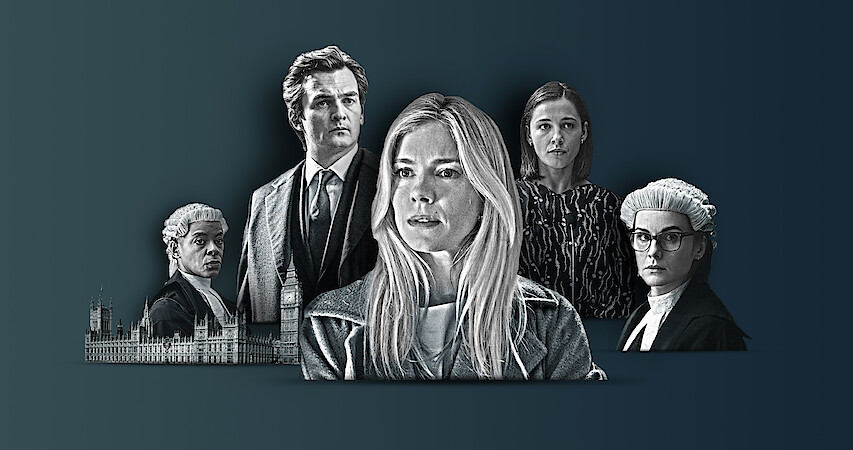
The actor, best known for his roles in Pride & Prejudice and Homeland (accent not included), struggled to relate to James — a Tory politician with deep pockets, high-level connections and a checkered past. Based on the eponymous novel by Sarah Vaughan, Anatomy of a Scandal delves into an accusation of rape made against James by his mistress and aide Olivia (Naomi Scott). James adamantly denies the claims, admitting only to cheating on his wife Sophie (Sienna Miller) with Olivia. But as the series unfolds, it’s clear that James’ perception of himself — and his understanding of consent — doesn’t align with everyone else’s.
“James was convinced of his innocence,” Friend says. It’s the character’s strong conviction that ultimately enticed Friend to take on the role. “From the very beginning, the only way this was going to be interesting was to mine that nuance,” he says. “Because if he is just a bad guy who did a bad thing and got away with it, that’s just a sociopath or a monster and just not very interesting.”
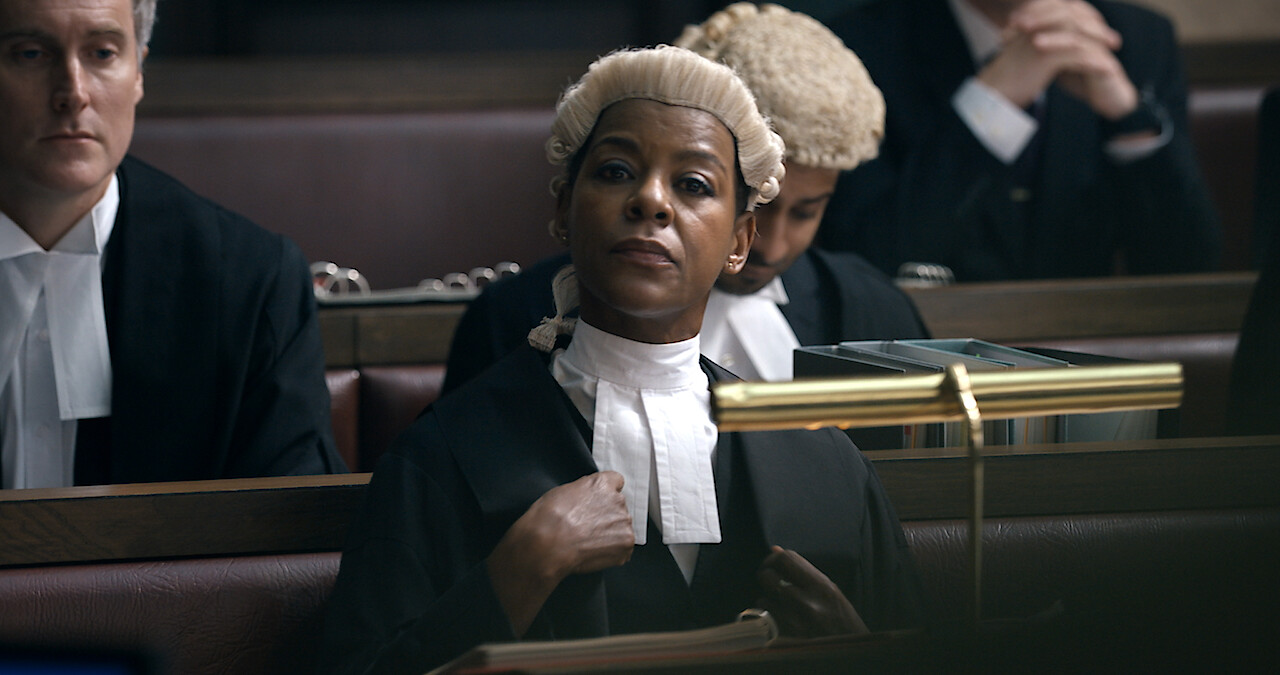
Anatomy of a Scandal delves into the ways privilege, power and a lack of self-awareness can create a predator. The “gray areas” explored in the series are where Friend believes the storytelling deepens and gains greater complexity. “And the fact that he was incredibly charismatic and skilled at his job, was a loving husband, and at times a great dad,” he adds, further challenges notions of what a predator can look like. Over the course of six episodes, we watch James work hard to convince himself, and a courtroom, that he is entirely innocent. Friend says it was a challenge to capture “how to see the world as this guy saw it — a world in which you’re never held accountable — and what it might be like to never have asked yourself if your actions are morally upright.”
It becomes clear that James can’t or won’t understand that his actions constitute rape. He is incapable of entertaining the idea that he might have even crossed a line with Olivia, which speaks to a number of themes throughout the show: class, privilege and the “gray areas” that people in power are able to navigate more freely. That also plays into the subjective memory of the characters, whose past and present play out on-screen simultaneously.
“The show is as much about the fallibility of differing accounts as it is about the scandal, as it is about class and privilege and elitism, and that the courage that it takes to come forward when you have been abused is immense,” Friend says. “And the idea that then your own memories are going to be called into question is sort of terrifying. Because if we don’t have the courage of our convictions, what do we have? And yet, all memory is subjective.”
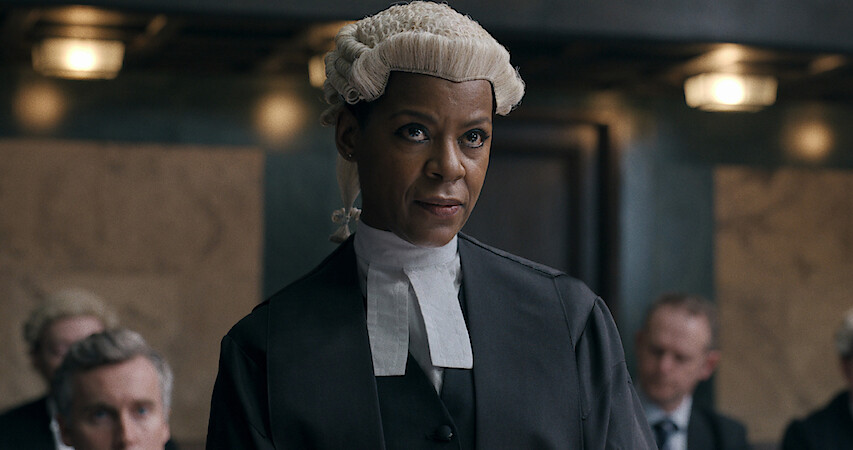
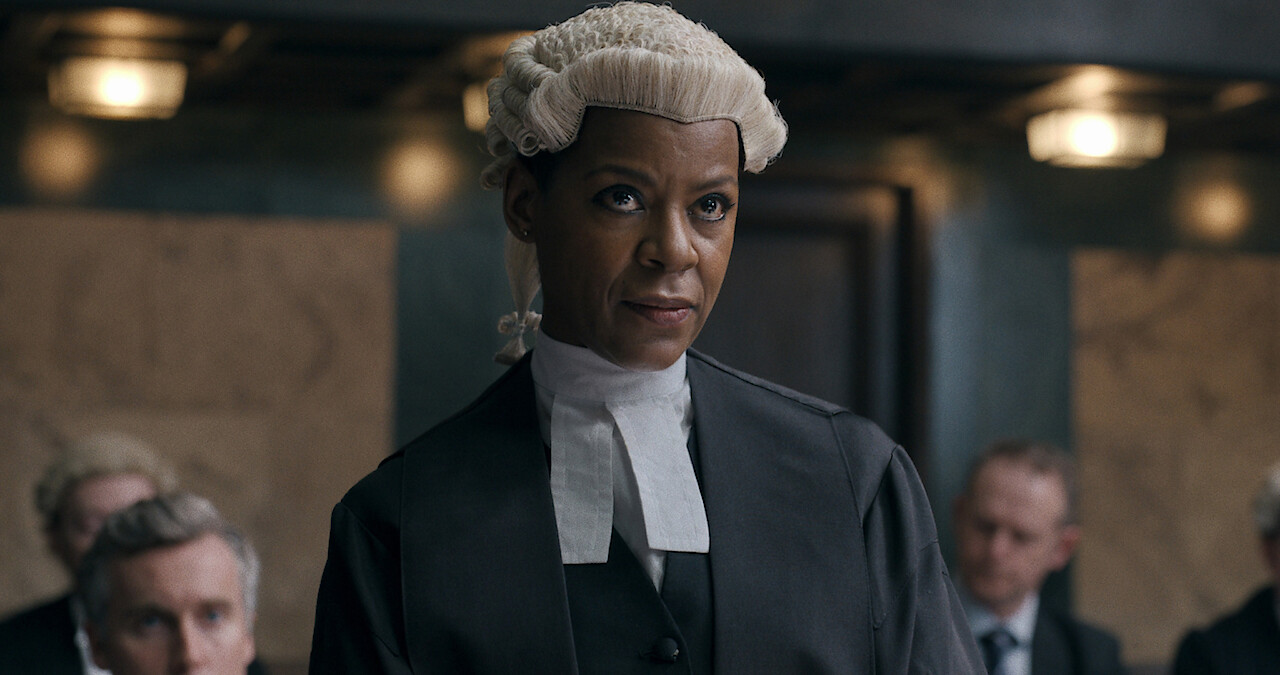
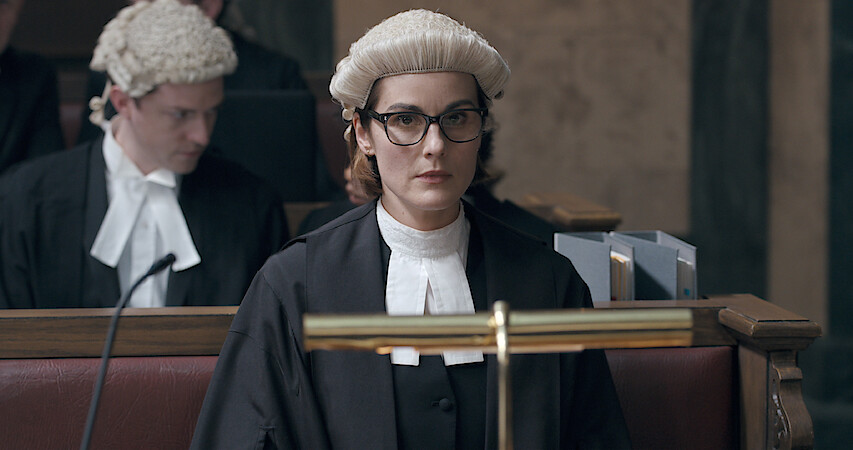
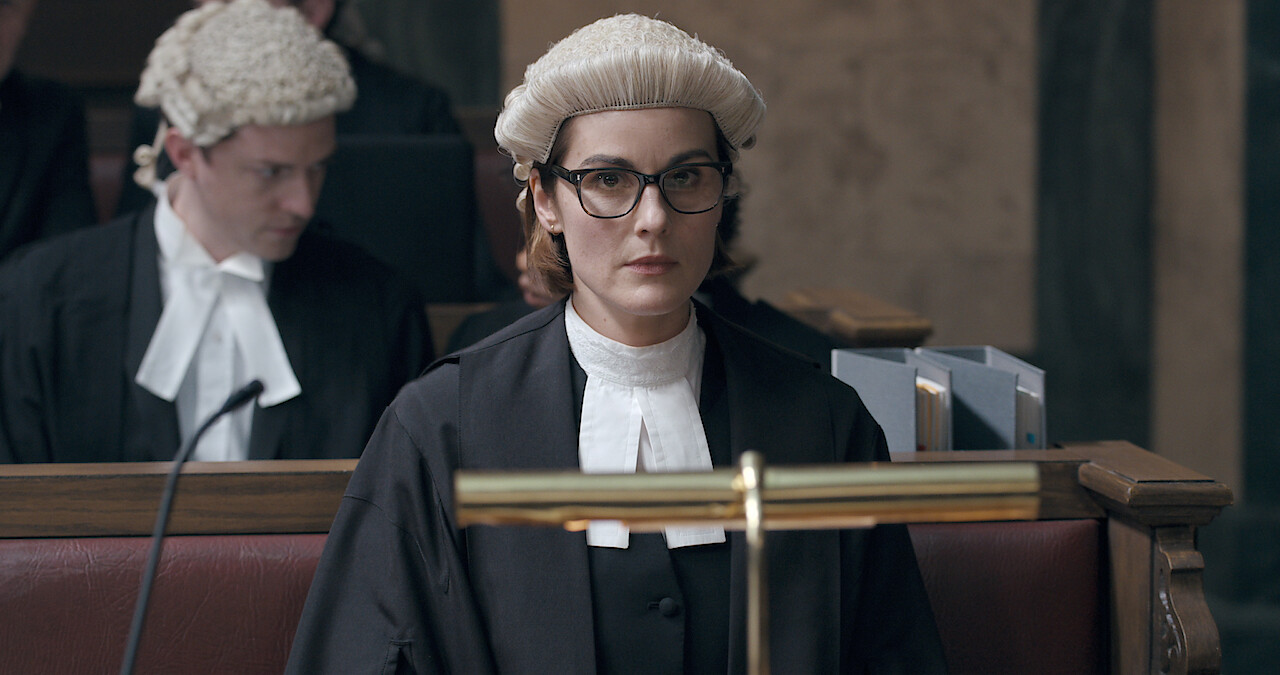
Anatomy of a Scandal illustrates this point by showing the incident in question from multiple perspectives: one that aligns with Olivia’s testimony, one that aligns with James’ and one that shows how Sophie interprets it. The versions were filmed at the same time, and the actors worked with an intimacy coordinator to create very specific “choreography” to match the memory.
“You can only play the truth of that person’s point of view,” Friend explains. “There was no kind of, ‘Well, my character wouldn’t do this,’ or whatever. It’s like, ‘Well, this is the way she remembered it, and that’s what we are portraying.’” This, coupled with James’ absolute certainty of his innocence, underlines the reality of the he said/she said narrative. At that point, it’s up to the jury to decide not who’s telling the truth, but rather whose memory to validate. “To have to stand there and defend your memory is something that none of us can really imagine doing, because we all think that our memory of an event is the one,” Friend says. “And of course, that’s not necessarily the case.”
In the end, spoiler alert, James is cleared of all charges involving Olivia’s rape allegation (only to be arrested again for his involvement in covering up a potential murder during his college years). Ultimately, the series speaks to an undeniable truth: how often power and privilege prevail in cases like these and why it’s important for all to confront privilege.
“The idea that people might watch this in the same household and come down on different sides of who was in the right, who was in the wrong, whether something happened or didn’t happen, or what happened and whose memory was more accurate — all those conversations are, to me, what makes not just television but films and books and music and restaurant meals interesting,” Friend says.