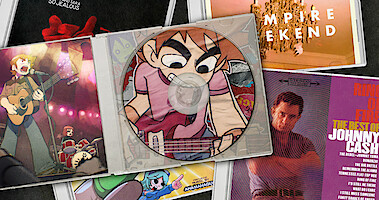
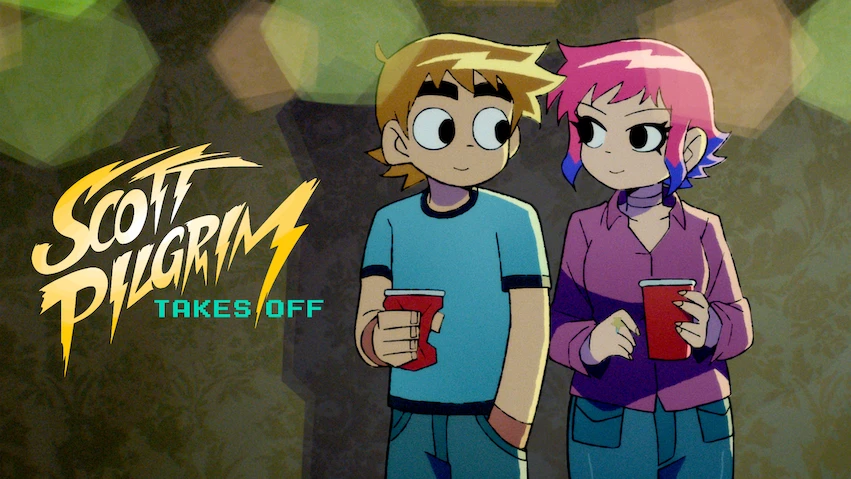
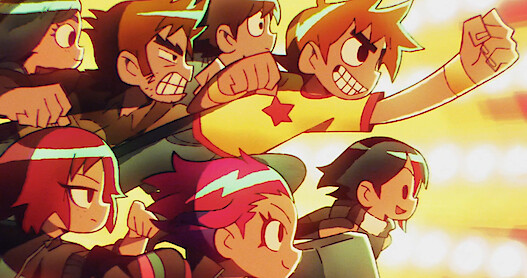
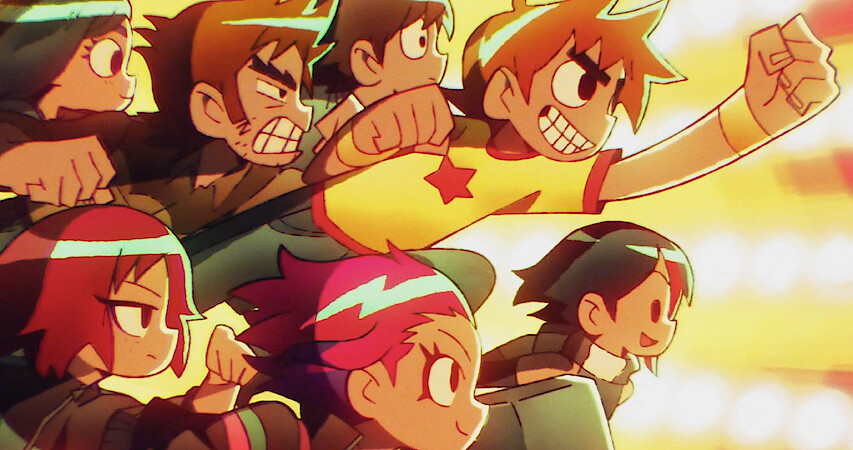
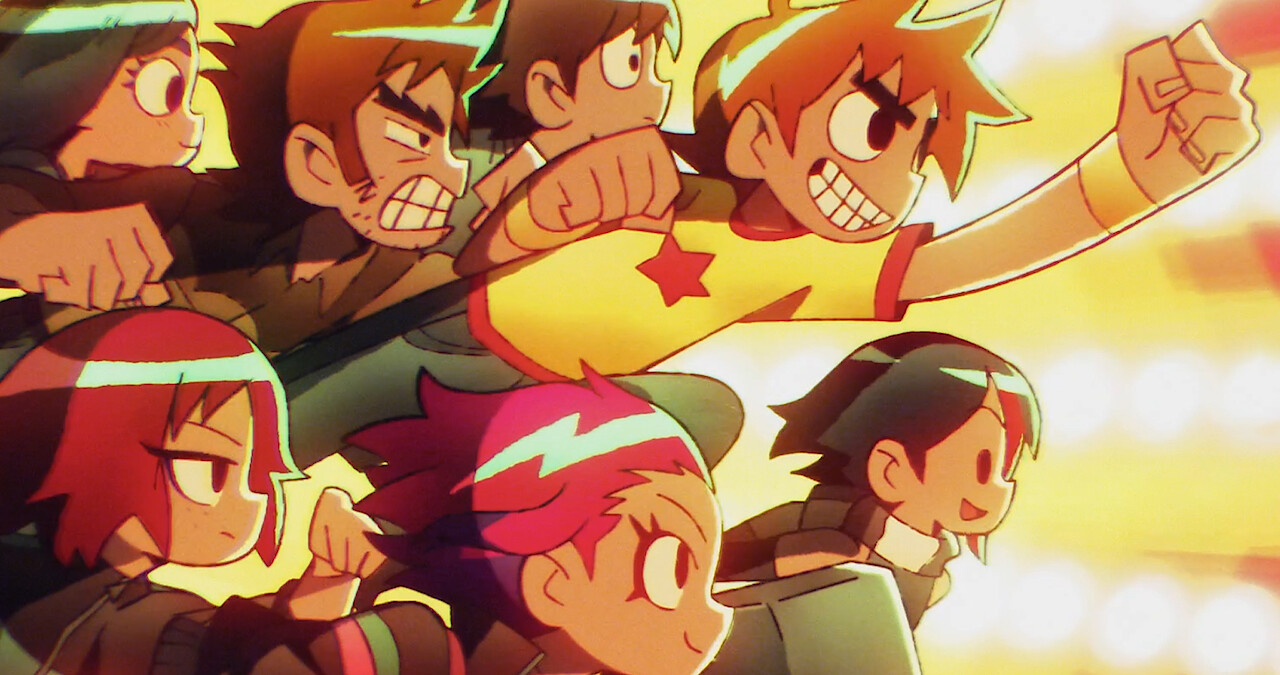
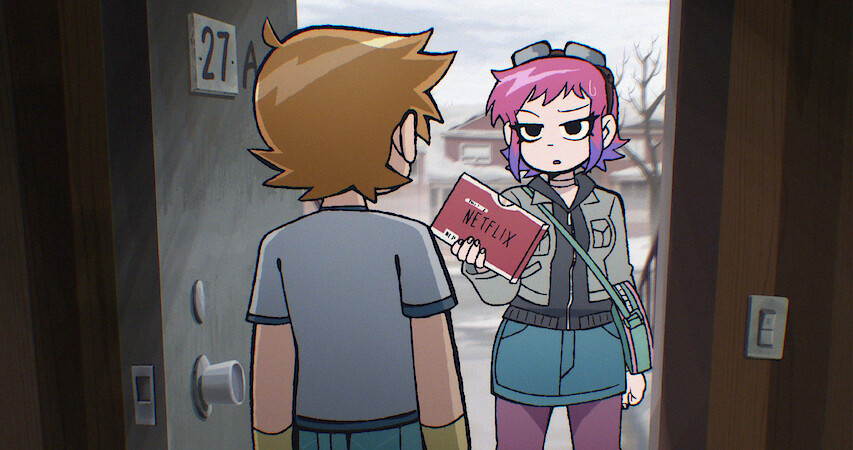
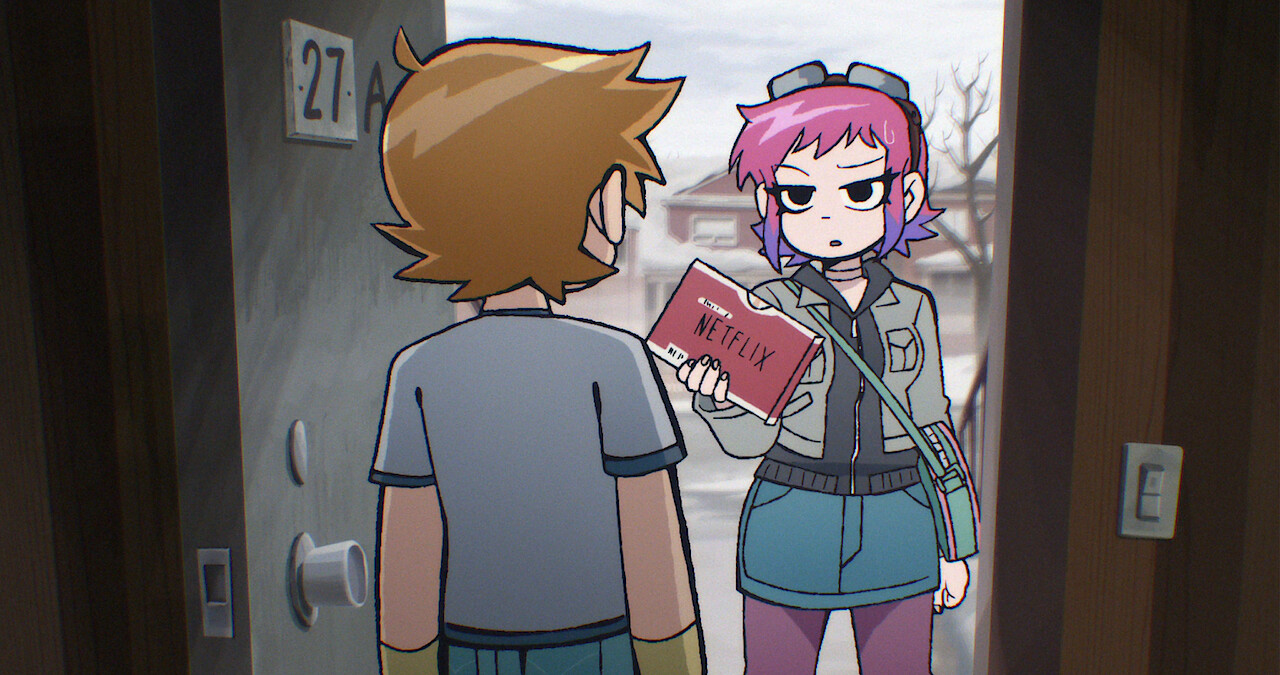
Over the past nearly two decades, Scott Pilgrim has lived many lives. He made his debut in 2004 as a hand-inked manga-style character in creator Bryan Lee O’Malley’s graphic novel Scott Pilgrim’s Precious Little Life. (The series would grow to encompass six volumes in all.) Six years later, in 2010, the Toronto slacker became flesh and blood in a live-action film directed by Edgar Wright and starring Michael Cera. That same year, Scott also went 8-bit in a companion beat-’em-up-style video game released by Ubisoft. And now, the titular bassist gets yet another makeover — this one hearkening strongly to his graphic novel roots — as an anime character in Netflix’s new series Scott Pilgrim Takes Off.
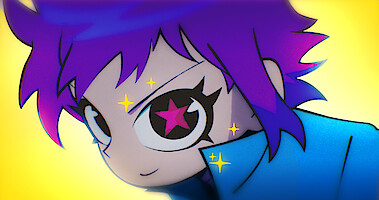
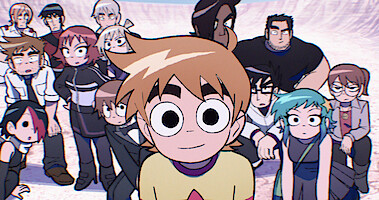
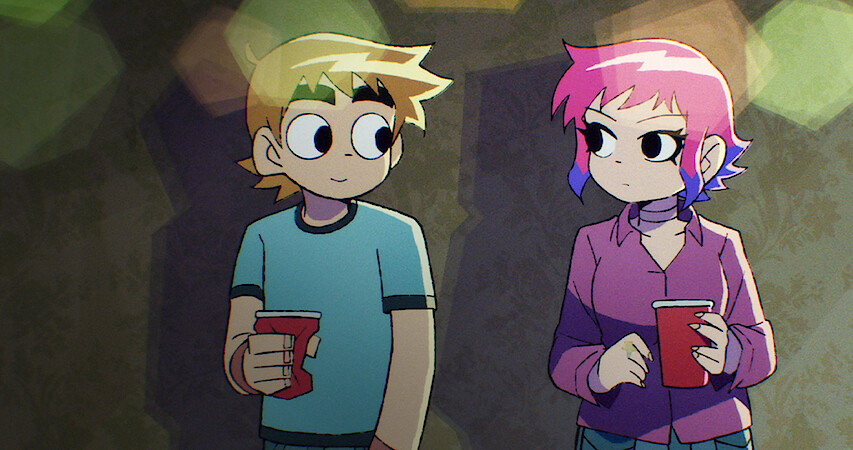
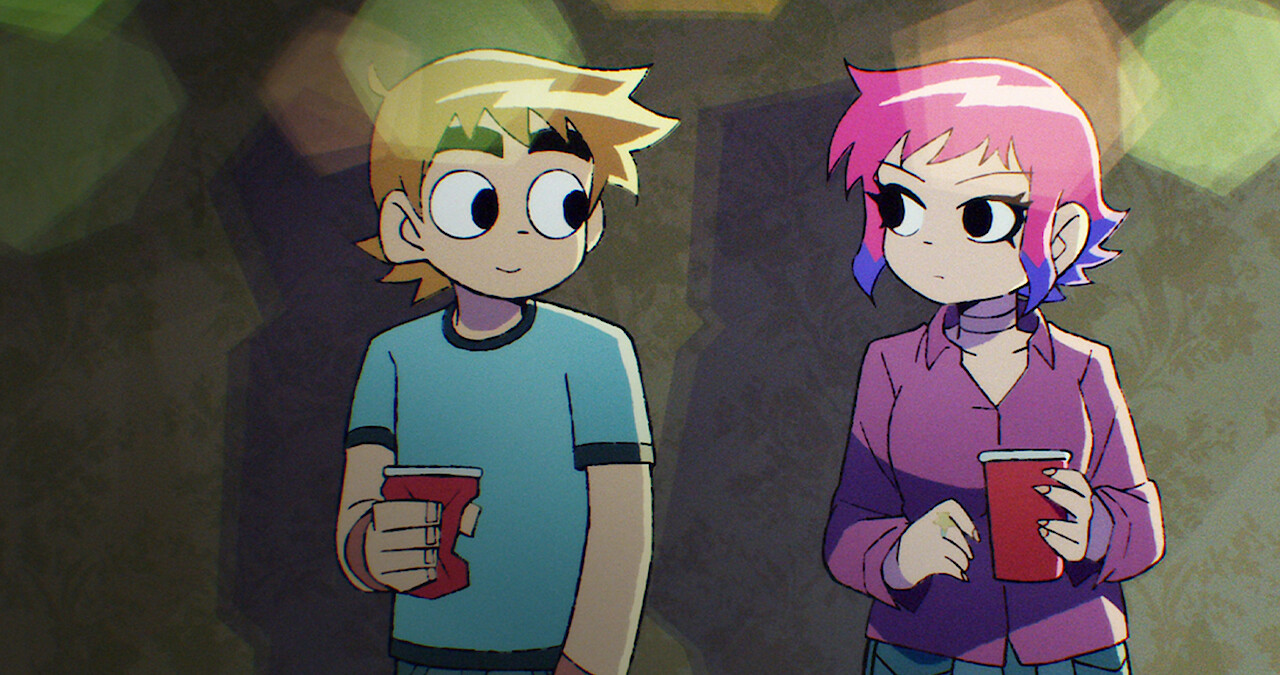
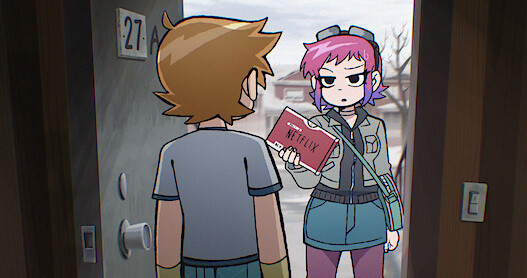
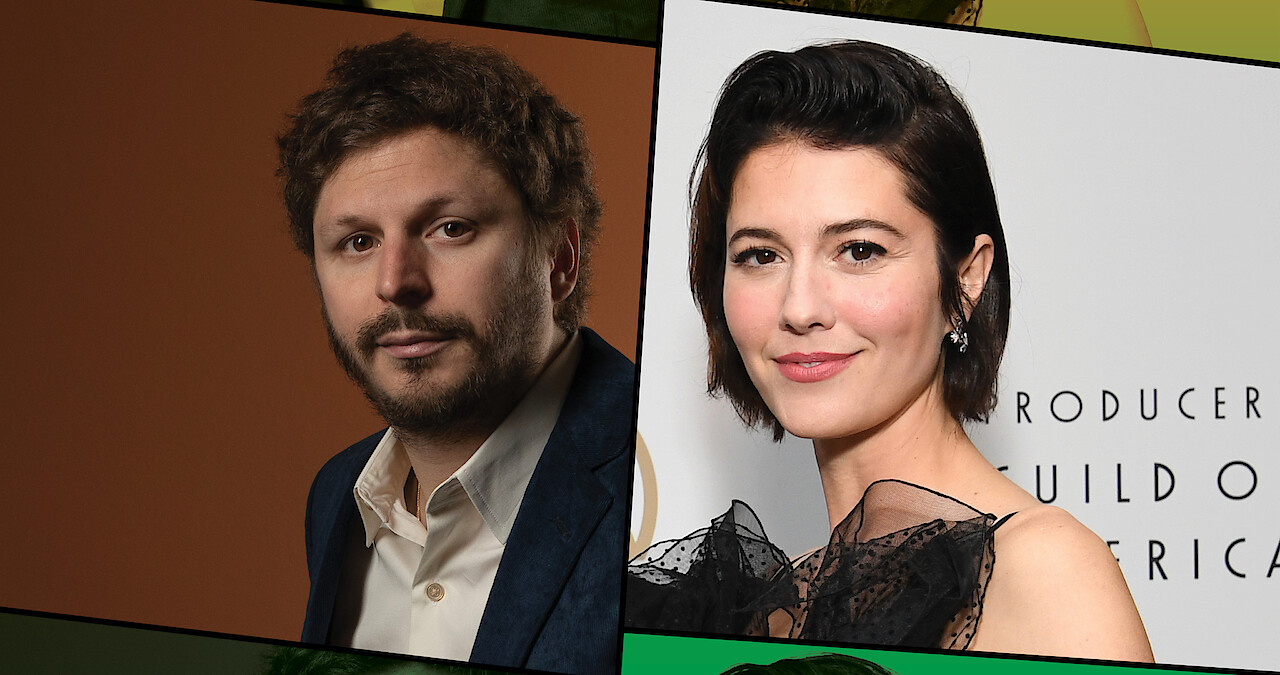
Executive produced and written by O’Malley and BenDavid Grabinski, Scott Pilgrim Takes Off finds our unlikely hero taking on a whole new adventure with the same old gang you’ve come to know and love, including Ramona Flowers (Mary Elizabeth Winstead), Wallace Wells (Kieran Culkin), Knives Chau (Ellen Wong), and, of course, those Seven Evil Exes. (The stars of the 2010 original reprise their roles here.) To create the eye-popping visuals for the streaming series, the production team turned to the Japanese animation studio Science SARU, responsible for such projects as Devilman Crybaby and Inu-Oh, with founding animator Abel Góngora taking the lead as director. Both O’Malley and Grabinski were already fans of the studio’s work and were thrilled to collaborate.
“Science SARU had done Devilman Crybaby, which is a huge show that we both were obsessed with at the time, and I loved their work going back years and years,” O’Malley says. “[Abel] is some kind of hero to us. We were just really excited to work with him and to see what he could pull off.”
For his part, Góngora prepared for the project by immersing himself in the world of Scott Pilgrim to get a better understanding of the characters — from rewatching the film to diving into fan art and forums. But the primary touchstone was always the original graphic novel series by O’Malley, in addition to more recent, non-canon drawings he’d done.
“[Science SARU] had so much respect for Bryan and his work,” Grabinski says. “They would reference art that he had posted on Instagram years ago of characters or sketches he did that were never in an official publication. They had a very thorough understanding of his body of work, but also the way that his style has evolved.”
To nail the setting, Góngora took mini digital vacations, so to speak. “I spent hours virtually visiting houses in Toronto, trying to better understand the way people live, and the way furniture and electrical appliances look,” Góngora explains. “I also digitally walked so much through Toronto, trying to find the streets that reminded me of the places we see in the comics and looking for cool spots we could use later. There is a great option that shows the streets a few years back in time. It was very important to use references that look more like the Toronto of 2010, because the city has changed quite a bit.”
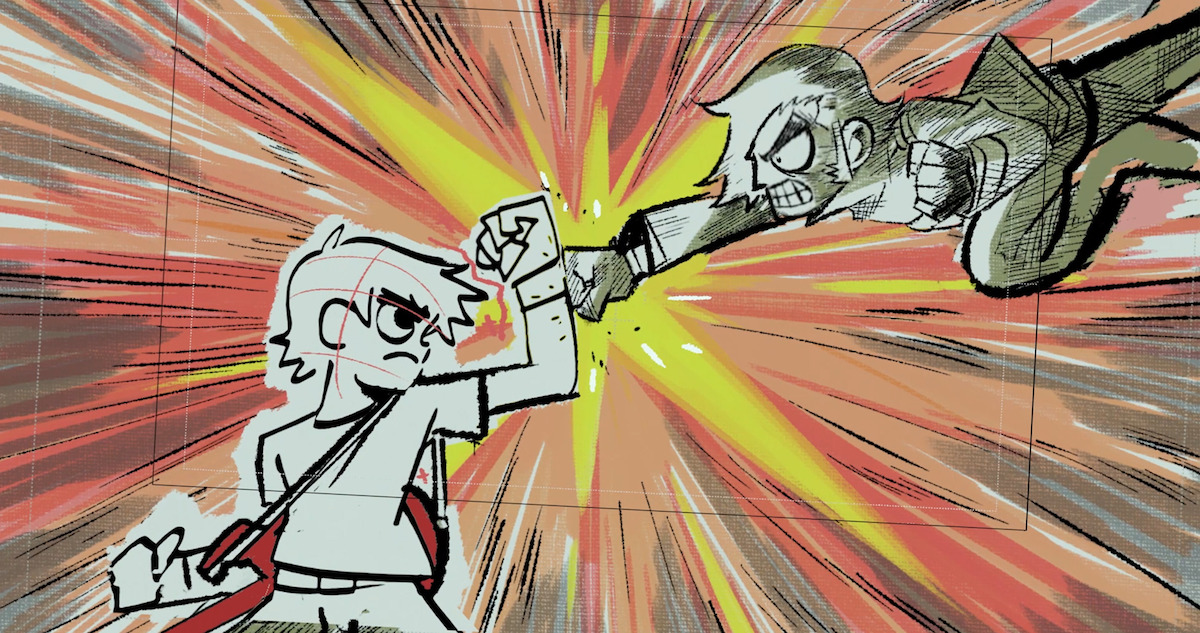
Other inspirations for the look and feel of the animation, according to Góngora, included Gorillaz illustrations, older anime like Dragon Ball, and Street Fighter 2D video games for all those fight sequences.
“I think that fights are super important in the show — those are the key moments when Scott Pilgrim becoming an anime makes sense, and the style of character design can be pushed to the limits,” Góngora says. “We hope that fans watching the amazing action scenes will get the feeling that Scott Pilgrim was made to be animated.”
What ultimately emerges is a poppy punch of color, action, and whimsy that hits you right in the eyeballs — a finished product that showrunners O’Malley and Grabinski couldn’t be more proud of.
“They’re geniuses,” O’Malley says of the Science SARU team. “There was just no way of anticipating how they would approach this. But their main producer, Eunyoung Choi, is incredible at putting a team together. No one will ever believe how few notes I had to give, because they just would deliver the exact thing without me asking for it in any specific way.”
“They had great taste, which makes our lives so much easier,” Grabinski adds. “We just tried to make the story as emotionally, thematically, and narratively interesting as we could, because we knew that they’d deliver on the visuals.”