

Ask an Expert
Is Lunar Water in ‘The Silent Sea’ Real?
We called up NASA to find out.
By Haein Jung
Jan. 7, 2022
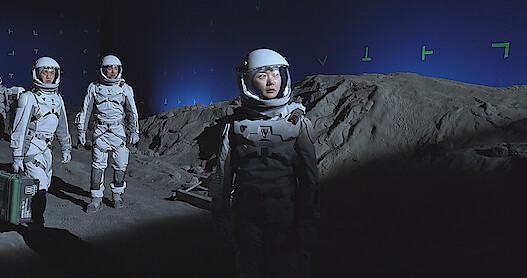
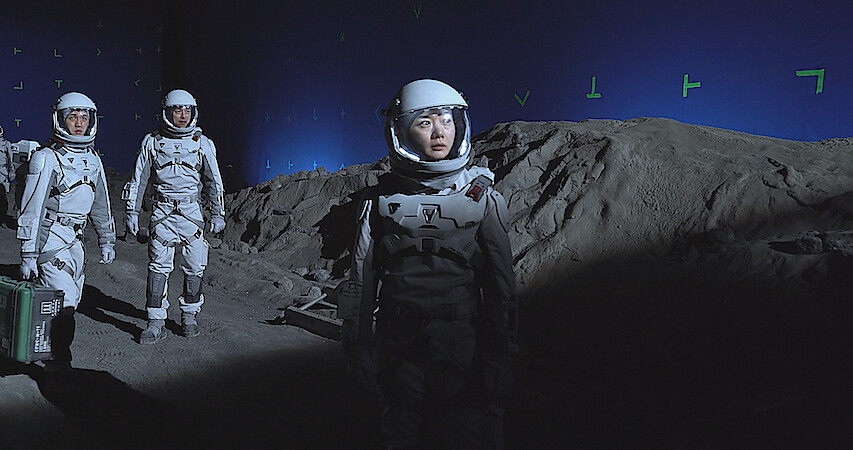
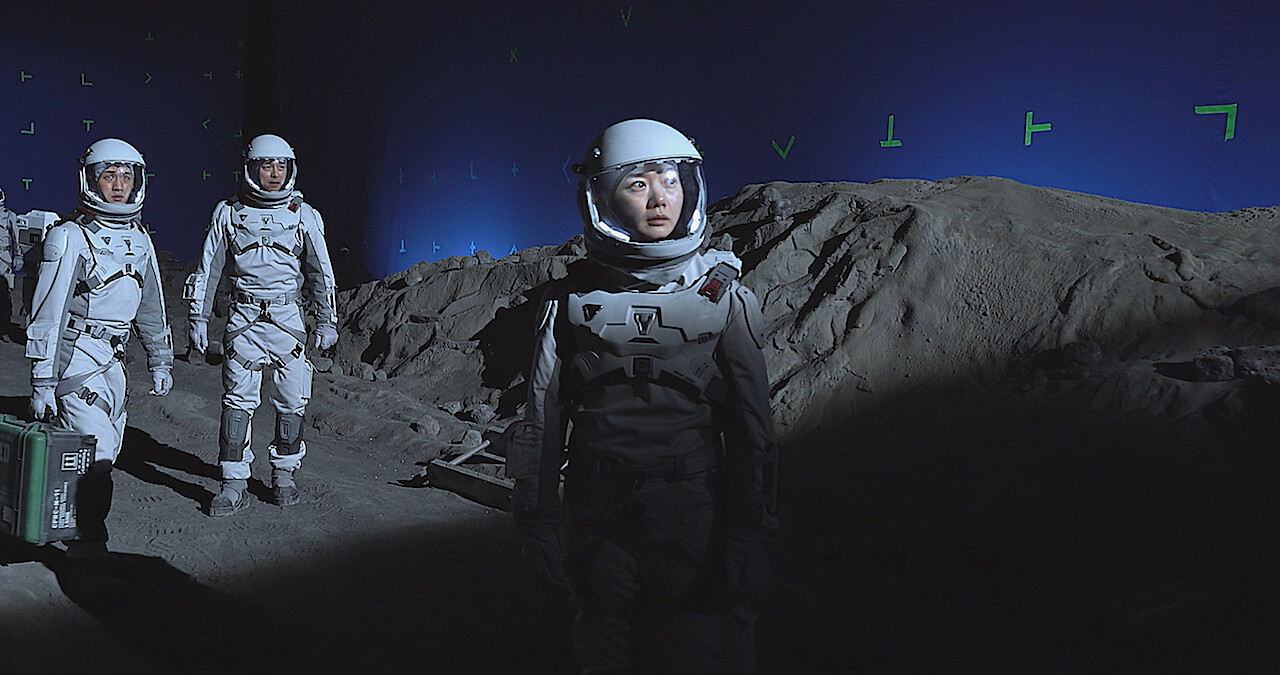
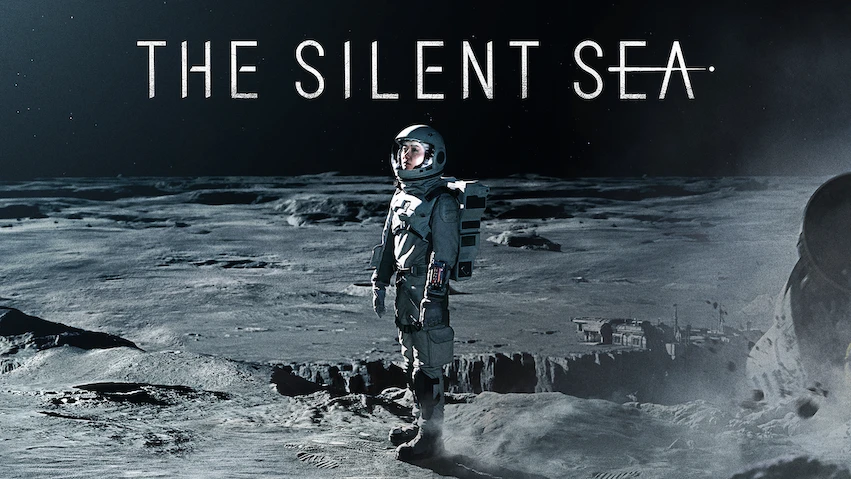
The Earth in The Silent Sea is a pretty bleak place. Resources are scarce, and, due to falling sea levels, water is rationed by class, and everyone is desperate for more. A group of astronauts are sent to the moon with a special assignment — to bring back samples of a mysterious substance at all costs. But what they find upon arrival is that their mission is a lot more dangerous than they ever imagined. Not only are they faced with extraterrestrial threats, like a creature that scales walls at superhuman speed, but also threats within their own crew as the situation reveals certain members’ self-serving agendas.
And the samples they have to bring back? Turns out it’s lunar water, which, if left in the wrong hands, could potentially wipe out the human population.
When it comes to sci-fi, you can safely assume that a lot of elements are made up (and when it comes to something like a space monster, we’re really glad), though some are a little bit harder to tell. Take lunar water, for example: Does it actually exist? We hit up NASA to find out.
Dr. Casey Honniball, a postdoctoral fellow and lunar scientist at NASA’s Goddard Space Flight Center researches and distinguishes forms of water found on the moon. Honniball breaks down exactly what the crew might’ve found in The Silent Sea and answers a few other questions we were left with after the Korean sci-fi thriller’s credits rolled.
Let’s start with the basics: Is there really water on the moon?
In 2009, three spacecraft observed a feature, which is attributed to hydroxyl, or “water,” on the moon. Technically, they found hydration, but they couldn’t tell if it was water or not. The way we have detected hydration and water on the moon has been mostly through remote sensing — using spacecraft with cameras that are looking for specific hydration or water features, or by telescopes here on Earth. We’ve also been able to look at Apollo 17 samples that have shown us there is possibly hydration, specifically hydrogen, within the samples that were returned by the astronauts.
In 2020, [my team and I] observed, using an Earth-based telescope, that the moon has elements of water all over its surface, meaning there’s individual molecules of water or hydrogen.
So, you’re saying it’s different from water found on Earth.
The hard part with the Apollo samples is that, as soon as they have been opened, if they’re not very carefully maintained in a vacuum setting, they’re exposed to Earth’s atmosphere, and the Earth’s atmosphere has a lot of water. As soon as that happens, atmospheric water attaches itself to the Apollo’s samples. It’s really hard to distinguish between lunar water and Earth water in the Apollo samples, and, so when they look at the Apollo samples, they look at specific types of samples that are kind of special.
They’re little pyroclastic glass beads which have hydrogen in them. They found a certain profile from the core of the bead to the rim, which told them that it was internal water from the moon.
What do you hope to do with these studies?
What I’m looking to do is try and understand how much water is present and if there are locations on the moon that concentrate water, and if these locations concentrate water, how much do they have, and is it enough for us to say, “Could this be a potential resource for exploration?”
How can we use lunar water?
The water has a lot of different uses. If you can find it on the moon and use it from the moon, you don’t have to take all the water or the hydrogen or oxygen that you would need from Earth to survive on the moon or go to another planet like Mars. For example, if you were to go to the moon, and if you were able to break that lunar water apart, you could create breathable oxygen or rocket fuel. Then we could use the moon as a stepping stone to get to Mars where we can refuel and replenish our supplies.
How far are we from being able to do something like that?
I believe the first human landing for the Artemis program [on the moon] is 2025.
In The Silent Sea, lunar water has a fatal effect on the Nuri 11 crew. So we have to know — is lunar water actually drinkable?
The water you find on the moon... let’s just say you’re not going to find puddles or even condensation. Depending on the location you go, you could find an ice deposit or you might have to take a handful of dirt and separate out the water. You have to take the soil, or ice deposits, and have to process it to get water. You have to purify it so you can drink it. Otherwise, it wouldn’t be safe to drink. Lunar regolith [lunar soil] are pretty nasty little particles, and they can cause a lot of respiratory issues.
OK, so if we did plan on drinking it, purifying it is very important.
Hydroxyl is the main active ingredient in drain cleaners, and so I definitely wouldn’t be wanting to be drinking that kind of substance.
Maybe we should hold off on getting the Brita pitcher out. But what would you say is the main thing people should know about lunar water?
One thing that I have been trying to make is the distinction between hydroxyl and water because they are different. If you harvest hydroxyl on the moon, it takes a lot of different processes to get the hydroxyl to break up into hydrogen and oxygen compared to water.
Since you’re an authority on a lot of space-related things, do you generally avoid watching sci-fi?
I actually love watching really bad sci-fi [laughs]. I really like The Core.
Really?
Sometimes it’s really blatantly obvious where I’m, like, “Oh, OK , come on.” Her hair should be floating in space. But, most of the time, I enjoy the movie.
What are you watching right now?
I just finished Another Life and so I’m trying to find another series to watch.
Well, there’s always The Silent Sea.
I can’t wait.
This interview has been condensed and edited for clarity.