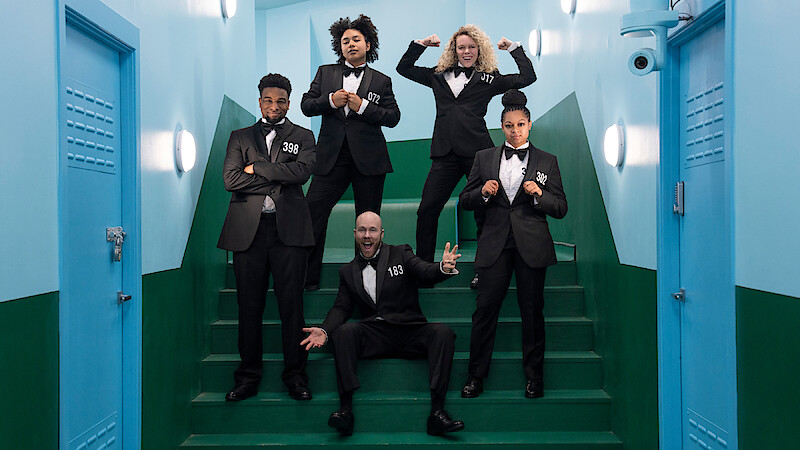
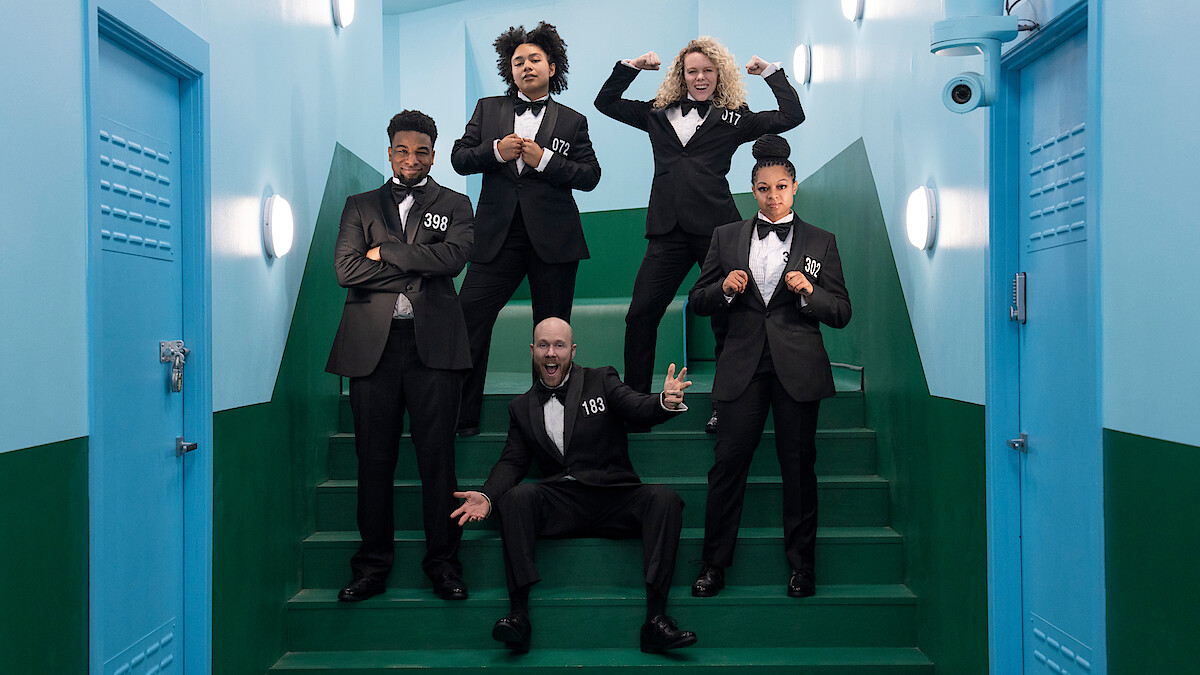
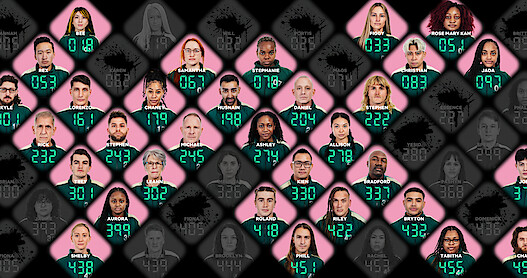
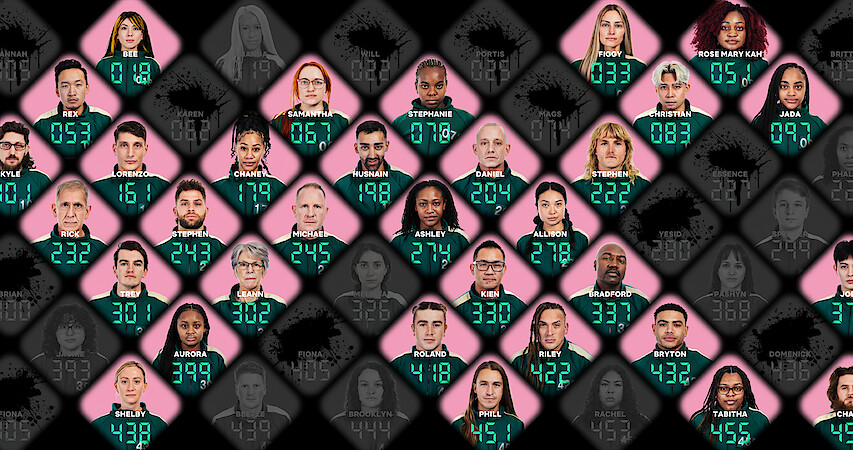
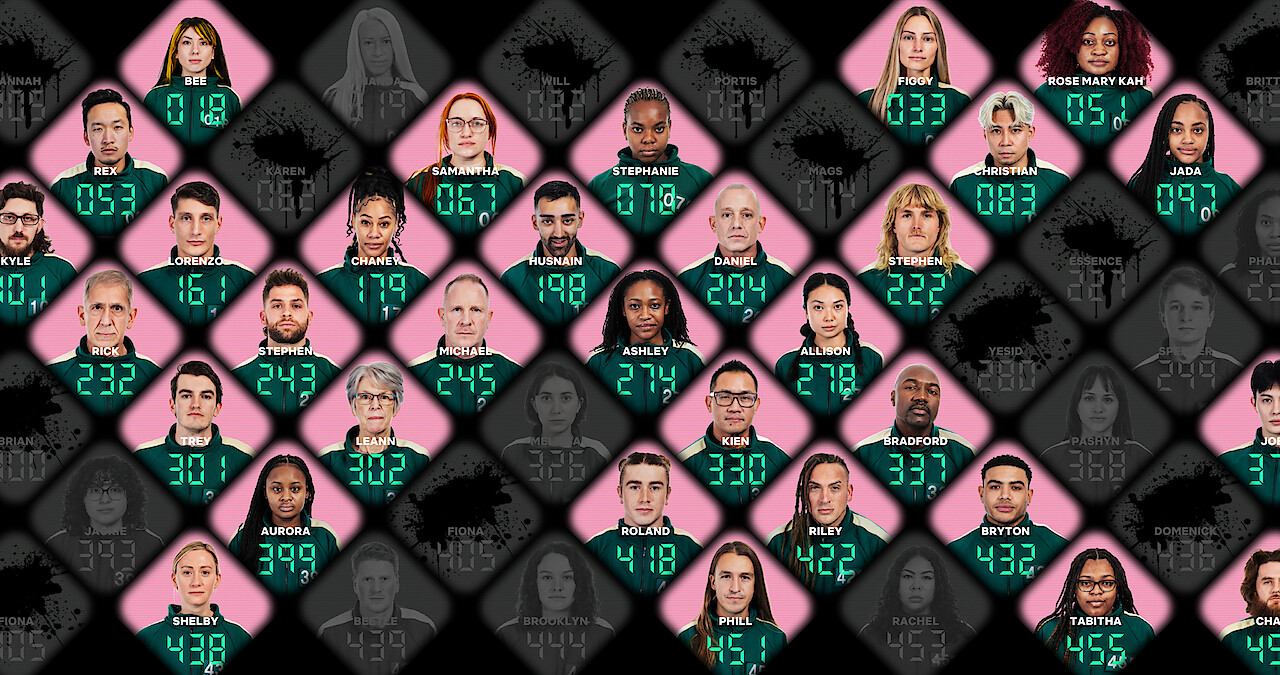
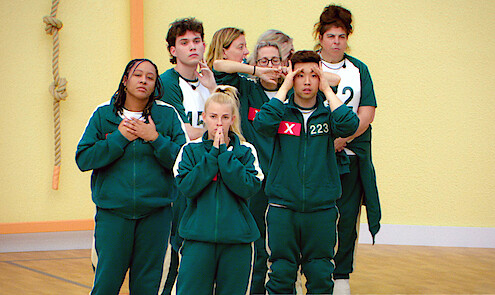
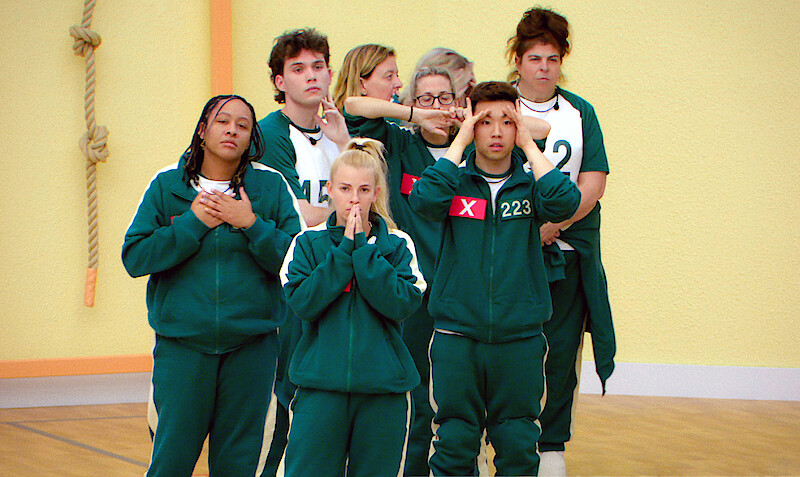
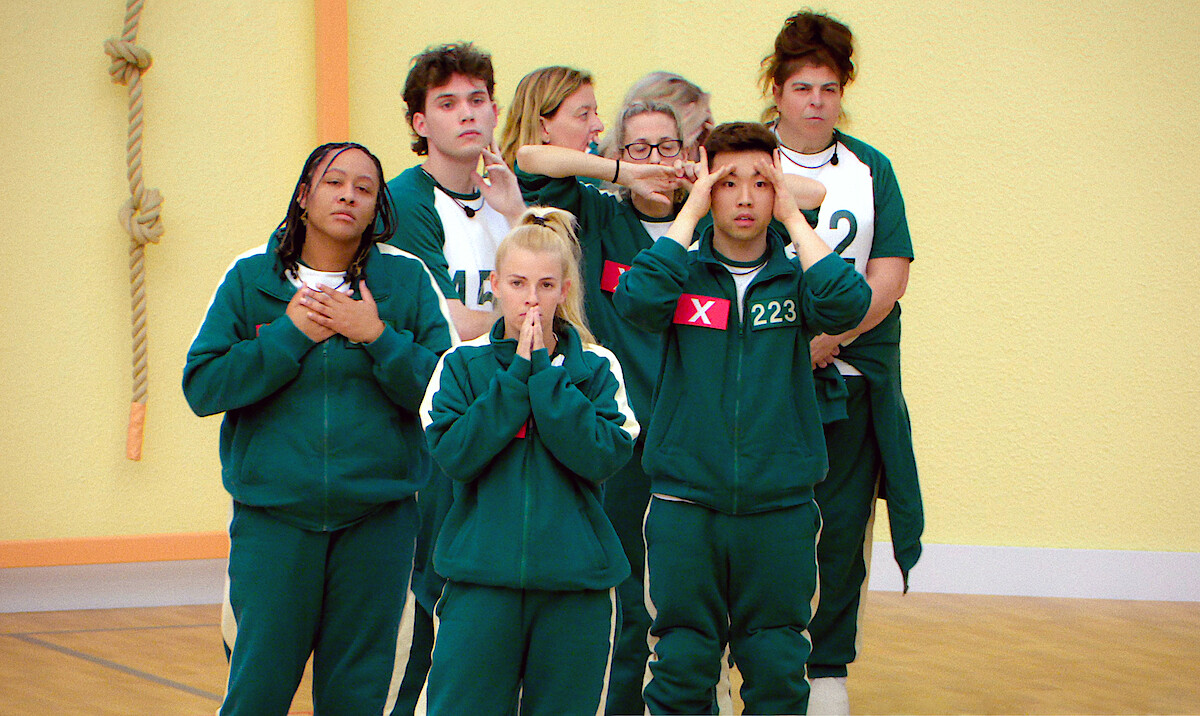
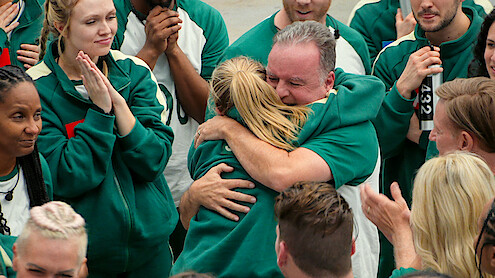
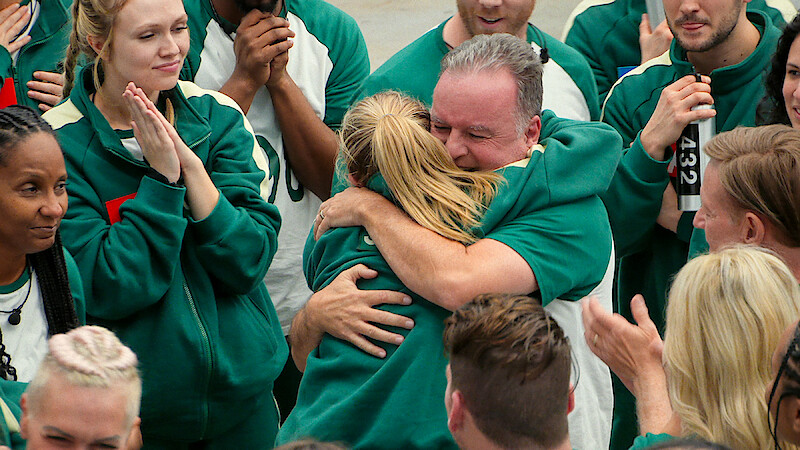
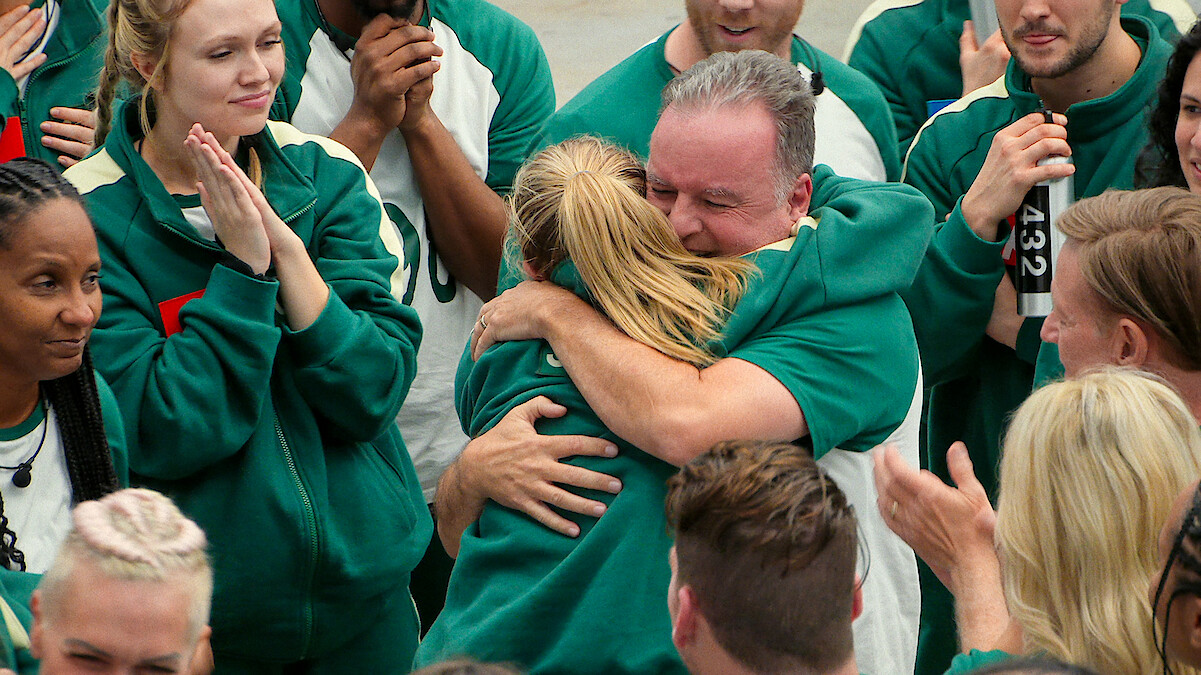
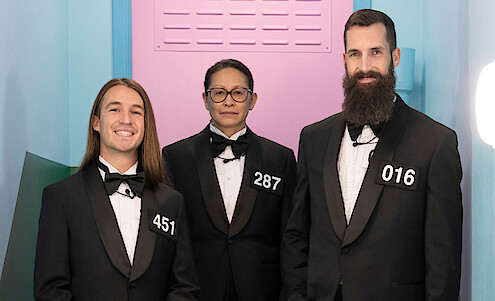
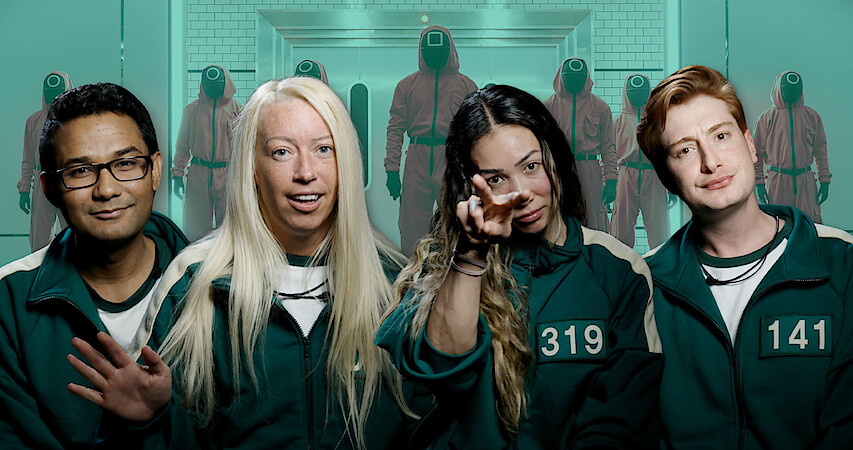
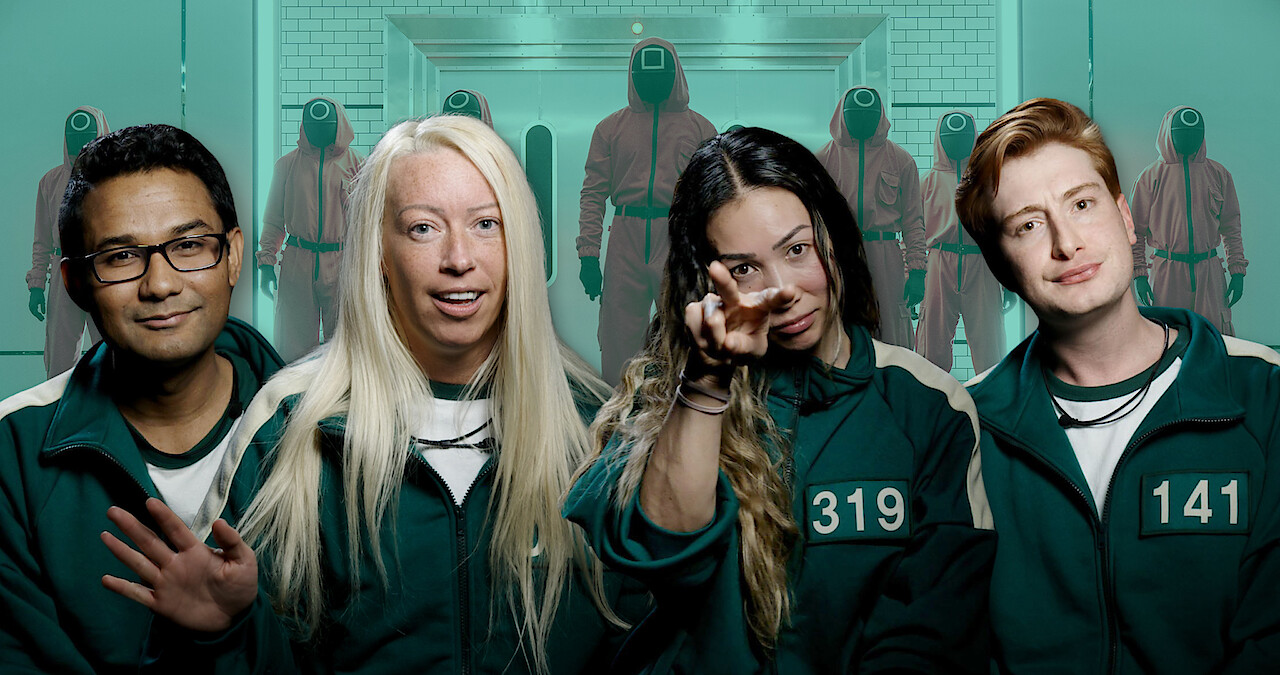
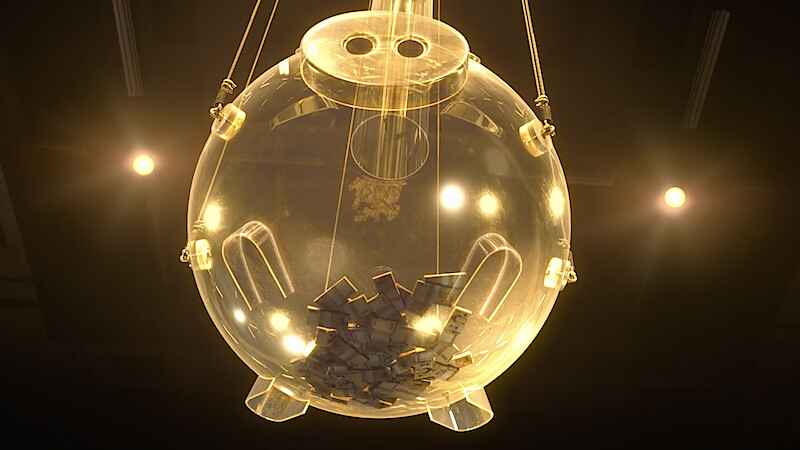
456 contestants, a $4.56 million cash prize, and eight diabolically stress-inducing games to determine the sole winner.
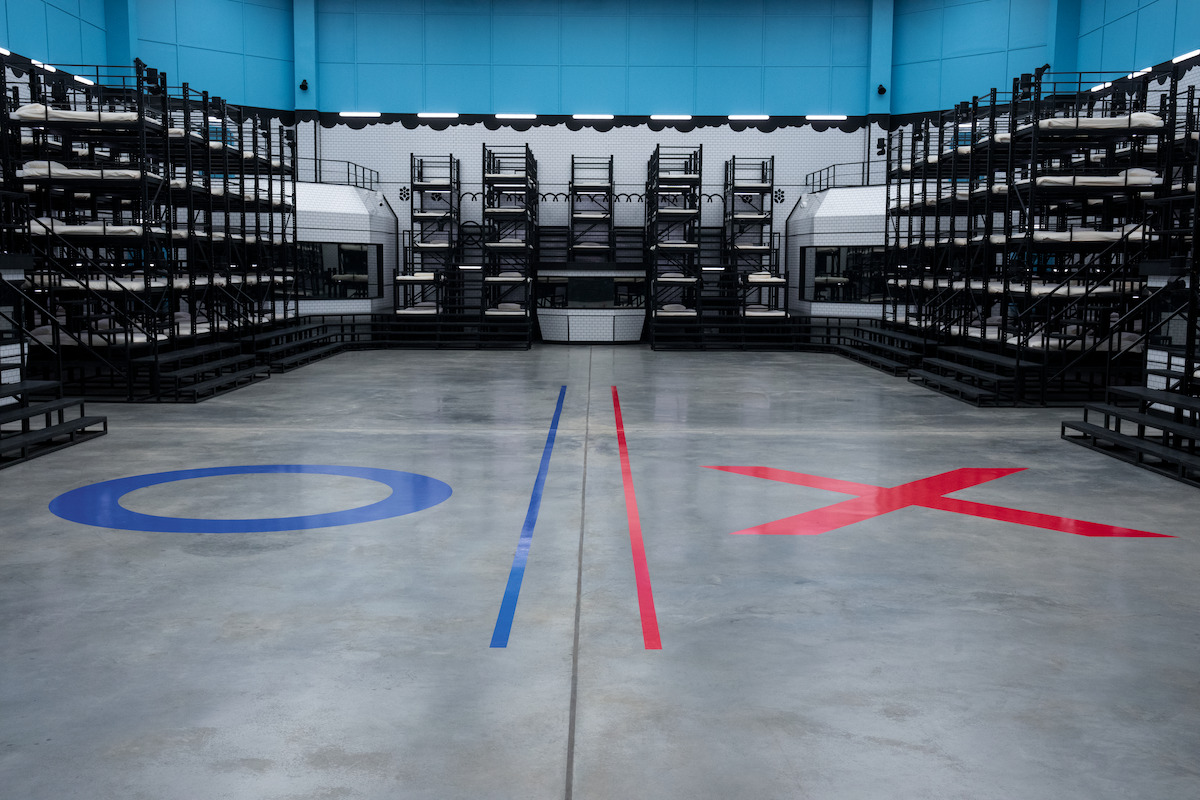
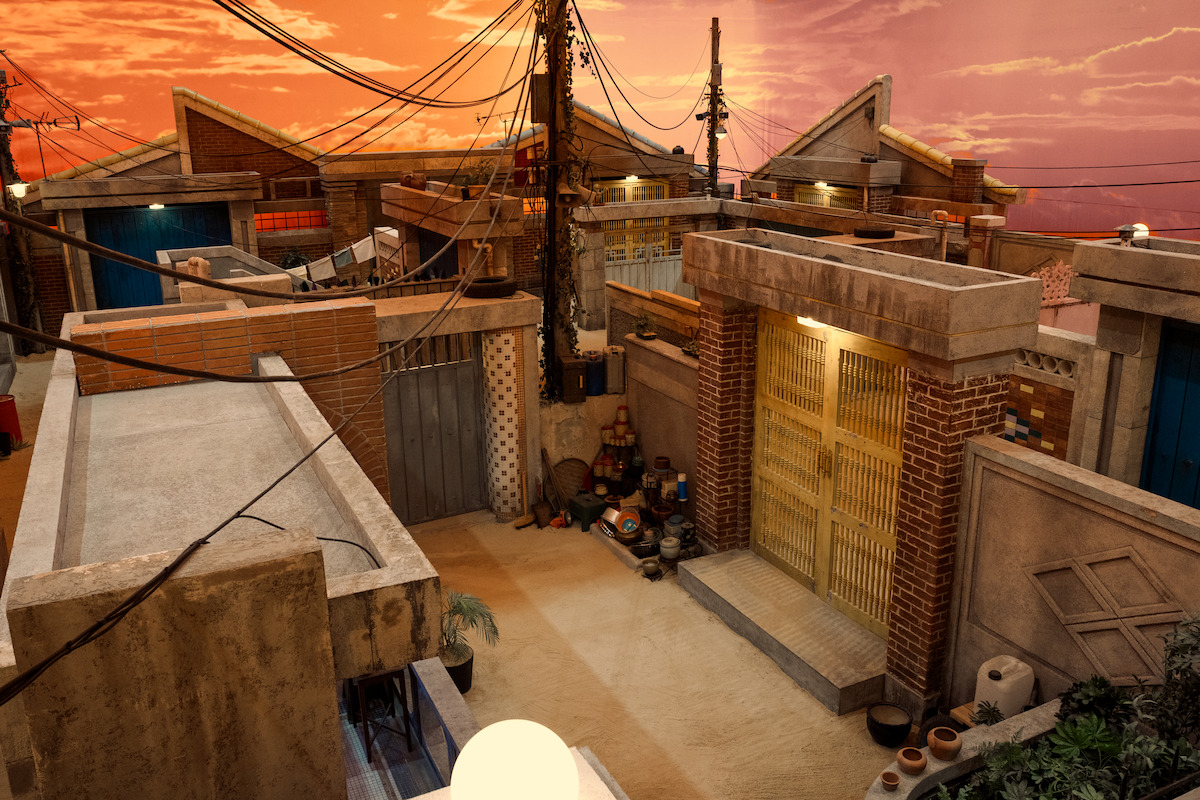
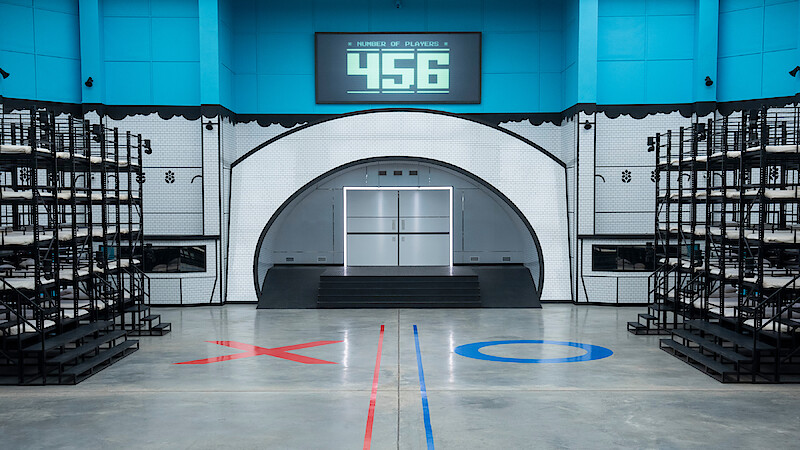
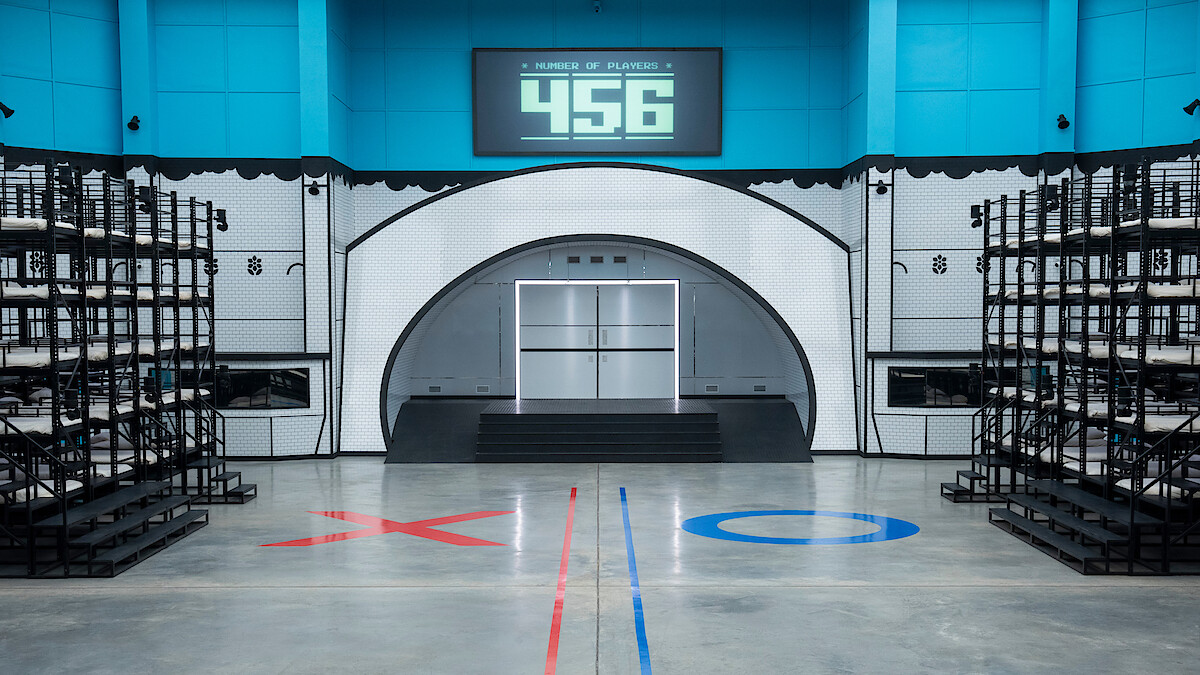
Squid Game: The Challenge whisks audiences back into the massive dormitory modeled after the original scripted series in Season 2, which is streaming now. The iconic set serves as both the living quarters and a high-stakes playground for a fresh batch of eager gamers who’ll try to stave off elimination and outlast opponents en route to life-changing winnings. Filmed in the United Kingdom, the second installment of the series brings games new and old that will push players to their limits and move viewers to the edge of their seats.
Executive producer Tim Harcourt tells Tudum that Season 2 features subtle references and nods to various games throughout the series that eagle-eyed viewers might pick up on. “Some people will spot them, some won’t, but we hope they see those little things and know what they’re about,” he tells Tudum. “There are decals on the walls of the dorm — some are games that we don’t use, some are new games.”
So, what will the cast of Squid Game: The Challenge Season 2 be getting themselves into? Scroll on for rules and details about the next set of games.
The Count
The Count is a brand new game that kicks off the season and plays a monumental role in determining how the rest of the competition goes.
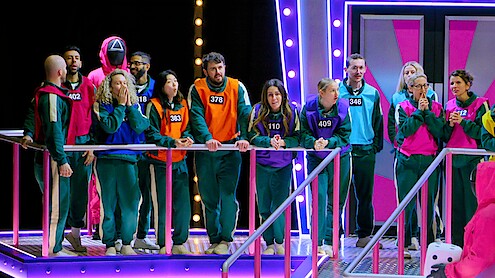
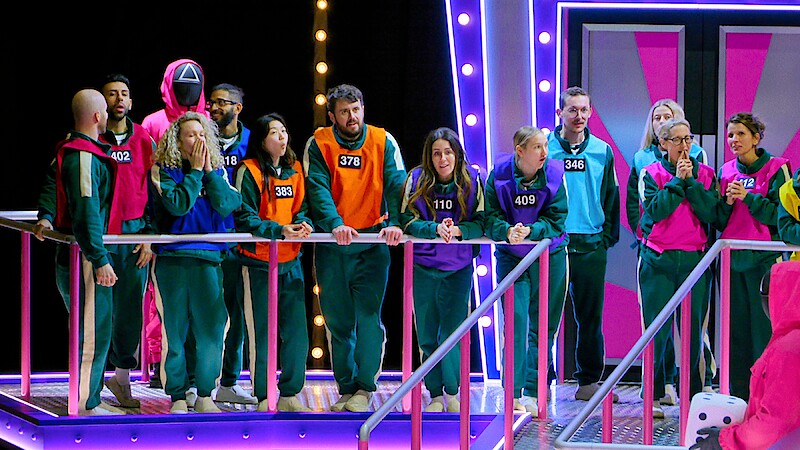
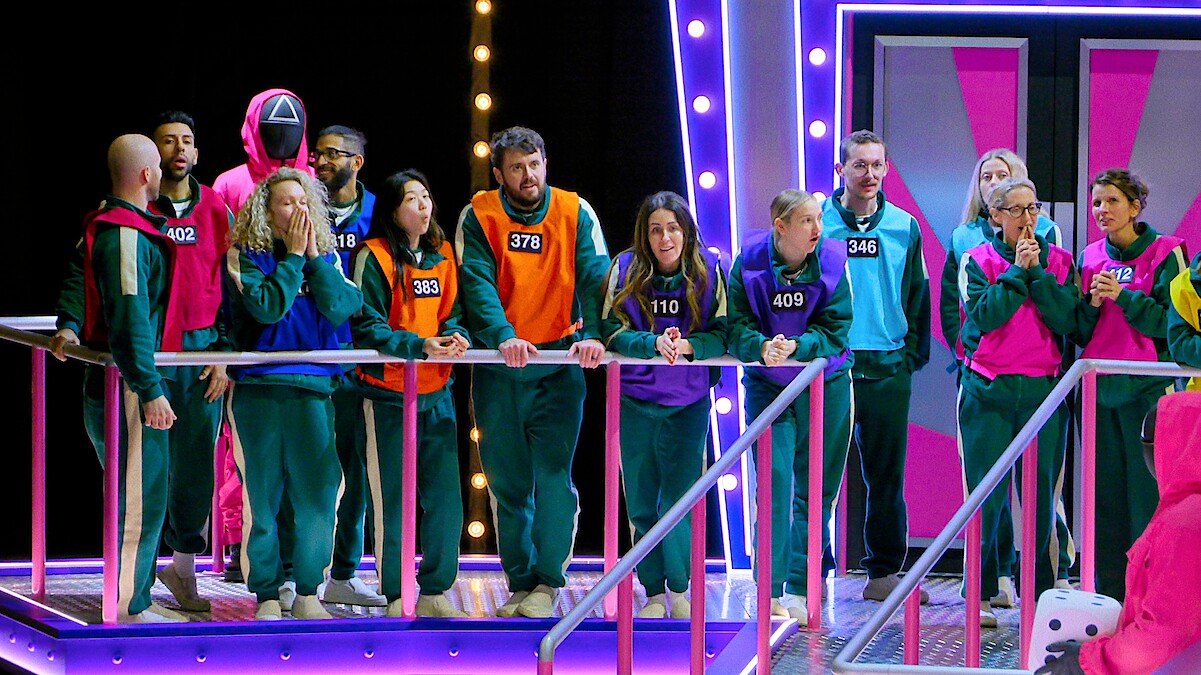
In the opening moments of the premiere, two players are asked to volunteer to stand on the giant X and O emblazoned on the floor and dividing the dormitory in two. The remaining 454 players are tasked with separating themselves in half along the corresponding sides of the dormitory. In two separate rooms — one for the players who chose X and another for those who chose O — the group learns that only one group will survive the next game, which eliminates half the total players.
The two players who volunteered at the beginning are then asked to be in control of a button — one they must push once they believe 456 seconds have elapsed. The room closest to counting correctly survives, and the one that falls behind must leave the game.
Six-Legged Pentathlon
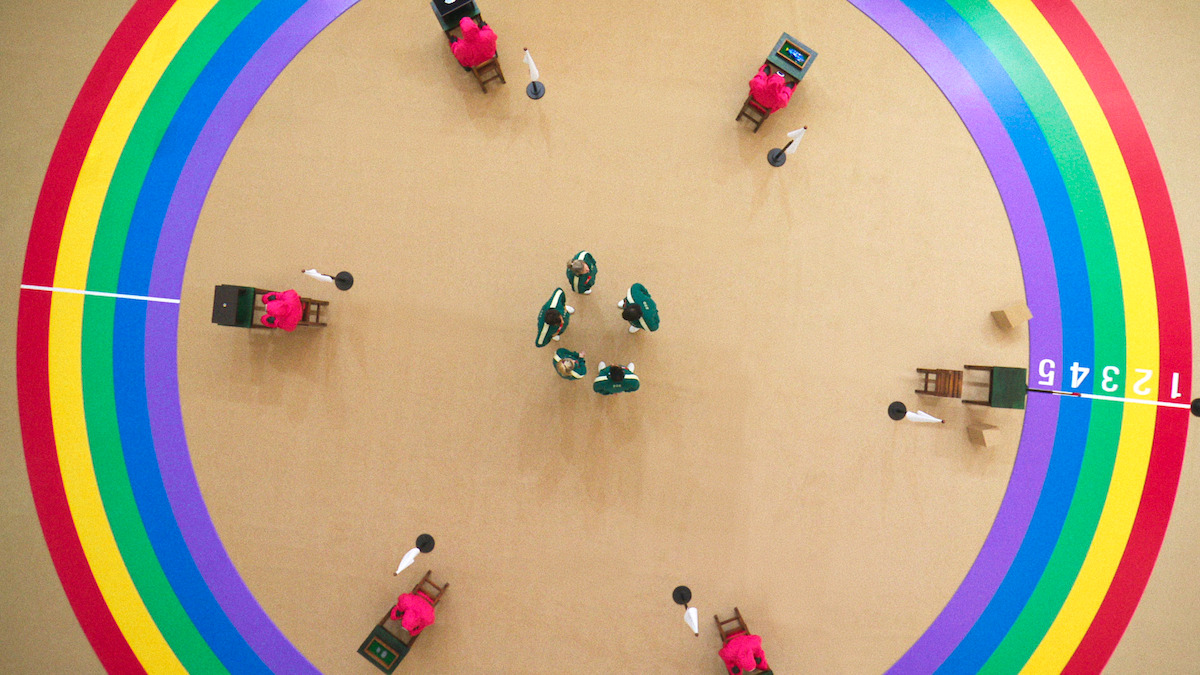
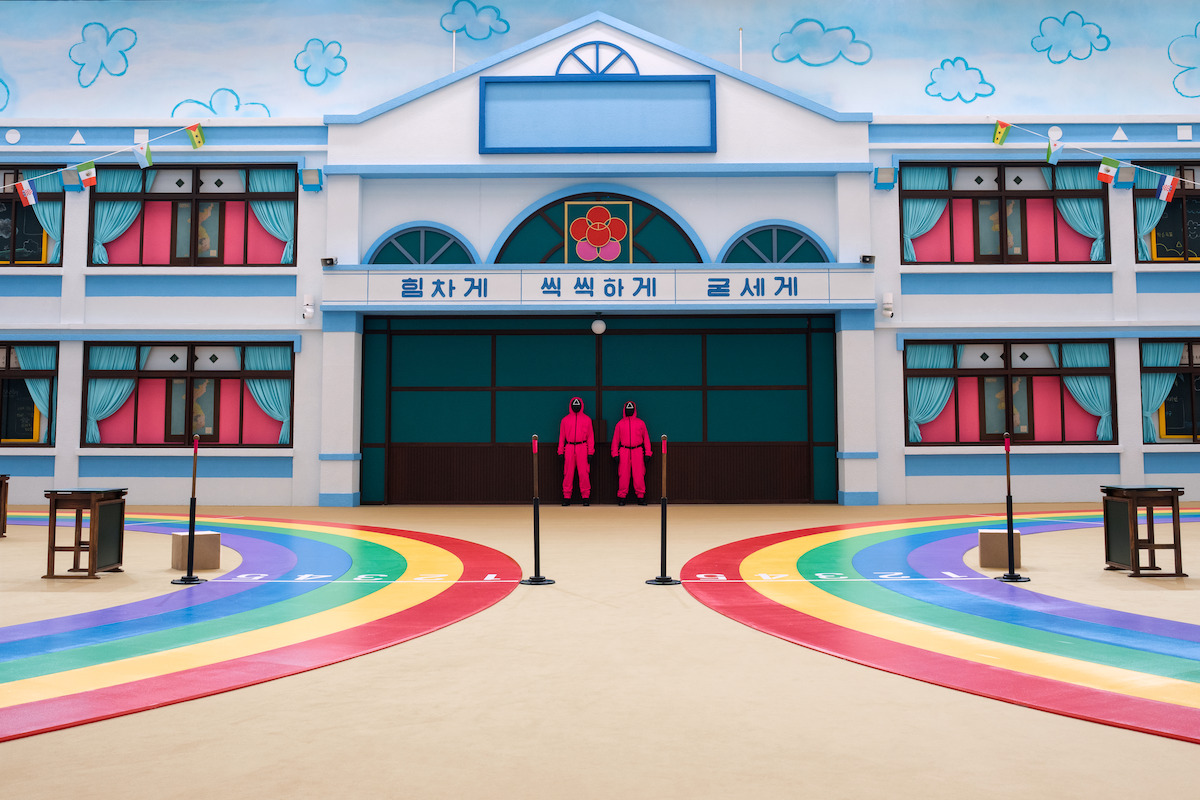
Players break into a group of 10 that’s then split into two teams of five. Each team has their legs tied together, and each player plays a mini-game that must be completed to advance. Unlike the Pentathlon you might have seen in the scripted series in which teams are thrust into a five-minute race against the clock to complete the circuit or be eliminated, this iteration has no time limit. The teams race head-to-head, and the winners advance while the losers are eliminated.
The Pentathlon games are: Ball-in-a-Cup, Flying Stone, Gong-gi, House of Cards, and Jegi. The rules for these mini-games are as follows:
- Ball-in-a-Cup: A player must catch a ball attached to a string inside their cup.
- Flying Stone: A player stands behind a line and attempts to knock over one stone by throwing a stone of their own. Each time they miss, their entire team must walk to the thrown stone together, pick it up, and walk back to the original place behind the line to throw again.
- Gong-gi: A player must throw five dice in the air in a row and catch them in increasingly complicated stages.
- House of Cards: A player must build a balanced structure using seven cards.
- Jegi: A player must kick a jegi (similar to a badminton shuttlecock) three times in a row without letting it fall to the ground.
Executive producer Stephen Yemoh explains the decision to swap the five-minute time limit for a foot race: “In the scripted series, the Pentathlon was an opportunity for both teams of five to make it through to the next round. We decided to change that slightly. We wanted to bring in that sense of competition quite early. We thought, rather than making it so any of these 10 people could pass to the next round, we did five versus five. It was a race against each other. That means some people who knew each other from the outside world were actually split up. That was one of the first big emotional parts of our show.”
Catch
“When looking at new games, simplicity and immediacy are key,” executive producer Nicola Brown tells Tudum. “With Catch, it’s an incredibly simple game — can you catch the ball, can you throw a ball?”
But of course, in Squid Game: The Challenge, nothing is as easy as it might seem. Games designer notes that Catch also has “quite a lower-level psychological thing, where you have to consider your options,” as your strategy in the game is key to survival. “It's not just their life on the line, it’s yours as well.”
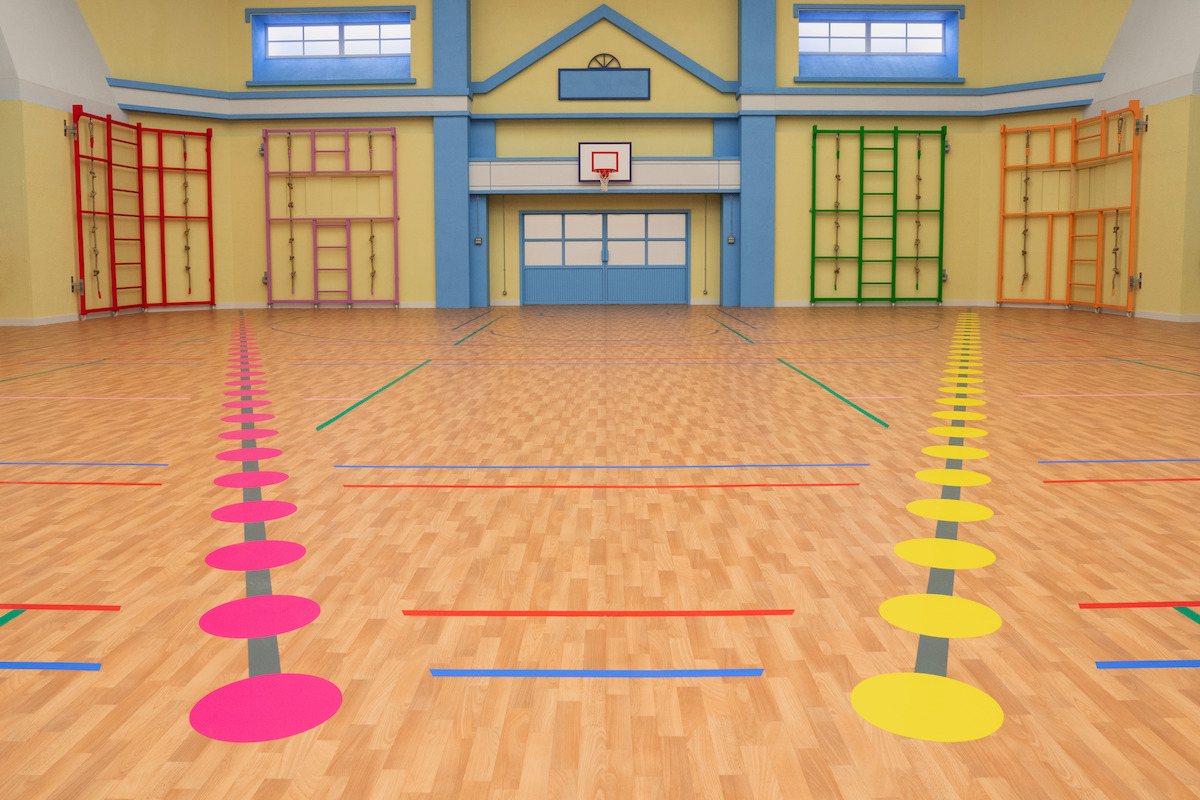
So what is it? In Catch, the players are gathered in a stark white room where they must divide themselves into four different color groups. Once they decide, the players are taken to a new room modeled after a kindergarten gymnasium to reinforce the innocence [of the game] when so much is at stake. Within each group, the players must line up along colored dots along the floor. In the center of the room, one thrower will stand and throw the ball to someone at the front of one of the lines. If the ball is caught, the thrower passes the game, and the catcher becomes the new thrower. But if the ball is dropped, both are eliminated.
Choosing your position in the line is where strategy comes into play, as being closer to the front guarantees a relatively easy catch, while those in the back face a more difficult throw — or may not even participate, as only 16 balls are in play. Once all balls have been dropped, the game concludes.
Series director Diccon Ramsay appreciates Catch because of the layers embedded in the game. “You’ve got the spectacle of all the players being in the same space. You’ve got the drama of the game playing out in the center of the room,” he says. “It’s a really good example of how we use a game to drive the story and not just be pure spectacle.”
Adds Brown, “Playing it under these conditions, with people who you may like and know or others you don’t, just put a huge amount of pressure on them and delivered some brilliant moments of gameplay.”
Mingle
Mingle is an immeasurably intense game, and executive games producer Anna Kidd speaks to the efforts made to capture the chaos from all angles. “You have to be poised to find the drama wherever it unfolds. We had 90 cameras ready to film whatever happened, whenever it happened, at all times. Everybody has a plan until a number is called, and then suddenly everyone slips into survival mode. The players had formed genuine alliances, and they had real solid relationships, but that went out the window because people wanted to protect themselves.”
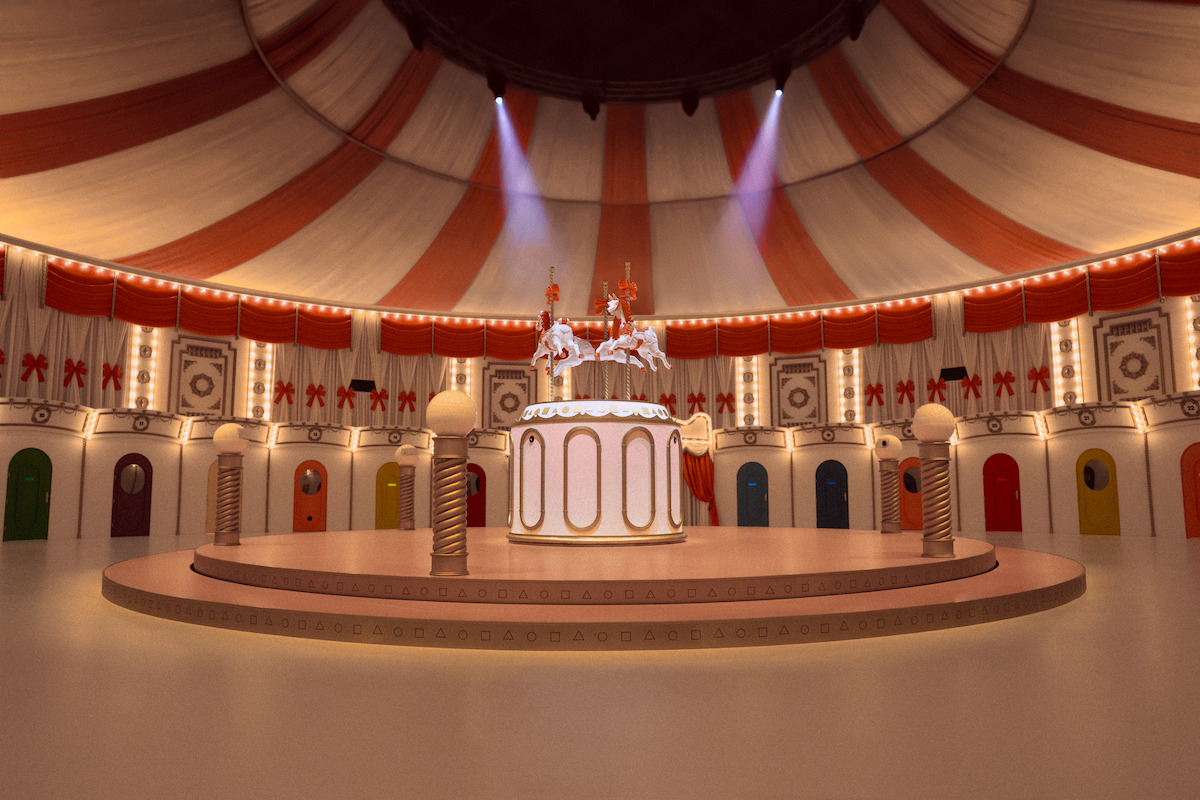
As for exactly who Mingle is played, the participants are placed on a spinning circular carousel surrounded by doors. Once the carousel stops, a number is called out. Players must gather in a group consisting of that exact number — no more, no less — and walk through one of the doors together, into an adjoining room. The numbers called out change along the way. If players aren’t grouped in a room according to the requested number, or cannot find a room to enter, they’re eliminated.
Ramsay reiterates that alliances are fragile in a game like this. “Ultimately, you have to play as an individual. If you need to jettison your friends to make sure you survive, then that decision has to be taken in the spur of the moment.” Given the nature of the game, safety was of paramount importance to the entire crew. “You want players to live and breathe this world. It's a reality show,” Kidd adds. “They’re not actors. So we need to make sure that everything can be played for real. The games have to work. They have to be fair, and they have to be possible for everybody to play.”
“People’s safety in the show is of paramount importance to us. Everything is considered — both physical safety and mental health,” says Harcourt.
To find out what really happened behind the scenes of Mingle, check out Tudum’s explainer about how Season 2 tackled the iconic game — and the revolt that ensued among the players.
Marbles
“Marbles was one of the games that we brought back but actually kept quite similar to how we did it in Season 1,” Yemoh explains. “It allows us as viewers to really get to know the players because they have an intimate moment with someone who is usually quite close to them. They decide the game — it’s their own agency … that means it’s really exciting to watch.”
Marbles was introduced differently in Season 2 to keep everyone on their toes. “The question surrounding Marbles was how do we get these two people together that are going to play against one another,” adds executive producer Nick Walker. “How can we get that picnic-basket moment again for Season 2? Players are a lot more savvy this season, so we settled upon doing it within Mingle.”
The mechanics of the game remain the same. “It’s so iconic to the first series that it stands alone and is its own star,” adds production designer Mathieu Weekes. Players are told to partner up. Each player is given a bag of marbles and allotted 30 minutes to pick a game of their choosing involving the marbles, which determines a winner. The loser hands over their marbles and is eliminated.
Slides and Ladders
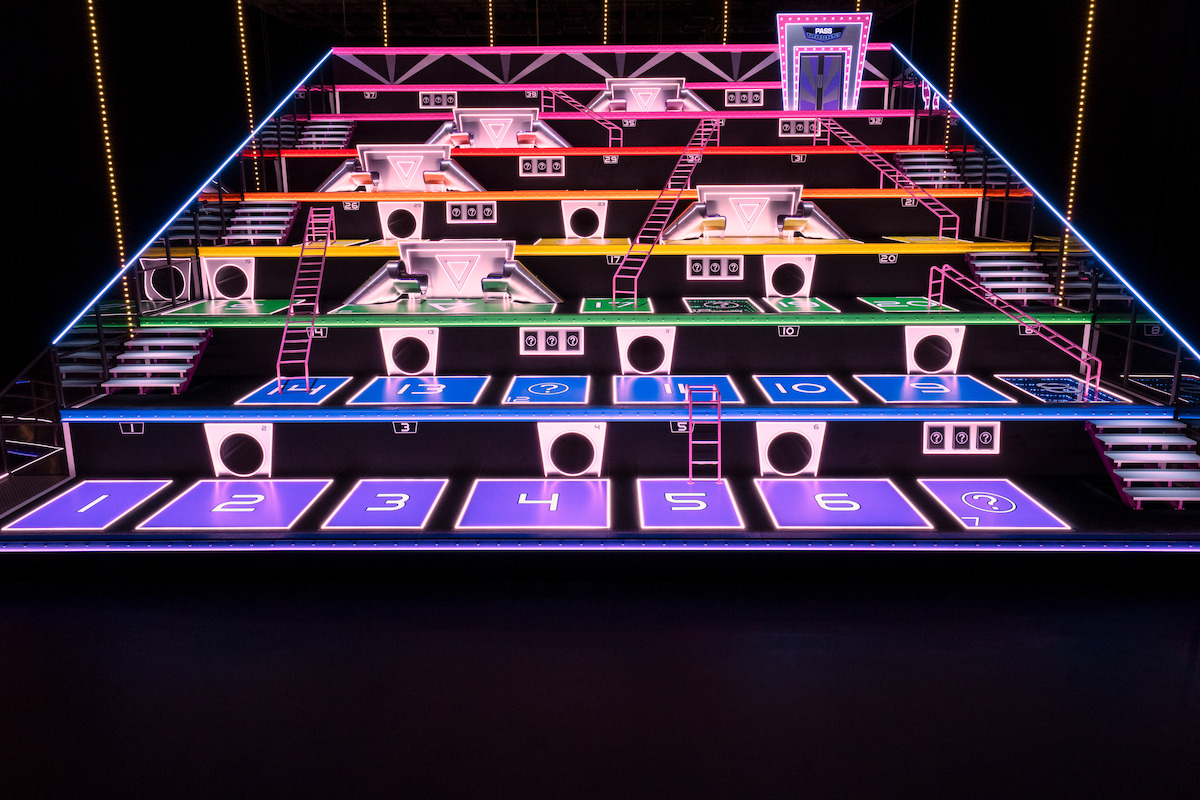
Slides and Ladders is the second of two new games in Season 2. Production designer Ben Norman describes it as a familiar board game that’s turned into something “supersized and fun.” He adds, “[It] has quite high stakes. It adds to the fear of what Glass Bridge did — that sense of unknown choices that can just send you straight out of the game when you don’t expect it to.”
Translating that vision into an actual set, in which players could compete — and do so safely — was a massive undertaking for the entire production team. The 35-foot-tall set went through over 200 rounds of testing to make sure it functioned exactly the way it was supposed to. “In a 20-year history of working in television, I have never tested a game as much as I tested Slides,” says Kidd. “A few slide companies said our concept just wouldn’t work,” adds Norman. From locking down a manufacturer who believed in the idea to figuring out exactly what type of wax to coat the insides of the slides with to accommodate players of all sizes, the crew left no stone unturned.
As for how the game functions, it’s relatively simple — but perfectly designed to bring out both the best and worst in the players. “We wanted Slides and Ladders to have that Squid feel — brutal decisions,” says Norman. At the beginning of the game, teams of two take turns attempting to make it to the final square at the top of the game’s set. The game features giant slides and ladders that move players up and down the board. When they encounter a slide, they have to make a decision between two. If they choose the right one, players are only shuttled down lower on the board, but if they choose the wrong one, they’re eliminated. Along the way, if the players land on a question mark, they must pull a card and follow the instructions given.
For the record: No, the players who chose the wrong slide don’t free-fall into a black abyss — that’s just a trick of the game. “You slide down and take a really sharp turn that leads off the back of the set,” Zoe, Player 369, says. “I do think it looks awesome falling down, so I can’t be that mad.”
Circle of Trust
Executive producer Nia Yemoh explains the importance of including some games from Season 1. “Having Circle of Trust come back means that the players have thought about how they might play, so they’re coming into it with a strategy. [It’s] your opportunity to take out the biggest competition in the game, but [that’s] also the scariest target to go for, which might end in your elimination.”
Walker calls Circle of Trust one of his favorite games from Season 1. “It has all the markings of a Squid Game — [players can] lie, deceive, and bluff. It’s when the game really turns from being a game of alliances to being about the individual — it plays into double and triple bluffs. You start to think to yourself, ‘If I put [the gift box] on the most obvious person, everyone will know it’s me. But then if everyone thinks that, maybe I should put it there because no one would ever suspect.’ It was fascinating.”
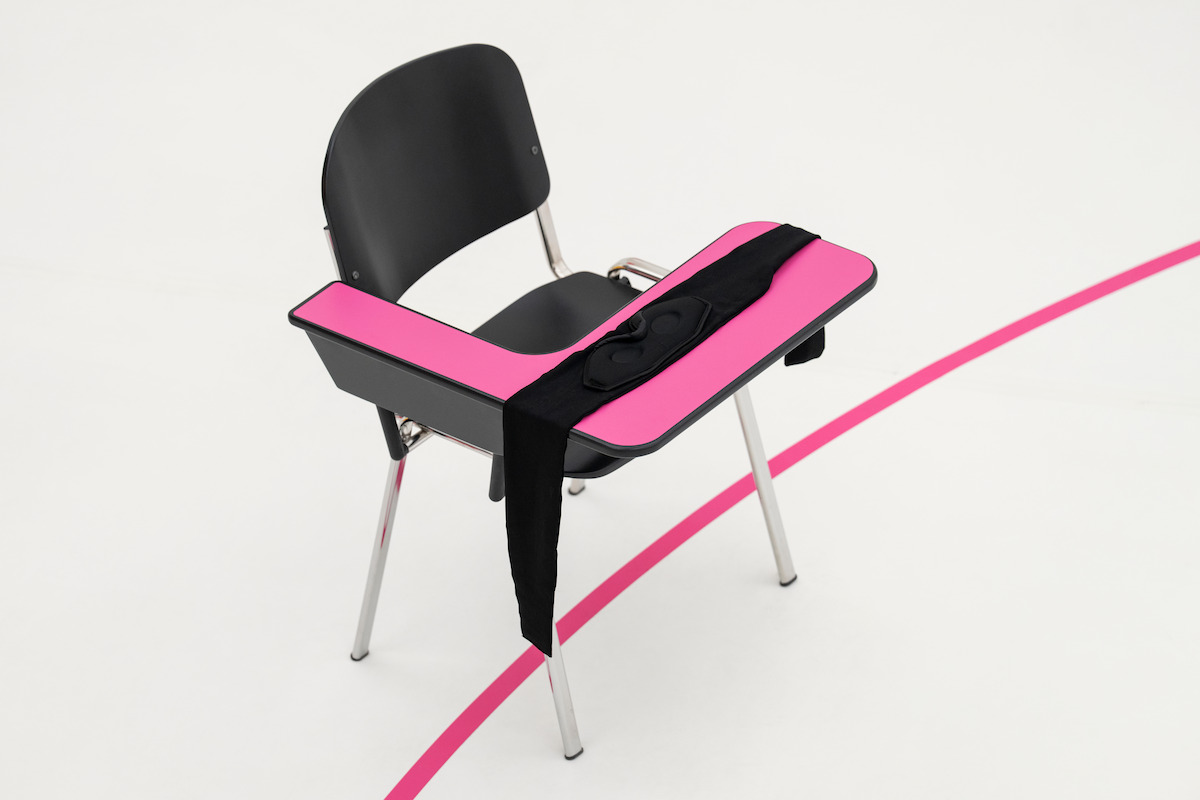
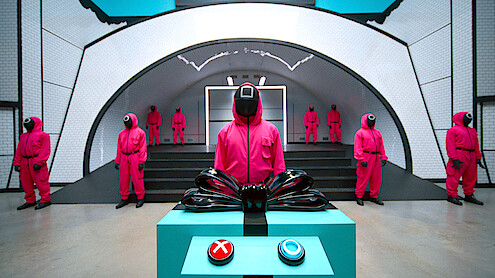
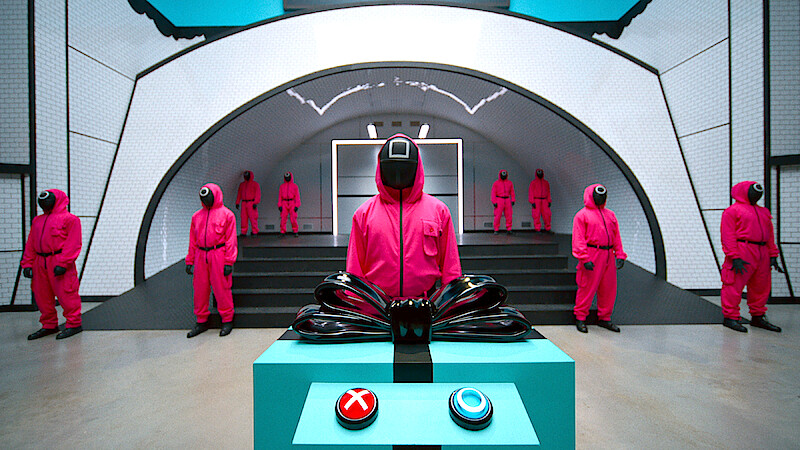
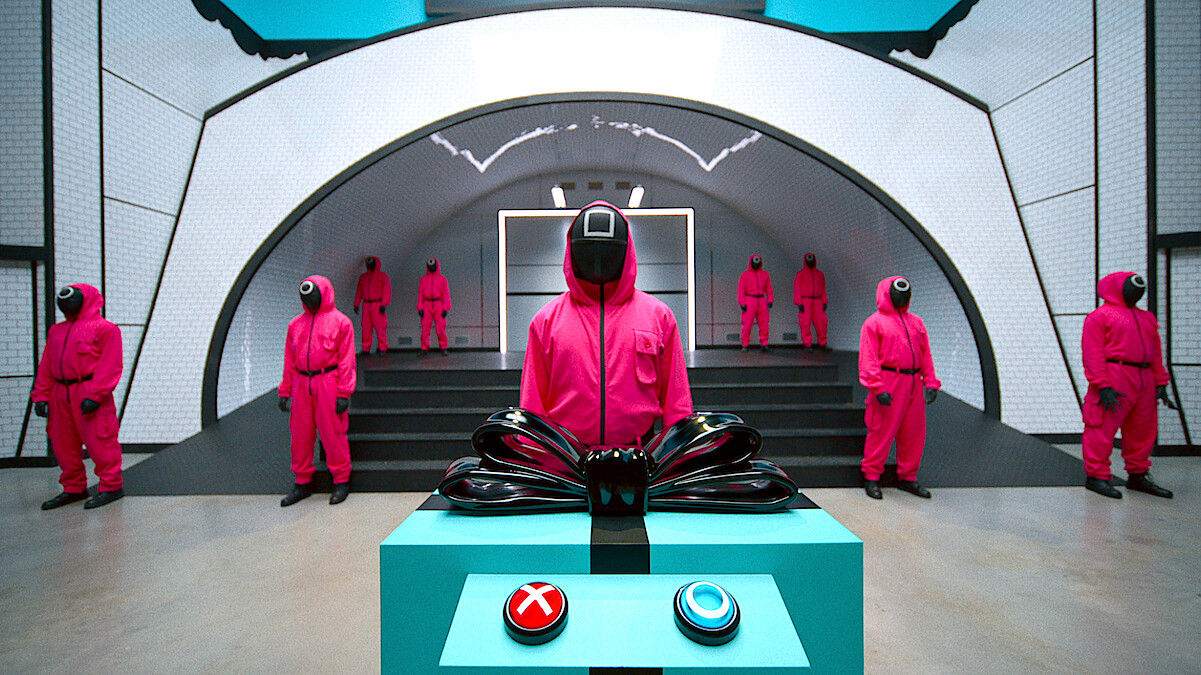
Players sit blindfolded at desks arranged in a circle with a podium and gift box in the center. When tapped on the shoulder, a player removes their blindfold, takes the gift box, and places it on the desk of a player they wish to eliminate. They return to their seat and put the blindfold back on. All the players remove their blindfolds, and the one who received the gift box must guess which player put it on their desk. If they guess correctly, the giver is eliminated. If they guess wrong, they’re eliminated.
Red Light, Green Light
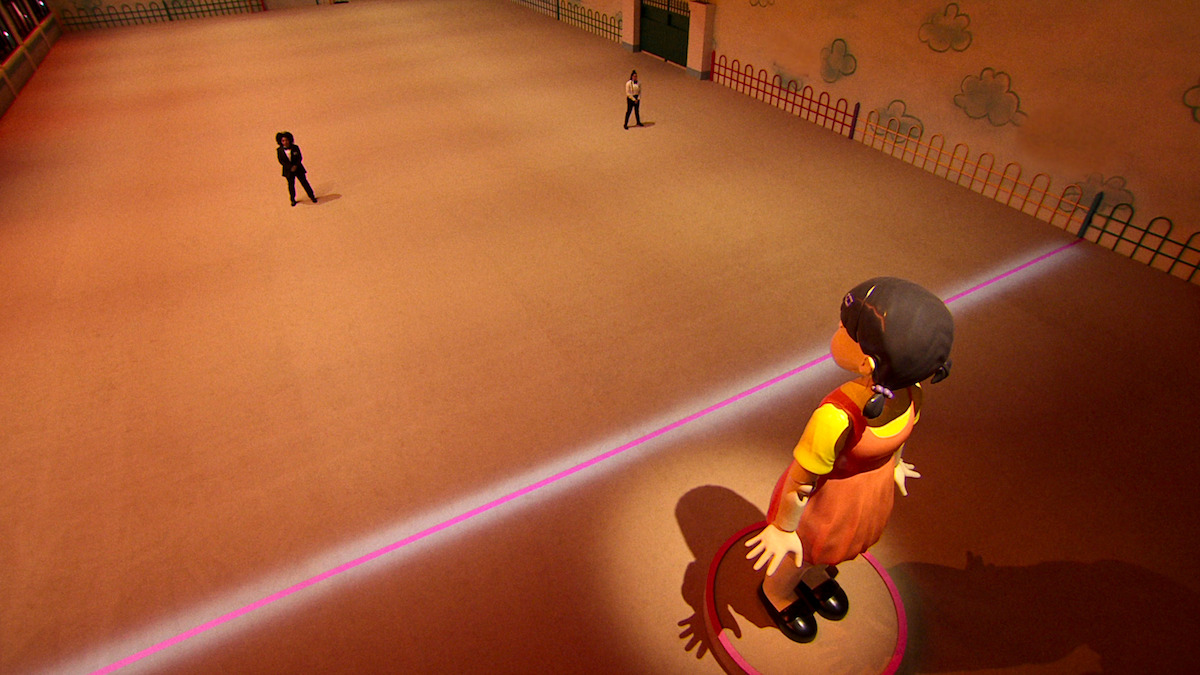
Instead of having 456 players face Young-hee, the iconic motion-sensing doll, Season 2 saved Red Light, Green Light for the final moments of the competition. “It was, in some ways, a no-brainer to end with Red Light, Green Light, because it’s the game that introduced Squid Game to the world,” says Brown. With only four people left standing, the game took on an entirely new dimension, creating different stakes for the finalists and challenges for the production team.
“Doing Red Light, Green Light with only four people rather than 456 sounds easy, but actually we had to go back to the drawing board a little bit with that and reinvent some of the tech behind it,” adds senior production executive Abi Lambrinos. First and foremost, fairness was the primary concern, as the game was “adjudicated down to the tiniest, tiniest fraction of detail.” Every player was chipped with body-motion tracking sensors that could detect even the slightest gesture or change in stance and tracked on a map. Plus, there was a frame-by-frame video review of the final four as they inched closer to the finish line.
What remained the same, however, was the doll at the center of the action. So where has Young-hee been all this time? “She’s been on holiday in a seaside town in Essex — our storage unit — and we got her out, cleaned her, and made sure the mechanics still worked,” says Norman. “She arrives in five boxes — legs, arms, torso, head.” Young-hee takes about two hours to assemble with a crew of six people and a system of cabling and motors to make sure she doesn’t collapse. But all the effort was worth it in the end, when the players hear the chilling music and gaze upon her face for the first time in the competition. “This season she’s in control of the final game,” says Norman. “It feels like she’s the one getting the final say on who wins the big prize.”
Feeling the urge to watch some wild games play out? Revisit Squid Game the scripted series, get a refresher with Squid Game: The Challenge Season 1, and if you think you have what it takes to step into the competition for Season 3, click on the banner below.