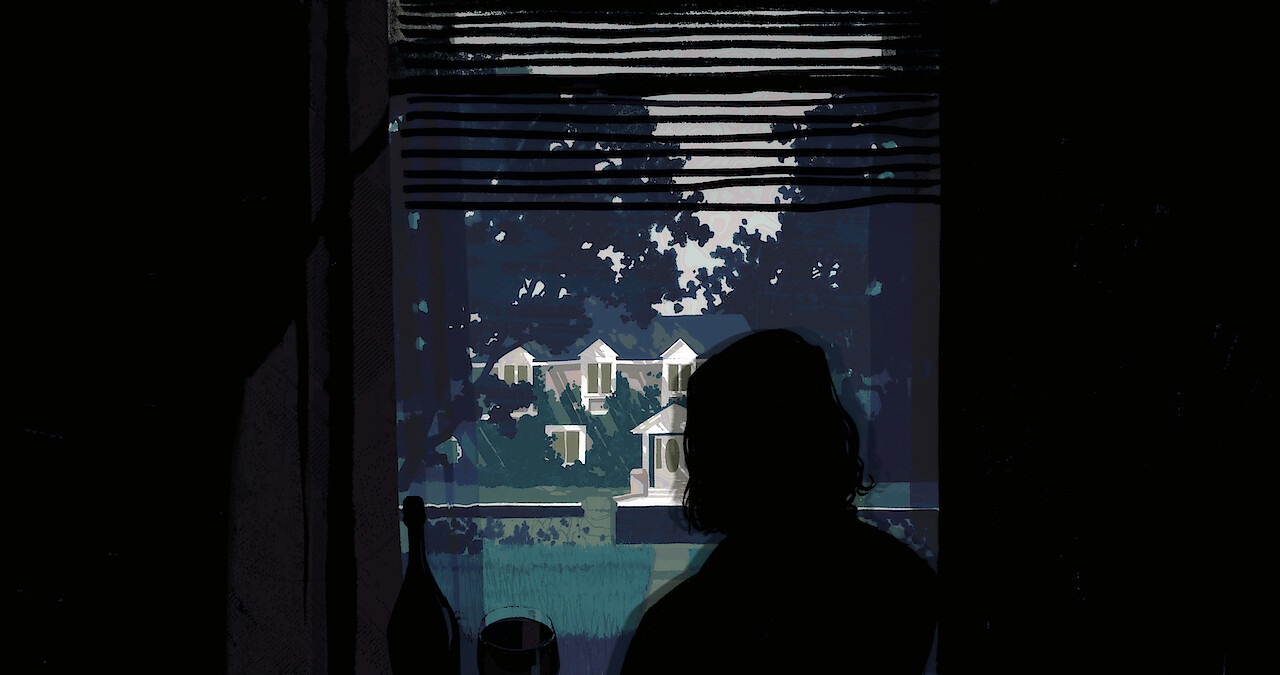
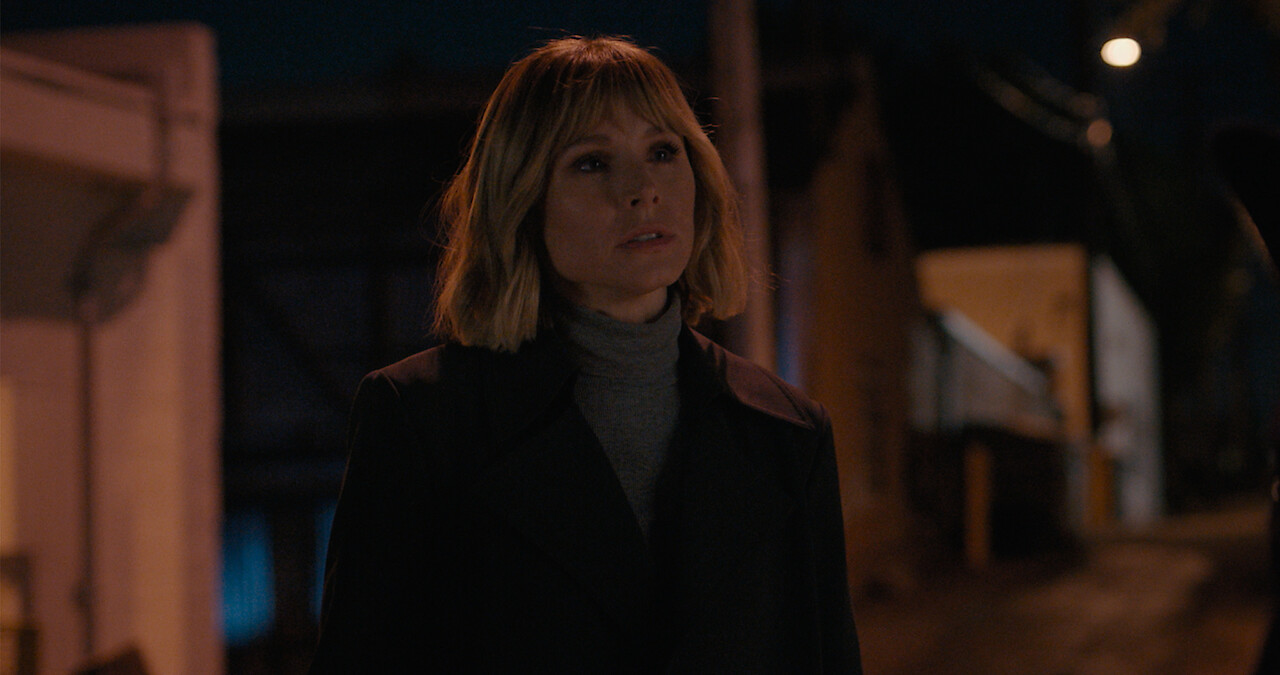
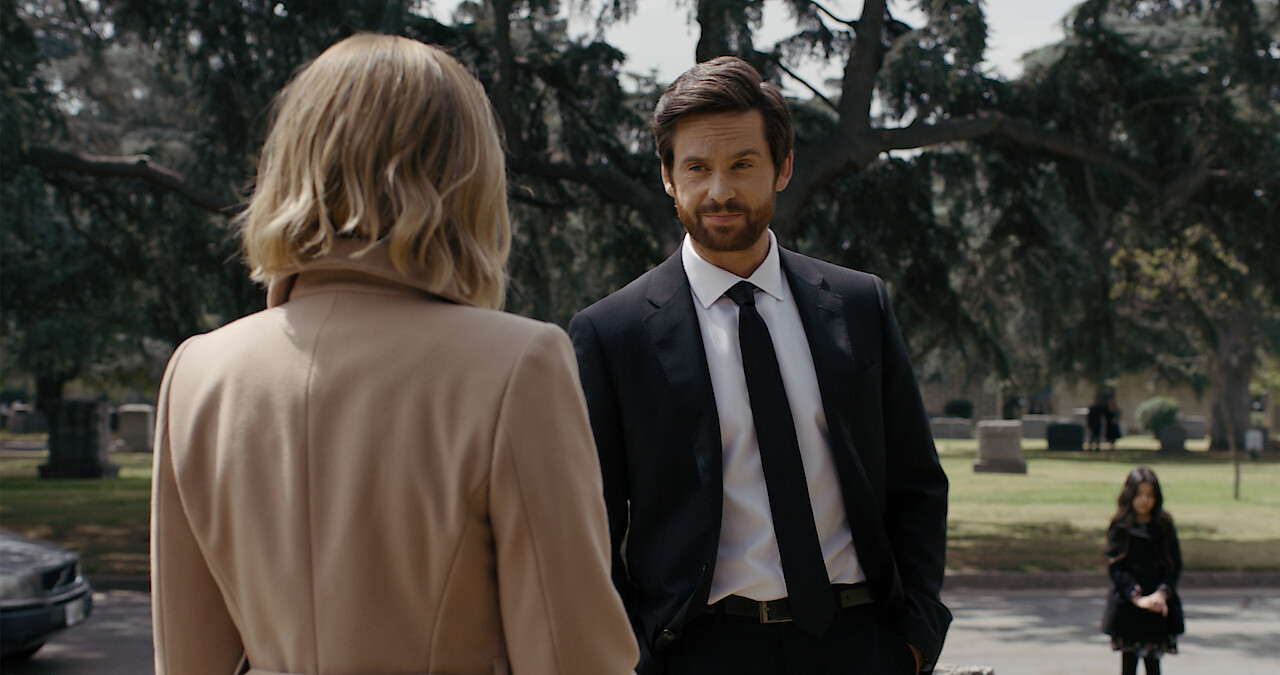
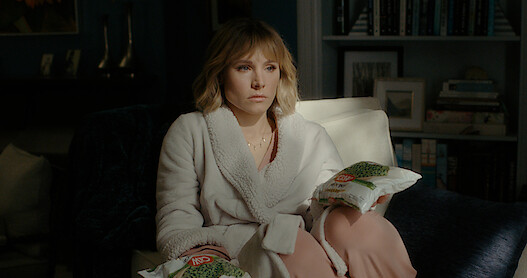
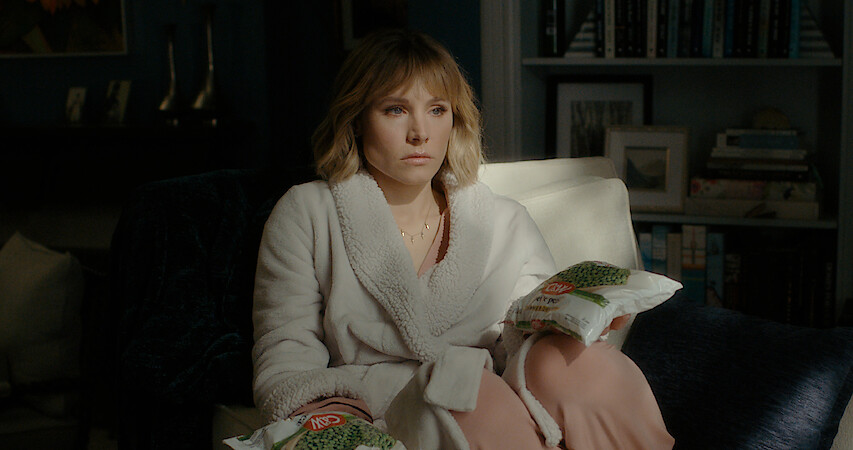
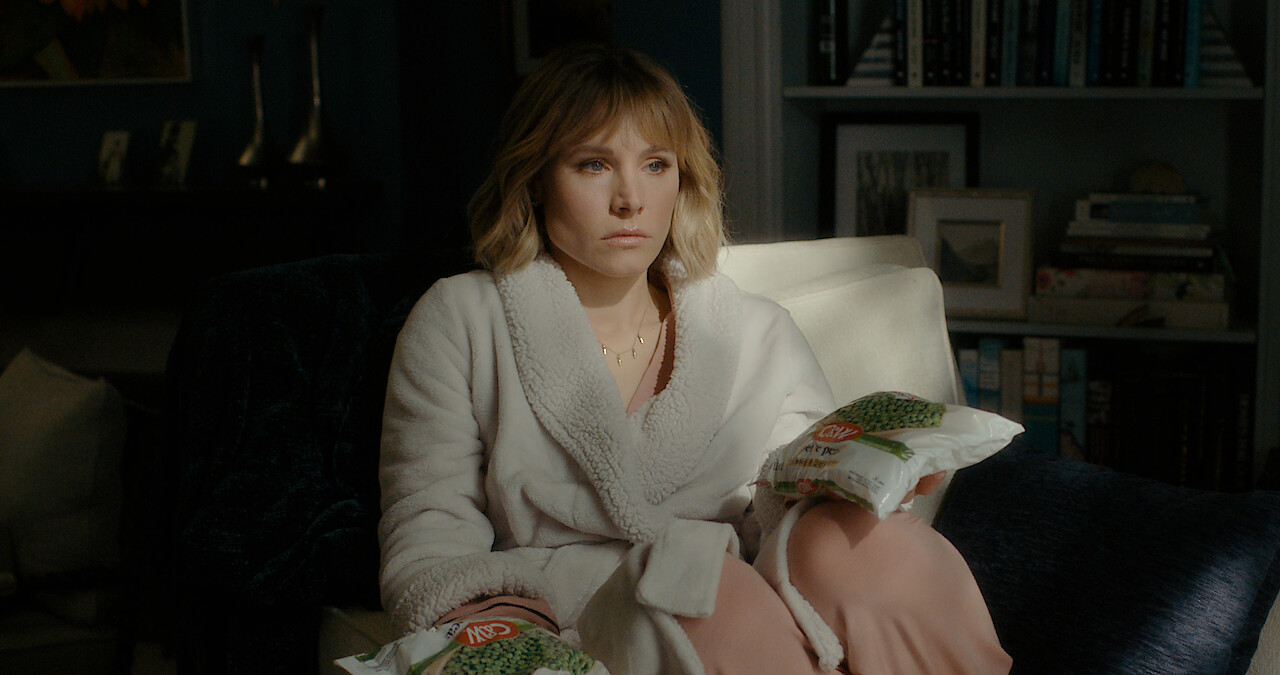
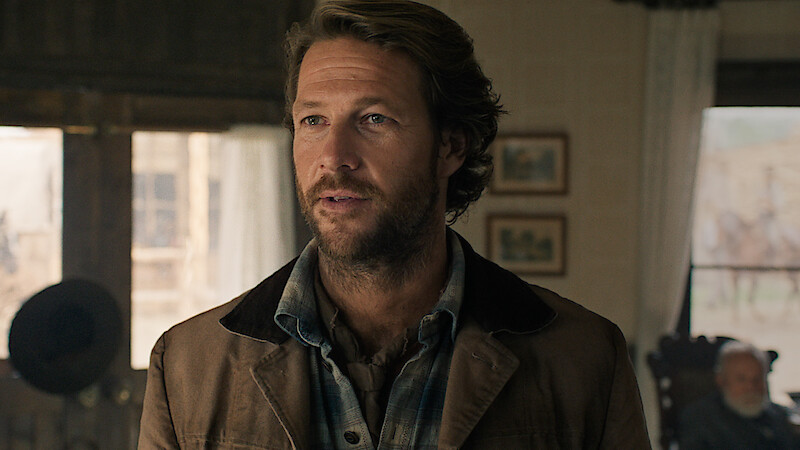
Life’s ebbs and flows aren’t for the faint of heart. Even those with seemingly idyllic lives must navigate heartbreak, grief and other forms of trauma. Though this creates a shared human experience, we all deal with those pains differently. For Anna (Kristen Bell), the protagonist in The Woman in the House Across the Street from the Girl in the Window, coping involves multiple carafe-size glasses of red wine, an engrossing novel, a half-dozen hefty chicken casseroles and some indulgent fantasies about her new, handsome next-door neighbor, Neil (Tom Riley).
After her daughter’s tragic death, Anna’s incapable of moving forward with her life. Instead, she’s left clinging to the last pieces of her sanity. She’s in a great deal of pain, so verbally sparring with her judgmental neighbor, Carol (Brenda Koo), and hosting her overbearing sister, Sloane (Mary Holland), are the only elements that slice through the monotony of her day-to-day. She’s unable to continue her career as a painter, or find some other purpose, so she numbs herself with alcohol and pills.
It’s a mundane existence — until she witnesses a murder that disrupts the protective bubble she’s built around herself. While The Woman in the House Across the Street from the Girl in the Window is a satire designed to poke fun at psychological thrillers, Anna’s desire to escape her circumstances couldn’t feel more real. After all, our collective obsession with escapism, whether through novels, the internet or substances, is often a means of maintaining sanity.
Psychotherapist Susan Zinn, who specializes in healing trauma, tells Tudum that deep psychological wounds don’t soften over time. “Our bodies don’t know the difference between a catastrophic event or something small that’s happening,” she explains. “[Trauma] affects our senses... There’s an event that happens; then there becomes an encoding in our nervous system as if it was a [present] occurrence.” That means Anna’s daughter’s death always feels as if it’s just happened, though she died three years ago.
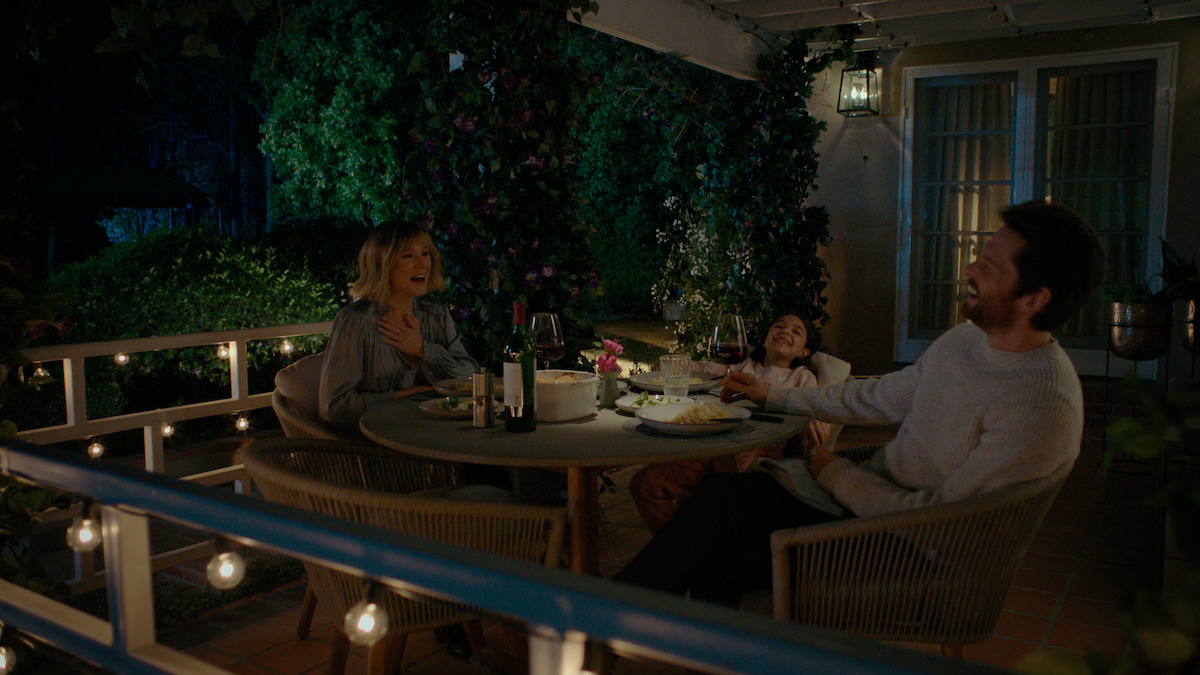
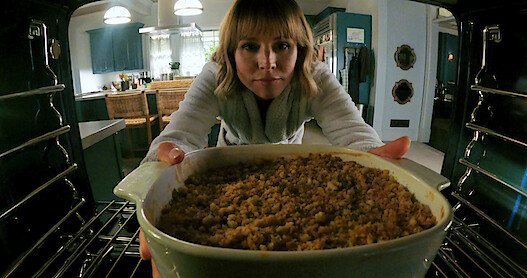
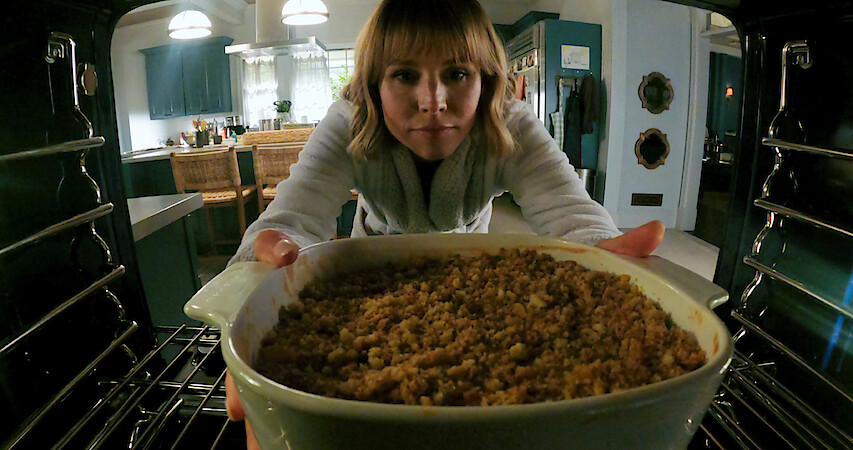
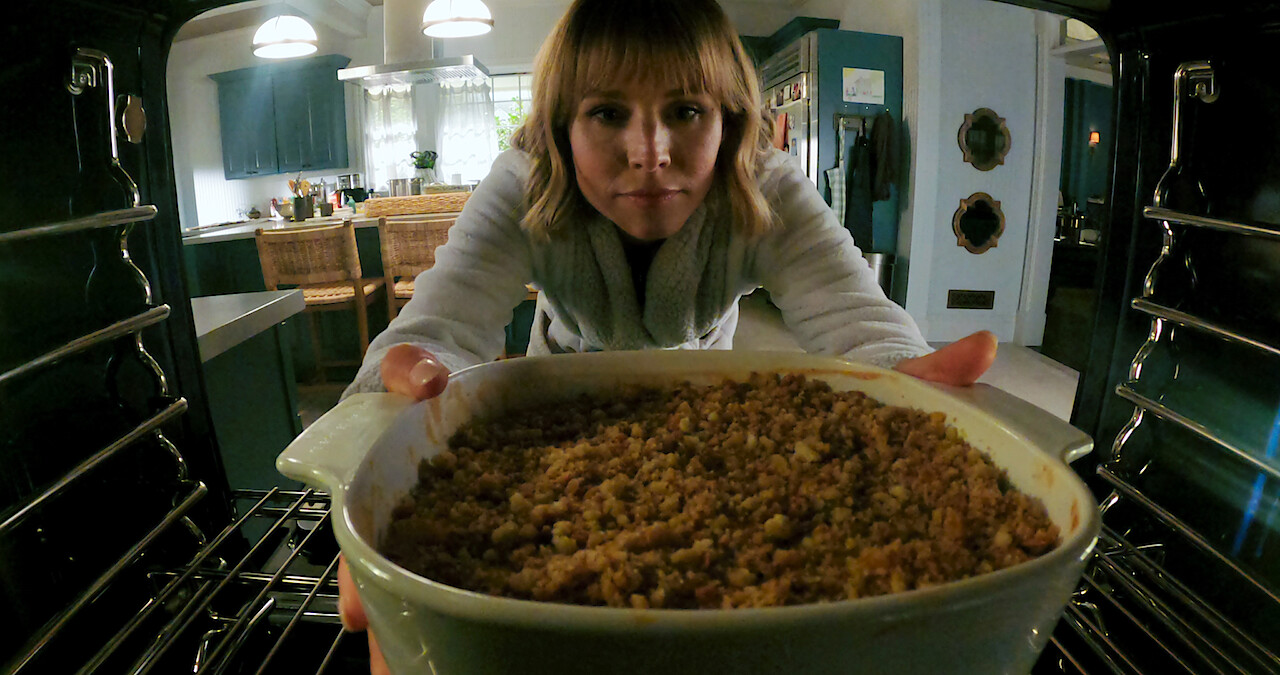
“It’s no longer something that happened in the past,” Zinn explains. There are moments in The Woman in the House when Anna tries to move forward, whether it’s picking up a paintbrush or having dinner with Neil and his young daughter, Emma (Samsara Leela Yett). However, these normal activities often trigger her because she hasn’t been able to work through her grief. When this happens, Anna leans back into her books, pills and wine, the coping mechanisms that have kept her sane. In the first episode of the series, Anna bakes Neil and Emma a casserole, but her ombrophobia — a fear of rain — prevents her from delivering it. Later, a terrifying encounter with a bird in her attic sends her spiraling downward.
“When we have triggers from our senses, all of a sudden that feeling and emotion that we had from that event becomes present again, as if we’re living it again,” Zinn explains. “The problem with that is that we get into these loops, and our brain hasn’t figured out a way to move forward in that process... The trick and the goal with trauma is to work on those depleting feelings and emotions that are causing you to feel that dysregulation and uncomfortableness versus actually focusing on the situation that happened.”
That’s easier said than done. Shoving her grief and guilt aside, Anna’s obsession with her new neighbors expands. She begins to slot herself into Neil and Emma’s lives, using her imagination to rebuild the idyllic family she once had. However, in Episode 2, Anna is dealt quite the reality check when she discovers that Neil has a beautiful girlfriend, a flight attendant named Lisa (Shelley Hennig). Unable to give up on her newfound fantasy, Anna’s immediately suspicious of Lisa. Determined to find cracks in Neil and Lisa’s relationship, she launches a social media investigation that opens a can of worms. She learns of some suspicious circumstances surrounding the death of Neil’s late wife and discovers that Lisa has been engaged in a steamy affair with a man named Rex (Benjamin Levy Aguilar).
Still, Anna’s decision to invade Lisa and Neil’s lives makes perfect sense to Zinn. After all, moviegoers flock to films like Gone Girl and The Girl on the Train to explore their morals, ethics and dark thoughts through the lives of fictional characters. “The problem with escapism is that we’re using it as a negative coping skill to not deal with the realities of living... The anxiety and the fear of our existence and our emotions become too overwhelming, [and] we want them to dissipate, and we’ll do anything so we don’t feel.”
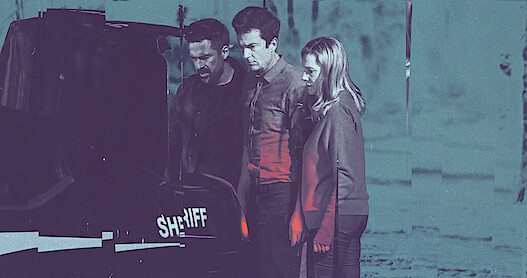
Though she begins looking into Lisa’s life to escape the pain of her own existence, Anna’s quest to uncover something unsavory does yield some striking results. But before she can confront Neil with her findings, Anna sees Lisa being gruesomely murdered. Horrified but immobilized, Anna calls the police but meets pushback: No-nonsense Detective Lane (Christina Anthony) finds no evidence that Lisa was stabbed to death, while Neil insists she’s working on a flight on the West Coast.
Anna’s patterns, including her angry outbursts, flakiness and alcohol dependency, make her an unreliable witness. In truth, when some people are dealing with mental illness, it’s not that they’re incapable of telling the truth; sometimes it’s just simply beyond their capacity. After all, even in the best of circumstances, memory is fallible. Obsessive escapism erodes your mental health, Zinn explains. “It can create all kinds of other problems, physical and mental... Is [Anna] hallucinating? We don’t really know, as the viewer, what’s true and what’s a fantasy in her mind.”
As much as The Woman in the House is about Anna’s fixation with escape, it also highlights society’s treatment of those dealing with mental health issues. Though Sloane is mostly patient with her sister, Carole, Neil and Anna’s ex-husband, Douglas (Michael Ealy), are increasingly frustrated with Anna’s inability to seek help. Their pity has worn thin. They’ve become wary of tiptoeing around her, making it easier for them to paint her as a villain.
“We are social creatures,” Zinn says. “If someone is really stuck or they’re really in pain, and we don’t want to feel that way, then people can avoid it. It’s like when we ask someone, ‘How are you doing?’ And everyone says, ‘Fine, fine, good. How are you?’ But we’re not really connecting with another human to sit with them and be present in their feelings. We avoid them. We don’t want to sit with them because they feel too much or it’s overwhelming.” While Anna is stuck in a loop, Douglas has resumed his life, and Neil has moved on with Lisa. There’s a simple reason for that: “We’re all wired differently,” Zinn explains. “Every single nervous system is completely different. And every single person [has] completely different feelings based on our history. That all affects the way we can cope. When it comes to grief and loss, everyone’s process is going to be different.”
Anna resists help for years, even misleading her therapist about her progress. Yet, watching Lisa’s apparent murder and then questioning if she’s seen what she thinks she’s seen forces her to begin healing. Anna’s determination to find out the truth propels her to engage with the outside world in a way that she hadn’t in a very long time. It also gives her a sense of purpose. “That’s the most important part of trauma,” Zinn says. “Not only communicating and telling your story but then also rewriting your narrative.”