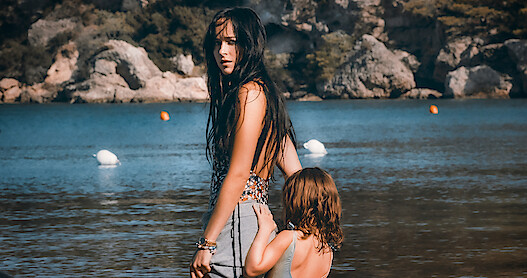
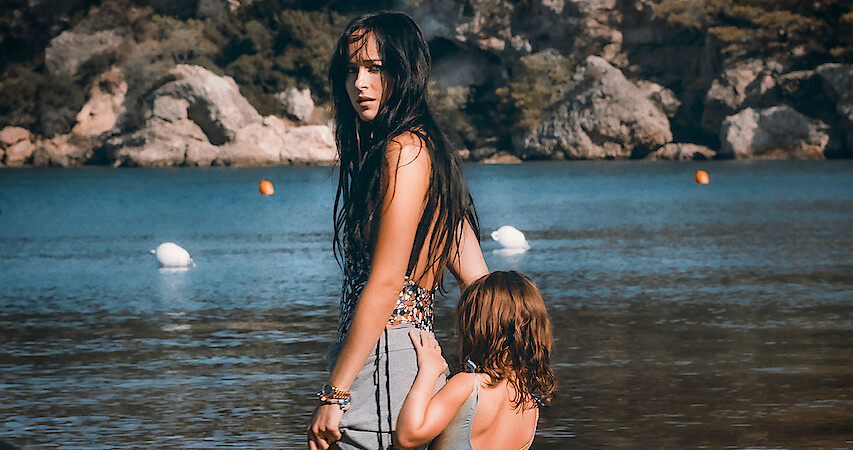
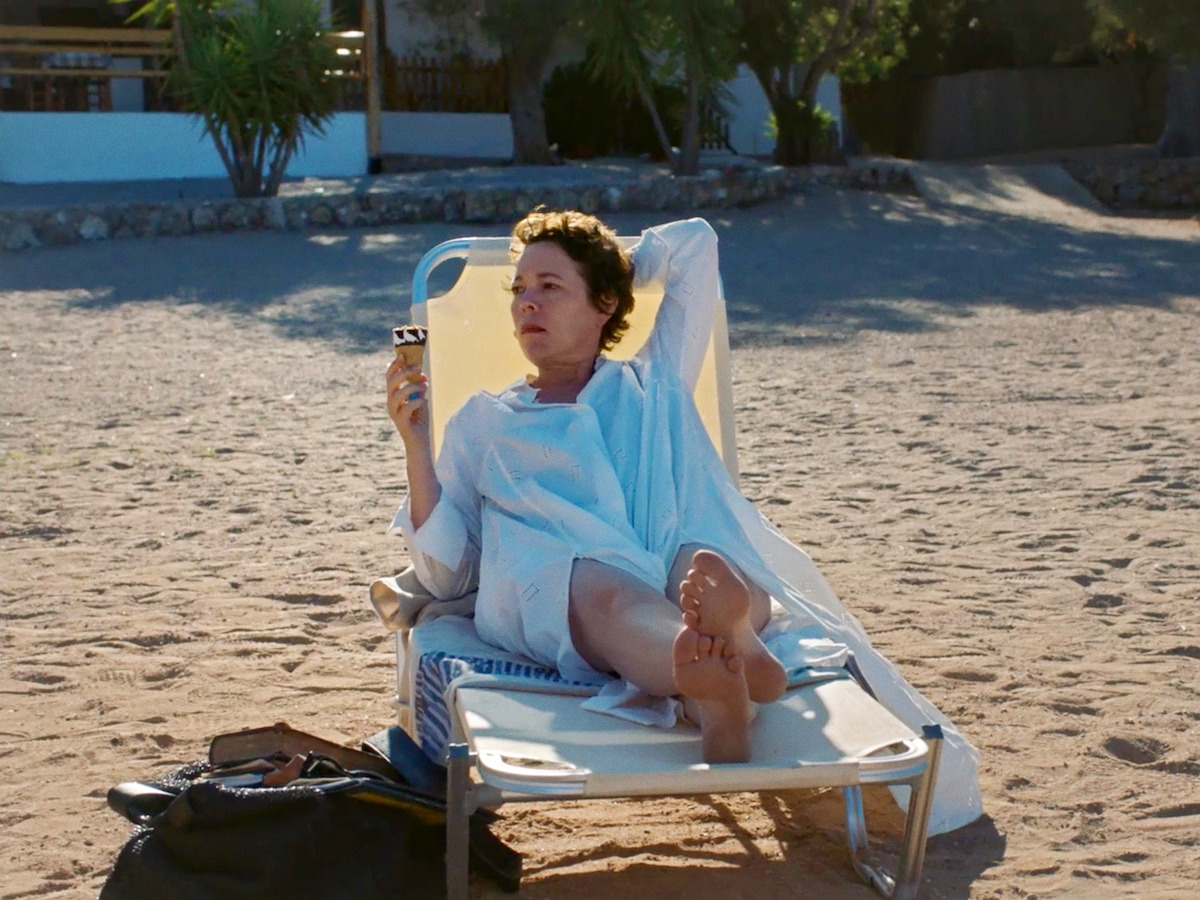
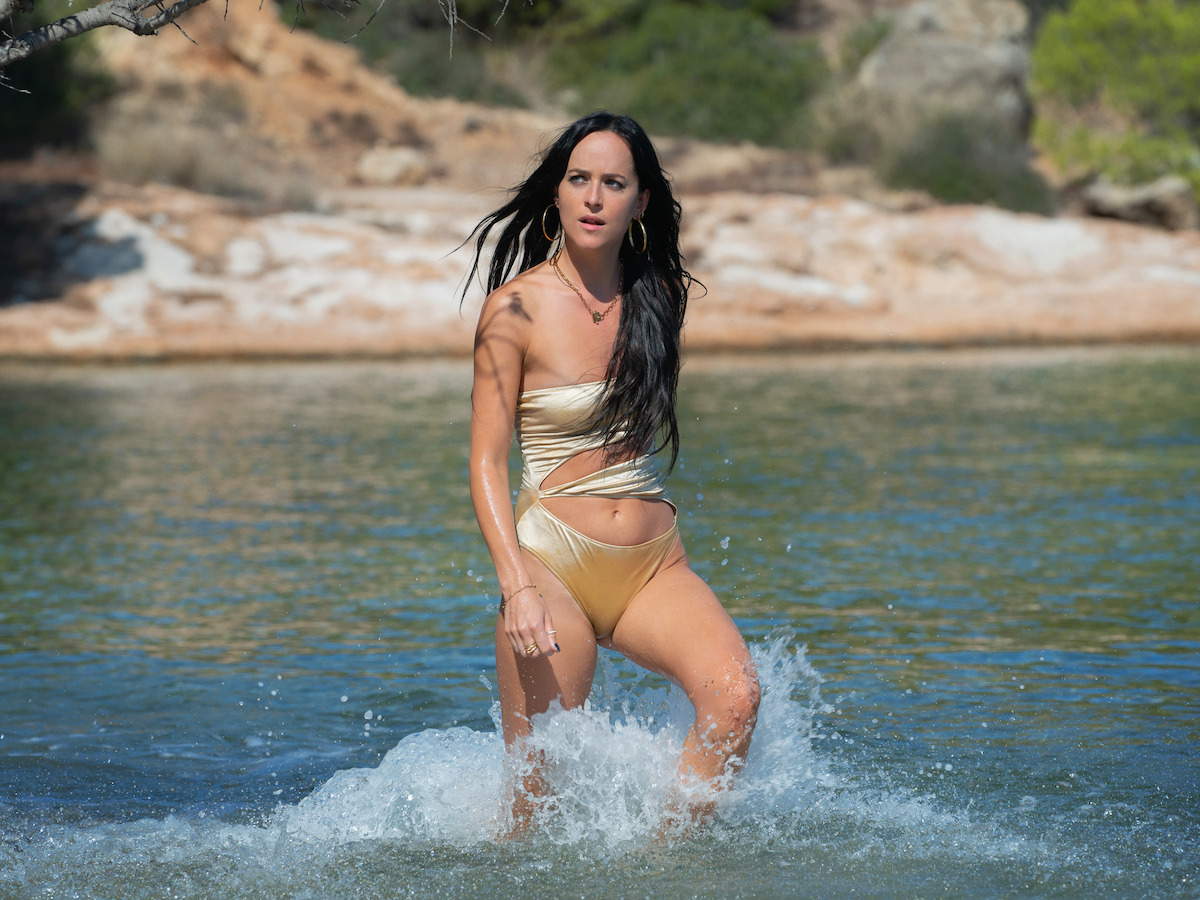
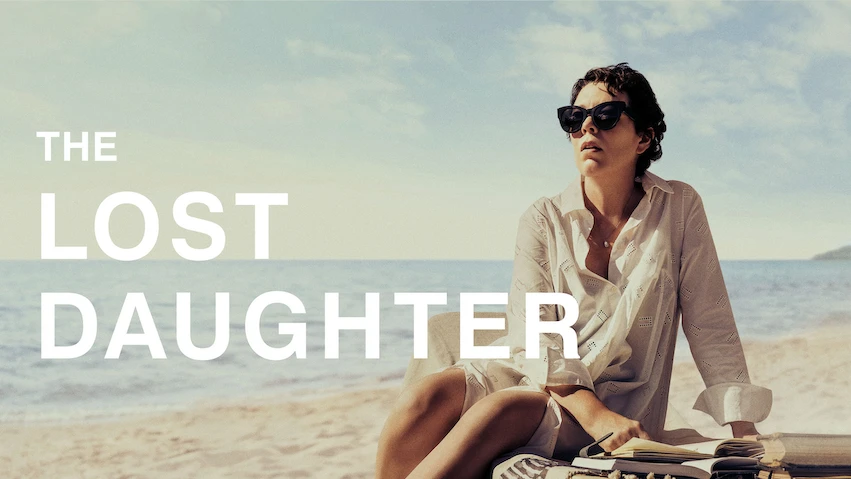
The Lost Daughter, the feature directing debut from Maggie Gyllenhaal, is a pressure cooker of barely controlled chaos. The exteriors are gorgeous and lush: Greek island villas, sandy beaches, cool blue water. It’s a dream vacation destination that beckons from the screen. The characters, too, do their best to blend into the glamorous decor. British professor Leda, played by Olivia Colman (and, in flashback, by Jessie Buckley), is all elegant caftans and structured maxi dresses in thematic neutral shades of Grecian blues and whites. She appears confident in her style, outwardly composed and even aloof as she takes to a chaise longue to read and eat an ice cream cone in the shade of a parasol. But the arrival of young mother Nina (Dakota Johnson) and her clan of boisterous Greek-American relatives violently shatters Leda’s illusion of calm.
When Leda is confronted with this complicated vision of motherhood that recalls her own painful memories of that time, her fraught and messy past melds more and more with her present, destroying her thin veneer of control. Even her idyllic surroundings turn on her – eventually injuring Leda when a pinecone plummets from a tree, bruising her back. As things get harsh, Leda’s once-pristine style becomes looser, less organized and rigid.
For costume designer Edward K. Gibbon, the challenge was to present the evolution of the characters — and their states of mind — through their clothing. Here’s how he pulled it off.
You’d worked with Maggie Gyllenhaal before on The Honourable Woman. How did you get involved with The Lost Daughter?
I really like Elena Ferrante's writing. In fact, it was Maggie [who] introduced me to her originally, when we worked together before. So, when I knew Maggie was doing [The Lost Daughter], I got in touch. Having known her and knowing the book and then her brilliant script, it was something I really wanted to be part of.
How much costume description was in the script?
Not loads. There's little clues. Leda's described as sophisticated, I think, at one point. There's little things about Nina's tattoos, and I think her swimsuit. And the white dresses on Leda’s daughters. [I was] very much led by the feeling of the script and collaborating with Maggie and the actors.
In your conversations with Maggie, what did she envision for Leda in terms of style?
Elegance was really important. Maggie was looking at a lot of French New Wave, and we talked about creating this slightly timeless look for Leda, just keeping it very simple and minimal. She's a woman who knows how to dress and what looks good on her, and she's reached that point in her life where she dresses according to a certain set of her own rules.
Leda wears an amazing assortment of cover-ups and caftans throughout the movie. Were they custom-designed or did you source them? In other words, can we wear them to the beach this summer?
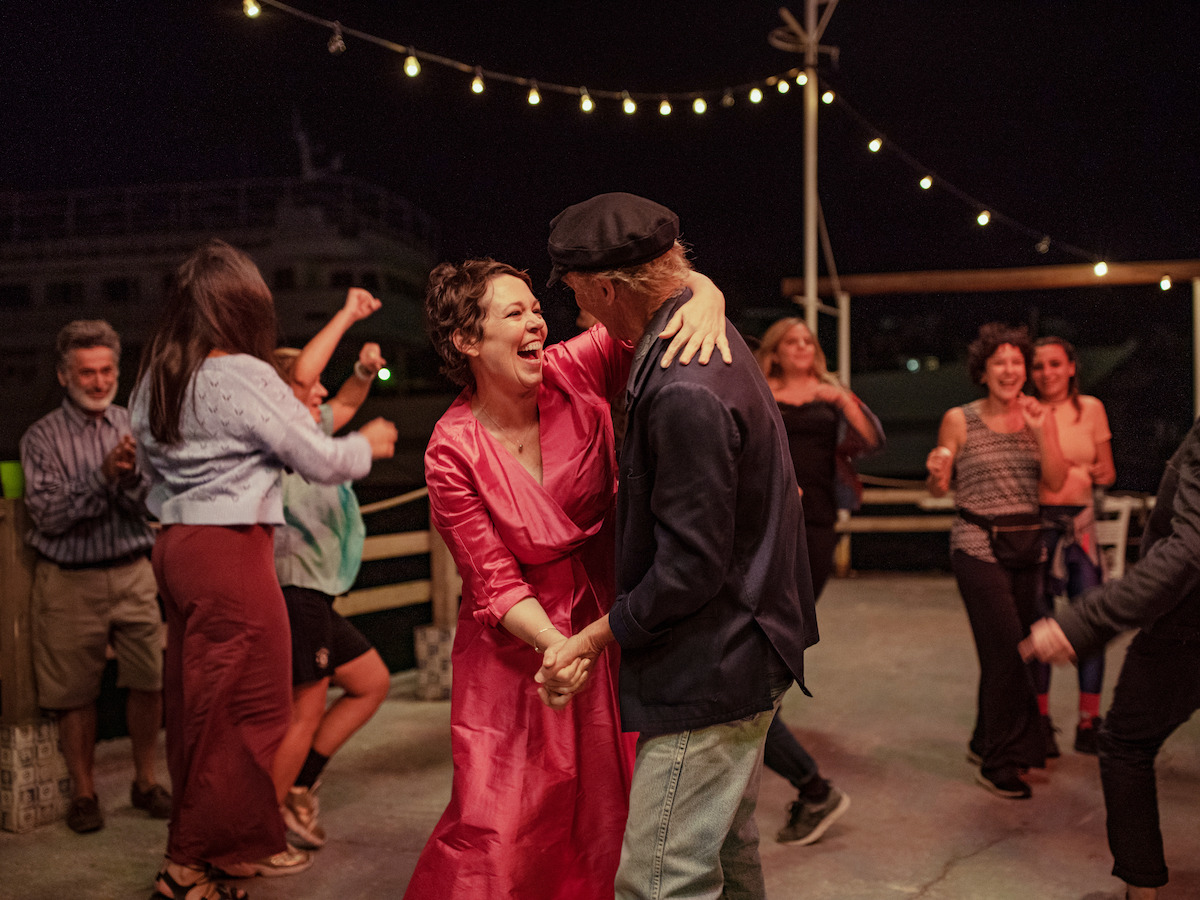
A couple of them we made, the others were sourced. The white one with the little embroidery on it is Palmer//Harding, which is a British-American label who make gorgeous things. We made a couple more. I was trying to create this very simple, no-fuss way of dressing for her on holiday — just sort of looking very elegant, but, at the same time, kind of not really giving a shit. I love the bit later on, where she's wearing the pink [Max Mara] dress and eating souvlaki. It's kind of Breakfast at Tiffany's.
Leda’s peaceful vacation is interrupted by the arrival of Nina and her family. Did you build up each character's looks individually or were they designed to contrast Leda's clothes?
They all kind of swivel around Leda, so I think she was the main point of reference. With Nina, there's a kind of clash of culture. Leda’s on the beach, looking tasteful and quite covered up and then suddenly she's confronted with Nina in all her bright colors and swimsuits.
Also, we have to consider the way that Leda looked in flashbacks, when she’s [played by] Jessie Buckley. The main thing was just that contrast of seeing someone before they've got it together. When [young Leda is] struggling and not happy in her life and everything's difficult, that was reflected in the way she looked. She looked much more thrown together and a bit organic.
How do you think the film addresses the question of how a “good” mother should dress? I'm thinking specifically of Dakota Johnson, who subverts that expectation.
Dakota is gorgeous, incredible and you can put anything on her and she'll look fantastic. But we almost played against that in a way. She does look great, but, at the same time, she just puts on a pair of sweatpants, we never see her in heels or anything. She's kind of lost who she is, [and] the amount of jewelry [she wears to] the beach is just inappropriate. She's got, like, a necklace, a belly chain, and she's got big hoop earrings. None of it's really very practical to look after a kid. I think there was just a feeling that she's kind of bored by how she looks.
At the same time, she's sort of being controlled by her family, and nothing she ever does is right, according to them. So, she's kind of given up. When [her husband] Toni [played by Oliver Jackson-Cohen] gives her this stupid big hat, there's a controlling attitude there. I think it's the last thing on her mind, what she looks like, in a weird way. She's just surviving at that point, she's just getting by. And she's forgotten how to dress.
What designers did you turn to for her versus Olivia Colman for Leda?
My initial thoughts for Nina were going to be much more designer-y and much more put together. We had bits of vintage Dolce & Gabbana. And it was always too much. So, we dialed it back. She wears this great Greek label called PCP — her cycling shorts and belly tops are by [them]. And the big tie-dye hoodie is [PCP]. She wears swimsuits by [Emily Ratajkowski’s swimwear brand] Inamorata. She wears a great Alexander McQueen vintage lemon yellow leather miniskirt in the dance scene. But then, you know, she's got a hoodie from Gap, and Havaiana flip-flops. [Olivia] wears a couple of [swimsuits]. She's got a Michael Kors one, she's got a Wolford on — the main [black] one she wears is Wolford. And then she's got one from Marks & Spencer.
Please talk about Paul Mescal's short shorts.
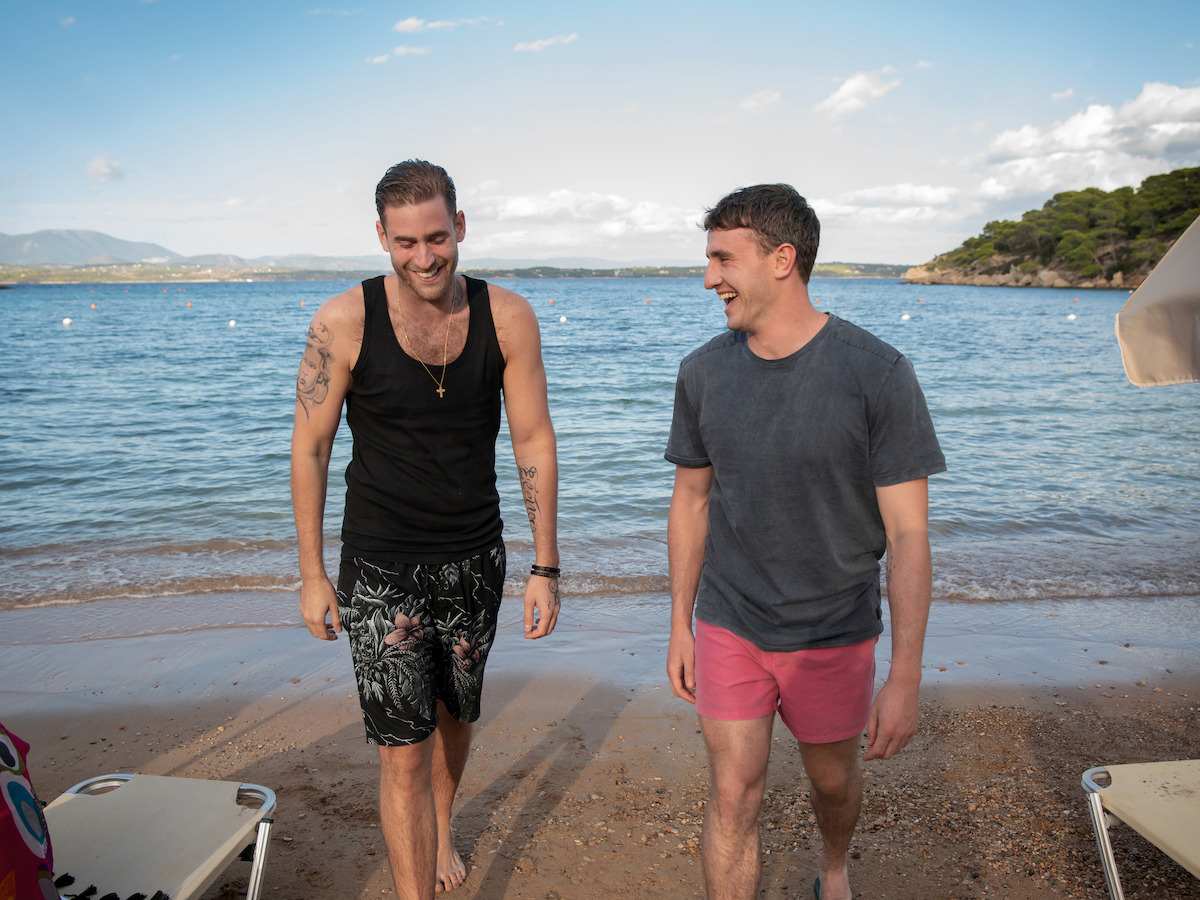
When Maggie cast Paul, he was very of the moment because he’d done Normal People. He's a great-looking guy, but that wasn't why she cast him. There was no Baywatch babe kind of thing going on. I don't think he even takes his T-shirt off. We wanted to keep that kind of reality: He's a guy that's living on the beach for the summer and working his way through college. But the shorts… after trying on hundreds of different pairs of shorts, we all decided on those, from a Greek label, actually, called Dirty Laundry. There was something about them. Like, a little bit off, but, at the same time, cool. It’s always about trying to be unusual without being unusual. With great looking people, it's easy to be distracting by dressing them too well.
Were you ever tempted to give him a Normal People chain?
Oh, yes. We took out a whole load of leather thongs with little seashells on, you know, like slightly traveler-y, surfer dude-y kind of things. We had them all lined up, and Paul was literally like, “No.” And he was right. Because, again, it would just be [obvious and distracting].
Are there any clues or details hidden in the clothes that you think people might have missed?
The main one that I was trying to pull through the whole thing is the reference to white. You see [Leda] in a white dress at the beginning on the beach, then you see her at the end in white on the beach again when she's in the waves. There’s the dresses that she buys her daughters, then we see Nina's daughter in a white dress in the toy shop. Originally, at one point, we were going to put Nina in a white dress. When you see Leda lying in the waves at the end, she becomes a bit like a Greek statue. She's draped in this wet, white look. There's something about the purity of it as well, and it’s a reference to the swan in Leda and the Swan.
Do you have a favorite costume in the movie?
I think the [Max Mara] dress that Leda wears at the dance. It comes across as red, but it's actually a really bright pink, like a magenta. It was quite a wild card. I just love that it breaks out of her habit of all tasteful neutrals, this shock of pink.
Products and links featured in this article are selected by our writers and editors. Netflix does not earn a commission if you choose to purchase through these links.