


Zoe Kazan’s adaptation of John Steinbeck’s novel preserves its final moments.
Take an in-depth look at each episode of the new docuseries narrated by President Barack Obama.
The oceans that make up the majority of our planet are a life-giving force. The global ocean current, also known as the “conveyor belt,” is a constantly moving system of deep-water circulation driven by temperature and salinity; a phenomenon that links each sea’s diverse ecosystems into something like one giant organism. Even with continued research into their depths, however, we still have so much to learn about what goes on beneath the vast canvas of blue.
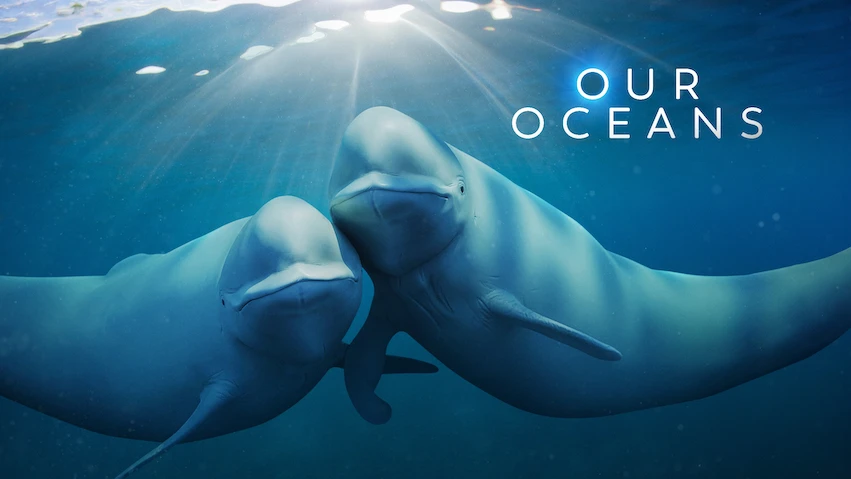
Premiering Nov. 20, Our Oceans is an ambitious project that illustrates just how much we have in common with the animals that populate our oceans — and how their lives are impacted by the choices we make on land. Narrated by President Barack Obama, each episode is dedicated to one of the world’s five oceans — Pacific, Indian, Atlantic, Arctic, and Southern — taking viewers on a 75,000-mile cruise across and beneath the surface. Utilizing cutting-edge research and newly developed underwater filmmaking technology, the series spends time with well-loved animals like dolphins and sea turtles while featuring other sea creatures and natural phenomena that have never before been captured on camera.
“What’s so brilliant about this world is that actually, when you look, so many of [these animals’] challenges are relatable,” executive producer James Honeyborne tells Netflix. “Suddenly this alien world becomes closer and warmer to us.”
Jump into the episode guide below to get a briny taste of what each episode has to offer.
Where it’s located: The largest and deepest of the world’s five oceans, the Pacific covers almost a third of our planet, stretching from Asia and Australia all the way to the western coasts of North and South Americas.
How it moves: The global ocean current circulates water throughout the entire planet and brings the Pacific to life, delivering, for instance, clean oxygenated water to the coral reefs that need it. “The global ocean current is actually a series hero here,” says series producer Jonathan Smith. “We follow its journey when it rises in the middle of the Pacific, reaching the surface, and our world, for the first time in a thousand years.” The current is powered, in part, by a 25,000-mile chain of volcanoes known as the Ring of Fire, sending the water on a loop northward toward Japan.
What lies beneath: The Pacific Ocean’s vast depths are home to an array of creatures, from humpback whales and sea turtles to spinner dolphins and so much more. The opening episode of Our Oceans introduces us to many of them, illuminating their worlds as we follow the current that connects the Pacific to every other ocean.
Those who’ve watched Finding Nemo may recall that clownfish lay their eggs within an anemone, which can sting potential predators. The fastidious male clownfish keeps the eggs — and in turn, the anemone — neat and tidy while keeping an eye out for hungry threats to his brood. But when an undersea volcano erupts, it brings a dark cloud of pumice that rains down debris on the same anemone that our expectant father is hoping to keep clean. But the volcanic rock also comes with unexpected benefits that prove, as our trusty narrator puts it, that a bit of “dirt don’t hurt.”
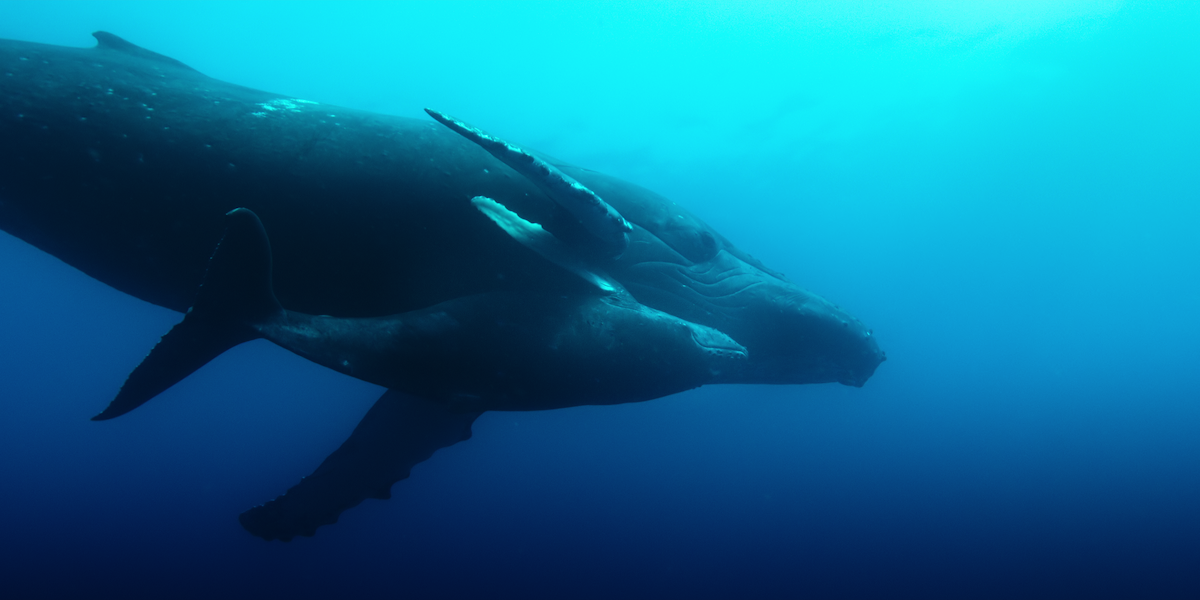
We also meet a humpback whale who has traveled 3,000 miles to give birth in peaceful tropical waters. The new mom, with her 2-ton newborn, doesn’t want to get caught in a storm that could separate them, so they head for Hawaii. The journey, however, turns out to be dangerous. A number of aggressive male suitors jockey for the attention of our mother, but their jostling could harm her baby. How will she get her newborn to safer waters when surrounded by threats they can’t outrun?
An on-camera first: Galápagos sea lions live among an elaborate network of gullies formed by volcanic activity, which provides crucial protection from the open ocean. Even so, they share their hunting grounds with sharks. When sharks see that sea lions are in the process of corralling tuna — using a never-before-filmed method of blowing bubbles in order to hem them in — they move in to see what they can skim from their neighbors’ efforts. But with pups to feed, the sea lions have to come up with even more innovative ways to secure their families’ next meal.
Where it’s located: At its northern reaches, the Indian Ocean touches the shores of Iran, Pakistan, India, Sri Lanka, Bangladesh, and other nations. Much smaller than the Pacific to the East, it extends from the eastern coast of Africa to the western coast of Australia.
How it moves: The global current carries warm water west from Asia to Africa, a journey over thousands of miles that takes about two years.
What lies beneath: As we make our way across the Indian Ocean, we meet an endlessly fascinating cast of characters, from dugongs gathered for a family reunion to bird-hunting fish and injured manta rays, who use a special area of the ocean as a sort of emergency room.
Every parent knows that it takes a village to raise a child — and sperm whales are no different. In Our Oceans, we meet a new mother who needs to eat hundreds of pounds of seafood a day in order to produce enough milk for her growing calf. But her baby can’t go with her on her dives, as he’s not equipped to hold his breath for as long as she can. Like many working mothers, she checks in frequently from miles below, calling out so he knows she’s just around the corner. Even better, the baby whale’s relatives step in to keep the not-so-little one busy with cuddles and playtime while mom is away.
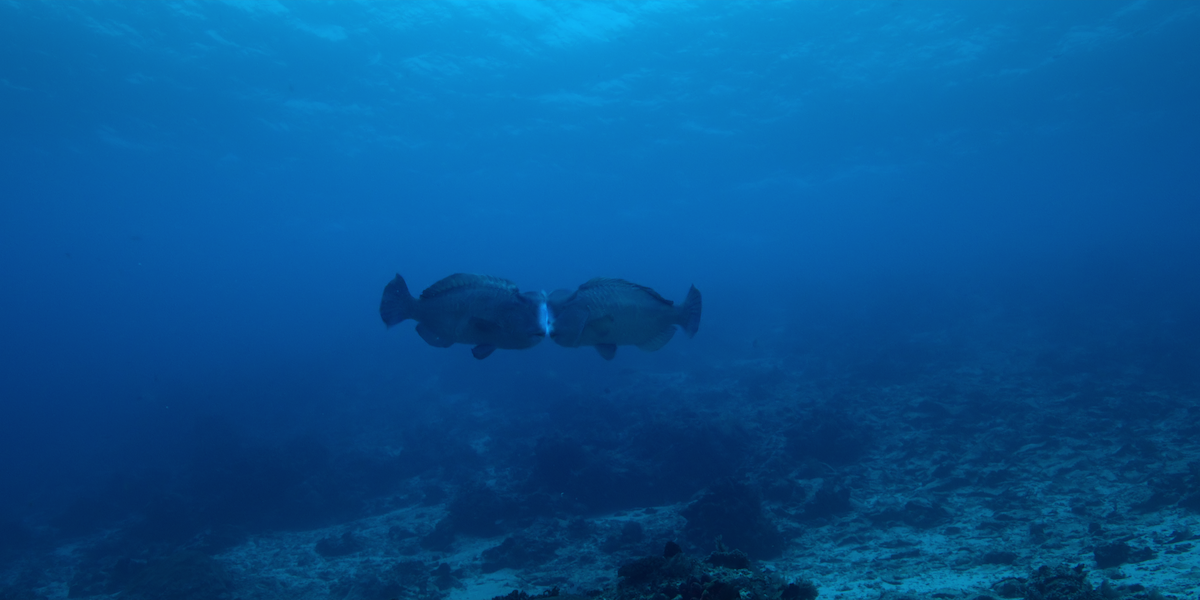
Then, get ready to rumble — in the part of the Indian Ocean off the shores of Sipadan Island, Malaysia, scores of bumphead parrotfish head for the drop-off — the best place to spawn, when the tide reaches its peak. As for who gets to spawn where, the bigger fish lay claim to the choicest spots and send smaller rivals away just by swishing their tails. But when two comparably sized males go up against each other, it’s time to see just how they earned the name bumphead. The two fish begin to spar, crashing into each other at such high speeds that the water between them actually vaporizes. The battle draws onlookers, including the female bumpheads with whom the two fighters hope to curry favor. Who will emerge victorious?
Back on shore: The rains of monsoon season have always been crucial in ushering nutrients from the land into the ocean. But with each passing year, more trash makes its way into the ocean as well. Pollution on land is just as harmful for creatures that live underwater as it is for those on land.
An on-camera first: As the ocean moves, it carries with it human debris — two million tons a year. What’s worse, every piece of plastic within this constant deluge of garbage will take hundreds of years to break down. For the clever veined octopus, however, the trash that litters her stomping grounds allows for experimentation. She tries out various items as potential hiding spots in which she may lie in wait while she hunts. But when other fish come sniffing around her hard-earned hideout, she does something no one has ever seen before — sucks rocks up into her siphon and shoots them at fellow predators to send them packing. A master of camouflage and a sharpshooter, too. “If I’m going to pick the moment that most blew me away when I first saw it, it’s our veined octopus using a projectile to shoot a fish away,” says Smith. “No one knew that could possibly happen. An octopus uses itself as a gun? That’s crazy.” Adds Honeyborne: “There’s now a paper being written on it.”
Where it’s located: The Atlantic Ocean is the planet’s second largest, touching vast swaths of several continents. It’s bookended on its western edge by North and South America and on its eastern edge by Europe and Africa.
How it moves: The global current carries the Indian Ocean around the southern tip of the African continent, where it becomes the Atlantic and travels northward 10,000 miles over the course of four years.
What lies beneath: As the climate crisis increases the temperature of the ocean, marine residents of the Atlantic are traveling to places they’ve never been before. Throughout the episode, the cameras capture animals who have ventured beyond their usual environs, like a family of Patagonian orcas that has learned to hunt seals — on land.
While this particular pod of orcas are certainly unique, they’re not the only ocean dwellers who have learned to venture onto land in search of a meal. Case in point? The four-eyed fish. As the Atlantic Ocean flows into the Amazon Rainforest, it creates mangroves, and the four-eyed fish venture into the forest for bugs and crabs — the types of treats you just can’t find underwater. Rather than simply swim into the mangroves, the four-eyed fish skip along the surface of the water. But when the tide goes out, there’s no time for seconds. If these fish don’t skip right back out to the ocean, they’ll be stranded on land with no way home.
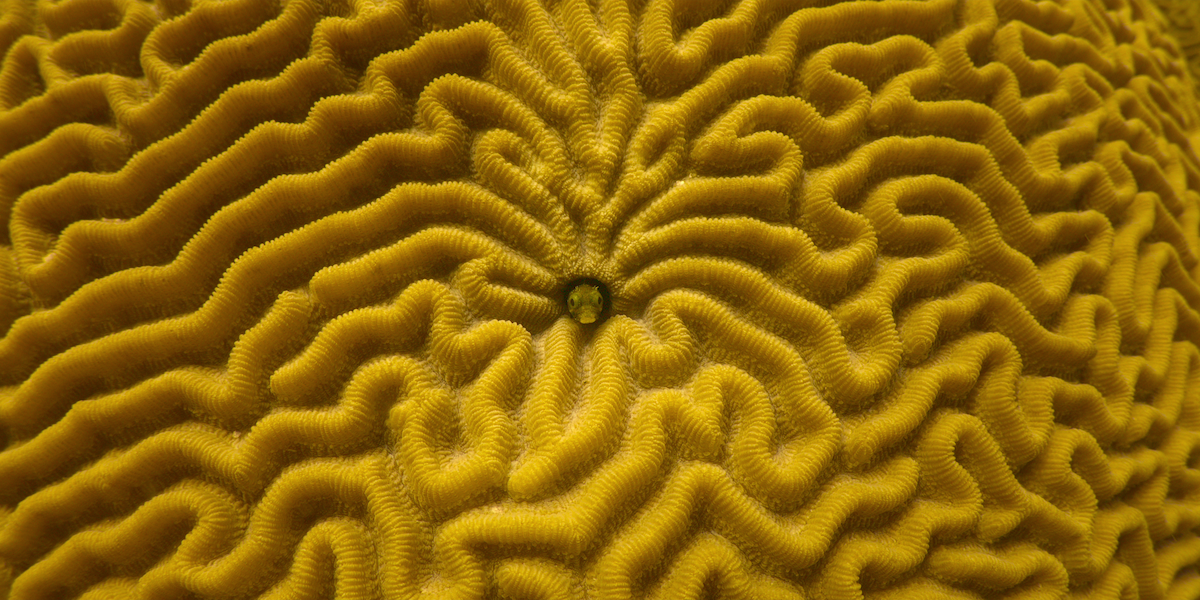
They say good fences make good neighbors, and it’s true even in the Atlantic. For the male sea bream intent on finding the perfect plot of sea floor for the right lady to lay her eggs, property disputes are common. The Our Oceans cameras capture what looks like a starfish tennis match, as two determined bream try to keep the pesky echinoderms from mucking up their patch of ground. Once the eggs are laid and a group of predators moves in with intent to harm, all the bream boys must put aside their differences for the good of the next generation.
Back on shore: In Iceland, 100,000 male puffins wait for their mates to return from an eight-month journey. They kill time by tidying their nests, but that only takes so long. One lonely puffin decides to go windsurfing — but when he’s done, his mate still hasn’t returned. With more fishing grounds depleted each year, there’s a chance that she may not. Nevertheless, our faithful flyer remains steadfast as he awaits his lifelong partner.
An on-camera first: When it’s time for a 50-foot-long whale shark to hunt, she turns to her fellow predators for assistance. The snipefish she’d like to eat are well-practiced at steering clear of her mouth, so she teams up with some skilled bluefin hunters who whip their prey into a tight “fishnado” before pinning them near the surface. While the bluefins pick off fish at the edges of the corralled school, the whale shark can open wide and charge directly into the fray, making off with hundreds of fish in each bite.
Where it’s located: The Arctic Ocean has the unfortunate distinction of being the world’s fastest-changing ocean. It’s also the smallest, surrounded by the tops of North America, Greenland, and Eurasia.
How it moves: As the warming Atlantic Ocean makes its way north, it has had a devastating effect on the Arctic Ocean, which continues to increase in temperature, an unprecedented trend whose consequences are unfolding in real time.
What lies beneath: From polar bears that must discover new ways to hunt to walruses seeking stable ice on which they can raise their babies, the “Arctic Ocean” episode depicts many of the difficulties caused by steadily rising temperatures.

Beluga whales, known as the canaries of the sea, know how to navigate the maze of ice in their path and communicate with their babies in order to teach them how. Their lack of a dorsal fin allows them to slip beneath the ice when needed. Here we watch older belugas lead a baby to a special inlet that’s ice-free and much warmer than where they came from. Here, everyone can relax and stretch out. They use rocks to scrub their bodies and release parasites, but the spot isn’t exactly a secret — up to 2,000 belugas can be present at a time, eager to make the most of it.
Back on shore: A polar bear teaches her two cubs how to navigate the sea ice. But with the climate crisis melting the shelves and glaciers on which they live, these lessons are more difficult than ever. Almost half of all polar bear cubs don’t make it to their first birthdays, and it becomes clear that one of this mother’s babies is significantly weaker than the other. Will she prioritize the one who’s more adept at moving across the melting ice? Or slow down to pull the slower one along?
An on-camera first: When scores of Arctic char return from their freshwater winter hideout and head back to the Arctic Ocean after months of fasting, the cold makes them sluggish and therefore potential prey. Among their predators are the narwhal, whose 10-foot tusks make them resemble unicorns. Such a long tool might seem ideal for spearing prey, but the Our Oceans crew captured narwhals using their tusks like bludgeons to stun the char.
Where it’s located: The Southern Ocean, the coldest of all, surrounds Antarctica. Winters in this region can reach minus 50 degrees Fahrenheit.
How it moves: “As we see [the global ocean current] come through the Indian Ocean, we start to realize that it’s picking up pieces of our world. And then, in the Atlantic Ocean, we realize it’s carrying heat. We see how it’s changing the landscape in the Arctic Ocean,” says Smith. “The story really ends definitively in the Southern Ocean — the place that we thought was isolated, sheltered from our impacts — and yet it’s the engine that drives the whole ocean system.” With winds of up to 200 miles per hour, the current here — at the end of its 75,000-mile journey around the previous four oceans— is stronger than anywhere else.
What lies beneath: It’s not easy to live in one of the world’s most hostile underwater environments, but every animal in this harsh region is uniquely adapted to the demands of their home. Some animals can go months without eating, while elephant seal pups must learn to hold their breath for two hours so that they can eventually dive and find food fathoms below.
For one tough crabeater seal, fighting is a way of life. But sparring with his fellow seals is very different from battling for his life when a pod of hungry orcas sets its sights on him. The hunters surround the piece of floating ice that the crabeater shares with a Weddell seal and strategically send large waves their way, washing them both into the sea. After a few attempts, the Weddell is captured, but the predators soon return, and the crabeater has to make a run for it. The orcas won’t give up that easily — no matter what the crabeater does to ensure his safety, his pursuers develop new ways to keep after him. “I still cannot watch it without tingles running up my spine,” says Smith. “This seal, it’s like Deadpool. No matter what you throw at it, it’s so wily and it’s so tenacious that it will fight back.” The melee lasts for more than four hours, and if the crabeater makes even the slightest mistake, he won’t live to see another day. “I think it’s certainly in the top 10 wildlife sequences of all time,” adds Honeyborne. “It’s just the most extraordinary story, told as it happened. And with a breathtaking outcome.”
The Antarctic sea spider lives beneath the massive Ross ice shelf, along with several other invertebrates that have existed there for millions of years. Their neck of the woods, so to speak, is fairly crowded, and after not eating for months, the sea spider ventures into an ice cavern to find frozen prey. Of course, every step poses a risk for our hungry hunter, but he uses his uniquely spindly legs to his advantage as he seeks out a much-needed meal.
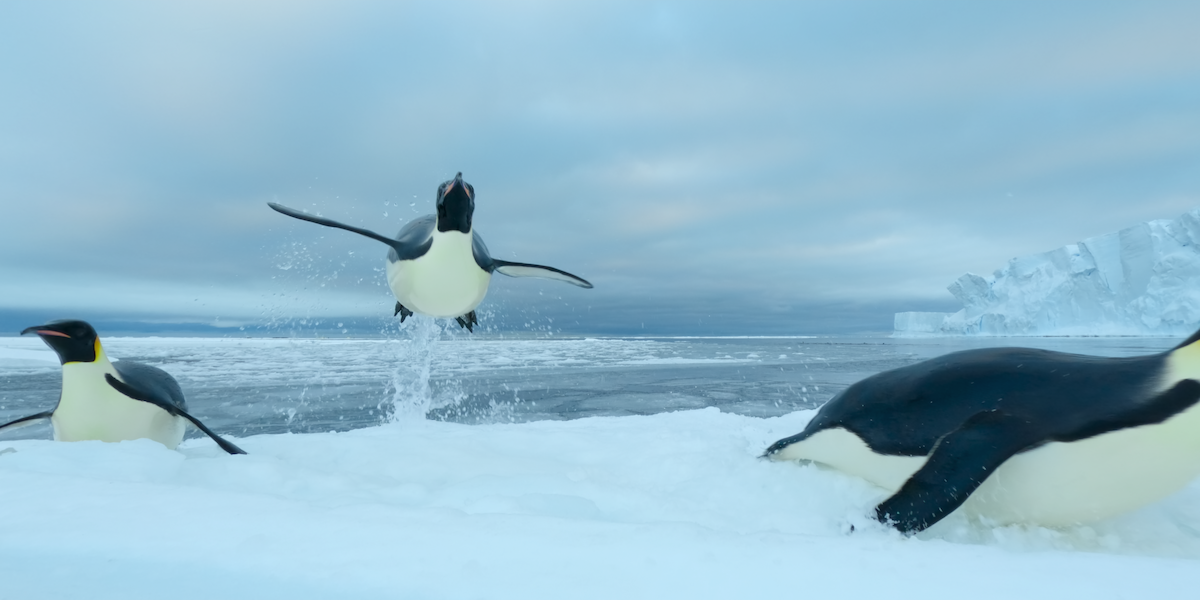
Back on shore: Two million chinstrap penguins live on Zavodovski Island, 1,000 miles away from the nearest landmass. Among them are parents who must dive off the island’s rocky cliffs into the punishing waves to find food to bring back for their chicks. Their leaps into the water are difficult enough — but making it back up the rock face is even more challenging. To get home to their babies, they’ll have to ride the crashing waves without getting washed back into the water.
An on-camera first: In this episode, viewers are introduced to the rare spotted handfish. Fewer than 3,000 exist, and the mother that we meet is appropriately fierce when it comes to protecting her eggs. When a massive sea star comes for her precious cargo, however, she’s unable to fend off the attacker. Remarkably, she appears to sacrifice herself rather than let her eggs be eaten. This critically endangered animal has eluded researchers for years, but now it’s been captured on film for the first time in its natural habitat.
Watch Our Oceans on Netflix now.
Inspired by Netflix’s new five-part documentary series Our Oceans, Athletic Brewing has launched Marine Odyssey IPA celebrating the beauty and complexity of our shared seas. This limited-edition hazy IPA features a majestic mix of hops, and a delicate grain blend for a bright and crisp drinking experience. Marine Odyssey is now available, just in time for the debut of Our Oceans.
Marine Odyssey will be sold nationally at select retail locations across the U.S. and on athleticbrewing.com. Customers in Canada will also be able to purchase Marine Odyssey on athleticbrewing.ca.
Athletic Brewing Co. LLC, Milford, CT and San Diego, CA. Near Beer <0.5% alc/vol.