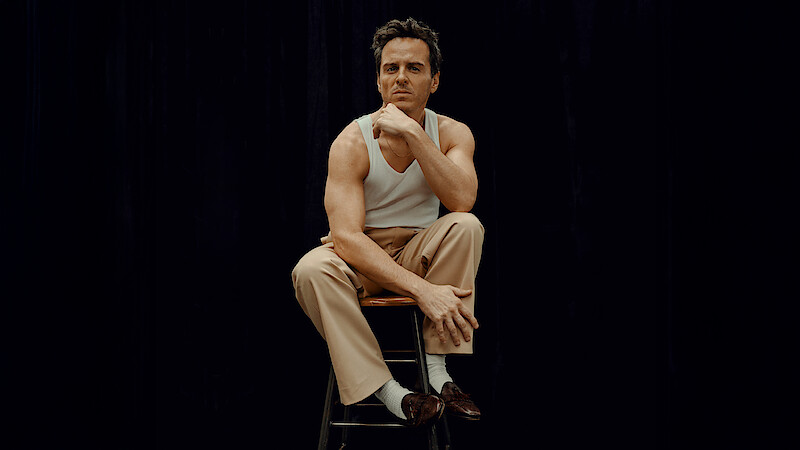
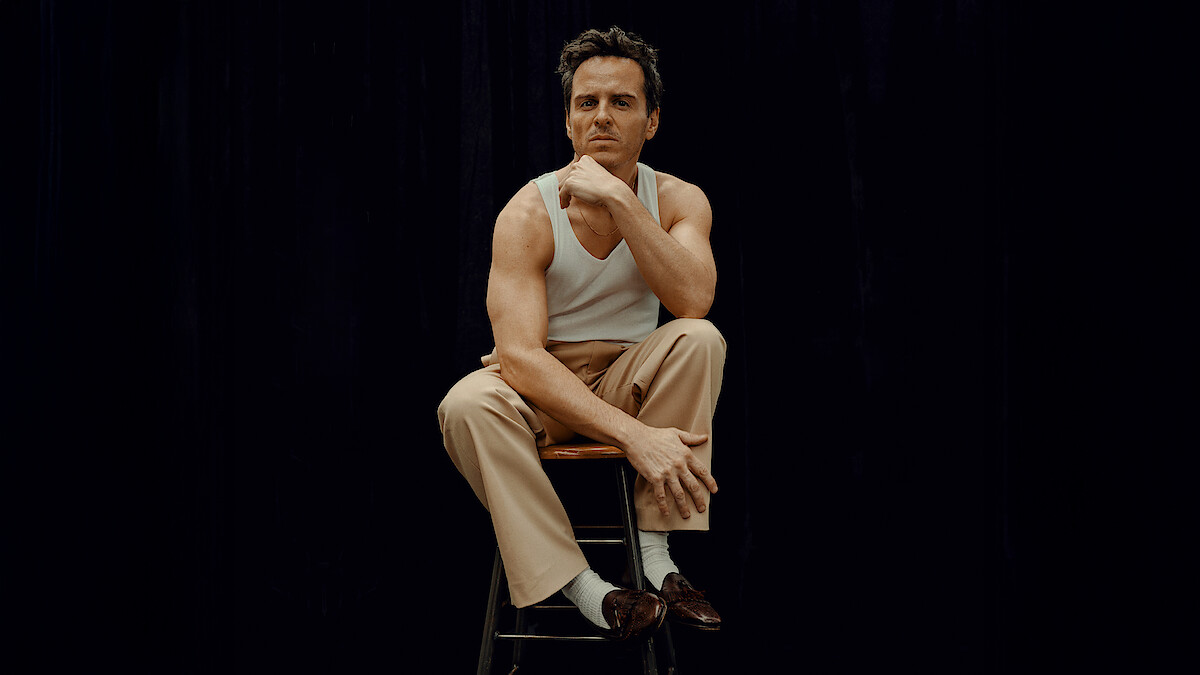
Scott is one of literature's favorite characters in Steven Zaillian's series.
From Atrani to Caravaggio, how the series came to life.
Ripley is the story of a con man who assumes the identity of a wealthy American expat. But, as star Andrew Scott told Netflix, it’s also “a story about art and beauty and sensuality… helped by the great beauty of Italy.”
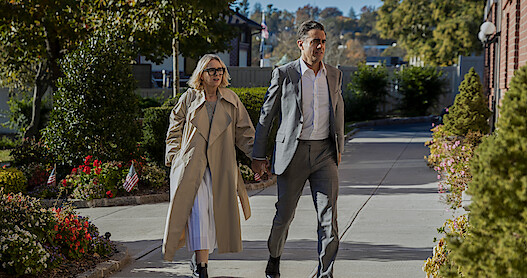
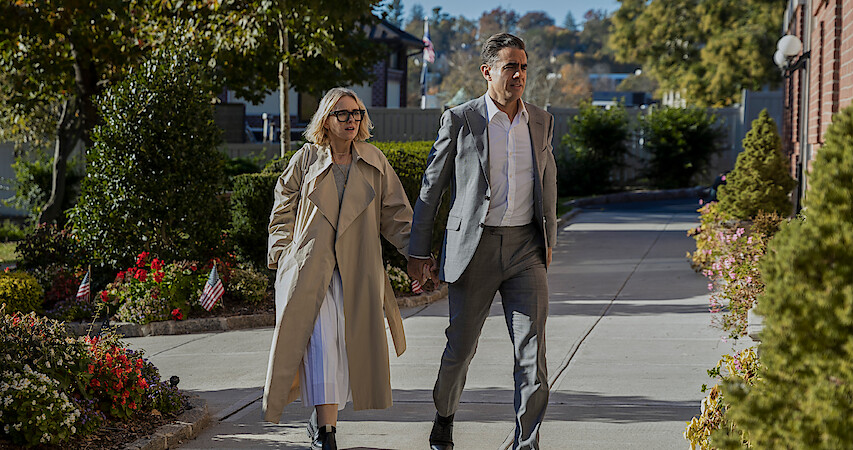
Based on the 1955 Patricia Highsmith novel The Talented Mr. Ripley, the 13-time Emmy-nominated limited series follows charming con artist Tom Ripley (Scott) on a trip to Italy in the 1960s bankrolled by a shipping magnate to retrieve his wayward son, Richard “Dickie” Greenleaf (Johnny Flynn). Tom ingratiates himself into Dickie’s life — much to the chagrin of Dickie’s suspicious girlfriend, Marge Sherwood (Dakota Fanning) — and soon is on the run from police while posing as Dickie in Rome.
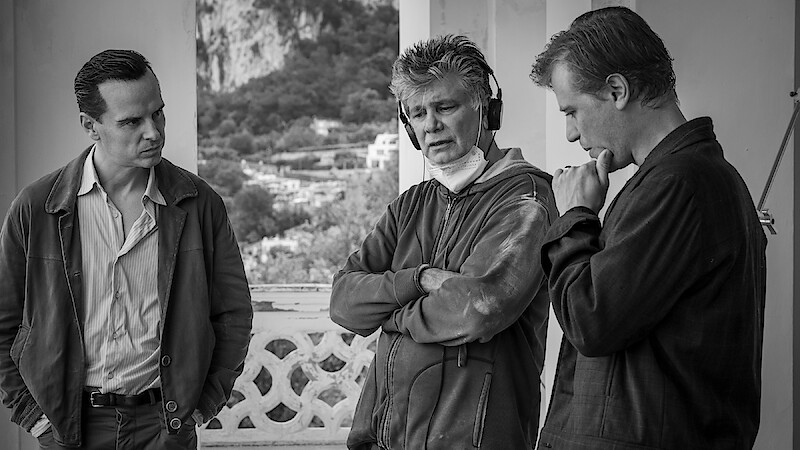
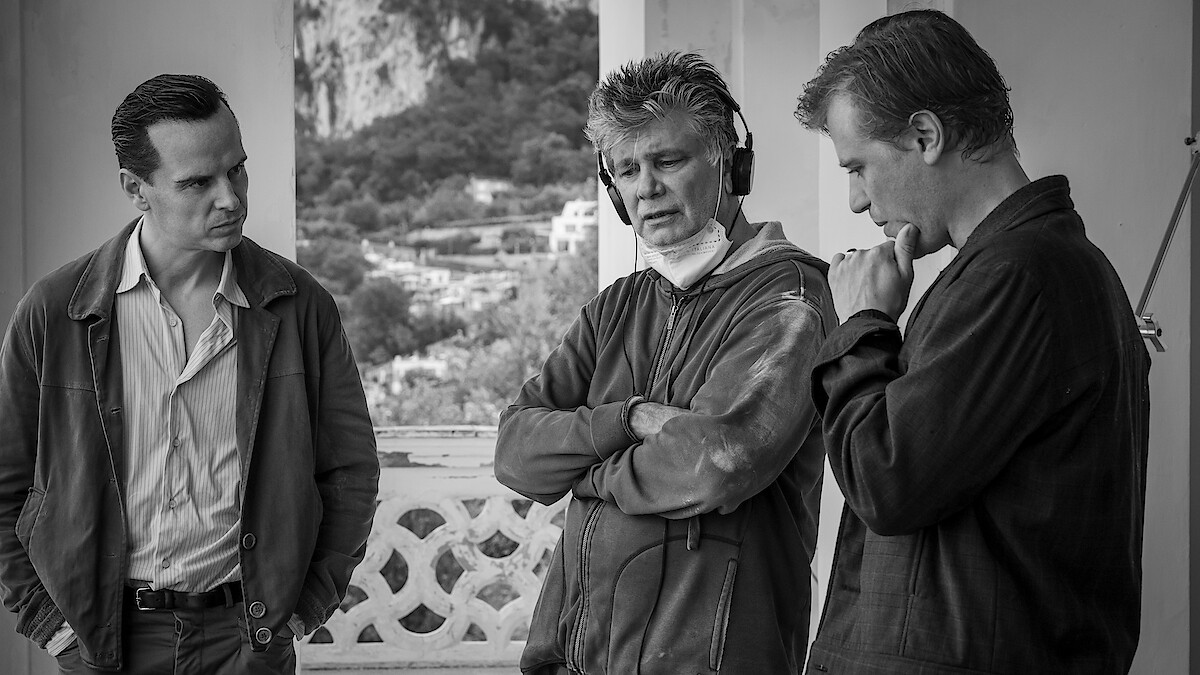
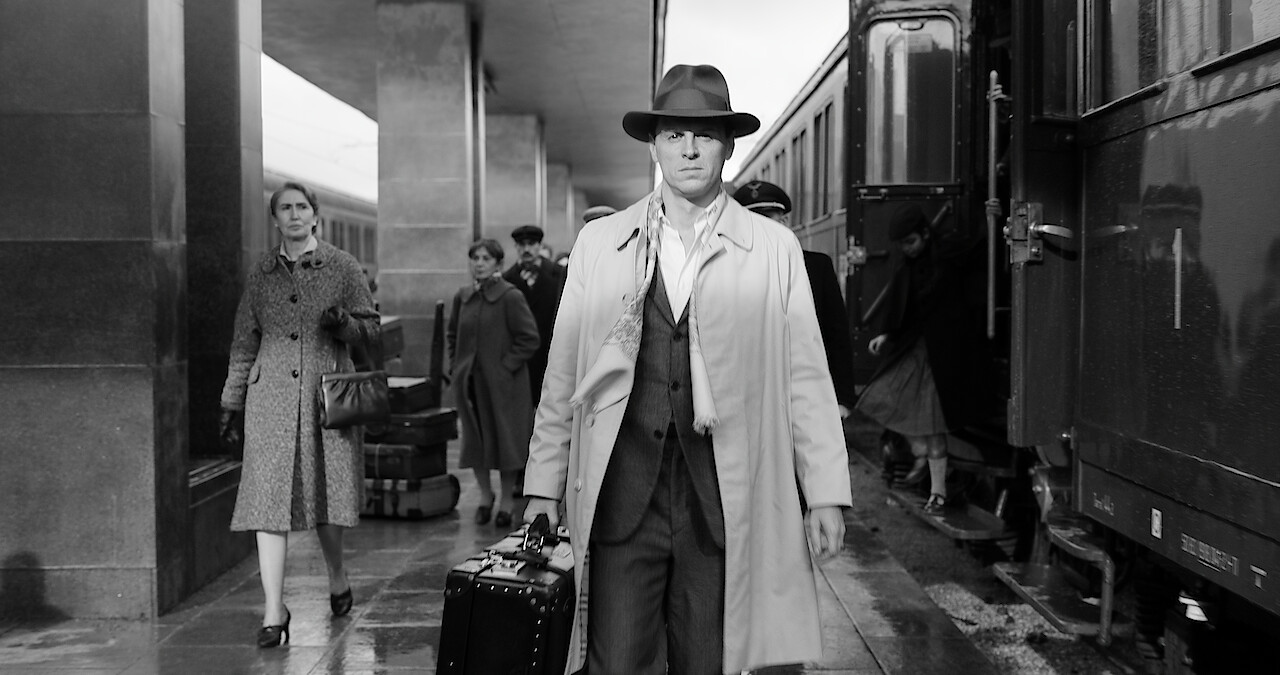
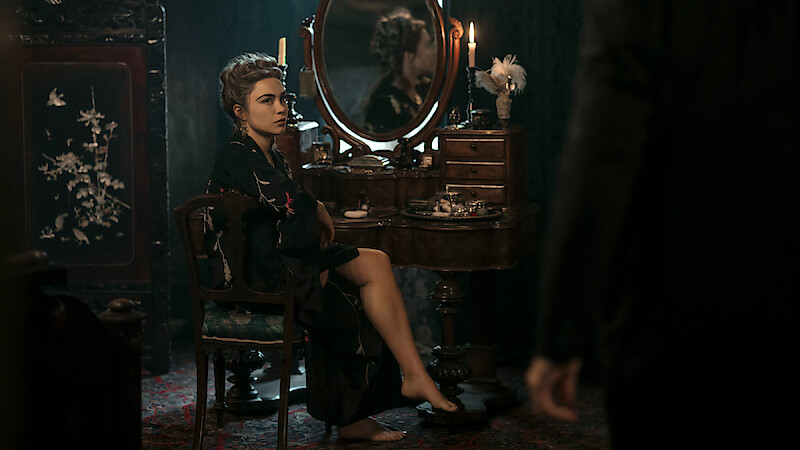
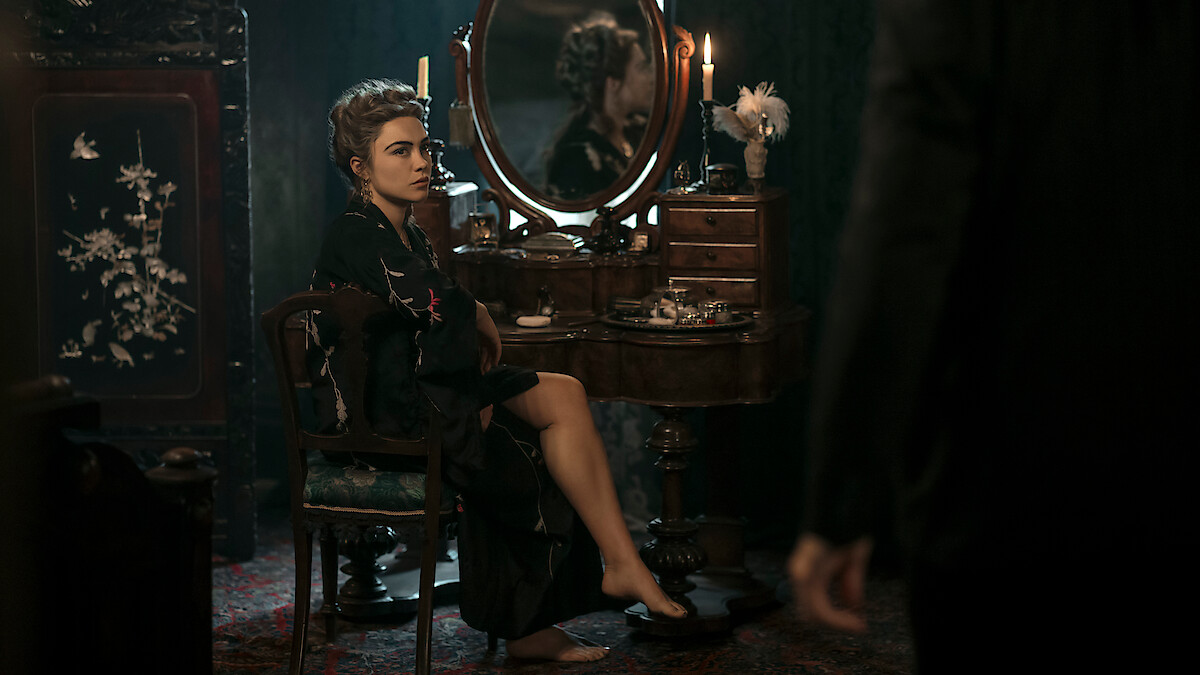
Creator Steven Zaillian’s team of talented artists — production designer David Gropman, director of photography Robert Elswit, and costume designers Maurizio Millenotti and Giovanni Casalnuovo — meticulously re-created a 1960s aesthetic. Below, find out how they fashioned such a stunning period setting in Ripley.
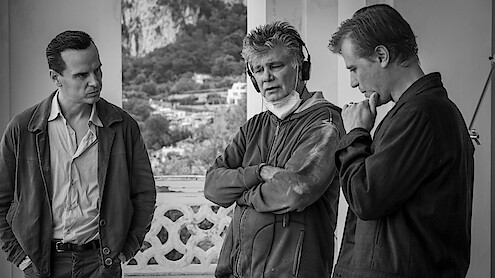
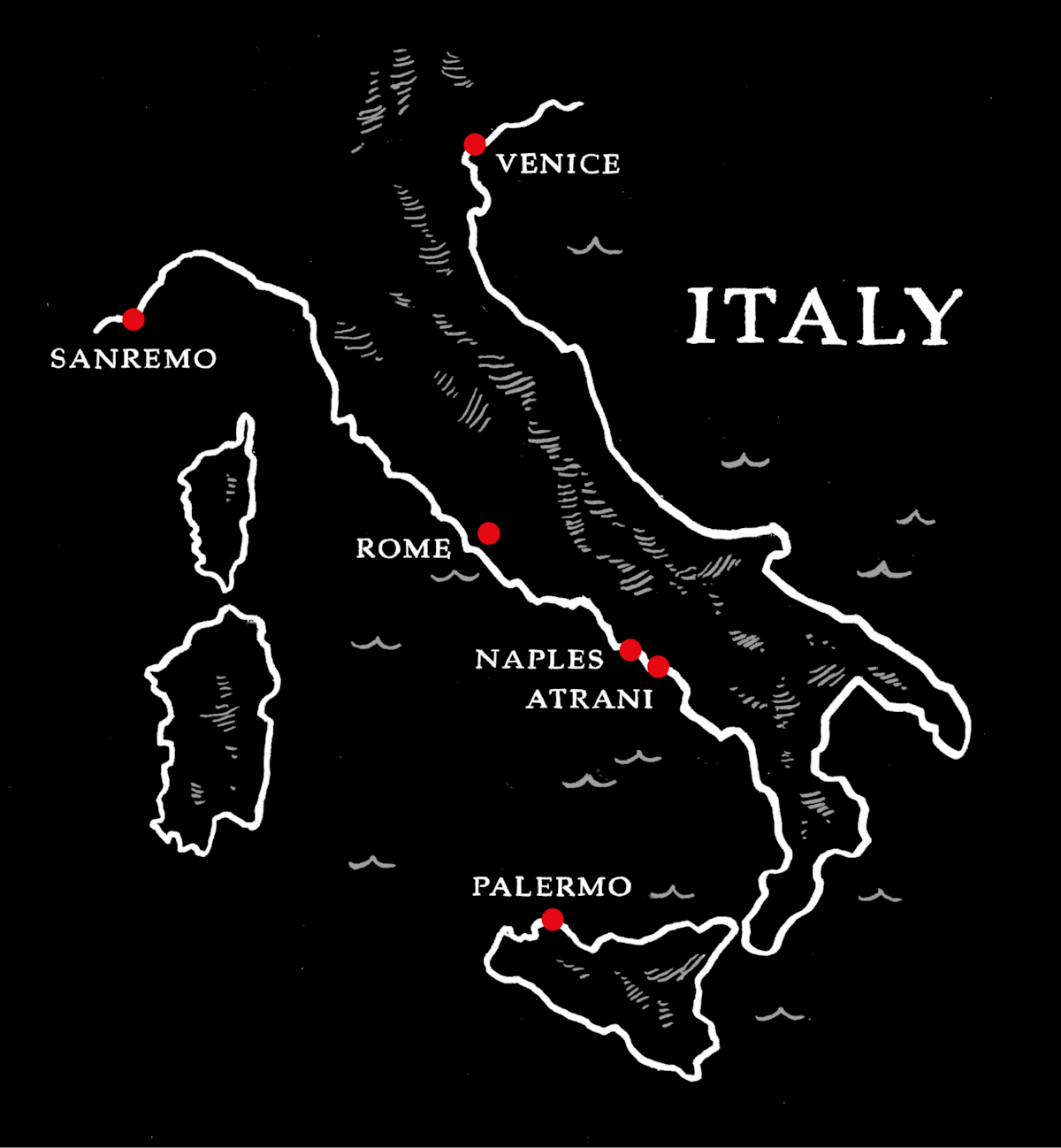
Ripley’s filming locations read like a dream vacation: Venice, Rome, Naples, Palermo. Zaillian and Gropman drove the length of the Amalfi Coast, going from Salerno to Sorrento, “looking for the town we imagined Dickie Greenleaf settled in,” Zaillian told Netflix. “Most have been too modernized or gentrified for a story taking place in 1960, but there was one we came upon, a village of about 800 people called Atrani, that we found perfect.”
When the series finally filmed in 2021, it was the height of the Covid pandemic, so “there were no tourists,” said Zaillian, “which made it feel all the more like we’d gone back in time.”
Beyond the postcard-perfect vistas provided by the location, Gropman had more than 200 sets and locations to design. His researchers worked in New York, London, and Italy to make sure the plans were as accurate as possible. While Gropman and Zaillian visited several Roman apartments, the one used in the show was a set. But those real estate tours were inspirational.
“The sofa in Tom’s Rome apartment was the sofa that we saw in a villa in Rome that we both fell in love with, so we just built an exact replica,” Gropman told Netflix. “The leather chair that Ravini sits in in Tom’s apartment? I was walking by a shoe store in Rome, and there was this beautiful old leather chair. We couldn’t get that chair, but we worked with the most wonderful Italian decorator to source something. She made all of these interiors come to life in a really spectacular way.”
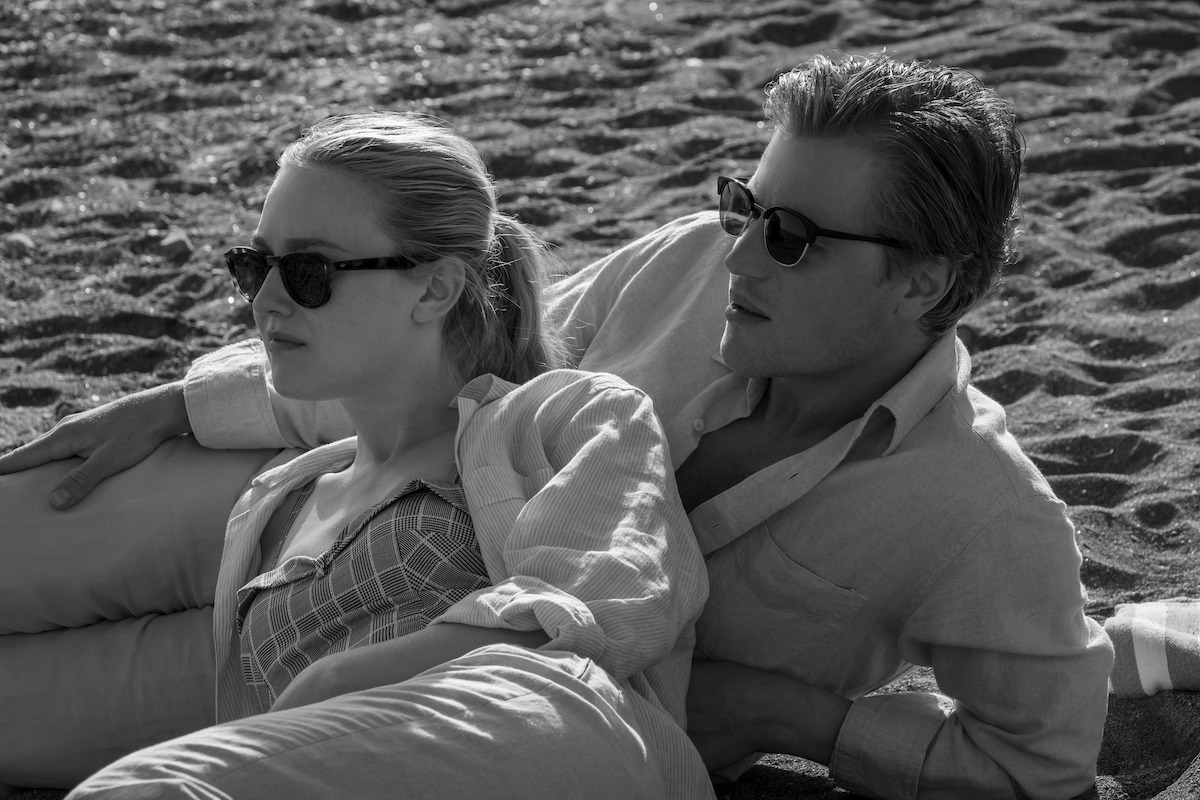
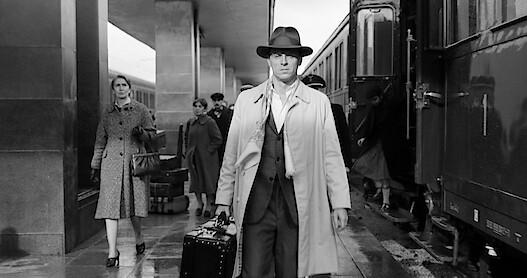
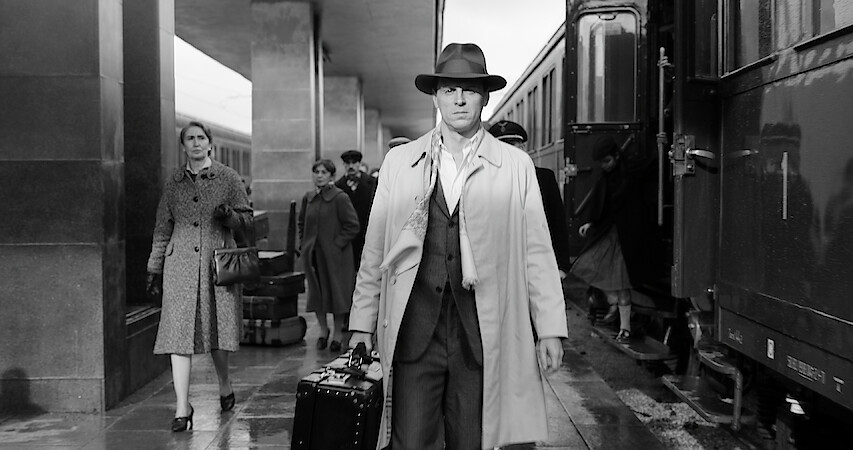
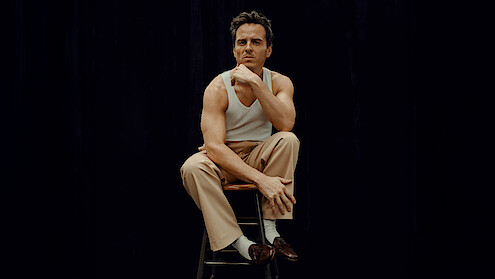
Unsurprisingly, the costumes were as meticulously researched as the locations. Designers Millenotti and Casalnuovo created “thick binders” of images, arranged by region and year, to show Zaillian their vision of what the costumes would look like. The finished products included vintage pieces as well as outfits they crafted themselves. “From the feel of La Dolce Vita in Rome to a more working-class wardrobe in Palermo or Atrani, it’s always accurate,” said Zaillian. “And even though it was always the intention for Ripley to be in black-and-white, I asked them to clothe no one in colors, which limited them in a way that made their job even harder than it already was.”
Millenotti and Casalnuovo initially worried about the black-and-white restriction, but once they got comfortable, they told Netflix, “[We] learned how to express ourselves and build the characters only with a thousand shades of gray. It was the greatest challenge we ever faced as costume designers.”
All of their hard work has paid off. Ripley Episode 4 snatched an Emmy nomination for Outstanding Period Costumes in a Limited or Anthology Series.
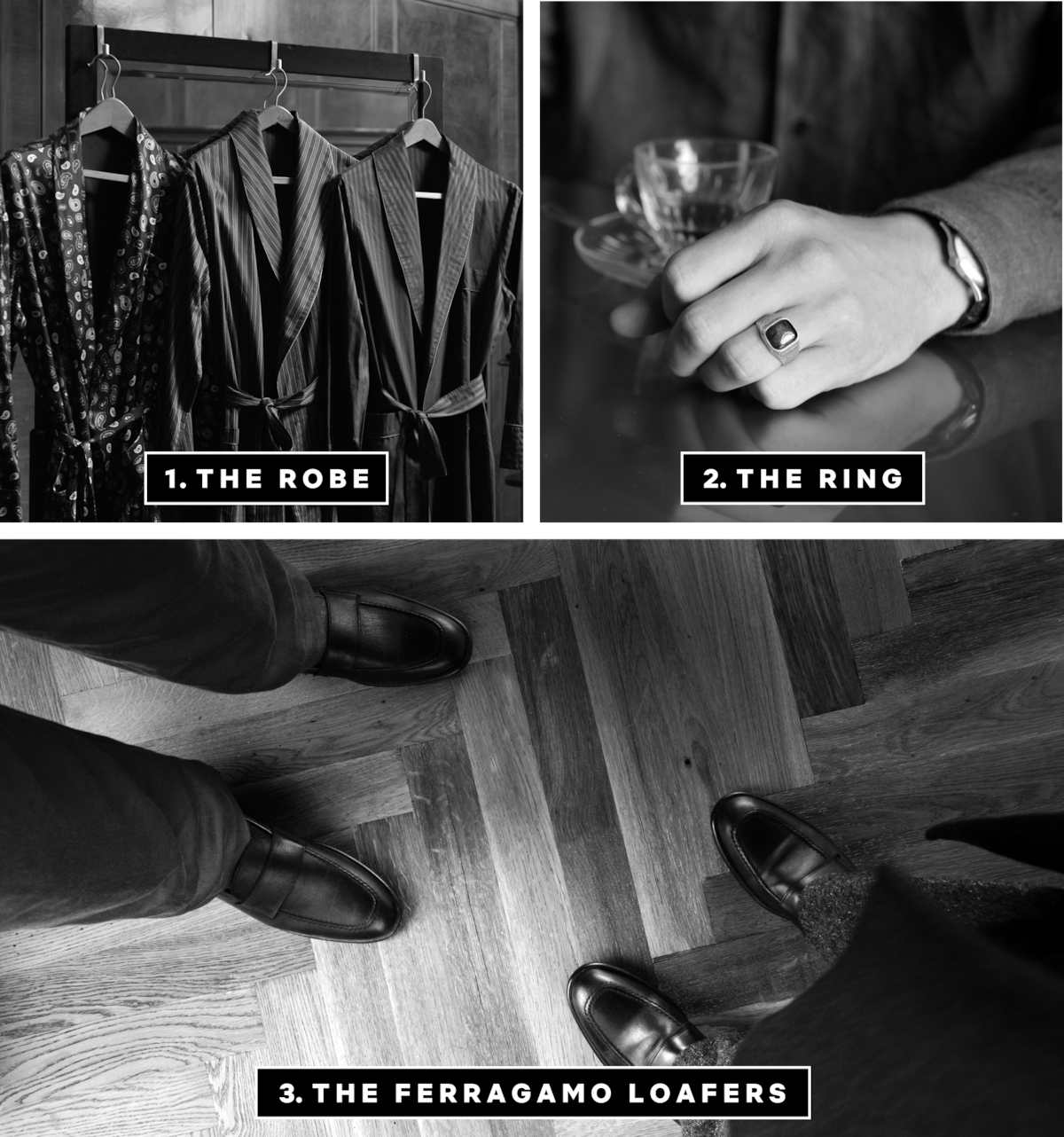
The object of Tom’s admiration, Dickie, is the heir to a shipping fortune — someone who grew up around wealth. For him, luxurious fabric and timeless style is second nature. For Flynn, the “beautifully tailored” costumes helped him get into character. “The way that the trousers sit on your waist and everything like that helps when you’re playing in this period — the grace that the clothes allow you,” he told Netflix.
Tom, on the other hand, is quite uncomfortable in the moneyed world he steps into, because he’s only crafting a facade. He’s a quick study, but he gets plenty of things wrong, too, like the purple paisley robe he brings to Dickie from New York. “Tom doesn’t come from the culture that Dickie comes from,” Flynn tells Tudum. “Dickie can spot something that’s unfashionable a mile off. And his taste — not necessarily in terms of his own paintings, but everything else — is meticulous.”
Was the robe really so terrible, though? “It was pretty garish,” says Flynn. “But it wasn’t that bad. It was something that your grandfather would’ve worn maybe — or certainly mine — and felt very suave.”
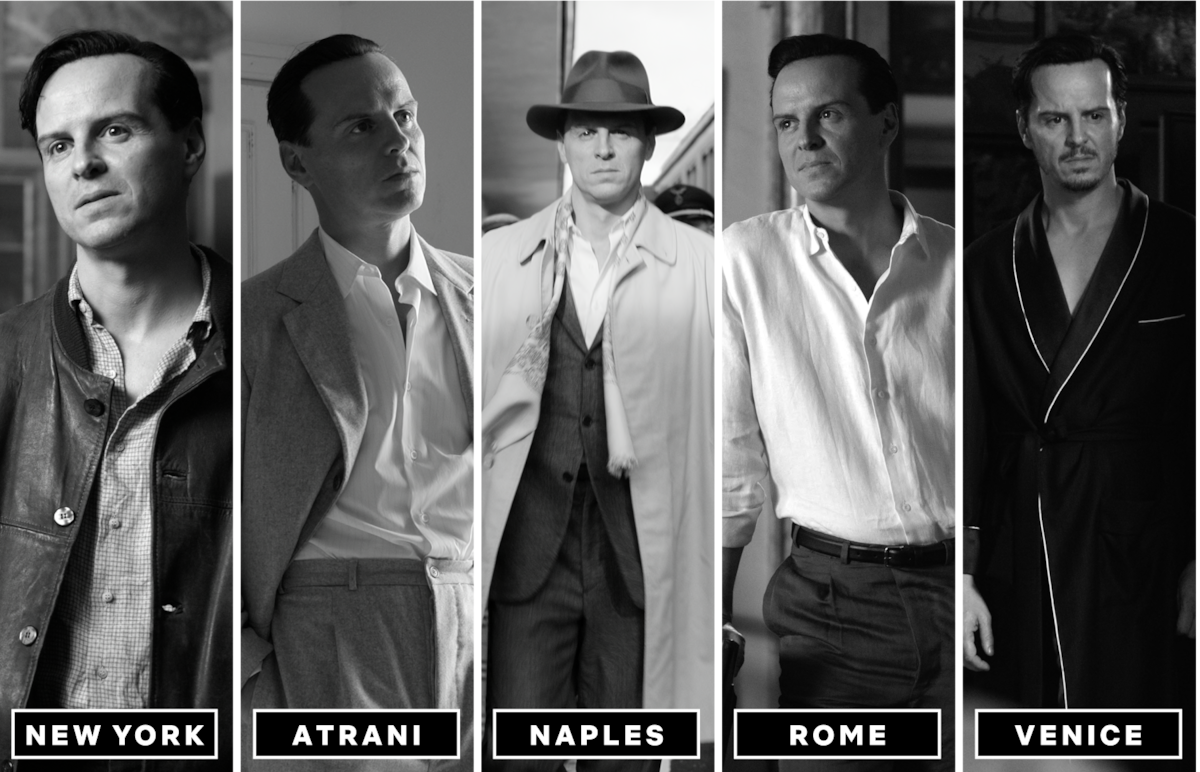
But as Tom becomes more comfortable amid such affluence, he begins to understand how fashion helps him fit in. “Ripley’s transformation is about seeing a subtle change but not being too brash about it,” said Scott. “We see there are different Toms: We’ve got New York Tom, Amalfi Tom, Tom as Dickie, and Venice Tom.”
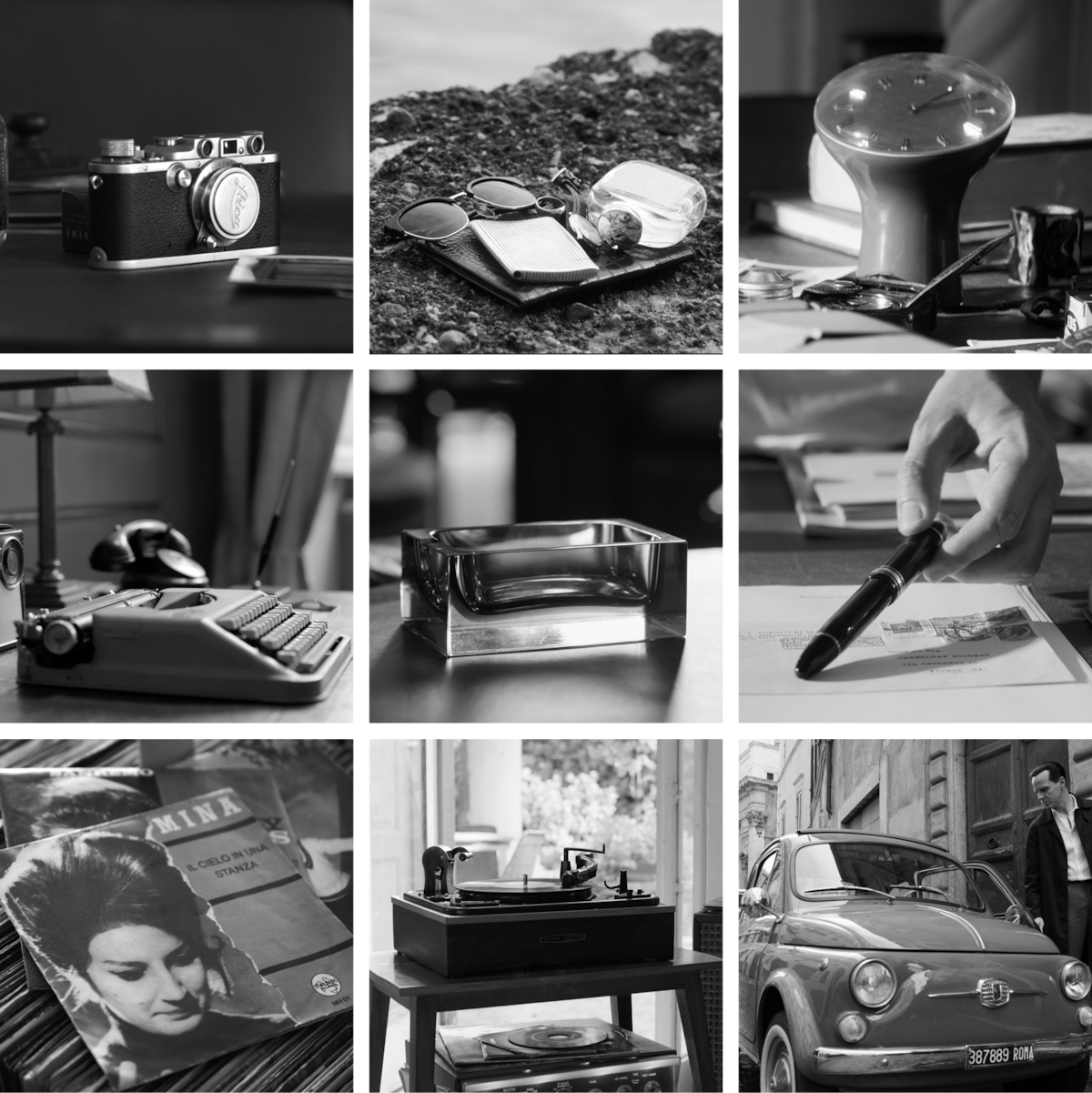
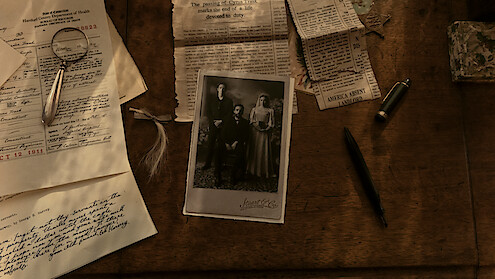
Tom is fixated on Dickie, and that singular focus extends to the objects in Dickie’s orbit, all of which are in 1960s midcentury style. Tom pockets a pen off of Dickie’s desk before returning it, a sign of what Scott calls Tom’s “almost sensual relationship with things.”
All of those meticulously curated objects — Dickie’s ring, his typewriter, even a hefty glass ashtray — become fixations for the camera, too. Scott said on Netflix’s Skip Intro podcast that Tom “loves [things], and you feel like he protects them. The camera is trained on these things so much. I suppose we as an audience are invited to just really appreciate them.” It’s no surprise, then, that’s Ripley’s production design has scored an Emmy nom of its own.
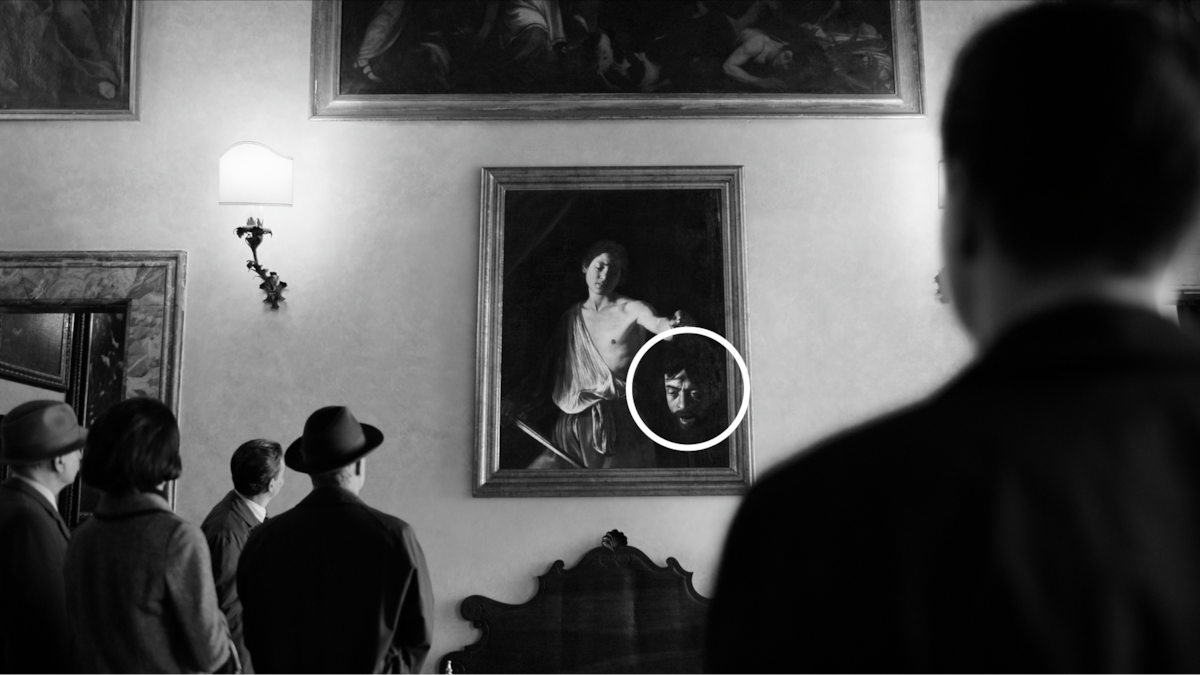
The final episode opens with a flashback of sorts, but not to another period in Tom’s life. Instead, we travel 350 years back in time for a glimpse at the life of famed Italian painter Caravaggio. Tom is enamored by Caravaggio’s gruesome, dramatic paintings, but the two men have more in common than an appreciation for beauty and art.
“Caravaggio is another man who lived in Rome who murdered somebody and then was on the run for it for the rest of his life,” Zaillian tells Tudum. “That little parallel I thought was interesting. For the final episode, I thought it would be a lot of fun to suddenly flash back 350 years and have people say, ‘Are we watching the same show?’ And then realize, ‘Oh, yes, Caravaggio. I understand this.’ ”
For all of Dickie’s wealth, there’s one thing his money can’t buy: talent. While Dickie might enjoy the finer things in life, his artistic pursuits are a vanity project. “There’s some stuff that’s passable in the landscapes,” says Flynn, “but we all found it very funny that it was [mostly] the really objectively bad paintings that you see.”
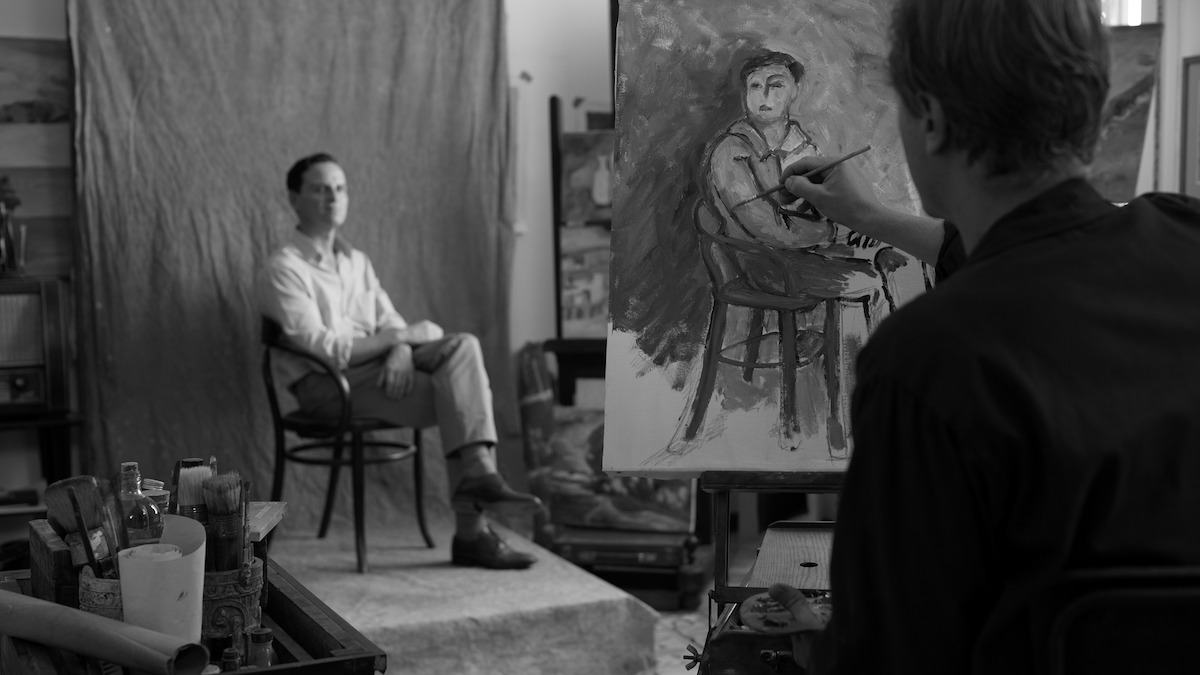
Is Dickie a good painter? Emphatically, no. “Here’s the thing: The story is so much from Tom’s perspective, you should be in his head going, ‘Oh my God, that’s disgusting,’ ” says Flynn. “And the same with Marge’s writing as well. I think it works well if we, through Tom’s perspective, think of these people as fooling themselves and that their whole life is a bit of a bubble and an illusion and the lie that they’ve created about being these artists in exile. Yeah, the paintings were pretty bad!”
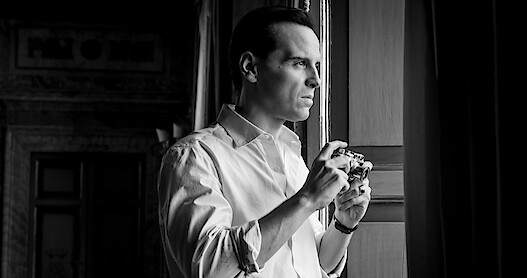
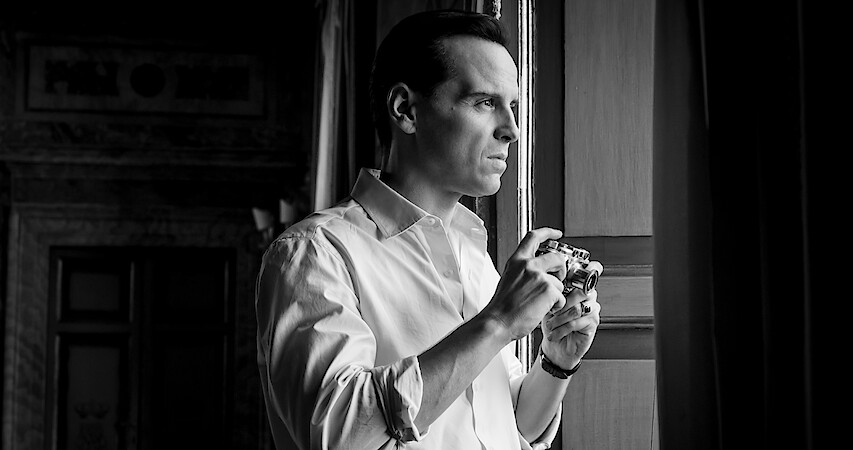
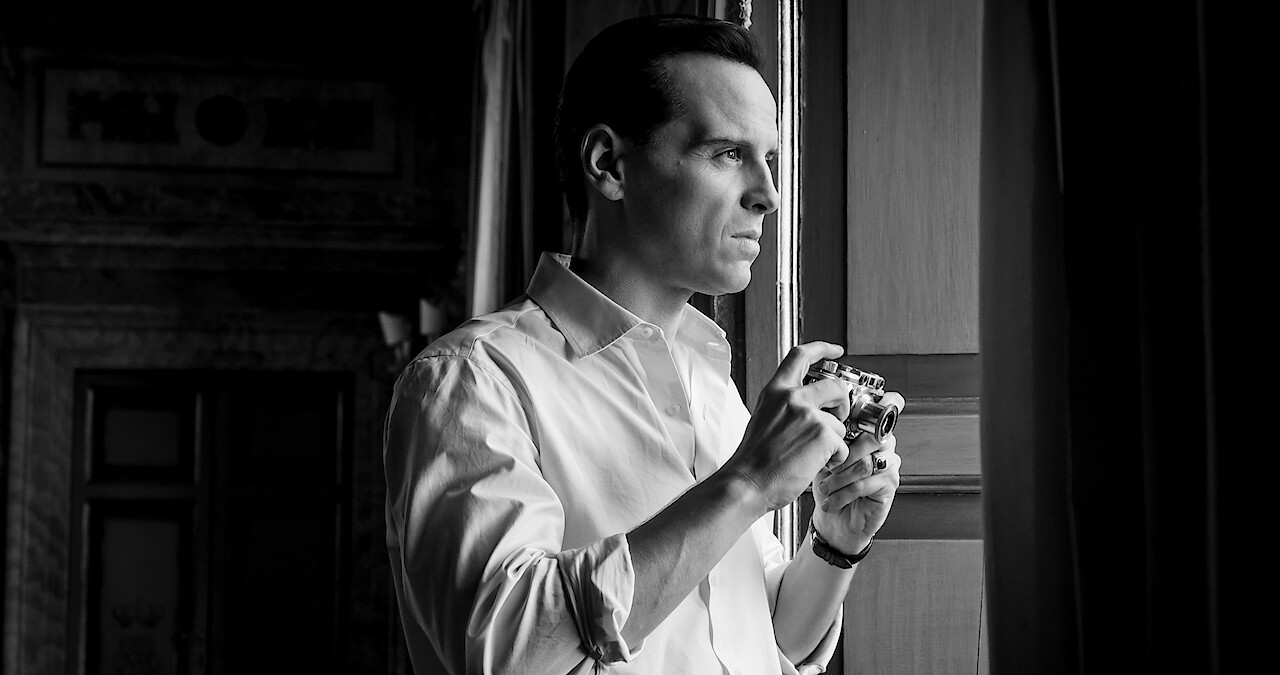
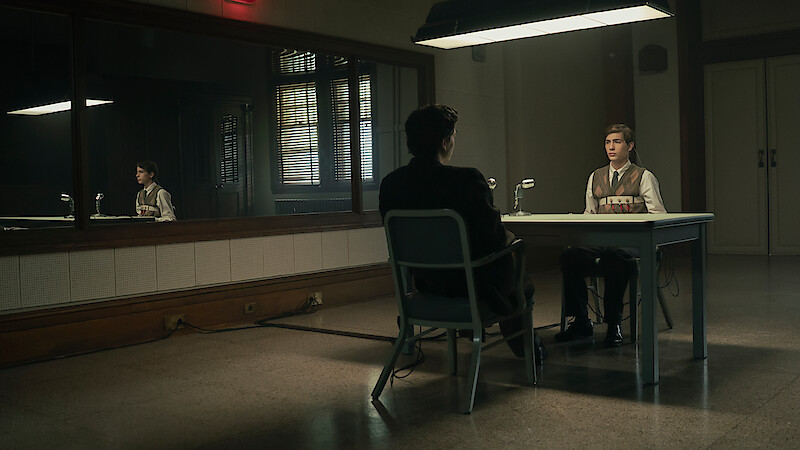
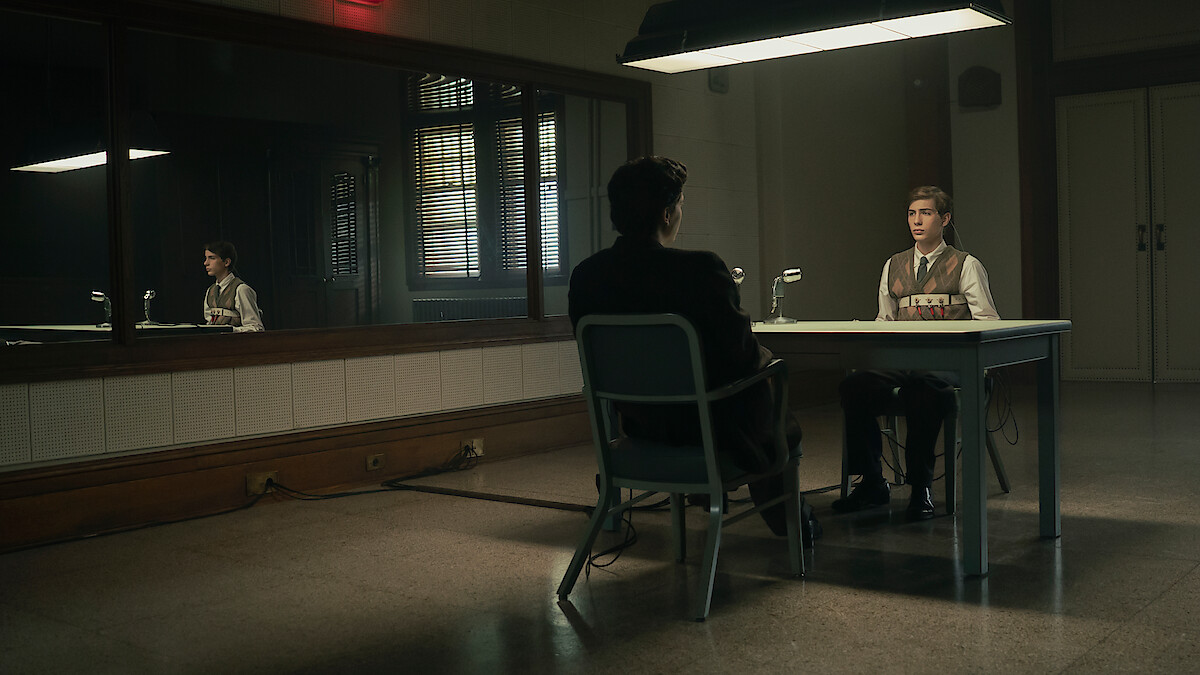
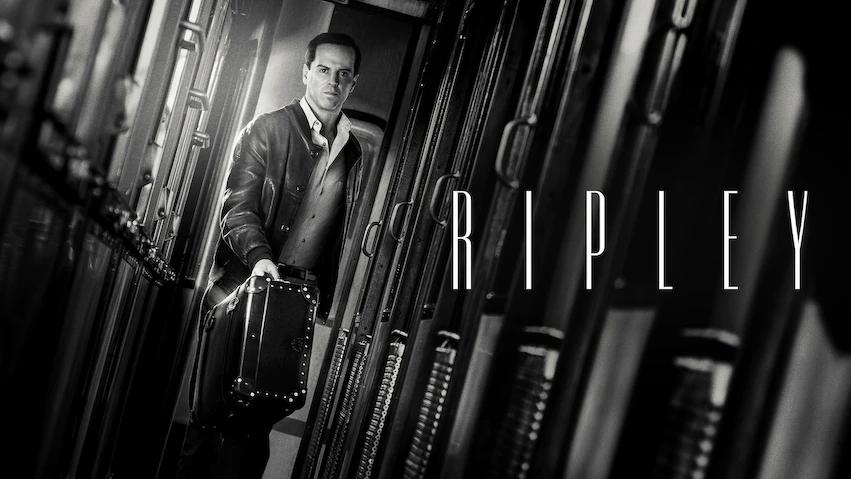
One of the most distinctive — and perhaps most period-appropriate — aspects of Ripley is its black-and-white palette, something double Emmy-nominee Zaillian (who received writing and directing nods for Ripley) had planned from the beginning.
“I never saw it as some sunny, colorful postcard of a story but rather as the foreboding suspense story that it is,” he told Netflix. “It takes place in the winter of 1960 and, like many of Highsmith’s stories, has a film noir quality to it. Black-and-white can be striking in a way color can’t be, and I’m grateful Netflix agreed.”
Zaillian and Elswit had worked together on the miniseries The Night Of, so Zaillian knew his director of photography would be up for the challenge. “He loved the idea of shooting in black-and-white and brought to that seemingly simpler palette a depth to the photography that’s more evocative than color,” Zaillian said.
Another of Elswit’s choices brought even more depth to the visuals — the shots that frame Tom within another frame, including windowpanes, mirrors, doorways, and other enclosed perspectives. They suggest that, as viewers, we’re watching Tom fit himself into a box.
The deeper meanings found within Tom Ripley’s story are also imbued in the Emmy-nominated cinematography. “This show is so much about light and dark and contrasts and the underbelly and what’s going on under the surface,” said Fanning. “I love that Steven and Robert are really playing with that through the lighting and the sets, and the color palette and the tone.”
Take, for example, the closing montage that focuses on a painting from Picasso’s cubist period. “Cubism is all about deconstructing usually a human figure into parts, so that we can somehow see them more clearly when we’re not distracted by them all being in the right place,” Zaillian tells Tudum. “I felt like at the end, to see these pieces of Tom, these different personas of Tom, these different identities that he assumed, that we were actually seeing him fragmented like the cubist painting that’s right in front of him.”
Ripley is now streaming on Netflix.
Additional reporting by John DiLillo, Sarah Rodman, and Ariana Romero.