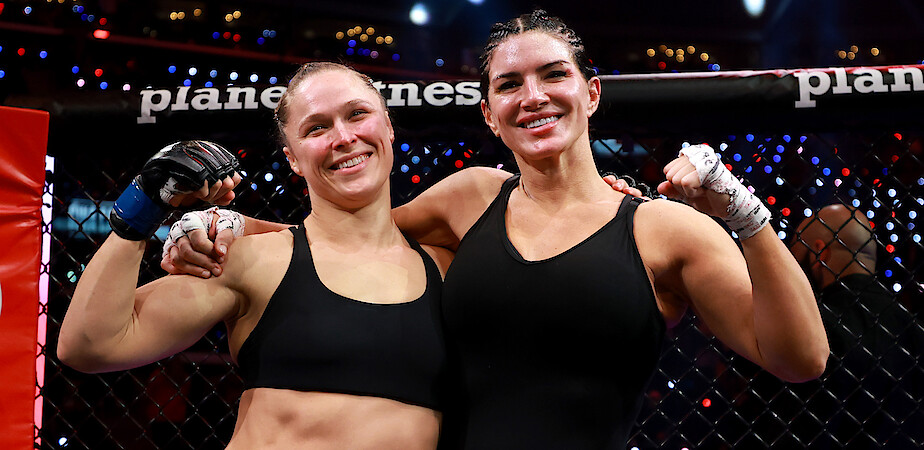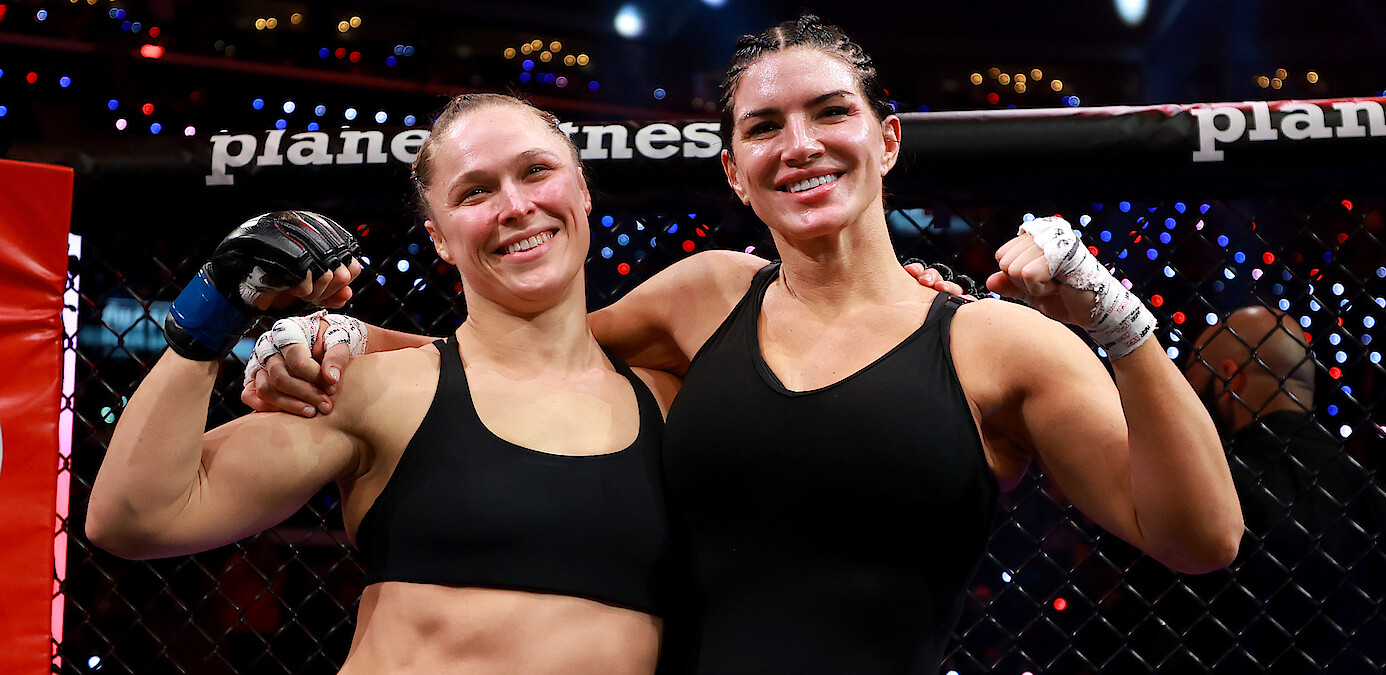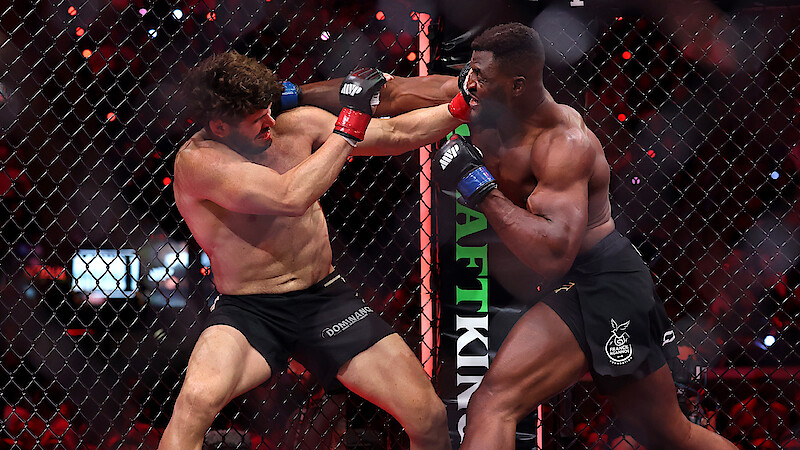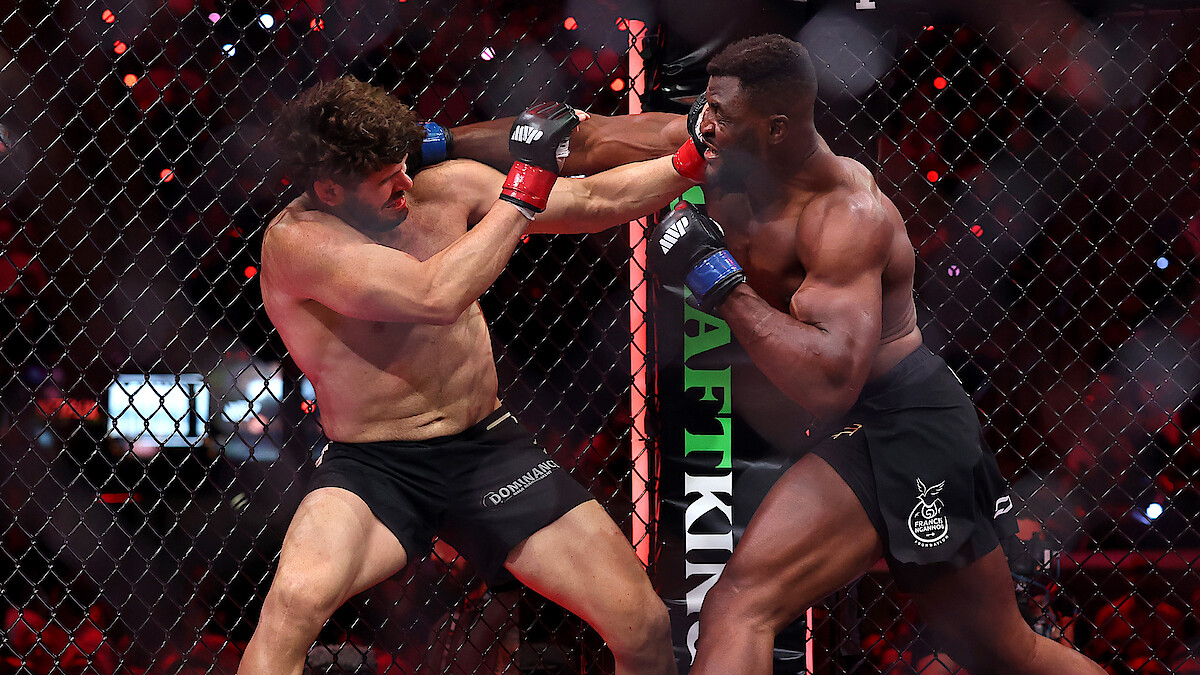
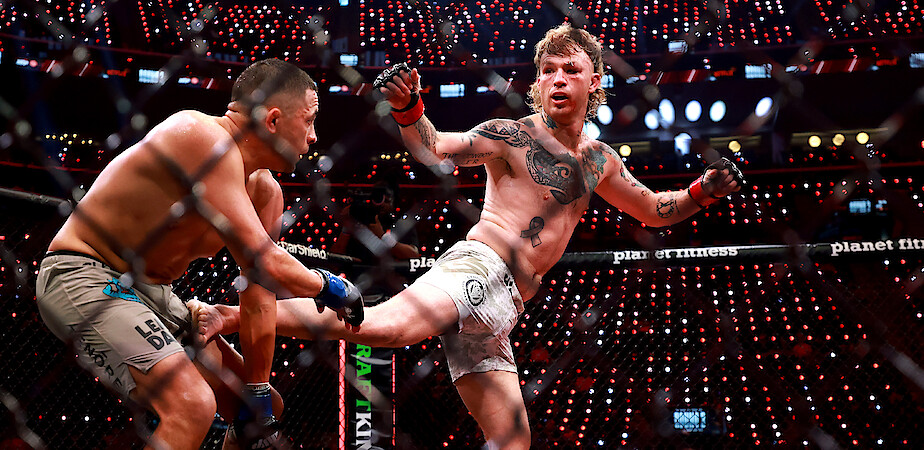
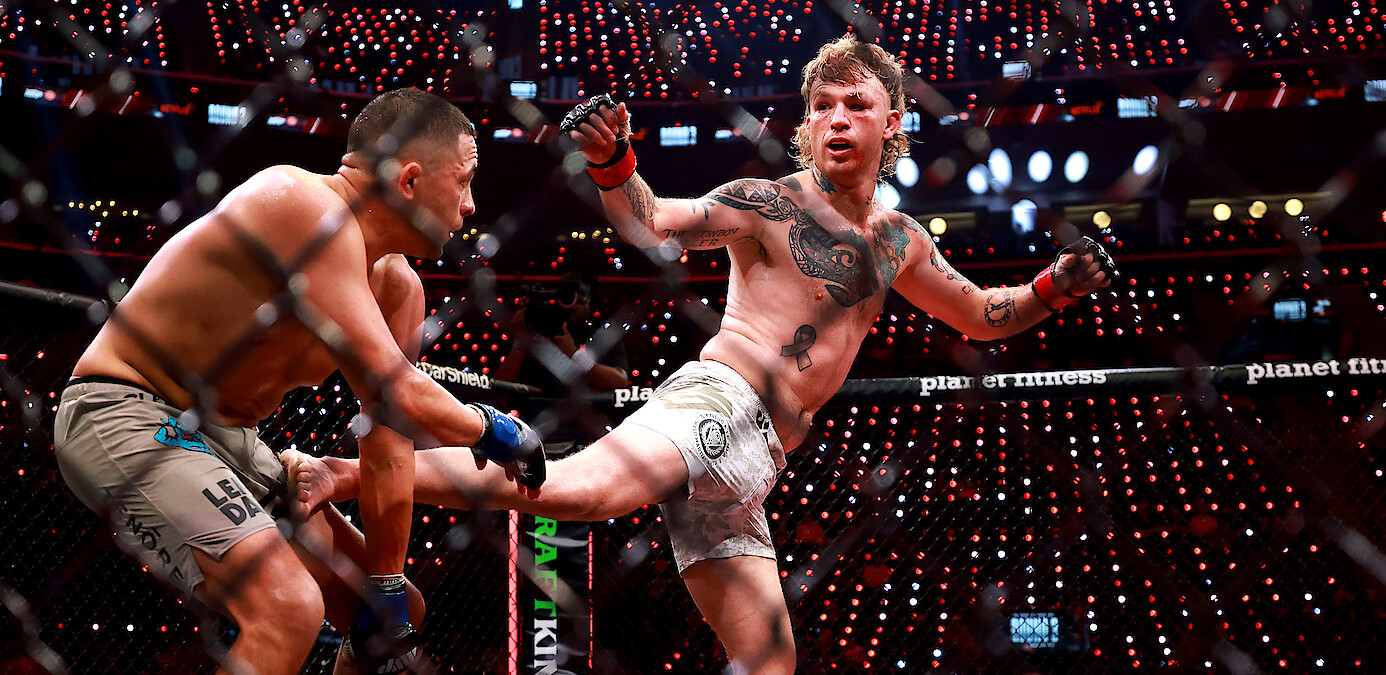
See every prelim winner, including Jason Jackson’s 22-second KO.

By the time Ronda Rousey sits down to talk, she’s already been at it for hours.
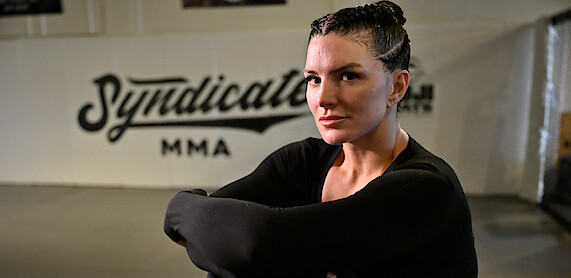
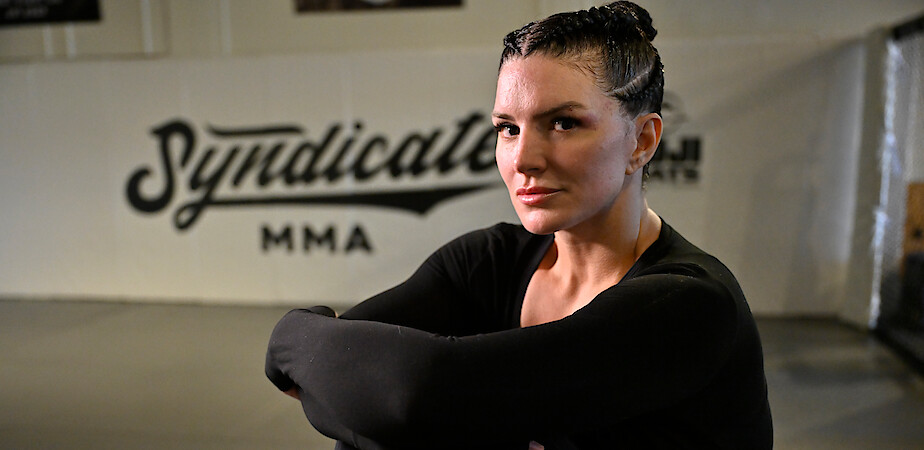
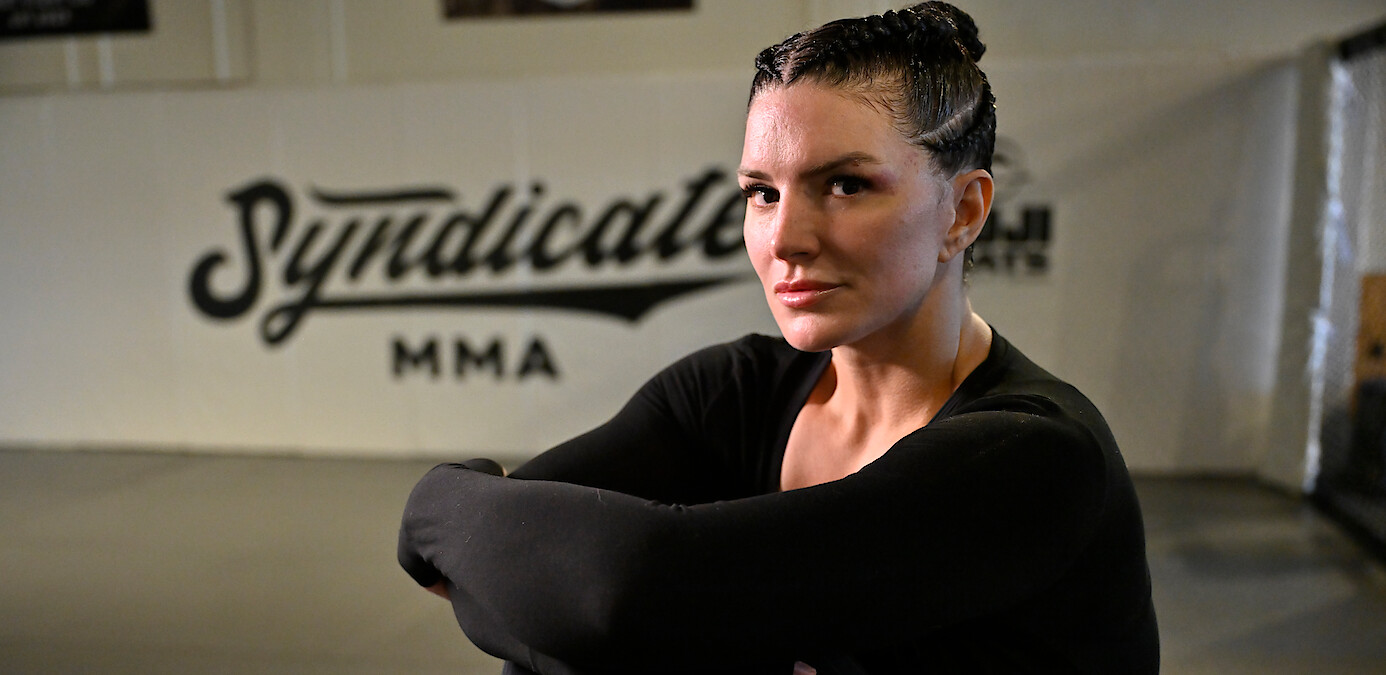
She trains in a friend’s garage in Las Vegas, though “garage” feels like a misnomer, as the space no longer resembles anything built for cars. It’s been converted into a kind of private proving ground: padded floors, stacked weights, a full cage occupying the center like an altar. The air is thick with the residue of effort, heat rising off the mats, and the faint metallic tang of equipment. Occasionally, the sound of Rousey’s fist hitting training pads cracks through the air like a whip.
Rousey moves through the space for the first half of the day with precision — drilling, grappling with trainer Ricky Lundell, resetting. The rhythm is punishing and exact, but not joyless; laughter cuts through at regular intervals, unexpected and easy, as if the work no longer requires the same kind of suffering it once did.
This is the level Rousey operates on now; she’s become the kind of athlete whose training camp doubles as a gravitational pull. At one point, the R&B singer Kehlani stops by, briefly crossing into Rousey’s world. Rousey shows her how to fall — not theatrically or for show, but the right way: how to absorb impact, how to meet the ground without panic. Though it looks like a lesson, it feels more like a philosophy. Gravity is not the enemy, if you know what you’re doing.

Rousey disappears when training is over, then reappears in a bikini, holding an ice water and a sandwich so large it reads almost like a joke. She eats quickly, without self-consciousness, then moves on: 220-degree dry sauna; 10 minutes submerged in a cold plunge; the sealed, pressurized quiet of a hyperbaric chamber.
The work here isn’t just what happens inside the cage. It’s the discipline of coming back from it.
“I can still train as hard as I’ve ever trained,” she tells Tudum. “But then the next day I’m so sore that I can’t move.”
There was a time when Rousey’s body seemed to operate without consequence, an engine built for acceleration, not maintenance. The fights were quick, often shockingly so, and opponents were dispatched in seconds, sometimes before the narrative could catch up to what was happening in the cage. Dominance became not just a pattern but an expectation. That expectation, eventually, calcified into something heavier.
“I think before, everything was about accomplishment,” she says. “I have to get certain things done, and the world is on my shoulders.”
The version of Rousey that lived under that strain is the one most people remember: the woman who arm-barred her way through an entire division in minutes, sometimes seconds, who carried Olympic pedigree into a sport that had barely made room for women at all. She became the first female champion in the Ultimate Fighting Championship, headlined cards once unthinkable for women, and turned dominance into spectacle. More than that, she became proof that women’s fighting could do more than just exist; it could command attention.
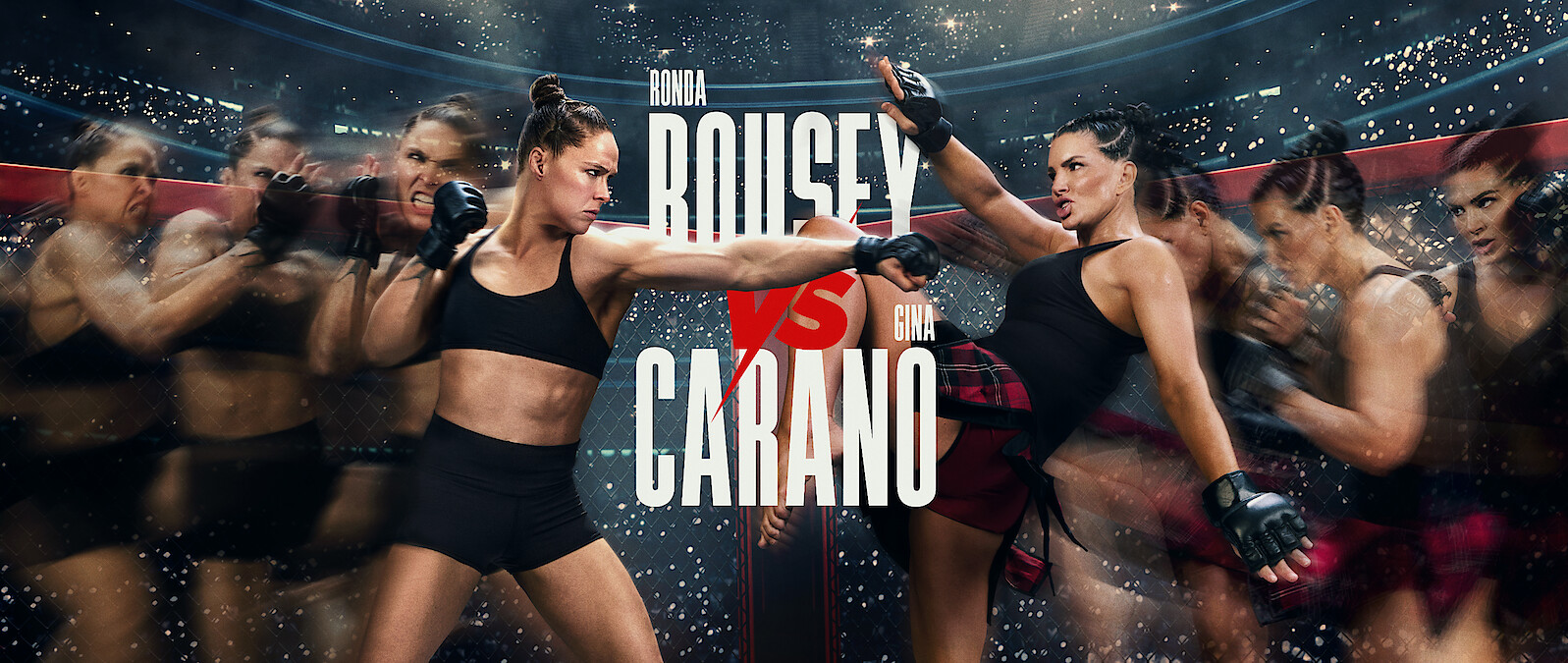
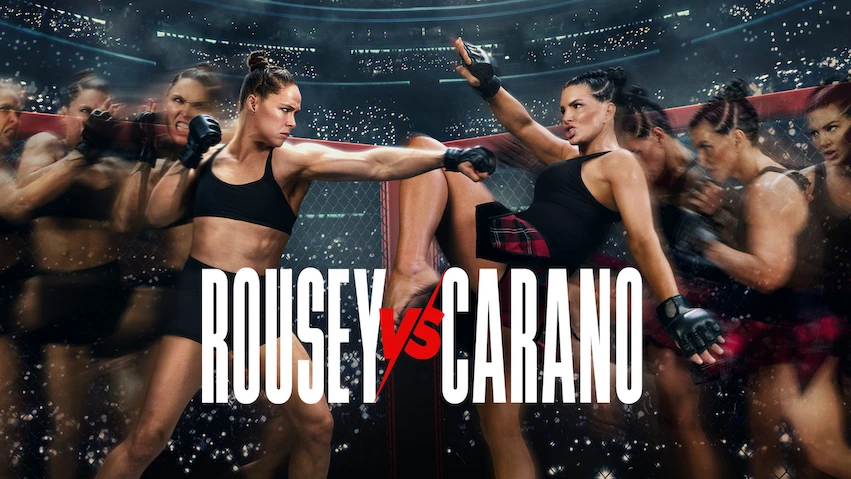
But that kind of dominance is difficult to sustain. It leaves no room for pause, for doubt, for anything that might complicate the story. Rousey’s return — against Gina Carano, streaming live on Netflix on May 16 — is not a continuation of that story, but its evolution.

“I’m starting new,” Rousey says. “I’m taking everything that I’ve learned and I’m doing it better this time around.”
For years, Rousey subscribed to a logic that is both familiar and, in retrospect, punishing: that suffering was a prerequisite for greatness. To be taken seriously, especially as a woman in a sport that was not built for women, you had to outwork, outlast, out-endure — and not just your opponents, but yourself.
“I felt like I had to suffer in order to be the best,” she says. Then, almost as if correcting a miscalculation she carried for years: “And now I’m realizing that it’s quite the opposite. I need to find my place of joy in order to be the best.”
Joy is not a word that fits easily into the mythology of combat sports. It disrupts the narrative. It suggests something lighter, less disciplined, less severe. But in Rousey’s telling, it is neither indulgent nor optional. It is structural.
This training camp, she says, has been built around it.
“We’ve really put so much emphasis on joy and healing. … Every single day there’s nothing but positivity coming from every direction.”

The effect is not softness but clarity. Rousey has reoriented her efforts away from obligation and toward desire.
“I think just a lot of times I was fighting because of reasons other than I wanted to,” she says. “And this time it’s come entirely from me and from what I want and what I love and what I enjoy.”
What makes this shift particularly striking is how it reframes something central to Rousey’s legacy: pressure. There was a time when pressure functioned as a kind of fuel. She thrived under it, performed through it, sharpened herself against it. But over time, she says, it became something else.
“I felt like I kind of needed that pressure before. … But I think I’m starting to realize that I do really well under pressure in the short term, and in the long term it taxes me and breaks me down.” Now, she says, her work feels more like exhilaration, like a promise of something new on her terms.
“It’s more that I have everything to gain,” Rousey says.
For all the ways Rousey insists she has changed, there is something in her that remains entirely intact.
“People only see a tiny little sliver. … What happens in a fight is a tiny little fraction of what I’m capable of,” she says. Then, with a flash of something unmistakable: “But man, I am so fucking good. I am so fucking good at this.”
What emerges is a private understanding of expertise that doesn’t depend on being witnessed.
“That joy of mastery … it’s something that they’re never going to understand,” she says. “And I’m so lucky because I’m the only one that’s ever really going to truly know.”
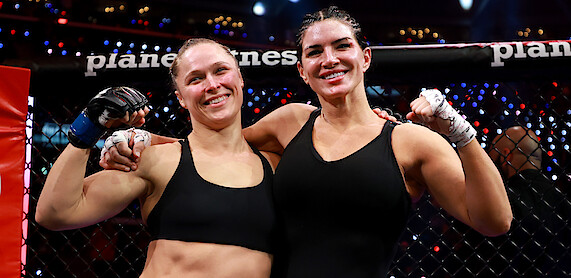
The matchup with Gina Carano carries a kind of long-circulating mythology: two fighters who helped define what women’s MMA could look like, finally meeting in a moment that feels both overdue and newly urgent. Rousey has long described Carano as a formative influence, someone who made the sport feel legitimate before it fully was, and whose striking-heavy, forward style still stands in contrast to Rousey’s judo-based precision. That variety, Rousey believes, is part of what’s been lost as the sport has evolved: a flattening of style, a hesitation to take risks. This fight, in her telling, is a return to something more elemental. And it’s not a coincidence that this fight is also unfolding on a different kind of stage — one that reflects how far women’s fighting has moved beyond needing to justify itself.

The relationship between the two fighters is also, unmistakably, built on a respect that doesn’t soften what happens inside the cage.
“The most respectful thing I can do is try to literally kill Gina Carano with my bare hands,” Rousey says, before adding, “I won’t do it because there’s a referee there.” To hold back, she insists, would be the real insult. “I feel like giving her anything other than my best is an insult. I can just hit a switch and turn it on … and then afterward high-five, ‘Let’s go get a drink.’ ”
Ultimately, what distinguishes this version of Ronda Rousey is not a reinvention so much as a loosening of the need to control how she is understood, or remembered, or received.
“I don’t really care what people think about me,” she says. “I think it’s about myself and my own experience.”
For years, that experience was inseparable from the pressure to make meaning out of every moment inside the cage. What remains now is something both simpler and harder to manufacture: the internal drive that doesn’t depend on outcome or approval.

Call it instinct. Call it discipline. Or, as she does, call it gumption, the one word she uses to define her career. It’s the kind of shift that feels, in its own quiet way, like progress — not just for her, but for what women in this sport are now allowed to claim for themselves.
When Rousey talks about the moment before a fight — the walkout, the call, the narrowing of everything into something immediate — she doesn’t describe fear so much as recognition.
“You never feel more alive than in that moment,” she says.
She has felt it before. But this time, she is arriving without the weight.
“I miss this and I enjoy this and I love this,” she says. “And I’m so glad I get to experience this again one last time.”