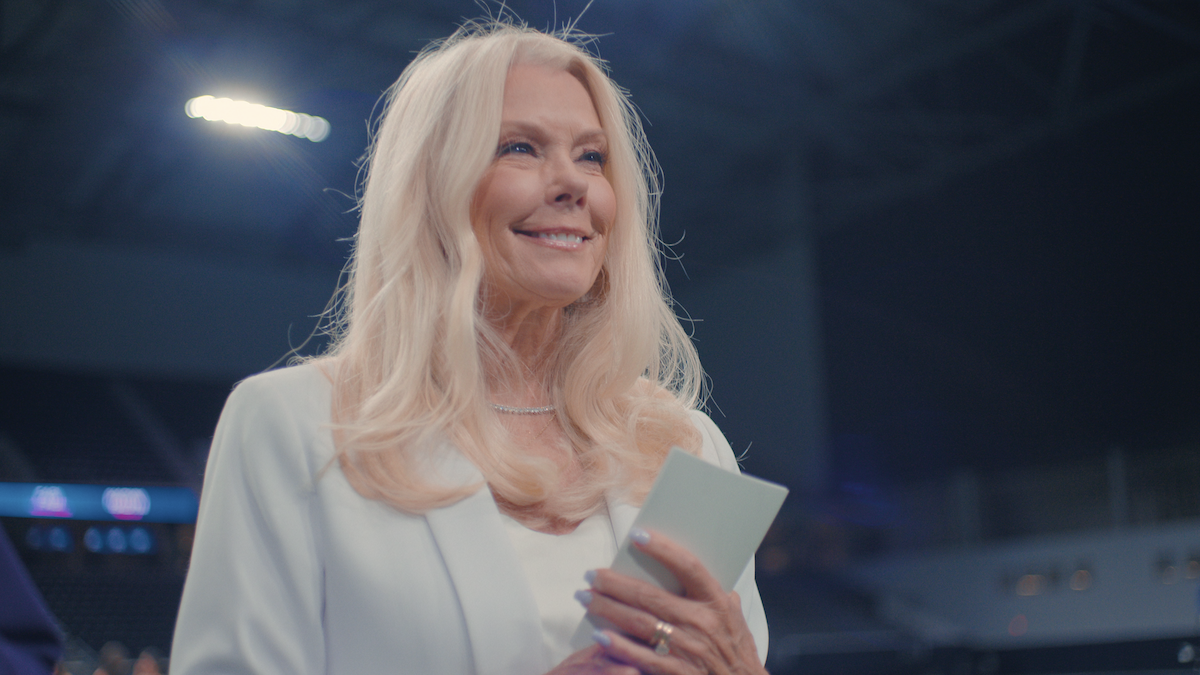
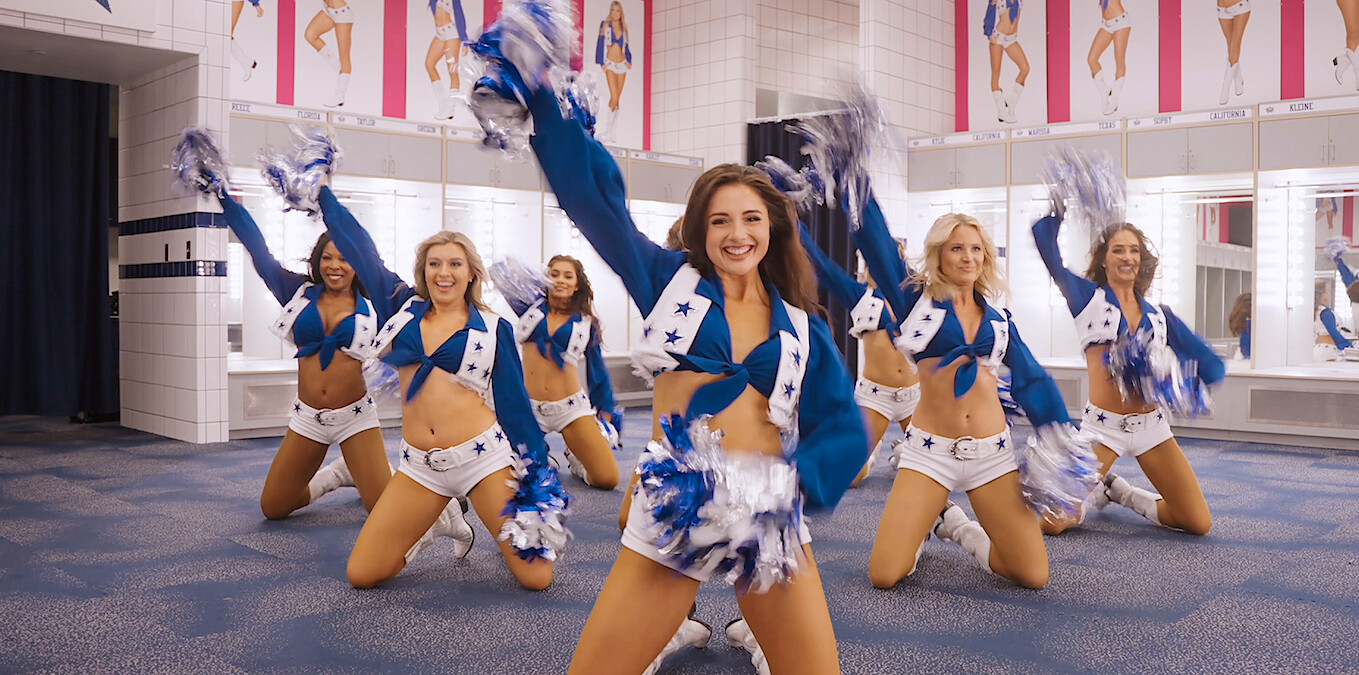
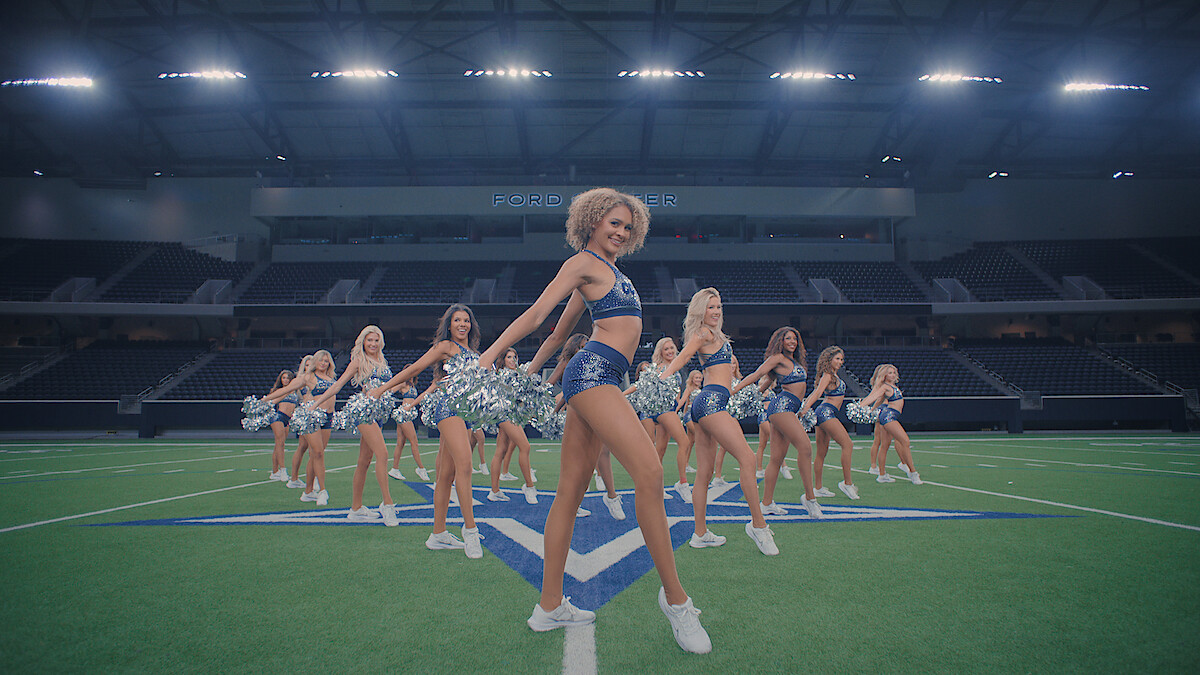
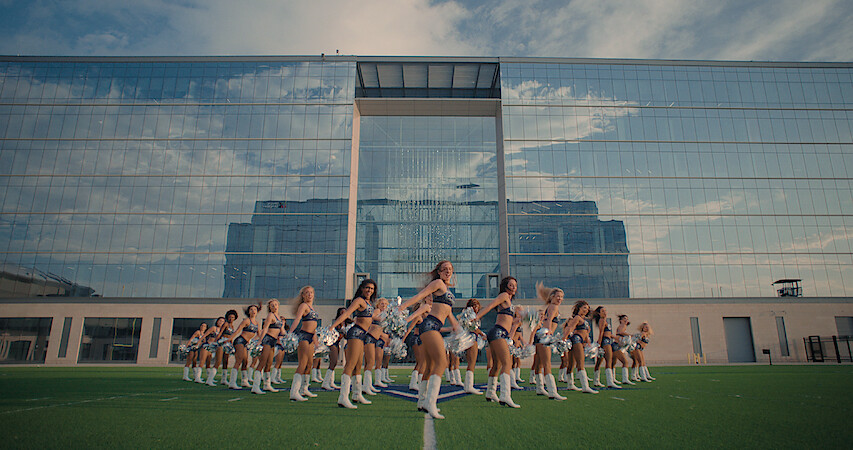
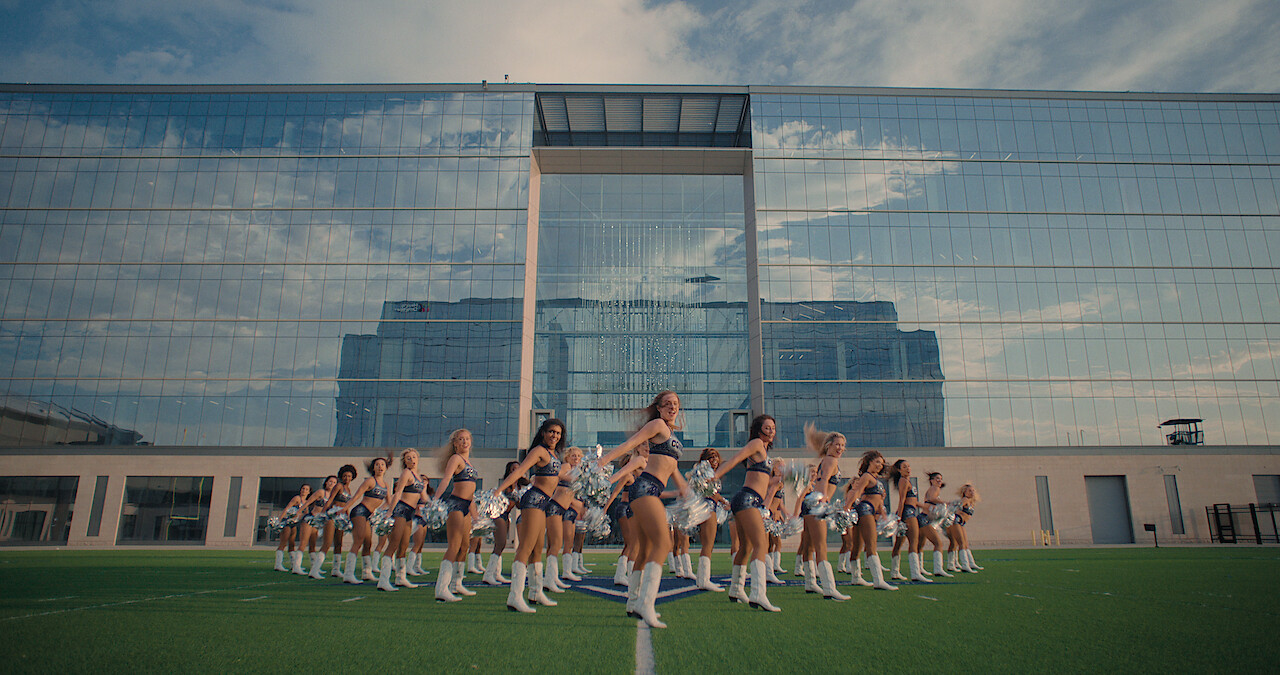
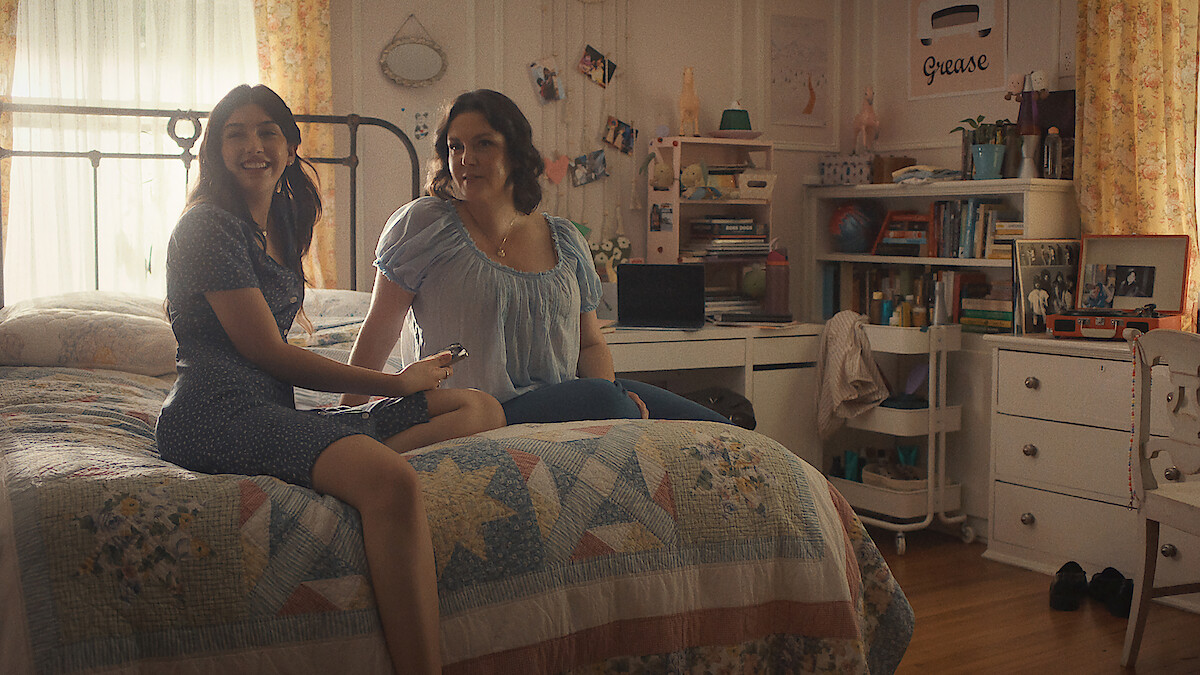
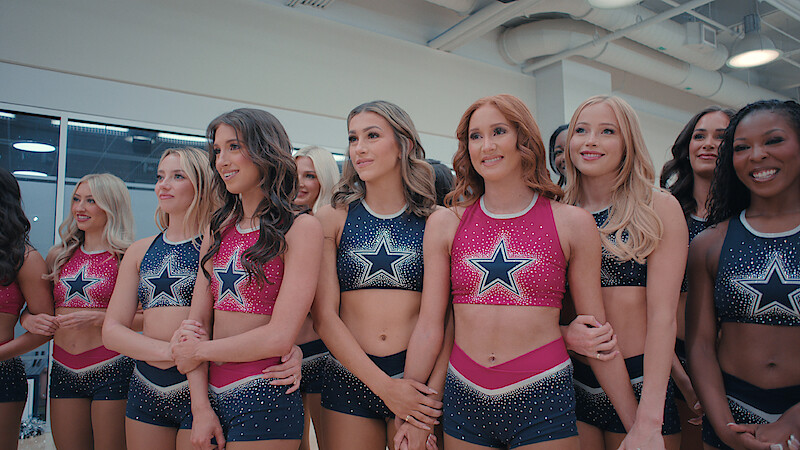
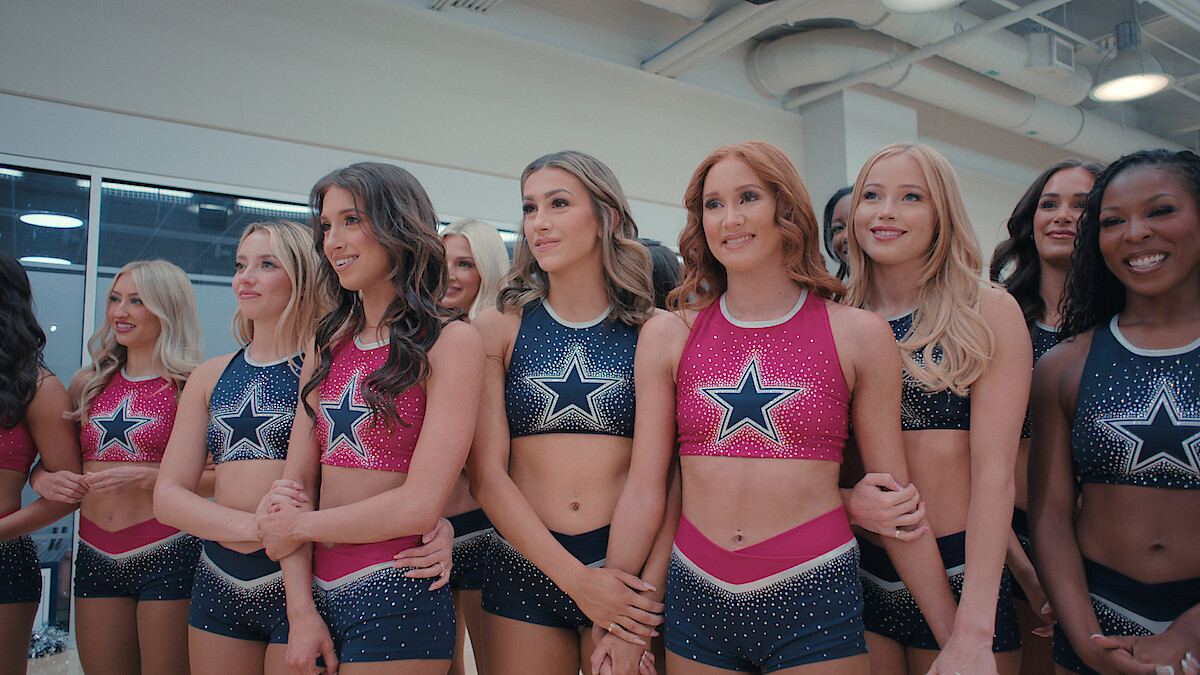
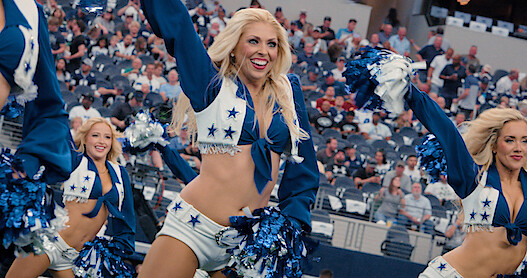
Kelli Finglass’ voice is the first one you hear in America’s Sweethearts: Dallas Cowboys Cheerleaders Season 1, the now-beloved sports series by Cheer director and executive producer Greg Whiteley. It’s not her inside voice, either — like she’s done countless times before, the longtime director of the squad is corralling her team backstage before a halftime show.
“OK y’all, are we ready?” Finglass shouts from offscreen. “Yes ma’am,” the group dutifully answers. “OK, listen up!” Finglass says, increasing her volume by just the right number of decibels to let you know she means business. Her tone implies that what’s coming could be a series of last-minute corrections or a full-blown dressing down. But then her voice softens.
“I just want to remind y’all that you are known as world-famous, the best in the business … how hard y’all worked to get here. You’re gonna perform like you practice. Let’s do it.”
That voice — and that leadership style — are just as present in America’s Sweethearts: Dallas Cowboys Cheerleaders Season 2, now streaming on Netflix. In fact, the new episodes reveal even more of Finglass in action: delivering tough truths, hyping up her dancers, and reflecting on what it takes to lead a team that performs under the brightest lights.
It perfectly sums up Finglass as a coach and mentor, which she has been for the Dallas Cowboys Cheerleaders for 35 years. She’s not going to mince words, but if you listen carefully, you might like what you hear. Right alongside her is a quieter voice — and an equally authoritative presence. Judy Trammell, the team’s head choreographer for the past four decades, is just as vital. A former DCC herself in the early ’80s, Trammell brings a deep passion for dance — but she’s never been in it for the spotlight.
“Kelli knows — when she even met me, I was very shy. I didn’t want to ever be in the spotlight. I just wanted to be behind the scenes. I was very quiet … But quiet people can be quiet leaders and still do the job well,” Trammell tells Tudum. “I am a different person when I’m in front of the squad, and I need to command the room. That’s just second nature to me.” Season 2 explores that side of the reserved choreographer and how her life experiences inform how she leads.
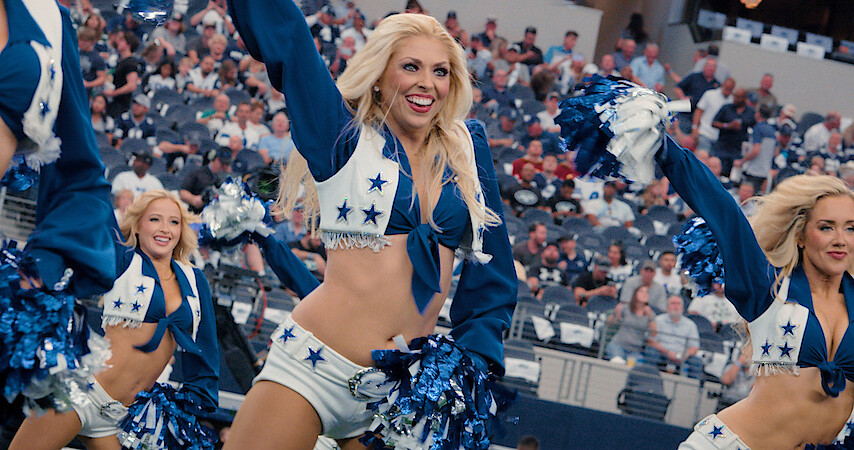
Together, the two make sure the high kicks are sharp and each dancer’s look is flawless — down to the inseam of those pristinely white hotpants. Of course, America’s Sweethearts isn’t the first time Finglass and Trammell have opened up the world of the DCC — fans will remember Country Music Television’s Dallas Cowboys Cheerleaders: Making the Team. Structured more like a reality show than a doc series, it focused primarily on the squad’s ruthless tryouts. Whiteley’s America’s Sweethearts gets to the heart of that process (and yes, it’s still cutthroat) while going deeper into the lives of those vying to make the team.
Ahead of Season 2, Finglass and Trammell sat down to discuss how the Dallas Cowboys Cheerleaders have evolved since they each were on the team, the tough lessons they’ve learned as coaches, and how America’s Sweethearts captures a cheerleader story that’s never been told.
To get us started, what’s the most common question you’re asked about DCC?
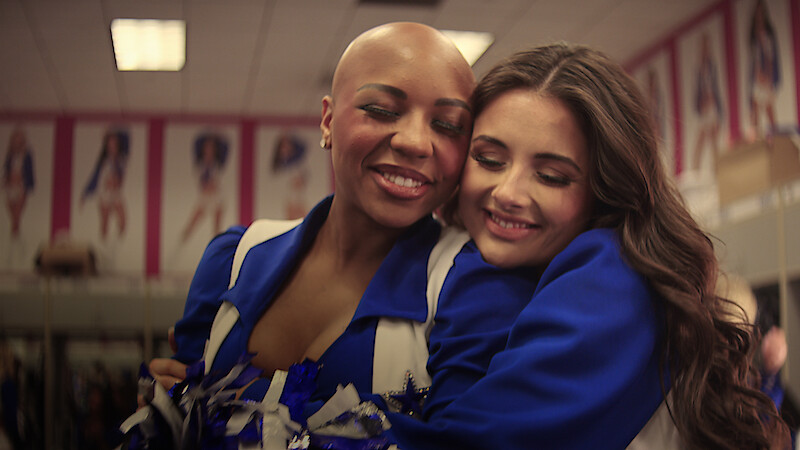
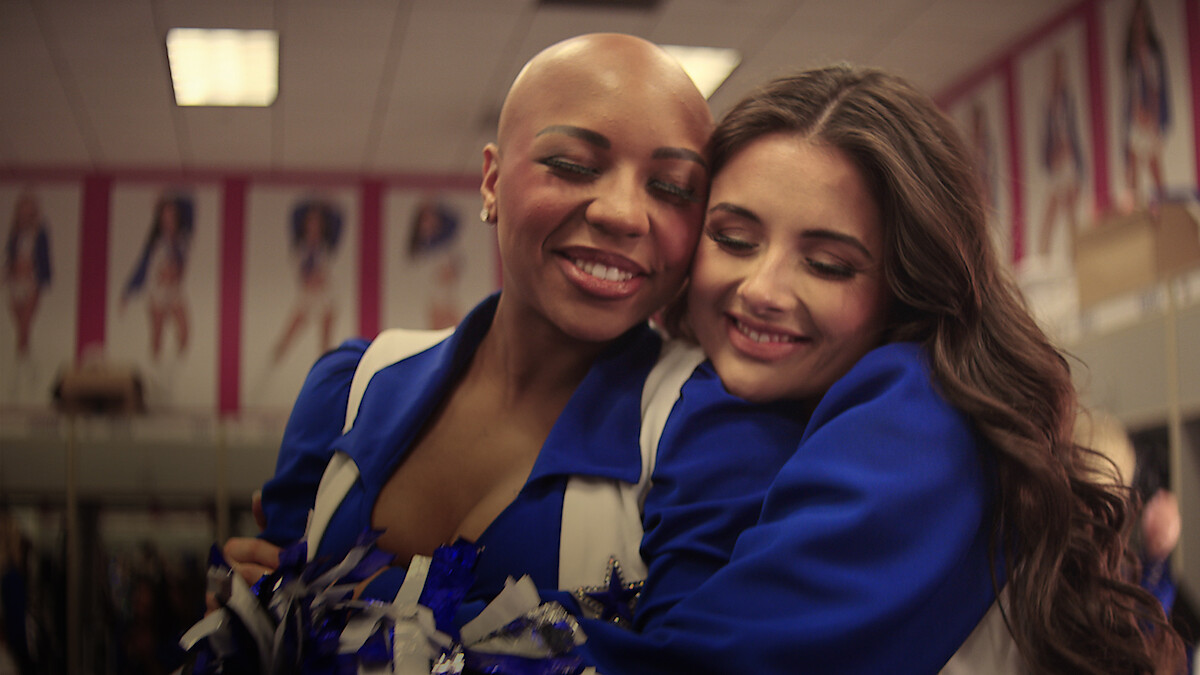
Kelli Finglass: “Do the girls really get along? Are they really friends inside the locker room?” The common answer to that is, yes, they become very, very close friends. Many of them don’t know each other at the [beginning of] the audition process — they survive the battle of training camp together and become close friends. We usually have four or five weddings a year, then they all become bridesmaids, and the next thing you see are all the baby showers. And I’m living proof; I’m very close to my rookie friends. In fact, several of them were at my daughter’s wedding. It [goes] beyond their experiences as a cheerleader … the friendships get stronger once we all grow into families, careers, and real-life situations.
Judy Trammell: Everybody thinks there are catfights going on and disagreements, but they truly are sisters and enjoy each other's friendships.
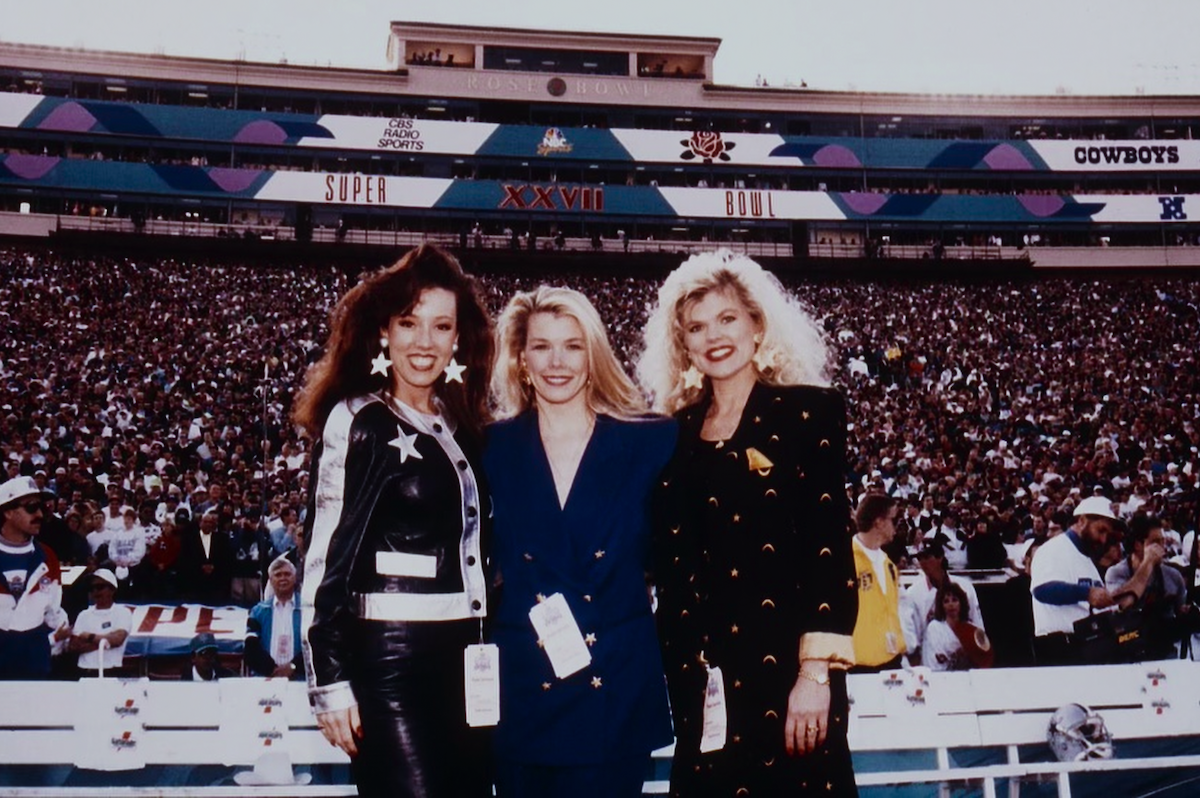
Kelli Finglass, Judy Trammell, and Tina Kalina pose for a photo at Super Bowl XXVII.
You were both Dallas Cowboys Cheerleaders in the ’80s. How has the team changed since then?
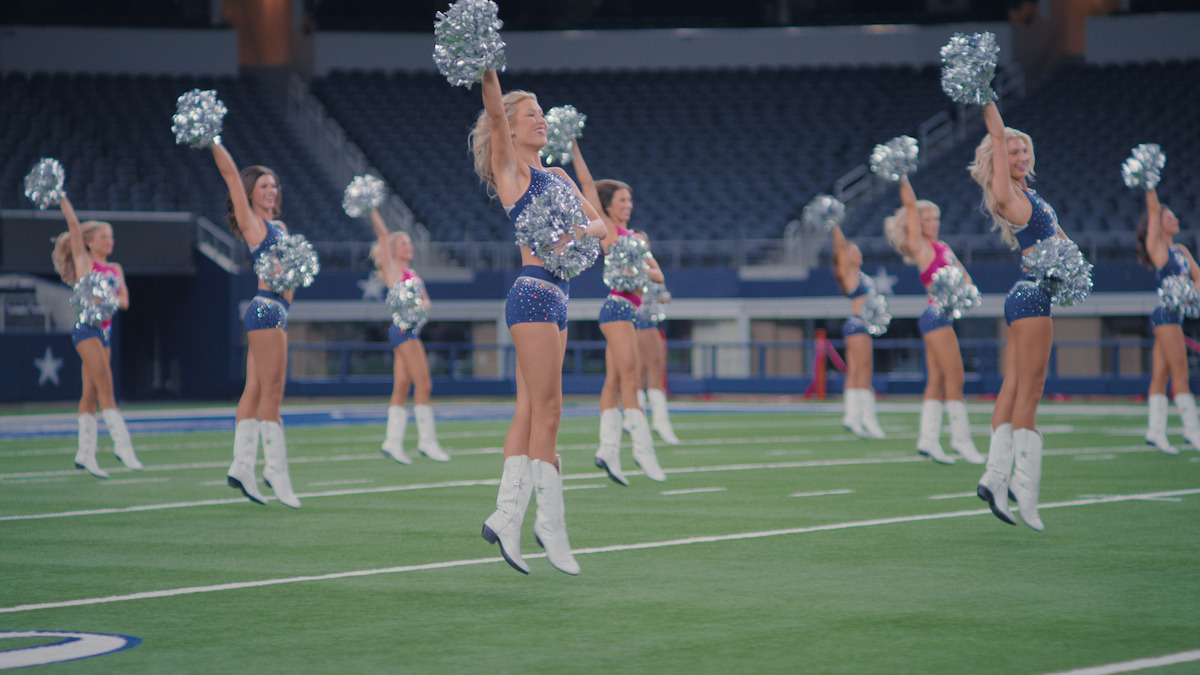
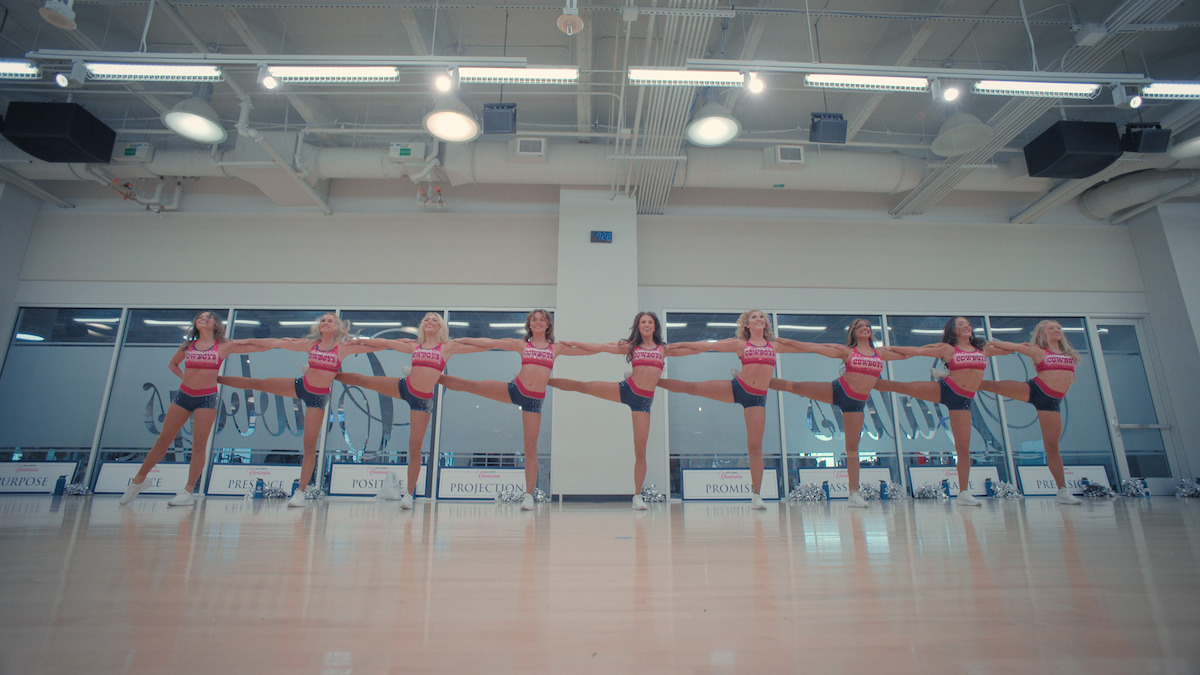
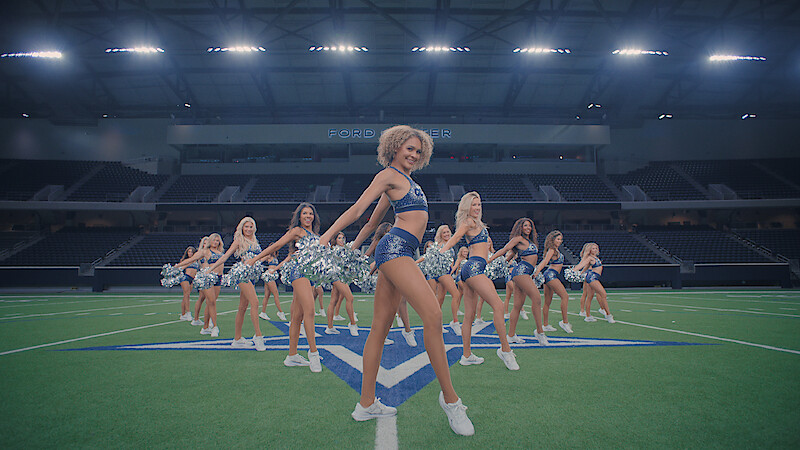
Trammell: The talent has gotten better and better and better each year, which has challenged me to make sure that we are trending on the dances and everything is the best it can be. They’re just so good now. Back in our days, if we had one or two real dancers, we were like, “Wow, they’re so good." But now we’ve got 36 very talented young women. It makes my job more fun and more challenging because we can do a lot more with their performances now. We just added a new hip-hop piece, and you wouldn’t even know that these are the same girls that then do [AC/DC’s] “Thunderstruck” so beautifully. We can do so many more types of dancing now.
Finglass: There are some things that have not changed, from our USO tours to our hospital and senior center visits. The mission part of our organization has stayed the same. Where we have changed is, we’re now in the TV business. And as of a couple of weeks ago, we’re in the live stage show business, and we always try to stay relevant and current with choreography and music. But at the same time, there are some things — the audition process that people see on TV now, our end-of-year banquet, the friendships and relationships — you could plop right back into 1980-something, and it’d feel the same.
Judy, you’ve been the lead choreographer for four decades — an impressive feat. How do you feel you’ve evolved as a leader through that change?
Trammell: I think I’m a lot more understanding. I’ve been through every part of life with my family that [the cheerleaders] are now going through. I have three children and my daughter cheered, and now I’m a grandmother. So I empathize with different things and want to show them a lot more love, just like I would want for my kids.
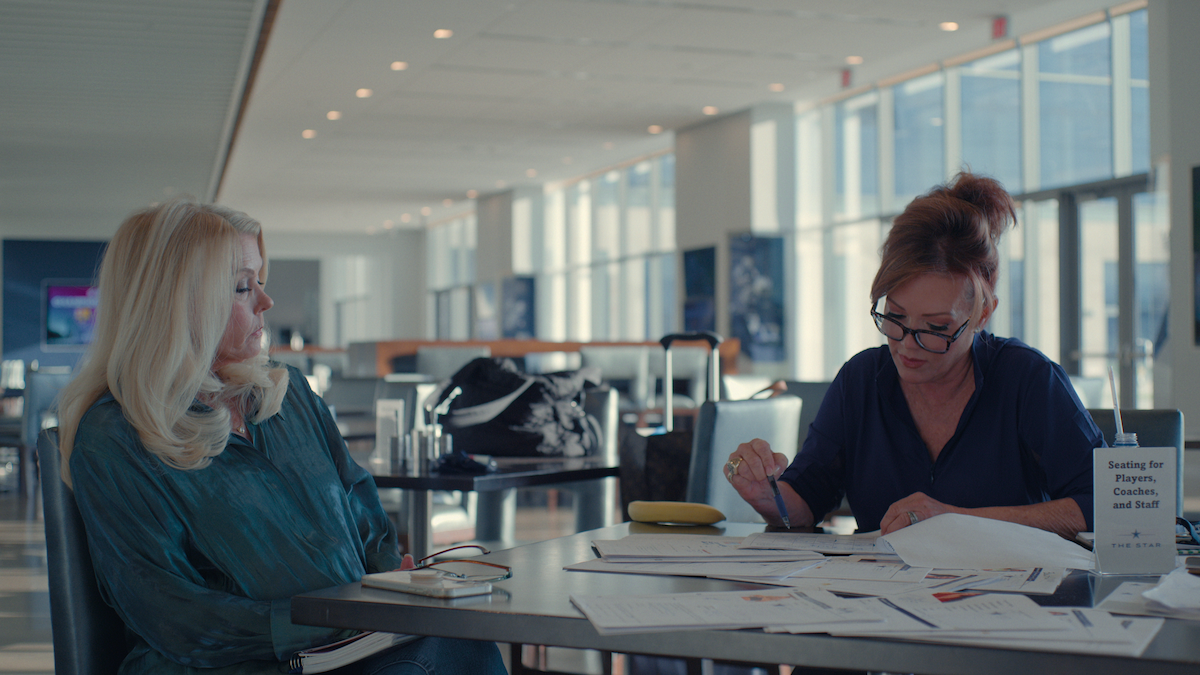
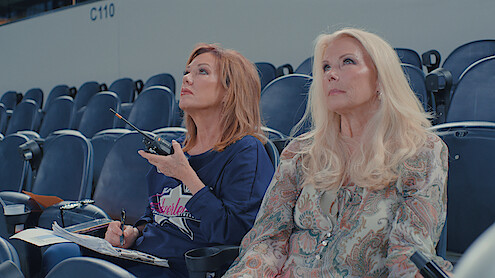
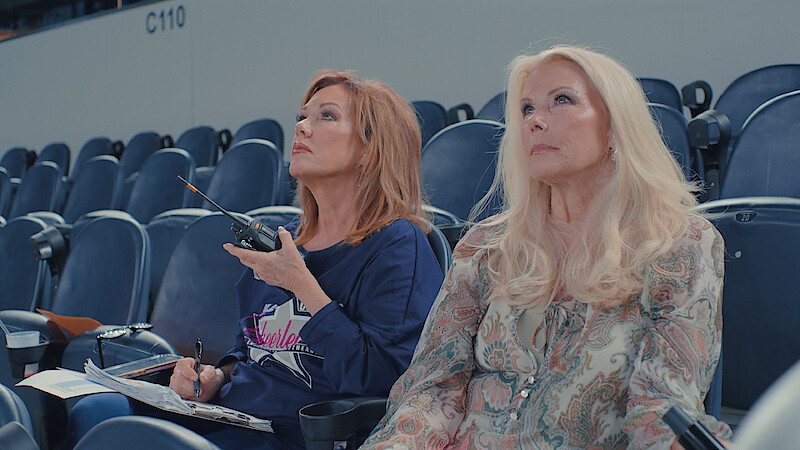
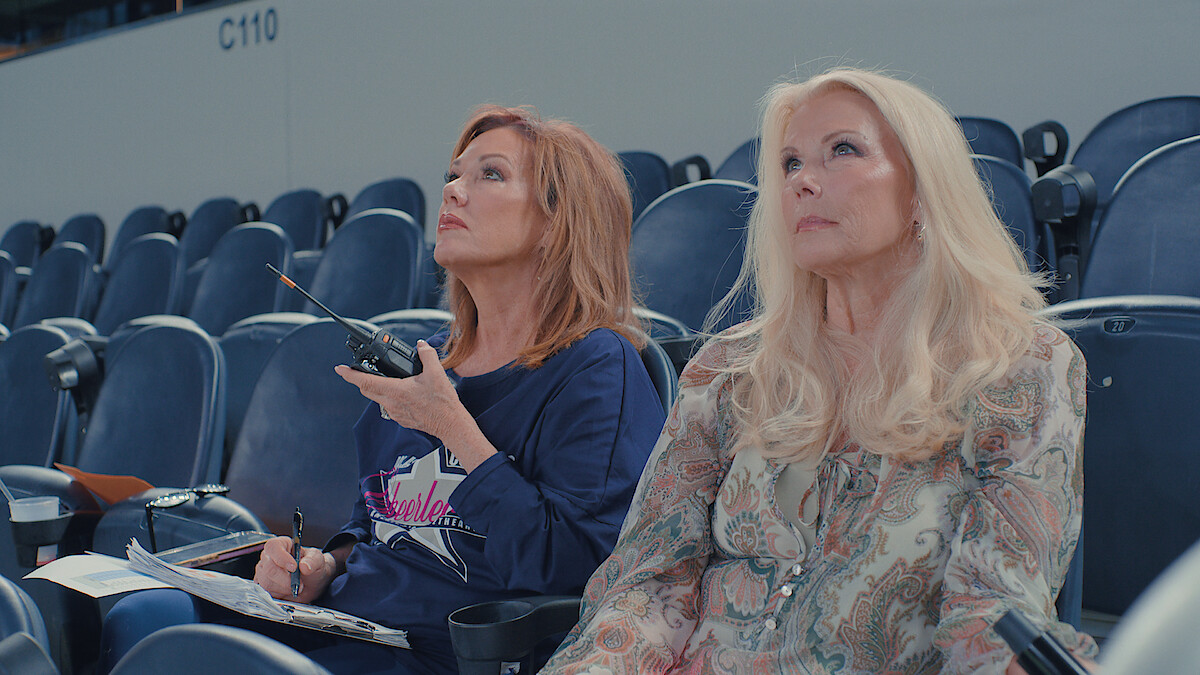
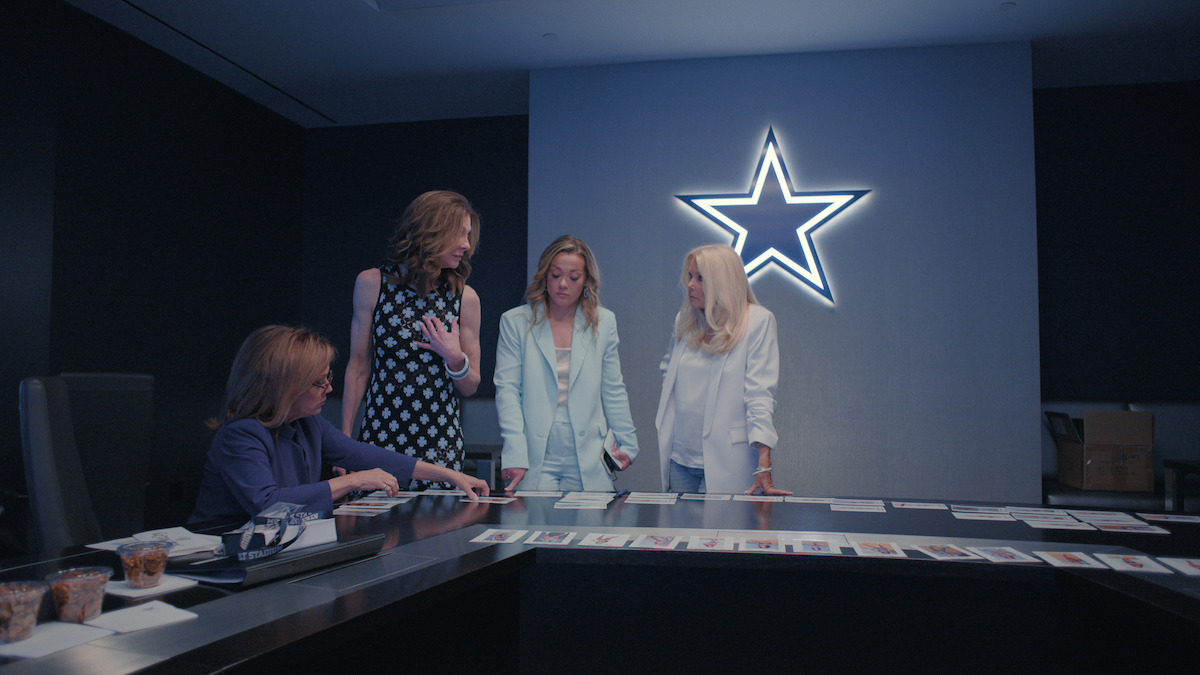
Trammell and Finglass discussing who they’ll be bringing onto the team — and who they’ll be cutting.
DCC has a huge audience and with that comes plenty of criticism. One criticism that might come up is how you play into the idea of an idealized or “perfect” woman. But, has your idea of what that perfect woman or the perfect Dallas Cowboys Cheerleader looks like evolved over the years?
Finglass: Yes. My viewpoint has evolved, much like Judy described. I was 27 years old and straight out of my own boots and poms when I became director, and I was ruthless because I was kind of an overachiever myself. Now we are both mothers, and we’ve seen the lives of the girls — their stories, them overcoming adversity, and sensitive moments — through Netflix. I built a whole career trying to present flawlessness, and now it’s almost like their flaws are what make them so beautiful. They have these beautiful stories that hopefully give somebody inspiration, or they can identify with an Armani or a Jada or a Kelly or a Charly or a Reece. It’s those very unique stories that make them so memorable, approachable, and hopefully, inspiring. Now, being the perfect cheerleader is to not be perfect and not be afraid to admit it.
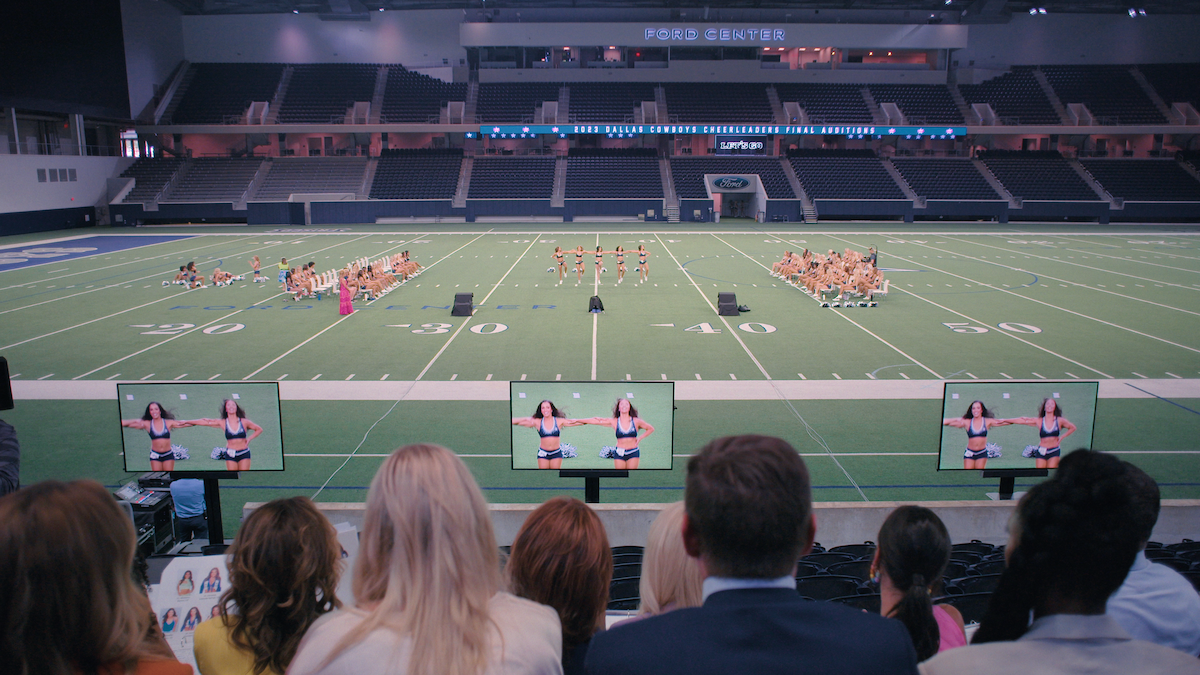
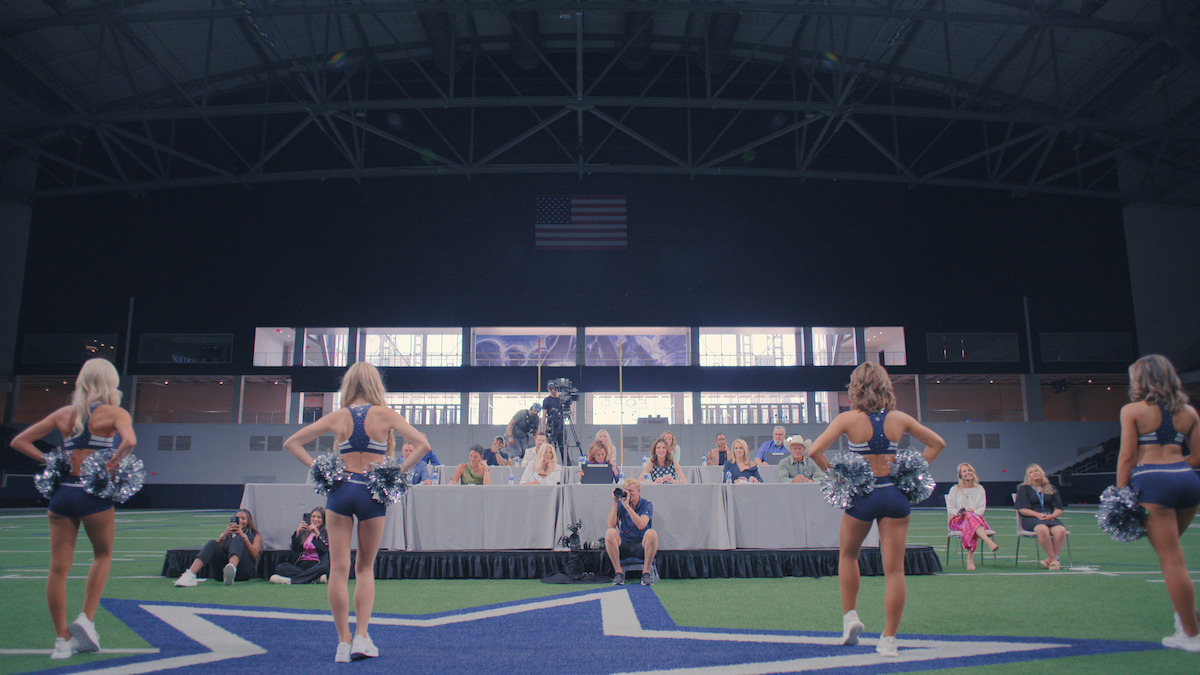
On-field tryouts are part of the DCC evaluation process.
Following Season 1, the cheerleaders’ pay became a huge topic of conversation among viewers, and it plays a major role in the arc of Season 2. Did your views on how the cheerleaders should be compensated change after seeing those conversations? How do you feel now about the raises they were able to get at the end of the season?
Finglass: I think the elevated talent and the elevated visibility gave all of us a reason to reframe it. We work on program enhancements every year, and that could be from wardrobe to music to, of course, in this particular case, compensation. But yeah, I think when you see that these are world-class dancers and their time commitment is a much larger time commitment than when we were cheerleaders, it all makes sense, and thank goodness it made sense. Everybody wanted the same thing and now our dancers are happy with our new program enhancements, and that makes us happy as coaches.
You both put pressure on the cheerleaders to perform at a certain level of excellence, but they also put a tremendous amount of pressure on themselves. How do you advise them to handle this kind of pressure while also pushing them to perform at their peak?
Trammell: I think they come to us as women who excel in everything they do, and they want to be their best at all times. They were the captains of their college teams and their drill teams in high school. Most of them are college graduates with really great degrees. It’s something we’re really proud of and respect, and they come to us wanting to be their best at all times.
Finglass: Judy and I do our best to prepare them for every situation that could come at them in a football game or a live show. And by helping prepare them, that gives them confidence, and then they perform at their best, and hopefully, can stay calm under pressure. Our Netflix Jake Paul vs. Mike Tyson performance was probably one of the most dynamic live performances — far different from any football game or any stage we’ve ever been on — and it took great focus and great preparation, but it’s also fun. I think the girls like the challenge.
What about your own teachable moments during your years of coaching? Have you had times when you’ve taken a step back and realized you were too hard on someone?
Finglass: There have been times when I may say things too quickly in the moment, and then I’ve thought back that maybe that wasn’t the best time [to say it]. I have followed back up with some cheerleaders privately and apologized a couple of times. We’re coaches, and we’re under pressure too, and we say things, but we do have to be very aware that they can fall on tired or sensitive or vulnerable moments. So we do the best we can, and we’re still learning.
Watch Season 2 of America’s Sweethearts: Dallas Cowboys Cheerleaders on Netflix.