This article contains major character or plot details.
Sometimes in a love story, you find someone who loves you, not despite all of your baggage, but because of it. That’s what American expat Jess Salmon (Megan Stalter) tells Felix Remen (Will Sharpe), the man she realizes she can’t live without, as their hands are glued to the ground in the climactic finale of Too Much.
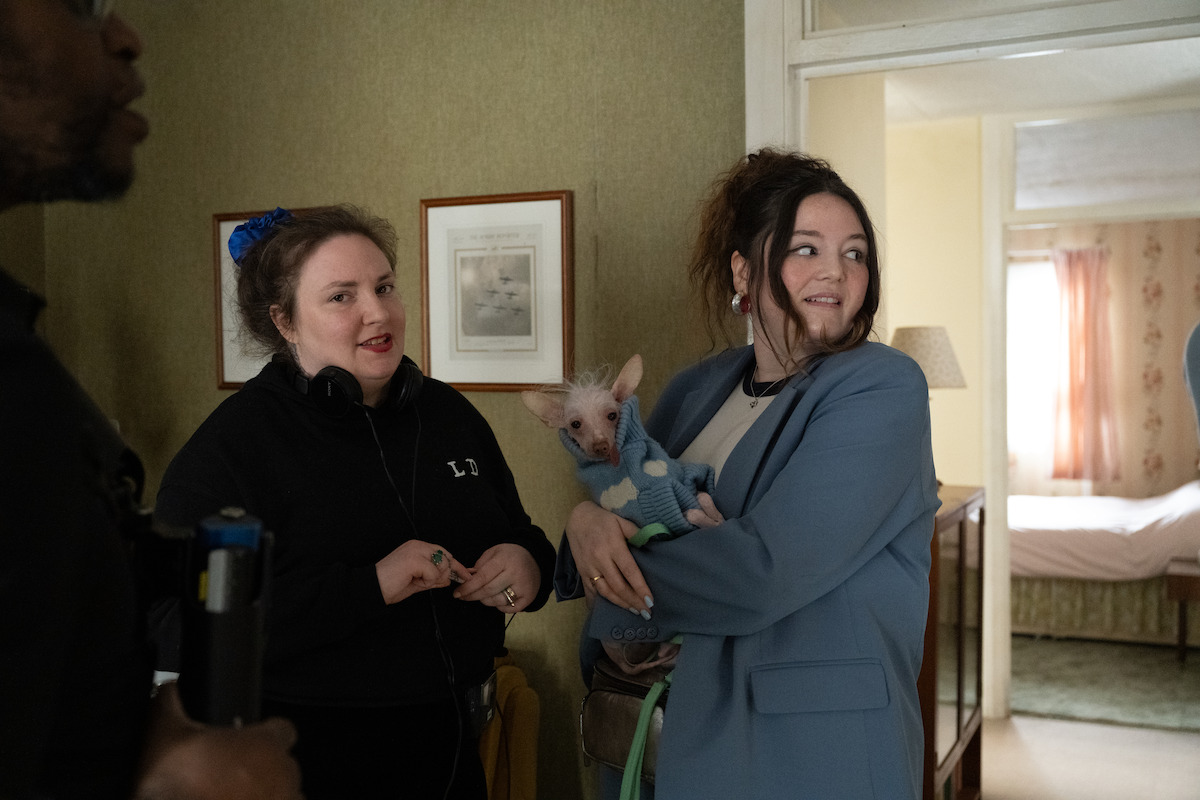
Lena Dunham (Girls) created Too Much based in part on her experiences of moving to the UK and meeting musician Luis Felber, whom she married in 2021 (Felber is also the series’ co-creator). Dunham had really wanted to write something about the experience of being a foreigner, “and the fantasies we have of it versus the realities,” she tells Tudum. “Then when I met my husband, Luis, I felt like I was experiencing all of that, but then also in the context of a relationship.”
The series’ finale is a reminder to both Jess and Felix that they’re not too much — for themselves or for each other. Like Felix says in Episode 9, “If you’re damaged in exactly the right way, sometimes you fit perfectly with someone.”
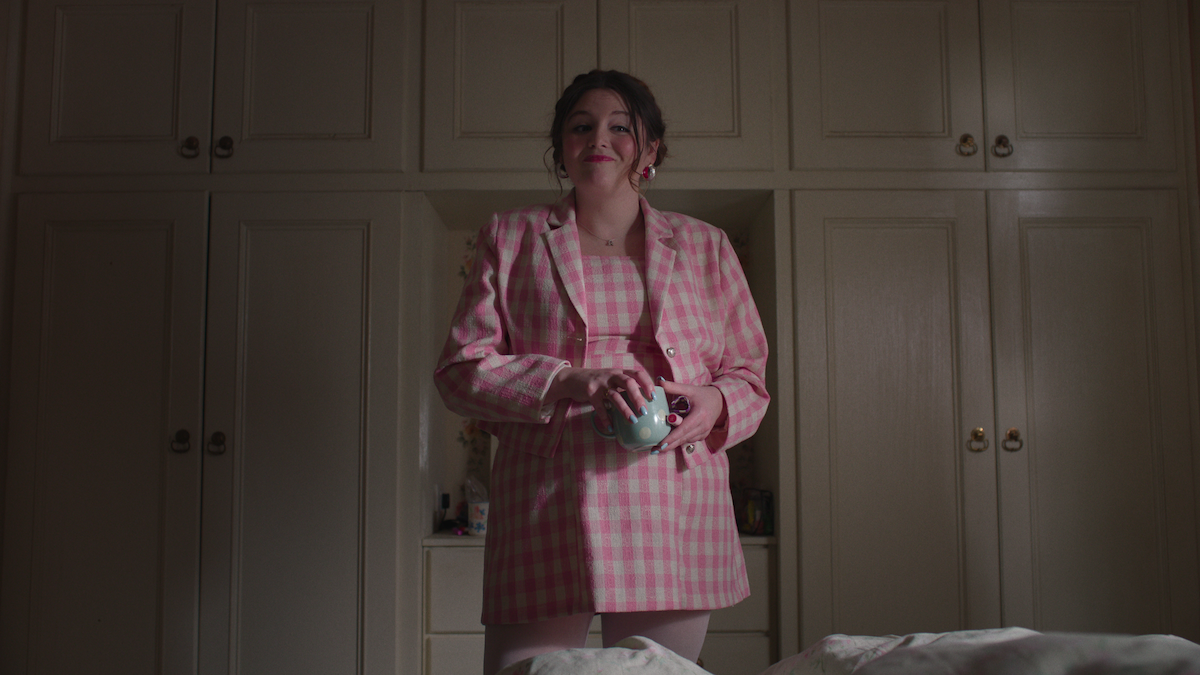
At the beginning of the series, Jess arrives in London fresh off a brutal breakup with her boyfriend of seven years, Zev (Michael Zegen), who’s immediately started dating knitting influencer Wendy Jones (Emily Ratajkowski). Jess struggles to let go of her pain and records, but never sends, private videos chronicling her ups and downs, all addressed to Wendy. To Jess’s surprise, on her first night in London she meets alt-rock musician Felix. As they quickly fall in love (and move in together), he reveals the pain he’s been masking, the result of parental neglect and childhood sexual abuse, and the feelings he’s numbed with drugs and alcohol over the years.
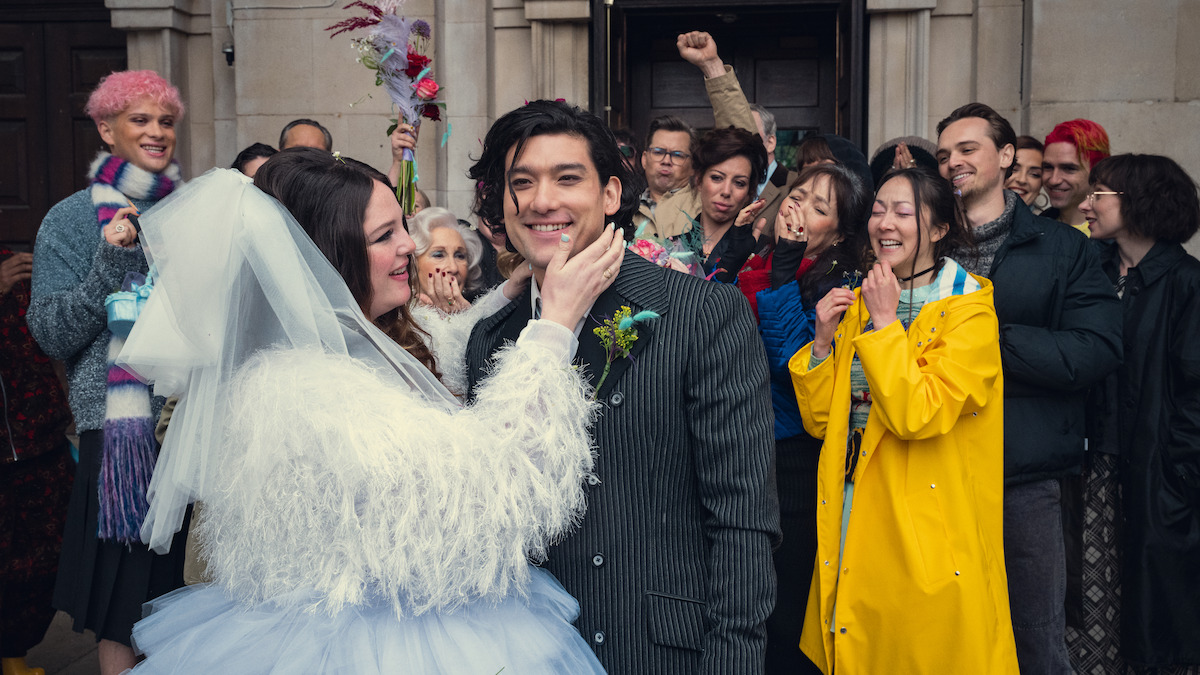
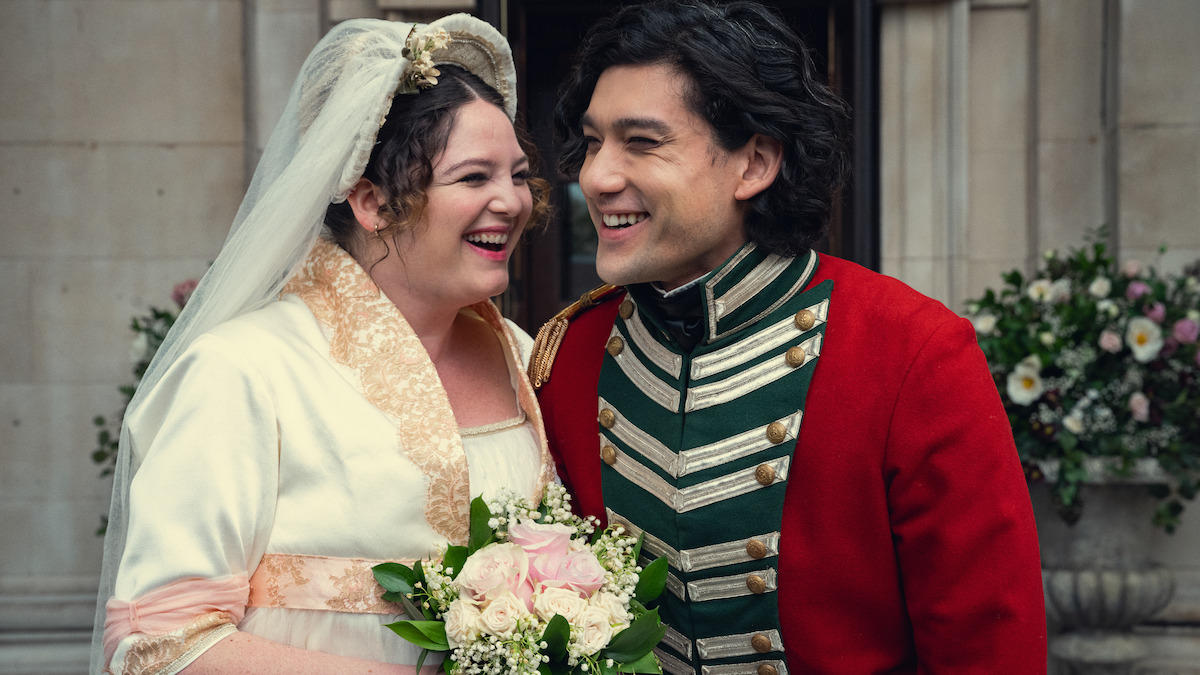
Felix and Jess both self-sabotage their relationship, each scared of losing a person they’ve let actually see them — but they end the season married at a courthouse, surrounded by their loved ones, as shown in an ethereal film montage of memories from the day. As they walk out and let the sun shine on their well of love, Felix asks Jess how long she wants to stay married. She implores him to say he’s kidding (he does). The series is, on the surface, a rom-com. A grand love despite the odds, with a happy ending … right?
Below, Dunham, Stalter, and Sharpe talk about both subverting and paying homage to the beauty and hopefulness of rom-coms in the Too Much finale.
Is Too Much a rom-com?
As a filmmaker, Dunham loves to take a genre we think we understand and turn it on its head. Too Much is assuredly in the vein of a rom-com, a form that struck her as particularly ripe for exploration. It’s also the genre that made Dunham want to make television and movies. Think Nora Ephron, Mike Nichols, Nancy Meyers, Elaine May, Penny Marshall. “I remember watching them all and feeling like they were made just for me,” she says. “They were aspirational, but there was also just a grain of honesty about what it is to be a woman and navigate the world.”
Stalter is of the mind that Too Much is a rom-com, but sort of subverted in that “sometimes you think something’s going to happen that comes out a little bit awkward, where there’s a funny twist on it,” she says. She thinks back on movies like Bridget Jones’s Diary (2001), which embodies the rom-com ethos of being really romantic and also really funny. “They just make you feel really good, and that sort of movie brings you a certain hope,” she says. “I love [Too Much] because it shows when you fall in love, it can be awkward and embarrassing.”
Unlike a typical rom-com scenario in which “she works too much, and he’s a little bit of a nerd,” Dunham wanted to layer in the real-life challenges and baggage that people experience as they try to fall in love in their 30s. “You just have this trail of complexity behind you, and when you react to the person that you’re falling in love with, you’re not just reacting to them — you’re reacting to everybody and everything that’s come before them.”
Sharpe recalls that in one of his earliest conversations with Dunham, they discussed the notion of baggage, and how both Jess and Felix are still carrying a lot of weight from their life and previous relationships. “But can you shed that baggage in order to feel free in this relationship and commit to this relationship?” he says. “I suppose what you’re learning episode to episode is what that baggage is, and it’s like, ‘OK, I sort of understand why you’re a bit weird now.’ ”
Now that we’ve established Too Much is a child of the rom-com, do Jess and Felix hit a low point before the grand finale?
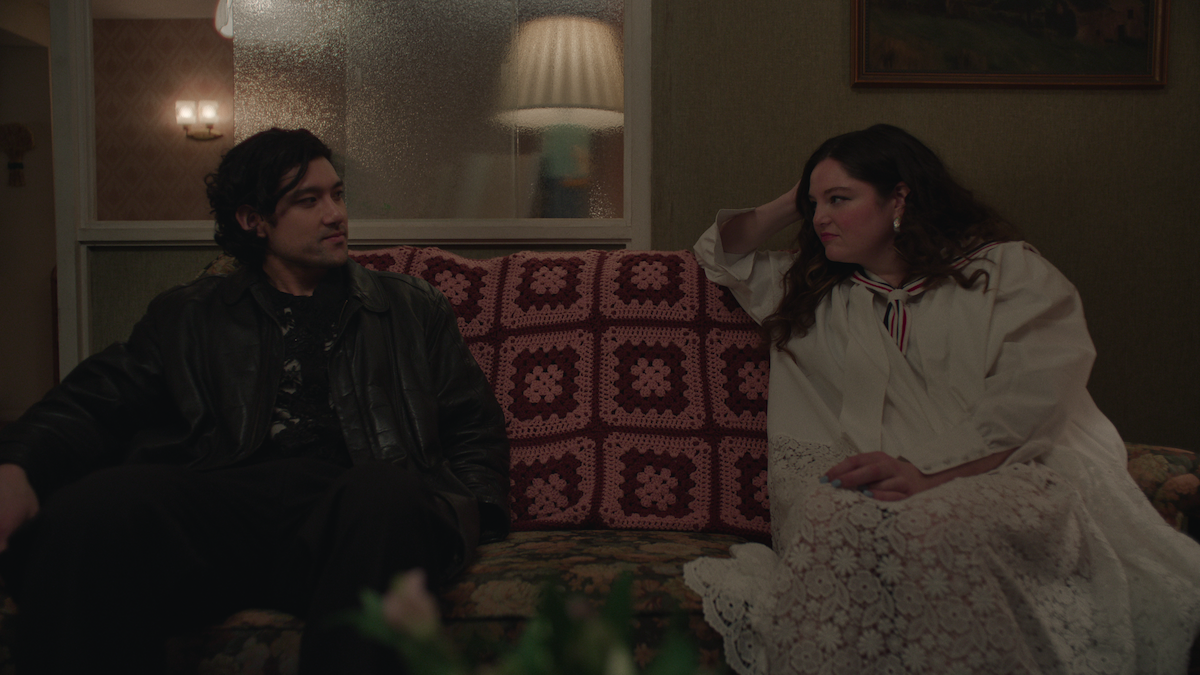
As is tradition, yes. In the episodes leading up to Episode 10, Jess and Felix are on the rocks, as each succumbs to their respective inner demons and doubts. The seeds of their tension are planted at his childhood friend’s wedding in Episode 8. After Felix finally tells Jess he loves her back — a tough thing for him to do, on account of his traumatizing childhood experiences with a nanny — Jess accompanies him to the wedding of the one boy in school who didn’t call him a racial slur. At least, that’s how Felix remembers it. (Felix’s last name is Remen, and the other kids would call him Felix “Ramen.”) But memory can be a fickle thing, as Felix unfortunately discovers: When he greets Felix, the groom mimics eating ramen. “Kids are truly hideous,” says Dunham.
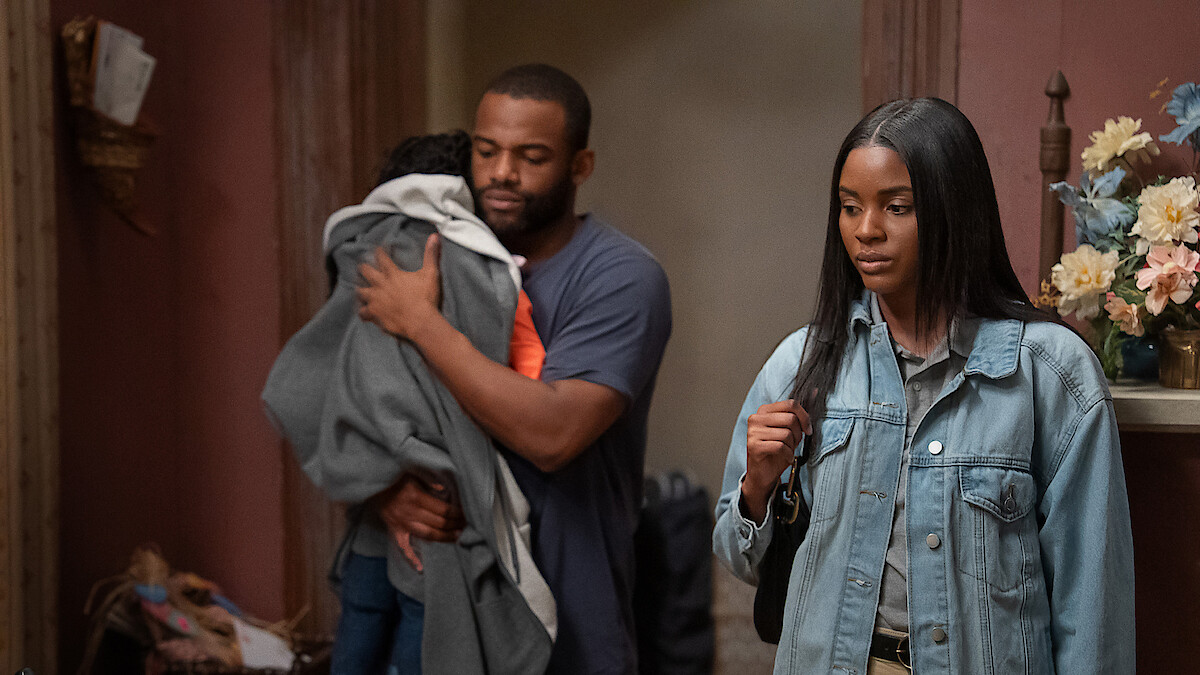
At the wedding, Jess is haunted by visions of her ex, Zev. In reality, she’s also feeling insecure seeing Felix’s exes around the venue, the way he changes his vocabulary and jaded demeanor to fit in with his toxic rich peers, and how he drinks to compensate even though he’s three years sober. “That whole episode’s about [how] you’re really trying to be like, ‘Can I handle what’s going on right now?’ ” says Stalter. “There’s a lot of tension and energy built up.” Meanwhile, Felix feels vulnerable and exposed after sharing his past traumas with Jess; articulating his emotions is not in his comfort zone. “Jess is quite forward about her feelings and quite open and ready to share where she’s at and her intentions, whereas Felix is much cagier and his defenses are visibly higher,” says Sharpe. “I think Felix uses his Britishness as an excuse not to open up.” It sets off a chain reaction: Felix doesn’t understand how Jess doesn’t see that his repressed complicity at the wedding was a means of survival among his crude classmates — and how it still is.
He knows Jess has romanticized grand estates like the wedding reception venue, but without the class consciousness he’d grown up with as someone half Japanese and whose parents were in debt. “The thing he can’t say, because he’s still dealing with a bit of that repression, is, ‘I’m complicit because I had to go along to get along,’ ” says Dunham. She continues, in the guise of his character: “ ‘Do you know what would’ve happened to me if I hadn’t played the game? And maybe I don’t have your privilege to just say, ‘Fuck off, everybody’ and leave every situation I’m in, because I was on scholarship and not the same as other kids.’ ”
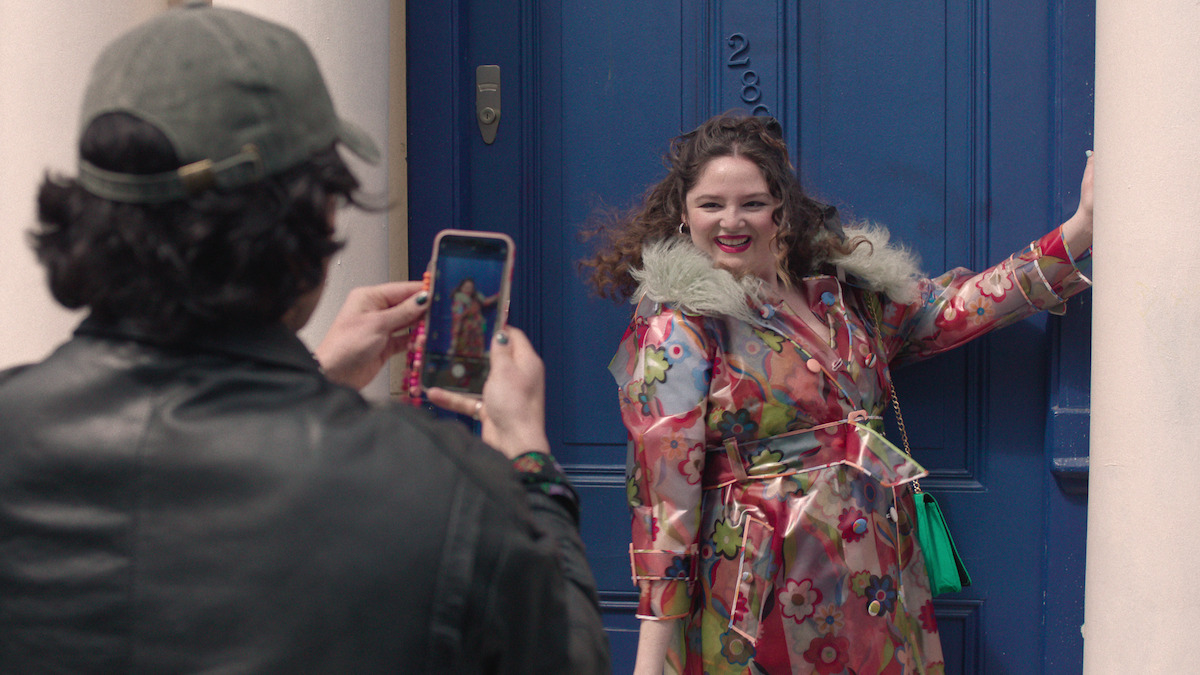
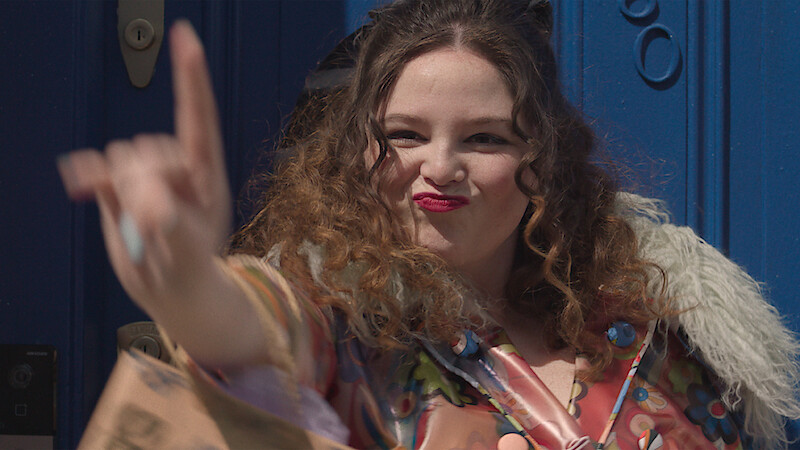
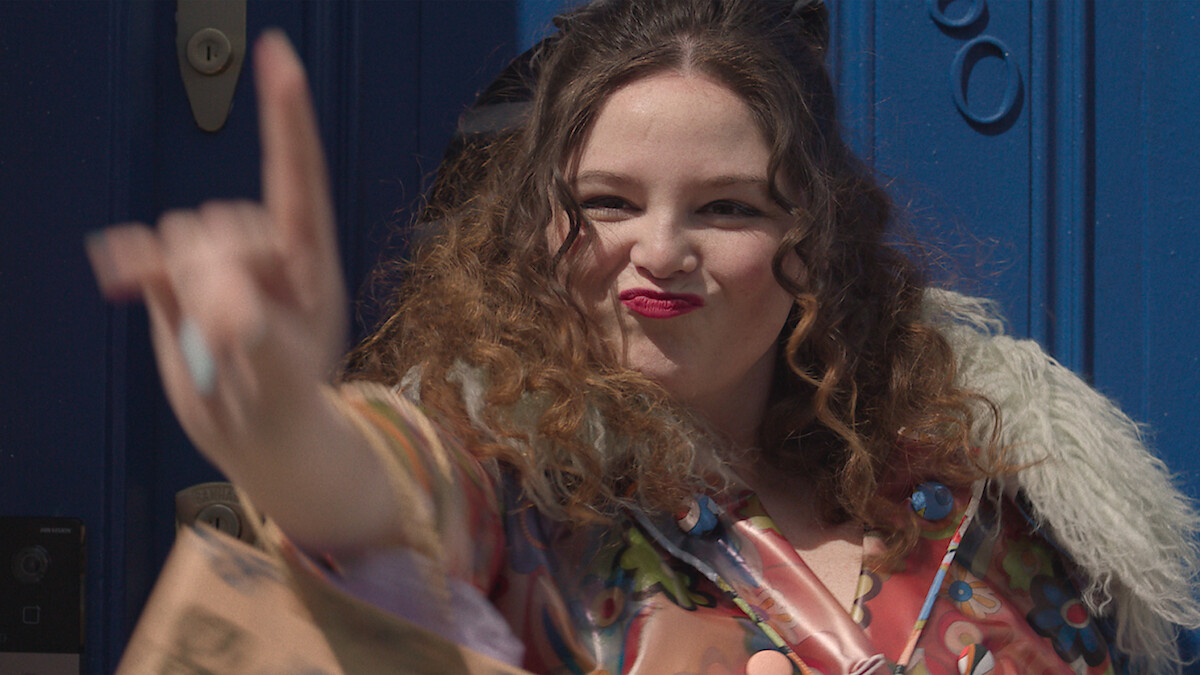
The tension that erupts at the wedding points to some of these essential differences. Jess fawns over the charming rainbow doors in Notting Hill in Episode 4 when they go round to her boss’ house for dinner. But Felix criticizes the type of people who can afford those homes. “That, in a way, becomes a metaphor for the relationship — she wants pure romance, and he wants to delve in and say, ‘What are we actually doing here?’ ” says Dunham. The wedding episode is when Jess starts to see the darkness in the idealized British facade she hadn’t noticed before. “And it’s like he’s saying, ‘You’re just catching up? I’ve been here all along.’ ”
So after their fight, Felix self-sabotages, indulging in his vices and sleeping with an older woman played by Jennifer Saunders (Absolutely Fabulous). “I definitely felt the most sad for him around that point in the series where he’s really been trying, but he just can’t shake this self-destructive streak,” says Sharpe. Additionally, “he’s never really learnt to protect himself in intimate situations, so there’s a lot of just letting stuff happen to him.”
When he confesses the truth to Jess, she tells him to take the day to pack up his belongings from their flat. “There’s something so beautiful about someone who makes a mistake,” says Dunham. “I remember someone saying, ‘Well, are we going to lose audiences if he does cheat on her and comes back?’ I mean, I’m not advocating for everyone to take their cheating partners back, but at the same time, part of love is making a mistake, and then allowing someone room to recover from it.”
So where does that leave Jess’s dog, Astrid?
Stuck between her two human parents! Astrid is Jess’s tiny, hairless dog and constant companion, who Jess adopted after her break-up with Zev. She brings Astrid with her to London, and Felix soon grows attached to Astrid once he becomes more integrated in Jess’s life. So it’s more than distressing that Astrid begins to struggle to breathe while Felix is moving out.
He rushes the dog to the vet, but it’s tragically of no use. Her heart gives out before her mom arrives, and Jess is now left doubly heartbroken. As is Felix. Astrid’s death tees up a blow-out fight between the two outside the vet’s office. “Jess and Felix’s argument feels pretty much like, ‘Maybe this is the end,’ ” says Sharpe. On an ordinary day on set, Stalter and Sharpe enjoyed hanging out and laughing all day together. “But that day, [Lena] was like, ‘OK, tomorrow, you guys aren’t going to see each other until we’re filming the scene,’ ” remembers Stalter, “which I actually do feel like [helped] with the tension.”
They’re both in tears, and Felix’s self-loathing is manifest: He hits himself in the face while pleading with Jess to understand that he didn’t kill her dog. “I’m sorry your dog died and that you’ve been through shit,” he tells her. “I get it’s hard for you, but it’s hard for fucking everyone, OK?” Distraught, Jess says she isn’t perfect, but she never would have cheated on him. “It’s interesting having these scenes where we hurt each other basically as part of a love story,” says Sharpe.
Then how does our rom-com heroine get her groove back?
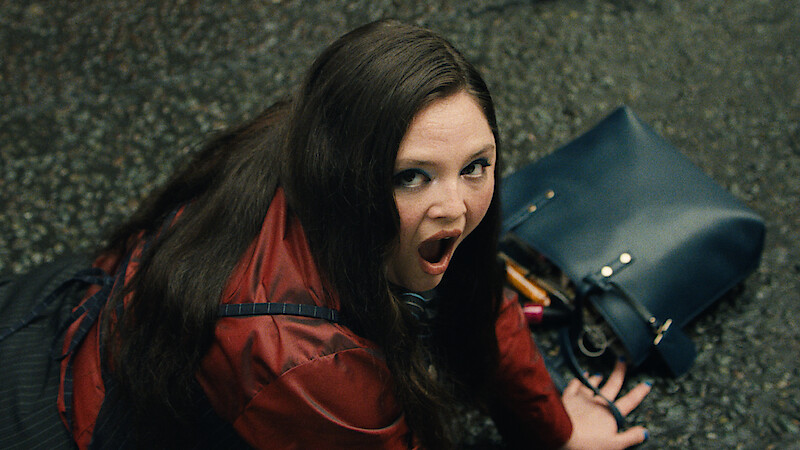
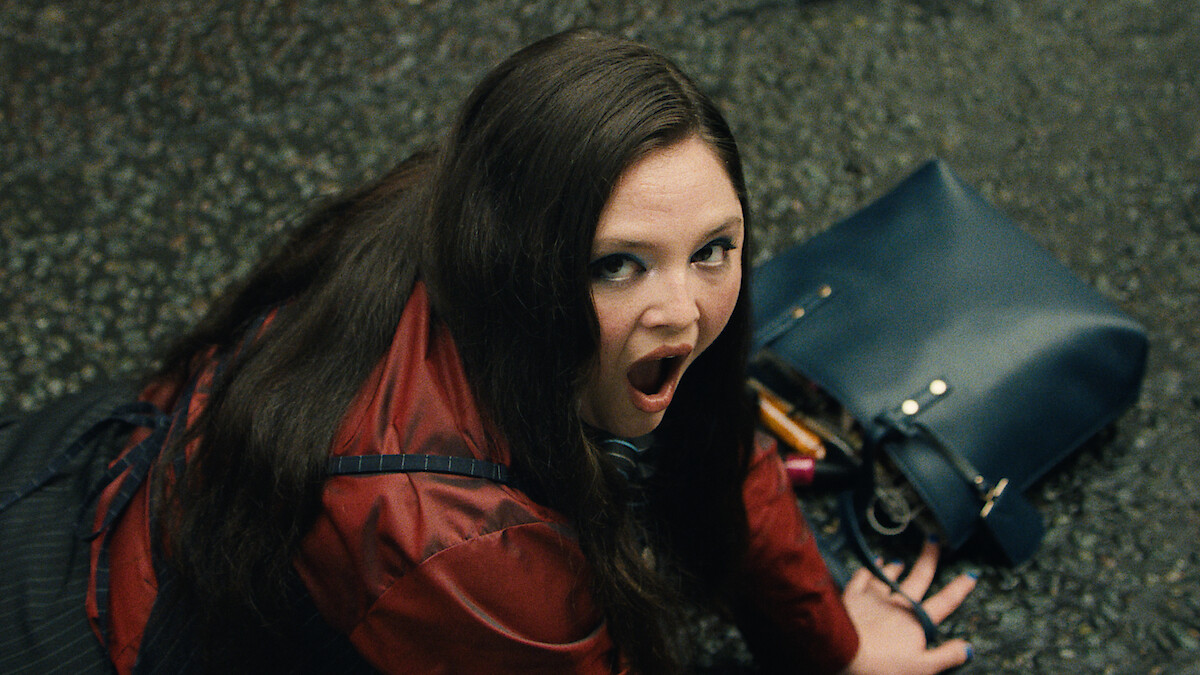
From the most unlikely place. Before the loss of her dog and her love, Jess’s Episode 9 journey is one of coming back to herself once all her worst fears are realized. That’s right: She accidentally publishes her never-to-be-sent videos addressed to Wendy. There’s no turning back. While she’s on set for the big Christmas commercial shoot she's prepared for all season, Jess proceeds to go viral. Suddenly she’s known as the girl who sets herself on fire (an incident that does in fact happen in the first episode). Meanwhile, the commercial’s pretentious director, Jim (Andrew Scott), goes AWOL in the middle of Jess’s personal crisis, but the star of the shoot, Rita Ora (as herself), comes to her rescue, helping Jess find her center and reminding her where her priorities lie.
Inspired, Jess fully takes charge of the shoot and re-casts Rita Ora as Santa Claus instead of the sexy elf she feels uncomfortable playing. It’s a full-circle moment for Jess from Episode 1, where she was too scattered in her anxiety to help Jessica Alba (also as herself), who’d asked Jess to change the misogynistic tone of the concept of the shoot she was booked for. Now Jess is free to show up for her girls — and for herself.
Does Wendy respond to Jess’s videos?
Yes! In Episode 10, Jess is about to return home to the US when she receives a text from none other than Wendy Jones (Ratajkowski), asking to meet up while she’s in London. To Jess’s surprise, Wendy shows up as the ultimate girl’s girl, completely clearing the air and apologizing for being part of something that hurt Jess just because Zev obfuscated the truth. “It’s really not my deal, I don’t fuck with other women,” says Wendy. “I truly believe we can just ease the burden for each other generally.”
Jess and Wendy’s London café meet-up is healing for both women, and Jess is able to arrive at a place in their conversation where her heart feels open. So much so that Wendy helps Jess realize that she and Felix truly do love each other. Sure, neither of them is perfect, but he just might be perfect for her. “I always say I can forgive pretty much anyone who’s willing to say sorry and [who] tells the truth,” says Wendy.
And how does the Too Much finale up the ante of the rom-com?
“I mean who doesn’t love the moment in the rom-com where the person runs through the airport or disrupts the wedding?” says Dunham. The moment Jess realizes Felix is worth fighting for, she checks his friend’s Instagram story to see where they’re posting up for a climate change protest. She doesn’t sprint through an airline terminal, but she does ask her neighbor Gaz (Dean-Charles Chapman) to drive her down the highway towards her love during rush hour, a full-on rom-com grand gesture.
“I wanted to see if we could create something that’s stuck to the kind of structural constructs of a rom-com, [where] it’s meet-cute, get together, problems arise, glorious finale, but how do we do that in a way that feels sort of truthful, at least to my experience, and I think [to] the experience of a lot of the people that I love?” muses Dunham.
Since Gaz can’t stop the car when they arrive at the service station where the protest is taking place, Jess gets out in the middle of moving traffic. Seeing that Felix and his fellow protesters have glued their hands to the motorway, Jess joins right in, grabbing some glue and planting her hands right down in front of Felix, who’s overjoyed to see her. “There’s sort of a nice feeling of them both surrendering ultimately to who they are as individuals and who they are with each other,” says Sharpe. “The realness of that is when it starts to feel like, ‘Well, maybe this can work.’ ”
Jess lays her heart on the line and bares her soul. She doesn’t really care that Felix slept with someone else, and admits she sped up the process of breaking up because she was scared of losing him after he made her feel safe. Felix concedes that he did the same thing: “I’m Mr. Sabotage…. We’re the sabotage twins.” When the police show up to make arrests and handcuff Jess, she tells Felix that she adores him and doesn’t want to live in fear and regret as she’s about to return home to the States. As the police pry her hands from the asphalt, she pleads with them, “Haven’t you done anything for love? I’m just making a big motion for love! I wanted to tell him that I love him!” And suddenly, in spite of and because of everything, Felix makes his own grand gesture in return. He asks Jess to marry him.
“I mean, we can think of thousands of examples [of grand gestures], like Lloyd Dobler (John Cusack) holding up the boom box,” says Dunham, referencing Say Anything… (1989). “Those are the kind of gestures we wish people would make in life, and they so often don’t. And so, I thought to myself, what is the us version of that? And the us version of that was obviously a marriage proposal that was immediately followed by an arrest.”
An admitted romantic, Stalter read the script of the finale feeling fully on board the rom-com train. “The show does a really good job of knowing what it is, but then also flipping it on its head,” she says. “The whole last episode, we’re doing all of those tropes really earnestly, and it feels really real…. I was really moved by them being together. I feel like people want to see that happen.”
So do Jess and Felix live happily ever after — and stay together?
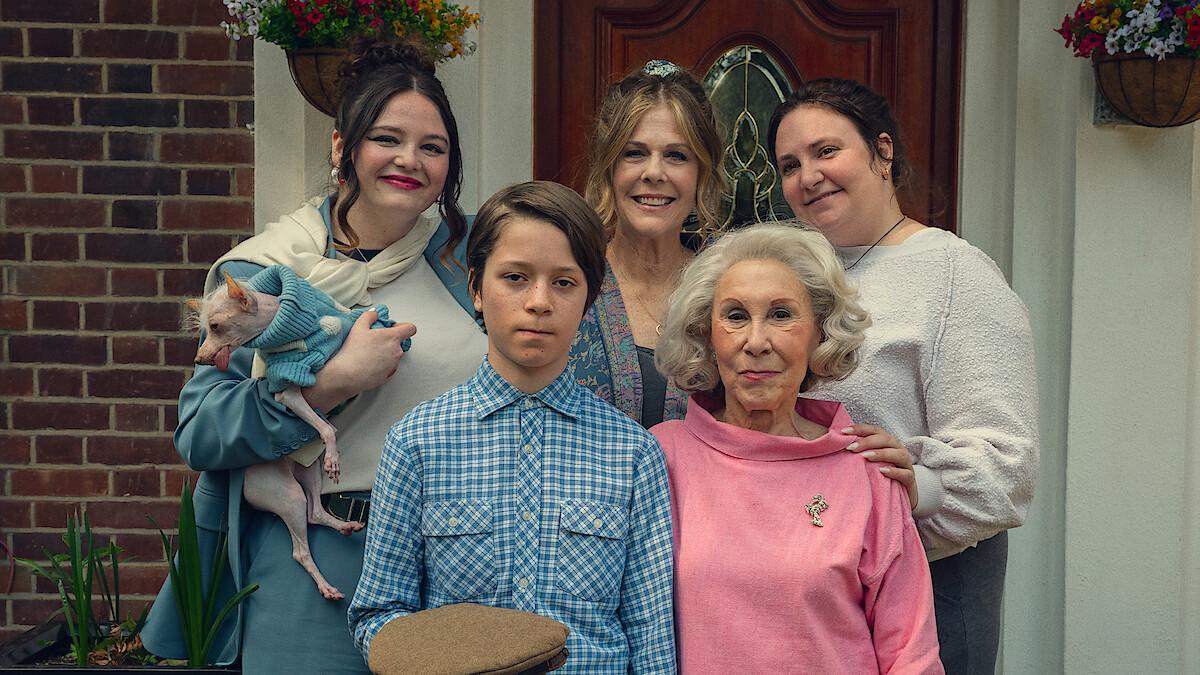
They seem happy, right? At least for now. The highway scene cuts to Jess and Felix’s courthouse wedding. Surrounded by their friends and families (most of whom are rooting for their relationship to succeed), Jess and Felix have their first married kiss before a dreamy montage of their wedding day starts to play. “It felt so sweet when we filmed that last scene,” says Stalter. “It felt like filming a memory of theirs. You can imagine those characters looking back on the day and remembering it that way.”
But there’s something intentionally discordant that lingers as the credits start to roll. After the vows are exchanged and the bouquet is tossed into the air, Felix turns to Jess and asks her how long she wants to stay married. They both laugh it off, but that question is meant to stir as much discordance in the viewer as it initially does in Jess before the action shifts into a montage of their marital bliss. Dunham compares the ending of Too Much to that of The Graduate (1967), when Dustin Hoffman’s character, Benjamin Braddock, crashes the wedding and runs off with the bride, Elaine (Katharine Ross). “Then they look at each other, and they’re like, ‘Wait, what the fuck did we do?’ ” says Dunham. “He’s like, ‘I’ve made this huge move, and now I actually have no idea what to say to this person.’ ”
Dunham aimed to leave the audience with a few lingering questions that she suspects Felix and Jess will be asking themselves as soon as the afterglow of their special day wears off. “I wanted the finale to leave us inspired, but also going, ‘They haven’t known each other that long.’ It’s that dual feeling of totally embracing it and also wondering, ‘Are they going to be divorced in three months?’ ”
Sharpe remembers the last line of the script. “The idea is, ‘They look happy for now,’ ” he says. “But let’s see.” Dunham deliberately subverts the traditional happily ever-after rom-com ending. Instead of a closed-book finale, Too Much ends on a bit of a cliff-hanger. “It has to be subtle and emotional, considering he just cheated on her about four days ago,” the writer-director says. She imagines viewers thinking, “ ‘Is this a great idea? It feels good, but things that feel good aren’t always right.’ Those are the questions we’re asking while still getting to have the joy of the wedding.”
When Stalter read the scripts, she’d sometimes get angry about what was going to happen to Jess. “[Like] ‘Oh my God, how could they do that to her? How could someone hurt her in their relationship?’ ” she recalls. Eventually, she understood it as true to the characters. “There have been moments I’ve been mad at Felix, but then in the end, I’ve been like, ‘This has to all happen like this. He has to do what happened, she has to do what happened, and they have to end up together.’ ”
Dunham sees the progression of Felix and Jess’s relationship as “two characters bumbling toward self-awareness.” As Stalter puts it, “They’re both flawed characters. Real people are flawed.”
What are all the rom-com Easter eggs in Too Much?
As Too Much modernizes the rom-com, it also peppers allusions to the genre’s predecessors. Below, see all the rom-com Easter eggs hidden in the series:
- Episode 1: Jess walks across Tower Bridge akin to Bridget Jones’s Diary.
- Episode 1: Jess refers to Felix as Mr. Darcy and Mr. Rochester (Pride and Prejudice and Jane Eyre).
- Episode 3: Jess and Felix stay up all night in the vein of Before Sunrise.
- Episode 3: Wendy and Jess drink Champagne in nightgowns as a reference to Sandy (Olivia Newton-John) and Rizzo (Stockard Channing) in Grease.
- Episode 4: Jess and Felix have dinner in … Notting Hill.
- Episode 5: Jess thinks Felix’s friend looks like Rachael Leigh Cook in She’s All That.
- Episode 6: Jess wears bunny ears in a nod to Bridget Jones’s Diary.
- Episode 8: Jess and Felix attend a very chaotic British wedding à la Four Weddings and a Funeral.
- Episode 8: Jess imagines and remembers conversations with Zev similar to Ghosts of Girlfriends Past.
- Episode 10: Jess speeds through traffic to win Felix back, much like Ben (Matthew McConaughey) chasing Andie (Kate Hudson) in How to Lose a Guy in 10 Days.
- Episode 10: We see a rewind-and-frozen-in-time moment between Jess and Zev, inspired by The Worst Person in the World.
- Episode 10: The Rita Ora commercial is a reference to Bill Nighy’s “Christmas Is All Around” music video in Love Actually.
Catch feelings for Too Much now, only on Netflix.
Reporting by Deidre Dyer.