While it’s true that the arrival of A Jazzman’s Blues, the very first screenplay Tyler Perry ever wrote, is a testament to his tenacity and perseverance, he prefers to see the new film as the result of a different type of thinking. “Strategy,” he tells Tudum over Zoom from the Toronto International Film Festival in early September, “and intention.”
Debuting on Netflix on Sept. 23, Perry’s latest movie is many things at once, much like its multihyphenate creator. It’s a lyrical love story, musical, historical romance, and murder mystery all rolled into one beautiful and heartbreaking poem. Perry first conceived the story (which stars newcomers Solea Pfeiffer and Joshua Boone as lovers in a taboo love affair) 27 years ago — back when he was an unknown wannabe, yearning to make his way as a professional storyteller. At the time, Perry was flat broke; so broke, in fact, that he had to sneak into an Atlanta performance of August Wilson’s Seven Guitars during intermission. As luck — or fate — would have it, Perry met the legendary playwright after the show. And Wilson not only gave him some time but also some life-changing advice. He encouraged him to write what was in his heart. Perry went home and began writing A Jazzman’s Blues that very evening.
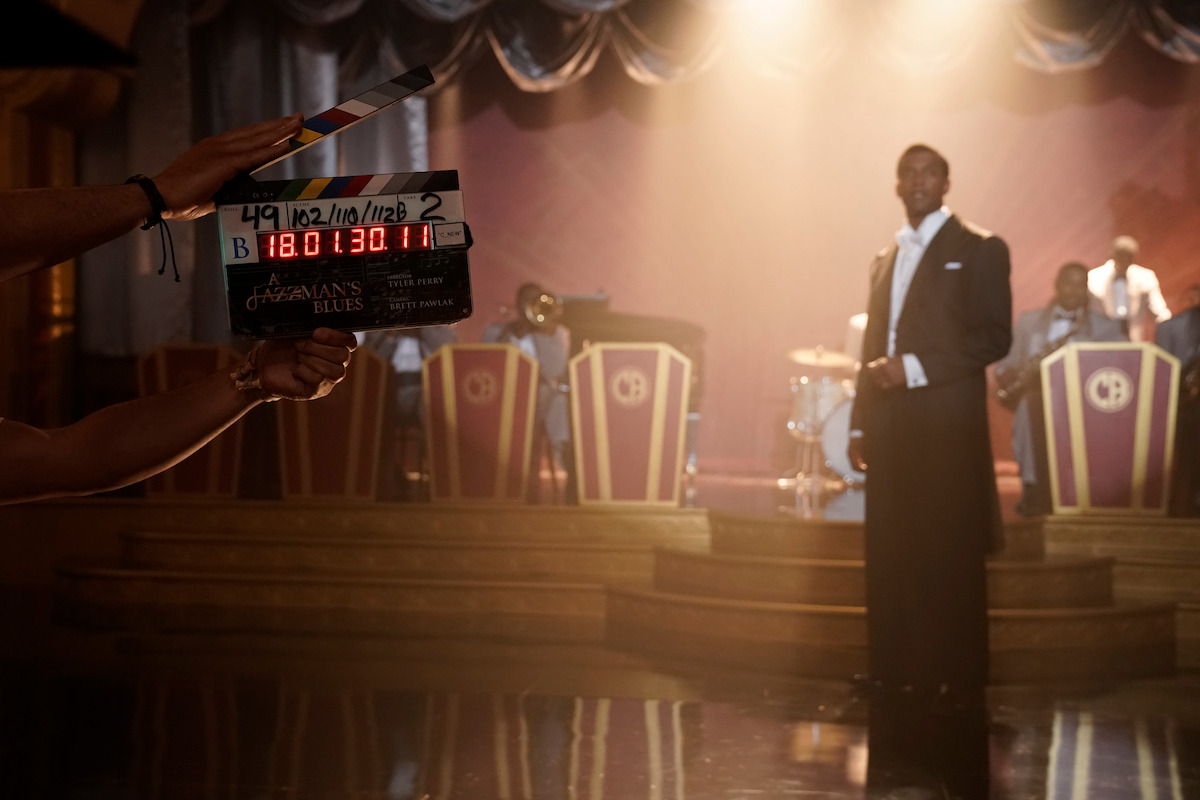
Joshua Boone on the set of A Jazzman’s Blues.
However, writing a film and making one are two very different things. And when it came time to translate the words on the page into a living, breathing creation, Perry realized the obstacles he was up against... even for an unstoppable force like himself. “What I understood is that I had to be very specific about when I did it, and how I did it,” Perry says, “because as I was building a business, I knew that I couldn’t take a chance on a period piece in the middle of that string of successes. As a Black man in Hollywood, I knew I wouldn’t get another chance to do another movie. So I had to go with what I knew would work, what I knew would build my company, build my studio. And now that I’m in a place where my feet are secure, I can do the things that I’ve always wanted to do.”
What Perry knew would work is, of course, his now-famous string of hits — the bulk of them the Madea movies — which have made more than $1 billion at the box office. Despite his track record, Perry doesn’t live in a bubble. He knows what critics have said about his previous films and, for that matter, what audiences have come to expect from his work. In other words, he knows A Jazzman’s Blues, with its subtle references to time-honored works including A Soldier’s Story and The Color Purple, will surprise a lot of people. “Madea’s not popping out from behind a tree in this one,” he jokes. “I think people think I’m only able to do a certain kind of thing. And I think [Blues] is going to make people readjust their thoughts of a Tyler Perry film.”
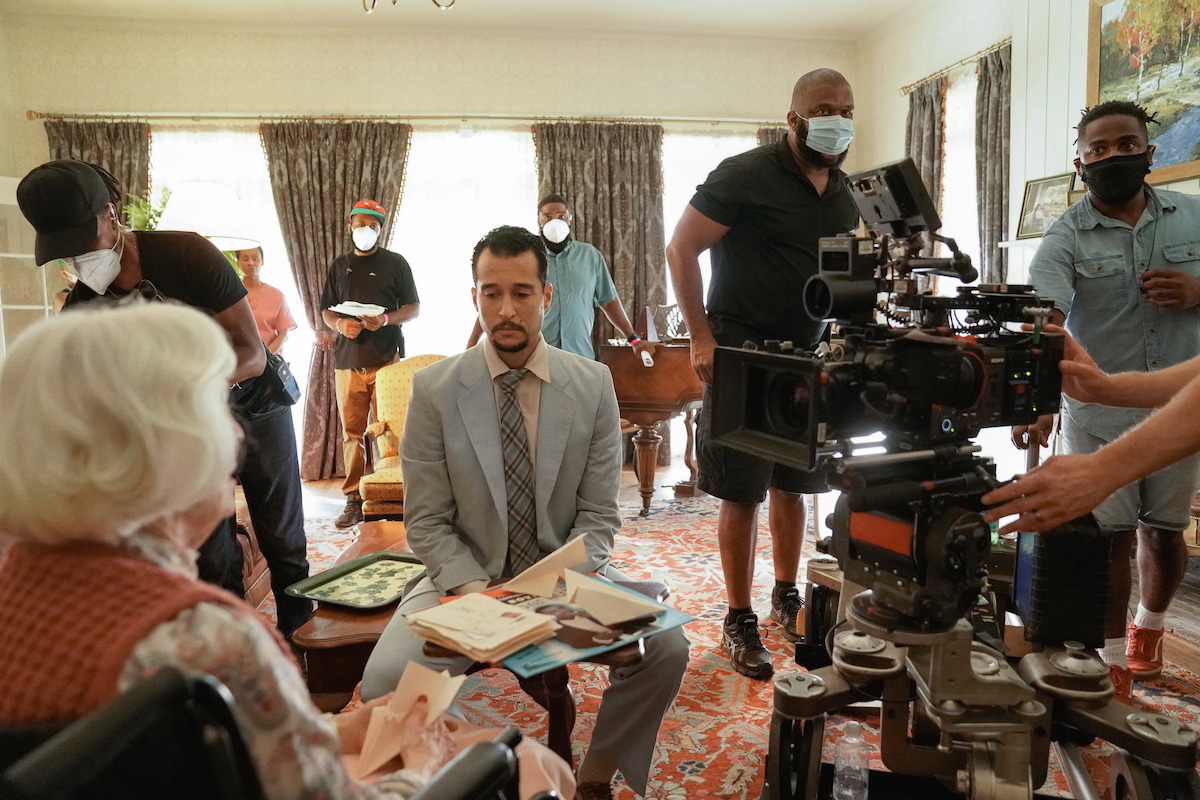
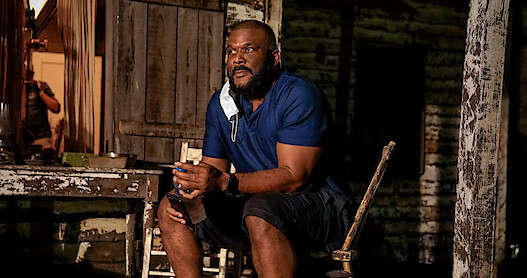
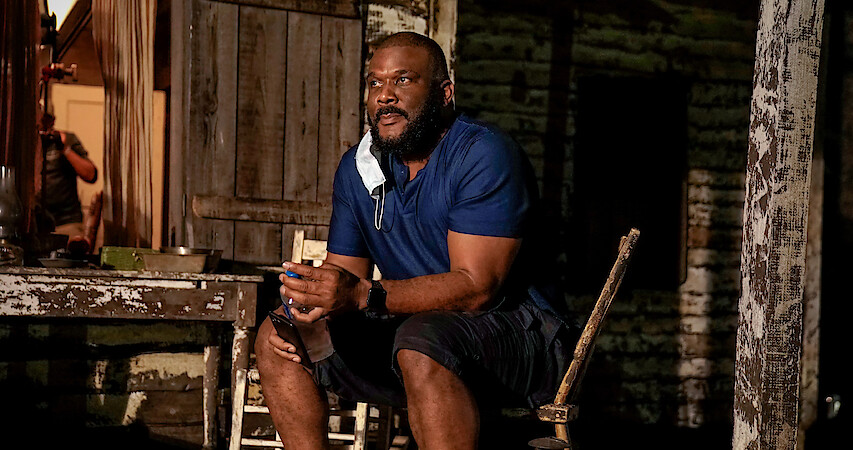
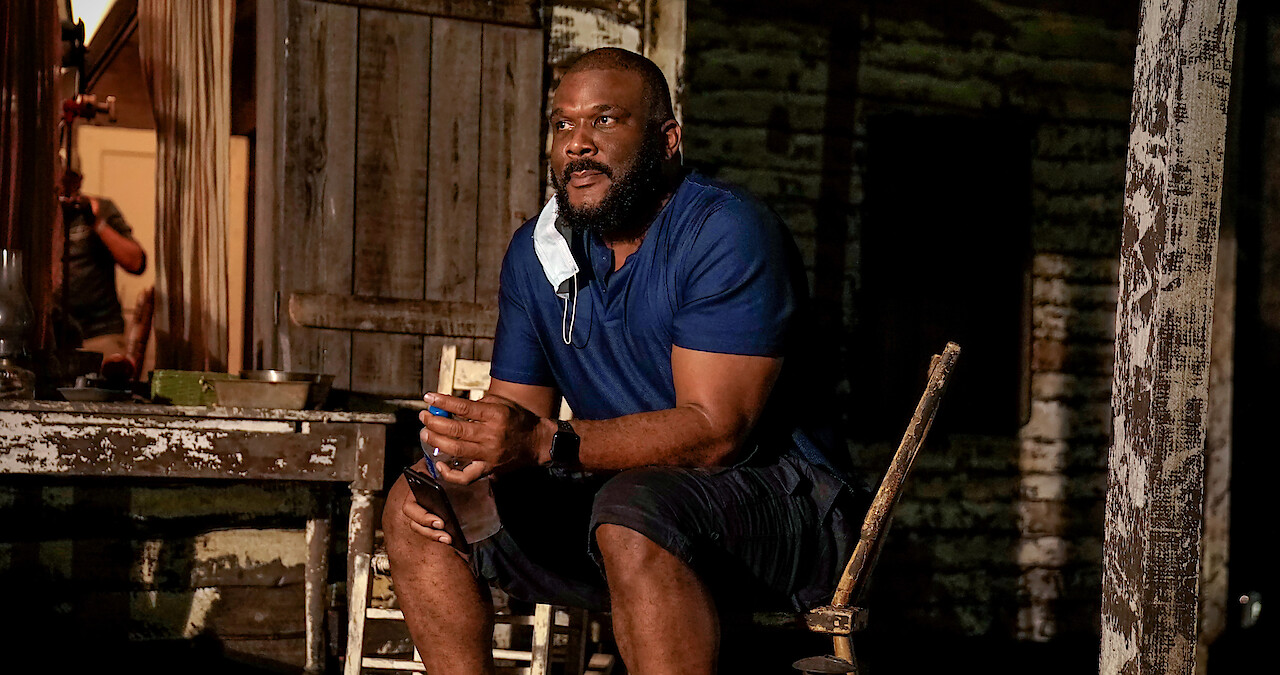
Perry (standing, masked) prepares for a scene on the set of A Jazzman’s Blues.
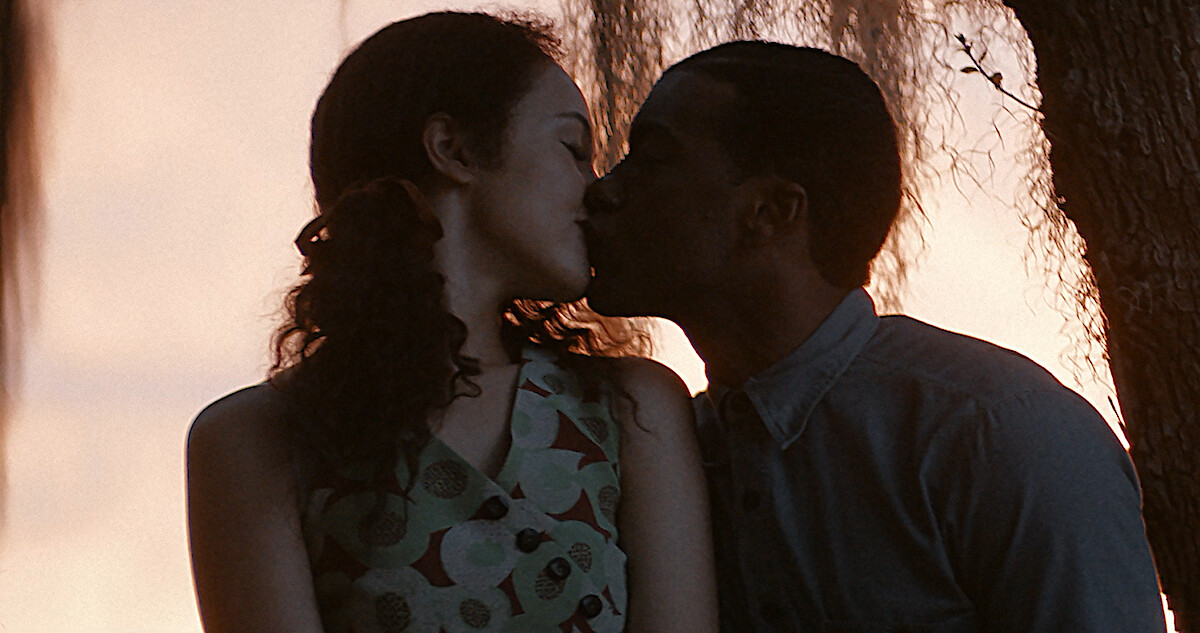
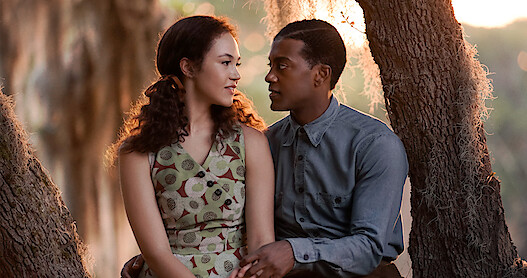
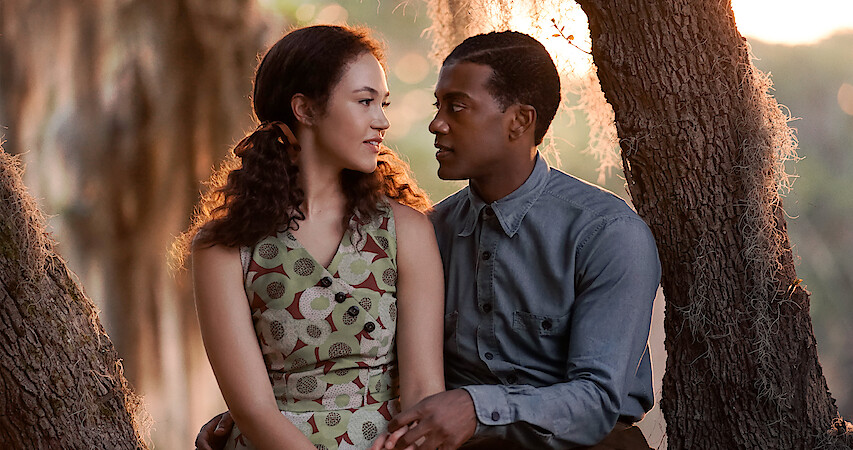
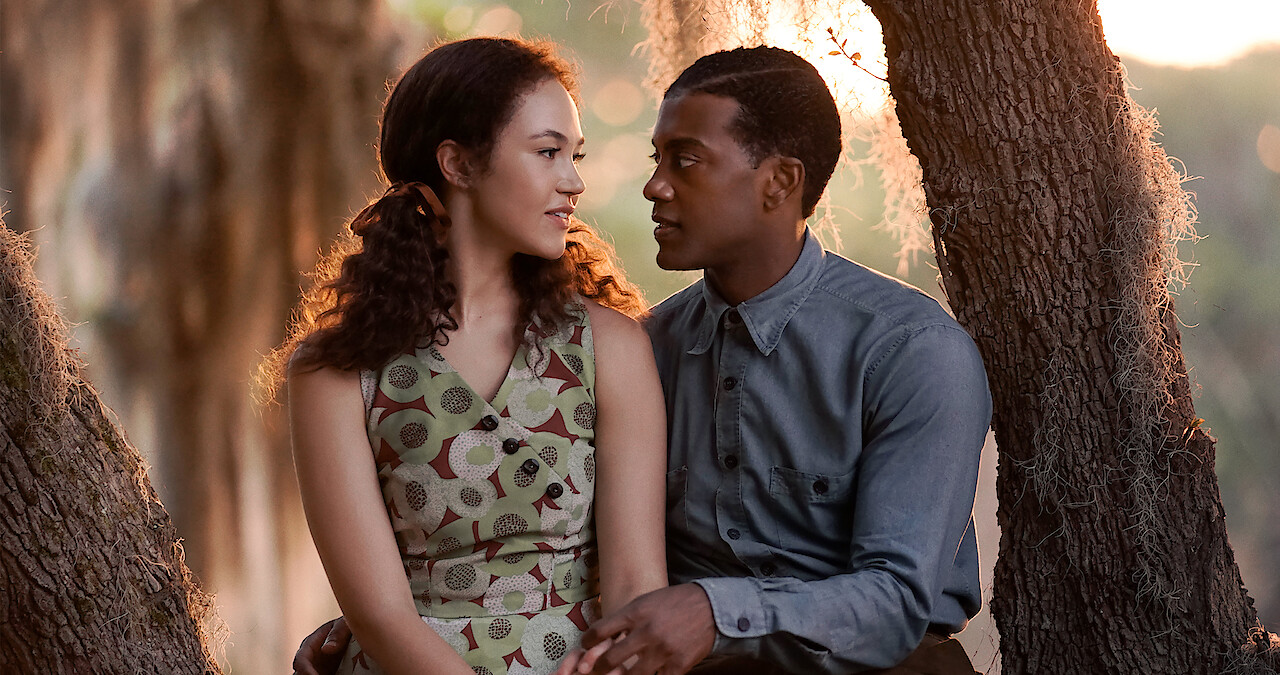
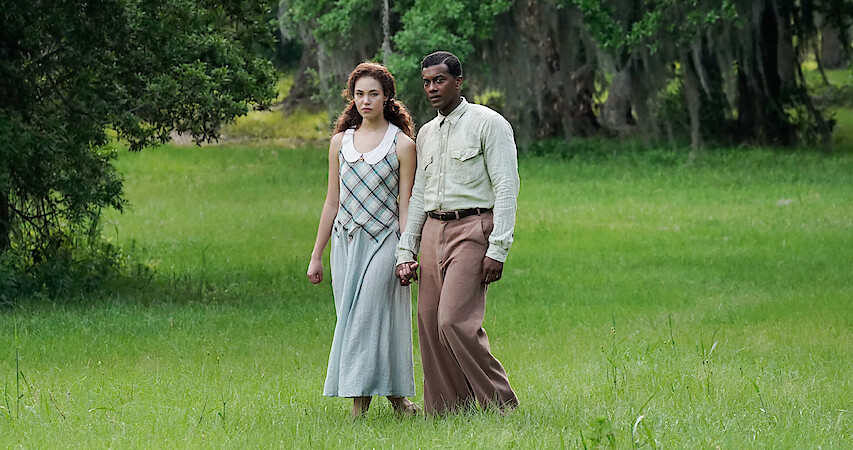
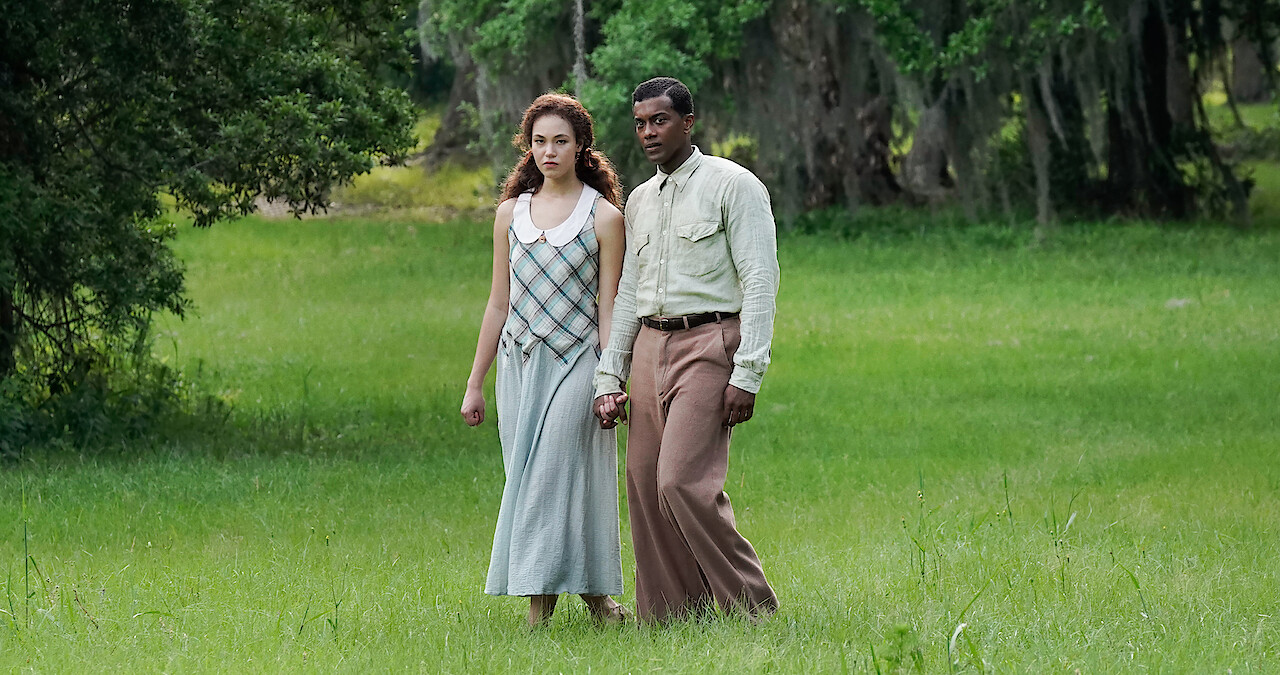
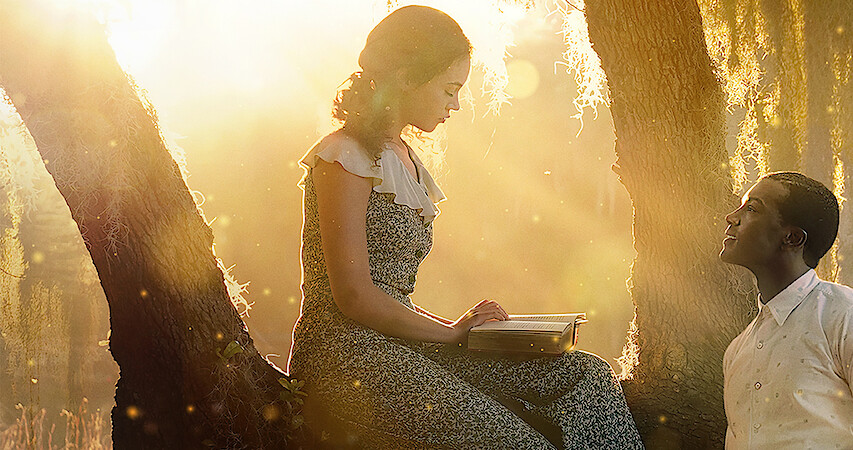
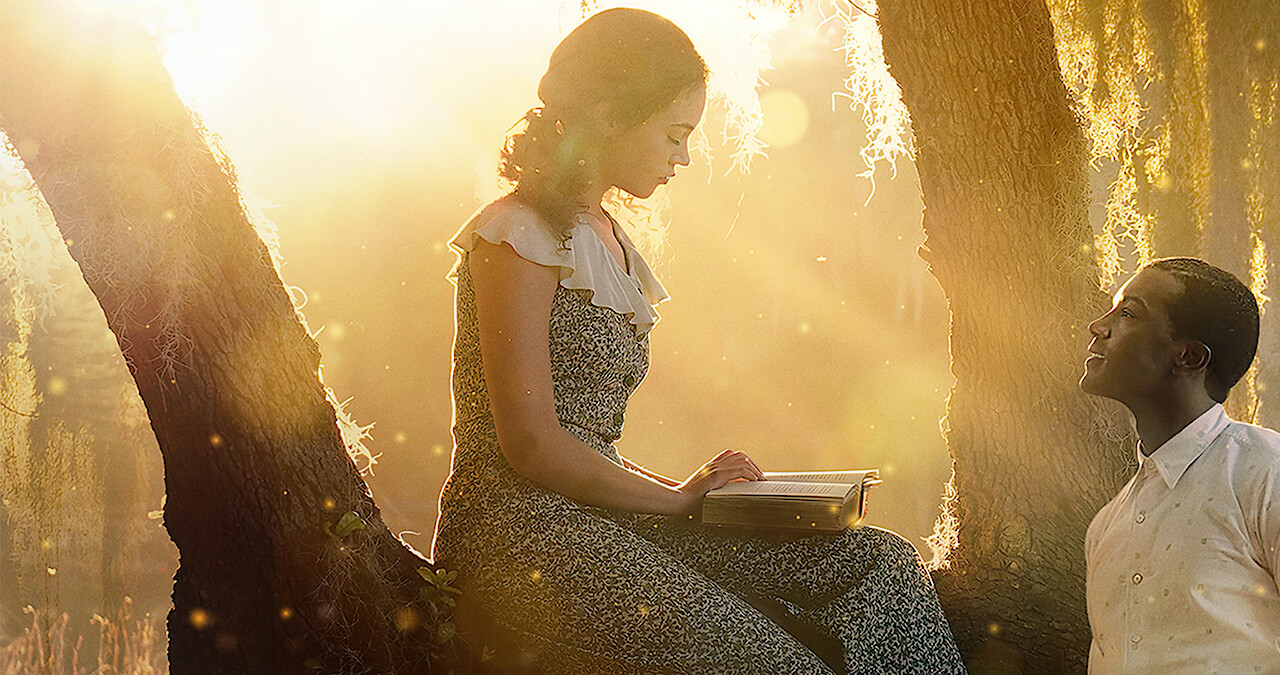
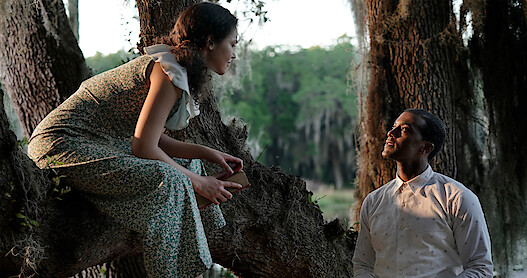
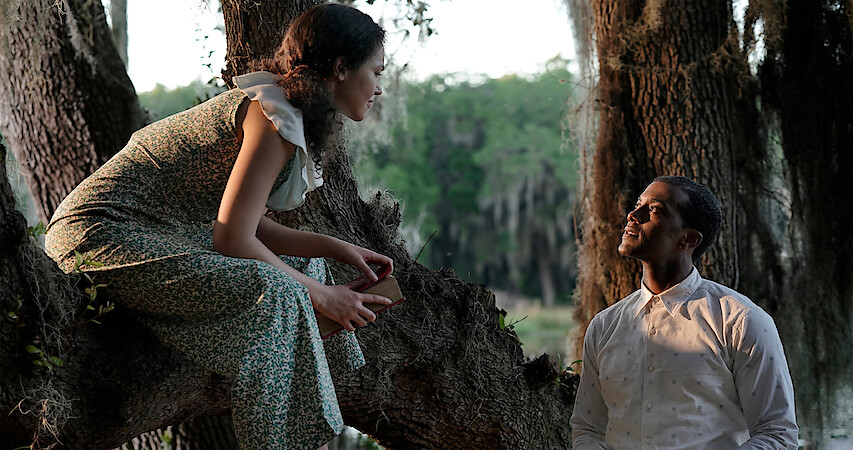
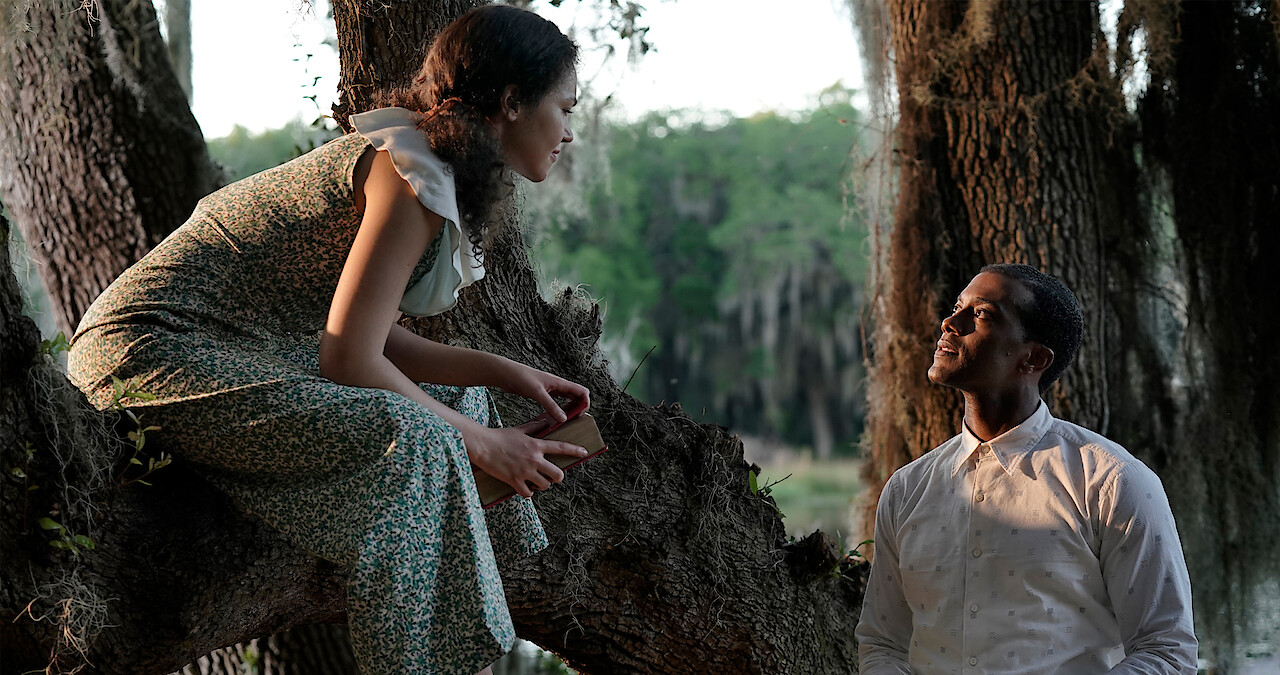
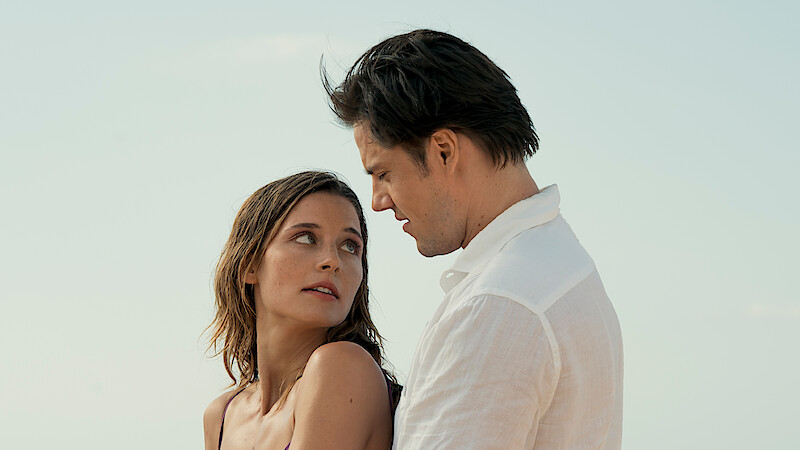
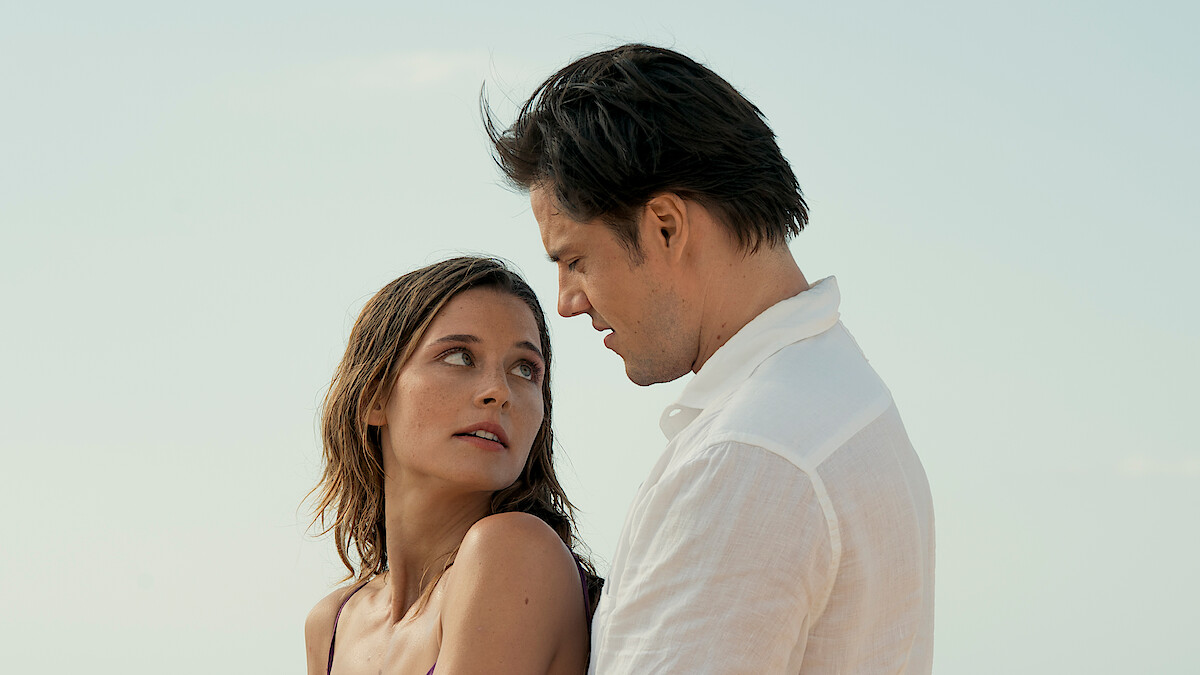
A Jazzman’s Blues spans generations, but spends most of its time in rural Georgia during the 1930s and ’40s, where a young man named Bayou (Boone) and his would-be beloved, Leanne (Pfeiffer), meet resistance to their courtship from both their families and a deeply racist environment. Leanne, so fair-skinned that she can pass for white, is forced by her mother to renounce any trace of Blackness and assimilate into a white world. Her mother threatens to destroy Bayou’s life if Leanne disobeys her. It’s a story steeped in some of the uglier chapters of American history, and it illustrates how even basic, universally human desires like love are corrupted by the sickness of racism.
“I’m just looking at where we are in America, and it’s a very sad place,” Perry says. “Certain political figures want to reimagine the history of Black people and want to water down and homogenize the pain that we’ve experienced. So for me, if [Blues] raises curiosity, and our kids want to find out the truth and research what happened during Jim Crow, even though [the movie’s] a fictional story, I’m hoping that it really inspires them to do that.”
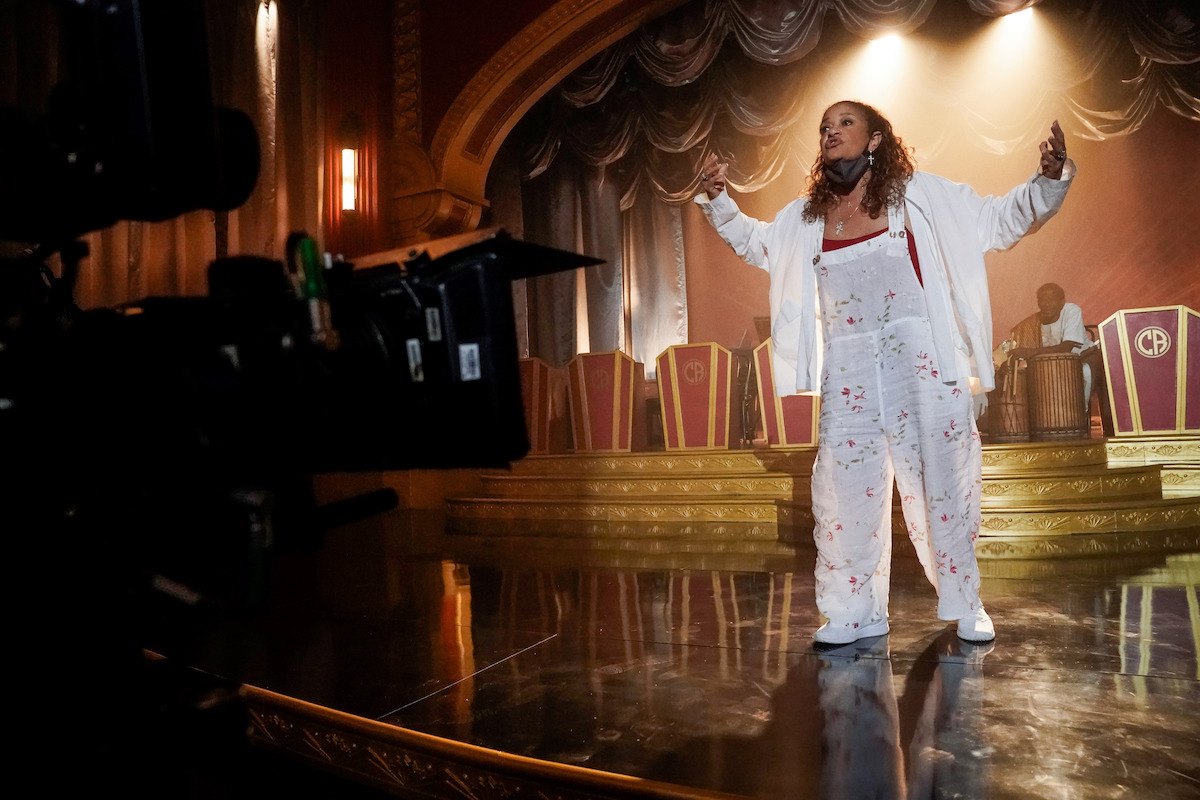
Debbie Allen getting ready for a take on set.
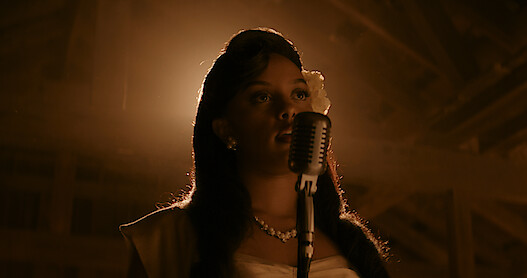
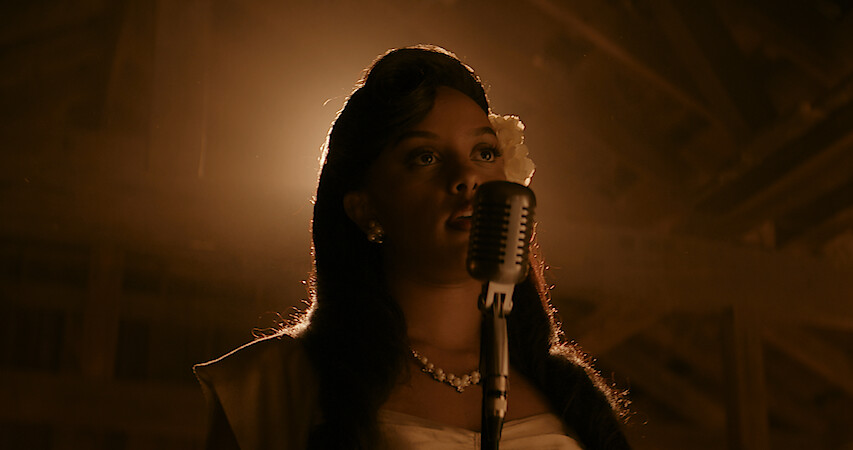
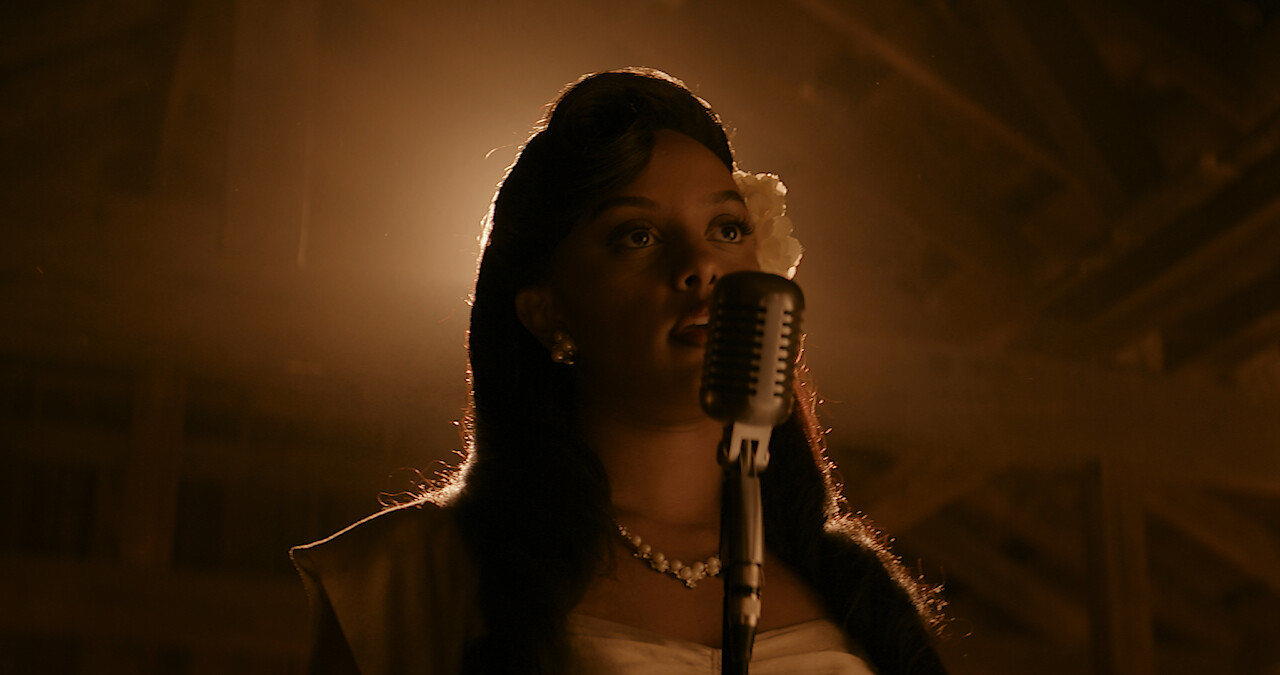
There’s more to Perry’s story than sorrow and hurt, though. As its title implies, A Jazzman’s Blues hops and swings with an exuberant soundtrack — several styles of jazz and perfectly executed blues songs come courtesy of Terence Blanchard and Aaron Zigman. Industry titan Debbie Allen also choreographed scenes set in Southern juke joints and Chicago dance halls, where Bayou is forced to flee, and where his career as a jazz musician takes off. “Terence Blanchard is a genius,” Perry says, adding that he imagined the soundtrack while writing the film, listening to some of the songs featured such as “Let the Good Times Roll” and “It Don’t Mean a Thing (If It Ain’t Got That Swing)” over and over as he put words on the page.
As for Allen, Perry says that they first talked about collaborating on A Jazzman’s Blues 20 years ago. “To have it all come together, and her be 72 years old, walking up to these 21-year-olds and kicking her legs up higher than theirs, showing them how to do the moves, I was just like, ‘Debbie Allen, living legend.’ ”
As for his own work on the film, Perry admits that it was thrilling to get to show off a different side of himself, too. From the film’s lush photography to its costumes and impeccable sets (including a juke joint built from scratch), every detail of A Jazzman’s Blues is as meticulously rendered as you’d expect from such a long-in-the-works labor of love — a decades-long journey that Perry admits ended up improving the story. “It took all of these years of training, understanding, figuring out, trial and error and making mistakes to be able to do Jazzman,” he says.
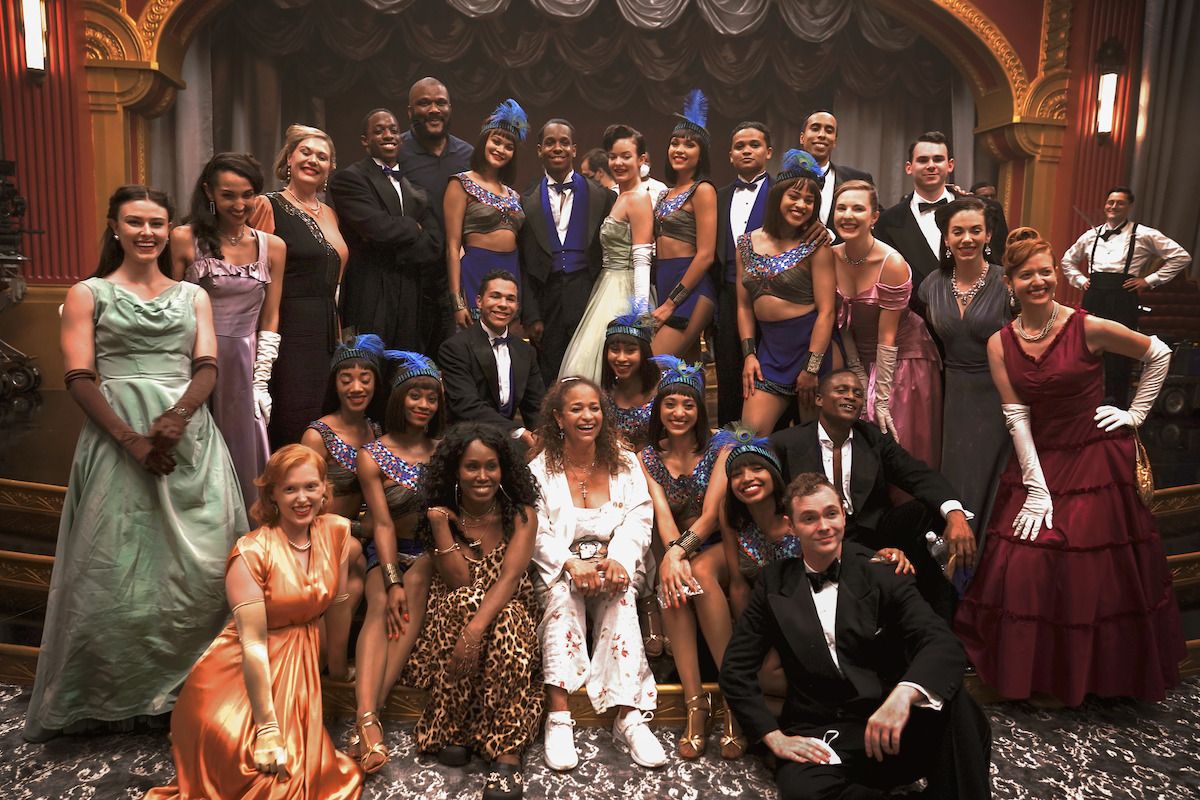
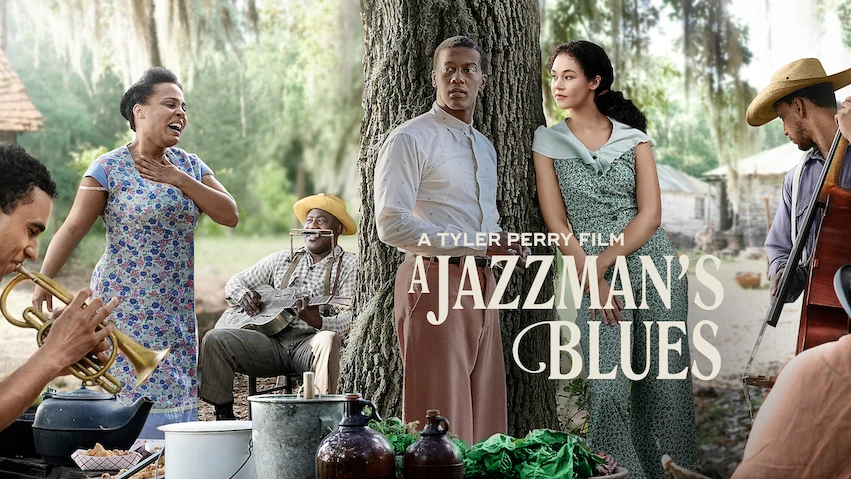
The cast of A Jazzman’s Blues.
Making the film also took some creative problem-solving skills. For example, when he was first looking to cast the leads, he originally imagined himself as Bayou and Halle Berry as Leanne. But as the years passed, he began reaching out to a number of younger, well-known Hollywood actors but heard a lot of noes. Undaunted, he looked to Broadway for fresh talent and eventually found Boone and Pfeiffer. “Life can be like a maze,” he says. “If you hit a wall, you’ve got to backtrack and find a way through it. Every time I would get a no, I knew that I had to go the other way and remind myself that I have helped [actors] that many people did not know become huge stars — at some point in their career, they worked in a Tyler Perry film.”
Perry’s focus and tenacity finally paid off when A Jazzman’s Blues finally blossomed, nearly three decades after he conceived it. Given all he’s done in the intervening years, it’s natural to wonder if this movie represents the “real” Tyler Perry, who he truly is as a storyteller and creator. “That’s a good question,” says Perry, “but, no, I’ve been authentic in everything that I’ve been doing from the very beginning. When I’d see a critic or someone say something about a movie that I’ve done in the past, I was always aware that I’ve got Jazzman in my back pocket. My hope is that people would be open-minded enough to realize that just because a person has done one thing one way doesn’t mean that’s the only thing they can do.”