This article contains major character or plot details.
Nearly 1,000 years after the end of an uproarious era of bloody raids, possibility-defying expeditions in narrow boats, and history-setting battles against the organized and disciplined English, we’re still transfixed by the sheer audacity of the Vikings.
Today, the brutal and largely misunderstood warrior people of 9th- to 11th-century Scandinavia continue to raid our psyches. Each new Vikings-themed series seems to raise our expectations for what’s possible in scope and detail in re-creating their most epic battles.
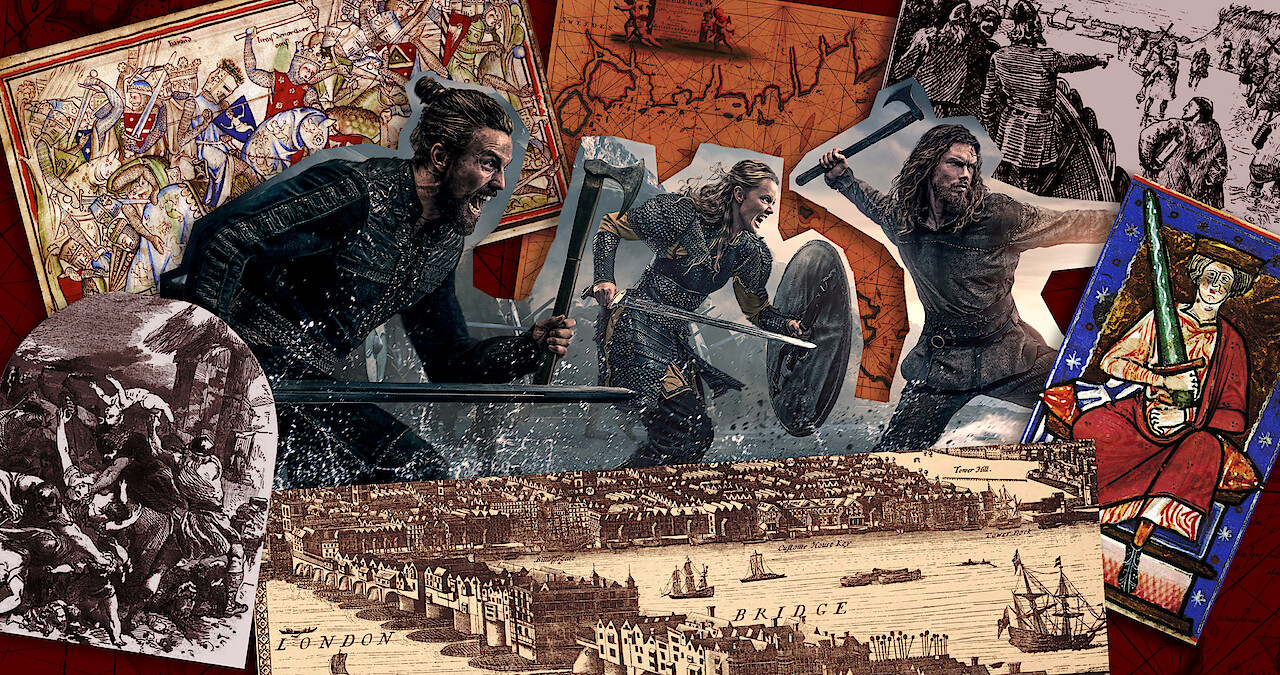
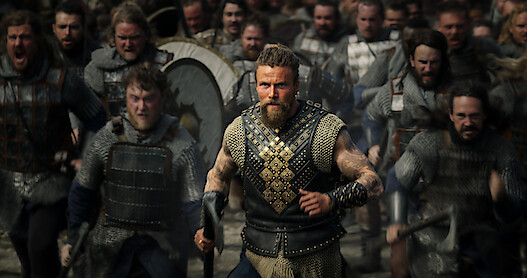
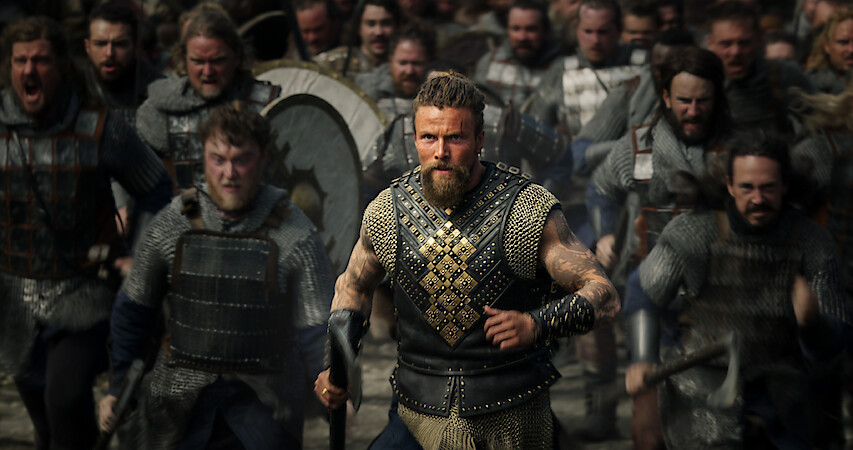
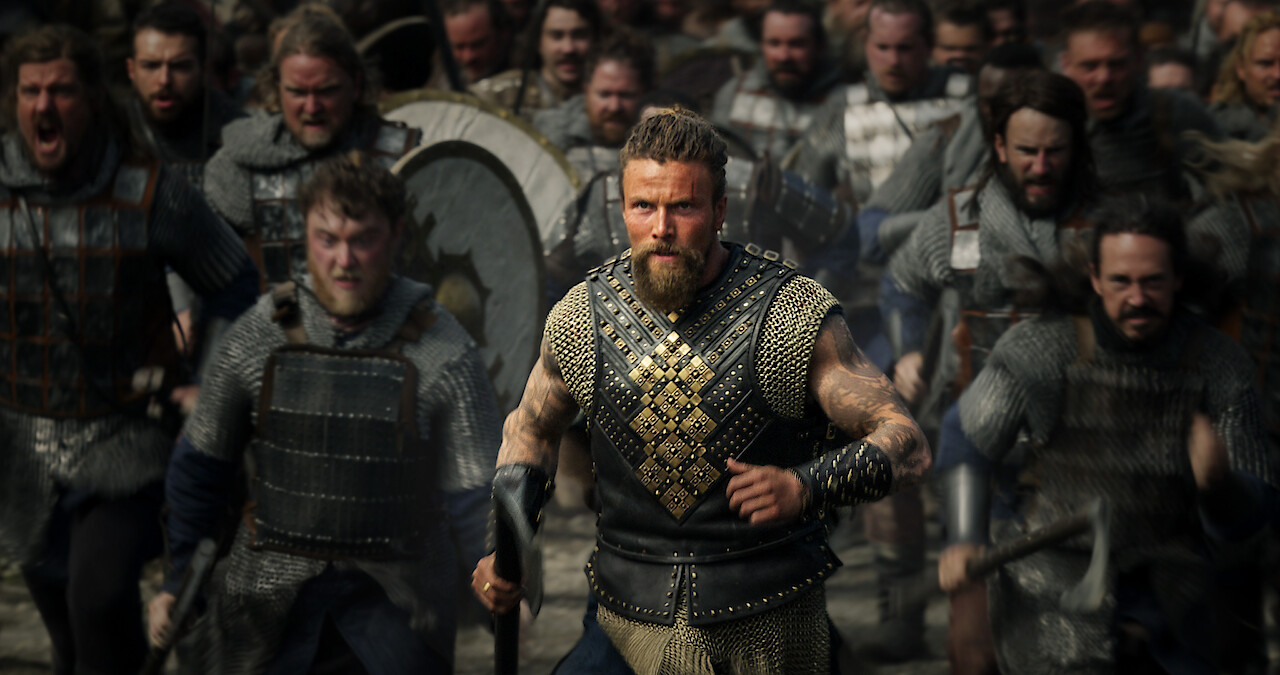
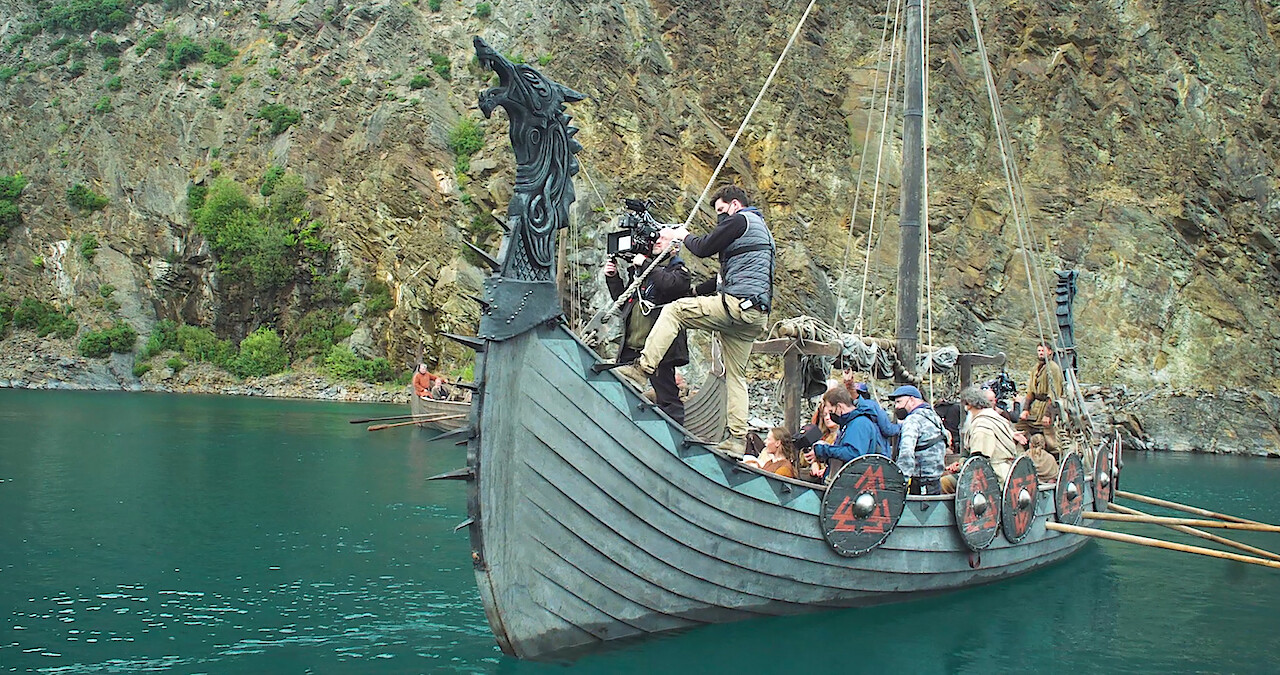
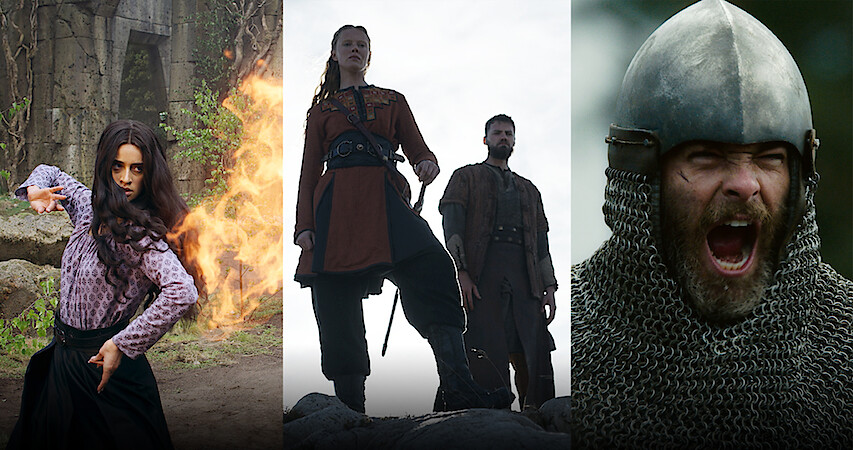
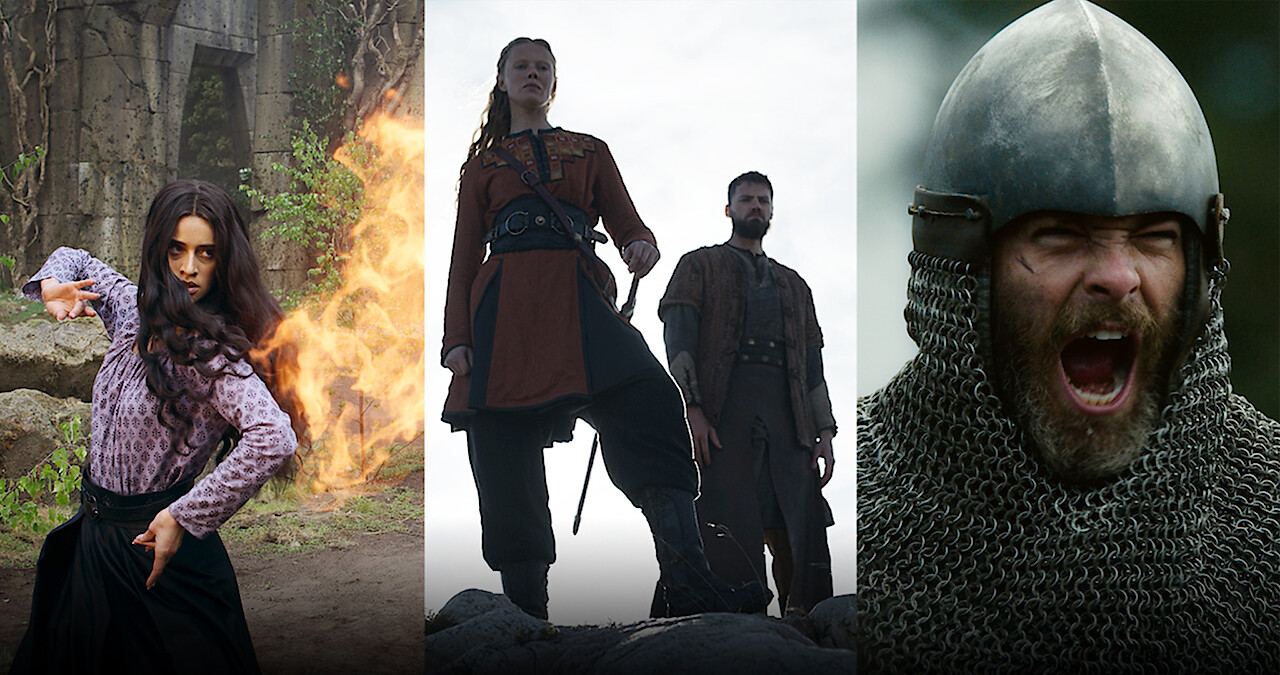
All three seasons of Vikings: Valhalla contain major fights scenes (among numerous other skirmishes and displays of general Viking bad-assery). So in honor of the series’ conclusion, let’s look back on some of its biggest clashes.
There’s the St. Brice’s Day massacre, Kent on the road to London, the London Bridge, and, finally, the invasion of Kattegat. “Yeah, those are ‘the big four,’ as we used to call them for Season 1,” Stuart tells Tudum, before breaking down the historical accuracy and research that went into each.
St. Brice’s Day massacre
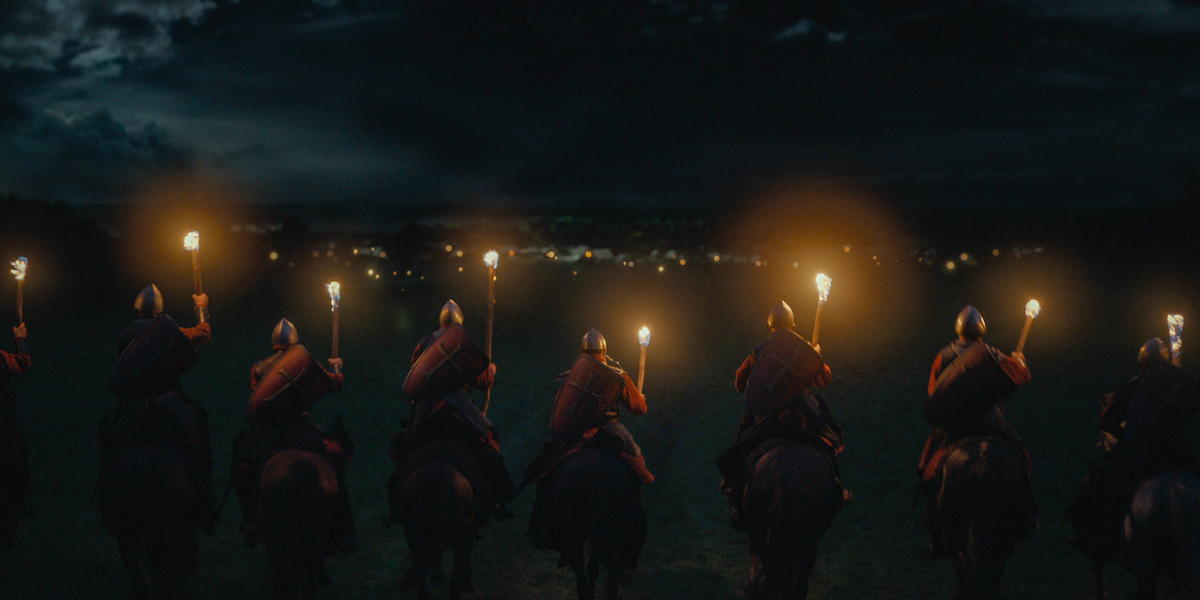
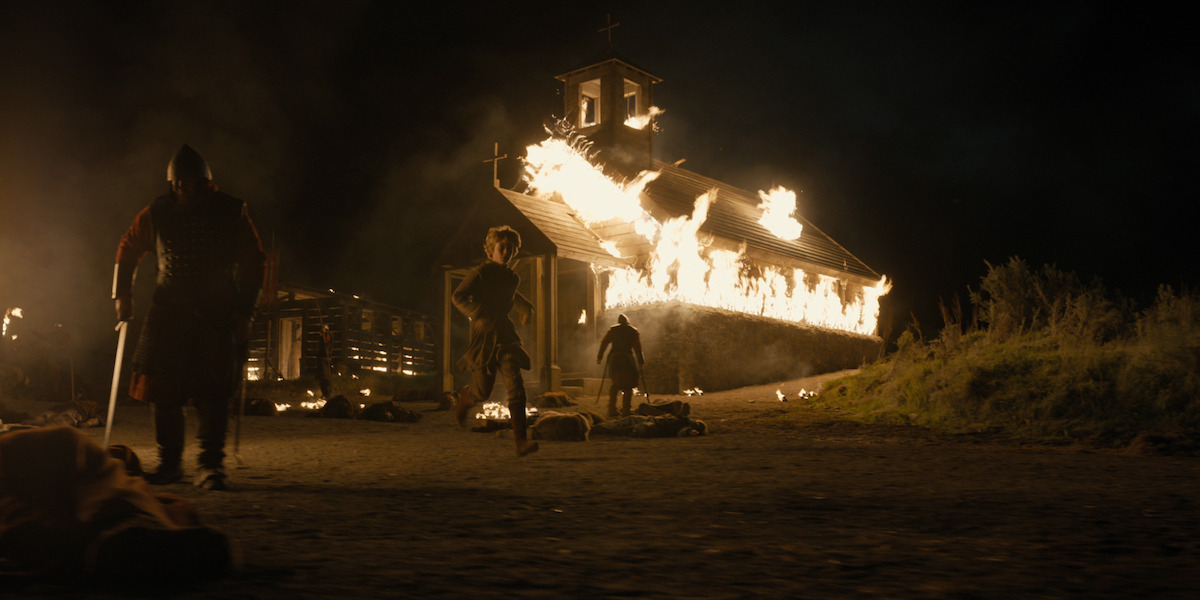
The series opens as Saxons and Vikings alike gather in their respective regions for the feast of St. Brice’s Day. Without warning, the celebratory setting turns violent, as the English surprise-attack all Vikings within their lands.
“St. Brice’s Day is based on reality,” Stuart says, as he details what happened on that day in November 1002 when King Æthelred’s army set out to kill all Vikings living in England.
At that time, Vikings (a modern catchall for seafaring Scandinavians from present-day Denmark, Sweden, and Norway) had been living in England for over 100 years. They settled in regions of England known as Danelaw, where they followed Danish law and customs. Many learned the English language, married into local society and some had been baptized into Catholicism. According to Stuart, even King Æthelred’s security detail was composed of Vikings. “So this was what the Saxons were feeling in the early part of the 11th century: ‘These Vikings are beginning to integrate into our society. Look, even you, the king of England, use them as your personal bodyguards. If you let this keep going, next thing there’s not going to be an Anglo-Saxon culture. There’s just going to be this big group of others,’ ” he says.
According to Stuart, archeological evidence shows that Æthelred called his bodyguards together and ambushed them. Then, urged by Saxon nobles, “Æthelred sent his soldiers into the Danelaw regions,” Stuart says, “and began ‘the extermination,’ as he called it.”
The tensions between Saxons and Vikings in the 11th century are not far removed from political circumstances today, Stuart points out. “You don’t have to look far in today’s world, especially in Western Europe or America, where we have cultures colliding,” he says.
In the following episodes, the Vikings gather one year later, called together by King Canute, to avenge the massacre. “I do not think Æthelred would’ve taken this risk [with the massacre] had he thought that the Vikings up north would have gotten their act together and come after him. I really thought that he felt that group up there were fighting among themselves, and that those days [of Viking threat] were long gone,” Stuart says. And thus we find ourselves in the overarching plot of the series.
Kent, southeast of London
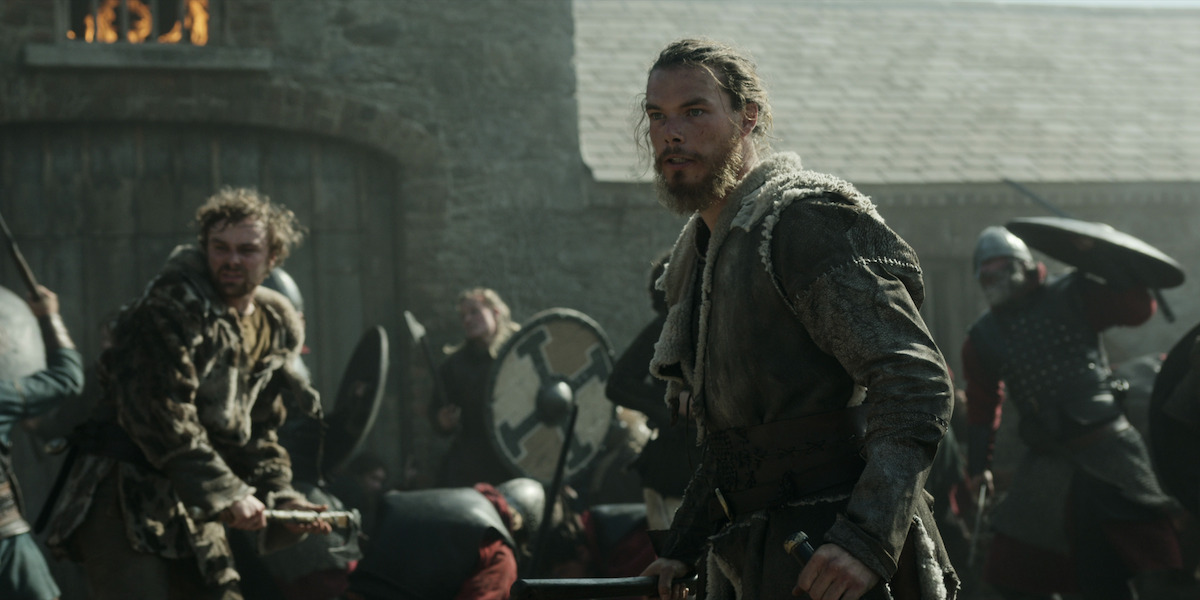
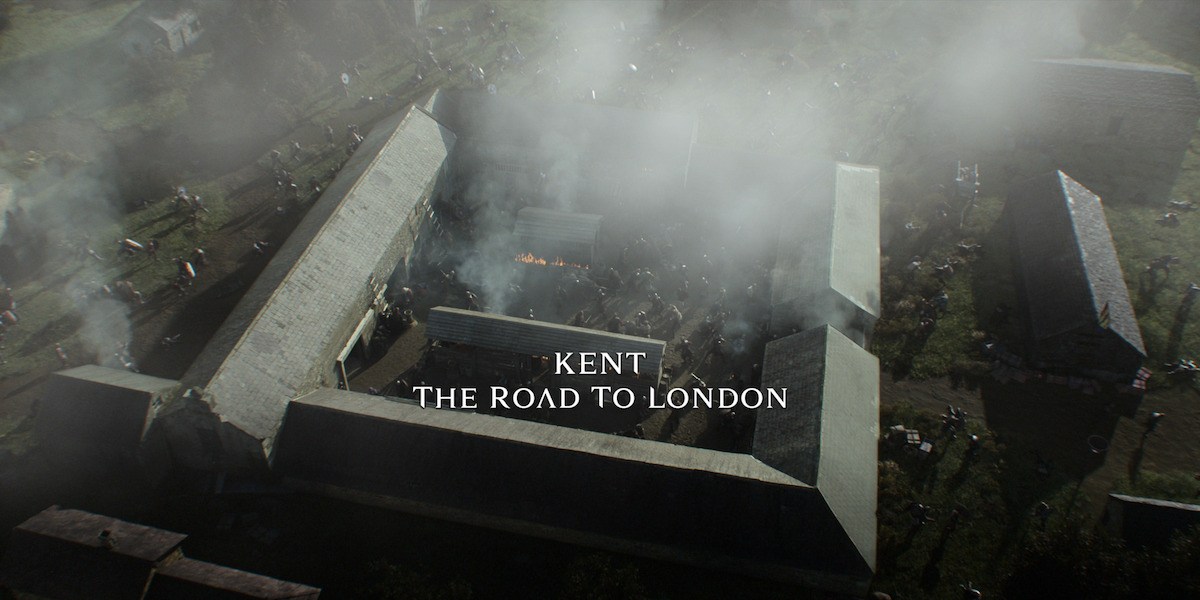
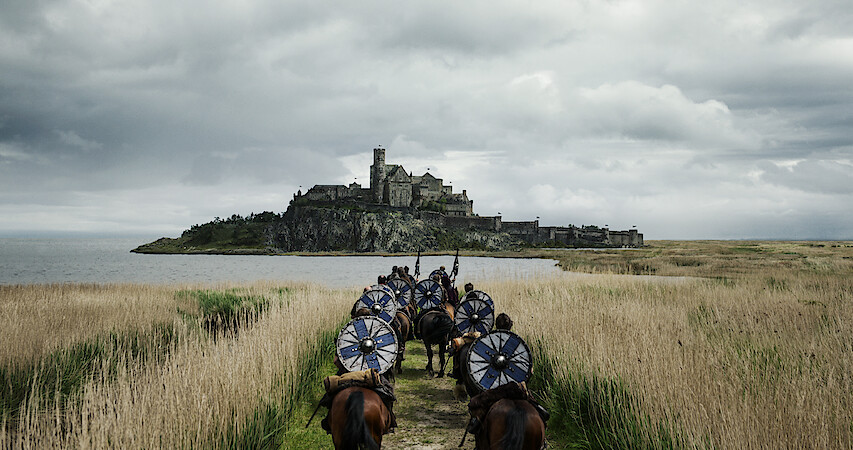
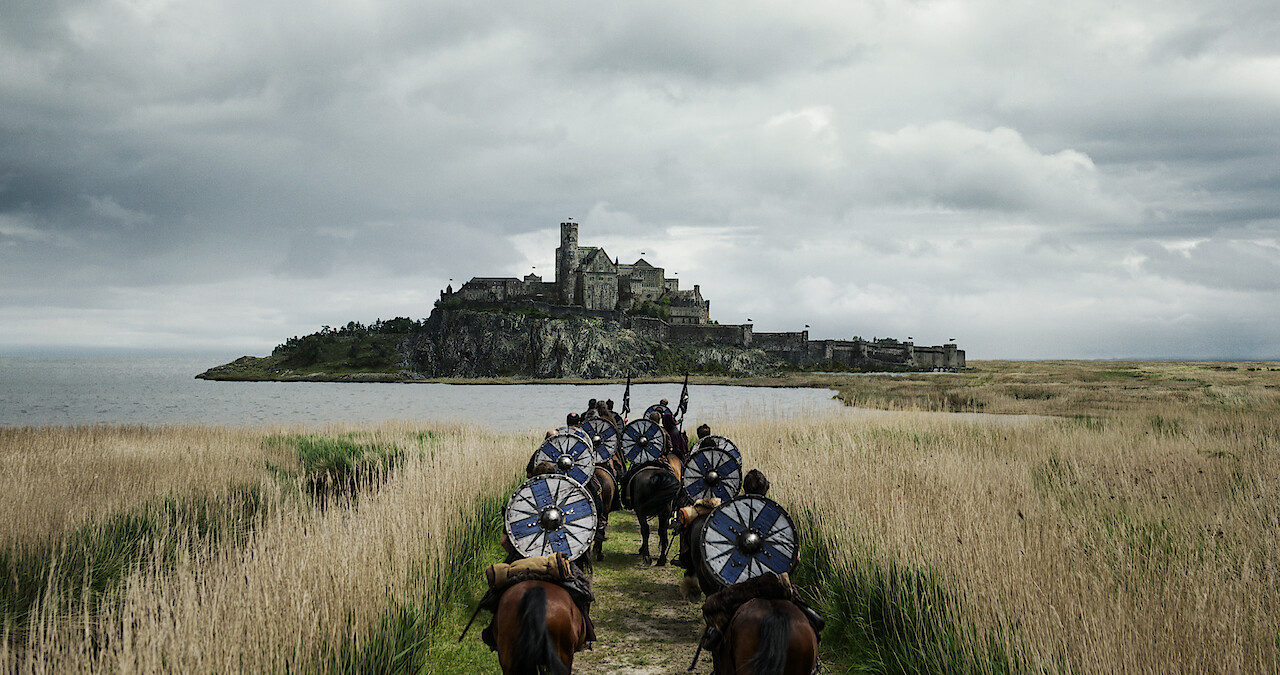
Following the advice of Olaf Haraldsson, Jarl of Norway, Canute’s avenging army sails to the southeast of England to invade London from the marshes to the city’s south — a strategy Olaf assured Canute the Saxons would never expect. And yet, Season 1’s third episode opens in the heat of a bloody battle raging in Kent, on the road to London, where the Vikings had been met with a surprise of their own: that the Saxons had anticipated and were prepared for their arrival.
“Kent, for me, was an amalgamation of a lot of different battles that took place over many, many years,” Stuart says, explaining that King Canute is known to have sailed in to Sandwich Bay, southeast of London, and in to Kent, as well as around Kent, to Dorset, with much fighting taking place along the way. “But I needed one battle,” he says of his decision to condense chronology into one most action-packed episode opener. “That battle, by the way, is probably one of the most accurate battles that we ever staged,” Stuart says. “Lots and lots of planning went into the battle of Kent.”
London Bridge
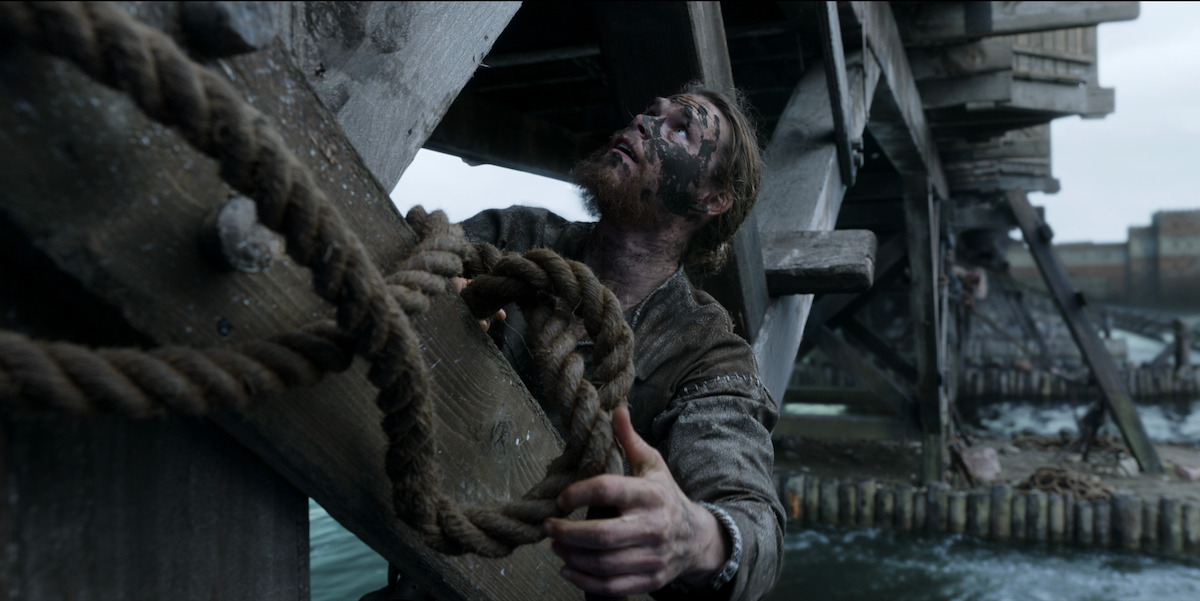
In Season 1, Episode 4, London Bridge falls down. The Vikings — that is, the legendary Leif Eriksson and his band of Greenlanders pull it down. The episode gives context to the ubiquitous nursery rhyme, but did this event really happen?
“It depends on who you listen to. I mean, there are, like, four or five different versions of that song,” Stuart says.
However, the one that Stuart was drawn to for his creative rendering was the version found in the Heimskringla, a collection of sagas by 13th-century Icelandic historian Snorri Sturluson, “who basically leans into the idea that [the song] is talking about Olaf,” Stuart says, listing some of the descriptives found in Sturluson’s sagas, like gleaming armor, flaming arrows whizzing by, and straining ropes.
“But quite frankly, sometimes the lack of real evidence is great stuff for me,” Stuart says, speaking of the creative process that can begin when historic details are unclear.
“I have to approach this both from a historical standpoint and a storytelling standpoint. We know exactly where the bridge was. We know that Canute channeled around the bridge from the south. We know where [the Vikings] went across. What we just don’t know are all the details. And hey, I’m the right guy to play in that field, because I can go play in that gray area,” says Stuart.
As a dramatist, the bridge served as a way for Stuart to bring the two sides, Viking and Saxon, together. “And I didn’t want to do another big Viking battle in a field. I wanted [this battle] to be something we’ve never seen before.”
Kattegat
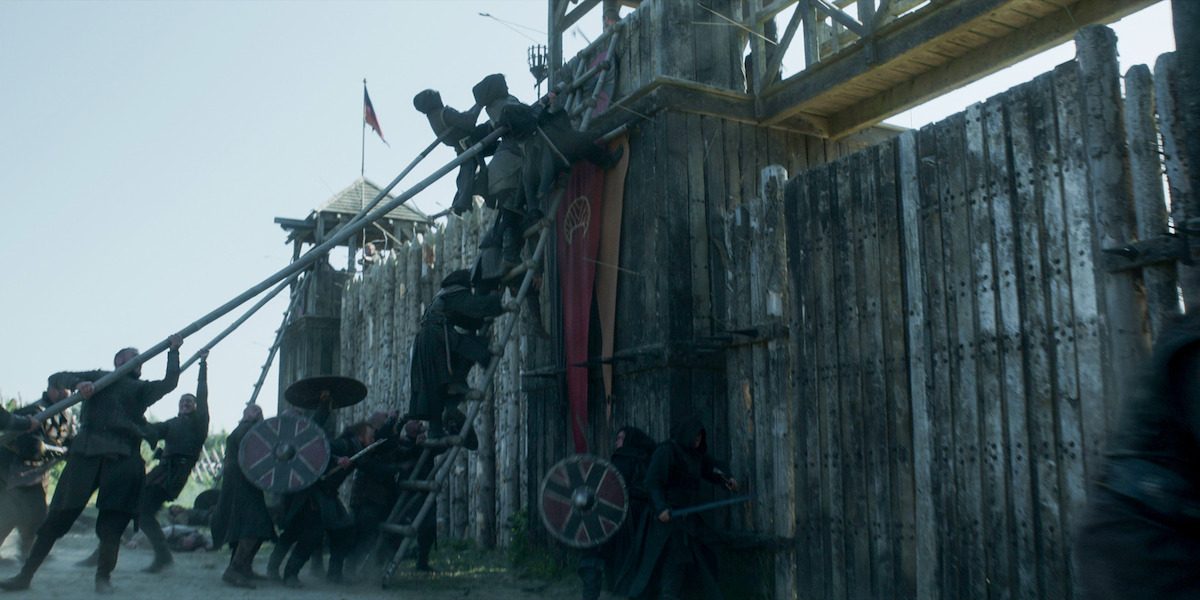
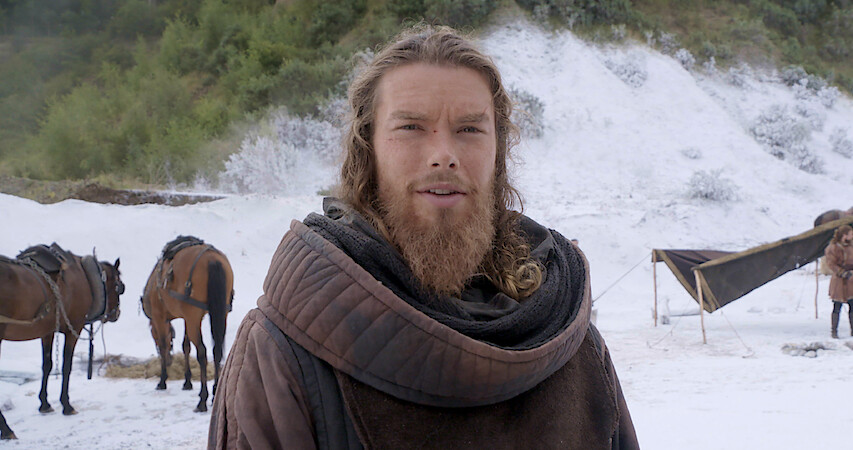
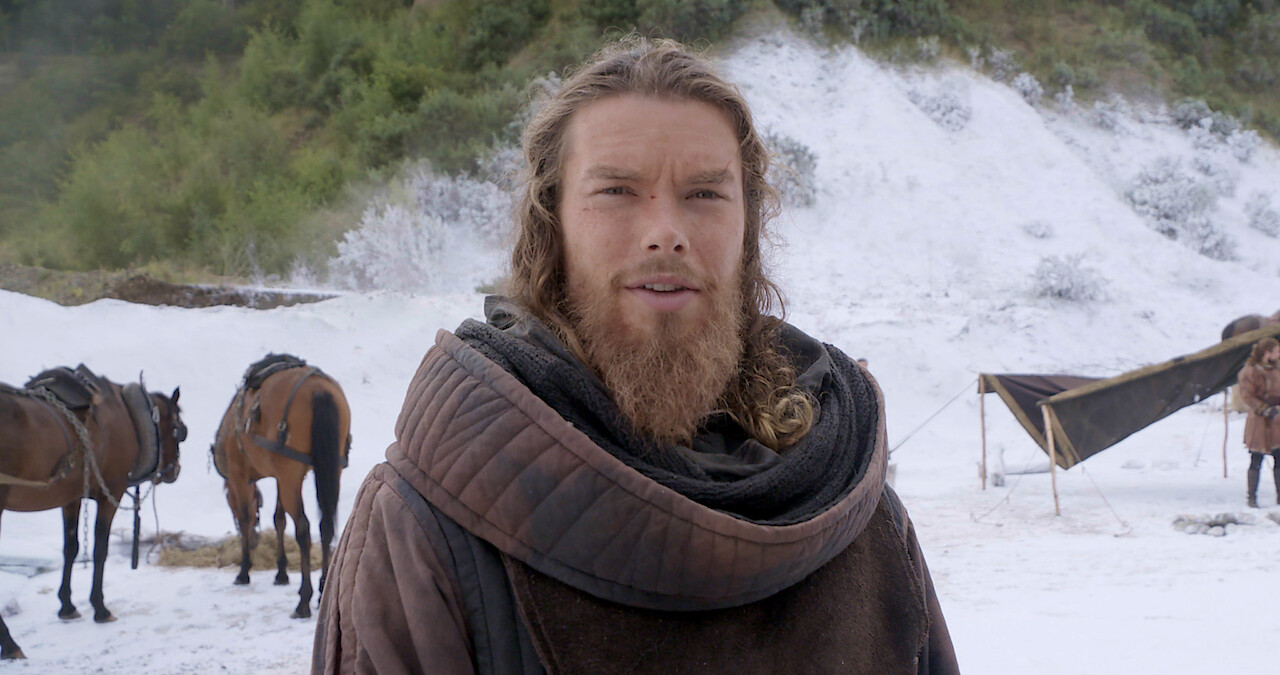
In the eighth and final episode of Season 1, we follow Olaf Haraldsson’s rogue army back to the village of Kattegat, in Norway, where the Vikings first gathered under Canute’s direction to organize the invasion of England. Olaf now intends to invade and seize Kattegat for himself, to officially claim the throne of Norway. The battle contains perhaps the most tension and suspense of the “big four,” as the fighting takes place between three armies, and is divided between two points of attack, as Olaf’s army stages a faux sneak attack from the shore while the full army plans to ambush from land.
“The battle of Kattegat is completely fictitious,” Stuart tells us. “I know this will be a shock to people new to the series, as it was a shock to the people in the original series, that Kattegat never existed.”
As he describes it, in Vikings: Valhalla, Kattegat is a place that Stuart, as a storyteller, can infuse with the authenticity of what is known, while building a narrative that works on various levels. According to Stuart, however, historians have long known that Olaf Haraldsson was a vocal proselytizer of the Christian faith, and that “he did lay waste to a lot of pagan cities in his path as he tried to bring Christianity to the Norse,” he explains.
The authenticity in this battle is in the details, from the weapons used to the buildings in the village of Kattegat that become littered with the dead. The trebuchets used to decimate Olaf’s troops are authentic to the time, as Stuart states that the Vikings would’ve had that technology for at least a hundred years at this point. The crossbows, swords, axes, shields, and other hand weapons are all “painfully accurate,” to the time. “Everything we have in that battle would’ve been appropriately used by the Vikings, if there had been a Kattegat and there had been a battle of this scale,” Stuart says.
The same goes for the structure of the buildings in Kattegat. “One of the first things I said, when I got to Ireland and walked around with [production designer] Tom Conroy was, ‘Wouldn’t there be two-story buildings here?’ And he said, ‘Not in Norway.’ ”
However, fans of the original series will note that Valhalla’s Kattegat has been upgraded with the kind of expansion and improvements that might have been seen over the 100 years that separates the two series. The great hall is now taller and contains a balcony and wings that Stuart says would’ve been accurate to the time period.
“And given enough time — and don’t want this to be a spoiler — but given enough time, a lot of those great halls in Scandinavia became Christian churches,” Stuart says. “So God forbid, we could see a cross rise up over the great hall of Kattegat.”
This interview has been edited and condensed for clarity.