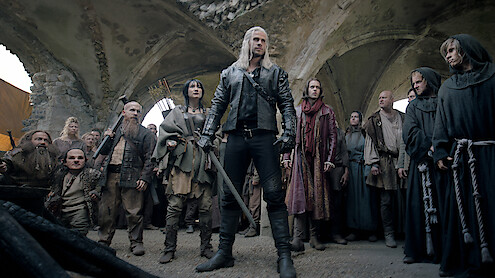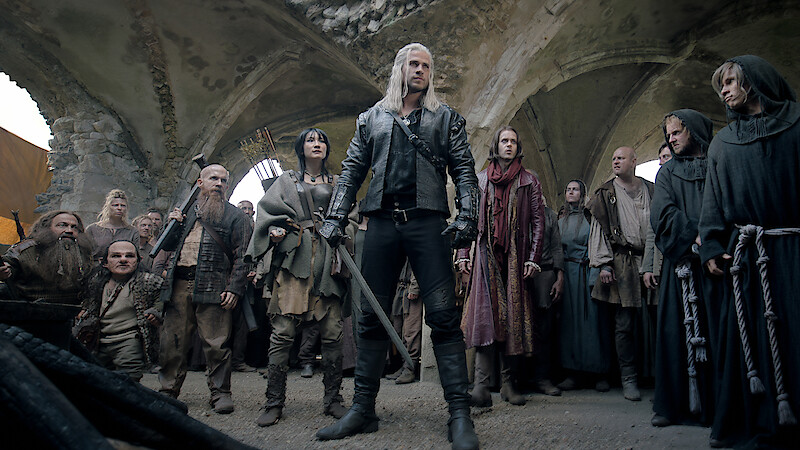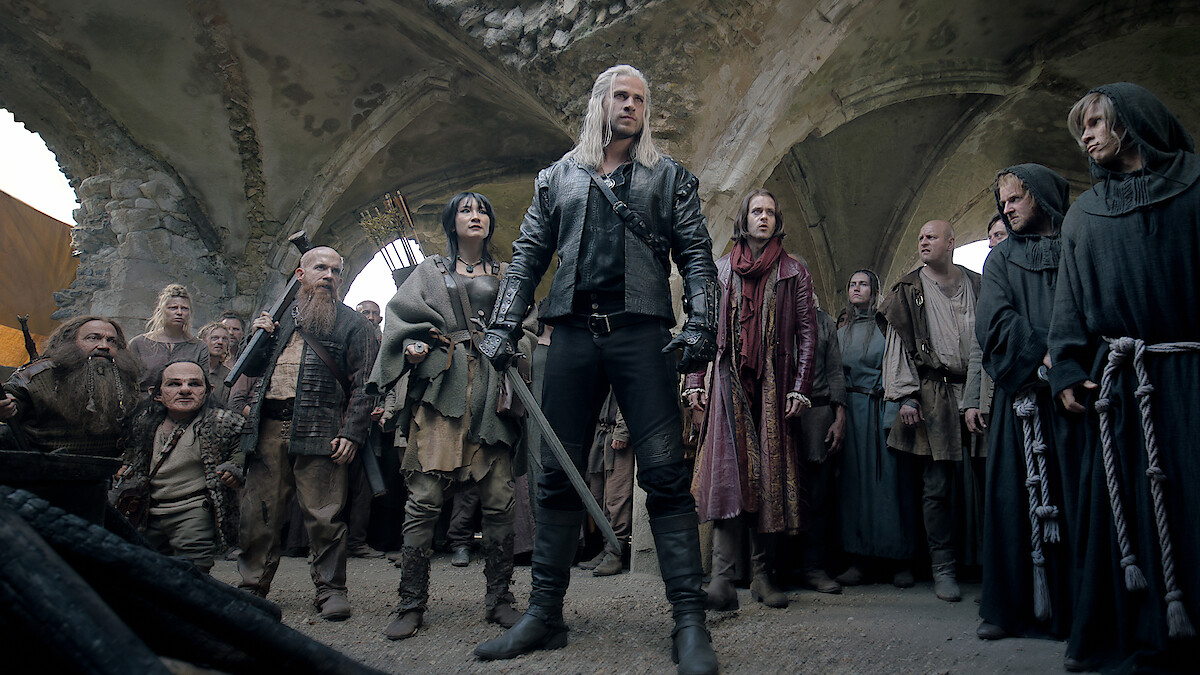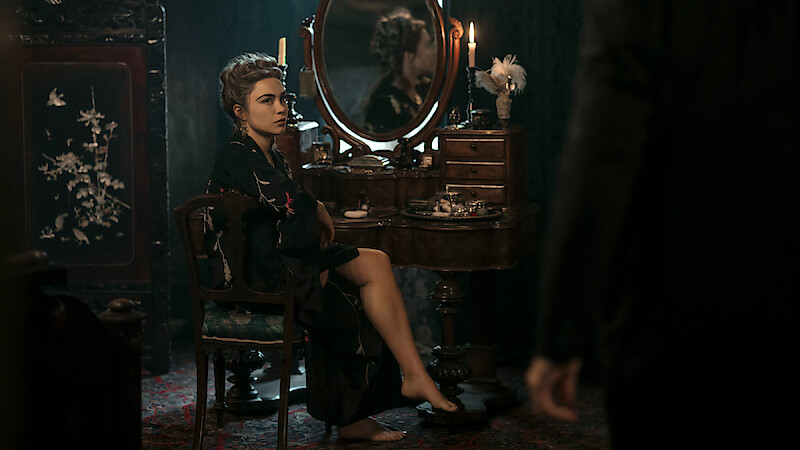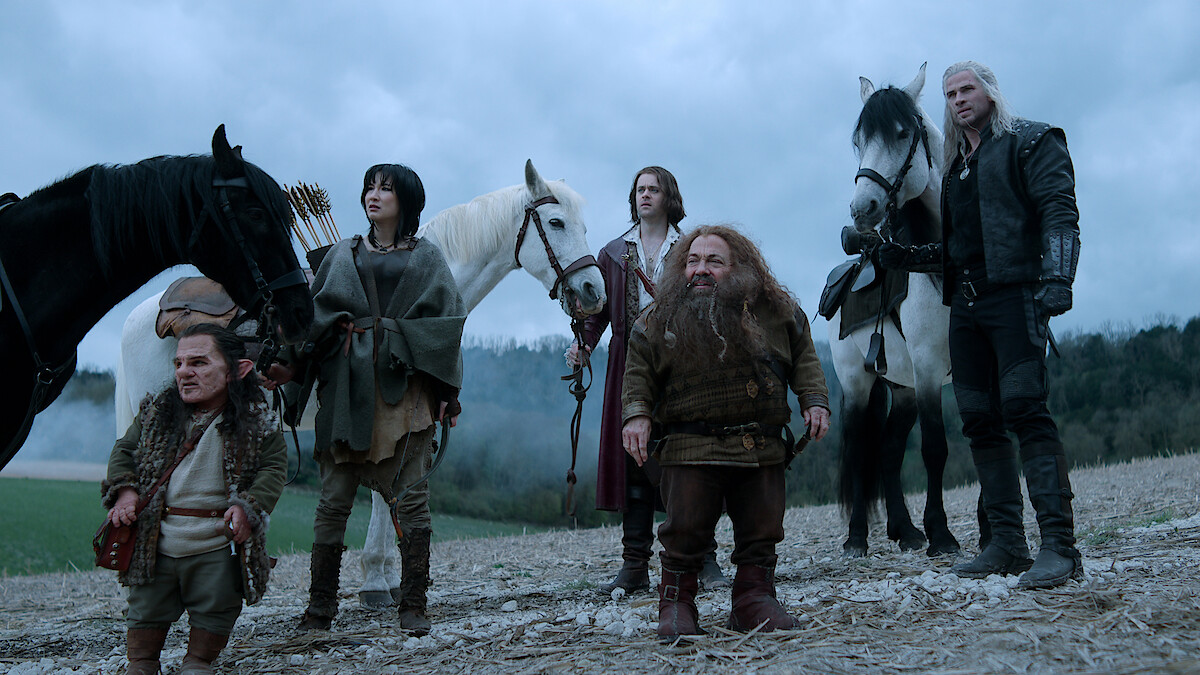

Join Geralt of Rivia, Lara Croft, Master Chief, and more on their adventures.
A Guide to the Continent and all its Creatures
The world of The Witcher spans thousands of years and stretches to the furthest reaches of the Continent. Contained therein are spells and monsters, poisonous herbs and magical beings, endless deserts and stormy mountaintops. Upon the release of Season 4, here is our guide to every single thing that falls within its boundaries. After reading it, you’ll be ready to endure the Trial by Ordeal — if you dare.
A telekinetic thrust that can be used to stun, repel or disarm an opponent.
A precious stone that can provide warmth, energy, balance and the courage to right wrongs.
One of the Four Kingdoms, lying between Temeria and the Mahakam Mountains to the west and the Blue and Fiery Mountains to the east. It is where Yennefer first served as a mage.
The sword, scabbard and belt; polearm; and dagger and sheath are common weapons for combatants from the kingdom of Aedirn.
A muscular amphibian with rough skin, a viciously spiked tail and corrosive, acidic green saliva that makes it good at killing.
Ithlinne’s widowed mother, proprietor of the Drunken Goat tavern in Inis Dubh.
Alchemy is closely related to magic and also involves elixirs and potions, but an alchemist would say that their field of study is more scientific. Usually mages as well, alchemists devote their life to the study of metals, the transmutation of matter and the secrets to eternal life. Perhaps the most important and controversial form of alchemy is mutagenic alchemy.
The newly crowned King of Xin'trea after the death of Mad King Darach, Alvitir’s reign was short. He tried to end the 1000-year war between elves by brokering a peace treaty, but with tragic consequences.
A student at Aretuza Academy, who attended at the same time as Yennefer, but didn’t show the same magical promise. She was turned into an eel by Tissaia, along with Doralis and Lark. If you didn’t have what it took to support Chaos, you were sacrificed to support the ones who did.
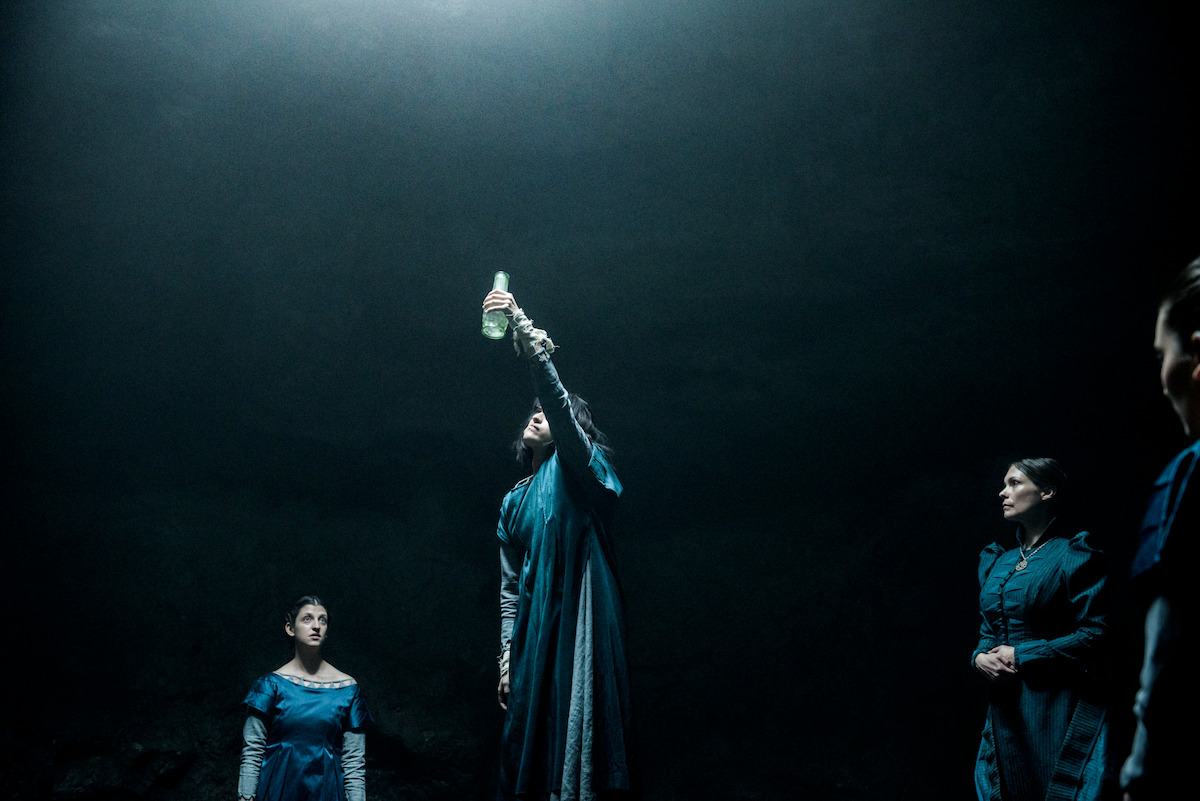
A magical aca demy for women situated on Thanedd Island, with architecture reminiscent of the elves who built it. Notable students include Yennefer, whose time there under the mentorship of Tissaia de Vries formed her future.
An old mage of the Nilfgaardian vassal state of Toussaint, Artorius Vigo is a traditionalist member of the Brotherhood of Sorcerers and the nepotistic uncle of Fringilla. Artorius was once the chair of the Chapter, where he gained influence by preaching conservative ideas, though he lost his power by refusing to adapt with the times. He found it hard to choose sides as conflict captured the Continent, but his passivity was what led to the burning of Cintra — paving the way for Tissaia and Vilgefortz to gain influence in the aftermath.

A lower ranked mage amongst the Xin’trean palace mages, young Avallac’h was content with his position, but destiny had other plans. After inadvertently saving the Empress from an assassination attempt, Merwyn entrusted Avallac'h with the task of retrieving Syndril’s book of monoliths from Balor, with the intention of trapping the Chief Sage in another world. Avallac'h found the book, but it was obvious to Balor that the young mage was behind the theft. Balor lashed out at this young upstart. Avallac'h fought back but barely survived their encounter. Unwittingly he had now forced Eredin to act, choosing Merwyn’s side, and leading to the imprisonment of Balor. Avallac’h was now at the core of Merwyn and Eredin’s plan to conquer other worlds. His study of Syndril’s Book Of Monoliths led him to discover its other power, the magical equation for time travel. Avallac’h’s influence on the Continent was just getting started.
A hypnosis sign that can be used on all creatures to manipulate their thoughts, whether to get them to do what you want, play mind games or even just calm a skittish horse.
A roughed up pair of elven refugees who were forced to sacrifice flesh and family in exchange for freedom. The brave duo escaped violent roundups in the North and sought refuge where they could find it. Their journey to the Sandpiper led them through a Gors Velen aqueduct where they ran into Yennefer, Cahir and a hungry zeugl. Even though Ba’lian didn’t want to go down without a fight, he fled when the deaf Dermain was dragged into the deep.

Chief Sage and adviser to the king with an insatiable thirst for power, Balor staged a coup against Xin'trea’s Mad King and established the new Golden Empire.
Balor didn’t like to talk of his past. But it was common knowledge at court that Balor was low-born, discovered by a mage after he mysteriously survived the burning of a feudal village. It was clear he was special; the mage took him to Xin’trea to school him further.
A prodigy with magic, Balor soon caught the eye of “Mad King” Darach. His unconventional ways with magic made him a favorite of the unhinged King, much to the chagrin of the inner chamber of mage advisers.
Balor adored order and despised the chaos and chance that is often found in elven mages’ earthen and celestial magic. Although he was wary at first, Balor found the theories of a shunned young Darwenish druid, Syndril Cullwyn, fascinating. They offered something in magic he had not seen before: logic — mathematical corridors and shapes applied to the wild earth/celestial magic. And so Balor took Syndril as his own apprentice and encouraged his experiments. When Darach’s son Alvitir tried to end the 1000-year conflict between elves, Balor seized the opportunity to stage a coup. Using Syndril’s magical equations to adapt the ancient dwarven monoliths he had raised, Balor was able to cross into another world, where he encountered the lure of chaos magic and used the gift of a terrifying beast from a mysterious lifeforce there to return to his own world and wipe out the Xin'trean, Darwenian and Pryshian royal families and clans sworn to protect them. Knowing his lowborn status in this classist society, he installed Merwyn as Empress of the new Golden Empire, as a puppet the people would accept. But, Balor was the real power behind the throne.
Merwyn tried to wrest power from Balor by siding with Eredin, the Golden Empire High Commander, but ultimately failed. Hungry for greater power, Balor sacrificed Fenrik, his only true friend, to a powerful force from another world. In doing so he became the first elf to harness both natural and chaos magic. As a means of revenge he trapped Eredin and his followers in another realm, but was ultimately defeated and killed when his own chaos magic was amplified by Zacaré and Syndril using the monolith and turned against him.
Zacaré and Syndril were able to defeat Balor and destroy the master monolith but unwittingly triggering the Conjunction of the Spheres, forever altering the Continent and bringing humans and beasts to the planet.
A prestigious magical academy for boys, located in the Kaedwen city of Ban Ard.
A deeply complicated dwarven game that used decorated playing cards.
A foul-breathed member of the draconid family commonly found in or near the Zerrikanian desert. Basilisks are dragons’ little siblings, though you might not see the resemblances instantly, because a basilisk’s body is a hodgepodge of different animal shapes and species. They have scaled bodies, sharp fangs, webbed wings and V-shaped legs — distinctive snake and bird features. Much like birds, basilisks can have different feather colors. In battle, a basilisk’s snakelike tail is not to be underestimated. A good tail whacking can send even the strongest witchers flying through brick walls. And whack you they will. They generally don’t need a reason to attack humans. They have toxic breath, a venomous bite and wings they use to attack prey — even though they can’t fly very far. Even their stare can be fatal, which is why using a mirror to show basilisks their own reflection is a good way to kill them. Though it might be wiser to use a silver weapon and aim for the head.
The basilisk’s mutated sibling, created through old magic. Equally dangerous, but even more ghastly, thanks to deformed talons, curved tusks and weathered wings. This basilisk is one of a kind, appearing only in the mountain pass near the elven academy. But it shares its deadliness with the original basilisk.
After the Slaughter of Cintra, Nilfgaard continued to march north, pillaging and burning every village in their tracks. None of the other kingdoms, nor the Brotherhood of Sorcerers, were willing to risk their lives to stop the Nilfgaardian army. Instead, a defiant group of mages, including Tissaia, Yennefer and Vilgefortz, faced Nilfgaard, unsure if their attempt would be futile. Fourteen mages, with Yennefer believed to be among them, died at the battle, but Nilfgaard was defeated — in the battle, at least, if not the war.
The climactic showdown where Geralt, Cahir, and their allies defend the Yaruga Bridge against Nilfgaard’s onslaught. Amid fire and chaos, Queen Meve rallies her troops, and Geralt earns his knighthood, finally becoming Geralt of Rivia.
The beasts of the Continent are legion, and each has its own distinctive power, motivation and vulnerability. While most humans would like to rid “their” land of these nuisances, Geralt, for one, realizes that not all beasts deserve to die, and not all humans deserve to live. Whether all the creatures in the Witcher universe, both malevolent and benevolent, should be seen as monsters is open to interpretation.
“Heiv eip, gröm eip!” “Bring together, bind together!”
Glowing moss used by elves and dryads to illuminate dark places. Safer and cleaner than a naked flame.
An age-old and relatively simple practice that allows the tracer to determine a person’s geographic location.
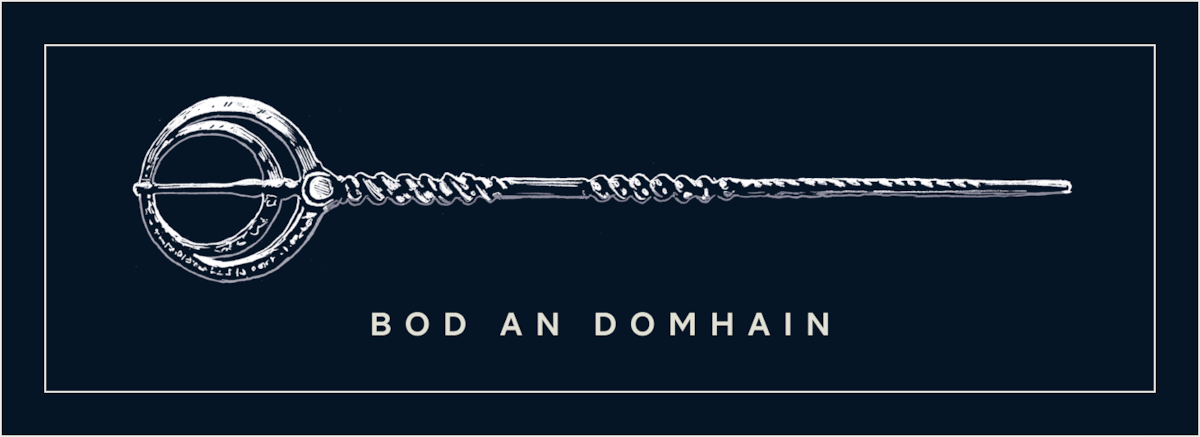
Brought to the continent by the explorer, Solryth and also known as Staff of the World, this powerful ceremonial staff was held by the Chief Sage, the highest magic office in the Xin’trean kingdom. It was Balor’s most treasured possession — a representation of all he was and all he’d gained — but he nevertheless sacrificed for a taste of the chaotic power from another world. The staff, however, was not enough: ultimately, he had to pay a far greater price to wield Chaos.
The inscription read:
“I am the echo of stars past, and those yet to shine.”
In the caves below the Tower of the Gull is an enormous collection of elven skulls and bones; the walls of the cave and its immense pillars are literally lined with them. Like many places on the Continent, Aretuza was built on the foundations of an ancient elven civilization like we see in The Witcher: Blood Origin.
Borch was a strange man who refused to carry a weapon. While he could be called a pacifist, his two Zerrikanian bodyguards — Téa and Véa — were definitely not. As the last of the gold dragons, Borch was very careful when traveling, rarely revealing his natural form. He was always disguised as a jovial man, no matter how skilled he was in the art of polymorphism. Borch had lived a very long time, gathering heaps of life experience. He tended to share his nuggets of wisdom with Geralt, whether the witcher asked for them or not. As much as Geralt hates a lecture, he recognizes the truth when he hears it. Without Borch, Geralt might never have returned to Cintra to seek out Ciri.
Botany is a core part of the magical experience, every magic student learns about nature’s medicine cabinet and all practicing mages pull from it. Witchers also have substantial knowledge of botany as they are, to a large extent, responsible for the creation of their elixirs. Each has its particular (poisonous) traits and purposes, so knowing where to find the right ingredients and how to apply them properly is paramount.
A gruff witcher from the Cat School whom the Rats recruit to help them with a dangerous heist in The Rats: A Witcher Tale. Initially reluctant, he’s known for his rough edges and thought to be a washed-up witcher. Over the course of the special, Brehen forms a complicated and sometimes protective bond with Mistle and the group, ultimately sacrificing himself to help the Rats escape.
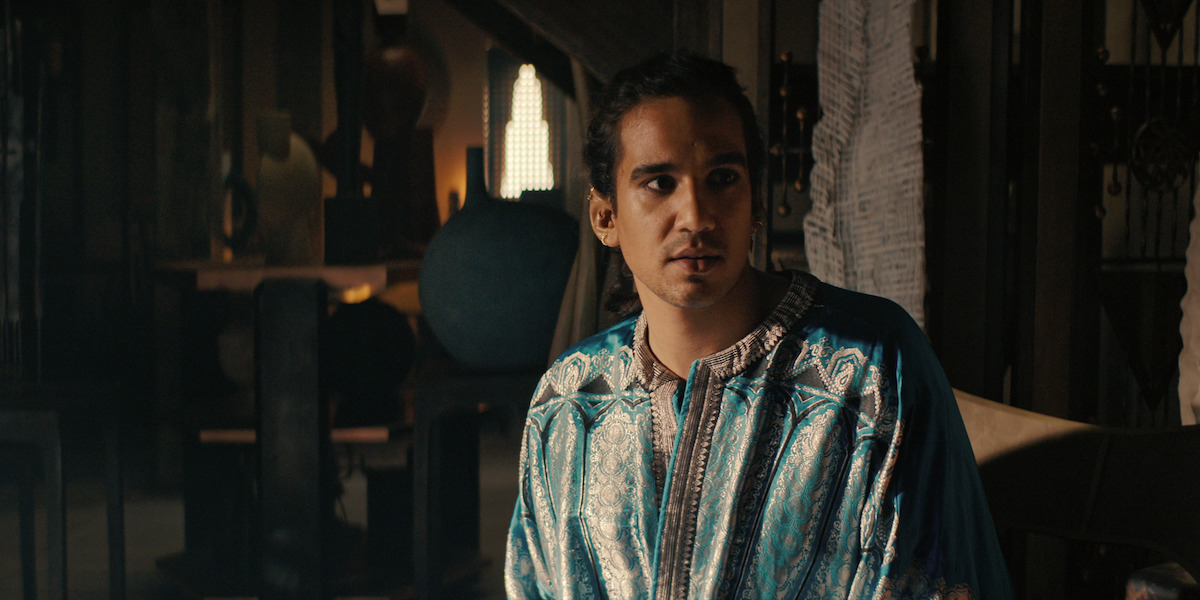
Born into the merchant class, with a taste for the finer things in life, Brían worked his way to a position of comfort and influence. He was a secret lover of Eredin, the High Commander of the Golden Empire army, as relationships between warrior and Merchant classes were forbidden. Empress Merwyn used their relationship — and, more specifically, the secret information Brían was privy to - as a way of blackmailing Eredin into her service.
An ancient forest queendom inhabited by dryads; it’s the only remaining nonhuman state in the northern kingdoms. Magical waters run through Brokilon Forest, they have the power to heal and erase memories of pain and suffering endured. Newcomers must drink the waters — if they have ill intent, they’ll die; if they are pure of heart, they’ll survive. As war begins to consume the Continent, Brokilon becomes a safe space for the persecuted to find refuge.

Callan, better known as Brother Death, was a damaged former soldier. He fled from war and found himself lost in Zacaré’s mists. Brother Death was able to find peace with Zacaré, and the two outsiders to society became lovers. Although tired of war and bloodshed, Brother Death joined Éile and Fjall when he discovered they were taking on the hated Golden Empire, their soldiers having wiped out a village of innocents he cared for. He lost an eye while trying to restrain the bestial version of Fjall, but survived.
The Brotherhood of Sorcerers, established in 839, is the oldest and most influential organization of mages on the Continent. Its inaugural members were the ones who drafted the Laws of Magic — the rules and guiding principles that dictate how Chaos should be used responsibly. Fire magic, demonology, necromancy, to name a few, were forbidden by law, and the Brotherhood saw to it that their members abided. Those who didn’t could face serious repercussions, like incarceration, banishment or dimeritium chains.
Near Brokilon Forest and just north of the Yaruga River lies Brugge, one of Cintra’s vassal states.
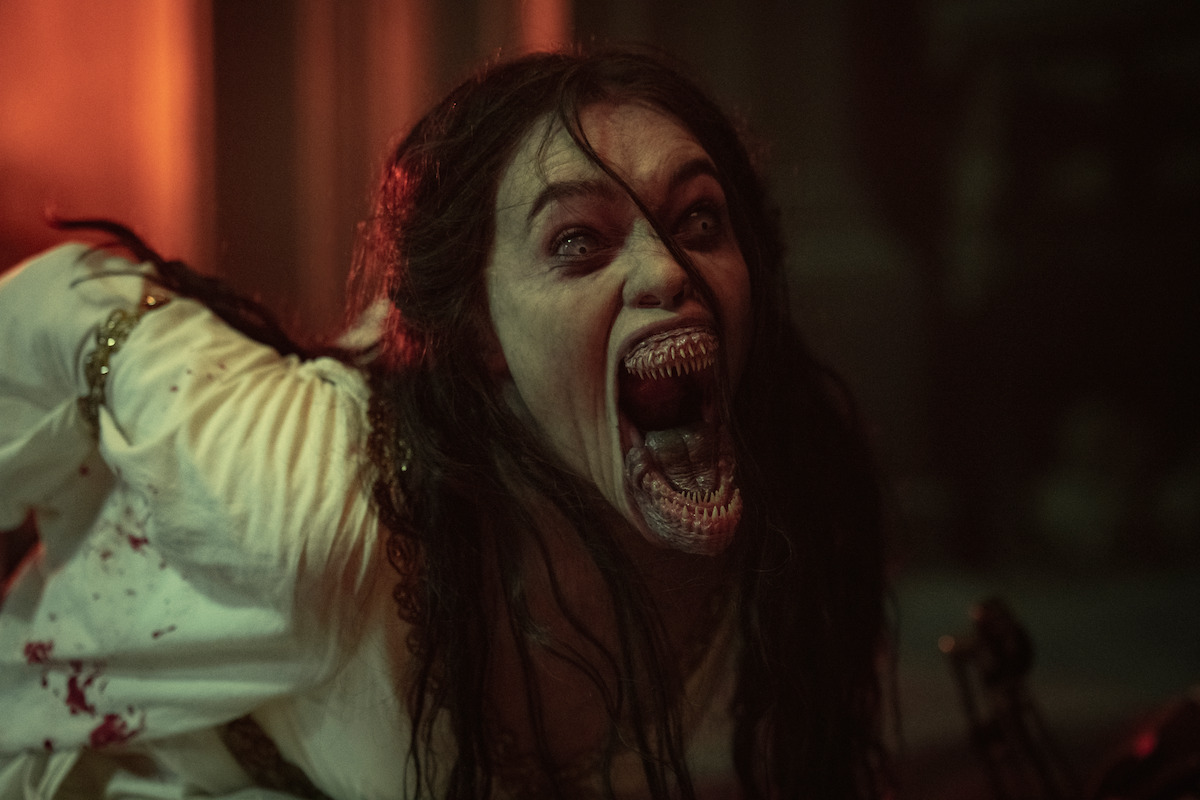
Bruxas are creatures with range, both vocally and visually. They’re capable of beautiful deceptions and beastlike brutality. In human form, the bruxa is often an attractive young woman — a look that undoubtedly helps her when charming victims. Her huge eyes and pale skin may appear harmless, but this stone-cold parasite is far from that — she’s a vampire-like predator who thirsts for human blood. She’s small in stature but grand in grotesqueness.
In her natural form, the bruxa is extremely nimble. She can crawl and climb like a spider, maneuvering tight spaces to become almost invisible. Her frame may be small, but when she flaps out her webbed wings, dislocates her jaw to bare her needled teeth and flies at you, she’s quite a horror to behold.
The bruxa is often in a secluded location, but she tries never to be too far from a host. She can only shape-shift into a beautiful woman, but her powers don’t stop there. She can communicate without being heard and move without being seen, and her huge wings make her dangerous in battle. When her jaw is disengaged, she can create a blast strong enough to seriously injure humans.
How can she be defeated? A silver weapon is key, and a beheading works best. You’ll know the job is done when a bruxa spontaneously catches fire.

Cahir Mawr Dyffryn aep Ceallach is a Nilfgaardian soldier who reports directly to the Emperor. He was the mastermind behind the attack on Cintra, and his prime directive was to capture Ciri. But he failed to disclose this to his magical counterpart, Fringilla, as both of them were competing for power and the Emperor’s approval.
After the Battle of Sodden Hill, Cahir was captured by the mages. They brought him back to Aretuza, where he was questioned, tortured and eventually sentenced to die. Yennefer, who was supposed to execute his sentence, ended up sparing his life. By way of Redanian sewer and Sandpiper transport, Cahir finally made his way back to Cintra, where he continued to plot and scheme his way into Emhyr’s good graces.
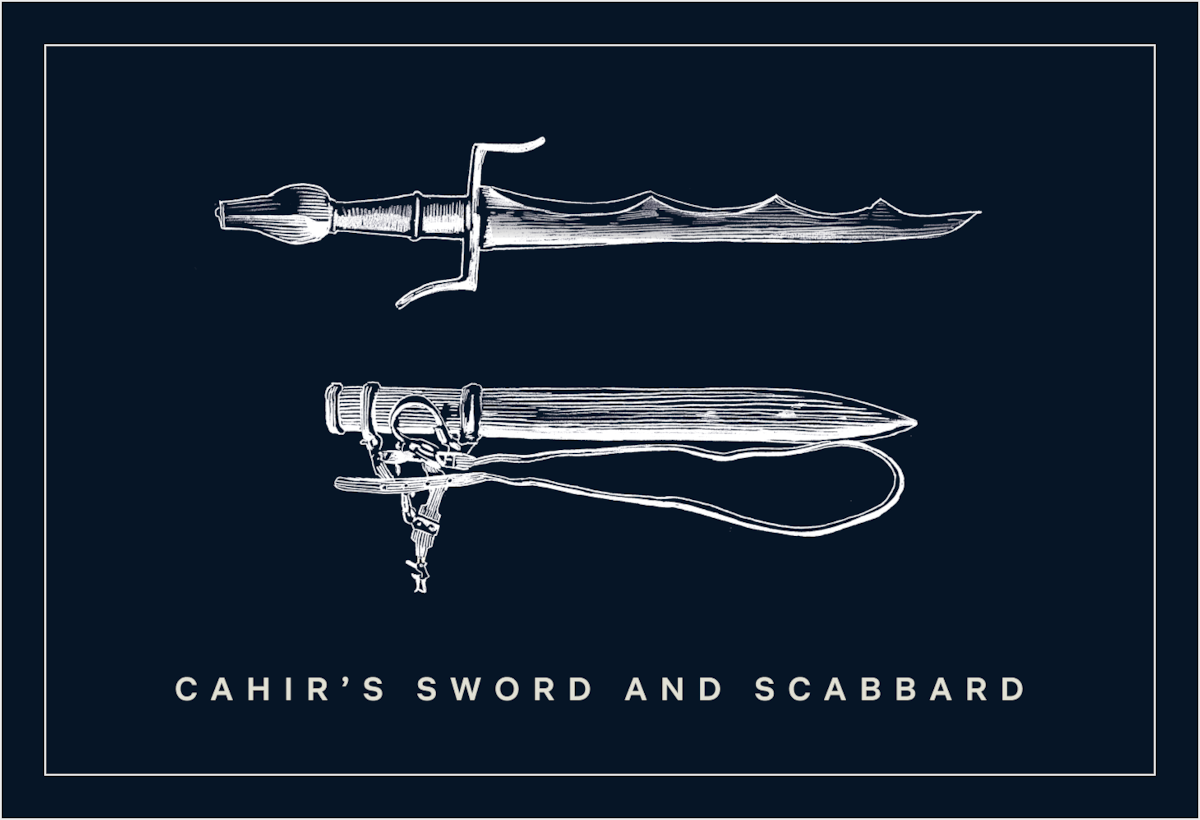
Cahir’s single-edged sword serves one purpose: hacking and slashing. Notice that the guard bends in opposite directions and the pommel has a sort of jewel shape, simple yet sophisticated. The wavy edge of the blade is both tactical and economical. This cut-out design uses less steel, making the blade lighter to handle and cheaper to produce. It’s a standard-issue falchion sword with purely decorative curves. One weapon serves all Nilfgaardian soldiers, Cahir is no exception.
The northernmost part of the Continent, this kingdom at the foot of a treacherous mountain range is bordered by Barefield, Malleore and Creyden, and is a hotspot for eager dragon hunters.
Chaos is the most potent force on the Continent — and the most difficult one to control. Elves were the first to experiment with it, but they weren’t the only magical beings in the history of the Continent. There were other magical races — such as dryads — magical creatures and, eventually, magical humans. Magical humans are rare, though, and they usually go through years of training at either Aretuza or Ban Ard to master a level close to that of elven mages. If magical power remains unchecked, especially in a Source, it can become dangerous. But, with proper training, it’s possible to master skills such as healing, teleportation, destruction, illusion and shape-shifting. It’s also possible to create certain magical items, such as amulets — witcher medallions are a prime example.
“Magic is organizing Chaos. And while oceans of mystery remain, we’ve deduced that this requires two things: balance and control. Without them, Chaos will kill you.” —Tissaia
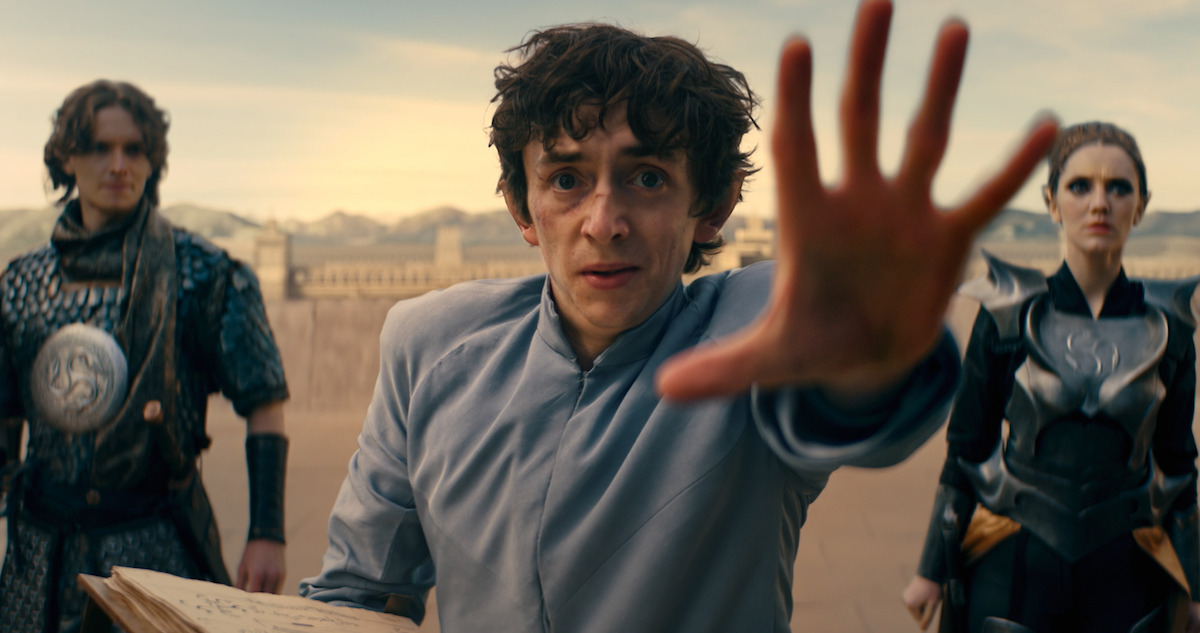
The Brotherhood was primarily a northern affair. It was controlled by a group of 12 mages called the Chapter, magical delegates from different realms, institutions and layers of society. The Chapter met regularly to discuss matters of state, the placement of young mages and whether or not to intervene in human affairs.
It was always the Chapter’s goal to remain neutral, but, of course, even mages were susceptible to bias and prejudice — they were, after all, human too.
A beast from another dimension, black like the crevice it came from and brutal beyond compare. Unlike other beasts and magical monsters, the Chernobog didn’t arrive during the Conjunction of the Spheres. It entered our world much later, mysteriously through a crack in the destroyed monolith near Cintra, proof that other spheres are still out there.
Everything about the Chernobog screams intimidation: Its sheer size. Its black exoskeleton. Its piercing yellow eyes. Its enormous claws, which are attached to long, muscular arms capable of grabbing a grown horse. And as having a hide that can barely be pierced isn’t challenging enough, the Chernobog also has the airspace advantage. With two giant webbed wings, it can swap solid ground for open air in a flash, attacking enemies ferociously from above.
The only way to kill this screeching, clawing, flying beast is to take a dagger or another sharp weapon to the weak spot in its exoskeleton.
Located along the western shores of the Continent, the country owes its prosperity to its maritime trade and shipping industry.
A powerful country known for its strong military force and its virtuous monarchy, Cintra is the realm that separates the northern realms from the Nilfgaardian Empire. Originally an elven city named Xin’trea, Cintra was once the only nation standing between Nilfgaard and the rest of the northern realms — until, that is, it was sacked and captured by Nilfgaard, leading to the death of its queen, Calanthe, and the escape of Princess Ciri.

“The Lion Cub” of Cintra, Princess Cirilla goes by Ciri. She’s an orphaned Child of Elder Blood, a Source, the sole heir to the Cintran throne and the first woman trained in the skills of a witcher.
Smart, strong and willful, with incredible magical powers that she had yet to discover, Ciri had what could be considered a charmed life as a girl, despite losing both her parents in a storm at sea when she was just an infant. She was the pride and joy of her grandmother, Queen Calanthe, and her strong will and self-sufficiency were as much a part of her DNA as her big green eyes. But everything changed when Cintra was seized by Nilfgaardian forces, and Ciri was forced to flee the only home she’d ever known and live like a fugitive, running from those who meant to use her for their own power-hungry purposes or — worse — kill her.
Despite her hardships, Ciri remained determined to build a new life for herself. In fact, when Destiny brought her and Geralt together, she seized the opportunity to train as a witcher like her newfound father figure. At Kaer Morhen, Ciri was introduced to a different way of life, one of swords, spells and endless studying.
As the prophesied Child of Elder Blood, and the sole heir to Cintra, Ciri was arguably the most important person on the Continent. Humans wanted her title, witchers wanted her blood, elves wanted her Chaos — but all stakes were upped when we discovered her own father actually mysteriously survived the shipwreck, and had risen to the role of Emperor Emhyr var Emreis of Nilfgaard – and he too was after her. She was the key to the destruction of the old world and the birth of the new, the descendant of Lara Dorren and the living epitome of Falka: fierce, remarkable women who were swallowed up by men afraid of their power — women whom Ciri was destined to avenge.
After her harrowing encounter at Kaer Morhen with Voleth Meir, Ciri goes into hiding with Geralt and Yennefer while agents from across the Northern Kingdoms and Nilfgaard try to track her down. The rogue mage Rience comes close, using a Jackapace to track Ciri’s blood while she’s distracted by the Belleteyn festival. Afterwards, Ciri’s treasured family is divided: Geralt sets out to track Rience down before he can strike again, while Yennefer takes Ciri to Aretuza to refine her control of Chaos.
This proves to be a mistake. Aretuza is attacked and Ciri is almost captured by Emperor Emhyr’s forces. In a desperate move, Ciri escapes through the unstable portal in Tor Lara, finding herself stranded in the Korath desert. After a grueling period of hunger, despair and wild visions of her powerful female ancestors, Ciri is eventually led to safety by a mysterious unicorn she christens ‘Little Horse’ – whose life she saves, though it leads to her renouncing her magical powers once and for all’ Alone, hunted, and still under threat, Ciri finds sanctuary with a band of young outlaws known as The Rats, joining their ranks under the pseudonym Falka.
The room from Yennefer’s perfect-little-family vision and Ciri’s residence in Kaer Morhen. It’s the first room that she truly got to call home since fleeing Cintra. She didn’t have much to work with — a cot, some mold and an inscription from a homesick boy — but added her own decorative touch: the skin of her first kill. A rat.
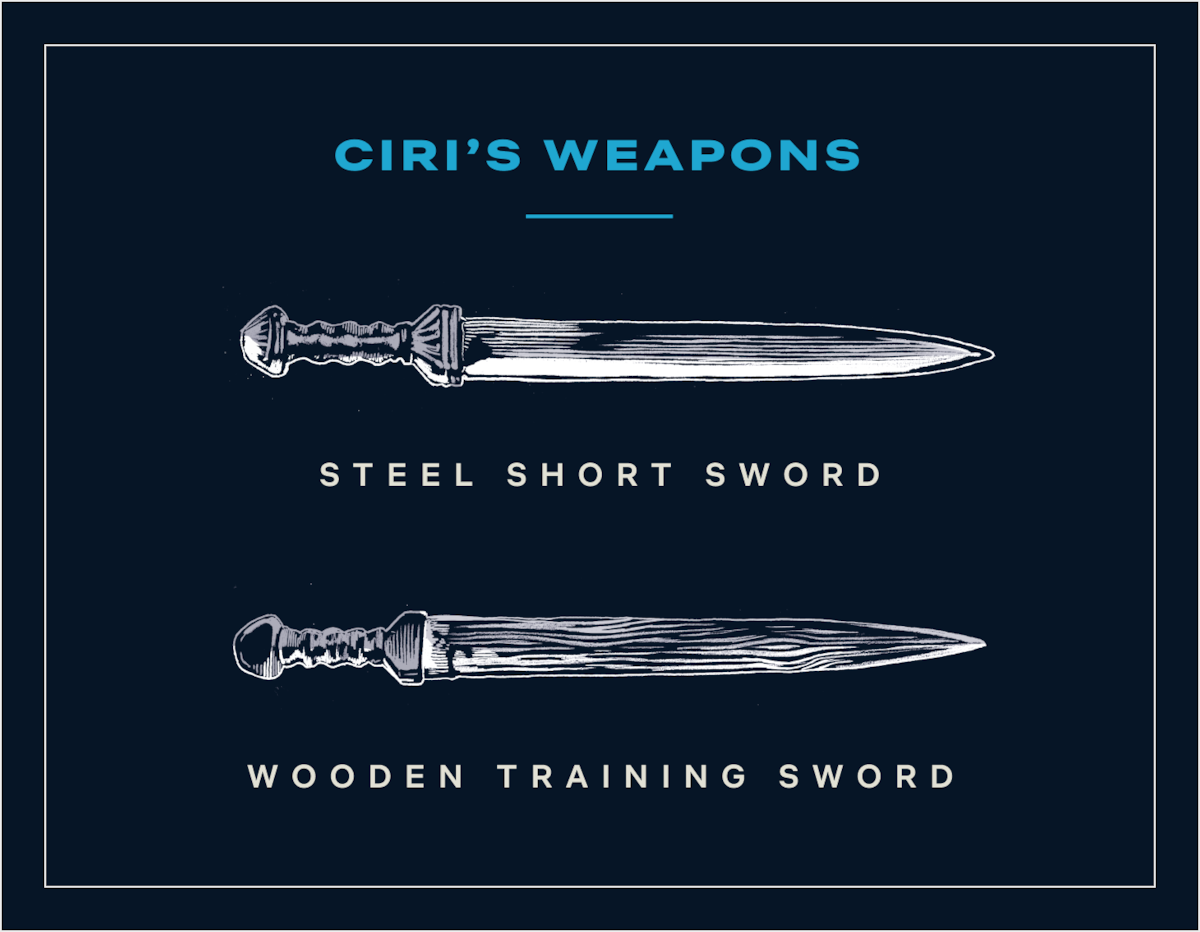
A blunt short sword inspired by Romanesque design. Light enough for tireless training, but heavy enough to prepare her for the real deal.
Standard issue witcher training sword. Blunted but still capable of inflicting pain. Similar in weight balance and design to the wooden variant.
The clans — Dog, Raven and Serpent — have existed as royal bodyguards since the dawn of time, even before the 1,000 Year War started. They are loyal to no one apart from the monarchs they protect. The clans of the three kingdoms have developed their own styles of combat, armor and strategy over the millennia.
Although they protect monarchs who are technically at war with each other, the clans hold a grudging respect for each other. They have clashed directly on occasions when kings and queens decide to leave the safety of their thrones to take to the battlefield. But the clan’s objective in battle is solely to keep the king and queen alive. They don’t work in concert with, or answer to the military. Clans don’t care for the outcome of the battle itself. Military tactics on the field, territory gained or lost are just distractions from their sole purpose: Protect the monarch at all costs. Three of the clans are associated with different geographical kingdoms. In Xin’trea in the West, there is Dog Clan; in Pryshia in the North, is Raven Clan; and in Darwen in the South, there’s the Serpent Clan.
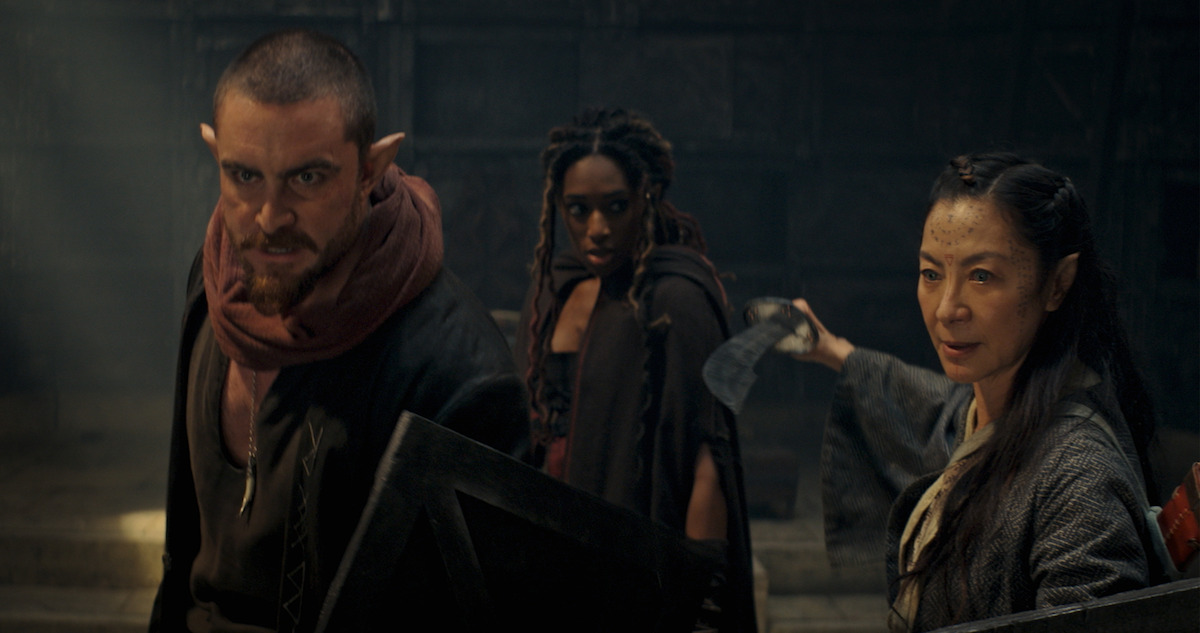
Partners in (solving) crime, this multi-hyphenate duo deals in knowledge and knows where to find it. Codringher and Fenn were in the business of information: gathering, knowing, revealing and even burying it, for the right price. While Codringher acted as the face of the business, Fenn stayed buried in her research. Neither of them had ever been presented with a mystery as all-encompassing as the one Istredd brought to their attention. Together, Istredd, Codringher and Fenn dug up what Calanthe so desperately tried to hide: the truth of Ciri’s lineage and its linkage to the Lara gene.
A young and not-yet bitter witcher who helped train Ciri, Coen is easily recognized by his mismatched eyes. One of the youngest witchers at the keep, but a core part of the Kaer Morhen family, Coen is a skilled sword fighter, though not one to boast about it. Lambert is one of his closest friends. They often pull pranks and tell crude jokes, but unlike Lambert, Coen always knows when enough is enough. He formed a special bond with Ciri when she was living at Kaer Morhen.
All humans speak Common Speech (some better than others), but you’ll be able to tell a Kaedwenian from a Skelligen and a Cintran from a Kovirian based on their local dialects and unique colloquialisms.
Beyond heralding the arrival of new beings and monsters to the Continent, the Conjunction allowed Chaos to take root across all of the races. Following this event, the newly arrived humans could become mages and witchers, and they sought to assert dominance over the Elder Races that had always inhabited the land.
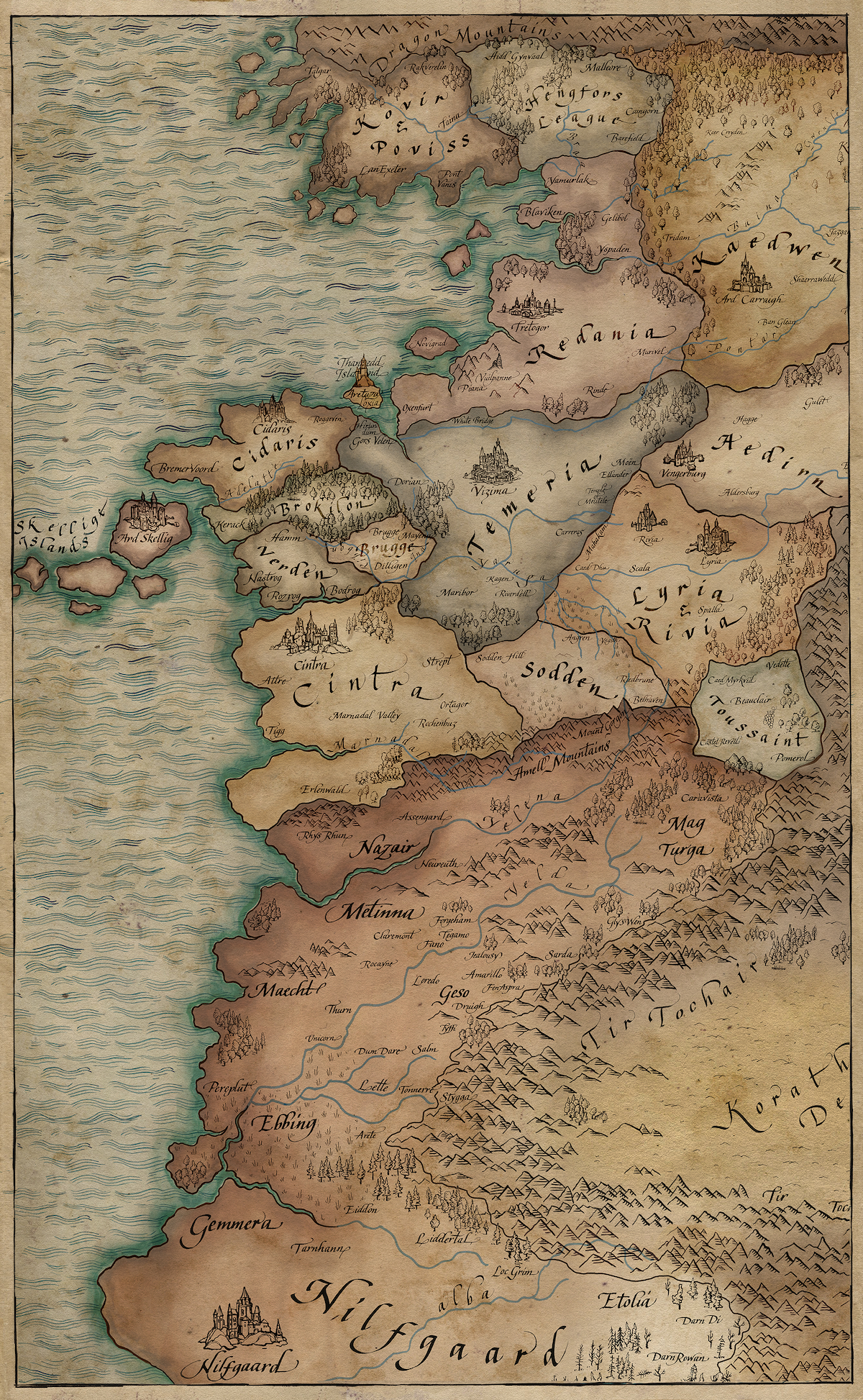
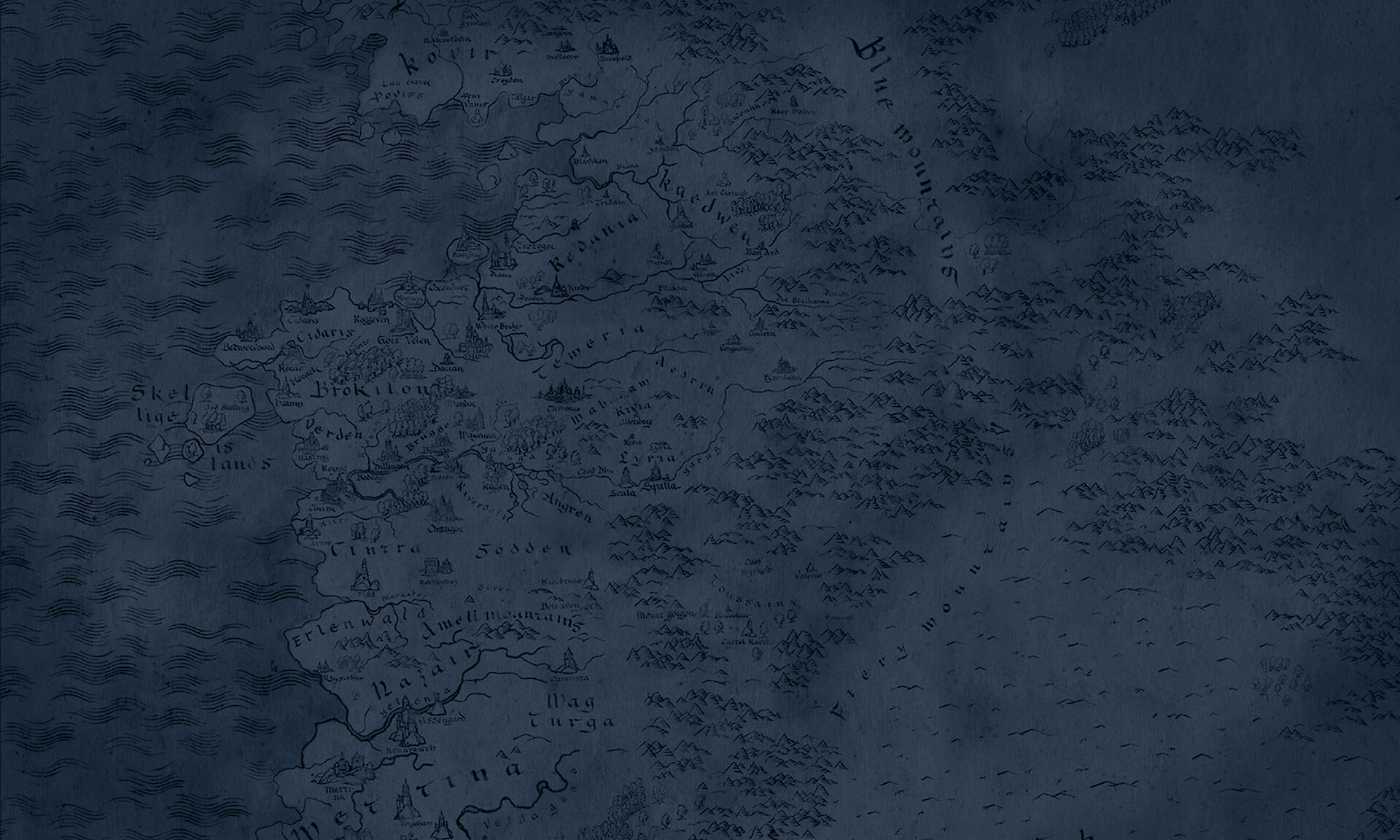
This is where the universe of The Witcher is situated: where elves, humans, witchers, gnomes and monsters battle to survive and thrive — and where good and evil aren’t easily identified. The regions of the Continent include Aedirn, Brokilon, Brugge, Caingorn, Cidaris, Cintra, Creyden, Dol Blathanna, Kaedwen, Korath, Lyria and Rivia, Redania, Riverdell, Skellige, Temeria and the Nilfgaardian Empire, which covers the southern half of the Continent.
Common herb used in Syndril and Zacaré’s elixir.
Poison which, when applied to blades, resulted in a slow, agonizing death. Only magical intervention could prevent its effects.
Situated at Aretuza Academy, this is a small room where big decisions are made. This is where the 12 Chapter members meet to discuss — and decide — the future of the Continent.
In the time before the Conjunction of the Spheres, during the 1,000 Year War, the majority of the lowborn elves were becoming restless, and the monarchies could feel it. There were rumors of peace between kingdoms, but the military and the mage classes were not keen on relinquishing their power in a world where every elf knew their place and birth role in society and acted accordingly.
Chief Sage Balor used Alvitir’s peace treaty to rally these disgruntled mages and generals from the kingdoms to wipe out all the royal families, establishing Xin'trean princess Merwyn as the empress of a new, unified Golden Empire.
Handheld explosives used by Kayleigh and other Rats.
A small northern kingdom of little importance near the Caingorn Mountains, this vassal state fell under the rule of Kovir and Povis, was home to Princess Renfri and was where Stregobor came to “treat” Fredefalk’s daughter for the Curse of the Black Sun, a story that resonates with Geralt early on in his career as a Witcher.
A seemingly ordinary solar eclipse that was interpreted as a dark omen by some. Stregobor thought that the eclipse was a sign of demon goddess Lilit’s return. He believed that women born during this eclipse were the foretold “60 women wearing gold crowns who would fill the river valleys with blood” and should thus be eradicated. To do so, he conducted horrible experiments, including confinement, starvation, mutations and operations. Renfri is the only one who survived Stregobor’s torture.
Old mining town in former Pryshia with a well-established dwarven bank. Éile, Fjall and Scían attempted to rob the bank, but were cornered by Golden Empire forces. They escaped, but not before Scían was wounded by a blade poisoned with corpse oil.
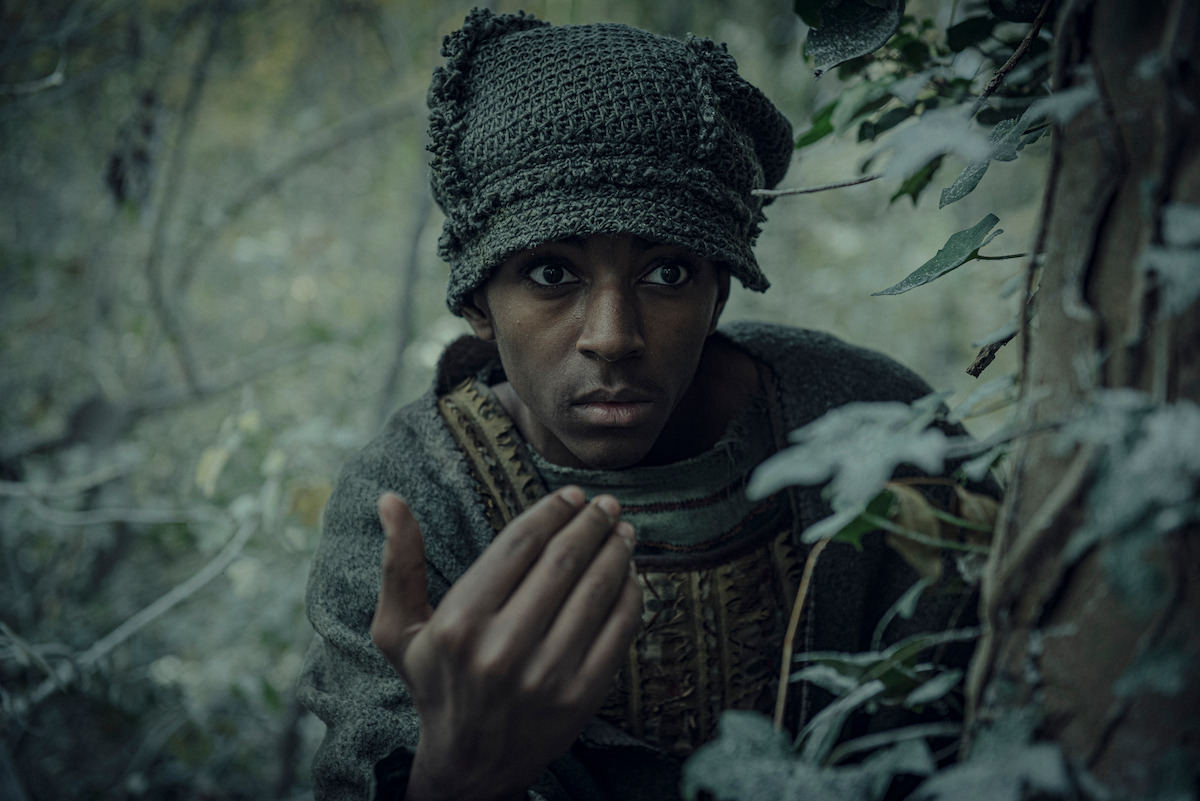
An orphaned elven boy who crosses paths with Ciri near a Cintran refugee camp and eventually finds himself in Francesca’s circle of trustees. Dara lost his family in Filvandrel’s Uprising, a rebellion that was squashed by Queen Calanthe. Orphaned and expelled from his homeland, Dara was forced to roam the Continent. He ended up in a Cintran refugee camp and stumbled upon Ciri, not knowing who she was. Both in search of safety and security, they decided to look for it together.
After helping Ciri survive an altercation with a doppler, Dara decided to keep himself safe and part ways with Ciri in the forest. Not much later, he found himself in Redania, caught up in soaring anti-elven sentiments. Soldiers eventually rounded him up with countless other elves and locked them away in prison camps. On the condition that Dara secretly reported to Dijkstra, he was released and sent to reunite with the free elves in Cintra — a deal that would come to cost Dara more than he bargained for.
Deglan was raised on the harsh and unforgiving Skellige Islands. A rough childhood and an even more grueling witcher training made him the hardened warrior-leader that he was. Wearing his characteristic wyvern cloak, he’d roam the Continent looking for coin and potentially some new recruits, Vesemir being one of his proudest enlistments.
Like those before him, Deglan was undoubtedly a devout leader. He would’ve done anything for his boys. He also understood that witchers need monsters. So when the latter were on the brink of extinction, he opted for an unorthodox approach: creating hybrids through mutation. He’d hoped that these hybrids would create jobs for his boys, but that plan backfired miserably. His zeal for the continuation of The Path meant its inevitable end. Kaer Morhen was brought to rubble, Deglan died defending it, and the knowledge needed to create new witchers was lost. Vesemir was tasked with rebuilding the fortress and keeping the tradition alive — which ultimately led to his fortuitous introduction to Ciri.
One of the three types of Forbidden Magic, this was the practice of summoning creatures from other spheres, across time and space. Strictly speaking, Ciri unintentionally (and unknowingly) dabbled in demonology. Her outbursts activated the monoliths and let creatures like the Myriapod and the Chernobog enter the Continent.
The Law of Surprise is closely linked to the concept of Destiny. Most humans believe Destiny is a binding force. One that can bring people together, keep them apart, make them rich, or inflict great pain. Others (read: Geralt) have a more down-to-earth view: They see Destiny as a construct, merely meant to help people make sense of things that otherwise don’t. Mousesack challenged Geralt on that belief, explaining to him that you can try to ignore Destiny, but you’ll never be able to outrun it. As Nenneke says to Geralt, “The difference between Destiny and fate is choice.”
A feathery plant with small pale flowers. It’s said to stop bleeding and promote healing. It’s extra potent in combination with Golden Oriole and knitbone.
Dijkstra’s relationship with Philippa Eilhart — itself a game of power and dominance — eventually leads to the mysterious assassination of King Vizimir of Redania. His younger brother, Radovid, is placed on the throne instead – which starts a rift between Dijkstra and Philippa.
Dimeritium is a particularly nasty metal for mages — it drains their powers and its effects don’t wear off instantly. A magical human exposed to dimeritium can feel depleted for some time. As such dimeritium isn’t particularly useful as a weapon — no more than a regular metal — but all the more effective when forged into handcuffs or prison cells, like the one in which Rience was kept.
An elusive air demon trapped in our sphere and coveted throughout for its ability to grant wishes. Djinns are incredibly powerful creatures, both wanted for their wishes and feared for their fickle nature. As they are air demons, there isn’t much of an outward appearance to describe — a djinn simply looks like a gust of wind or black dust that has a will of its own. Should you ever go looking for one, don’t do it without the proper amphora at hand. Once captured, djinns are proverbially bound to their master — forced to fulfill three wishes before being free once more.
Found in ruins, graveyards, deserts or amphoras, djinns are known for granting wishes (three in total, each one leaving a bloody mark on your flesh as it’s granted, so be careful what you wish for); wreaking havoc, using the power of the wind; attacking, or “marking” victims; and even, if rarely, taking possession of your body. Djinns don’t need to be killed to be vanquished — simply utter the third and final wish and watch them disappear.
Bodyguards to the monarchs of Xin'trea, Dog clan, as with all clans, were versed in every weapon known to Elfkind. But they specialized in the Battle Axe - a brutal double-headed axe, commonly slung across their backs. Their combat style was brutal; raw power and bludgeoning force. Although the kingdom of Xin'trea was a patriarchal monarchy, there have been female Dog Clan Chieftains.
The words Dol Blathanna are Elder Speech for “The Valley of the Flowers,” and this kingdom was the last elven stronghold. It was a sacred elven kingdom, said to be the only place where feainnewedd naturally grows. Elves were forced to leave during the Great Cleansing, and it is where Geralt and Jaskier were captured while on a job hunting a “devil.” Dol Blathanna eventually becomes a symbol for “home” — any place where elves can live peacefully and rule themselves again.
Translating roughly to “Valley of the Soul,” Dol Dusza is a practice that allows a skilled mage to enter the deepest layer of consciousness and uncover things that might be hidden there. Genetic memories, generational imprints that tell the story of who you really are and where you really come from. Triss used it on Ciri to figure out where her powers came from.
What is there to say about a creature that can take on any human form? A doppler is a unique being with a magnificent gift for metamorphosis and an unquenchable thirst for beauty. Its appearance could resemble literally anyone’s. In its “default” form, the doppler looks like a blueish goblin — or a person suffering from severe frostbite perhaps. Its skin looks rough, veiny and damaged; its eyes are bloodshot. But it’s unlikely that you’ll encounter a doppler in this form, as they’re generally said to be a kind and loving creature as long as you treat them equally well.
The doppler possesses an almost kneadable figure that allows it to change into shapes similar to its own. When it takes on another form, a doppler doesn’t just copy that shape, they copy that being’s memories, voice and behaviorisms too.
They like to live near or among humans, and can pick any shape to adopt; they also “collect” parts, building a perfect specimen to inhabit. Should you need to defeat a doppler, silver does the trick, causing an allergic reaction of sorts that scorches its skin.
A student at Aretuza Academy who attended at the same time as Yennefer but didn’t show the same magical promise. She was turned into an eel by Tissaia, along with Anica and Lark. If you didn’t have what it took to support Chaos, you were sacrificed to support the ones who did.
Like mages and witchers, druids are a type of magical human and are known for being scholars of the forest. Though less versed in the arts of magic than mages, druids are still capable of healing and other more rudimentary forms of magic; they have an extensive knowledge of all living things.
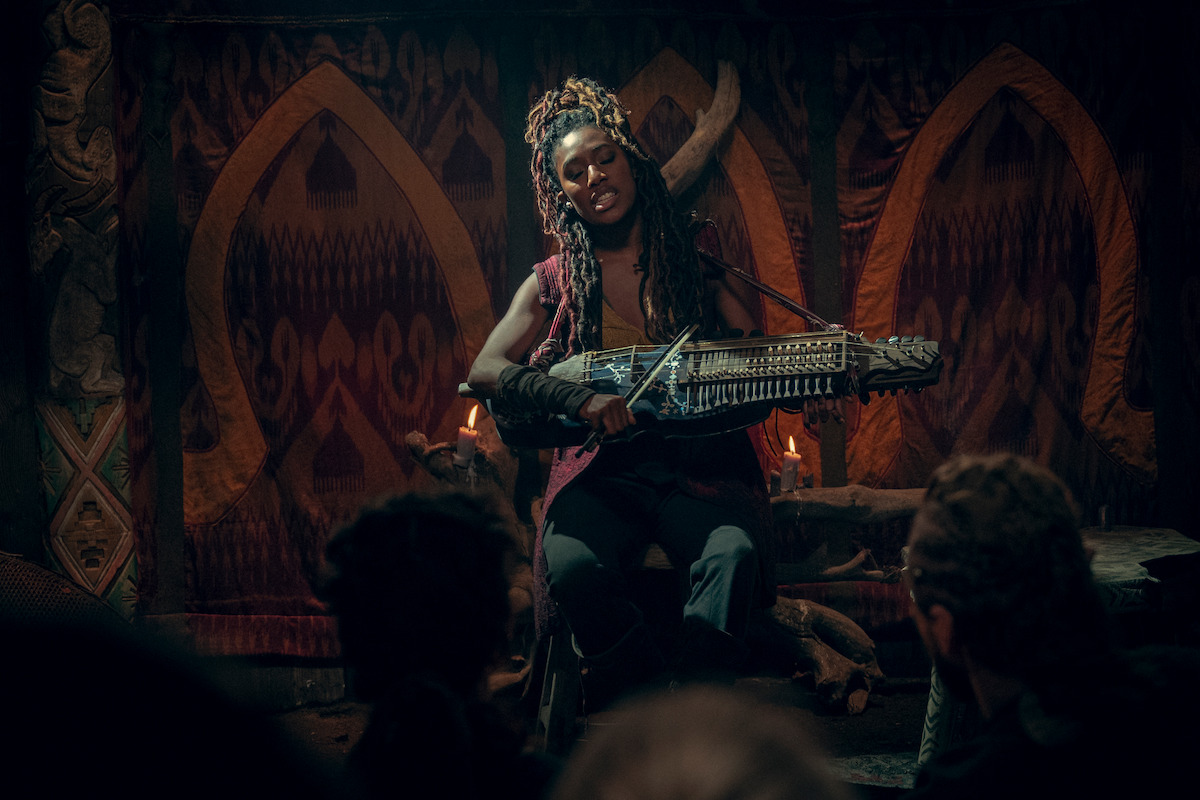
A popular lowborn tavern in Inis Dubh, owned by Aevenien. Notable for being the childhood home of Ithlinne.
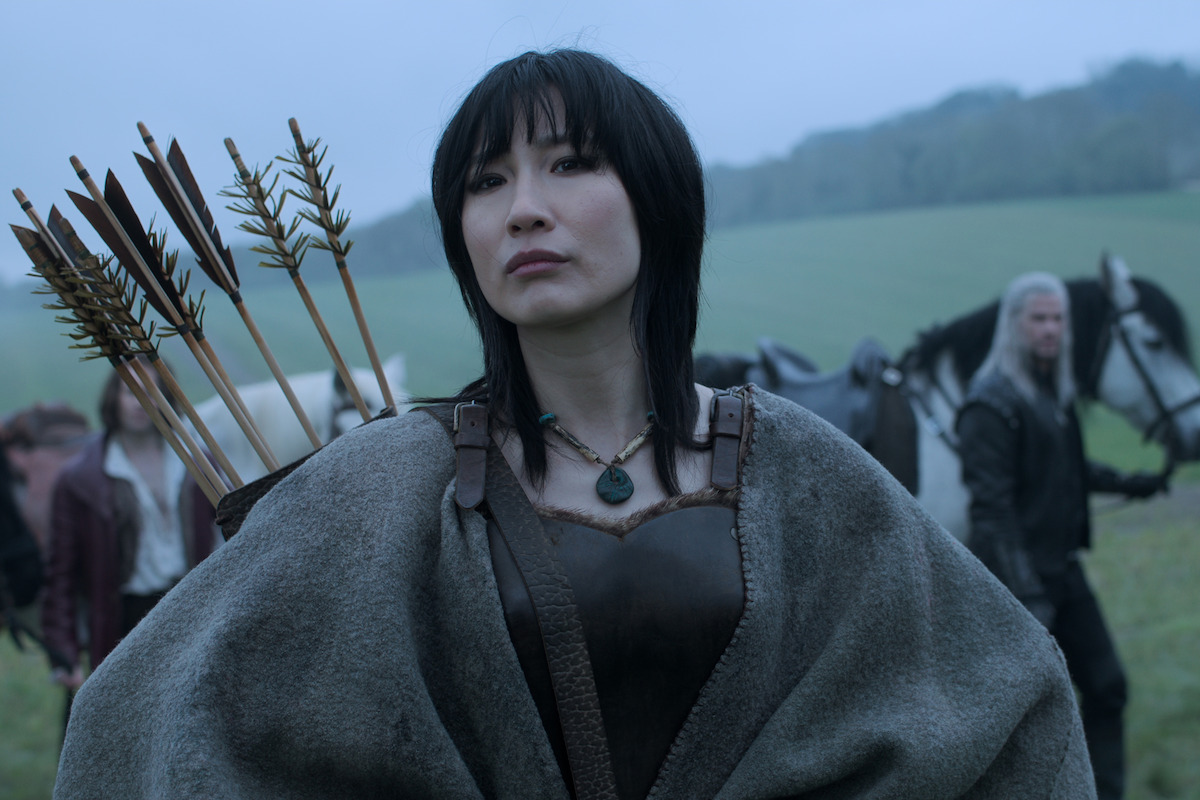
Dryads are an all-female race of forest creatures; a self-sufficient tribe of warriors who live in total unison with nature. They tend to be very hostile toward humans — especially those who disregard the rules of the forest — though some human women are allowed to stay for protection, like Milva. How, or when, dryads exactly came to be on the Continent is unclear. Some say that they are enchanted human women — which would place them in post-Conjunction — while others claim that dryads descend from trees, meaning they could be even older than elves.
As a result of countless confrontations with humans, dryads retreated from many of their forest homes and created a single settlement in Brokilon forest. As much as they resemble humans physically, they are not like them. Dryads speak Elder Speech and have a sixth sense for magic. They also believe in things beyond human comprehension, like Shan-Kayan, an all-knowing ancient tree located deep in the heart of Brokilon Forest. Those who drink from her waters (the waters of Brokilon) will reveal “their true selves.” Prove yourself to be pure of heart, and the dryads will allow you to stay. Reveal ill intentions, and the waters will be lethal.
As is to be expected of a tribe of forest nymphs that lives away from “modern” society, dryads don’t rely on steel and metal for weapon-making, but on the materials that Brokilon Forest provides them with. This fact is clearly reflected in their mostly wooden weapons.
The nickname for Urcheon of Erlenwald, aka Emperor Emhyr var Emreis; Pavetta’s husband and Ciri’s father. A knight of no renown who was presumed dead but turned out to be the Emperor of Nilfgaard all along. (See also: Urcheon of Erlenwald; Emperor Emhyr var Emreis)
Before the elves came to power, dwarves controlled most of the lands that became known as Pryshia, Darwen, and Xin'trea. The dwarves were ultimately defeated and driven east into the mountain protectorate of Nolde, but their influence could still be felt: dwarven script adorned the walls of the Xin'trean royal palace, their control of Dwarven steel, and the raising of their sacred monoliths buried throughout the Continent by Balor, eager to repurpose them as gateways to other worlds.
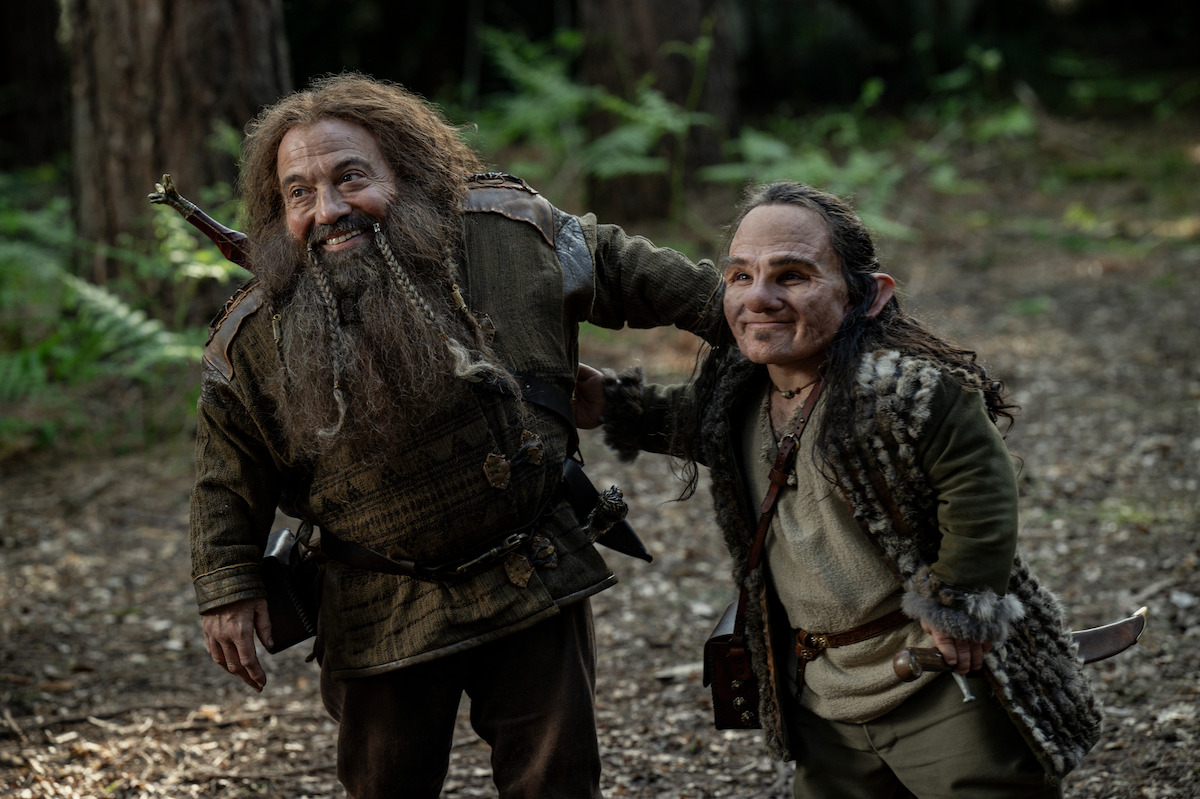
Dwarves walked on the Continent long before all kinds of monsters did — and they might just be here long after, courtesy of the dwarves’ skill with the sword. Aside from excellent soldiers, dwarves have also produced enviable artisans and successful businesspeople.
When it comes to humans, dwarves hold less of a grudge than elves — dwarves and humans even work together in the mines of Temeria. That being said, a dwarf will always choose another Elder Race over humans. Shared enemies make for unlikely friends. As to where one would be most likely to find a dwarf: If the Trail doesn’t yield any results, try the dwarves’ motherland, the vassal state of Mahakam. They also own and run one of the larger banks in Gors Velen.
Dwarves are generally a good-humored but quick-tempered lot. Their weapons are a tad bit over the top — just like dwarves — with exaggerated elements and comical details that by no means diminish the weapon’s destructive abilities. Dwarves may be short in stature, but they’re sturdy and muscular, which allows them to wield large, heavy weapons. As one of the other Elder Races, they too have a long-standing history with the Continent. Their enclave in Mahakam happens to be a city rich in metal and mineral deposits, which help them excel in craftsmanship.

An elite warrior with the voice of a goddess, Éile abandoned her position in the Raven Clan protecting the Pryshian royal family in favor of a life spent as a nomadic musician, hoping to make more changes with words and melodies than by fist or blade.
To her Chieftain mother, Cethlenn of the Knives, Éile was her greatest disappointment. As a young child, she showed potential not seen in generations of Raven Clan births and was destined to be one of the greatest warriors ever known. Her mother groomed her to take over as chieftain of the clan, over her other six siblings, finding her the most exceptional tutors in the kingdom to hone her talents. One of the tutors she was fostered with, Scían, a mysterious sword master of deadly renown, also played the keyharp. Once Éile rested her hand on the instrument and heard the strings vibrate and sing, she was lost to it forever. This was what she was looking for all her young life. This made sense to her. It was the world in seven notes. By the end of her training she was lost to its magic.
On return to her clan, Éile was lost. She felt trapped. She had always accepted her fate - being born into the Raven clan, it was an honor people would die for. But the sense that she could make more of a change in the world with songs than with violence was growing bigger. Her mother was devastated when Éile told her that she wanted to be remembered for her music rather than her feats as a warrior. Despite her mother's protestations, Éile could not betray her truth, the burning need to atone for all the death she had brought into the world, by bringing song to the world. Her Chieftain mother banished her daughter from the clan.
Éile became a nomad traveling the harsh lands, slipping across borders into other kingdoms, playing for whoever would listen and living hand to mouth, avoiding the large cities. Choosing instead to bring her song to those who most needed it. This nomadic life shaped her: she became known as The Lark, a bard whose ballads gave hope to lowborn elves.
That life was shattered when she learned that the rest of her tribe was murdered in a coup orchestrated by Xin'trean sage supreme Balor and Princess Merwyn. Éile’s thirst for vengeance, and guilt for having abandoned her clan at their time of need, led her to make a blade pledge with Fjall, a rival warrior from the Dog Clan. Together, they set about destroying Merwyn’s newly-formed Golden Empire and the monstrous beast that allowed them to maintain control.
Over time, Éile and Fjall’s relationship changed from one of open hostility to respect and, eventually, a love forged in the crucible of war. While preparing for the final battle against Merwyn and Balor, Éile intended to undergo a dangerous magical experiment that would enhance her abilities and give her a chance of slaying Balor’s beast. Fjall, however, realising this would likely kill the warrior he loved, secretly took her place. Éile helped lead an army of sellswords into Xin'trea, where she reclaimed her place as The Lark: a figurehead to the lowborn, who inspired them to action during the final attack on Merwyn’s forces. Their attack was successful, but not without loss. The experiment left Fjall lost to the rising beast inside, and Éile was forced to end his suffering. Neither knew it at the time, but Éile was pregnant with Fjall’s child at the time of his death.
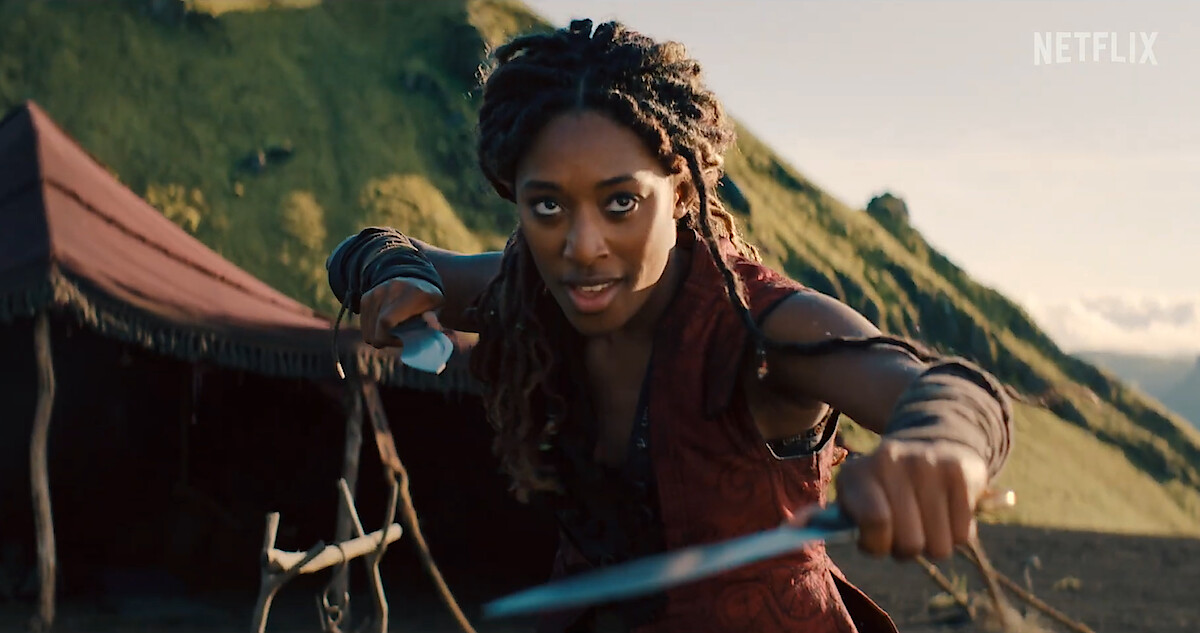
A musical instrument used by Éile to entertain and inspire the masses. It also doubled as a hiding place for her throwing knives.

Éile’s weapon of choice. She was forced to use these to kill Fjall after he fully degenerated into a beast following the final battle in Xin'trea.

A Skelligen jarl, or chief, who became King of Skellige by popular vote and King of Cintra by marriage to Calanthe. Eist is a typical Skelligen, ruggedly handsome, hairy and chatty. So chatty that he even persuaded Calanthe to marry him after countless proposals. Even though Calanthe saw her second husband mostly as an opportunity to strengthen Cintra’s bonds with Skellige, the marriage was a strong and loving one.
Eist was a warm step-grandfather to Ciri, loving her like his own flesh and blood, and a dear friend to fellow Skelligen, Mousesack. When Nilfgaard came to conquer Cintra, he rode out to battle beside his queen. But he never saw much action; Eist was instantly killed by an enemy arrow during the fight at Marnadal Valley.
The fearless leader of the dryads and protector of Brokilon Forest, Eithné is also known as the Silver-Eyed. Eithné is best described as a “Brokilonian earth mother meets regal bandit queen.” Her unbreakable bond with nature means that she’s respectful to all forest creatures, but not all living creatures — humans have wronged her and her people one too many times.
Even though she’s quick to judge, her judgment is rarely wrong. When meeting Ciri for the first time, she immediately sensed the girl’s magical power. The waters of Brokilon quickly confirmed her hunch and Ciri was allowed to stay — a unique display of dryad hospitality.
The term Elder Blood, or Hen Ichaer, refers to Lara Dorren’s bloodline, her descendents being children of Elder blood. It was thought that Lara Dorren had ruined everything by “contaminating” her bloodline, but the opposite is true. Ten generations down the family tree, Elder Blood is present in Ciri — a fact that became abundantly clear when her bloodshed caused feainnewedd to sprout. Feainnewedd, which means “Child of the Sun,” is a plant that only grows where Elder Blood is spilled. Those with Elder Blood are sought after because Ithlinne famously prophesied that a child of Elder Blood will save the elves when the world ends.
The importance of Elder Blood isn’t lost on other races and people either. Witchers, for instance, would like to get their hands on it, too. Elder Blood is one of the key ingredients needed to create witcher mutagens, but Kaer Morhen’s supply and knowledge of how to use it was lost during the sacking.
Most of the mages’ practices were appropriated from elves. Elves built Aretuza, elves taught humans how to control magic. The only way to do so is by using ancient incantations in Elder Speech, also known as Hen Linge.
Exceptional sword work isn’t always enough against a magical creature. To enhance their chances at winning, witchers take elixirs that have temporary physical effects. There are elixirs for enhanced night vision, extreme smell, superhuman hearing, you name it. Depending on the creature, witchers will create a cocktail of several elixirs that should help in that particular fight. Some of these elixirs can be quite toxic — even to witchers — so they have to be careful when calculating their dosages.
An ancient Elven dialect that was thought to be dead. This language is linked to darker times and therefore not commonly used.
The Elven Golden Era, a rich and complex pre-colonized elvish world that was filled with art, music, earth magic, architecture, deep math, high culture, and science. The elves of Blood Origin were post-agrarian and enlightened, with functioning cities, trade, higher education, and a vast history and belief system. They were more well-established as a society than the elves we have met in The Witcher. And because that society was thriving, the young and fertile elves were able to continue their reign by reproducing – a phenomenon that is lost over the following 1200 years.
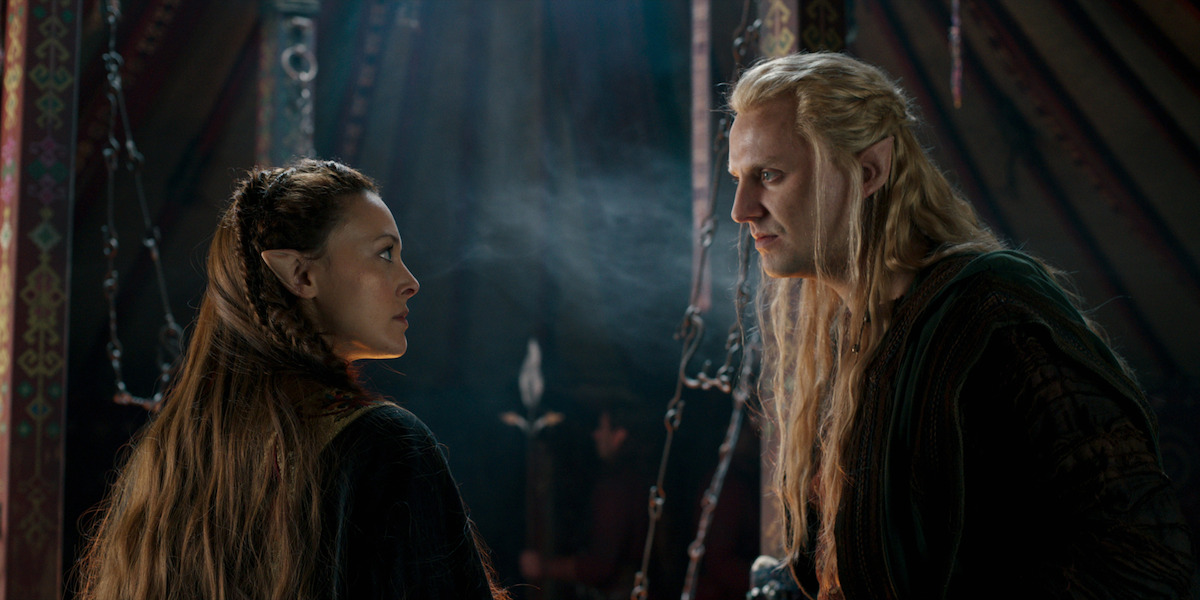
Elves are one of the Elder Races and the first magical creatures on the Continent to control Chaos. Having mastered the art of magic, they were prepared to share their gift with the humans who arrived during the Conjunction — a decision the elves would come to regret. Humans may have been new on the Continent, but they were quick to rule it. Once the humans no longer needed the elves’ teachings, they turned against them. Elves refused to be forced out of their homes and cheated out of their land, but their resistance was futile against the humans’ brute force.
“When the humans arrived, we believed they were like us. Creatures of noble restraint and wisdom. We welcomed them as peers, instead of seeing what they really were… when we fought back, they called it proof. So we met their depravity with self-control. We took the high road — and it led to a mass grave we dug ourselves.” —Francesca Findabair
During what we call the Great Cleansing, nearly all young elven warriors were wiped out, killed in cold blood. The remaining elves were forced to live as second-rate citizens, licking their wounds in silence and longing for a chance at retaliation. The gruesome acts of the Great Cleansing irrevocably changed the Continent, explaining the deeply rooted tensions between elves and humans.
In spite of everything, the elves prefer to stand tall rather than cover their pointed ears and cower in caves. They still firmly believe in a “bright elven future” and will do anything if it ensures the survival of their species — a nigh impossible task given that the fertile segment of their civilization has been eradicated. There hasn’t been a successful elven birth in years, and as their numbers continue to decline, the stakes just keep getting higher.
The elves believe in a prophecy spoken by Ithlinne Aegli aep Avenien, a prophetess, which says that humans will perish in an ice age while elves will prevail, returning to their former glory through the offspring of Elder Blood.
Elven culture emphasizes balance — between all living things, between Order and Chaos — and honoring their elders. Elves will never forget where they come from, nor will they neglect their heritage. Transformational figures in elven history are adored and honored throughout the community. Perhaps the elves’ extremely long lifespans have something to do with their legends and stories persisting throughout history. Legends don’t die when those who lived them are still telling the tales hundreds of years later.
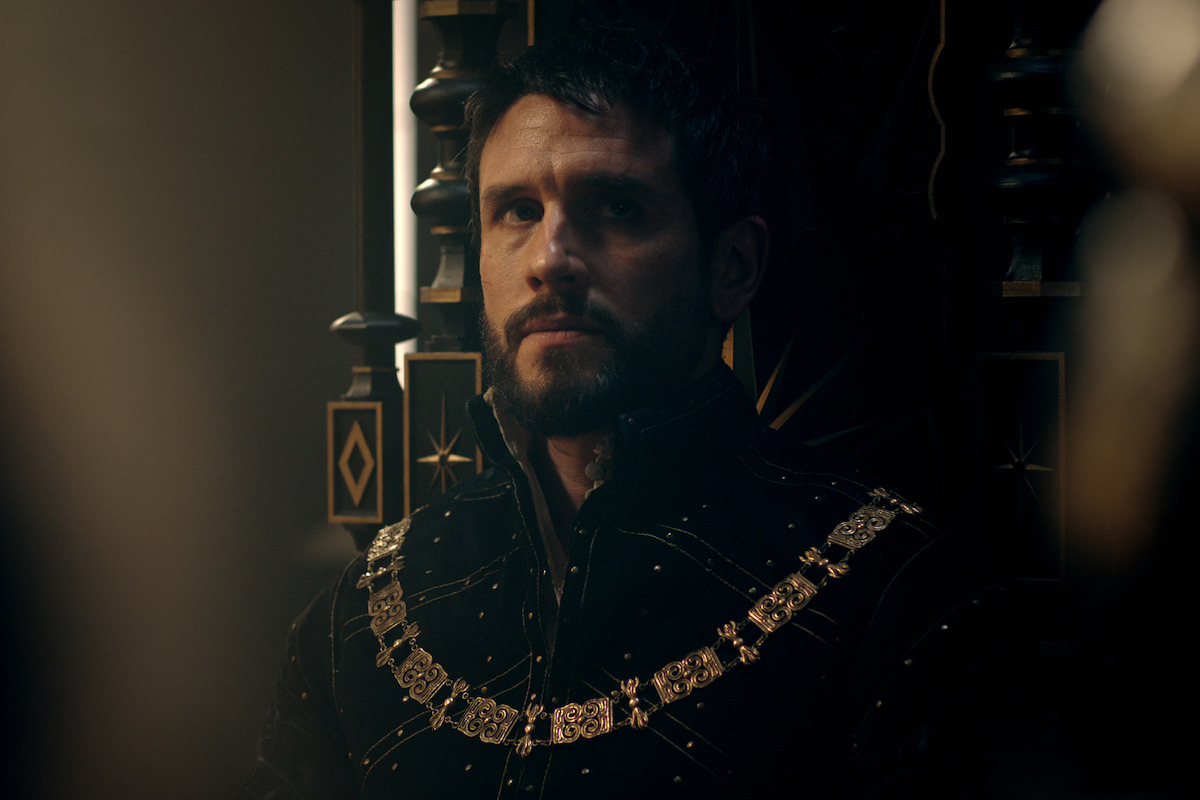
The ruler of the Nilfgaardian Empire, Emperor Emhyr’s thirst for power was felt through every inch of land the Nilfgaardian army took over and every move his puppets made in his play for world domination. But who was the Emperor? Unbeknownst to many, he was once known as Lord Urcheon, the cursed hedgehog man who’d come to Cintra to claim Princess Pavetta by Law of Surprise. Urcheon, or Duny, had saved Cintra’s King Roegner from death years ago and later fell in love with his daughter. Only after Duny nearly died and Pavetta had revealed her pregnancy did Calanthe agree to the union. Sadly, the pair’s wedded bliss was short-lived because a raging storm at sea was thought to have taken both of their lives some years later.
As Cintra mourned the loss of Pavetta and Duny fell off everyone’s radar, Emhyr made his moves, returning to Nilfgaard to reclaim his throne, shoring up his armies and invading the northern kingdoms, all in a plot to reunite with his daughter, Ciri.
After the failure of his campaign in the Northern Kingdoms, Emhyr employed his disgraced agent, Cahir, to track down Ciri — more out of a desire to consolidate his power than any kind of fatherly love. He also manipulated the elves into fighting for his cause, despite secretly being responsible for the death of the first elven child born in centuries.
Thanks to Vilgefortz, Emhyr is finally reunited with his daughter, Ciri – except the audience knows that it’s actually an imposter named Teryn.

Raised in a military family. Eredin’s mother died in childbirth and his father, a military man, lost his mind with age. He lost a sister and two brothers in the 1,000-Year War. Smaller and less physically strong than other recruits in the academy, Eredin played to his strengths, subterfuge and dirty tricks, to rise to the top of his class. He was the youngest elf ever to achieve the rank of captain after the battle of Stell’s fjord, where he took command of Xin'trean forces retreating in a panic after its two generals were killed by bowmen. Eredin rallied the troops and launched a counter-attack that routed the Darwenish forces and saved a critical Xin'trean border fort from capture.
When the Alvitir was murdered in the coup, Eredin was promoted to High Commander of the Golden Empire for his instrumental role in getting key generals from all kingdoms to join Balor’s ambitious plan.
Eredin was stoic, cold and ruthless, but he had secrets. He was in love with a lowborn merchant named Brían. Eredin hid his lover from the court, not because a same sex relationship meant anything of note in Xin'trea or the other Kingdoms, but because of their different classes by birth.
Merwyn leveraged this information to turn Eredin against Balor and regain control of the army. Balor, however, made Eredin pay for his betrayal, trapping him and his company in an arid world on the other side of a portal. Imprisoned for eternity, with neither hope nor humanity, Eredin took his first steps to becoming one of wraiths who would later be known throughout the Continent as the fabled Wild Hunt.
A typically boorish witcher who trained with Geralt as a young child, Eskel was proud, self-assured, and easily offended. Eskel was the life of the party, as long as the party revolved around him, that is. In Eskel’s hands, a run-of-the-mill monster fight could be spun into a tale of epic proportions. Finally, his hubris got the better of him: an arduous fight with a leshy left Eskel infected. Unaware of the infection, his symptoms worsened until, finally, he was fully consumed by the monster’s slithering vines. A now leshy-like Eksel turned against his friends, which forced the witchers to kill him.
Part of a group of witchers, along with Gawain and Merek, who wintered at Kaer Morhen and were found dead in their quarters shortly after Voleth Meir took possession of Ciri. Their chests were stabbed and throats were slit while they slept.
“Anain a veishme, aneinye a vol.” “Ignite to life, burn to death.”
“A power-hungry mutt of a girl, who cried death to all kinds when Vridank spurned her elven mother. Bent on revenge, she slaughtered nobility, priests, even civilians, with her bare hands. She preyed on foolish followers, incited a rebellion to burn cities to the ground, sent rivers of innocent blood down the streets of Redania and Temeria to reclaim power.” —Stregobor
In Stregobor’s hands, this story is a piece of anti-elven propaganda — a cautionary tale that reminds humans no one is ever what they seem, especially elves. Others say that Falka was just a girl abandoned by her family who came to reclaim what was rightfully hers. That she happened to be one-quarter elven only matters to those who already believe elves to be evil. The tale of Falka returns to haunt — or inspire — many characters in the future.
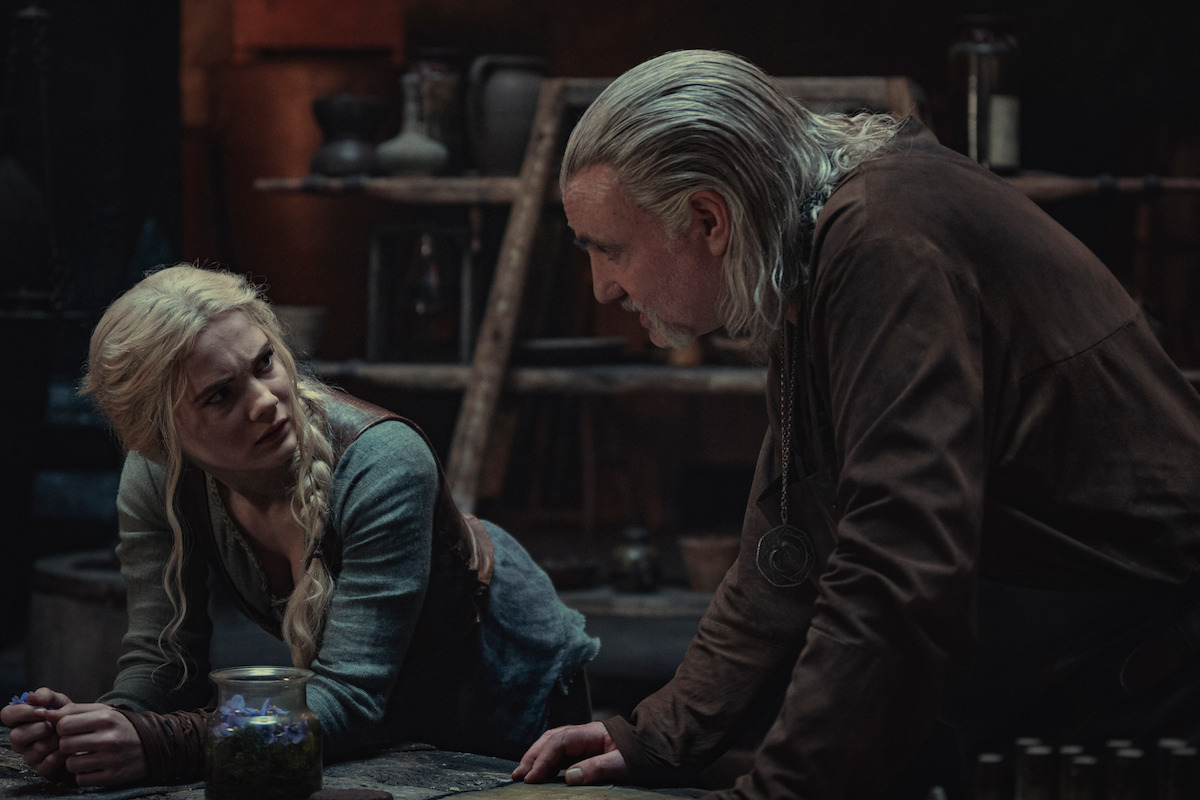
According to legend, feainnewedd — which means “Child of the Sun” — only grows in Dol Blathanna or where Elder Blood has been spilled. These purplish flowers are intrinsically linked to ancient elves, so much so that they still render some of their potent magic, including portaling. Feainnewedd was one of the main ingredients in the witcher mutagen, but is nearly impossible to get one’s hands on.
A haunted graveyard in which Geralt faces a vengeful wraith after a summoning gone wrong. Shrouded in fog and legend, Fen Carn becomes a battlefield that forces the Witcher to confront the cost of every soul he couldn’t save.
Balor’s cunning, nonverbal accomplice, Fenrik paid a cruel price for her loyalty. Fenrik was Balor’s closest confidant; he’d plucked her from the same mage institution that raised him, and their relationship was one of father and daughter. In order to harness the power of chaos, Balor had to sacrifice the thing he loved most in the world, Fenrik. Fenrik died at Balor’s hand, granting him incredible, rejuvenating magic abilities.
The parrot mascot in Geralt’s hansa.
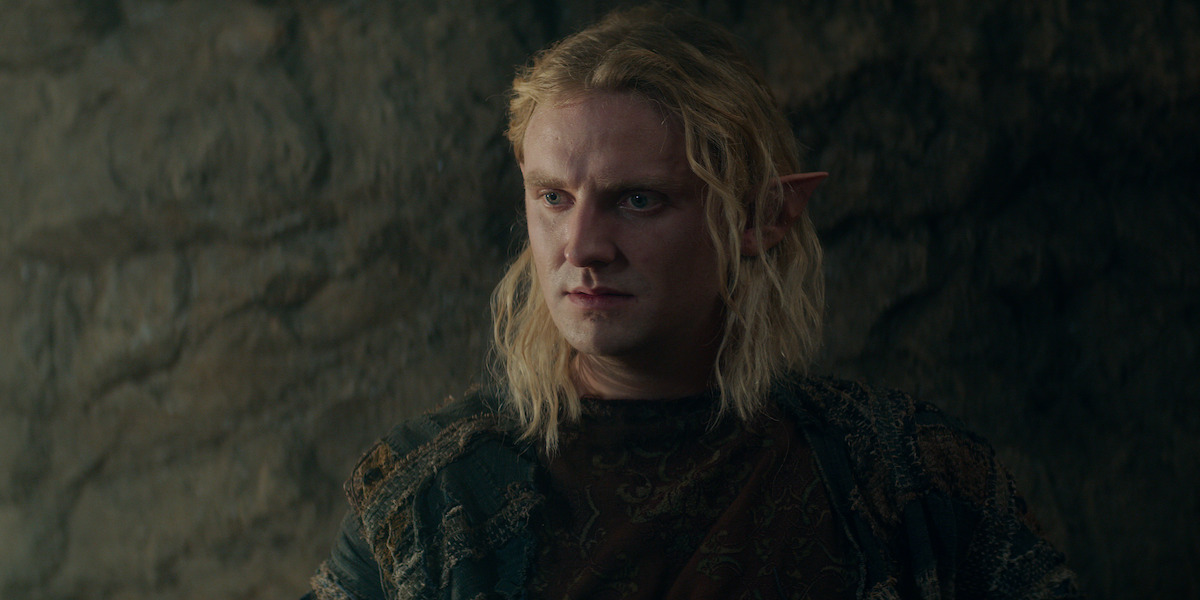
An old friend to Vesemir, also known as Filavandrel of the Silver Towers, Filavandrel managed to rally some of the remaining elves to stage an uprising following years of suppression and elven genocide. This elven rebellion cost many human lives, but was soon dealt with by Calanthe. The face-off forced Filavandrel and his crew to retreat into the caves near Posada — the place where he met (or abducted) Geralt and Jaskier.
Over time, the elves’ situation deteriorated and they lost hope in their former king from the Blue Mountains. Looking for a new leader, they gathered behind Francesca, the elven mage with whom Filavandrel would eventually father the first elven baby born in ages. Though knocked back by his people’s loss of faith, Filavandrel remained strong. He was an elf who loved — and longed — to lead. This tough but just sovereign has the weapon skills of a warrior.
One of the three types of Forbidden Magic, fire magic is extremely dangerous, highly addictive and therefore forbidden by law. But that doesn’t stop mages from using it. Yennefer used it to scorch Nilfgaard at a cost to her magic, but rogue mages like Rience use it without remorse.
“People think Chaos comes from nothing, but that’s wrong. To draw it, you need a source. Fire is a forbidden source because it usually consumes those who draw from it. Unless you’re very talented. Then the body can withstand it.” — Rience

A brash and impulsive warrior who was banished from the Dog Clan, Fjall was the son of Osfar, and next in line to become chieftain of the Dog Clan until he was caught sleeping with Princess Merwyn, the same Xin'trean heir he swore to protect.
Fjall had long carried guilt for surviving his older brother who died in battle saving him from a marauder’s sword. Since then, Fjall, despite being a dog clan warrior without equal, drowned his sorrows in whatever vice he could get his hands on and self-sabotaged his place as chieftain — a place he believed he was “stealing” from his dead brother. The only one who really understood his pain was his sister, Ryl. As children, Fjall and Ryl grew up with Prince Alvitir and Princess Merwyn. Exiled and disgraced, Fjall tried his hand at becoming a sellsword, but couldn't quite get into killing for coin. He preferred to spend his waking hours drowning his guilt and rage in brothels and taverns.
Fjall later discovered his entire clan was murdered in a coup orchestrated by Merwyn. Fjall joined forces with his Raven Clan rival, Éile, and the two planned to return to Xin'trea and enact bloody vengeance on those responsible.
In order to defeat Balor’s beast, Éile agreed to undergo a dangerous procedure that would meld her body with that of the beast. But Fjall took her place instead, saving the life of the elfyn he had fallen for.
After undergoing the experiment, Fjall began to lose the sense of who he was, prone to bestial rages which could only be soothed by Éile’s singing. After his transformation, Fjall was able to defeat the beast, but lost himself to the beast inside him in the process. In the end, Éile had to kill Fjall, fulfilling part of Ithlinne’s prophecy — just not in the way she expected.
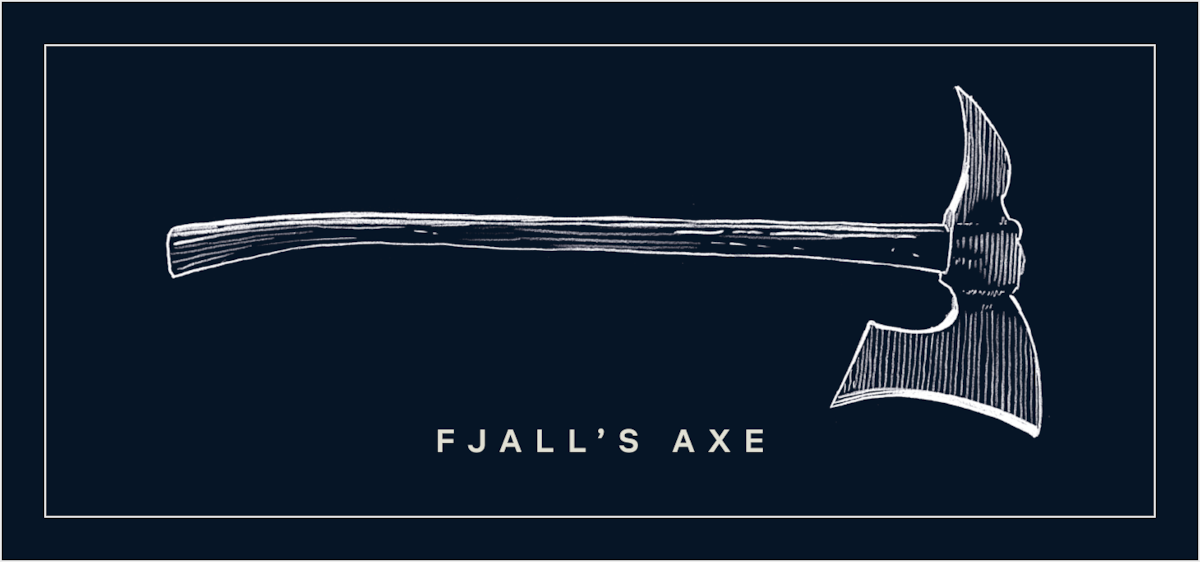
A well-balanced battle-axe taken from Fjall’s would-be assassin in Inis Dubh. A fearsome weapon that could be thrown overhead when needed.
Fjall’s backup weapon. He gave it to Merwyn when they were attacked in the lowborn streets. Merwyn used it to kill Fjall’s sister, Ryl, during the coup. Éile stabbed Merwyn with the same blade during the fall of the Golden Empire, giving her two options: leave the blade in place and live to face defeat and despair; or remove it and bleed to death. Merwyn eventually chose the latter.
A memento of Fjall’s time in the Dog Clan before his exile. Éile stole it from him while they were imprisoned together in Inis Dubh, leading him to seek her out after his release. After Fjall’s death, Éile wore the pendant in memory of their love — something previously unthinkable for a former member of the Raven Clan.
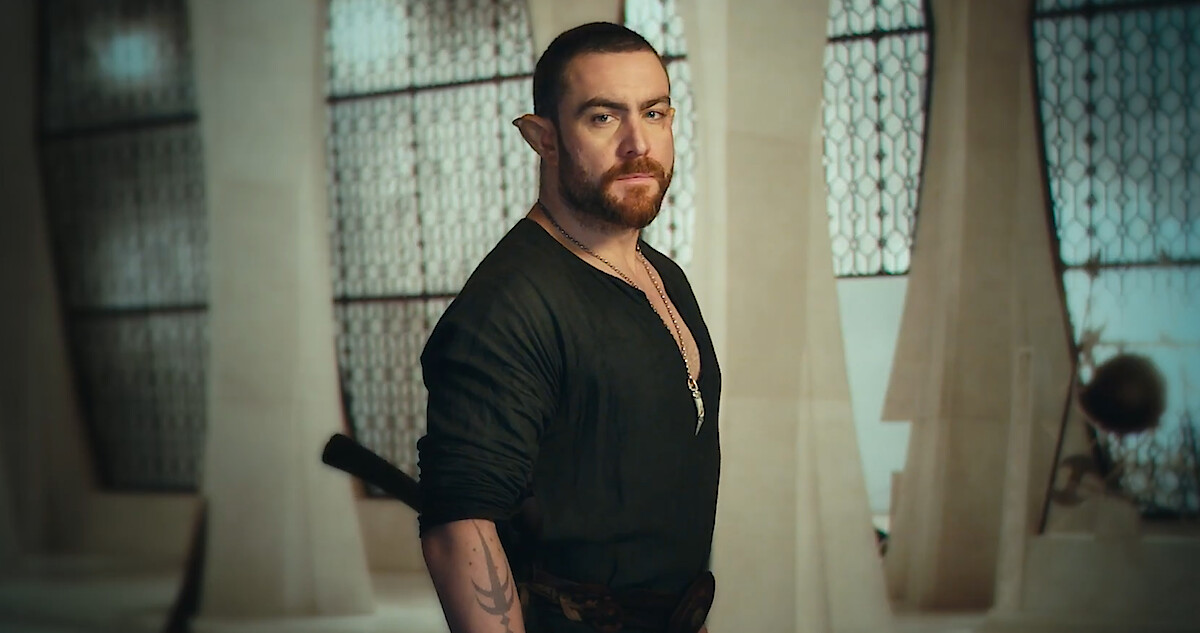
Along with Glacella and Murta, Fola was one of three young apprentices at Aretuza who encountered Yennefer upon her return to Academy for the emergency gathering of the Brotherhood. Though severely scarred and unlikely to disobey, Fola was a quick learner and highly competitive. Yennefer saw a lot of herself in Fola.
There are many types of magic that are forbidden by law, including fire magic, demonology and necromancy.
During the war with Nilfgaard, the Chapter was heavily divided. They stood idly by while tensions rose, thinking that having “one of theirs” — Fringilla — in Nilfgaard’s court would increase their influence and help temper their tensions. What they hadn’t anticipated was that Fringilla would succumb to Emperor Emhyr’s charms and fully embrace the Nilfgaardian doctrine. Feeling their control weaken, the Brotherhood called for a conclave, at which it was decided that no action was to be taken by mages.
Disagreeing with the Brotherhood’s verdict but too late to save Cintra, Tissaia and Vilgefortz recruited a group of vigilante mages to help them stop Nilfgaard at Sodden Hill. A brutal battle followed, amounting to considerable losses on both sides: 4,000 Temerians, 5,000 Kaedwenians, 20,000 Nilfgaardians, and 14 mages. While 14 seems insignificant compared to thousands, it was the Brotherhood’s biggest loss — and most public display of disobedience — to date. In honor of the Fourteen Fallen, and as a reminder of how the north bonded together, a memorial was erected at Aretuza.
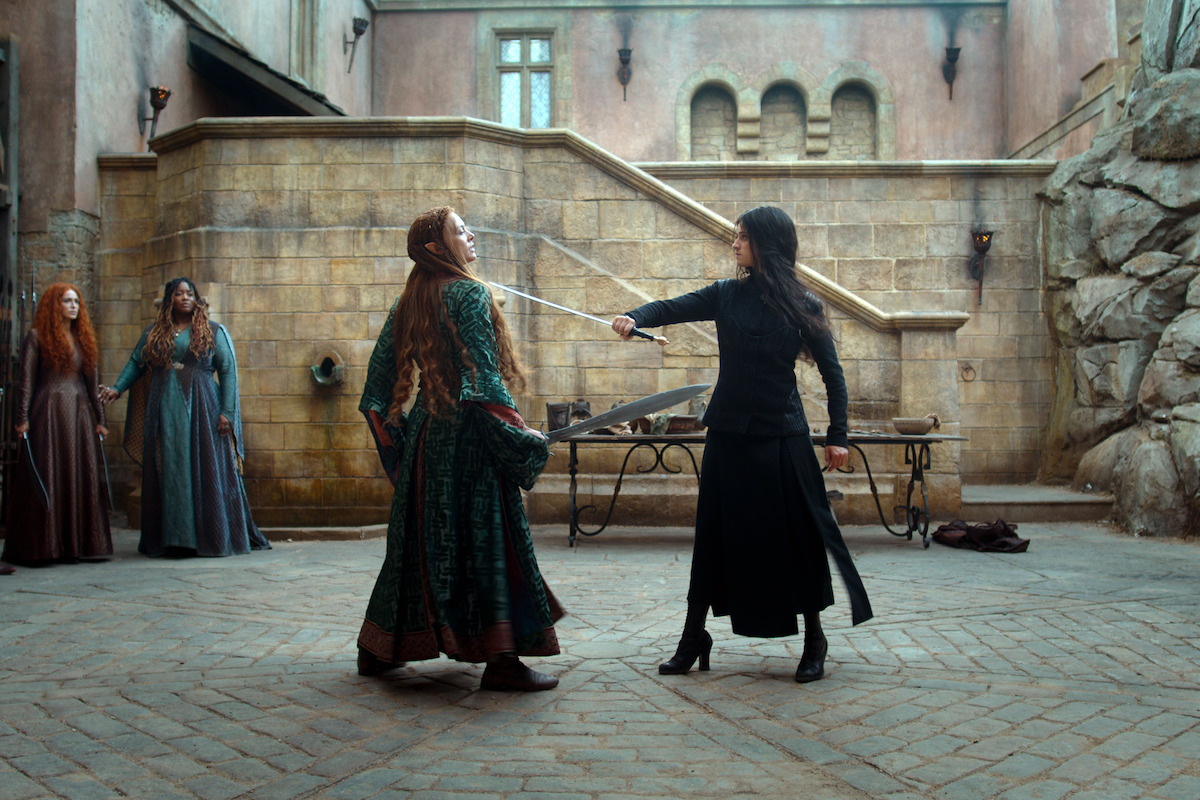
A powerful elven mage who leads what’s left of the free elves, Francesca is spiteful toward humans, but willing to consort with the enemy if it will help her restore her elven glory.
After the elves lost hope in Filavandrel, they turned to Francesca, who they believed to have been blessed with a dream vision of Ithlinne. As much as Francesca hates humans for how they’ve treated her and her ancestors, she loves her kin more and will do anything to protect them. It was Francesca who kidnapped Yennefer and Fringilla, who mistakenly freed Voleth Meir from her tomb, and who briefly entered an alliance with Nilfgaard — all to secure a home, or Dol Blathanna, for her precious elves.
The alliance with Nilfgaard was bound to break eventually, but the death of Francesca’s newborn baby — at the hands of Emperor Emhyr — sped up the process considerably. Even though they suspected Redania instead of Nilfgaard, the enraged elves left the protection of the Nilfgaardian Empire to seek revenge, eventually becoming the rebel Scoia'tael. Now more aligned than ever, Francesca and Filavandrel were only out for one thing: justice for the murder of their child.

A zealous sorcerer with a powerful drive to prove herself, Fringilla is willing to do anything and cross anyone to impress Emperor Emhyr. Fringilla was one of the best students in her class at Aretuza. When the time came for mages in training to be assigned to a court, Fringilla was bound for Aedirn. But due to Yennefer’s interference, things panned out differently. Against her uncle’s wishes, Fringilla was assigned to Nilfgaard. She reluctantly accepted and decided to make the best of a bad situation. She quickly made a name for herself down south as fierce, resourceful and unforgiving — qualities that the Emperor appreciated and no doubt helped nurture.
Fringilla, who was once accused of only being able to “do as she’s told,” started charting her own course. Without the Brotherhood looking over her shoulder, she grew more powerful and confident. As her first major show of force, she sank an entire Skelligen fleet — the one that was supposed to come to Cintra’s rescue. Later, she led the Nilfgaardian troops to war and after Sodden Hill, forged a remarkable alliance with Francesca. Everything Fringilla did was to please the White Flame, a man whose approval was easy to win but nearly impossible to regain.
An elf defined by his broad build and boorish behavior, Gage is motivated by contrasting emotions: an undying anger toward humans and a deep love for his sister, Francesca. He’d do anything to protect her and fight anyone if it could secure a better future for elves at the cost of that of humans.
A bold, abrasive elf who is blindly devoted to the revolution. Gallatin is a born fighter who led an army of guerrilla Scoia’tael fighting on behalf of Nilfgaard. Unafraid to speak his truth and loyal to his people, Gallatin puts himself on a collision course with his ruler, Francesca.
Part of a group of witchers, along with Everard and Merek, who wintered at Kaer Morhen and were found dead in their quarters shortly after Voleth Meir took possession of Ciri. Their chests were stabbed and throats were slit while they slept.
Bustling northern port city with onion-domed rooftops and decorative buildings. Éile and Fjall found themselves here after escaping Inis Dubh and surviving a storm at sea.
A Nilfgaardian army general with an inclination toward violence and an aversion for insubordination, General Hake was, like most humans, not a big fan of elves. But he hated worthless soldiers who waste his time even more. (The Nilfgaardian army’s latest recruits were both.) The general often found himself at odds with Fringilla and Cahir, who constantly seemed to ignore Hake’s opinion and rank. As a result, the general grew more and more frustrated with them for trying to do his job, becoming more and more recalcitrant, until he met his death at the hands of Fringilla.

A witcher who’s seen it all and has the cynicism to prove it, Geralt is bound to Yennefer by desire and to Ciri by destiny. Arguably the most famous witcher on the Continent, Geralt is called the White Wolf or, less favorably, the Butcher of Blaviken. Given up by his mother to the men at Kaer Morhen — a deed for which he resented her at first — Geralt flourished at the School of the Wolf. He was so successful at his training that he was chosen for additional mutations, giving him his signature white hair and greater strength, speed, endurance and resilience than his peers. Combined with his heightened senses, near immunity to diseases and potions, and extreme resistance to pain, Geralt was practically unbeatable.
Geralt’s cynicism hid an affection for his loved ones that seemed at odds with his stoic demeanor. He’d protect them at all costs, but would rather avoid violence and remain neutral in all matters. As he got swept up in Ciri’s life (by the Law of Surprise), he was forced to choose a side in politics and question everything he thought to be true. Driven by destiny, he moved heaven and earth to help Ciri follow a path that was set out by prophecy.
After decades on the road, Geralt has made many “friends” and probably even more enemies. Important influences in his life include Jaskier, a bard and his best friend; Vesemir, the father figure who trained and mentored him; Triss, the sorceress who saved his ass more than once; and, of course, Yennefer, Geralt’s true love. Even though “it’s complicated” with Yen, she’s the most important person in his life, next to Ciri.
As Ciri’s true nature becomes more widely known across the Continent, Geralt’s role as her protector and father figure is increasingly crucial. He reluctantly enlists Yennefer to help teach Ciri to control her Chaos. It’s a partnership which, over time, helps ease the distrust between the two. He even allows Yennefer to take Ciri to Aretuza to continue her magical training.
In order to ensure the safety of his unconventional family, Geralt planned to draw out the rogue mage Rience. Their rivalry came to a head during the Aretuza coup, where Rience arrived with force of rogue sorcerors and Scoia'tael. Geralt beheaded Rience, but fell in combat against his real master: Vilgefortz. Triss was able to portal the injured Geralt to the safety of Brokilon, where he would recuperate under the watchful eye of the hunter, Milva. Eventually, Geralt turned his back on the witcher life, and set out to find his adoptive daughter, Ciri, who was once again lost after the chaos of Aretuza.
A nifty 9-inch knife that can easily be tucked away in boots, sleeves or pockets but can still hold its own against a full-size sword. This dagger is made from a single piece of steel, making it both sturdy and striking. Its modern grip was created by looping a leather lace through the blade. The two notches right above the grip are cutler catchers that stop any blade from sliding down the dagger and digging into Geralt’s knuckles.
Winters at Kaer Morhen are for rest, repair and upgrades. Similarly studded as its predecessor, this armor is a fine combination of leather and metal with the added bonus of a more rigid breastplate and scaled shoulder pads.
A dark leather armor, strategically studded with metal for maximum protection and minimal weight. This torso model is no match for trained swordsmen, but is a great first line of defense in other battles.
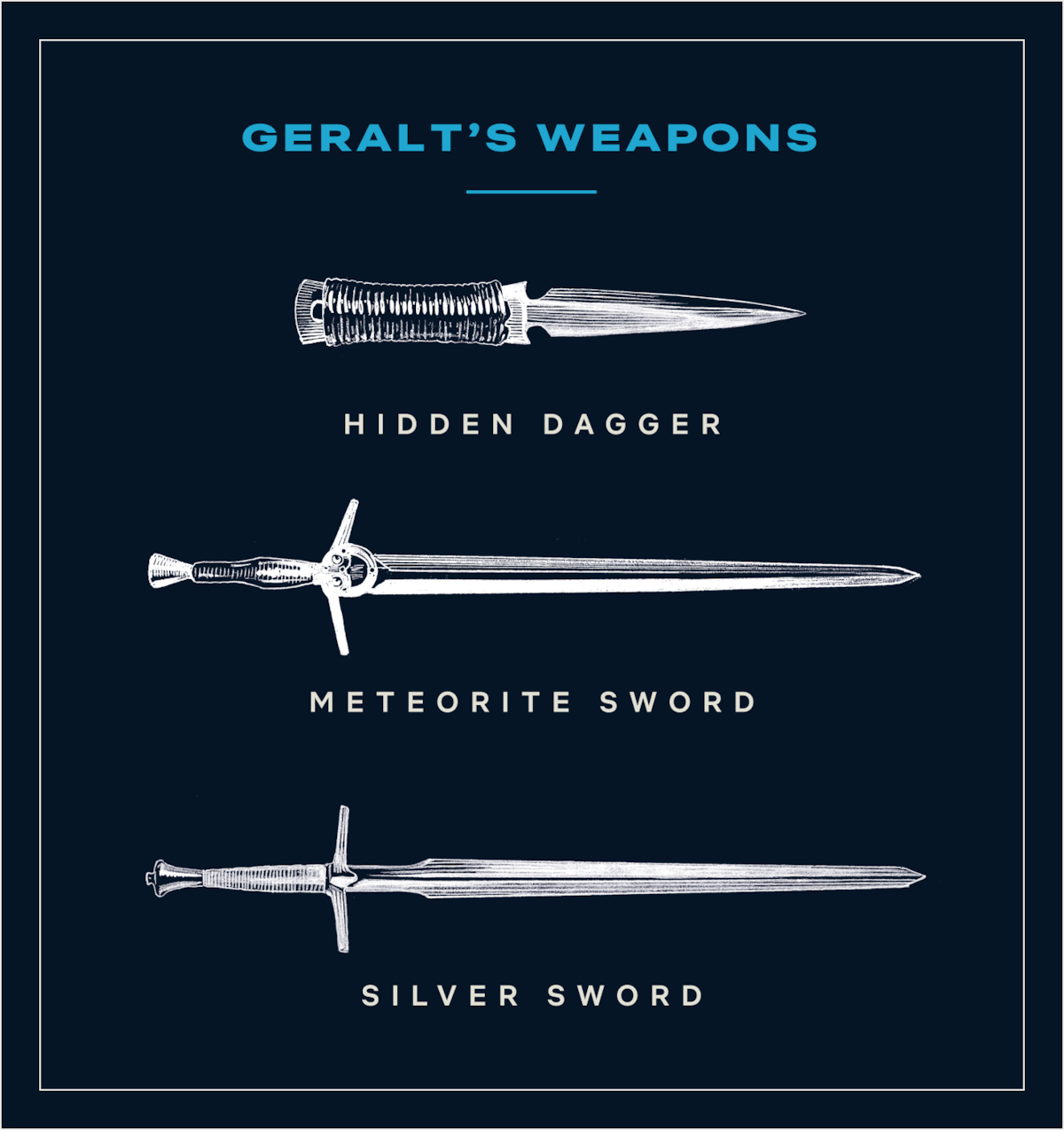
A double-edged sword with a 27.5-inch meteorite blade, which is stronger and more durable than steel, and sporting a narrow double-handed grip meant for non-monster fights. This blade has two striking details: the elven inscription along the fuller and Renfri’s broach on the hilt. Geralt added the broach to reinforce his belief that he shouldn’t get involved in the political affairs of men. Other than reminding Geralt of his beliefs, the broach serves as a cutler catcher, making it easier to deflect blows or overpower an enemy.
A weapon that is lethal against magical creatures but worthless against regular enemies. It has a silver blade and an ivory grip; silver swords are much more precious than steel swords, more malleable and thus easily damaged. To make sure that Geralt gets as much use out of this weapon as he can, he keeps it in a sword carrier on his mare, Roach. That way, it won’t be exposed to the elements but can always be grabbed when a monster is near.
Nomadic sword masters who owed no loyalty to any royal family. When they refused to fight for the Xin'trean ruler, Mad King Darach, he had their water supply poisoned, wiping them out. Darach also took the Ghost Tribe’s sacred blade, Soulreaver, as a war trophy and sign of Xin'trean supremacy. Scían was the sole Ghost Tribe survivor.
Ghouls, or ghuls, are a type of undead being that has a distinctive skeleton-like silhouette, piercing yellow eyes and a fang-filled mouth; with a long, snake-like tongue. They’re known to hunt for dead bodies and attack in groups, leaving little to no chance of escape. They hiss and snarl, not so much as a way to attack, but as a scare tactic or battle cry. Defeating a ghoul is easiest if you hit it in the head or neck; either twist the neck or use a silver sword to keep a safe distance and slash away. Should they bite, they’ll probably leave you to rot for a while, as they prefer the taste of aged flesh over fresh meat. A ghoul’s bite means certain death, unless you’re Geralt of Rivia.
A manicured mage known for his masterful transformations of countless Aretuza students, Giltine considered himself “nature’s final artist,” the creator of living pieces of art. The special Aretuza students chosen to “ascend” met with Giltine near the end of their time at the Academy. As an expert on various cultures and customs, he was well equipped to create custom looks for every mage, no matter their destination. With a special mixture of herbs, he would put a student under — Yennefer regrettably forwent that step — and perform surgical procedures to remove their uterus in exchange for great magical power. Once altered, there was no going back; Giltine’s transformations were everlasting.
“Ein te nepurte, the pur irig.” “From your unborn, you are reborn.”
Along with Fola and Murta, Glacella was one of three young apprentices at Aretuza who encountered Yennefer upon her return to the Academy for the emergency gathering of the Brotherhood. Glacella was beautiful but spoiled: She’d bought her way into Aretuza. She may not have had the knack of magic, but she already had the confidence of a skilled mage.
An extremely potent fungus that, when consumed, will lead to feelings of euphoria and overconfidence. The psychedelic side effects make it quite popular.
A mythical serpentine creature, the gold dragon is not to be mistaken for a white, black, red, green or rock dragon. Dragons are extremely rare and awe-inspiring creatures; built like a castle and armored like one, they are nigh indestructible — if you play your cards right, you’ll never have to try.
Though the gold dragon is said to be benevolent, it has all the features of a ferocious creature: huge taloned wings, razor-sharp teeth, and big, pointy claws. Their fiery breath is hotter than hell and can scorch buildings or bodies in the blink of an eye. They fly upon wings huge enough to cast a shadow over an entire village; they could also blow over that village with a single flap. They’re hunted in part because they’re known to collect and protect treasure; while dragon hunters might be able to share some tips for taking down more common dragons, nobody — witcher or otherwise — has managed to kill a gold one yet.
Whether there is more than one gold dragon out there remains to be seen; nonetheless, Villentretenmerth is unique. Reflective golden scales form an alluring and impenetrable shield along its backside, protecting it from dragon hunters. Though dragons are known to reside in mountains, gold dragons are skilled in polymorphism, so they shape-shift to hide anywhere as anything or anyone — keeping a low profile like Borch Three Jackdaws.
Borch and the Dragons
On his travels, Geralt meets a man by the name of Borch Three Jackdaws — a jovial fella who is always accompanied by two Zerrikanian warriors, Téa and Véa. After a brief introduction, the colorful trio decided to join Geralt on an impromptu dragon hunt. Funnily enough, Borch himself would never carry weapons. Instead, he relied on his two Zerrikanian bodyguards to fight his battles.
As the hunt progressed, hunters fell and tensions rose. When the group finally found a sleeping green dragon, it all came to a boiling point, forcing Borch to blow his cover. Rid of his guide, and to everyone’s amazement, Borch revealed that he was in fact the mythical gold dragon. He had responded to the green dragon’s cry for help and, apparently, arrived just on time to protect her egg. What exactly transpired in the dragon’s lair is lost to history, but a gold dragon hasn’t been sighted since.
A unified elven state, formed in the aftermath of Balor and Merwyn’s coup. After the Xin'trean, Darwenian and Pryshian royal families were murdered by Balor’s beast, the Golden Empire was formed (excluding the Dwarvish republic of Nolde) with Xin'trea as its capital and with Empress Merwyn as the figurehead — a demonstrative position designed to keep the masses happy. The Golden Empire troops quickly became unpopular, however, thanks to their brutal methods, use of slave labour to raise buried dwarven monoliths, and the worsening famine throughout the empire.
A bird or parts of a bird that neutralize the effects of poisons in the bloodstream — immensely beneficial when fighting basilisks. One of the main ingredients in the wound-binding potion.
A port city located in Temeria just above Brokilon Forest, Gors Velen and its bustling marketplace is the main connector to Thanedd Island.
After the conjunction, Elven elders taught humans how to control chaos, and having learned everything they needed, humans began taking elven land. During what is called the Great Cleansing, nearly all young elven warriors were killed in cold blood in a failed rebellion against the humans. The remaining elves were forced to live as second-class citizens, licking their wounds in silence and longing for a chance at retaliation. The gruesome acts of the Great Cleansing irrevocably changed the Continent, which explains the deeply rooted tensions between elves and humans.
A close relative of the gold dragon, a green dragon is often the collector or protector of treasure. Similar to other dragons, the green edition has a scaled body, taloned wings, large claws and fiery breath. It’s said that their teeth are white as snow, sharp as razors and roughly the size of rocks — big enough to fill a dwarf’s hand.
Though they’re not as rare as their golden-scaled siblings, the chances of an encounter with a green dragon are also rather slim. The treasure they’re known to rest (and nest) upon is also the reason why dragon hunts are such a lucrative business and why the species might soon go extinct. Even if a lair holds no treasure, the dragon can be bounty enough. Someone might sell a dragon’s skin, teeth, talons or even organs for ample amounts of gold and silver.
A parasitic cave creature, the greylock attacks Ciri and Mistle during their underground initiation. Bioluminescent and horrifying, it feeds on fear and flesh — forcing Ciri to unleash her deadliest instincts to survive.
Nilfgaardian battle ogre with fused armor and a triple axe grafted to his arm.
Contrary to what their name suggests, halflings are not half-human. They have human proportions and are often “employed” by them, but are in no way related. Like dwarves, halflings are short in stature, but don’t mistake one for the other; they won’t appreciate it. Nor do they appreciate being (ab)used as unpaid servants by rich Northern families.
Throughout history, halflings have shied away from the spotlight — stepping into it probably wouldn’t have done them much good anyway — preferring to live peaceful and quiet lives. Unlike dwarves, halflings don’t have any land or kingdom that’s traditionally theirs. In fact, in more recent times, halflings have been known to travel to Nilfgaardian territory. Away from human scrutiny, they enjoy the Emperor’s security.
A tree from the rose family that yields dark red fruit. Witchers use it for its healing properties.
There are different forms of healing magic. Some require spells, others potions, hand gestures or a combination of everything. Druids are usually skilled healers because of their extensive knowledge of all living things. Triss was also known to have a knack for it. Three common healing spells are: “Abeil kew net’a’t esen gweth. Gasheir kwe’s grönshil.” “Close what should not be open. Release what is bound.” And: “Ynilysh kwe’s perthe. Thenkreil kwe’s kov.” “Join what is broken. Replace what is lost.” And: “Ein ulka, zeil eip. Yn murm, gadeith kerve.” “From the ashes, rise. In the darkness, burn true.”
An ancient song that mourns the dead, and is also said to guide lost elves home. Yet another example of how important music is within the elven community.
A defensive sign. Much like Quen, Heliotrope helps deflect attacks and can soften impact. Use it as a temporary defense against physical attacks, spells, charms and other forms of combat magic or as a buffer when crashing into walls or falling to the ground.
Even rarer than dragons, with deceivingly harmless looks but a deadly appetite, hirikkas have distinctively thin, sinewy bodies covered in patchy fur. You can recognize their long, doglike ears, short head shape, and light brown skin. That neutral skin color helps them blend in with their environment — typically northern forests — but those yellowish eyes still stand out.
When they squat down, hirikkas might not look all that terrifying, but once they rise from behind the bushes, bare their sharp teeth and come coursing straight at you, that assessment will surely change. If you’re (un)lucky enough to see one, you’d do best to leave it be. Hirikkas were hunted nearly to extinction but usually bear no ill will toward humans; they’re just looking for quiet places to eat their fill.
Humans were the invaders of the Continent. Trapped in this world after the Conjunction of the Spheres, they wasted no time in overtaking it. In a short time, humans had colonized the Continent and established themselves as its rulers — much to the Elder Races’ regret. Humans looked down on the other evolved races, believing solely in their own inherent superiority. But that superiority was threatened — both by the long-prophesied Child of Elder Blood and the impending war with the southern empire of Nilfgaard. As tensions between kingdoms and races rose, humans had to be careful not to let conflict consume them.
A pyrokinetic sign with multiple purposes. Used to repel attacks with a burst of fire, warm things up or set them ablaze completely. Vesemir famously used Igni to set fire to his sword — extremely useful against leshies.
Vesemir’s childhood sweetheart. Illyana was a low-born, self-made member of Kaedwen’s court who pleaded the witchers’ case on several occasions as Lady Zerbst. When she was still just Illyana, she grew up in the same household as Vesemir, both children of servants. After Vesemir left to train with Deglan, she was sold to the Zerbst family. Their son fell in love with Illyana and married her, making her a duchess. After the Duke died, Illyana took his place at court and turned their home into an orphanage.
It would be more than half a century until Illyana saw Vesemir again. Both tried to ease the rising tensions between Kaedwen’s nobility and Kaer Morhen. In the end, neither Illyana nor Vesemir were able to protect one another from what they feared — Vesemir’s home was destroyed and Illyana was lethally wounded in the process. As the dust was settling, they shared one last bittersweet moment and Illyana died in Vesemir’s arms.
A grim, unforgiving harbor town in the far north. An island where those running from Elven society and its laws found themselves. Éile met Ithlinne here while performing at the Drunken Goat. Later, Éile found herself imprisoned with Fjall in the Inis Dubh jail, and fought together to survive Golden Empire assassins sent to kill them both.
In Aretuza, the Inquisition room is found in the Academy’s dungeon, where it is used to interrogate and torture suspects — Cahir can confirm. The chair itself doesn’t necessarily have any magical features, but it keeps the prisoner locked in place. The right mage — with a steady hand — can read a person’s mind, even relive their memories.
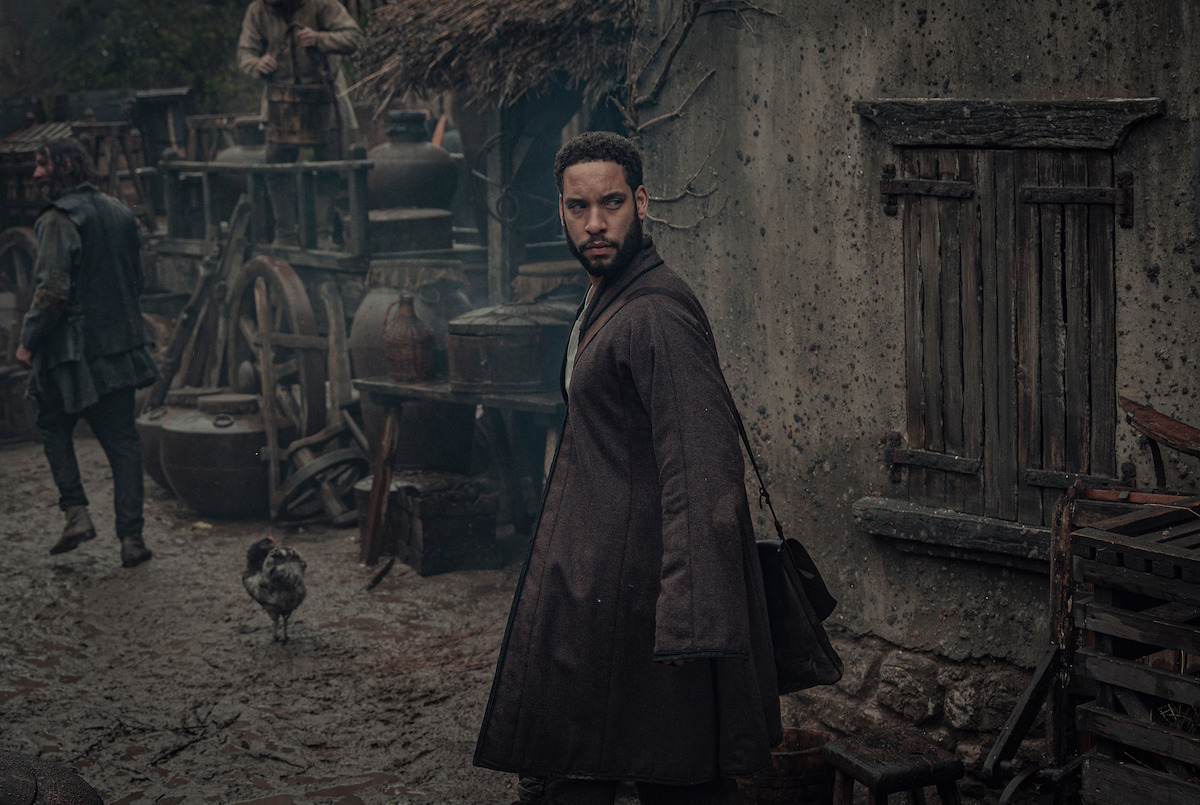
An inquisitive-by-nature mage who studied under Stregobor at Ban Ard, Istredd claims history as his muse. Aside from magic, Istredd was fascinated by archaeology. He studied anything from the remains on Thanedd Island to the monoliths in Nazair and Cintra. During his studies at Ban Ard, Istredd was captivated by Yennefer, whom he met in the caves of Tor Lara. A romantic relationship soon blossomed between the two magic students, one that was pure and true. She trusted and admired him. He adored and challenged her.
Despite his efforts to keep “Yenna” in his life, the star-crossed lovers progressed in different directions. But Istredd’s love never really faded, he merely buried it beneath heaps of work. He became somewhat of an expert on monoliths, and, as a scholar, was allowed to work on Nilfgaardian territory, which is where he met Geralt. Both looking for answers, they investigated the monolith outside Cintra together. Geralt knew enough — the monoliths were a portal for monsters — but Istredd’s thirst for information wasn’t quenched yet. Not until he learned about Ciri’s link to Lara Dorren.
A girl with the gift of prophecy, whose words will guide generations to come, Ithlinne grew up in a tavern in Inis Dubh with her mother, Aevenien. She was prone to sickness, fits, and visions, which made people around her scared and suspicious. All of her visions came true in some form, including, tragically, the loss at sea of her own father. Ithlinne foretold that Éile’s child would begin a lineage that would have great consequence for the world to come. Just who the child is linked to remains to be seen, though. The answer isn’t as simple as it would seem.
Ithlinne Aegli aep Avenien is the elves’ most sacred prophet and these are her (in)famous words:
“Verily I say unto you, the era of the sword and the axe is night, the era of the wolf’s blizzard. The Time of the White Chill and the White Light is nigh, the Time of Madness and the Time of Contempt: Tedd Deireaádh, the Time of Eind. The world will die amidst frost and be reborn with the new sun. It will be reborn of the Elder Blood, of Hen Ichaer, of the seed that has been sown. A seed which will not sprout but will burst into flame. Ess’tuath esse! Thus it shall be! Watch for the signs! What signs these shall be, I say unto you: first the earth will flow with the blood of Aen Seidhe, the Blood of Elves…”
The elves deeply believe that Ithlinne’s prophecy, or Aen Ithlinnespeath, will ring true. If it does, humans will come to perish in an ice age, while elves will prevail, returning to their former glory through the offspring of Elder Blood. This is why the elves are so keen to procreate, and why they are so disheartened by their lack of success.
A snarling creature that tracks and kills with deadly efficiency, the Jackapace’s flared proboscis gives it an unusually acute sense of smell that allows it to track prey from great distance.
A terrifying, alchemically altered monster that guards the vault targeted by the Rats during their heist in The Rats: A Witcher Tale. In a heartbreaking revelation, the jalowick is revealed to be Juniper — Mistle’s former lover — who has been transformed into this deadly creature. The jalowick poses both a lethal danger to the group and an emotional crisis for Mistle, who ultimately makes a devastating choice to kill the monster in order to save the Rats.
A young apprentice historian studying at the Temple of Melitele and Ciri’s slightly awkward study buddy. His thirst for historical knowledge led him to Melitele’s Temple where he devoured every item in the library. Upon Ciri’s arrival, Jarre was asked to show her around and help her get acquainted with the Orbuculum. Not long after, an unsuspecting Jarre fell victim to Rience, barely surviving the whole ordeal.

Jaskier is a successful bard and self-proclaimed romancer who entertains kings, queens and common people with his songs and poetry. The charming Jaskier (whose full name is actually Julian Alfred Pankratz) is everybody’s friend — or so he’d like to think. He dresses in the finest clothes and uses his boyish looks and born talent to impress anyone who will listen. As a bard, Jaskier always goes where stories can be found and songs can be written. He believes in the power of words, and that stories can change the course of history — which is why he wrote his most famous song to date, “Toss A Coin To Your Witcher.”
A traveling troubadour and a wandering witcher were bound to cross paths at some point. Their early time together resulted in some of the bard’s most popular work. Even though Jaskier had a nose for adventure, he didn’t always have the stomach for it. He joined Geralt on several monster hunts, nearly losing his life to a vicious djinn at one point, but left the life of adventure behind after a dispute with the White Wolf. A few years later, Jaskier popped up again. Under the alias “The Sandpiper,” a mysterious angel of refuge, Jaskier was helping fugitive elves out of Redania to safety — perhaps his most altruistic act to date — and soon reunited with Geralt in his quest to protect Ciri. He remains one of Geralt’s most trusted friends and frequent travel companions.
A sun-scorched frontier town, Jealousy becomes the bloody stage for Leo Bonhart’s massacre of the Rats. Its dusty streets and shuttered saloons turn into a nightmare arena — the place where Ciri’s rebellion ends in devastation and fire.
This is the largest northern kingdom, home to the witcher fortress of Kaer Morhen and the sorcerers’ school in Ban Ard. The witchers have lived there since the first witcher was created and remained even after their keep was burnt to the ground. Weather conditions in Kaedwen can be harsh — as are its inhabitants — so their weapons can withstand a lot. The scabbards and sheaths are covered in thick layers of fur so that frost and rust don’t stand a chance. As for the designs, those are simple yet sturdy. Well-built, solid swords that will hold up in combat, but demand a bit of muscle power to wield.
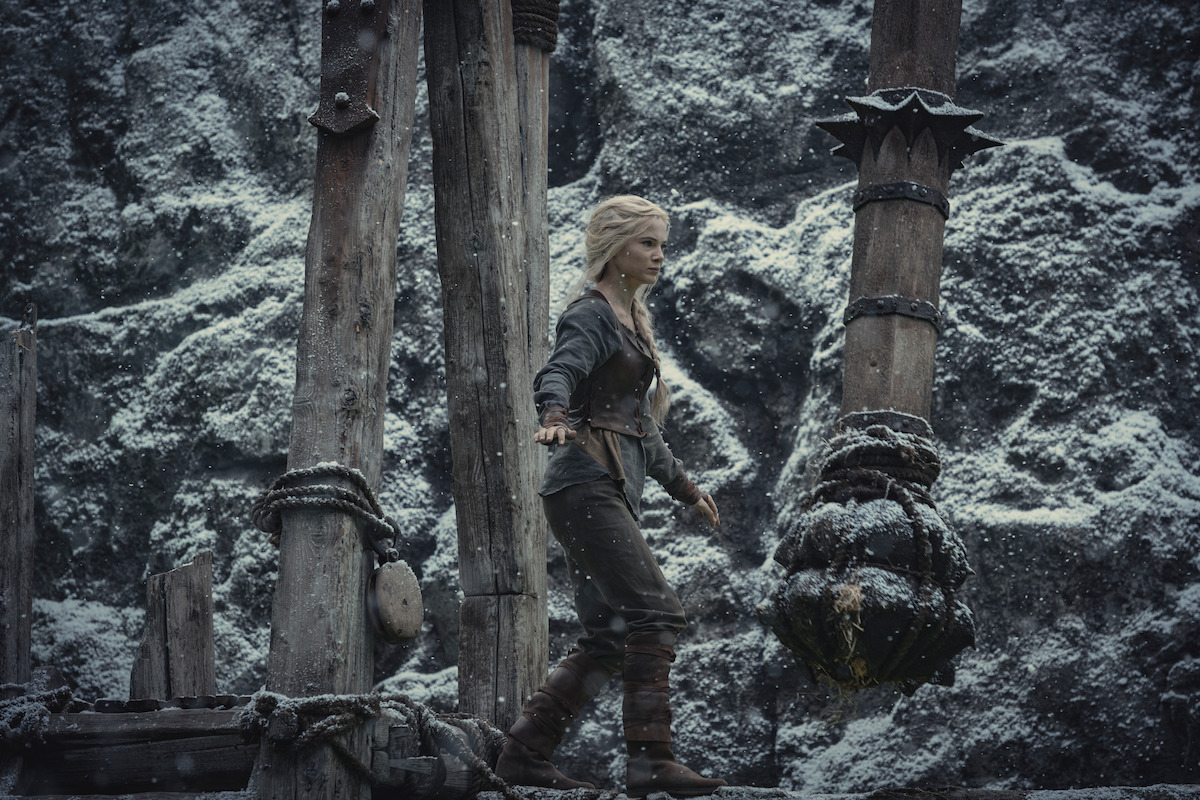
The training grounds for witchers located in the kingdom of Kaedwen was once a mighty keep, but now its ruins remind witchers of a proud past. The name Kaer Morhen literally means “Keep of the Sea,” but there’s no sea in the vicinity now. Built into the peaks of the Blue Mountains, Kaer Morhen is only accessible to those with knowledge of the treacherous trail that leads up to it. For centuries, it has been the home of the witchers from the School of the Wolf. These witchers-in-training could experience the closest thing to real-life monster combat on three huge wooden training contraptions. There’s the Pendulum, a series of swinging logs, with piercing metal spikes; the Windmill, an array of rotating wooden posts with jutting arms, ready to strike; and the Comb, a wooden bar hanging above a compactor of sorts, perfect for crushing small children. Even though Geralt didn’t like the thought of Ciri training on it without his presence, she was brave and didn’t let it conquer her.
Kaer Morhen’s armoury holds relics of a bygone age, each with its own epic origin story, like Klef’s crystal dagger, Deglan’s armor, or Vesemir’s Lab Axe that saved the witchers from the leshy. The armory’s collection of fully functional weapons and witcher memorabilia preserves the history of those witchers who have come and gone from its strong walls over the years after some rest and replenishing their elixirs and armor. Keen eyes will notice that the armory also holds some familiar weapons from a different part of Geralt’s universe…
Ket was Merwyn’s handmaiden, and trusted confidante.
An insectoid water creature with eight sinewy legs commonly found in swamps; hostile when hungry. Far from an insect in size, the kikimora stands tall on several multi-jointed legs. Their limbs bear some resemblance to a human’s, but the lion’s share of the kikimora’s bony physique consists of many different animal parts. They’re quite the sight to behold: mangled faces, mouths filled with crooked teeth. Their eyes are opaque and hollow, their blood thick and much darker than that of humans.
Starving kikimoras can kick up quite the fuss, gobbling up unsuspecting children or even grown men should they come charging at her. Otherwise, they largely operate under the radar of humans or witchers, only attacking out of hunger. They dwell in marshes, swamps and lakes, and their screeches sound like a dying woman’s scream, serving no purpose but to scare their foes. To slay the monster, a silver weapon to the head or heart will do the trick.
A natural, rocky path encircling Kaer Morhen. Young witchers had used the treacherous trail to train, so Geralt taught Ciri the path for her own witchering education. It was on the Killer Trail that Vesemir first spotted the feainnewedd that sprouted from Ciri’s blood.
The king of Kaedwen, Dagread was a lazy monarch who was more concerned with wearing the right makeup and wigs than ruling his kingdom. Before Henselt ascended to the throne, the vain Dagread was in charge — Vesemir will surely remember him from his younger days. Dagread was a king who never had much interest in governance. Instead, he trusted a group of advisors — eagerly led by Tetra — to keep him informed about pressing matters. All that Dagread had to do was decide on the next course of action before washing his hands of it.
The king of Aedirn, Demavend succeeded his father Virfuril — the king of Aedirn during Yennefer’s tenure at court — to the throne. Demavend is a chip off the old block. Like his father, Demavend was very suspicious of mages — mages born in Aedirn being the only exception. As the ruler of Aedirn, he was expected to join the royal councils. But Demavend was never all that interested in global politics. His concern was being superior to the neighboring kingdom of Kaedwen.

The king of Temeria, Foltest is a man of questionable morals and considerable political influence. He used to be one of the most disliked royals in the north. His kingdom, one of the largest in the Continent, was tormented by a striga — the direct result of an incestuous relationship between Foltest and his twin sister, Adda. When Foltest finally decided to deal with the situation, he gained some of Temeria’s trust back.
Together with Triss, Foltest’s mage, Geralt managed to free Foltest’s cursed child. With life behind castle doors somewhat settled, Foltest started to get more involved in global politics. Against expectations, he marched his armies to Sodden Hill, where he swayed the battle in the Brotherhood’s favor. After realizing the role he had to play in the fight against Nilfgaard, he started cooperating (or conspiring) with the other northern royals to gain more power.
The king of Kaedwen, Henselt was smitten with his mage, Sabrina, but even more enamored by the awe-inspiring war machine that was his army. As the ruler of one of the larger kingdoms, Henselt’s opinion was respected among royals. But when he did join royal councils, he wouldn’t voice his opinion all that much (he left that to Foltest and Meve). Henselt cared more about his kingdom than the prosperity of the Continent, going to great lengths to protect what was his. At one point, Yarpen and his crew worked as Henselt’s convoy security, until it was attacked by Scoia’tael.
The first husband to Queen Calanthe of Cintra and father to Pavetta, Roegner’s life was saved by Urcheon of Erienwald, also known as Duny, and granted him the Law of Surprise, which led to Duny’s eventual marriage to Pavetta.
The king of Aedirn. Virfuril was kind to his own people and even kinder to the beautiful mages from the motherland. He was known for two things: his hatred of elves, and his handsome looks. When the time came for Aretuza’s young mages to be appointed to a court, Virfuril’s was in high demand. Despite the Brotherhood’s effort to keep Yennefer — who’s a quarter elf — out of Aedirn, Virfuril fell for her. Upon hearing that she hailed from Vengerberg, there was no changing his mind. Some years after Yennefer’s tenure at Aedirn’s court, Virfuril died and Prince Demavend ascended to the throne.
The ruler of Redania. Vizimir is known for relentlessly rounding up elves and trusting none other than his head of intelligence, Sigismund Dijkstra. Vizimir is everything you’d expect a king to be: wealthy, powerful and always wanting more. Redania was already one of the largest and wealthiest kingdoms on the Continent, but Vizimir was still set on adding Ciri to his family and Cintra to his realm. If Vizimir were to force a union between the two of them, he would be the single most influential king on the Continent.
As with most powerful royals, there’s nothing Vizimir fears more than losing his power. Redania’s king isn’t exceptionally clever or cunning, but the people in his inner circle are. With the help of Dijkstra,his advisor Philippa Eilhart, and his brother Prince Radovid, Vizimir often manages to outsmart the competition, winning at a rigged game. What he might not realize, though, is that he’s the one being played.
A shape-shifting elven mage with fox-like hair and destructive fury. An elf-mahr hybrid who hides deep inside the ruins of an old elven academy.
Before she was corrupted by witchers, Kitsu was a regular elven girl, young and talented. She was taken from under Filavandrel’s watchful eye and forced to undergo mutations that didn’t agree with her — in fact, they’re what made her into an elf-mahr hybrid. Deglan’s plan for profit (create monsters to kill monsters) had backfired and Kitsu was living proof.
To hide the evidence, the witchers tried to get rid of her but only managed to estrange and anger her more. Kitsu fled into the mountains and found refuge in an old elven academy — there she stayed until Vesemir and Tetra followed her magical trail. Deceived by Tetra, Kitsu finally unleashed her fury on the witchers, thereby contributing to the destruction of Kaer Morhen.
One of the first witchers. Klef was part of the group that tried to entomb Voleth Meir, and died in the process. When Voleth Meir was first wreaking havoc on the Continent, Klef joined the task force meant to take her down. They succeeded (sort of), but not before she managed to take Klef down. His damaged armor and the crystal-hilted dagger that she used to kill him are all that’s left — a humble tribute hidden in the Kaer Morhen armoury.
A healing herb with hairy leaves. Strong enough to patch up wounded witchers and especially useful when healing broken bones.
A makeshift dexterity game played by Cintran street rats (and one disguised princess). The pieces are made out of sheep bones and the gameplay is as follows: using one hand, players toss the large knucklebone. While the bone’s mid-air, they grab the smaller pieces from the ground. The trick is to grab the right number of knucklebones and catch the big bone before it touches the soil, using just one hand.
A hostile desert wilderness. Those who go seldom return. It is the largest piece of (mostly) unexplored land, covering more ground than Cintra, Redania, Temeria, Brokilon and Nilfgaard combined. It’s the natural habitat of many nasty creatures, and famous for the expression: “Damn it to Korath!”
A vast, inhospitable wasteland to the southeast of the Northern Kingdoms. Ciri accidentally transported herself to Korath while escaping Thanedd, using the unstable portal at Tor Lara. Isolated and starving, Ciri suffered from hallucinations and malnutrition until she was led to safety by the unicorn she dubbed Little Horse.
Also known as a roach hound, a krallach is an artificially engineered arthropod with canine characteristics, long antennae and spear-like front legs. Krallachs are the result of extensive alchemic experiments and genetic engineering. They look somewhat like a cockroach on spiders’ legs — which unfortunately come up to your waist.
These genetically enhanced creatures are also formidable killers with exceptional hunting and tracking capabilities, hence the moniker roach hound. As invertebrates, they do not have a backbone; instead, their bodies rely on a scaled membrane for stability. Other defining features are its antennae and legs, two of which are made of razor-sharp metal.
Krallachs are created and kept in captivity by the mages who made them. They’re prized for their speed and agility; using all six of its legs, a krallach can reach speeds that no human can outrun. Once locked on its target, a krallach will follow a scent and track a target until it’s caught or killed. With its two antennae and tons of other little feelers, a krallach can detect the tiniest movement, which is good since its eyesight isn’t the best — yet it rarely misses a target with its lethal front legs. Want to kill it? Decapitation is most effective, either by sword or magic.
Located in the bowels of Kaer Morhen, the Lab is where Reidrich practiced mutagenic alchemy. Many young orphan boys were given the grassy green mutagen here — though only three in ten survived. Inside the Lab, behind a medieval vault door, is a secret room that Reidrich called the Bestiary. This room, an old catacomb, was indeed used to study beasts, but also to hybridize them — Kitsu was also created here.
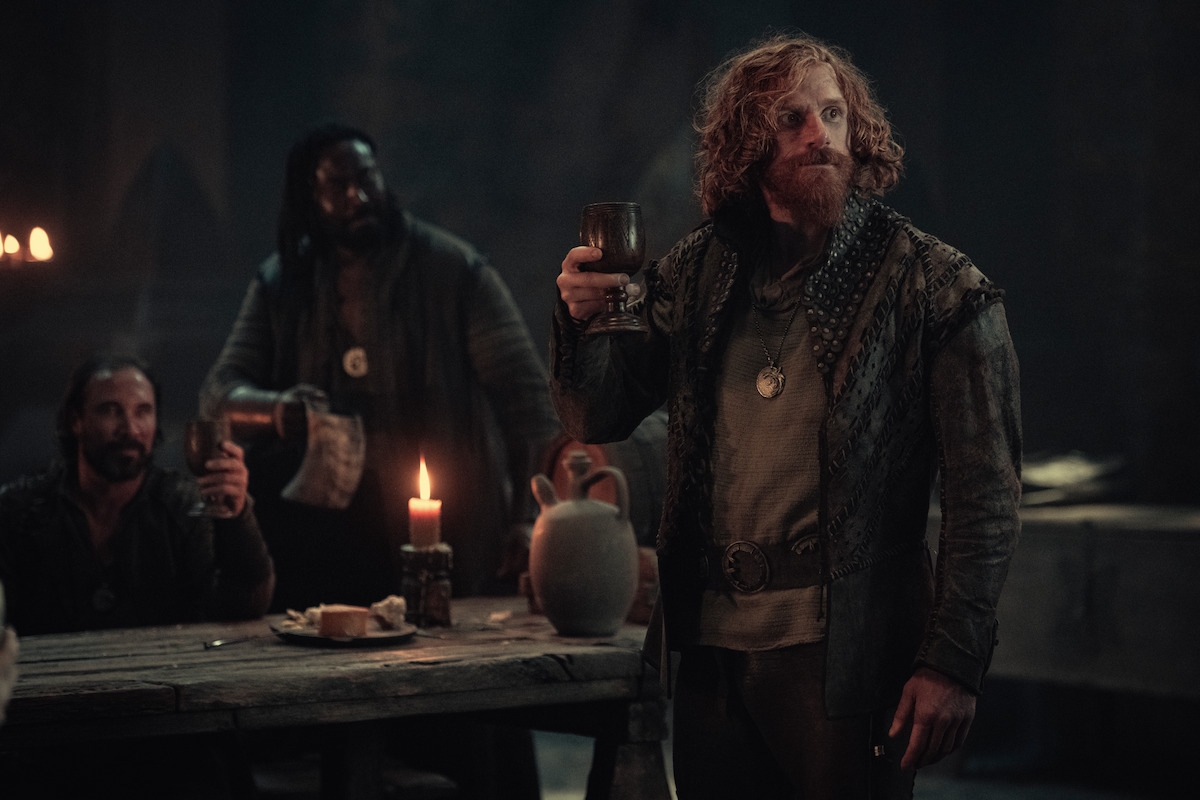
A mountain of a man with a teaspoon’s worth of tact, Lambert is a witcher with strong tales, but little diplomacy. Lambert was one of the “younger” witchers; he and Geralt went way back. They trained together before the sacking of Kaer Morhen, but they didn’t always get along. Blunt as he was, Lambert could make people feel very unwelcome, especially non-witchers. When it came to Ciri, Lambert only dialed back the attitude when she started showing promise in their training sessions. He grew to appreciate her stubbornness and inability to give up — something he’d surely pride himself on as well. Lambert was spared when Ciri — possessed by Voleth Meir — attacked the witchers.
The story of the curse starts with an elven warrior, Lara Dorren, who falls in love with the one thing she is meant to kill: a man. Lara was “created” by elven mages as an answer to human tyranny — she would right the wrongs and secure the future of the elven race with her Elder Blood. But it was not her manslaying that made her famous, it was her controversial relationship with Cregannan of Lod, a human. Their union — and the child it produced — meant the end of Lara’s pure bloodline, and seemingly the end of Ithlinne’s prophecy. Chased to her death, Lara cursed the Continent with her last words:
“Know this. My curse will hound your descendants unto the tenth generation. Until the columns of time and space tremble and open for my people. Then my vengeance will be borne again.”
She died in a field of feainnewedd, but the child in her arms survived. The child would go on to bear children of her own, and those children after her. Eventually, Lara Dorren’s Elder Blood reached her descendant: Ciri. Lara’s story and the supposed end of the Elder Bloodline are also called The Fall of the Elders, the story depicted in Nivellen’s zoetrope.
Different from Éile, this Lark was a student at Aretuza Academy, who attended at the same time as Yennefer, but didn’t show the same magical promise. She was turned into an eel by Tissaia, along with Anica and Doralis. If you didn’t have what it took to support Chaos, you were sacrificed to support the ones who did.
A custom as old as history itself, the Law of Surprise can be given or called for as a form of payment in exchange for saving someone’s life. Instead of money, the Law of Surprise entitles the other to “that which you have, but don’t know yet.” This could mean a bounty of crops, or a newborn calf or sheep – but oftentimes, this would mean a child that hasn’t been born yet or was born in the parent’s absence.
“Who are we to challenge Destiny? A life was saved, a debt must be paid or the whole order of the world falls apart.” —a slightly dramatic Eist
Duny tried to use the Law of Surprise to “claim” Pavetta years after he had saved her father. When that plan backfired, and Calanthe tried to have Duny killed, Geralt jumped to action. He saved Duny and casually claimed the Law of Surprise himself, not thinking it would amount to anything — but ended up with the unborn princess Cirilla as his destiny.
Speaking of witchers, they have been known to claim the Law of Surprise hoping for a child surprise. New witcher recruits are hard to come by, especially since most humans don’t particularly offer their children up voluntarily. So, they tried their hands at destiny. If the Law of Surprise brought the witcher a child, that child would be taken to Kaer Morhen and trained with the rest of the young recruits. All they had to do was find people whose lives needed saving, and that isn’t all too difficult on the Continent.
These laws were drafted by the inaugural members of the Brotherhood of Sorcerers, established in 839. These rules and guiding principles dictate how Chaos should be used responsibly. Fire magic, demonology, necromancy, to name a few, were forbidden by law and the Brotherhood saw to it that their members abided. Those who didn’t abide could face serious repercussions, like incarceration, banishment or dimeritium chains.
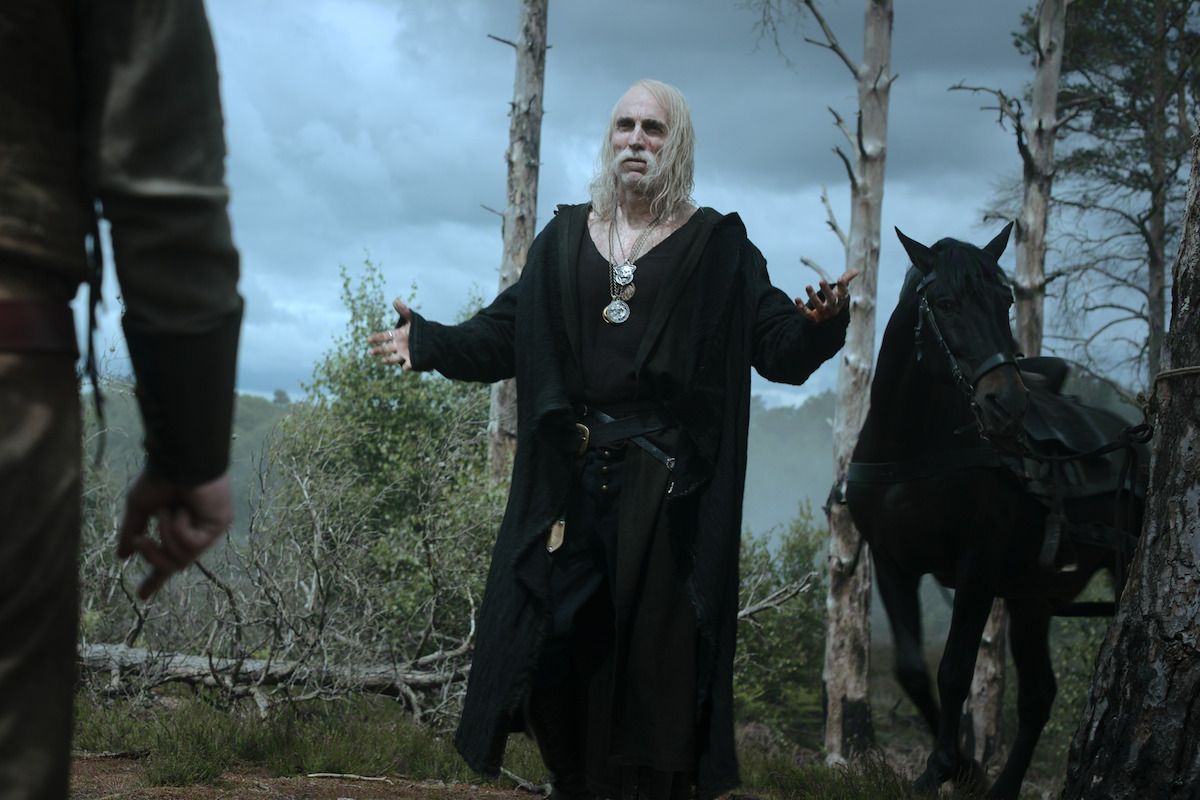
A sadistic bounty hunter introduced in The Witcher Season 4, Leo Bonhart is the kind of man who treats killing as both sport and art form. Known for wearing witcher medallions from the targets he’s slain, he’s hired by Nilfgaardian agent Stefan Skellen at Emhyr’s order to track down Ciri and her gang, the Rats.
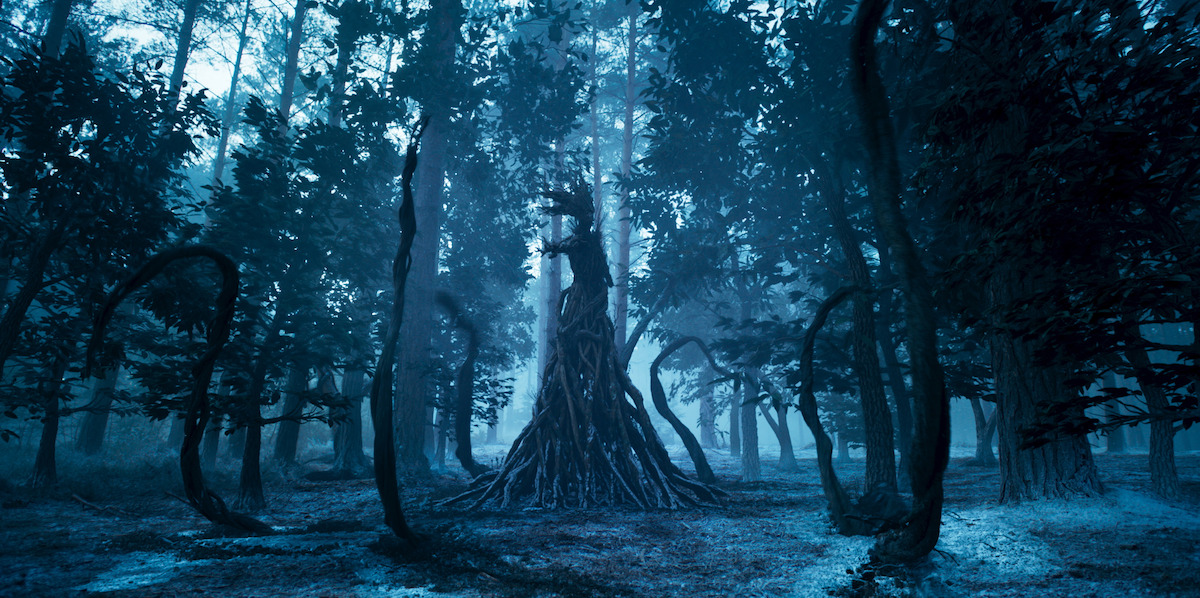
Ancient spirits tasked with the protection of the forest. Because the leshy is incapable of reproduction, this forest dweller will soon die out. Leshies are one of the original monsters that arrived with the Conjunction. Soon, though, they might be nothing more than a history lesson. These barky beasts look like humanoid trees; their branches are bunched together in the shapes of arms and legs.
Though they suffer from a bad reputation, leshies are, in fact, forest spirits of protection, closely watching what goes on in the forest with their dimly glowing green eyes. They won’t normally venture out of the woods other than to protect their land.
Using their vines to attack, leshies can lift, strangle or crush their opponents; like the hydra, cutting off one vine will just make room for a new one to sprout. The most effective way to take down a leshy is by fire through the heart, but animal sacrifice or old dryad spells might also work.
The first — and simplest — incantation that young Aretuza mages learn, used to assess their worthiness of Ascension; their worthiness to control Chaos. It’s as simple as lifting a rock without touching it: “Zeilil eip” which means, “Rise up.”
A young unicorn, named Ihuarraquax but called Little Horse by Ciri. The pair developed a deep bond while lost in the Korath Desert, sharing food and water, and each saving the other from monsters hidden in the sands.
“Hulil i vorzeilil.” “Find and Reveal.”
Formed at Montecalvo, the Lodge of Sorceresses unites Yennefer, Triss, Philippa, Francesca, and other surviving mages. Created to protect magic — and Ciri — it marks a turning point where rival sorceresses choose sisterhood to counter the attack of Vilgefortz following the fracturing of the Brotherhood of Sorcerers.
A Temerian Lord and local hero, Ostrit served as King Foltest’s spokesperson and royal liaison with the local miners and townspeople. The pair had known each other for years and seemed close, but, in fact, Ostrit resented the king. Ostrit had been deeply in love with Foltest’s sister, Adda, but never got the attention he craved from her. In an extreme act of jealousy, he had the princess cursed, resulting in the birth of the striga. When Geralt came to “investigate,” Ostrit tried to hide his involvement in the matter. But Geralt quickly sniffed out Ostrit’s lies and sacrificed the lying Lord to the striga he had created.
A pessimistic witcher who resented his profession. Unlike other witchers, he never learned to love what he did. Maybe his pessimism was merely a shield, maybe it was how he really felt; either way, Luka was vocal about nearly everything — and that got him into trouble more than once. After an altercation with two knights, an inebriated Luka was apprehended and brought before the king to explain himself. Unfortunately, Dagread had just learned about Deglan’s hybrids. Wanting to make an example of Luka, the king executed him on the spot.
Ill-intentioned and well-connected, Lydia is a slightly psychotic mage who is pro-magic and anti-establishment. She enjoys anarchy and fuels it any chance she gets. She isn’t one to get her hands dirty, but she knows people who will. After the fall of Cintra, Lydia freed Rience and brokered a deal between him and a mysterious mage in the quest to capture Ciri.
A small country located on the Yaruga River. Though Geralt chose the title “of Rivia,” he wasn’t actually from there. It was here that Yennefer was passing through with Queen Kalis and her newborn girl when they were attacked by a rogue mage for hire and his krallach; the king was hell-bent on producing a male heir to continue his bloodline, and Kalis kept having daughters.
Darach was the ruler of Xin'trea, and father to Alvitir and Merwyn, notorious for his cruelty and disregard for lowborn elves. He had his mage poison the Ghost Tribe’s water supply when they refused to fight for him as sellswords, leaving Scían as the last of her tribe. King Darach met a poetic end: he was fatally poisoned by Balor’s apprentice, Fenrik.
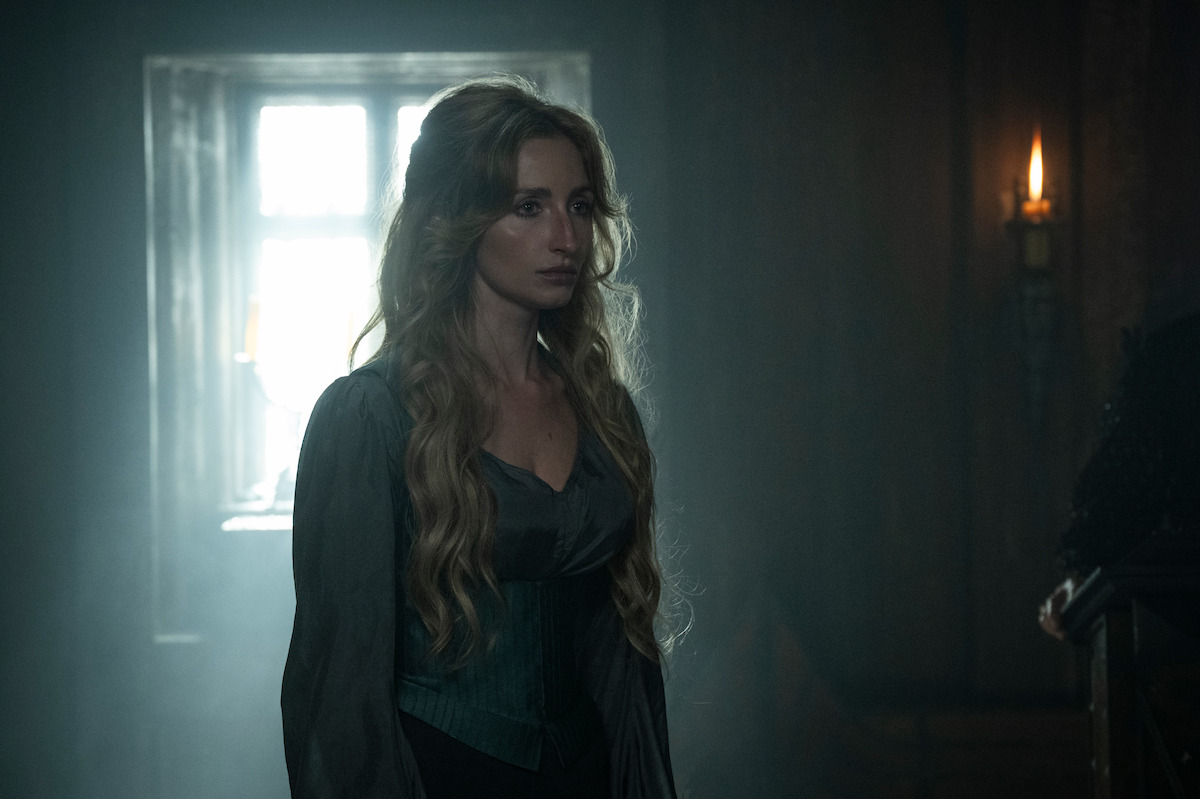
Mages and sorcerers (both being humans with magical abilities) are the most important political faction aside from royals. They train and study at special schools to control Chaos , but another large piece of their education involves their role in politics. Once their formal education is finished, each mage is expected to serve a kingdom (chosen by the Chapter) and work closely with that community’s leaders. Ideally, a mage is the person who helps guide kings and protect kingdoms, but as turmoil destabilized the Continent’s political structure, many mages started taking matters into their own hands and breaking sworn oaths to claim their own positions of power.
Traditionally, mages enjoy privileged positions, but that wasn’t always the case. After the Conjunction, during the reign of elves, humans had no control over Chaos. It was only because the first elves agreed to share their knowledge with humans that mages came to be. As humans realized that they were no longer reliant on elves for magic, they turned against them. Given their shared history and equal appreciation for the art of magic, mages generally don’t harbor the same prejudice against elves as kings and queens in the Continent. But they will fight if needed to protect their position of power and maintain social equilibrium.
In comparison to the dryads or elves, mage culture is virtually nonexistent since mages’ backgrounds are diverse, sourced from all over the Continent. At Aretuza and Ban Ard, young mages and sorcerers are taught to leave their pasts behind them and learn the strength and wisdom from the community of the Brotherhood to be influential political players in the kingdoms they are placed in.
Mages live nearly as long (or sometimes longer) than witchers or elves due to Chaos, which makes them age slower. And once Giltine has done his handiwork during “ascension”, their looks hardly change.
“Magic is organizing Chaos. And while oceans of mystery remain, we’ve deduced that this requires two things: balance and control. Without them, Chaos will kill you.” —Tissaia de Vries
It’s not something every living thing possesses, but magical beings - like elves and dryads - and magical humans — like mages, druids and witchers — were taught to master magic, with spells,signs, incantations and curses. The most important thing is that nothing is given without something else being taken.There must be a balance, a sacrifice. Then there’s the issue of control — to control Chaos one also needs to know how to keep emotions in check. As Yennefer says to Ciri, “Magic. It’s lodged in you, like a spiked arrow. It wounds you deeply. Hurts you. I know it does, but — it’s a strange sort of pain. Combined with… bliss. Trust me, it’s all you’ll ever need. It’s everything.”
Magic is not something you can develop over time, it’s something that you are born with and it’s extremely rare. The youngsters with magical abilities exhibit a “conduit moment” of Chaos — they can channel its power but are not yet able to control it. If they are not trained, they could become a danger to themselves and others. Therefore, magical children are recruited for education at either Aretuza, the academy for women, or Ban Ard, its male counterpart.
During several years of rigorous, unforgiving training, the students aren’t just taught what it takes to control Chaos. They also master incantations, study botany, learn the principles of alchemy and develop a better understanding of global politics and their role in it.
Magic doesn’t only reside in spells and incantations, it’s also in objects and practices — like the orbuculum, a levitating glass orb — or blood-tracing, that allows the tracer to determine a person’s geographic location using a blood sample.
Located in Aretuza, the magic pools are the Academy’s version of a spiritual cleanse. The healing waters aren’t exactly warm, but a simple heating spell can sort that out quickly.
A parasitic demon, a mahr can be hard to detect or recognize unless you know what you’re looking for. Like other demons, they aren’t visible to the human eye unless separated from their host. They proverbially sink their teeth into unsuspecting humans to make them do their bidding, and once a person has been possessed, the mahr feeds off the host’s madness, so it will make strenuous efforts to create physical discomfort and mental delusions to achieve utter delusion. Luckily, meteorite ore will disrupt that magic and make it possible to expel the mahr. Only once exorcized will the mahr show its true face: that of a fox-like gremlin with six knuckled legs — best to leave this to an experienced witcher.
A plant of the nightshade family. These fleshy roots are very distant relatives of a potato but they can be far more poisonous. Supposedly one of the ingredients in the witcher mutagen.
This monolith is located just outside Cintra; for centuries, monoliths were an inexplicable phenomenon — they were simply there. Nobody knew what they meant, or where they came from — until one night, when Ciri’s uncontrolled Chaos created a scar in the earth so wide that it swallowed the Pillar whole. It wasn’t until Istredd and Geralt examined the crevice lined with shattered stellacite that they discovered this was the source of the otherworldly monsters they’d faced recently. This shattered monolith is a portal to another sphere, one that was opened by the massive surge of energy that Ciri created.
Isolated marshland in former Pryshia and home of Zacaré. She could use the mists as a way of reading the minds of approaching travelers.
The enormous tree grew in Kaer Morhen’s Great Hall. Its trunk and branches are decorated with countless witcher medallions of those who have gone in memoriam. These medallions help alert the witcher wearing it by humming in the presence of magic. Unfortunately, the memorial was ruined when Ciri’s magic uprooted the tree, revealing there to be a monolith underneath it and opening a portal to another sphere.

An exuberant dwarf on a tireless quest for justice, Meldof was fierce with her war hammer, and lethal with a bow. A true wildcard, Meldof lost the love of her life, Gwen, and cast her hammer “Gwen of the Flowers” with her ashes. She set about tracking down the elven soldiers responsible for Gwen’s death in a brutal fashion. The last thing they would see would be Gwen about to crush the life from them.
Meldof found herself without purpose after avenging Gwen. Having saved Éile and Fjall’s company from Balor’s roaming beast, and, after giving them shelter, she agreed to help them infiltrate Xin’trea and complete their mission. One last quest to end her days in glory.
Meldof’s chatty warhammer. It was named after Gwen, a dwarf brutally murdered by elven soldiers. The hammer was constructed from ore from the Korath mountains, smelted down and mixed with Gwen's ashes. Meldof made revenge her life’s purpose, believing Gwen’s spirit resided in the hammer and guided her actions.
Part of a group of witchers, along with Everard and Gawain, who wintered at Kaer Morhen and were found dead in their quarters shortly after Voleth Meir took possession of Ciri. Their chests were stabbed and throats were slit while they slept.

An imaginative and underestimated Xin’trean princess who became a figurehead Empress of the new Golden Empire, Merwyn was the gentle flower that no one noticed had poisoned thorns beneath her blooms. Raised from a distance by her mother and barely being tolerated as a girl by her father King Darach, Merwyn consoled herself with books, losing herself in the deeds of her hero Solryth, the explorer who first led the elves to the Continent and drove the Dwarves from their cities.
As a Xin'trean princess, she was treated as a chess piece for marriage purposes in a patriarchal elven monarchy. Merwyn taught herself to hold on to two sides of her being: the public face and the private truth that she believed she was destined for more than marriage fodder.
Merwyn, refusing to accept her fate, became an expert at appearing docile, calm, playing the part of princess perfectly, carrying out her perfunctory duties for show. But all the while she was listening and studying how the cogs of monarchy and power worked. Her home away from home was the palace library, where she read all the dusty tomes cover to cover.
Having bonded with him while they grew up in the same court, Merwyn had sought solace in Fjall, the Dog Clan warrior sworn to protect her. Their illicit relationship resulted in Fjall being exiled from Xin’trea.
Desperate to avoid being married off to the The King of Pryshia as a barganing chip in her brother’s peace treaty, Merwyn agreed to join with Chief Sage Balor and High Commander Eredin’s plan to murder the Xin’trean, Darwenian and Pryshian royal families and their protectors. This coup resulted in the death of her brother, Alvitir, as well as Fjall’s father, Osfar, and sister, Ryl, and turned the elven world upside down.
Merwyn was installed as the puppet Empress of the united Golden Empire, but she chafed at being little more than a figurehead at Balor’s disposal. She blackmailed Eredin into helping her, and installed her own mage, Avallac'h, to take Balor’s place. She was able to contain Balor but her plan failed because Avallac'h was unable to control the monoliths. Out of options, Merwyn had to set Balor free, forming a tenuous alliance with him.
Merwyn was determined to bring Fjall back to Xin'trea alive so they could sire an heir together, but her plans were waylaid by Scían and her sellsword army. Merwyn was stabbed by Éile during the battle for Xin'trea and chose to hasten her own death by removing the blade — the very same Dog clan dagger Fjall previously gave her to protect herself.
As the name suggests, meteorite is a material that crash-landed on the Continent. It’s much stronger and more durable than metal, but also a lot harder to come by. Geralt has one meteorite sword — the perfect weapon for any non-magical foe — while a fellow witcher, Remus, carried the poor man’s version of the same weapon.
Flavius, Lodovico, Rizzi and Toublanc Michelet were a quartet capable of murder for the right price.At least three of these four brothers were not only built like bricks, they had brains as thick as bricks. So what the Michelet brothers lacked in smarts, they made up for in muscle. Rience hired them to accompany him on his search for Ciri in Melitele’s Temple. Alas, their attack-first-think-later tactics were no match for a skilled fighter like Geralt.
These little creatures can crawl into your ear, making you susceptible to mind control. Fringilla used them at Sodden Hill — and once ear-wormed, Sabrina suddenly turned against Yennefer as if in a trance.
A secluded stronghold and site of an epic magical battle against Vilgefortz, Montecalvo is where Yennefer gathers the surviving sorceresses in Season 4. Once a symbol of magical power, it becomes a fortress of resistance — and the birthplace of a new alliance that will change the balance of the Continent forever.
A skilled Skelligen druid working at the Cintran court, Mousesack was Geralt’s longtime friend, Calanthe’s trusted adviser, and Ciri’s beloved mentor. In the absence of Ciri’s parents, Mousesack took on the role of Ciri’s father figure. He taught her about nature, history, politics, and he tried to prepare her for her life as a queen. Mousesack was an incredibly loyal servant to the Cintran royals and a close friend to fellow Skelligen, King Eist.
The druid berated his friend Geralt on several occasions. Theirs may not have been friendship from the start, but deep mutual respect certainly grew between them. It was Mousesack who reminded Geralt not to forsake his Destiny, thus playing an important part in uniting Geralt and Ciri. Like the rest of Cintra’s court, Mousesack died by the hand of Nilfgaard — not during the siege, but shortly after, when the doppler employed by Cahir took Mousesack’s place.
Along with Fola and Glacella, Murta was one of three young apprentices at Aretuza who encountered Yennefer upon her return to the Academy for the emergency gathering of the Brotherhood. A worrier by nature, Murta was easily wowed by Yennefer; eventually she ended up aiding the King of Cidaris after her ascension.
Mutagenic alchemy is what led to the creation of the first witcher. When monsters threatened the safety of the Continent, mages turned to science for a solution. Through alchemy and magic, they produced a poisonous mutagen that could turn an ordinary person into a genetically enhanced superhuman, a witcher — that is, if they survived the mutagen. For ages, mutagenic alchemy was used only on humans. But there have been (failed) experiments with mutated creatures and hybrids as well.
The myriapod is an utterly horrific and absolutely dangerous mix of animal features. It has the skull of a wolf, the horns of a ram, the segmented body of an insect and random eyes scattered across its mangled head. If its visage doesn’t make you shake in your boots, the countless legs and clawing hands that cover its torso might. It’s incredibly tall, even taller than Queen Leshy, and gravity doesn’t seem to bother it , as it can crawl up, down, or inside anything. The size of the myriapod’s teeth and talons make it much more dangerous than other arthropods, and it takes a silver sword to the jaw, wrenched through the skull, to guarantee death.
Located in Nilfgaard, Nazair was the site of a massive excavation of monoliths. Istredd lived in Nazair while working on the monolith excavation, and Yennefer visited him there.
A collective name for magic and spells cast on the dead, either intended to revive the corpse completely or temporarily. Due to its unnatural character, the practice of necromancy was banned by law.
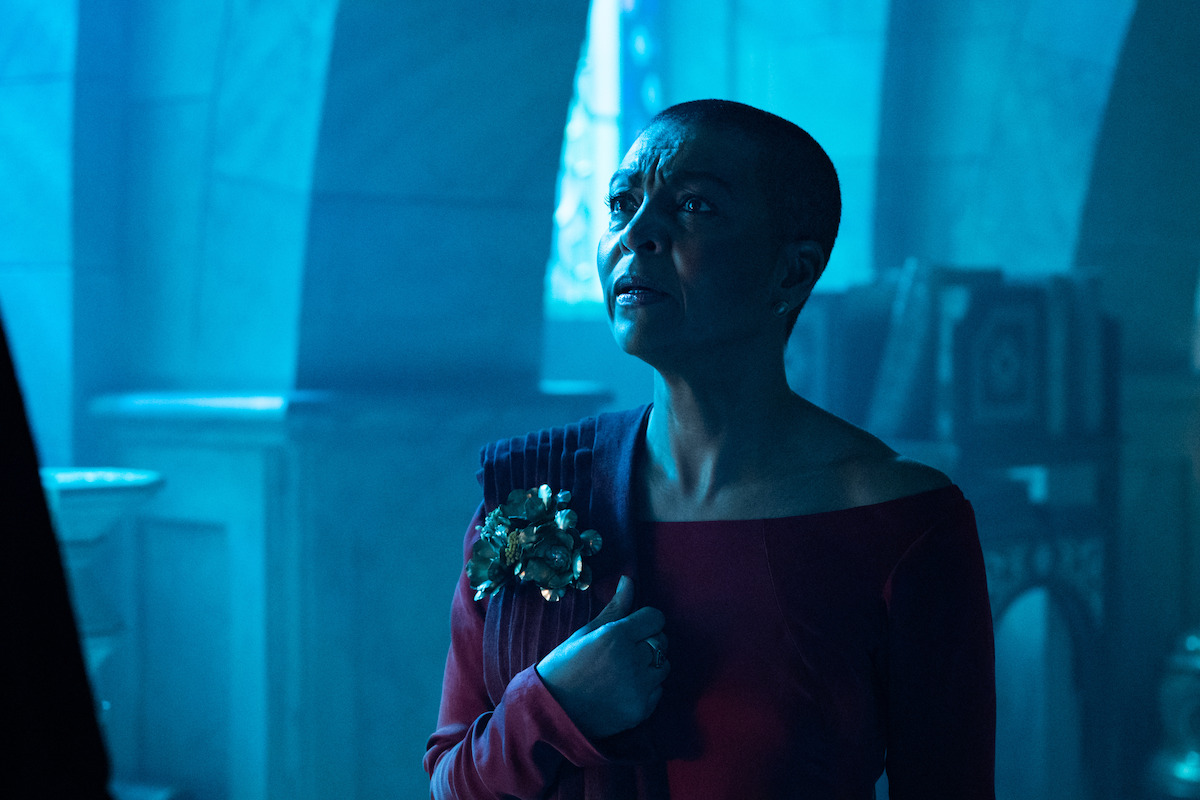
Archpriestess of the Temple of Melitele, Nenneke met Geralt as a young man, when she taught him magical witcher signs. To this day, she is the closest thing to a mother that Geralt has. In her position, Nenneke values her faith above all else. The many lost travelers who she nurses back to health with her elixirs, ointments, and level-headed advice come a close second. As devout as she is kind, Nenneke offers refuge to anyone seeking it as long as they respect the rules of the Temple. She is also incredibly perceptive, noticing the smallest details and reading people like books. Geralt has never truly managed to hide anything from her, nor does he need to.
Éile’s sister. Murdered by assassins attempting to wipe out any remnants of the Dog, Raven and Serpent clans.
A flowering plant with paralytic qualities and a very peculiar taste. It takes a skilled botanist to mask its taste and slip it to someone without arousing suspicion.
The largest empire known to man, covering the southern half of the Continent, also has one of the largest and strongest armies in the land. Inside Nilfgaardian walls, the kingdom offers its own people security and equality, while outside its walls it is seen as a nation driven by a lust for power, ruled by an Emperor unwilling to stop until he controls it all. Fringilla freely served as its mage during the invasion of Cintra. But others weren’t so lucky, and during its turbulent political history the order was made to lock up all its mages and conscript them into service.
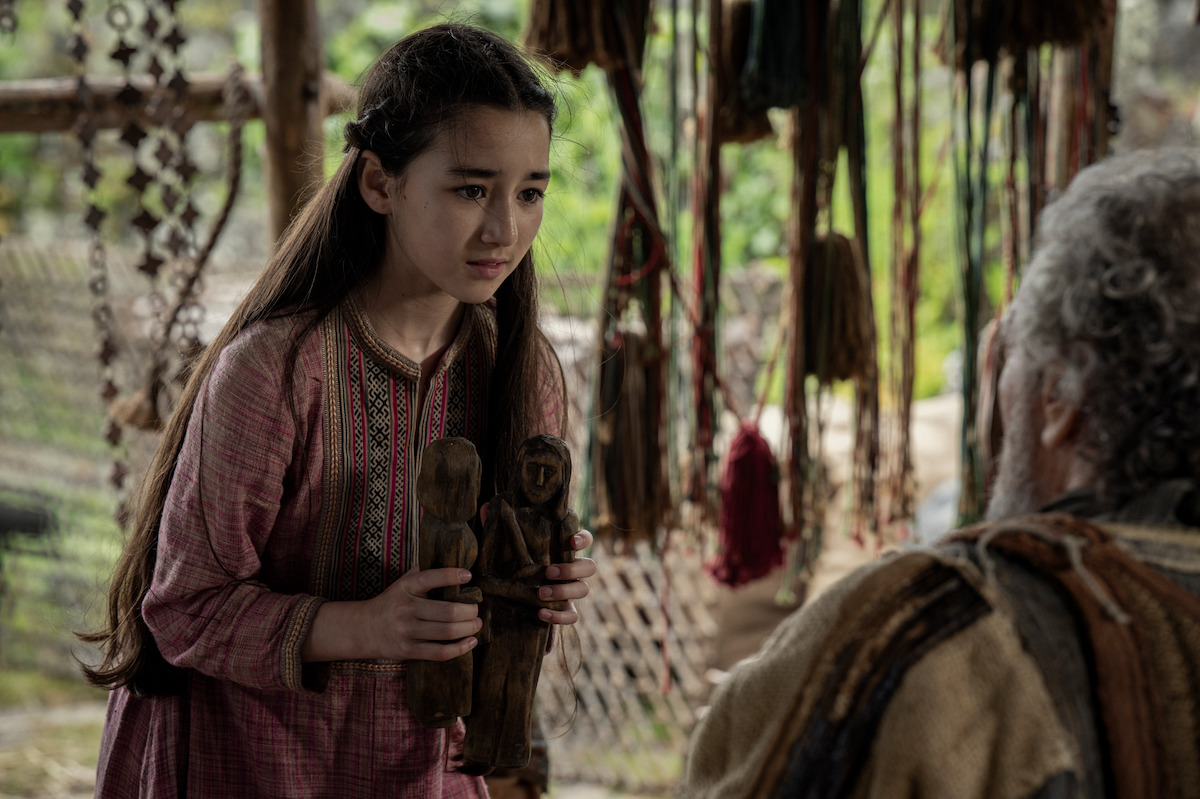
A sharp-minded young historian and storyteller introduced in The Witcher Season 4, Nimue challenges the myths surrounding Geralt, Yennefer, and Ciri. Through her questioning of old tales as told by Stribog, she reframes their legend for a new generation.
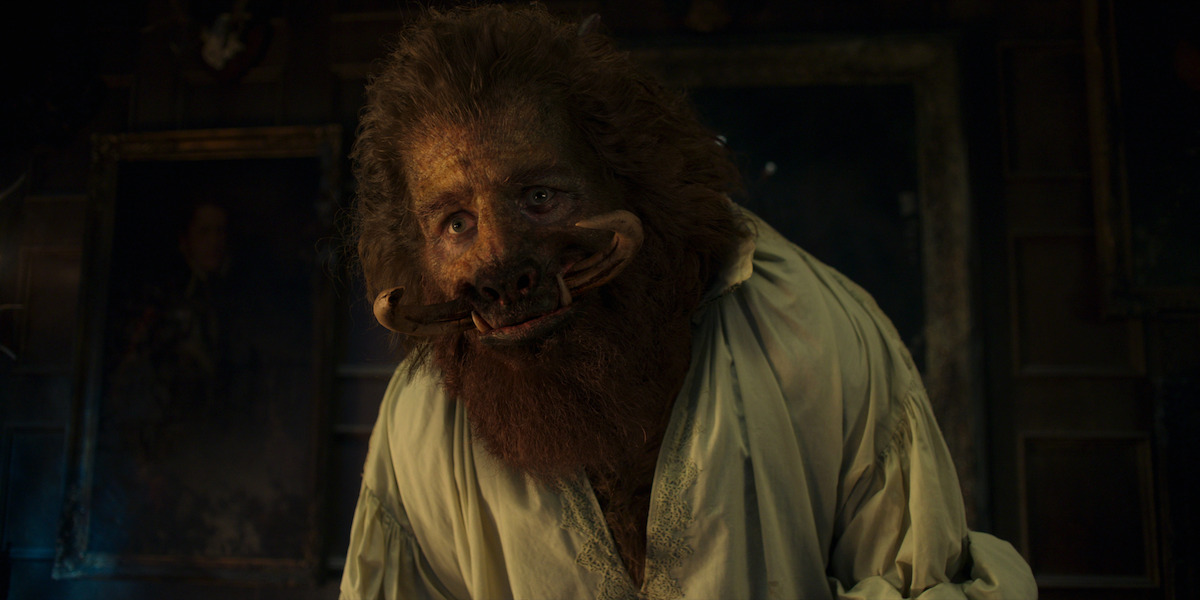
A cursed man with a troubled past, Nivellen has clawed hands, huge tusks, and the head of a boar crossed with a bear. Nivellen was one of Geralt’s old friends. He was an educated man, but since his time at Oxenfurt University, Nivellen had gone down a dark path. High on godflesh mushrooms, he raided a sacred temple and raped a priestesses. As punishment, Nivellen was cursed, and forced to do penance for the rest of his unnaturally long life.
The curse took most of his humanity, but gave him certain magical abilities. Those abilities allowed Nivellen to make a home for himself in an enchanted mansion. There he lived alongside the bruxa, Vereena, until Geralt came around, inevitably confronting Nivellen with reality.
The Northern Kingdoms is composed of four of the largest kingdoms who allied against Nilfgaard in an attempt to keep their land and power: Kaedwen, Temeria, Redania and Aedirn. Historically xenophobic, some humans in positions of power in the North desired a full ethnic cleansing (so that they could rule the way they believed they were intended to rule), while the Elder Races just wanted to return to a world without humans in it. The political game that was played between the two groups was one of power and ownership, with both players paying no mind to the cost of their greed.
The Northern Kingdoms had their interpersonal conflicts and turf wars in the past, but they’d always seen eye to eye when it came to threats from the “outside world.” As the ancient proverb goes, “The enemy of my enemy is my friend” — which resulted in a tenuous bond between the Northern leaders as they faced the growing threat of Nilfgaard. They bonded over one other thing, as well: the need to capture and control Cirillia of Cintra, in order to maintain their power.
The orbuculum is a levitating glass orb kept in the Temple of Melitele. The priestesses use it to help mages-in-training hone their craft. Though Nenneke instructed Ciri to use it , she had no clue what to do with it — which is exactly how it’s supposed to be — until the orb responded to her magic.
“Felben geish ein me krethe ron. Anelsh’t fasta eip’t kern. Felgreth teigan ain ein’t mine.” “Curse my wicked king. Suffer him the horrors of his heart. Deny his love the light of day.”
The young boys undergoing the Trial of the Grasses would be locked up in this Kaer Morhen dungeon right after the mutagen was administered. Once the side effects wore off, those who survived could walk out of the oubliette and call themselves witchers.
Ghastly specters who hide their frightening facades behind long lace trains and forcefully attack innocent humans. They dwell in swamps and cemeteries.
The Path refers to the witchers’ way of life and is a set of principles and guidelines. The Path tells them right from wrong. It teaches them where their loyalties lie and shows them that not all monsters deserve to be killed, as not all humans deserve to live. The Path takes witchers all over the Continent, but it also sees them back home during wintertime. Each year, when monsters are hibernating and humans have no use for witchers, they return to warm their frozen bones, repair their busted armor and have their fill of white gull (a witcher-brewed alcoholic beverage that even manages to inebriate enhanced humans).
A sharp-nosed gnome inventor with an encyclopedic knowledge of herbs, metals, and mechanics, Percival brings wit and ingenuity to Geralt’s band of travelers.
Equal parts charming and conniving, Philippa is Dijkstra’s shape-shifting partner-in-crime and trusted advisor to King Vizimir. Her ability to figuratively — and literally — shapeshift through courts and parties alike make Philippa one of the most influential sorceresses within the Continent’s politics. It would be a mistake to take her for just another one of Dijkstra’s henchmen, because Philippa has an agenda all her own. Charming yet chilly, Philippa can command a room with a single look.
An armored, scorpion-like predator that hides in the desert. The Pit Monster spits sand to panic and confuse prey before using its snapping claws or venomous sting to kill victims.
“Vond agwethil,” “Door, be opened.”
“Acreid me, aheil me.” “Feed me, heal me.”
Using expertise around botany in order to make potions is a key aspect of magic, both for mages and witchers. Some particularly powerful potions include the Witcher Healing potion, a brew of veratrum, hawthorne, and spurge; and the Wound-binding potion, a mixture of Golden Oriole, devil’s nettle, and knitbone.
These valued substances are used for myriad reasons, from making weapons to casting spells. Some of the most notable among the Continent’s precious metals and materials include silver, dimeritium, meteorite and stellacite.
Princess Pavetta of Cintra was a kind-hearted young woman, willful like her mother, Calanthe, and magical like her daughter, Ciri.
Pavetta led a very sheltered life, kept out of harm’s way more than once by her mother, with whom she was often at odds. The princess cared deeply about people, regardless of race, and thus disagreed with Calanthe’s xenophobic ways.
Just like her daughter, Ciri, Pavetta had long, ashen hair, emerald eyes, and Elder Blood — the uncontrolled outburst of magic on the eve of Pavetta’s betrothal being a telltale sign. Much to her mother’s disapproval, Pavetta married the then-cursed Lord Urcheon of Erlenwald. Even though their love lifted the curse, the pair’s luck was short-lived. The couple was mysteriously lost at sea, leaving a newborn daughter behind.
“Vesie deireid’eip eigein, veise eig faidh’ar.” “Something ends, something begins.”
“Anymbreishil y murm, ankein eir murm.” “Grown in darkness, bring forth darkness.”

The Lioness of Cintra, mother of Pavetta, grandmother of Ciri. A fierce warrior who aggressively opposed all things elven, saying Calanthe’s name can elicit one of two responses: aversion or affection. She was young when she ascended to the throne — only 14 — but she accepted the role gladly. She fought to defend her country with vigor, making friends with former foes, and enemies out of elves. In her first year as queen, she defeated the Nazair military, earning her the Lioness moniker. (Her armor is telling of its owner’s royal status: gold-plated metal, adorned with Calanthe’s trademark lions on the breastplate.) Not much later, she married her first husband, Roegner, with whom she welcomed Princess Pavetta. Calanthe protected Pavetta (and her abilities) from the outside world — so far as to almost have the man Pavetta loved, Duny, killed so they could not be wed.
After the tragic loss of her first husband, Calanthe married a Skelligen named Eist Tuirseach. An unexpected but successful union, the two remained in love until their bitter end during and shortly after the Battle of Marnadal Valley when Nilfgaard invaded Cintra. If there’s one thing that Calanthe loved more than her country, it was her granddaughter, Ciri. When she realized that her beloved Cintra was lost, she used her dying breath to secure Ciri’s safety, taking the secret of her family’s elven heritage to the grave.
Like other leshies’ bodies, the queen’s body is built from layers upon layers of roots and vines. The shape of a regal gown in which they have formed —possibly over hundreds or thousands of years — is an indication of her status in nature. She’s the one that stands even taller, the one that leshies look to for guidance and the one that will fight even harder to defend her domain, the forest.
The fearless ruler of Lyria and Rivia, Queen Meve has never needed anyone’s permission to speak her mind. Once dismissed for her small kingdom and sharp tongue, she proves herself a brilliant tactician in The Witcher Season 4, leading her outnumbered forces against Nilfgaard in the Battle of the Bridge. Meve earns Geralt’s loyalty — and, in knighting him “Geralt of Rivia,” helps cement the legend of the White Wolf.
Quen is a protective sign — much like Heliotrope — that forms a protective field around the caster. You can use it to shield yourself from sonic waves or small pieces of debris, but it won’t hold up against a physical attack. Unlike Heliotrope, Quen lasts until the shield or the sign is broken. When multiple witchers create one combined Quen sign, it forms a much stronger, almost impenetrable shield.
The feckless and carefree Redanian prince who stumbled into a position of power, Prince Radovid was the hedonistic, overprivileged brother of King Vizimir. He shared a connection with the bard Jaskier, which Redanian spymasters Philippa Eilhart and Sigismund Dijkstra leveraged to get closer to Ciri.
When King Vizimir died under mysterious circumstances, Radovid ascended to the throne, but the true power lay with the spymasters who placed him there.
A huge, aquatic monster that Éile, Fjall and company fled from after Syndril’s portal took them to another world. It had a fishlike head, giant pincers, and rows of sharp teeth. The monster was killed after being sliced in half by a closing portal. Its body parts and heart were used by Syndril and Zacaré in the ritual to make the first prototype witcher.
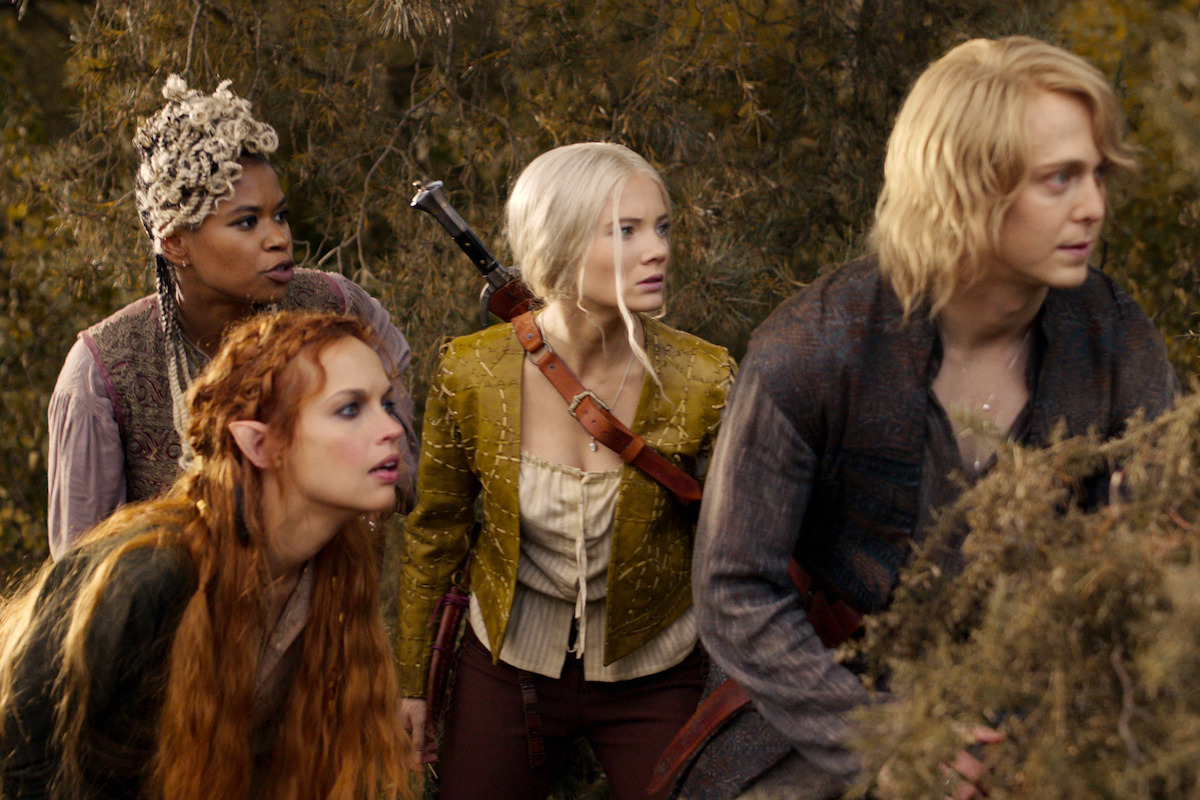
Mistle, Kayleigh, Giselher, Iskra, and Asse were members of an outlaw band known as The Rats. Ciri first met Mistle in the basilisk tent at Gors Velen. They were reunited when Ciri was taken prisoner alongside Kayleigh in the town of Glyswen, where she escaped and met the other members of The Rats. Ciri joined their ranks under the pseudonym Falka.
Although there were male members, Raven Clan were mostly female warriors. Rumor had it that the Raven clan drowned male children at birth. As the name of their chieftain, Cethlenn of the Knives, suggests, the Raven clan specialized in close contact double knife combat.
An extremely wealthy realm known for supplying the Continent with grain and for its horse husbandry. The cult of nobility runs strong through Redania, and wealth disparity is at its most unequal here. In Redania, knowledge is also power, and King Vizimir pays Dijkstra to run the largest spy ring on the Continent — the Redanian Intelligence. It is where Geralt fought Renfri and her men in the streets of Blaviken and earned the nickname “the Butcher.”
A dense, cursed swamp that’s crawling with evil spirits. Deglan dropped his young witchers there to see how many of them could fend for themselves between the ghouls, pale brides, basilisks and krallachs. Survive, and you’d have proven your worth as a witcher.
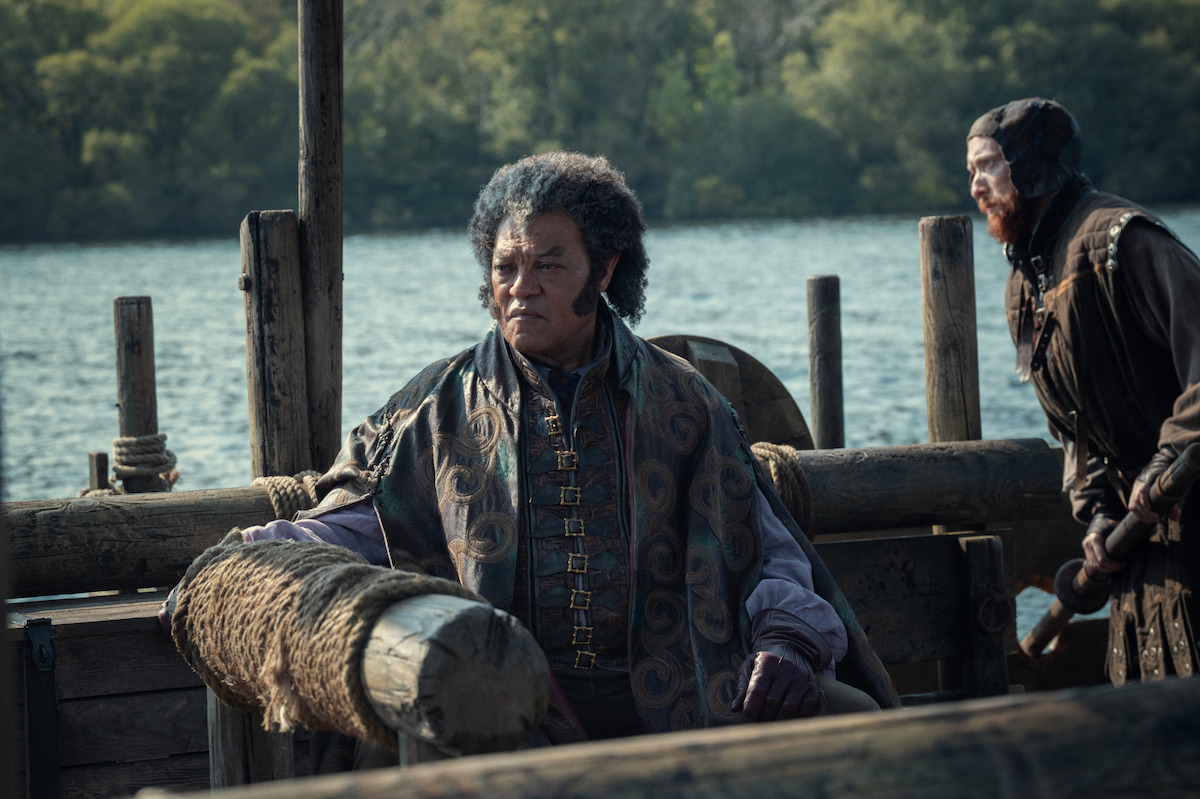
A centuries-old “barber-surgeon” with impeccable manners and a dangerous secret, Regis is revealed to be a higher vampire — one who’s sworn off blood after a life of addiction and loss. Wise, wry, and quietly haunted, he becomes both healer and mentor to Geralt, challenging what it means to be a monster.
The last of the mages who knew the secrets to mutagenic alchemy, Reidrich lived, worked and died at Kaer Morhen. The dungeon lab in the old witcher keep was his domain. During his unnaturally long lifetime, Reidrich did many regrettable things — administered lethal potions to young boys, created dangerous hybrids — but he remained passionate about his field of study. He accepted the toll it took on his conscience as part of the job. When humans attacked Kaer Morhen, Reidrich was the prime target, and when he was killed, he took his knowledge with him.
When Kaer Morhen was under attack, Vesemir and Illyana saved several young witchers — Remus among them. Like his fellow trainees Geralt and Eskel, Remus soon set out on The Path. But as time passed, it became increasingly difficult to find work, so when King Foltest offered a hefty amount to the person who could take down the stubborn striga, Remus took the challenge. Attempting (and failing) to kill the monster would be Remus’ last job.

Born during the Black Sun eclipse, Renfri was the ousted Creyden princess turned fearless brigand leader who stole Geralt’s heart. She and her gang were tracking Stregobor and wreaking havoc around Blaviken when Geralt met her. But could you blame her? The deceptive Stregobor had tortured her extensively when she was a young girl, believing that he could “cure” her of the Curse of the Black Sun. When unsuccessful, Stregobor fled Creyden, and Renfri followed him. She tried everything to lure him out of hiding and bring him to justice — everything but the witcher.
As much as Geralt was taken with this stubborn and courageous woman — he saw bits of himself in her — he refused to be used by her or Stregobor. But Renfri came for blood , and she died by the witcher’s blade in a fight she forced him into. But Geralt didn’t take killing Renfri lightly, and had her iconic brooch set in the grip of his blade so he would never forget the lesson she taught him about not getting involved in the affairs of men.
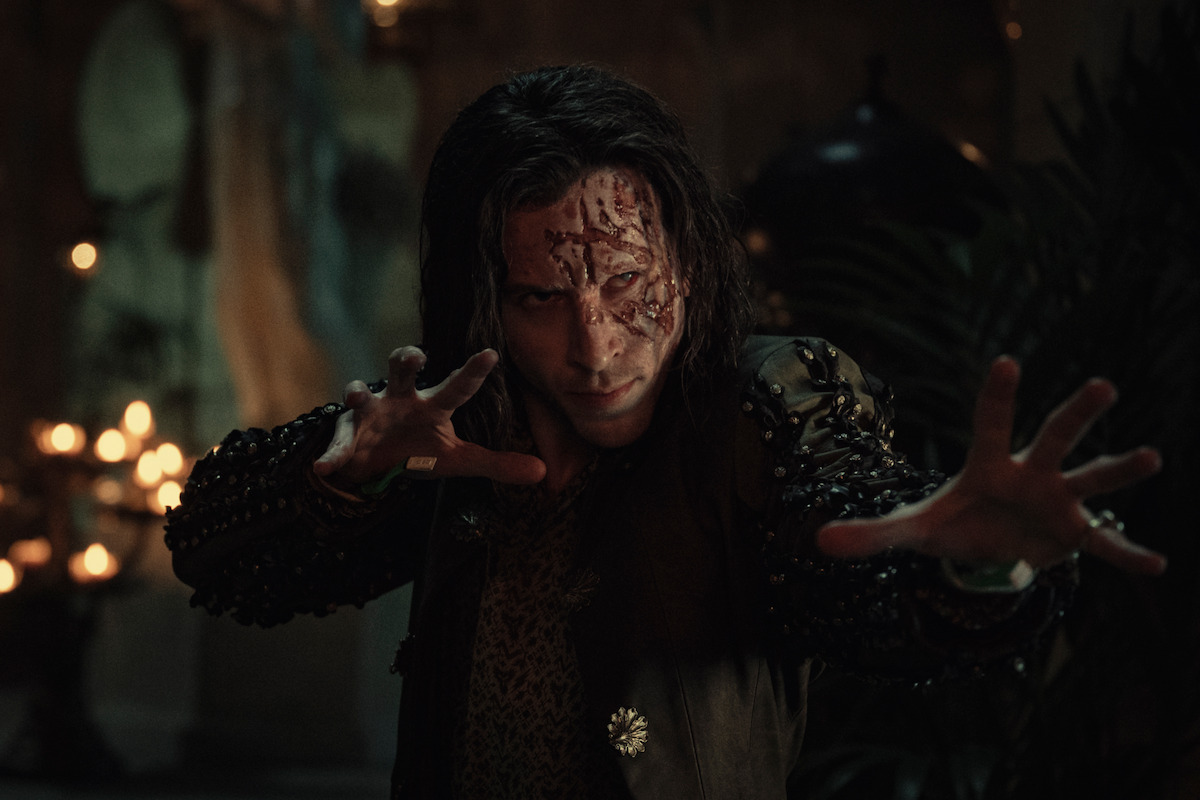
A sadistic mage with a penchant for fire. Rience was a rogue mage who was enticed by the dark side of Chaos early on. Even though the Laws of Magic forbade it, Rience was a fire magic aficionado — and one of the few mages capable of using it without hurting himself. Soon, Rience became arrogant, and as punishment for his debt to the crown, Calanthe had him locked in a dimeritium dungeon for nearly 10 years, draining his magical powers.
After the fall of Cintra, he was presented with a way out: Lydia and her mysterious master. Newly freed and quickly regaining his full fiery potential, Rience could be bought, and set out to capture Ciri, leaving an ashy trail along the way.
Ambiguous territory that was fought over for ages by Cintra, Temeria and Redania before it was taken by Nilfgaard. Geralt and Ciri met here, in Sodden’s shadow.
A troll subspecies that relies on basic communicative skills and animal strength to coexist with humans.
Little Rusalka and Mama Rusalka are swamp-dwelling water spirits who ensnare Geralt and his companions in Season 4. Both eerie and mournful, Little Rusalka and her mother test Geralt with riddles, revealing his deepest fear — not through combat but through confession.
Fjall’s sister and talented Dog Clan warrior. She was murdered by Merwyn during the coup, her throat slit with Fjall’s Dog clan dagger.
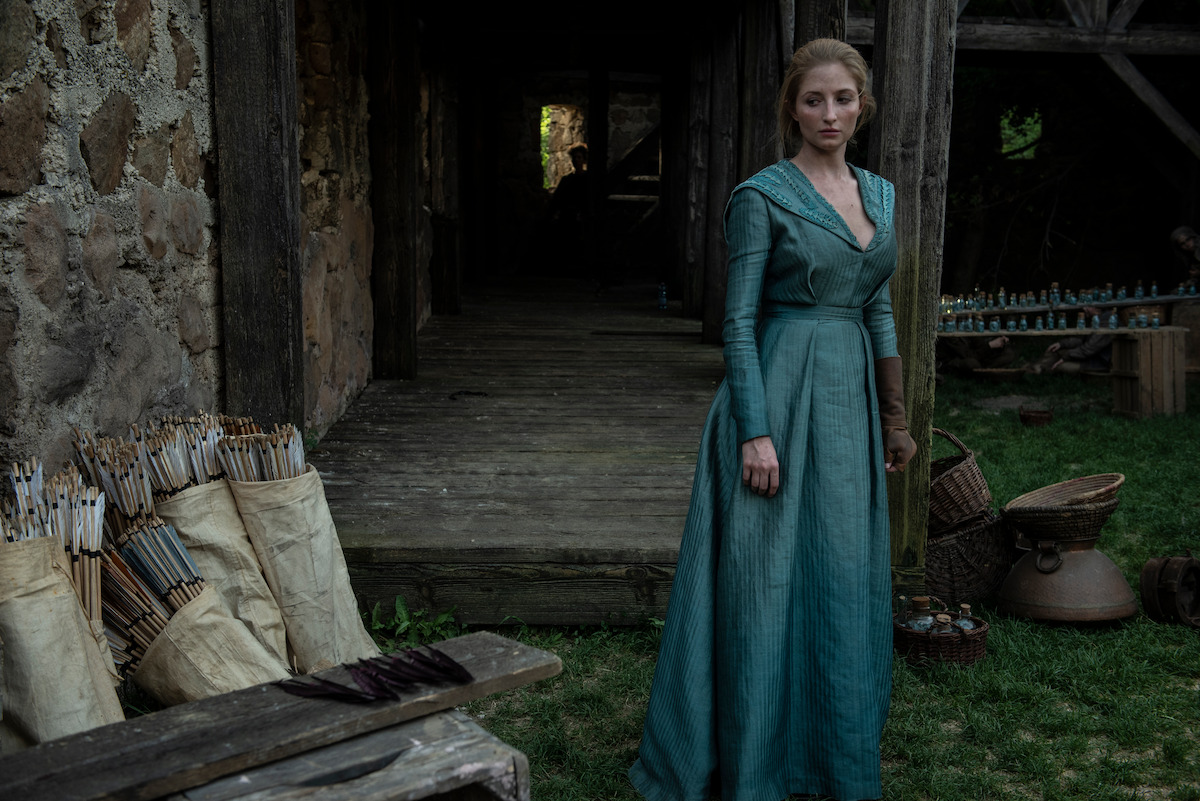
Aretuza alumna from the same year as Yennefer and Fringilla who served Kaedwen. What Sabrina lacked in talent, she made up for in drive and ambition. Ever the teacher’s pet, Sabrina lived for the Laws of Magic and wouldn’t dare break them. After her enchantment, she was assigned to King Henselt’s court. Though she enjoyed it there — and she enjoyed King Henselt — a sense of obligation (or competition) swayed her to fight with Tissaia at Sodden Hill. Though Sabrina was not to blame — she was under the influence of mind-control worms — she nearly killed Yennefer and almost handed Nilfgaard the victory.
The witchers who lived in Kaer Morhen had little to do with the Kaedwen locals — a delicate balance that neither side wished to disrupt. During winter, when monsters would hibernate, the witchers all returned to the keep to repair their weapons, mend their armor and stock up on elixirs. But one winter, Kaer Morhen fell under attack.
For some time, monster hunters had been declining rapidly, leaving the witchers without work. So witcher leader Deglan started creating hybrids, ironically, to help his “sons” make an honest living. The news of Deglan’s deceit did not go over well with King Dagread and his court. Adding insult to injury, the cunning mage Tetra spread lies about the witchers that riled up the Kaedwen people and one of Deglan’s failed experiments, the mutated elf Kitsu.
Both man and monster stormed the keep, destroying nearly everything in their path. Witchers were slaughtered, the basement lab was raided and ruined, and any hopes of ever performing the Trial of the Grasses again were crushed. But there was a glimmer of hope: A young witcher called Vesemir managed to save some younglings — including Geralt. They were out of danger, for now, but they would certainly be the last of the witchers.
Known to those in hiding as a mysterious angel of refuge, the “Sandpiper” was really Jaskier, who assumed this alias in order to help fugitive elves out of Redania — perhaps his most altruistic act to date. His work was funded and sponsored by a mysterious benefactor, who is sure to come back for payment someday.

Last of the legendary Ghost Tribe, Éile’s old mentor and blademaster, Scían was searching to avenge the memory of the clan and retrieve her precious ancestral sword, Soulreaver.
Scían was the only survivor after the Xin'trean king Darach wiped out the Ghost Tribe. She lived alone in the mountains as she couldn’t understand how people could live in cities. While Scían was not born into the Raven Clan, she took many of the young Raven clan into her life to teach them the way of the blade. Scían wholeheartedly believed in the old gods. She prayed before every battle and left part of her food and drink out for them, as she believed they fought alongside her. She was calm at all times and always had a quote from a great elven philosopher to match every situation.
When Éile left the Raven Clan her mentor and blademaster, Scían, was also banished as a result and forced to become the thing she most hated: a sellsword.
After Merwyn’s coup, Scían joined Éile’s band of outsiders to avenge the memory of Raven Clan and retrieve her precious ancestral sword, Soulreaver, which was stolen by the Xin'treans. Scían was injured during a bank heist in the former Pryshian town of Daedwode, but made a full recovery thanks to the intervention of a healer named Zacaré. Scían pretended to betray Éile and Fjall, but instead engaged the services of a former sellsword associate, Uthrok One-Nut. The group disguised themselves as Golden Empire soldiers to gain access to the city, where Scían reclaimed Soulreaver and helped Éile and Fjall defeat Balor and Merwyn.
Her tattoos read:
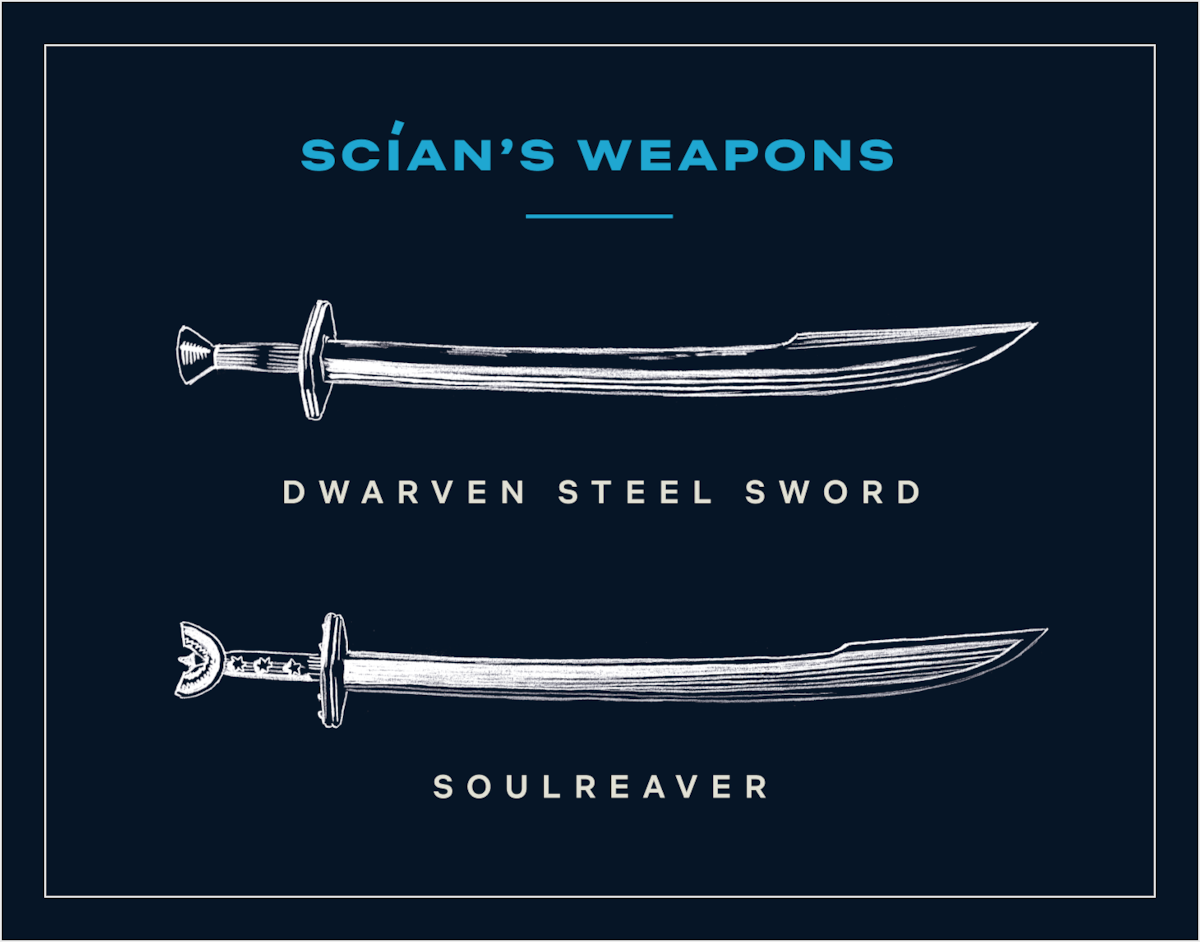
A plain, strong, dwarven steel sword that Éile, Fjall and Scían used to escape the bank ambush at Daedwode — the only thing capable of cutting through the dwarven steel lock securing them.
Legendary ceremonial blade of the Ghost Tribe, believed to hold the souls of fallen Ghost Tribe warriors. It was taken by Mad King Darach after his mage poisoned the Ghost Tribe, and for years lay in the Xin'trean trophy room. Scían joined Fjall and Éile’s cause in order to retrieve the blade, which she successfully did after orchestrating the infiltration of Xin'trea. She returned the blade to her Ghost Tribe’s burial grounds.
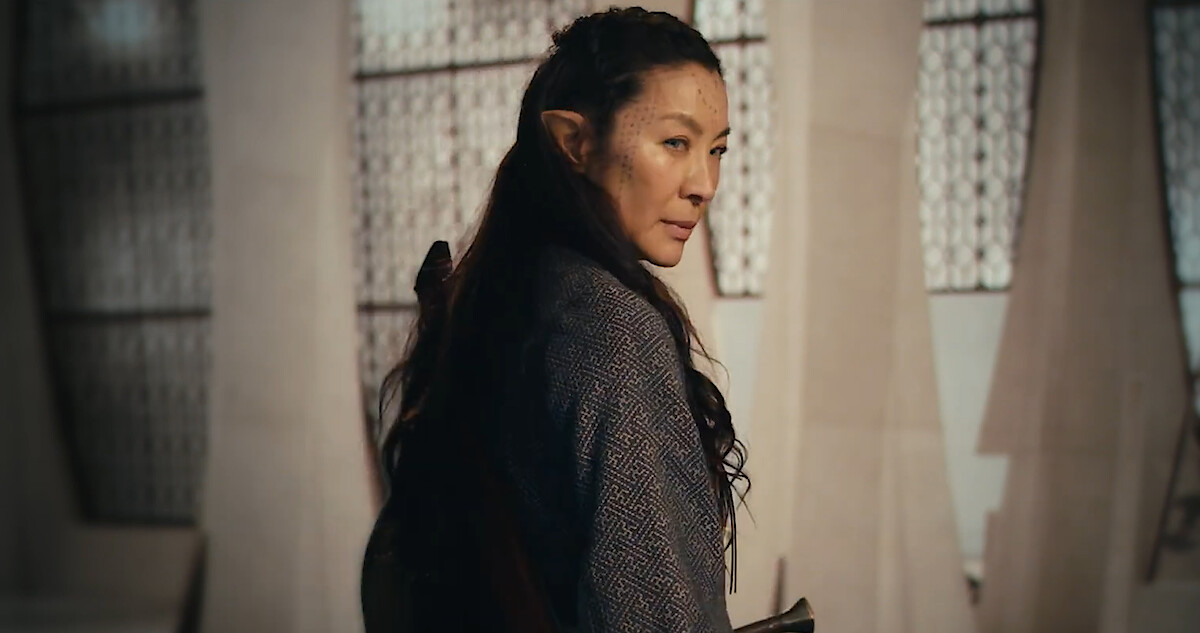
A large lake monster with a cavernous muzzle capable of taking down ships in one swallow. Selkiemaws rarely surface, making them all the more prone to fantastic speculations. Lore states that they’re creatures with thousands of sharp teeth lining an enormous muzzle big enough to devour ships and even villages whole. Others say that they are, in fact, harmless plankton feeders, but people generally agree that there’s no smell more rancid than that of selkiemaw innards. Geralt, unfortunately, knows from personal experience.
A mixture of magic and alchemy, this spell can be used to analyze a sample. As a vial of the material — monster blood, mostly — is placed in a centrifuge, this spell helps separate the material into its components. If there’s any sign of mutagenic alchemy, if a mage has intervened, that component will glow. The incantation is: “Themben shwar felwas, themben zurshem gafeine.” “Let nature decay, let Chaos shine.”
The Serpent clan did not have gendered delineation, referring to each other only as “clan.” Their speciality was a sharpened shield, spear and poisoned blow dart. The Serpent clan worked in phalanxes and formations to optimize their strengths. Many moving as one. They were mathematical, surgical and deadly.
An all-knowing ancient tree deep in the heart of Brokilon forest, from which the Waters of Brokilon flow.
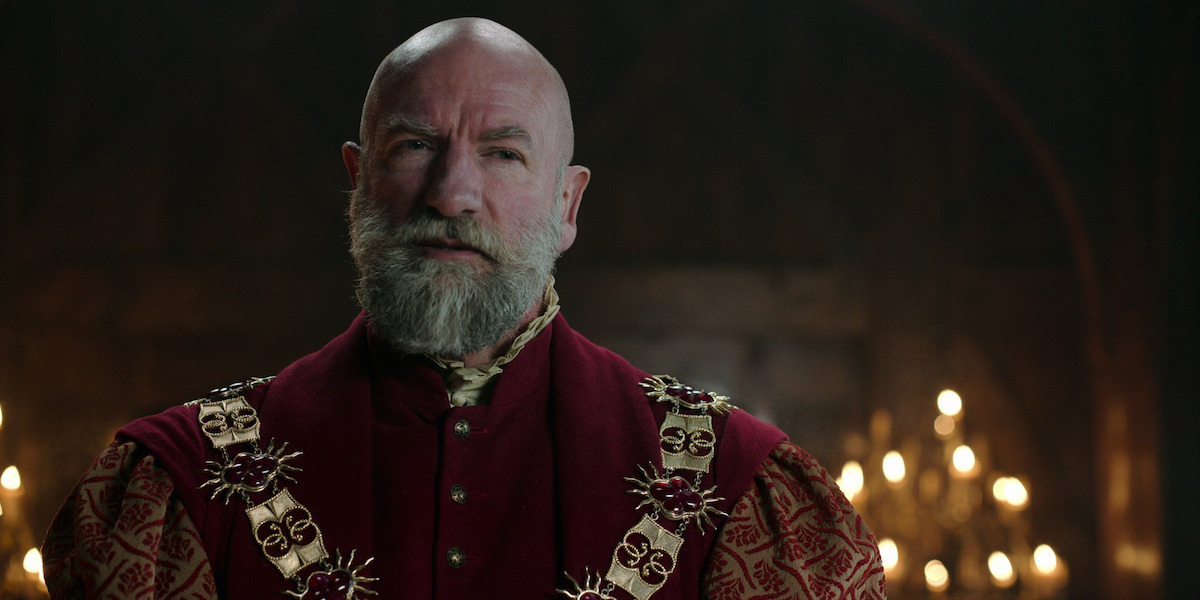
The head of Redanian Intelligence. A man whose impressive style and physical strength are second only to his knowledge of kings, mages and how to get exactly what he wants. Double-crossers and ne’er-do-wells from all over the Continent surely know Dijkstra’s name. He is King Vizimir’s most trusted advisor, but make no mistake, while he is the ultimate patriot, Dijkstra is also a free agent. With spies (intelligence agents) all over the land, he knows of every noteworthy event, sometimes even before they happen.
Despite his high position at Redanian court, Dijkstra was just a commoner — a lowborn man with an absolute first-rate mind. Case in point: It was Dijkstra who first alerted Vizimir to Ciri’s existence, luring him with the promise of an all-powerful Redanian-Cintran alliance. It was also Dijkstra who sent Dara to Cintra to spy on Nilfgaard and the elves — because information is the only thing that Dijkstra can never have enough of. It’s his weapon of choice, but it’s not the only weapon that he knows how to wield.
A finely crafted dwarven sword gifted to Geralt by Zoltan. Its blade bears the inscription “Defender of Dwarves,” symbolizing both Geralt’s bond with his companions and his acceptance of himself as a hero.
Silver is very valuable — even more so to witchers. Magical creatures have extreme reactions to silver, making them more vulnerable and easier to kill. Thus, witchers tend to carry at least one (fully or partially) silver weapon. One witcher, Albin, even had his entire armor forged from silver.
As a member of Queen Calanthe’s guard, the valiant and loyal Lazlo was privy to high-level information and extremely important tasks. During the Slaughter of Cintra, he was entrusted with Ciri’s protection — being asked was the highest honor Lazlo could’ve received from Calanthe. Unfortunately, honor didn’t help Lazlo succeed. He gave his life trying to keep Ciri from Cahir.
An archipelago of six islands located off the coast of the Continent in the Great Sea. Unlike nearly all other kings, Skellige’s king is chosen by its chiefs, the jarls. Skellige is known for its blunt and bushy warriors and has the most impressive and powerful battle fleet. It was allied with Cintra due to Eist’s marriage with Calanthe. Ciri spent much of her youth there, and considered it the closest thing to home after Cintra was sacked.
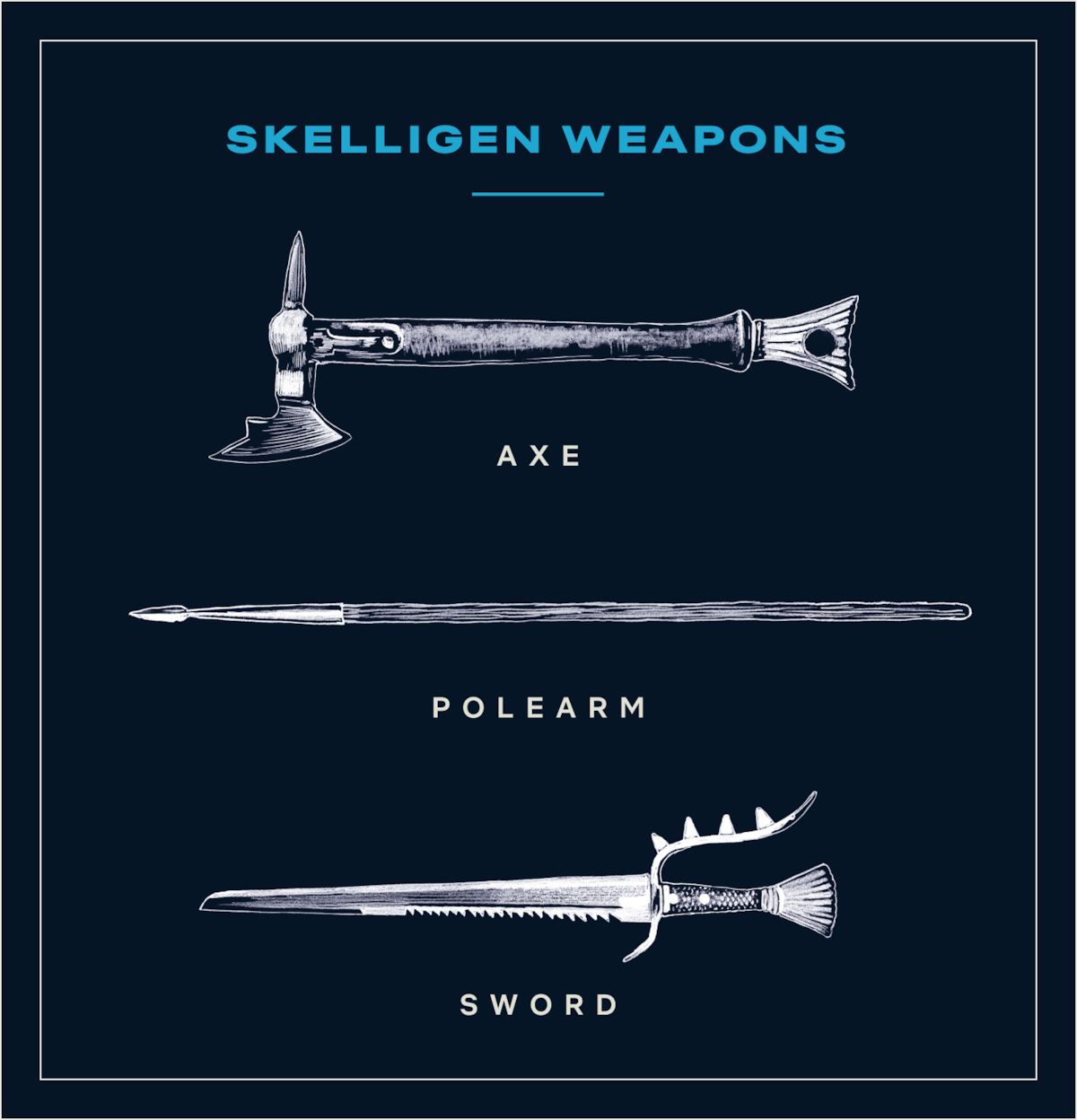
The Skelligens are seafaring people, thus their choice of weapons, and the design of said weapons, shows their connection to the maritime. Their swords have “scaled” grips, like a fish; there are “gills” engraved in the blade, and the serrated edges vaguely remind of fins. Their polearms are multipurpose: just wrap one around them and use them as harpoons or — as the Skelligens would — boarding pikes. In one of their famed war tactics, they’d link up polearms to create a row of boats and ships, conquering each from stern to bow.
A boyish apprentice with burns on his face, he pined for Tetra’s approval and preached the anti-witcher gospel. Skogar was Tetra’s right-hand man, a zealous student who’d do exactly as she said. While Tetra fueled the nobility’s outrage with half-truths and complete lies, Skogar preached to the Kaedwen locals with religious conviction. During the sacking of Kaer Morhen, he proved his worth as a mage, but even advanced magic couldn’t have stopped the Great Hall’s ceiling from collapsing on him.
The first in a series of catalyzing events. The news that Nilfgaard had breached Cintra’s borders arrived in the middle of some festivities. Queen Calanthe immediately left the throne room and prepared her army to meet Nilfgaard face-to-face at Marnadal Valley.
The battle didn’t last long. The Cintrans fought valiantly but were grossly outnumbered. King Eist died, and Calanthe was mortally wounded. As the valley soaked up the blood of soldiers from both sides, Calanthe returned to the palace where she arranged for her granddaughter’s escape. She entrusted the druid Mousesack and Sir Lazlo with Ciri’s life as she took her own — Calanthe would go down with her kingdom. The Northern Kingdoms hadn’t been oblivious to Nilgaard’s intentions, but the attack still came rather unexpectedly, as everyone underestimated their strength. Coming to terms with what had happened and what the loss of Cintra, the Continent’s crown jewel, meant for the distribution of power, the kingdoms carefully considered their next move.
An ancient elven hero, Solryth was an explorer who led her ships through a mighty storm, following the light of the two comets (now known as Solryth’s eyes). Landing on the continent she led her elven armies to drive the dwarves out of their cities and claim the Continent for elfkind — rebuilding cities like Xin’trea on their ruins. She was the subject of the Solryth sagas.
Twin comets associated with events of great significance, named after the legendary elven hero, Solryth. After her ship was blown off course by a tempest, the comets led Solryth to the Continent where she helped establish a golden era for the elves. The comets could be seen in the sky immediately preceding the Conjunction of the Spheres, and their impact was a possible catalyst for the events that followed.
People born with immense magical abilities, but little to no control over them, were called Sources. Their power grew as they matured and became increasingly difficult to control, leading to sometimes dangerous outbursts. Ciri was a Source, as was her mother, Pavetta, which is why it was so important to Triss and Yennefer that Ciri be trained and educated properly.
A plant with unique floral structures and a thick, milky sap that’s often poisonous. Strangely enough, witchers get better from spurge mixed with hawthorn and veratrum.
A ruthless Nilfgaardian intelligence officer, Stefan Skellen serves Emperor Emhyr with chilling precision. Cold, calculating, and always two steps ahead, he manipulates spies, bounty hunters, and even monsters to tighten Nilfgaard’s grip on the Continent — including unleashing Leo Bonhart to hunt down Ciri.
The material that the monoliths are made of, stellacite is a shimmery black material and nearly indestructible. It doesn’t appear to occur anywhere other than in monoliths, but Triss and Geralt also found traces of stellacite in the Myriapod’s remains. Plus, the Chernobog, the other monster that traveled through the monolith, had an exoskeleton that was made entirely of stellacite. It holds a deeper connection to other spheres.
A beverage made from dried thornapple leaves and seeds, it’s used as a painkiller or anti-inflammatory drug and can cause hallucinations.

Proud, prejudiced and positively archaic, Stregobor is Rector of Ban Ard, a prominent member of the Chapter, and master of illusion with some outdated ideas. He believed in the Curse of the Black Sun, the apocalyptic eclipse that foretold the coming of Lilit. And he didn’t hide the fact that he studied the girls — Renfri, most famously — born around the eclipse, subjecting them to lethal experiments and autopsies.
Despite his controversial (anti-elven) opinions, Stregobor was revered by his peers for his skilled use of magic and masterful illusions. Plus, some of the more conservative members of the Brotherhood still believed in “the old ways” and Stregobor’s racist views. This naturally put Yennefer on his list of dangerous women. Even when Vilgefortz and Tissaia introduced a new form of magical leadership, Stregobor managed to stay involved at the highest political level — not because he cared so much about the Continent, but because he cared about being right.
A traveling storyteller who opens and closes The Witcher Season 4, Stribog weaves tales of Geralt, Ciri, and Yennefer for a new generation.
A cursed female, extremely vicious and filled with hatred toward nearly all living things. This creature is a rarity — neither beast nor fully human, but simply the product of a curse put on a pregnant woman. As the curse progresses, the child grows more and more deformed, ripping its way out of the womb. Once matured, she stands taller than most men. She has long sinewy limbs, a protruding rib cage, darkened leathery skin and inhumanly large claws. Look closely and you’ll even see a bloodied umbilical cord still dangling from her abdomen.
Strigas are extremely vicious, and using their agility, strength and huge teeth they can kill nearly anything. Luckily for us, they tend to restrict their hunting to nights with a full moon. Once they slip out of their hiding place, they attack without hesitation. While silver can help dispatch a striga, why kill what can be cured? Keep the striga from returning to her hideout, make her see the light of day and the curse should be lifted.
A creature in the Korath Desert’s red sands that has a circular maw filled with meter-long teeth. The Suntrap lures desperate sun-stricken survivors in by using its thick saliva to create the appearance of pooling water before it attacks.
A misty marshland in which Geralt and his traveling companions are ensnared by supernatural forces. Teeming with drowned memories, the swamp tests each traveler’s fears.
A witcher who trained with Vesemir and Luka. Short, beefy and one-armed, but still very dangerous. When Kaer Morhen was attacked, Sven fought valiantly alongside his brothers but lost against a ferocious basilisk.
An exceedingly rare and highly intelligent humanoid herbivore that walks upright and speaks the common tongue. Sylvans are unique creatures. Neither man nor beast, but rather human-goat hybrids with impeccable grammar. Their outward appearance mostly resembles that of goats: horned heads, hairy legs, cloven hooves and tasseled tails.
Locals would describe sylvans as hairy devils, but that just goes to show that they’ve never taken the time to engage in conversation with one. Because despite their animalistic tendencies, sylvans are intelligent and well-behaved creatures who consider themselves equal to (or better than) humans.
Syndril Cullwyn was multi-talented, way beyond his time and misunderstood by many. Syndril was born into the conservative kingdom of Darwen. From a very young age, he was at one with the earth magic of the Continent and forever experimenting. Syndril was born in the same village under the same star as Zacaré, and after his parents died he was raised by Zacaré’s mother. When his adoptive mother fell ill and died, he and Zacaré worked on a magical remedy to bring her back to life. But the creature that returned to life was not their mother. This procedure was the precursor to the one they would later carry out on Fjall, itself a forerunner to the Trial of Grasses.
Syndril, ashamed of his failure, abandoned Zacaré and went to Xin'trea to atone for his failures. His abilities gained him the recognition of Xin'trea’s Chief Sage, Balor –especially his theories of travel between worlds using converted dwarven monoliths. His calculations allowed them to explore other realms. But when Syndril discovered a world alive with dangerous chaotic energy, he realized his mistake. It was too late. Balor betrayed him, stealing his work and imprisoning him, using the power from worlds beyond to harness a hydra-like beast that would help him seize control of Xin'trea.
Realizing the ruinous power of the monoliths was damaging the stability of the world, he escaped and returned to Zacaré to convince her to join magical forces with him and the master monolith. To do that, however, they first had to defeat Balor’s beast. Together, Zacaré and Syndril developed a procedure that would transform an elf using biology, chemistry and magic, creating a warrior with a chance of fighting the beast. Their procedure transformed Fjall into a precursor to the first witcher and he ultimately killed the Balor’s beast. Syndril and Zacaré were able to defeat an empowered Balor and destroy the master monolith, but Syndril, finally at peace with his adoptive sister, sacrificed himself in the process.
Syndril’s notes and calculations about how to repurpose bruied dwarven monoliths as triggers to open gateways to other worlds. Balor took it after imprisoning him. Avallac'h stole it back at Merwyn’s request. It contained the knowledge to use portals and monoliths, but still required some innate ability to be useful. Avallac’h eventually used the book to travel through time itself.
A duo of Zerrikanian warriors who accompanied Borch Three Jackdaws on his travels. Téa and Véa were women of action rather than words. These symbiotic twins simply didn’t need words to know what the other was thinking or planning; they could act in perfect unison and fight as one warrior with two swords. They wear traditional Zerrikanian armor and carry custom long swords that made for an awe-inspiring appearance. Just ask Jaskier.
Striking leaf-shaped steel blades that are double-edged, perfect for when you need to attack quickly and forcefully.
A wealthy and religious realm. Though the region is known for its politeness and is home to powerful sorcerers and famous travelers, Temeria is often highly xenophobic, especially when it comes to the Elder Race. The streets of Temeria were once tormented by a striga. Geralt and Triss solved the mystery that the striga was really King Foltest’s daughter, the cursed Princess Adda, whom Geralt saved by breaking the curse.
A house of worship erected in the name of goddess Melitele and run by the Archpriestess Nenneke. Leave your weapons at the door — the temple is a hub of knowledge and neutrality, and a sanctuary for the sick and wounded. Ciri takes her first (guided) steps into the realm of magic under Nenneke’s and eventually Yennefer’s care.
A young novice mage transformed by Vilgefortz into a living decoy of Ciri in Nilfgaard.
A vindictive sorceress with a talent for politics and a tendency to deceive. She looked chic but played dirty. When she was just a little girl, Tetra’s mother was killed by a witcher. Understandably, she harbored a lot of resentment toward witchers and wanted nothing more than to see them wiped from the Continent. Years later, becoming close to Kaedwen’s king and nobility, she was ready for plans to come to fruition. Though she concealed her true reasons from the Assembly of Nobility, she made her intentions very clear: seize Kaer Morhen and exile its occupants for crimes against Kaedwen’s people. With each manipulated account of events, Tetra managed to turn humans against witchers until, finally, she got her wish. Kaer Morhen was reduced to rubble, and Tetra got to revel in her long-awaited revenge. Still high on victory, she tried to kill Vesemir, but died by Deglan’s axe instead.
A vast, three-headed monster from another realm. Balor controlled the beast, using its incredible power to stage a coup, annihilating the Xin'trean, Darwenian and Pryshian royal families and establishing the Golden Empire. The 16-metre-long beast could fly, used echolocation to track down its prey, and had a thickly scaled hide that ordinary weapons couldn’t penetrate. Most notable, however, was its terrifying ranged attack using its three “stingers” which could instantaneously vaporize organic material. Fjall, having undergone his bestial transformation, was able to slay the beast using a stone greatsword taken from a fallen statue of Alvitir.
Headmistress of the Aretuza Academy, Tissaia is a strong leader and strict educator who thrives on order, discipline and control. She is a member of the Brotherhood of Sorcerers and was the one who took Yennefer under her wing when nobody else would. She wears a striking star-shaped necklace and always has a distinct air of authority about her. She can command a room with even the slightest movement. Her students — Yennefer excluded — follow her orders meekly, and most of her peers are equally obedient.
Tissaia’s pristine and composed exterior hides a much more conflicted interior. She takes her responsibility as an educator very seriously and wants what is best for her students and the Brotherhood, even if those interests often conflict. But the war with Nilfgaard and the loss of 14 mages — including Yen, whom she’d searched for — changed her. Together with her romantic partner and confidante, Vilgefortz, she started a new era for the Brotherhood, but soon came to realize that control didn’t always equal power and that authority didn’t always equal righteousness.
Tissaia’s loyalty is tested by the attack on Aretuza, orchestrated in secret by her lover, Vilgefortz. When the conclave comes under attack she uses all her power to protect her home, but it ultimately destroys her. Tissaia gave her life to protect Aretuza, passing away after seeing everything she ever loved fall to ruin.
A witcher recruit who trained with Vesemir, Sven and Luka. Tomas became a witcher by Law of Surprise — a career he wasn’t particularly thrilled about. In fact, the boy was terrified of what was ahead of him. When the young recruits were suddenly dropped in the deadly Red Swamp, completely left to their own devices, all of Tomas’ nightmares came true. As the boys were running for their lives, Tomas’ medallion snagged on a branch and a hungry ghoul caught up with him.
When Geralt and Jaskier were traveling through Posada, they caught wind of “a hairy devil with horns the size of tankards.” Local farmers and villagers complained about stolen crops and plundered fields. After a brief investigation, the pair found out that it was no hairy devil but a sylvan by the name of Torque who’d been stealing the farmers’ grain. Torque turned out to be a worthy foe — not the strongest but quick and clever. With Torque’s help, Geralt and Jaskier were captured by elves, but the captors soon learned that the witcher was on nobody’s side but his own. So Geralt and Jaskier resumed their travels and the events of Posada were immortalized in the lyrics of “Toss a Coin to Your Witcher.”
A fast and fierce free elf with an impressive fighting spirit. The ongoing fights between elves and humans forced Toruviel to leave her childhood home of Dol Blathanna, never to return. She followed her king, Filavandrel, throughout the Continent in the hopes of rebuilding the elven population and reclaiming their home. Her eventual death is memorialized in a heimlon that Francesca sings.
One of the most prominent places on the Continent, accessible only to members of the Brotherhood. The tower, also called Tor Lara, is used by Aretuza Academy for lessons, rites and rituals, as it holds strong chaotic power and a deep Elven history.
At the bottom of Tor Lara lies a grotto with a rocky pool, Aretuza’s dirty little secret. This water is the academy’s power source. Mages who proved incapable of harnessing Chaos were transformed into eels, forced to live out their days in this pool, providing power to the academy.
This is the collective name for a network of trade routes that spans the Continent. It’s widely used by merchants and traders, and thus a prime target for bandits and brigands. People know that the Trail isn’t always safe, but they have no other choice if they want to move their goods. As a result, there’s one sacred rule that goes for all travelers: You never refuse help on the Trail.
A brutal test of faith and justice in which Geralt intervenes to save two accused sisters from execution. The “ordeal” — pulling a red-hot horseshoe from the flames — proves that monsters aren’t always the ones with fangs.
Witchers aren’t born, witchers are made — created through years of physically demanding training and an extremely painful mutation process known as the Trial of the Grasses. Most young boys already struggle to make it through the training in one piece, but the trial claims many lives. During the trial, a certain mutagenic mixture is administered; it’s a dark green fluid, brimming with energy. Not knowing how their bodies will respond to it, the young witchers are tied down and injected with a syringe-like contraption. Afterward, they’re locked up in the Oubliette, where they wait for the grasses to do their work. Fevers, nosebleeds, black spit-up, seizures, extreme hair loss — anything can happen at that point. Eventually, the trial reveals who the newest, most hardened witchers will be. Cruel as it may be, this was the only way to create witchers. When Reidrich, the mage who concocted the mutagen was killed, the needed alchemy and magic to make more was lost.
A powerful healer and Temeria’s town mage, Triss is a practical but soft-hearted person, constantly trying to balance her heart’s desires with her brain’s sense of purpose and duty. While training at Aretuza Academy — several years after Yennefer — she discovered her talent for botany and healing. Triss developed a deep understanding of all the Continent’s plants, using them to create potions and salves for people in need. After Aretuza, she went on to practice in Temeria. In her capacity as King Foltest’s mage, she eventually met Geralt, the man she’d come to love but who’d never return her affections in the way she desired.
Triss and Geralt parted ways, only to be reunited some decades, scars and life-changing events later. No stranger to banged-up witchers, Triss was summoned to Kaer Morhen, and quickly realized she was there to help train Ciri. After Calanthe, Triss was the first woman to take an active role in raising Ciri, coming into her life when she needed it most. After performing a dol dusza, to help understand Ciri’s past trauma, Triss is also one of the first people to see Ciri’s possible power and what it means for the future of the Continent.
Pavetta’s husband and Ciri’s father. A knight of no renown who was presumed dead, but turned out to be the Emperor of Nilfgaard all along. Nobody really knew Lord Urcheon, the cursed hedgehog man who’d come to Cintra to claim Pavetta by Law of Surprise. Urcheon, or Duny, had saved Cintra’s King Roegner from sudden death years ago, and later fell in love with his daughter. Only after Geralt interfered and saved Duny from her blade, did Calanthe agree to the union. Duny and Pavetta were married, Geralt called his Law of Surprise, and surprise! Pavetta was pregnant the whole time. Sadly, the pair’s wedded bliss was short-lived because a raging storm at sea took both of their lives some years later — or that’s what everyone believed.
As Cintra mourned the loss of Pavetta and Duny fell off everyone's radar, Urcheon resurfaced as Emhyr, who overthrew the Usurper in Nilfgaard. After that moment, Emhyr’s name and thirst for power was felt through every inch of land that the Nilfgaardian army took over, and through every move his puppets made. Fringilla and Cahir were pawns in Emhyr’s play for global domination, which centers around the reunion with his daughter, Ciri.
A notorious sellsword keen to prove he did, in fact, have both testicles, Uthrok was a rough, capable sellsword and former associate of Scían. For a considerable sum of money and the spoils of sacking Xin'trea, Uthrok and his sellsword army helped Éile and Fjall bring down Merwyn and Balor’s regime, gaining access to the city disguised as Golden Empire soldiers. Unfortunately, Uthrok didn’t get to enjoy it: he was torn in half by a fully-transformed, bestial Fjall after Balor’s beast was destroyed.
A valued Chapter member, voice of reason and an advocate of change, Vanielle’s loyalties usually lay with Tissaia and Vilgefortz. Like her allies, she tried to make Artorius and Stregobor change their minds about Nilfgaard, but her efforts were in vain. With Nilfgaard on Sodden’s doorstep, Vanielle joined Vilgefortz’s cause and headed into battle. The battle was won, but it was paid for with Vanielle’s life as one of “The Fourteen.”
A tree from the Velen region. It can be acquired at local markets and used as a strong sedative.
A tall flowering plant with poisonous properties, contradictorily used in combination with hawthorn and spurge to heal witchers.
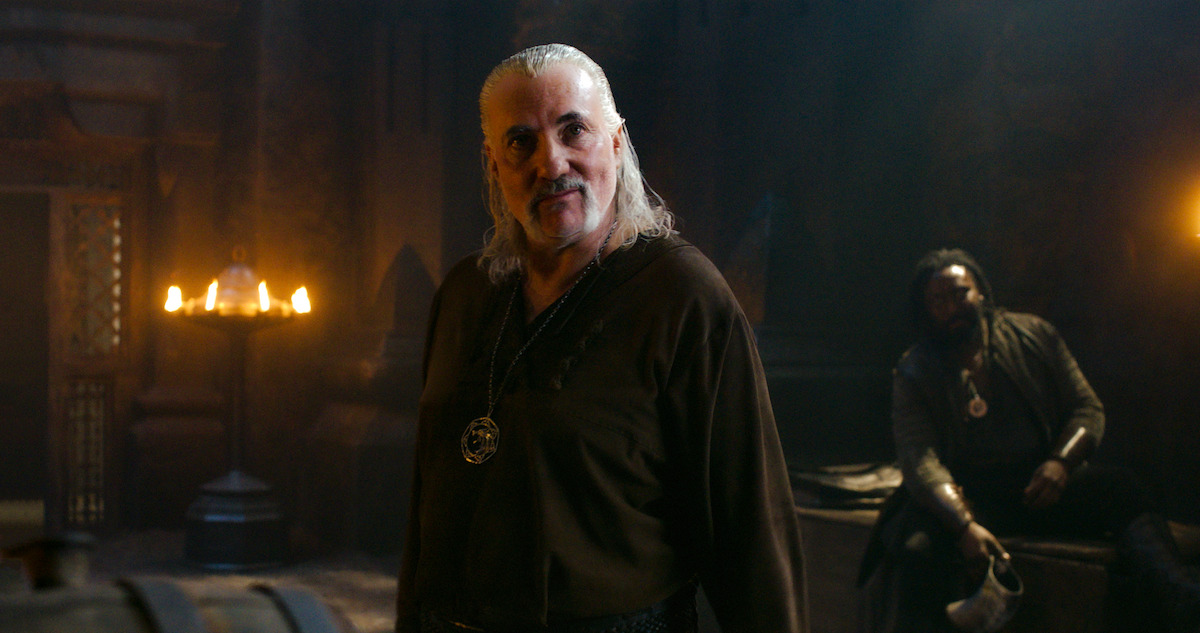
Witcher School of the Wolf chieftain and Geralt’s father figure. He lived through the sacking of Kaer Morhen and looked after the few witchers that were left. Vesemir grew up a servant in a nobleman’s household where he spent most of his time fantasizing about a bigger, better life beyond the walls of the estate. His partner in crime, the spunky Illyana, shared all his dreams and hopes for the future. But when Deglan offered him a chance at a better life, Vesemir left her to go train at Kaer Morhen.
Having passed the Trial of the Grasses, he started life on The Path, slaying monsters and making coin. When Kaer Morhen was attacked, Vesemir was there. There was no way for him to save the fortress, but he was able to rescue the young recruits. The last handful of witchers, including Geralt, have been in Vesemir’s care ever since. He is the one that other witchers look to for guidance or advice, though they might not always like what he has to say. Vesemir is also their living link to forgotten times — and he takes that role very seriously. He sees it as his responsibility to preserve the witchers’ way of life and thus wanted nothing more than to figure out a way to “create” new witchers.
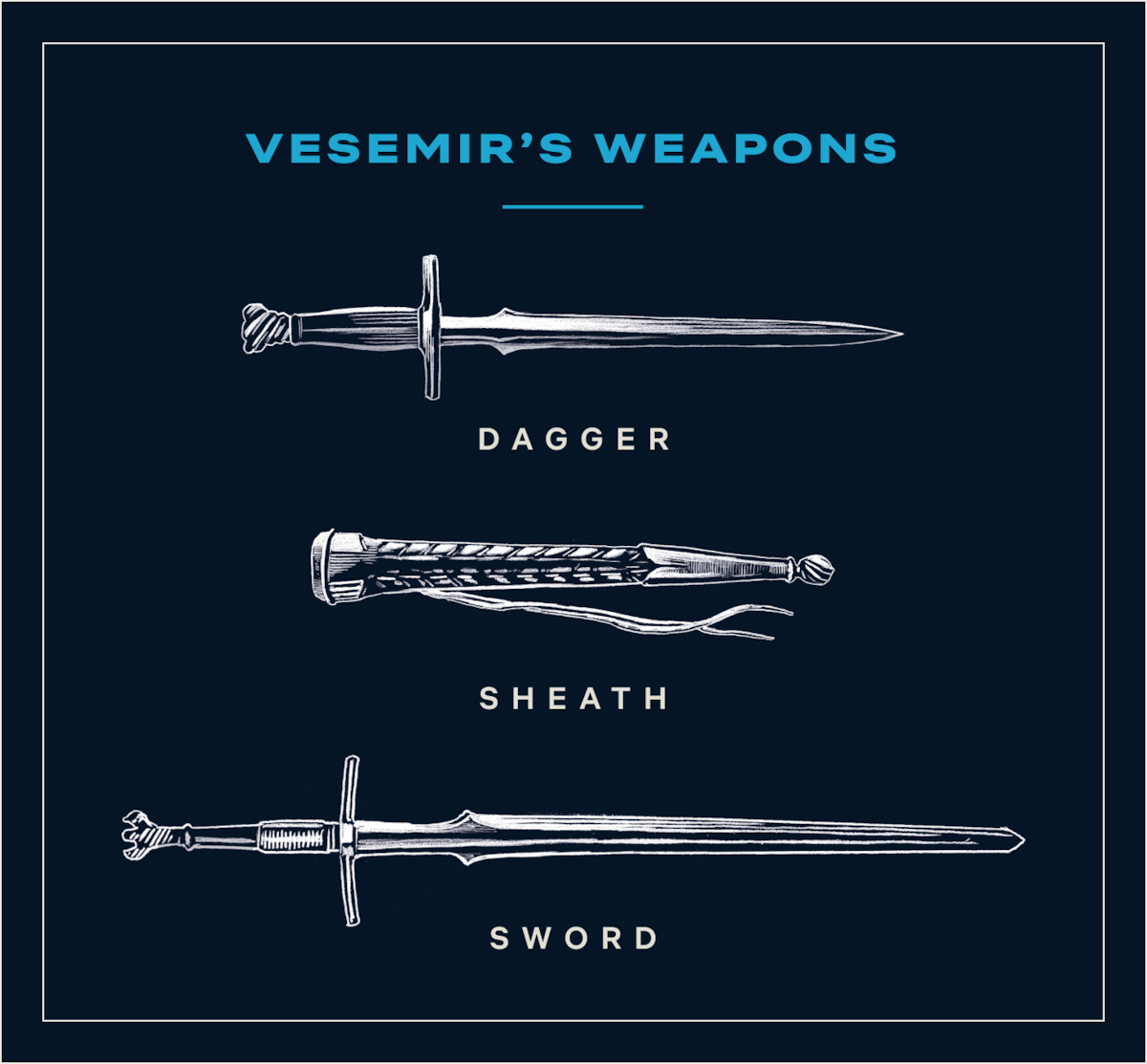
A weathered but trustworthy dagger that has been in Vesemir’s possession for what seems an eternity. It was made to resemble the design of its hand-and-a-half brother.
A hand-and-a-half sword, damaged over time but lethal as ever. It is similar in grip and dimension to Geralt’s meteorite sword. This sword is also telling of Vesemir’s age. Not only is the blade fashioned in a medieval style, but if you look closely, you’ll also see marks from many a monster fight — the copper tinges show that whatever bit it had a very strange reaction with the steel.
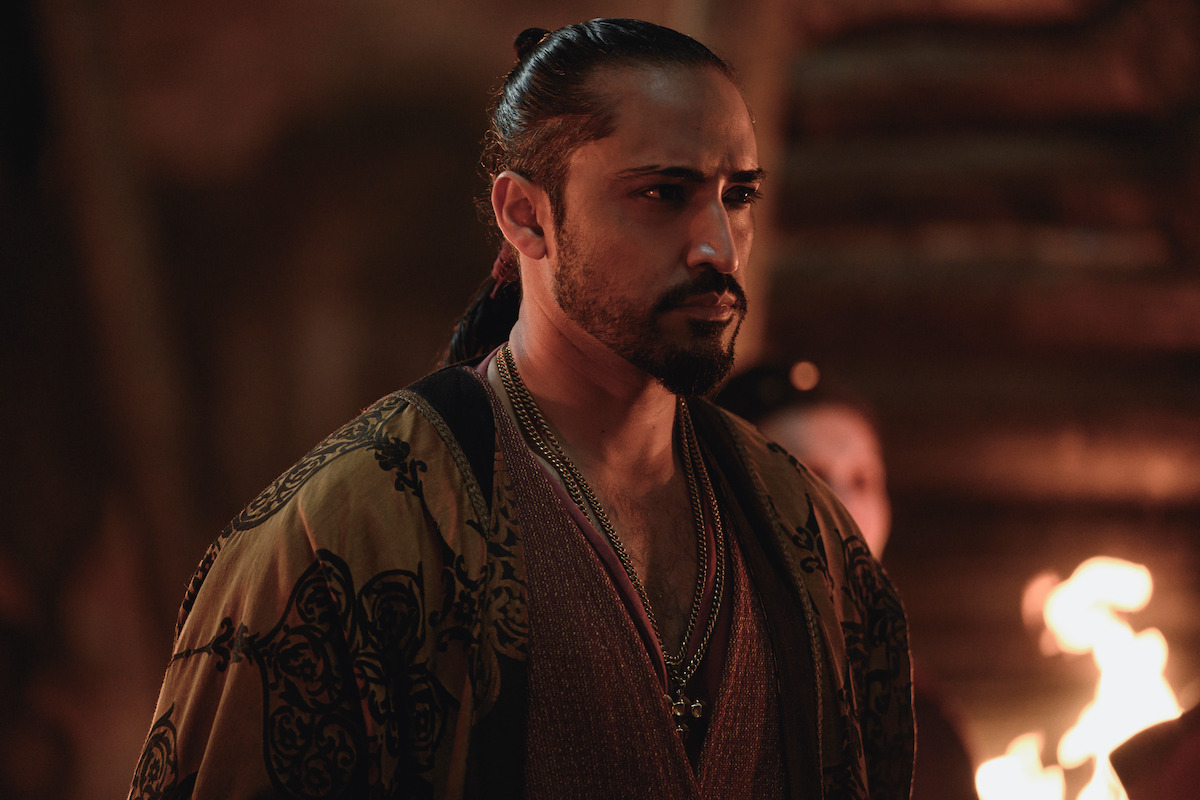
Handsome, tall and mysterious, Vilgefortz is a charismatic mage with a military history. Vilgefortz looks young for a mage of his ability, honed from years spent as a mercenary. But the fact that he chose the life of a soldier despite having innate magical powers was held against him constantly by certain members of the Chapter. The Battle of Sodden — a battle that might never have happened without Vilgefortz’s influence — gave him a chance to redeem himself and prove his worth. There, he was beaten in a one-to-one battle with Cahir, a soldier with no magical abilities — a feat that leads us to believe that there’s more going on that we realize.
In the aftermath of Sodden, Vilgefortz knew he had to strike the iron while it was hot. So employing his talent for politics, he used the mages’ grief and anger at Nilfgaard to make a play for control. Together with Tissaia, his partner in love and politics, he is trying to steer the Brotherhood in a new direction — but he faces plenty of opposition among the old guard led by Stregobor and Artorius.
A master of manipulation and subterfuge, he allies with Nilfgaard and helps orchestrate the coup at Aretuza before eventually unveiling his true abilities. It was Vilgefortz, not Stregobor, who was behind the mysterious disappearances at Aretuza – and the hunt for Ciri. And instead of the weak, capricious mage bested by Cahir during the battle of Sodden, Vilgefortz reveals himself to be an inhumanly powerful warrior who easily destroys Geralt in single combat.
A skilled druid and Geralt’s mother, she abandoned her son with the witchers before saving his life nearly a century later. Kind-hearted and dedicated to her trade, she found herself a young mother without the means to support a family. Though she loved Geralt in her own way, she believed he’d get a better future with the witchers. Years later, the two were briefly reunited. Though Geralt could never forgive Visenna, he did have her to thank for saving him from an otherwise deadly ghoul bite.
These humanoid, fishlike monsters were widely seen after the Conjunction of the Spheres. Found in bodies of water where people often drowned.
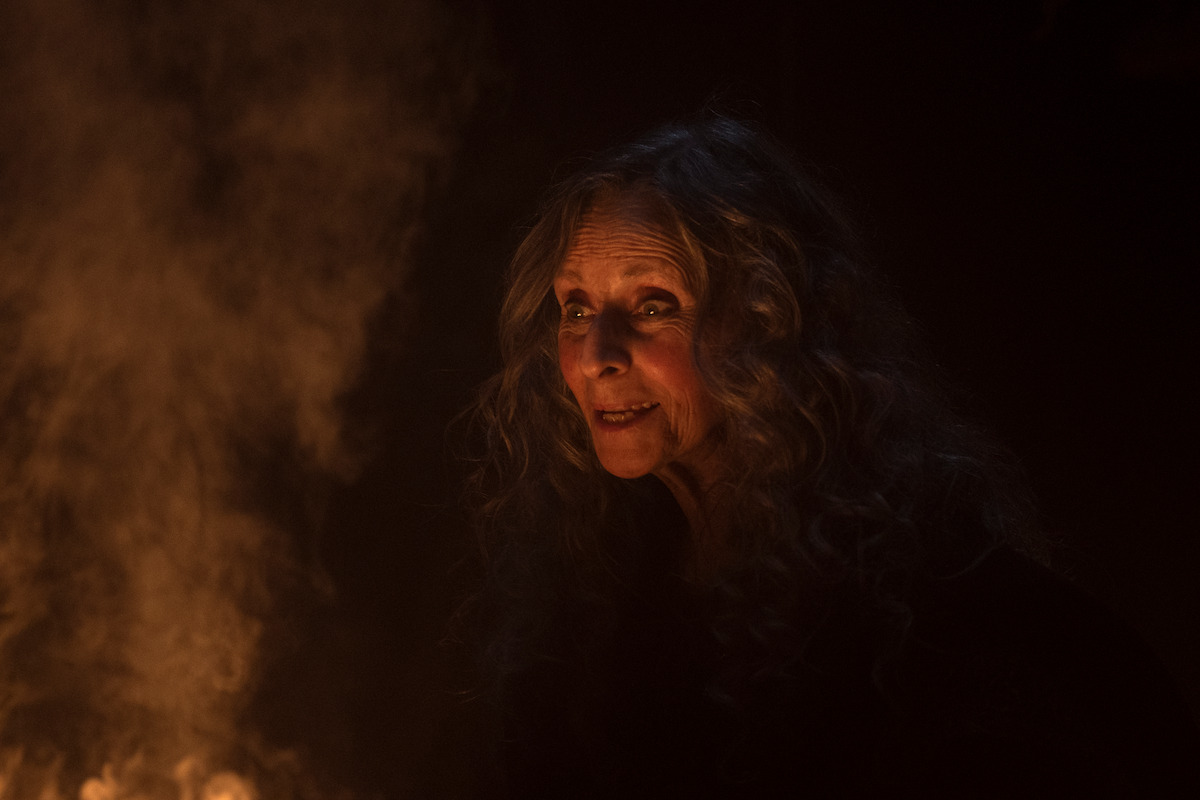
Quite literally one of a kind, Voleth Meir is an elven warrior trapped on the Continent. As the inscription on her tomb reads, she is the Deathless Mother, nesting in dreams. But she doesn’t just nest (or manifest) in your dreams — she has power to manipulate them. She finds your weakness, makes you suffer so badly that you’d do anything to stop it, and then feeds off your agony like a demon. Her look is that of a gnarled old woman: deeply wrinkled skin that reveals her true age, hair white as snow and clothes black as her intentions. She lives in a little forest hut without doors that rises on basilisks’ legs. If you hear her calling to you with promises of granting your deepest wish, walk the other way. Her powers include: taking possession of both body and mind; telepathy; and shape-shifting, allowing her to take the form of the thing you desire most. She is eventually vanquished by Yennefer, in the process of saving Ciri’s life — and she returns to another sphere, where we realize she rides with her long-lost brethren, the Wild Hunt.
Made of steel, crystal and marble, the dagger is a relic of forgotten times – It once belonged to the witcher Klef, but was used by Voleth Meir to kill Klef. Henceforth it’s been kept in the Kaer Morhen armory. In the hands of a possessed Ciri, it would be used against witchers once more.
Therianthropes (aka part human, part animal beings) who transform into wolves by disease or curse. They’re fast, strong and feral creatures who are vulnerable to silver.
A member of the mint family that looks like a nettle, but without the stinging hairs. It’s one of the key ingredients in the witcher mutagen.
Seven skeletal horsemen, eyes glowing with death, whose appearance is generally seen as a portent of doom. The Wild Hunt, or the Wraiths of Mörhogg as they are known colloquially in Skellige, is a group of equestrian corpses from another sphere. Galloping through the sky on their equally undead horses, legend has it they appear as forbears of destruction or war. Each member of the hunt is fully clad in extremely intricate black armor, complete with custom weapons of the same fashion. They truly are quite the frightening sight to behold, though one could take comfort in knowing that they are mere manifestations.
The genesis of one of the most famous riders in the Wild Hunt is told in Blood Origin, we meet Eredin, the ambitious High Commander of the Golden Empire army, hungry for conquest and glory, before his banishment to another realm where he eventually becomes the leader of the Wild Hunt.
In Season 2 of The Witcher we learn that Voleth Meir will become another rider of the Wild Hunt — she was imprisoned on the Continent by the witchers and has been feeding on pain ever since, trying to get back to the sphere she came from during the Conjunction.
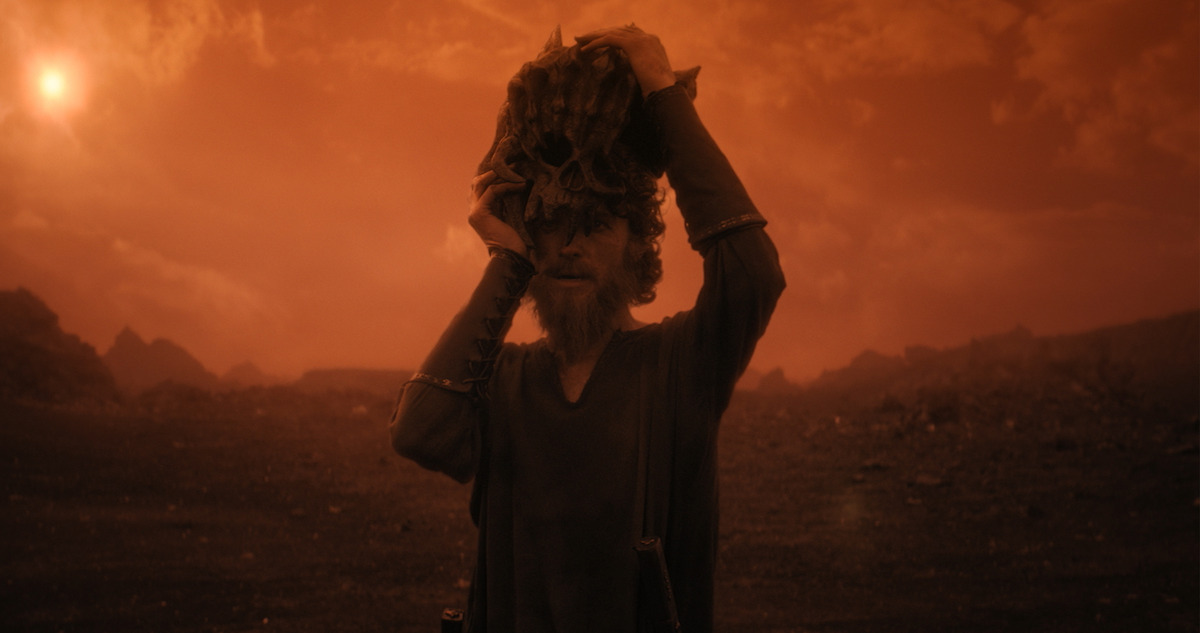
The Wild Hunt are, of course, elves, albeit from another time and place. They share ancestry, which is why the Wild Hunt’s “genesis weapons” bear some resemblance to later elven weapons. The Wild Hunt weapons, though, are much more elaborate, unusual-looking and stylized. They feel otherworldly, which the Wild Hunt technically are. Each member of the Hunt has a specific weapon that’s decorated with a particular animal: King Eredin’s Rat Sweihander, the Gargoyle Badiche, the Crow Hammer, the Alligator Spear, the Rhino Pole, the Snake Lance and the Terrapin Mace.
Witchers do have supernatural healing, but some wounds just won’t heal on their own. In that case, witchers drink an elixir brewed with veratrum, hawthorn and spurge.
The concoction that is needed to create witchers includes mandrake root, wolfsbane, white dead-nettle and, as legend would have it, Elder Blood. Unfortunately, the exact ingredients and ratios were lost when Reidrich and his fellow alchemists were killed. Even if the mutagen recipe were to resurface, one would still need a mage or alchemist with the knowledge needed to activate it.
Witchers are the Continent’s monster hunters for hire. They are humans who were taken as young children — usually orphans and always boys — into special training at the witcher keep, Kaer Morhen. At the keep, the “recruits” would undergo harsh mutations and strenuous conditioning. One long rite of passage culminated in the Trial of the Grasses. Only after surviving the trial can you truly call yourself a witcher. The first of these alchemically enhanced superhumans was created by mages somewhere after the Conjunction. They turned to mutagenic alchemy in an attempt to keep the increasing number of deadly creatures at bay.
Most of the boys sent (or sentenced) to be witchers never made it through the training — around seven out of ten died in the process. Those who did survive, left Kaer Morhen to follow The Path, which is how they referred to the witcher way of life. Ideally, the Path would lead them to monsters, maybe even riches, and keep them far away from politics. They had no interest in it, and no real ability to engage in it. Their mutations were believed to have snuffed out their ability to feel human emotions or forge meaningful relationships with others, although the behavior of witchers like Geralt clearly contradicted that belief. Their political ethos was one of neutrality, which was one of the many reasons why they were despised by higher society: they couldn’t be bought, couldn’t be swayed and, therefore, couldn’t be trusted when it came to grander schemes for political power. Of course, not all witchers stuck to this ethos.
Each witcher medallion is a unique yet universally recognizable token of its wearer’s allegiance. Aside from identifying the school, the medallion also serves a practical purpose: They start to hum in the presence of magic — a sort of natural link to Chaos. As such, witchers carry these magical divining rods prominently on their chests so as not to miss their cautionary hum.
Early on, witchers adapted spells that didn’t require a magic formula. They called them signs. All that was needed to “cast” a sign was concentration and a hand gesture — even witchers could muster that. Signs were most commonly used against monsters and other enemies, but some signs, like Axii or Igni, served other purposes too. The other signs are: Aard, Heliotrope, Quen and Yrden. Geralt mastered signs with the help of Nenneke, the priestess at the Temple of Melitele.
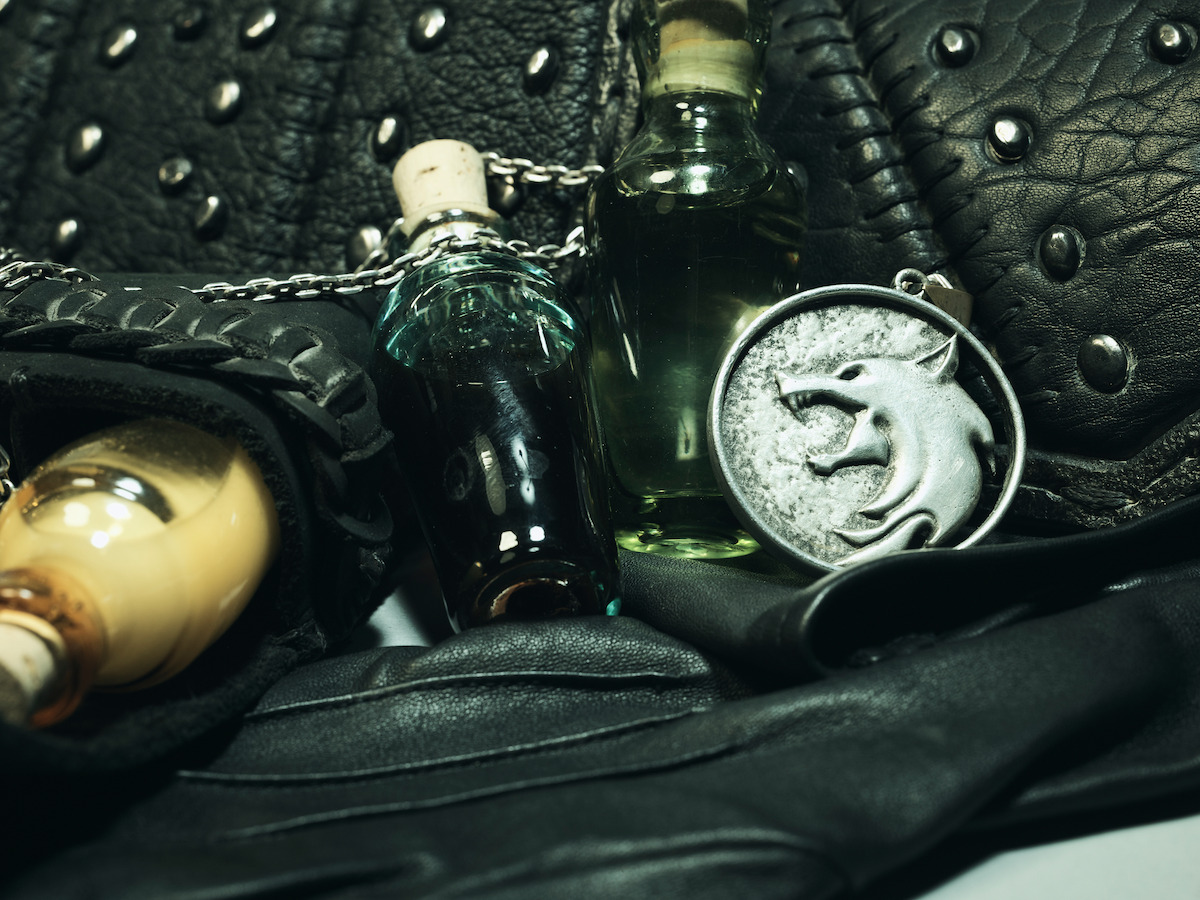
Witchers don’t wear standard-issue armour as soldiers do, they collect or fashion their own armour out on The Path. For instance, Deglan wore a wyvern cloak; Albin, one of the witchers who helped build Kaer Morhen, wore silver armour; and Geralt wears studded black leather. Differences in attire aside, there are a few items that each witcher has on him at all times: a silver sword, a steel sword, a witcher medallion and a collection of elixirs.
As monster hunters for hire, witchers rely heavily on weapons. On the Path, you’ll most likely see a witcher carrying two weapons: one meteorite or steel, one silver. The designs and weapon choices can vary greatly depending on personal preference, or types of enemies, but in the end, they all serve the same purpose: killing. That being said, witchers are taught not to kill out of fear or hatred; they kill in order to save lives. If the monster is of a magical nature, your run-of-the-mill steel weapon won’t work — you’ll require silver. Whether it’s in the form of a sword, a chain, a dagger, an axe, or an arrow depends on the monsters (and how deep your pockets are). Silver swords are much more precious than steel swords, more malleable too, and thus easily damaged.
A type of poisonous herb from the monkshood family, often with beautiful flowers. It was supposedly used in witcher mutagen. A powerful narcotic when used alone.
A potion that helps heal the most persistent wounds: a mixture of Golden Oriole, devil’s nettle and knitbone.
A type of undead, incorporeal spirit that eternally haunts our world hoping to harvest souls. Wraiths are worthy adversaries — the undead are notoriously tricky to kill. They are not of this world, nor do they belong in it. As for their appearance, wraiths look exactly as you’d expect a specter burdened with an eternity of soul harvesting to look. They’re barely visible creatures, tucked away in tattered cloaks and floating in air shrouded by darkness. Oftentimes their unfinished business will make wraiths linger in our world, so if you’re keen on avoiding a wraith face-off, steer clear of cemeteries or the places where their worldly selves passed away.
A flying reptile, not to be mistaken for dragons and only fought by witchers. Wyverns are snake-like creatures, caught somewhere between dragons and basilisks as far as appearance goes. With wyverns, it’s not their breath that kills, it’s their powerful tail covered in spikes. Apparently, their hides make for great coats and shoes.
While exploring the market in Gors Velen, Ciri and Fabio were drawn to a gaudy tent boasting a captive basilisk on display. Once at the front of the crowd though, Ciri immediately recognized the beast as a wyvern — and a small, dirty and starving one at that. It doesn’t take a witcher’s trained eye to tell a wyvern and basilisk apart. Like basilisks, wyverns are reptilian, but they are much smaller. But they typically grew not much larger than a dog, with long, snaking tails and hooked, flightless wings.
It didn’t pay to take them too lightly, however, as their fangs and claws can also still be deadly, especially if the creature is in a starving frenzy.
The Xin’trean capital city and seat of the royal family. It was built upon dwarven foundations, the ruins of which were still visible in some parts of the palace. The city was captured by the elven hero, Solryth, and later became the seat of Merwyn’s Golden Empire. It’s the home of the master monolith, which controlled all the others.
Thousands of years later, after the arrival of the humans, the city was captured again and became known as Cintra, the Continent’s crown jewel. When elves returned to occupied Cintra after its fall, it once again reverted to its ancient name.
Short in stature, big in bravery — Yarpen’s company are experienced dragon hunters and dwarves for hire. As much as Yarpen would like to think he could slay a dragon alone, dragon hunts are a team effort. His crew consisted of three members: Xavier Moran, Yannick Brass and Lucas Corto. Not long after the dragon hunt in Caingorn, Lucas Corto left the company because he decided to settle down and enjoy married life. Lucas was eventually replaced, and Yarpen’s company would go on to chase coin all over the Continent.
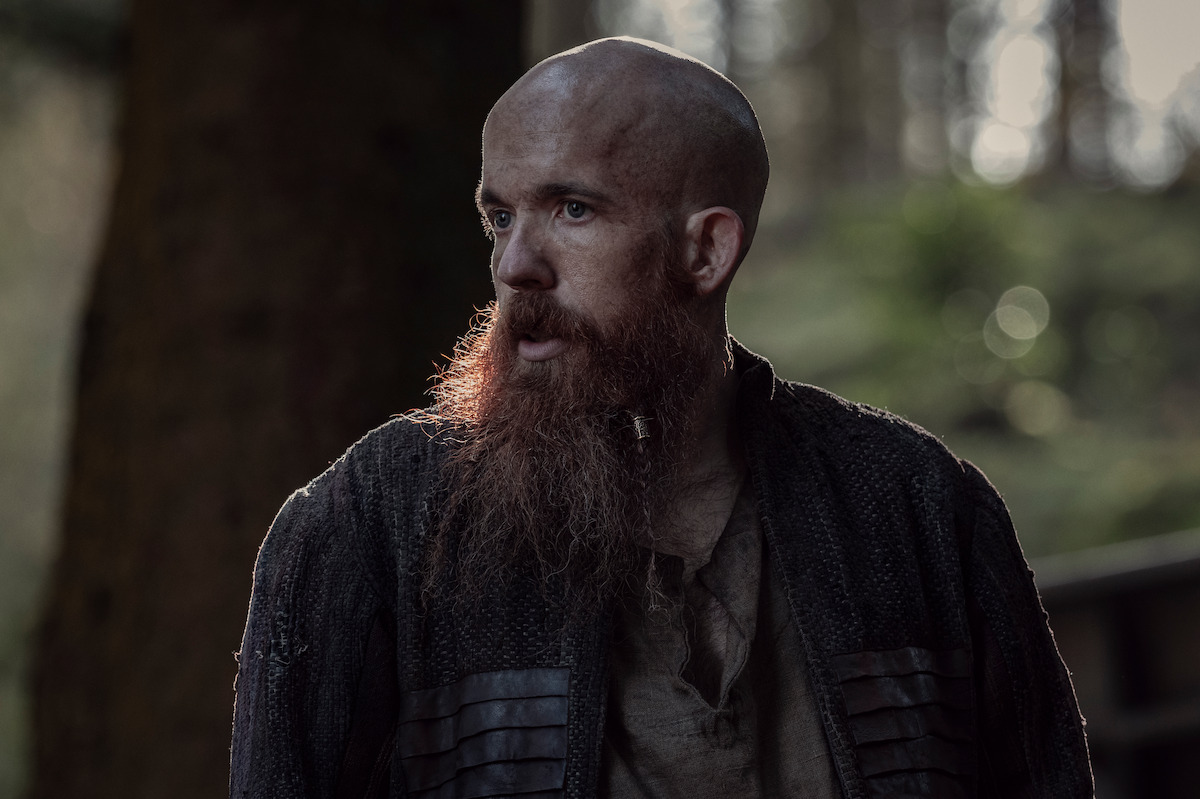
A well-known dwarven warrior from the Zigrin clan. Leader of a company of dragon hunters, and maker of crude jokes. Bald head, bushy beard, foul mouth: those are the three defining features of Yarpen Zigrin. Fierce and feisty as he is, Yarpen has yet to find a challenge too big. He has crossed paths with Geralt several times in his life — one might call them friends. Their joint contribution to the dragon hunt issued by King Niedamir is probably most memorable. The tales of Yarpen’s victory over the dragon earned him moderate fame and considerable fortune in the form of a lordship. But he would continue to travel across the Continent, running into the witcher and pursuing every adventure he can.

A quarter-elf whose mind is razor-sharp and whose magic is unmatched. The most powerful sorceress Aretuza ever produced and Geralt’s true love. Yennefer was not born the violet-eyed and raven-haired beauty that Geralt came to know, but she was born innately powerful. As a small girl with a deformed spine, she began exhibiting magical abilities in her early childhood — a childhood spent with a stepfather who abused her and a mother who turned a blind eye. Eventually she had her conduit moment, where she transported into the Tower of the Gull, and met Istredd for the first time. Soon after, Tissaia bought her from her father for four marks and brought her to Aretuza where she would learn how to control her chaos, fall in love for the first time, and that all she ever wanted was to be the best and most powerful. She forced Giltine to perform her enchantment — voluntarily giving up the ability to have children — and weaseled her way into Aedirn’s court.
For many years, Yennefer lived for herself and nobody else. Pressured into returning to Aretuza and the politics of the Continent, she joined Tissaia and a group of renegade mages to defend Sodden Hill from Nilfgaard, where she used fire magic and sacrificed her powers, but became the Saviour of Sodden. Yen’s prickly and bull-headed exterior started to change when Ciri came along. Seeing a lot of herself in the young girl, she became the mother figure Tissaia had been for her. Knowing she was the best qualified person to train Ciri, she would first have to convince Geralt to forgive her sins, and together the three of them could make a family unit strong enough to survive what the future of the Continent has in store for them.
After recovering her powers in the fight against Voleth Meir, Yen sets about repairing the broken bond of trust with Geralt. She agrees to help Princess Cirilla of Cintra learn to control her considerable magical abilities, a slow process that not only repairs their relationship, but gives Yennefer the chance to finally experience something like motherhood.
One of the Witcher signs, Yrden is sort of a telekinetic brand. It can be used to seal a door or a passage blocking opponents from escaping, or keeping yourself safely locked inside — which Geralt did when fighting the striga. A Yrden seal won’t be lifted until the caster removes it.
An exiled elven mage with astonishing healing powers, Zacaré had the ability to read people’s memories.
Zacaré grew up with her adoptive brother, Syndril, but the two were estranged when they tried and failed to bring Zacaré’s mother back to life with monstrous consequences. Syndril abandoned her, leaving Zacaré alone to destroy the thing that was once her parent. She took refuge from the world in the Marsh of Mists, where she eventually met her partner, the traumatized soldier known as Brother Death. A master healer, Zacaré was responsible for saving Scían after she was struck by a blade coated with corpse oil.
Zacaré was aware that the natural order of the world was under attack by energy leaking through tears in the world caused by the monolith gateways, so she joined forces with Éile, Fjall and Syndril to infiltrate Xin'trea and ultimately destroy the master monolith. They succeeded, defeating an empowered Balor, but Syndril had to sacrifice himself in the process.
A formidable sewer monster that’s drawn to filth and adept at drowning unsuspecting prey, Zeugls are a force to be reckoned with; they grow at an alarming rate and are never not hungry. These insatiable sewer dwellers mostly live underwater, only raising their tentacles to the surface when a tasty meal presents itself. Once they have a tentacle wrapped around you, they’ll drag you down the sewers and into their massive maw. Like the selkiemaw’s, the zeugl’s maw is filled with multiple rows of teeth. So, at least your death will be quick.
A loving woman and her modest merchant husband who played a pivotal role in uniting Geralt and Ciri in Season 1. Zola, Yurga, and their son lived in a small farmhouse near Sodden. While out at the marketplace, Zola met Ciri. Feeling sorry for the girl, she took her home. At the same time, Yurga ran into Geralt — just in time for the witcher to save them both from a ghoul attack. Wanting to return the favor, Yurga took the severely wounded witcher with him, offering him the Law of Surprise — but this time, having learned his lesson, Geralt refused. But destiny had its own plan: once there, Geralt sensed something in the forest: he bid Yurga and Zola farewell, wandered into the trees, and found… Ciri. This house was clearly a place of great comfort and importance to Ciri. It’s where she traveled with her first-ever portal, only to find that Rience had burned the remnants of her happy memory.
A battle-scarred dwarf who carries a sharp axe, Zoltan becomes a fiercely loyal and hilarious member of Geralt’s band of travelers.