Family Favorites
A Guide to the Beasts of ‘The Sea Beast’
From Red to Blue
July 14, 2022
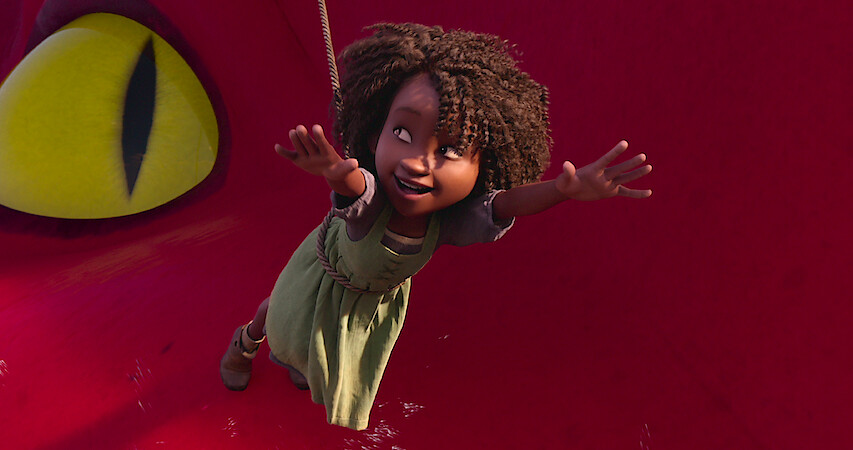
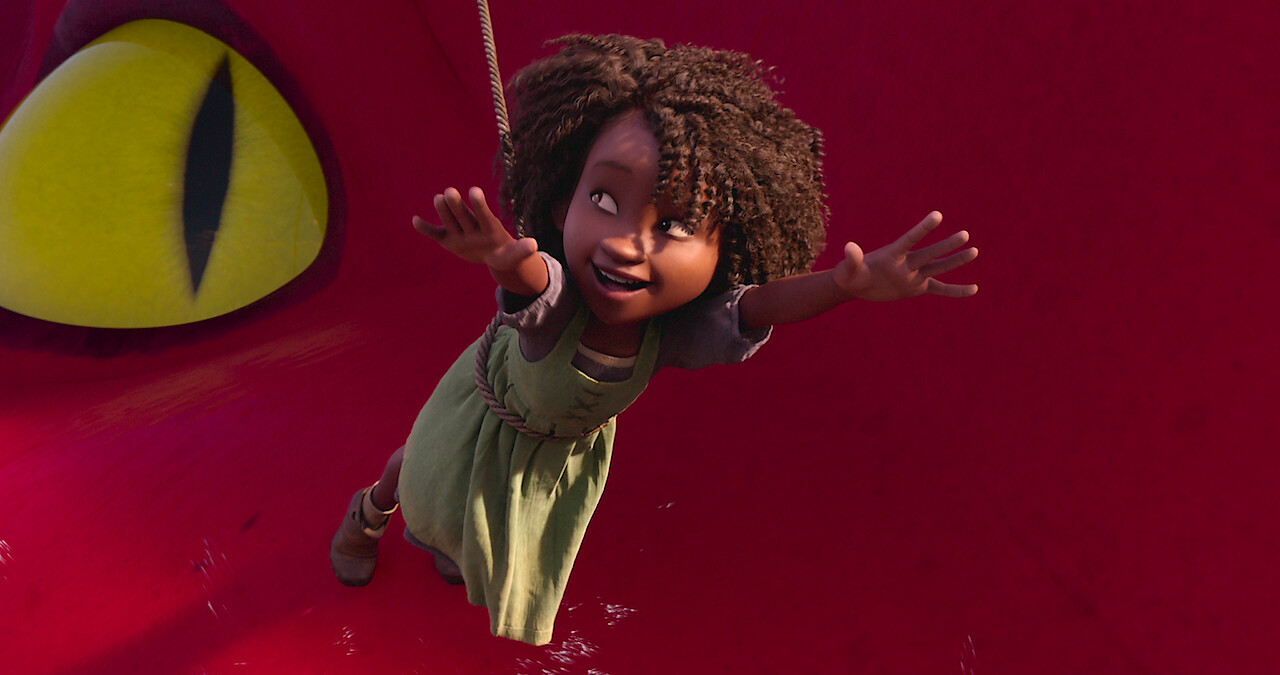
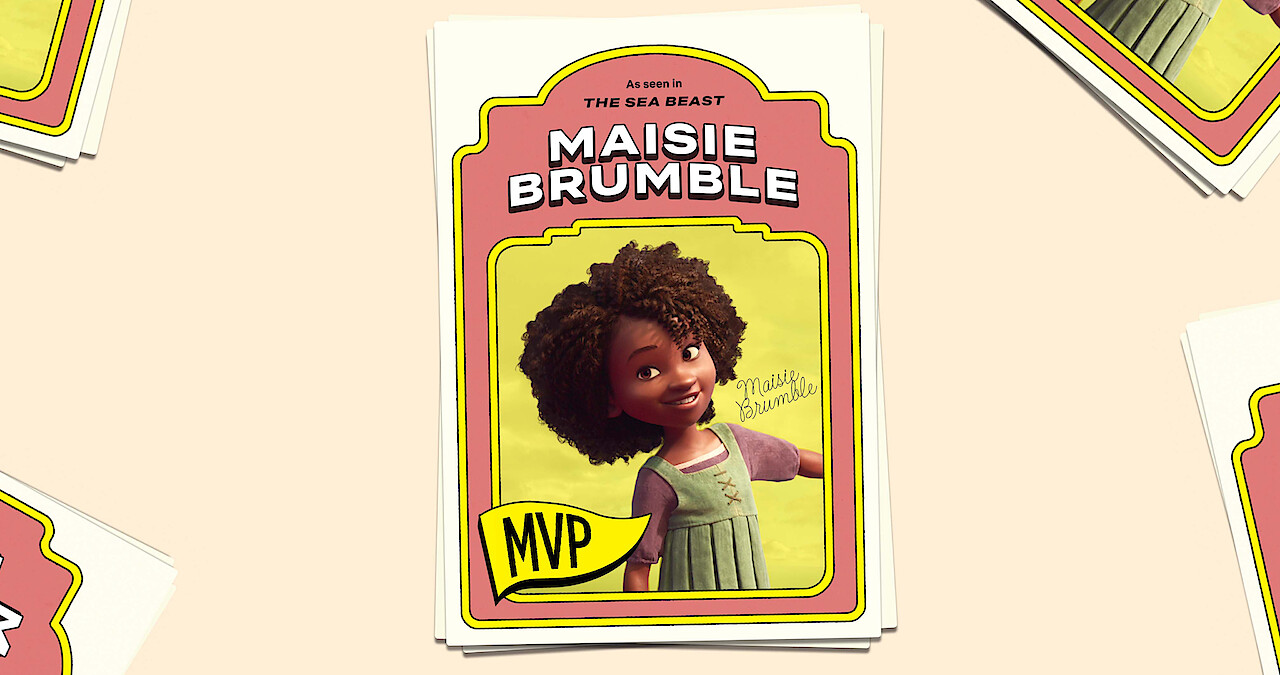
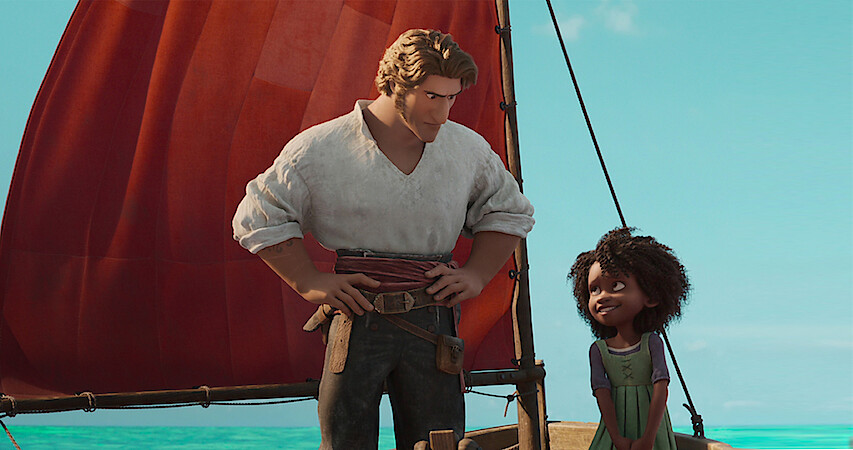
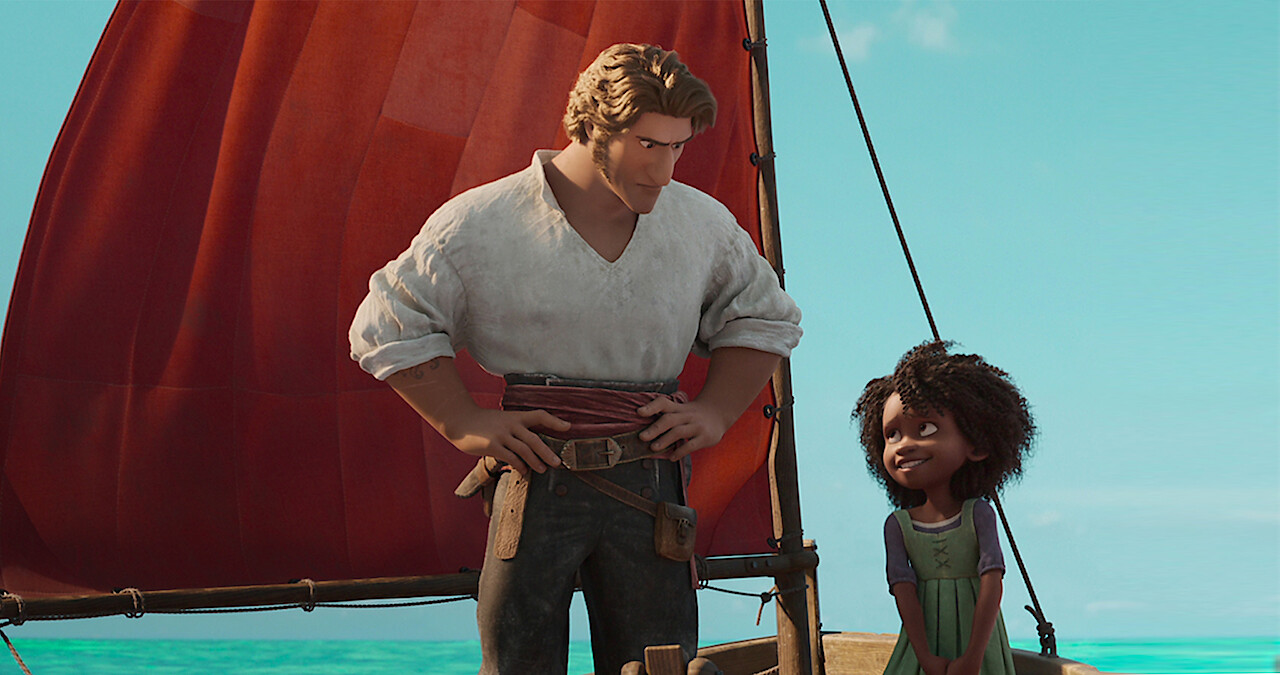
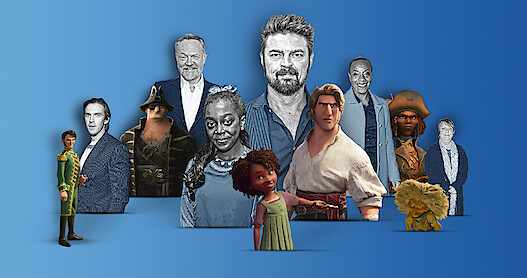
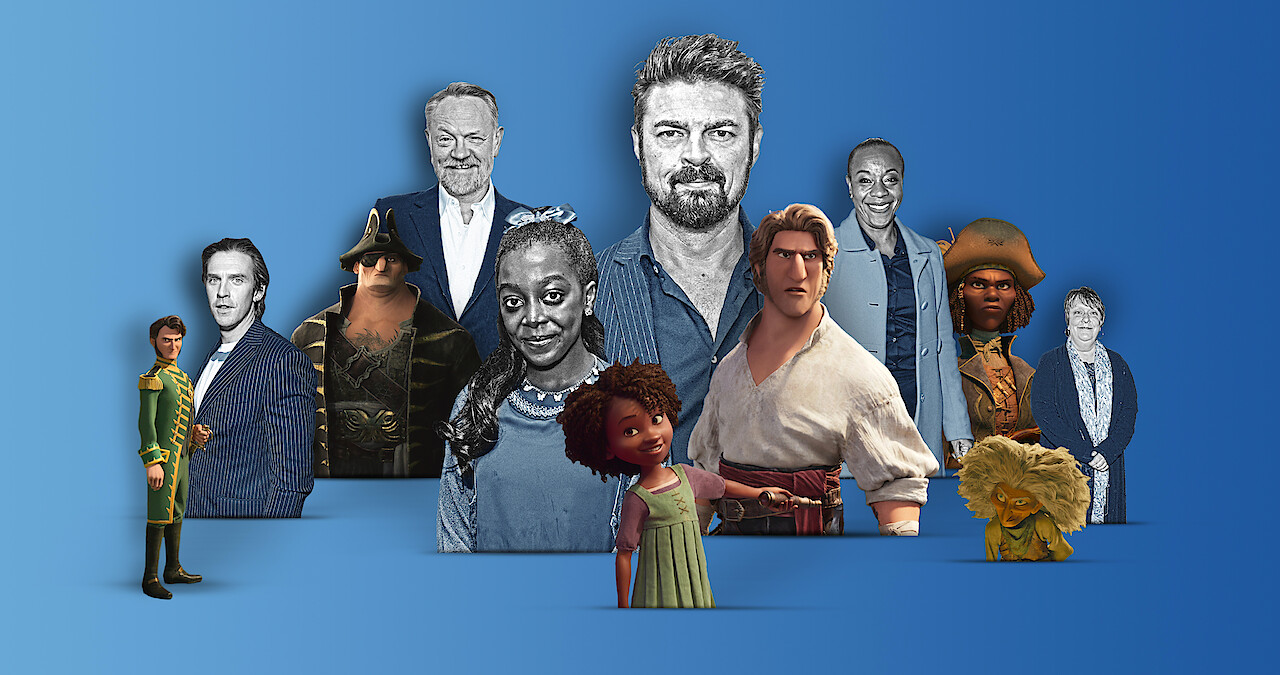
The Sea Beast is full of fantastical creatures of the sea and shore. The new animated film showcases a vibrant menagerie of nautical monsters, ranging from ferocious to friendly. Alongside Red, the film’s crimson star, there are crabs, blobs, tentacled green beasties and more. As our heroes Maisie (Zaris-Angel Hator) and Jacob (Karl Urban) venture into the uncharted open ocean, they meet beasts beyond their wildest dreams. Some are massive, others miniature, but all are instantly memorable.
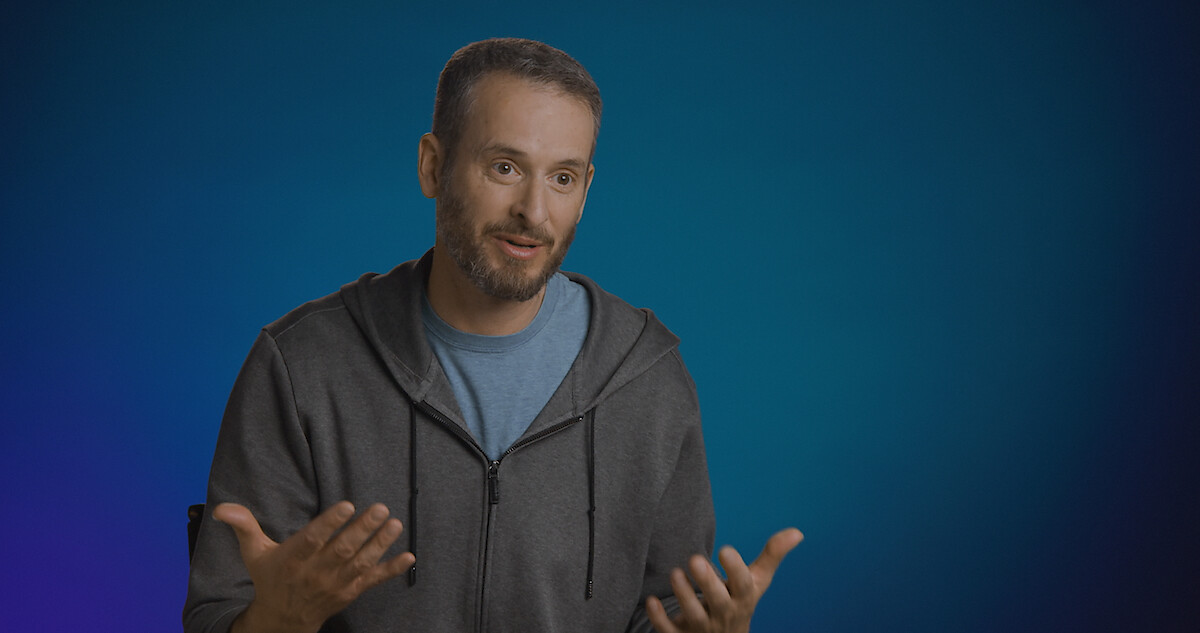
For the team behind the film, designing these creatures was a long and intensive process. “We work with amazing designers, and it’s a lot of back-and-forth,” director Chris Williams tells Tudum. “It’s really trying to find this middle point between an artist’s imagination but also actual practical research. The creatures have to make sense or people will feel it.” To strike this balance, the film’s designers drew from real-world animals, while also plumbing the depths of their imaginations. Join us as we take a dive into those depths, and learn how the sea beasts of The Sea Beast came to be.
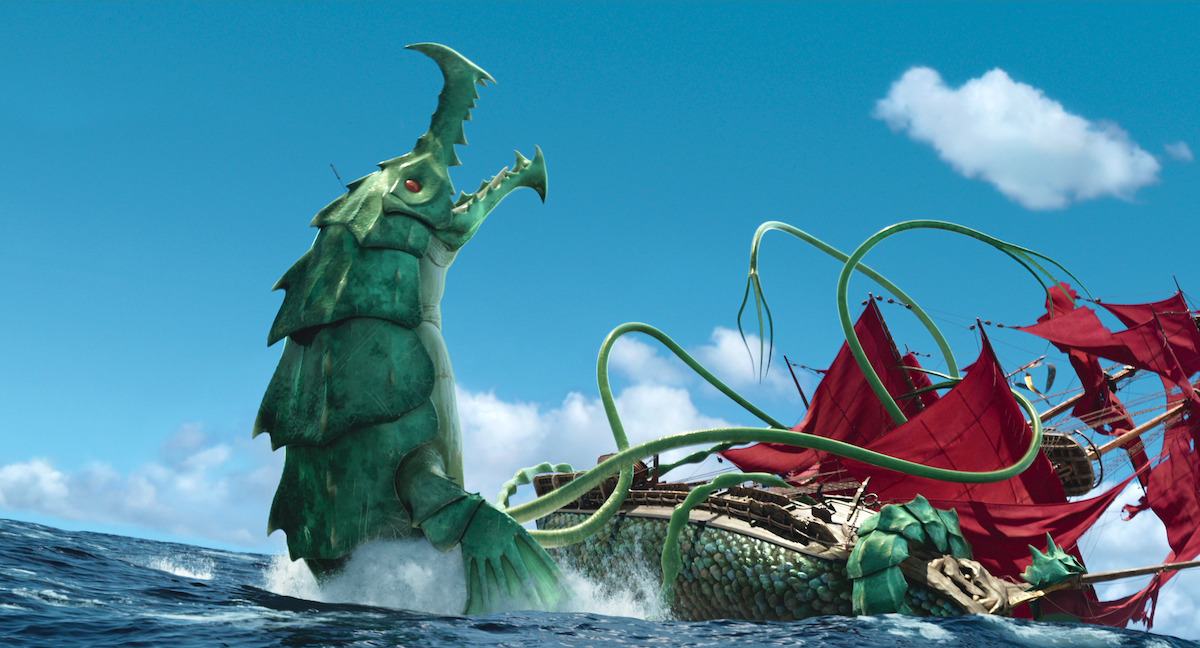
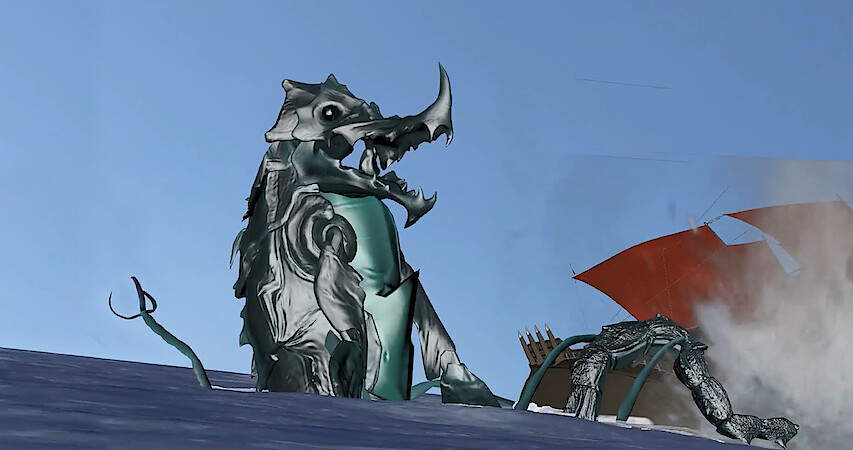
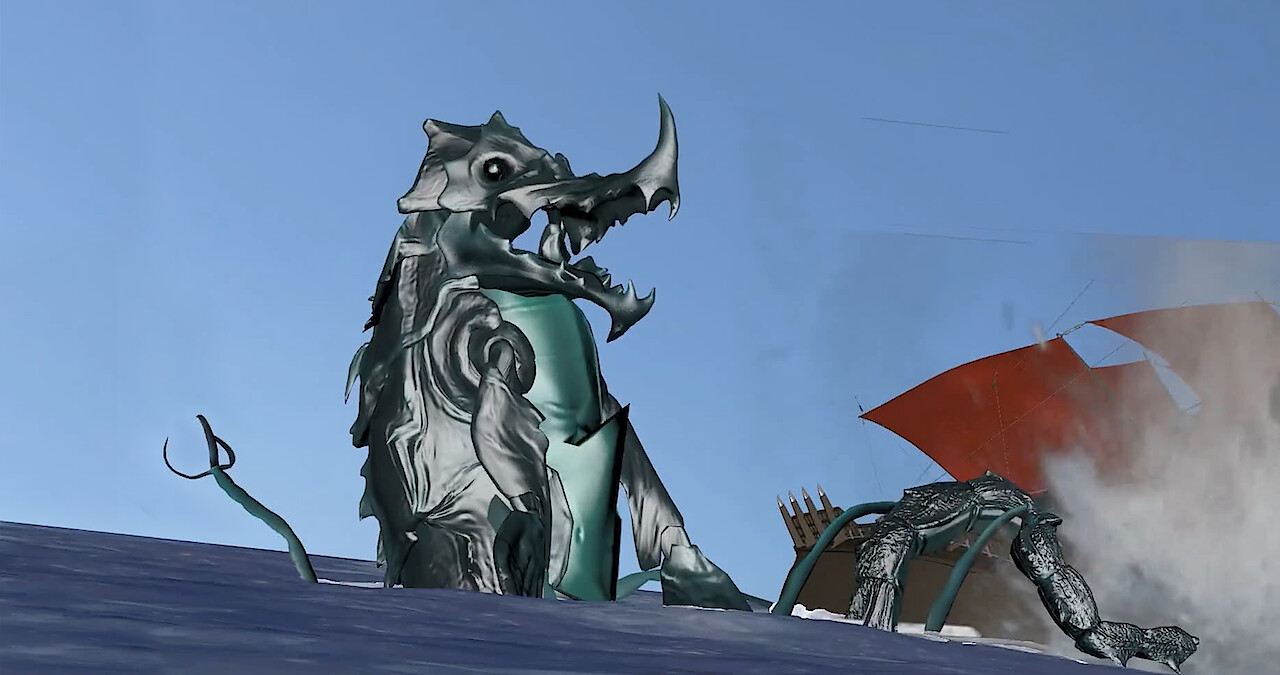
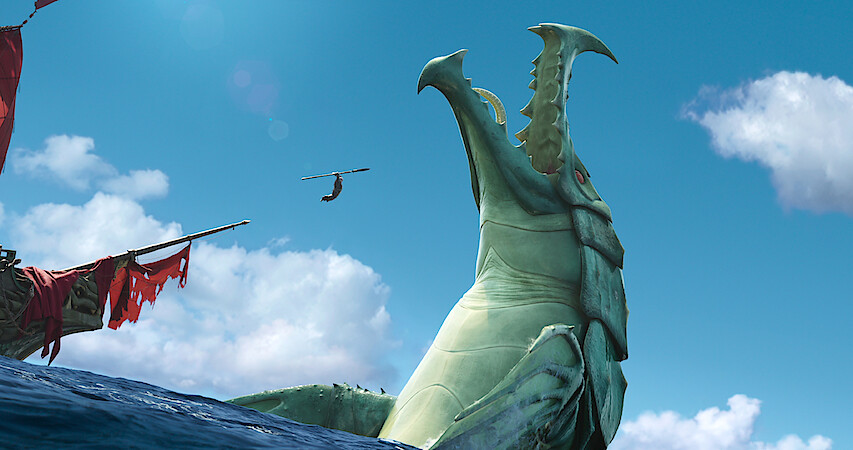
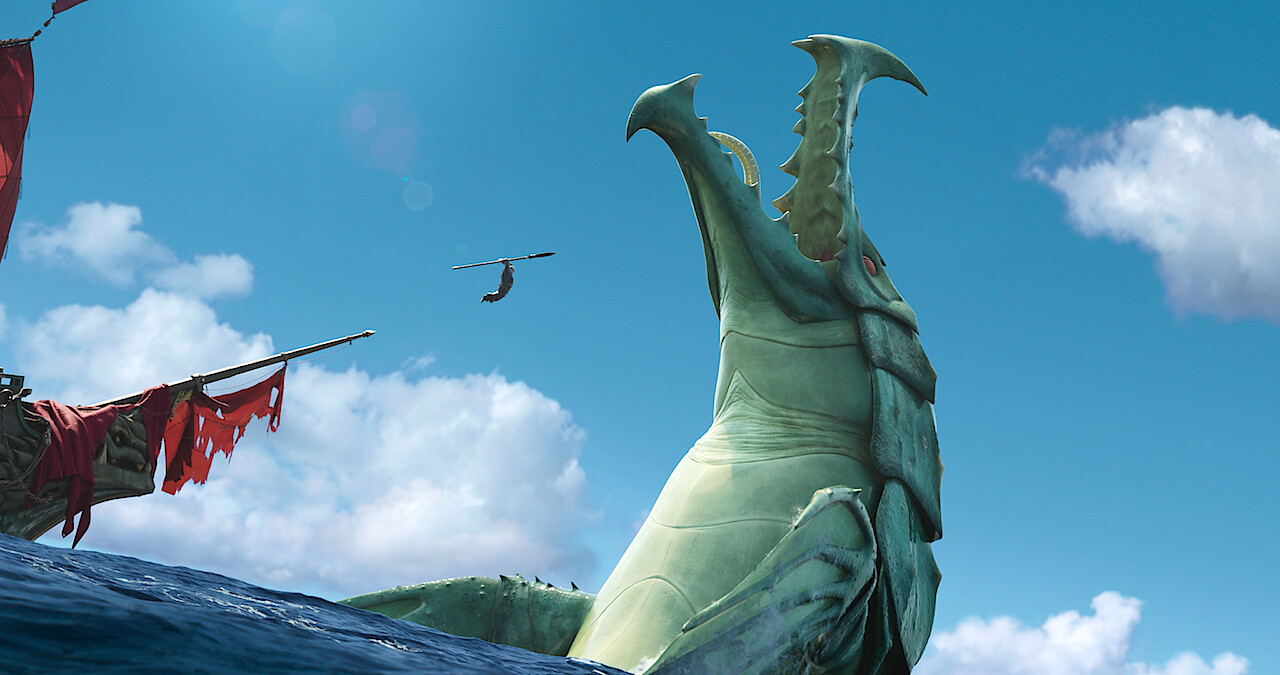
The first creature we get a good glimpse at in The Sea Beast is the Prickleback, a ferocious green beast with whipping tentacles and a massive pair of jaws. It’s a creature of pure fantasy, but one that was inspired by real animals. “We are going for grounded, very realistic, believable creature design,” says art director Jung Woonyoung. So the team turned to an unlikely combination.
“I was inspired by crocodiles, but it also had tentacles,” character designer Shiyoon Kim says. “So looking at the creatures that had tentacles, like octopuses and certain sea creatures, and the way that there’s texture on them was really fun to get into, and then mixing that in an appealing way with... the hard shell of a crocodile.”
Before Maisie and Jacob’s journey begins, the beasts (like the Prickleback) are just that: beasts. And that means the first beast we encounter has to be menacing and mysterious. “Chris was very [insistent] on the fact that we cannot connect emotionally to the Prickleback,” production designer Matthias Lechner says.
“We had to be on board with our heroes initially,” Williams adds. “And so the first creature you see lives up to your expectation as far as a menacing-looking monster.”
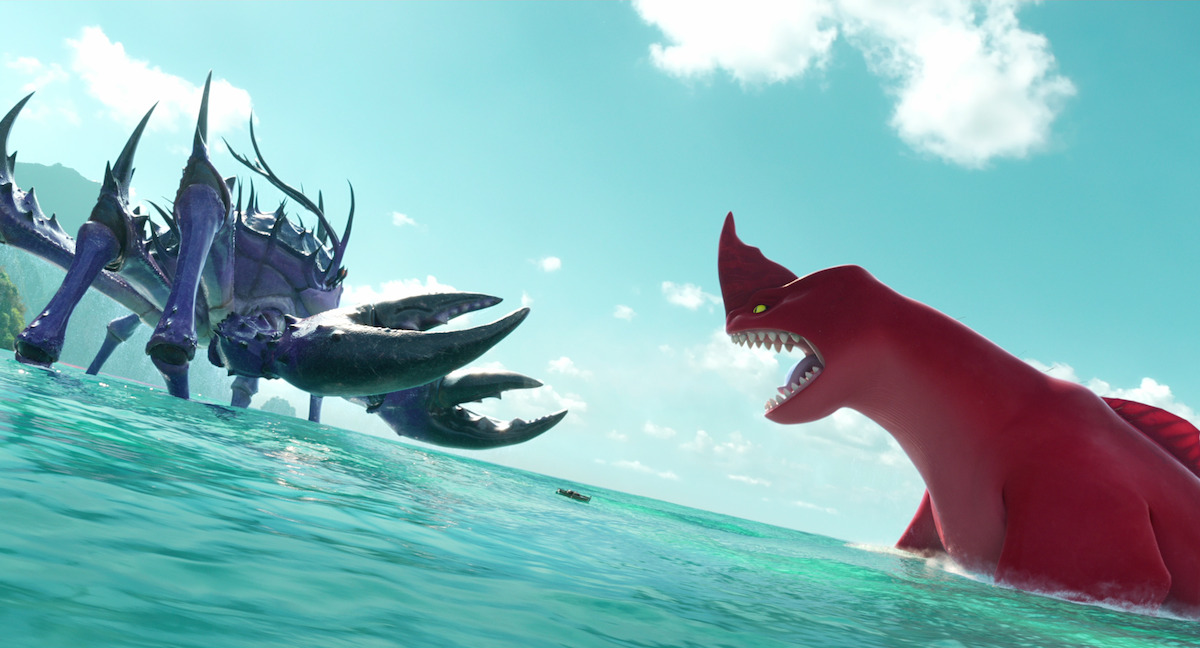
“I think [with] most of the great monster movies, there’s an audience expectation that there’s gonna be a supercool monster fight, and we wanted to deliver,” Williams says. “And so we needed to create two monsters that could be a good match for each other.” The team found that match with the Purple Crustacean.
When Maisie and Jacob wash ashore on an uncharted island, they’re attacked by this crablike purple behemoth. It soon snaps and skitters its way into a fight with Red, the film’s eponymous scarlet sea beast. To design the Crustacean, the film’s designers again looked at its real-life inspiration — and wound up learning a few things.
“For me, one of the best things about being a character designer is you’re always designing things that you’ve never done before,” Kim says. “So I’ve never really, really looked at crabs.” As the team worked on the Crustacean, Kim sought out images of Japanese spider crabs, specifically their mouths. “There’s a scene in Star Wars where Luke is kind of going through this pit, and it has this creature that opens up,” Kim continues. “And we wanted the same idea, where the mouth kind of opens up and you see all these tiny teeth or claws. If you look at real crabs, they have these little crevices inside there. And so not taking it [literally]... but just being inspired by the design of it and the aesthetic of it.”
Still, the real-life crab wound up being a little scarier than the one that made it into The Sea Beast. “I don’t think Chris wanted to push it all the way into like how the real thing is, which is there’s several layers of mandibles and little kind of tentaclelike structures that pushed the food inside the crab’s mouth,” Kim notes. “I think what we landed on was more appealing, and it kind of served the film.” Not too appealing, of course.
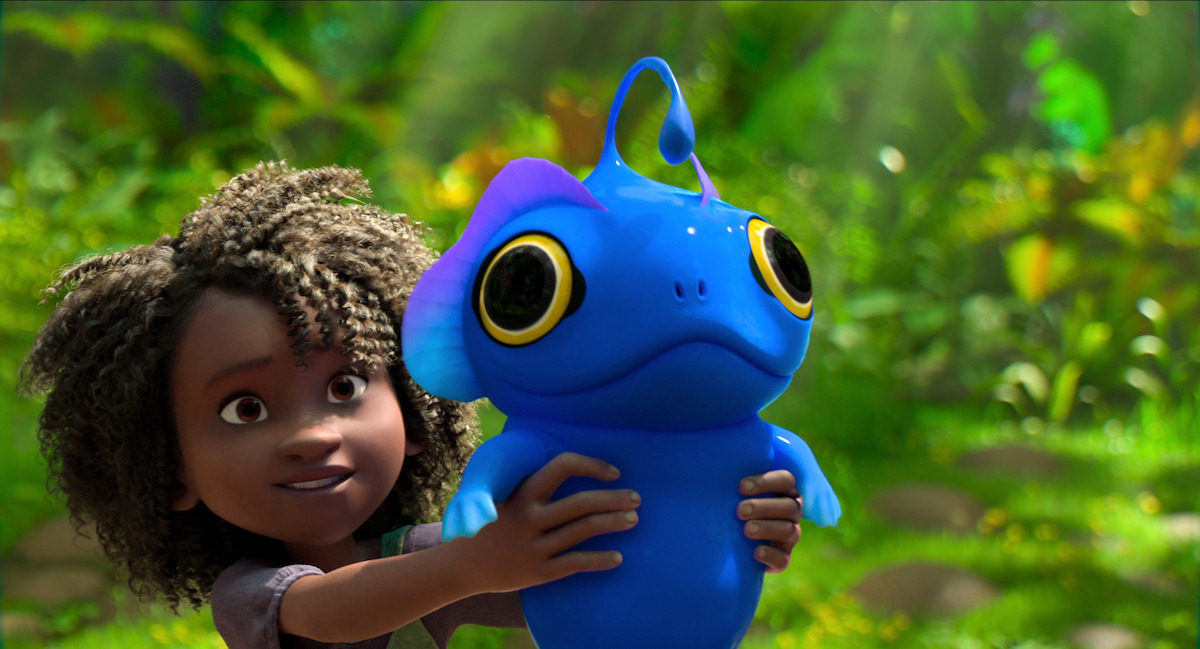
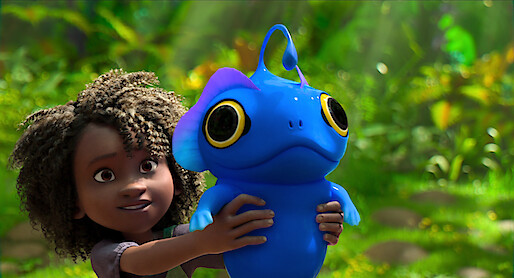
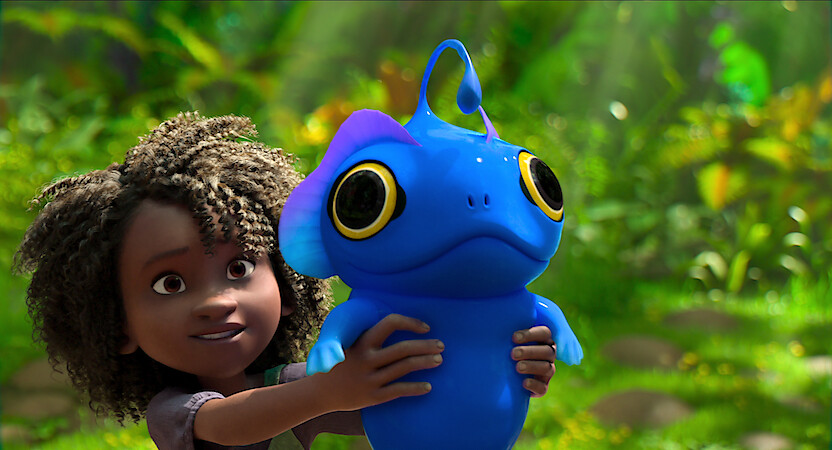
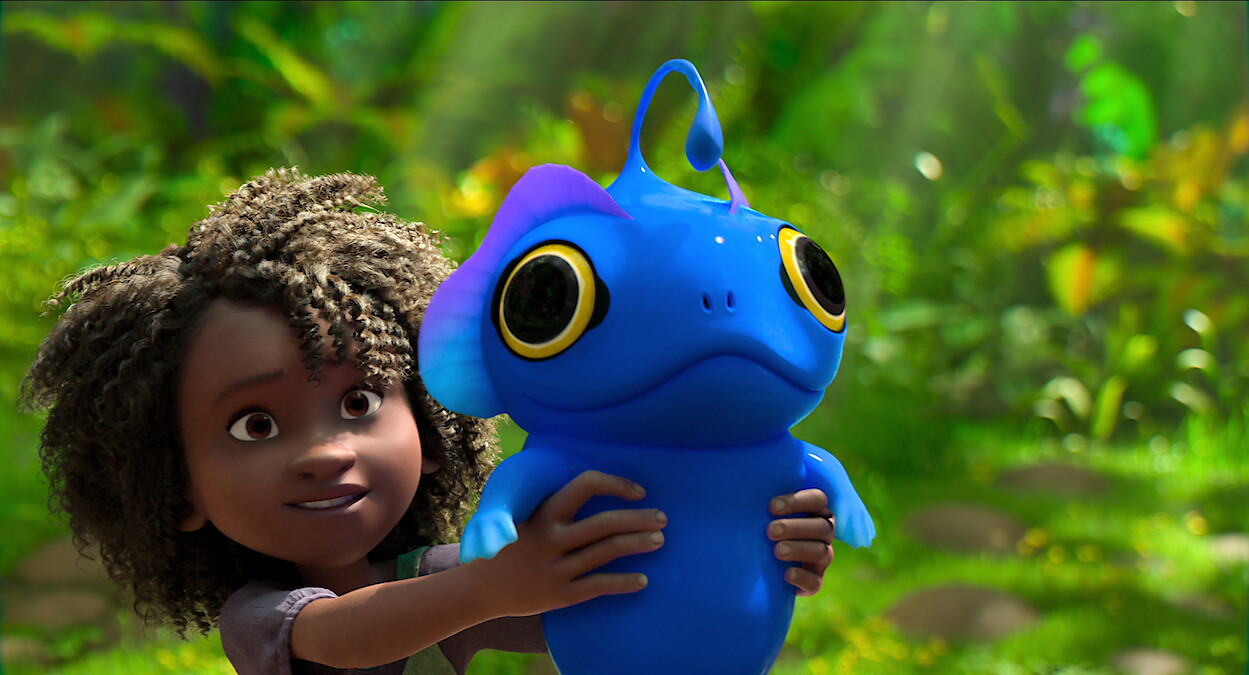
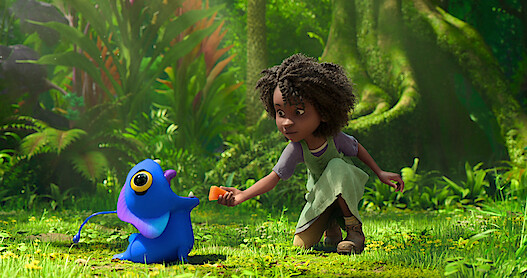
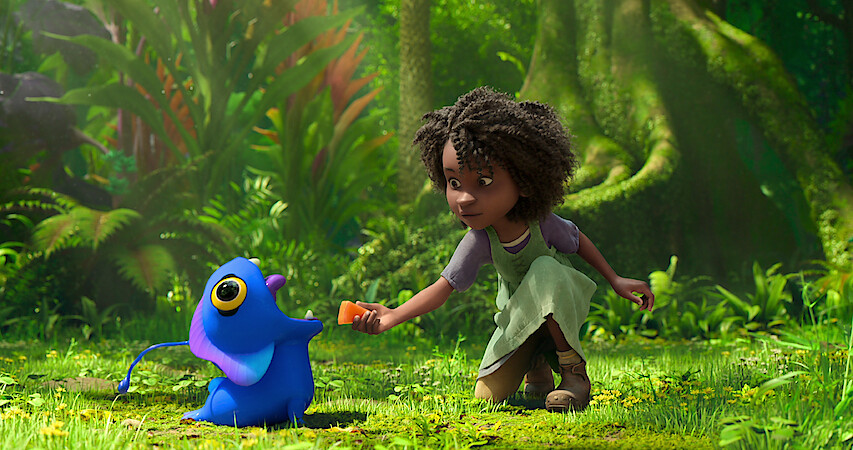
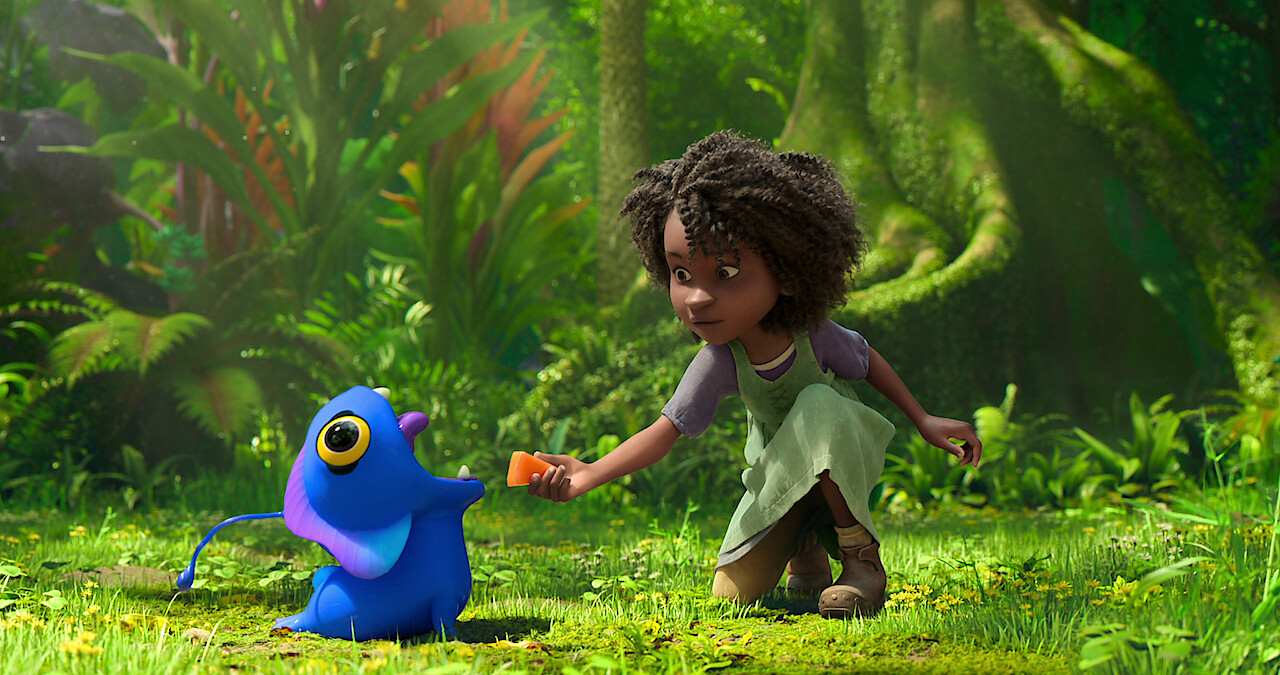
When Maisie and Jacob begin to explore the uncharted island, they meet a few more creatures: a strange horde of yellow, rotund animals and Blue, a gelatinous little stinker. These characters are the beginning of the film’s turn toward sympathy for the sea beast, and the designers worked hard to successfully execute that pivot. “The whole scene on the island is interesting because, at that point, we are starting to realize that, well, they’re destroying the eggs, and then these creatures come out [that] are kind of cute,” Lechner says.
That cute factor was essential. “The creatures from the monster islands [are] more lovable, more likable,” says Jung. To capture that, Kim turned again to a real-world inspiration: the noble pug. And it was all about the eyes.
“Blue does not have much going on upstairs,” Lechner says. “So we have these eyes that are actually on the outside of the head, pointing outwards.”
“You kind of don’t know [what] they’re looking at,” Kim agrees. “And they’re really wide-eyed. And so Blue kind of has that quality. And I tried to really push that in the design, almost like a pug. The comedy and entertainment is that it’s got, like, this puglike face.”
Of course, Blue also shares a little something with an internet-famous pug: He has no bones. “Blue is the character that was the most squishy. And so, in animation, that meant that they would animate Blue, but basically as spheres [that] kind of crash into each other.” That footage would then be passed to the effects department, which would add in the texture of Blue’s skin and its wobbly Jell-O movement. “It was a little scary to see the animation, because Blue did not look appealing,” Lechner laughs. “It only started to be appealing once it went through that second pass.” Thankfully, the movie’s cutest little guy wound up turning out OK.
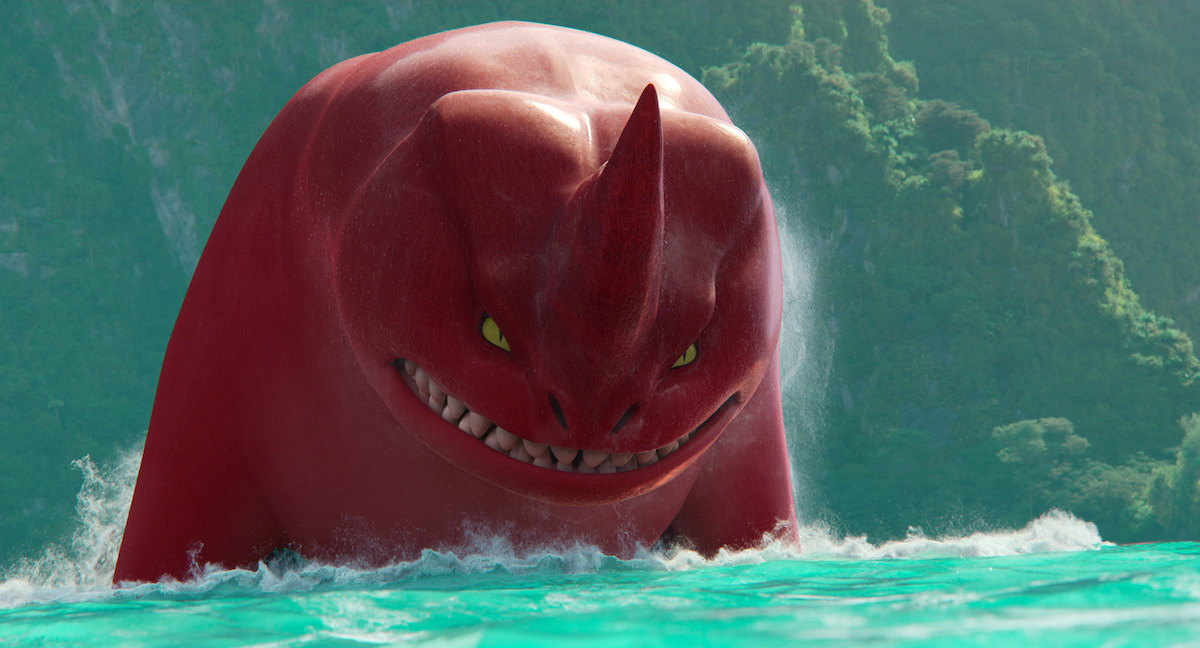
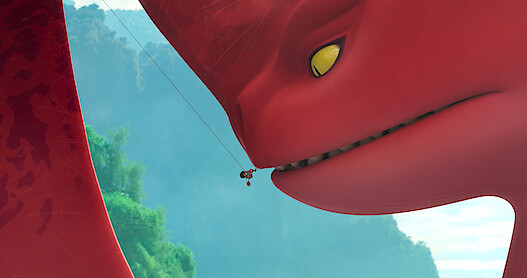
While the film’s other characters took plenty of work, Red was always the main assignment. The film’s central figure had to be more than just a set piece — she had to be a character, and one that threaded the needle between appealing and ferocious. “We didn’t want to feel like she was gonna be just this sweet, docile thing,” Williams tells us. “She had to also be capable of incredible destruction and be really fearsome.”
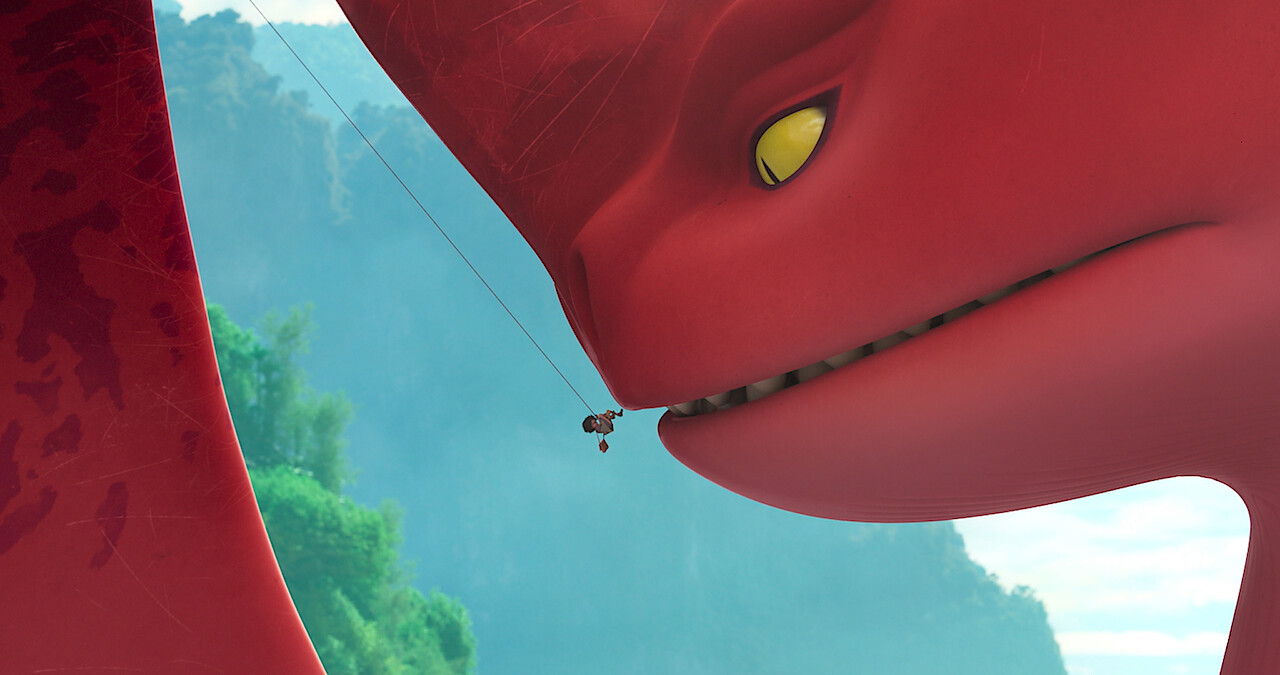
To fully crack the film’s main character, the team hired a sculptor to craft a clay model that would define even the beast’s internal musculature. There were also a few story-based requirements that helped set guardrails for Red’s design process. “We know the scale,” Lechner says. “The nostril has to be this big because we’re going to look out of it.” With the size established, the design team looked once again at real animals — but this time, Red had no one-to-one real-world analogue. The creature in the film is a pure fantasy, with a few qualities borrowed from real ocean creatures.
“We looked into walruses and how they navigate in the water,” Kim says. “They have, like, these big flippers, and what’s interesting is that humans and walruses, they have the same number of joints.” This allowed the designers to get just a little bit closer to Red. “You could kind of almost pretend like you were a walrus and really kind of get into the mechanics that way in a more empathetic kind of way,” Kim shares.
“We are referencing a bunch of different animals, of course, because we want to learn from nature first and then try to interpret it differently,” Jung says. “So we’ve been looking at whales, turtles, sharks, anything you can think of.”
Another real-world inspiration was ultimately scuttled. “The beast actually had front and hind legs,” Lechner describes. “But then the more we thought about how to portray that in the movie, the less elegant it would seem to paddle like a cat.”
“We looked obviously at whales, because then you get a sense of what a larger mammal would look like and how they get around and how they function,” Williams says. “And one of the things that you see is that when you’re pushing through the water, friction is an issue, right? And so the designs tend to be very sleek and streamlined.”
Much like Blue and the Prickleback, the final touch came with Red’s eyes. “It’s a fish-reptile creature that we have to connect with,” Lechner says. “[We] just used cat eyes basically as a clue for that.”
The finished creature is the obvious star of The Sea Beast, a creature that would seize the audience’s attention even if she weren’t the biggest thing on-screen. “She’s gigantic, the most powerful creature in the world, but then we don’t want to make her look [scary],” Jung says. “We want her to be very appealing in a very divine [way].” If the film’s ending is anything to go on, they succeeded.