Deep Dive
The Stories Behind Miles Bron’s Priceless Possessions
Did you spot all the Beatles’ Easter eggs in Glass Onion?
Jan. 6, 2023
🤐 SPOILER ALERT 🤐
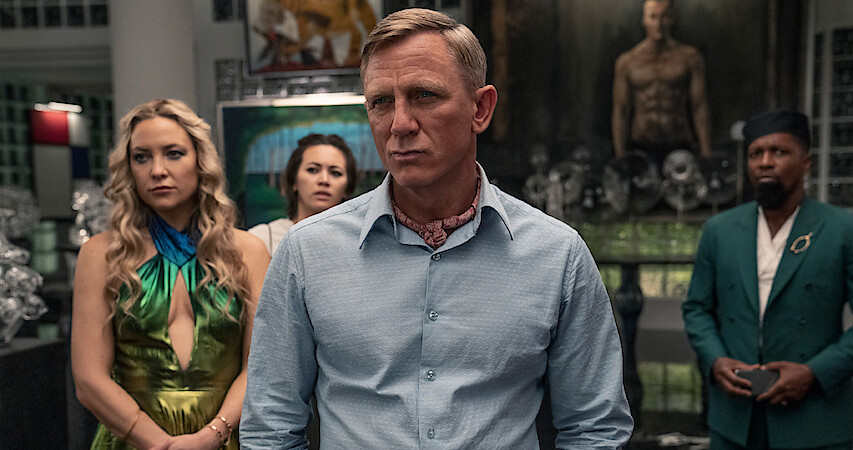
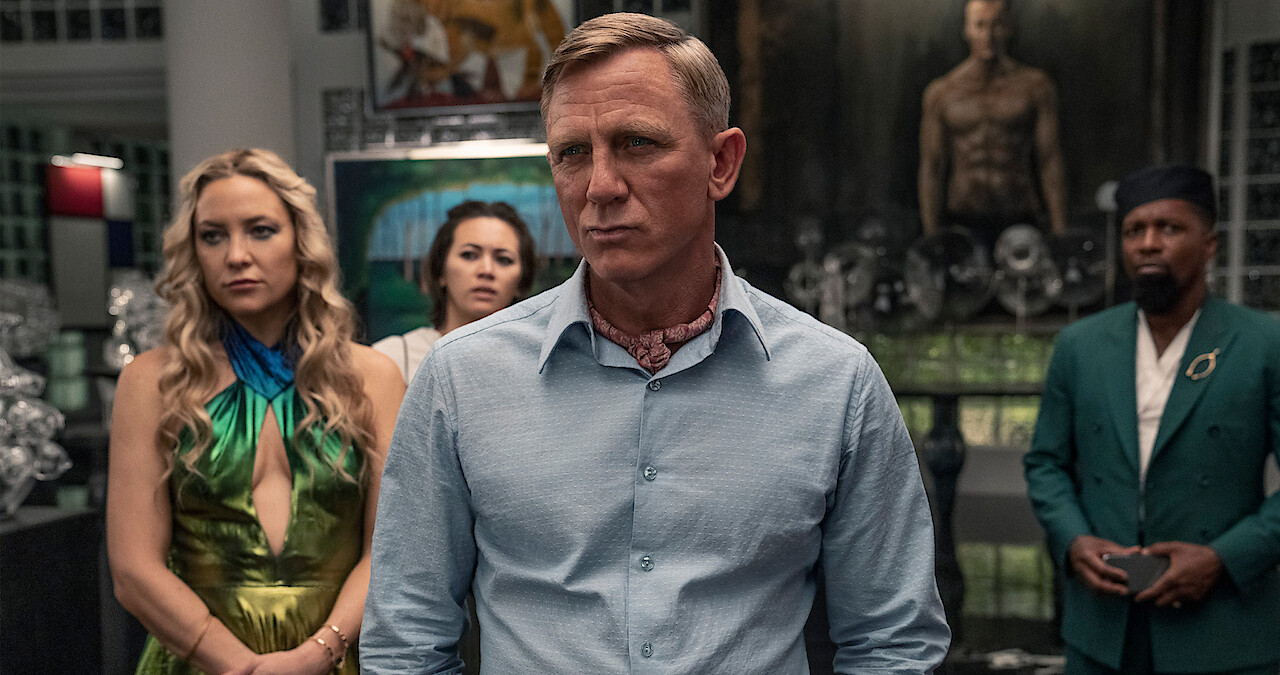
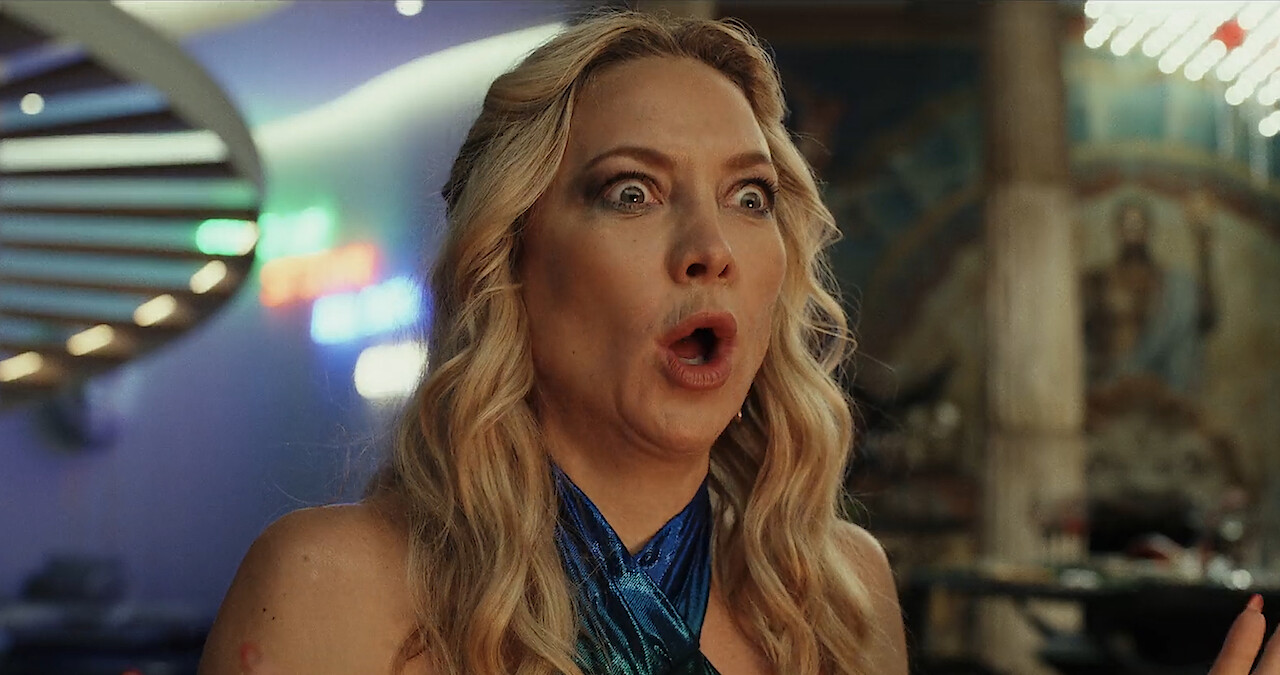
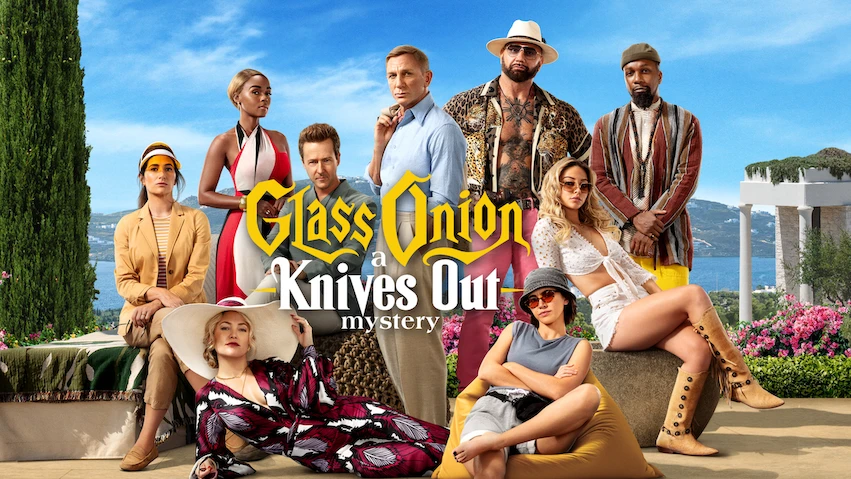
“This place is the Tate Modern,” marvels one of Miles Bron’s murder-weekend guests as she walks into the billionaire’s enormous glass atrium.
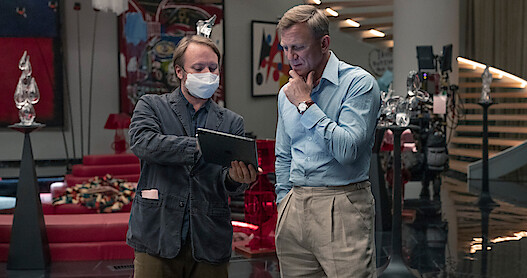
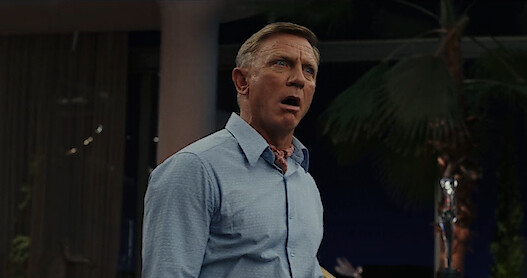
She’s not wrong. Like everything else Edward Norton’s billionaire owns, his home –– perched atop his private Greek island –– is designed to awe. And his art collection wouldn’t be out of place in some of the world’s most famous museums. Works by Mark Rothko, David Hockney, Jean-Michel Basquiat and Piet Mondrian are set against a backdrop of sweeping views of the Aegean Sea. As detective Benoit Blanc (Daniel Craig) points out, there’s even a priceless Henri Matisse painting hanging in the bathroom! This gaudy opulence encapsulates Miles’ more-is-more ethos. As they say in The Producers, when you got it, flaunt it.
Still, money can’t buy taste, and there’s something a little off about Bron’s lair. And not just because he’s got the actual Mona Lisa hanging in the middle of the place. Tudum spoke with Glass Onion production designer Rick Heinrichs about the tacky mogul’s collection of priceless toys, and points out some of the Easter eggs hidden among his riches.
What’s the first thing you do when you begin work on a project like Glass Onion?
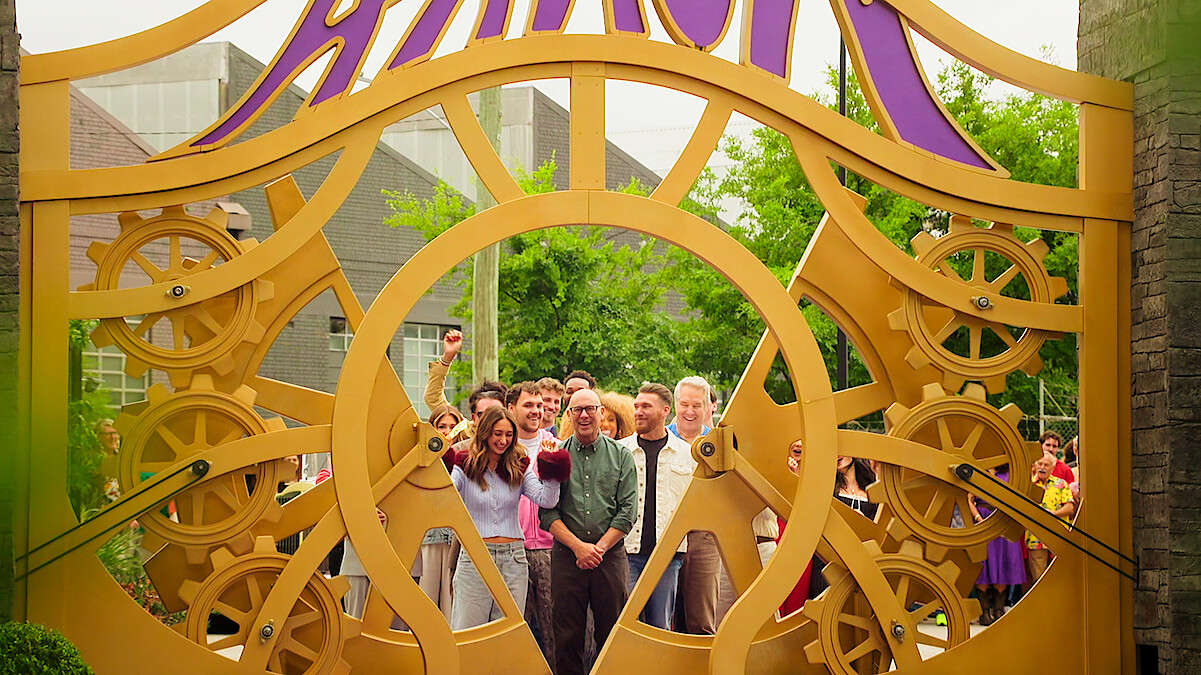
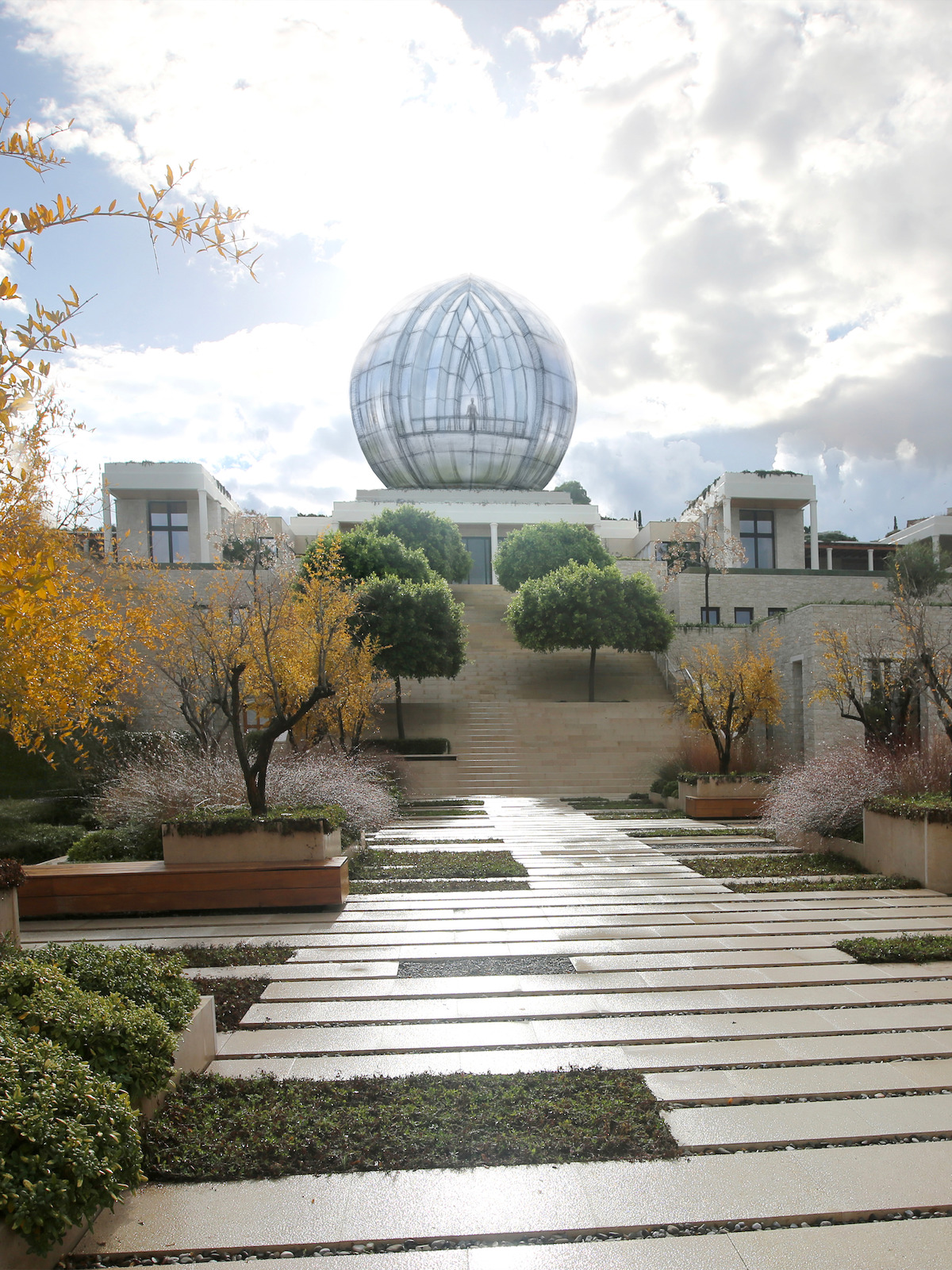
We started up during the pandemic, so this was unusual. Normally, something like this would require a global search for the proper location. We did do that, but it was much more of a Google Earth search. And the Amanzoe [resort in Porto Heli, Greece] just felt right. The architecture is sort of perfect. Because it’s Greece, you’d expect that Miles would’ve wanted to build something that was a modernist interpretation of classical Greek architecture. But, of course, he has to do one big asshole thing, which is put a huge monument to himself on the top of it. So, it does feel like this great, exalted temple of Miles on the top of the hill.
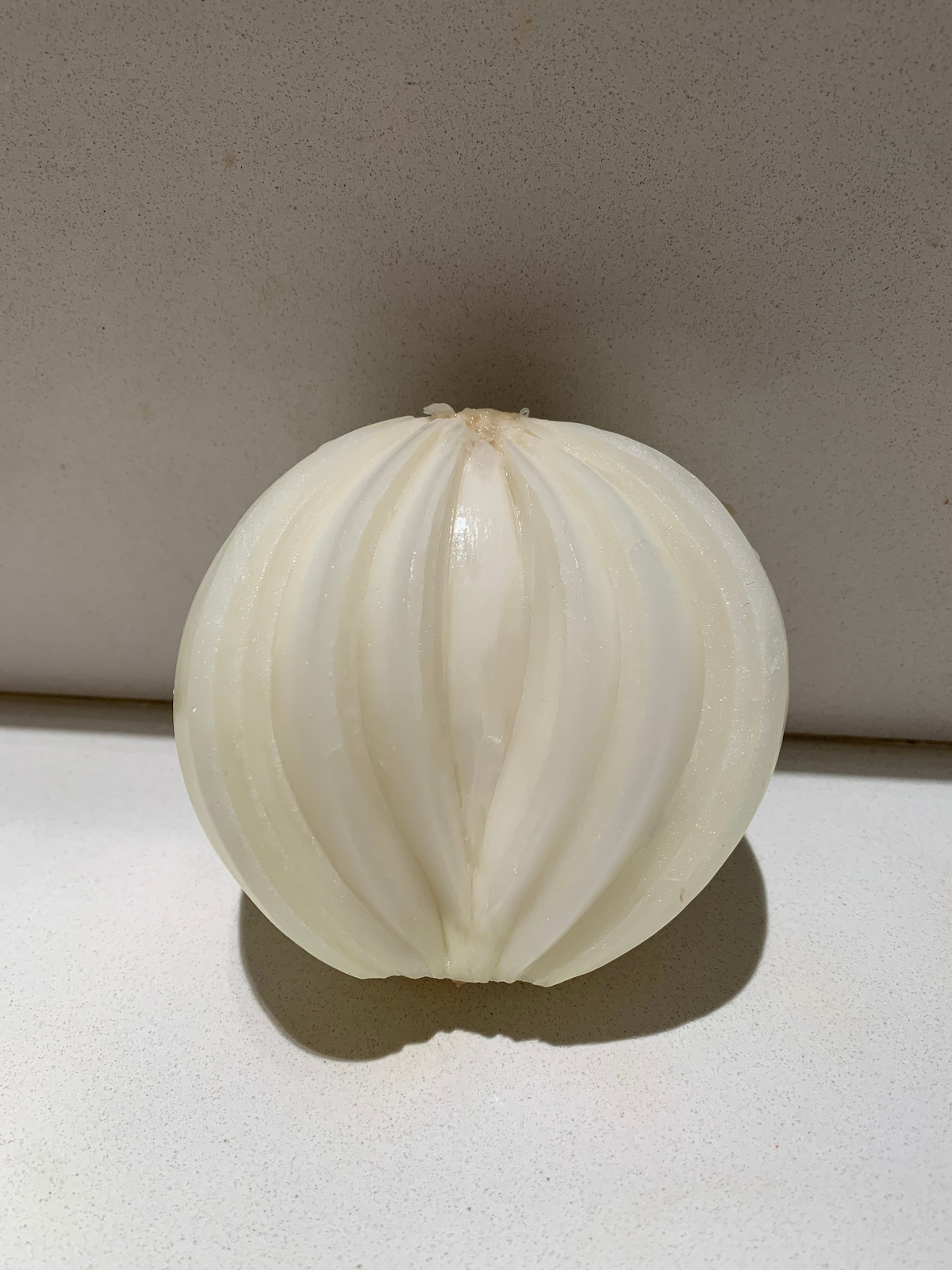
Speaking of the glass onion dome, how many real onions did you have to dissect in order to study the design?
Only one. I was trying to figure out how to show layers. It really did require cutting carefully and observing the architecture of an actual onion, and making sure that the side I was cutting into was the important side that we were going to observe when we first see it. I was really looking for something that I hadn’t seen before.
Let’s talk about all the incredible art that’s on the walls inside the atrium. A number of people noticed that Miles’ Rothko painting is upside down…
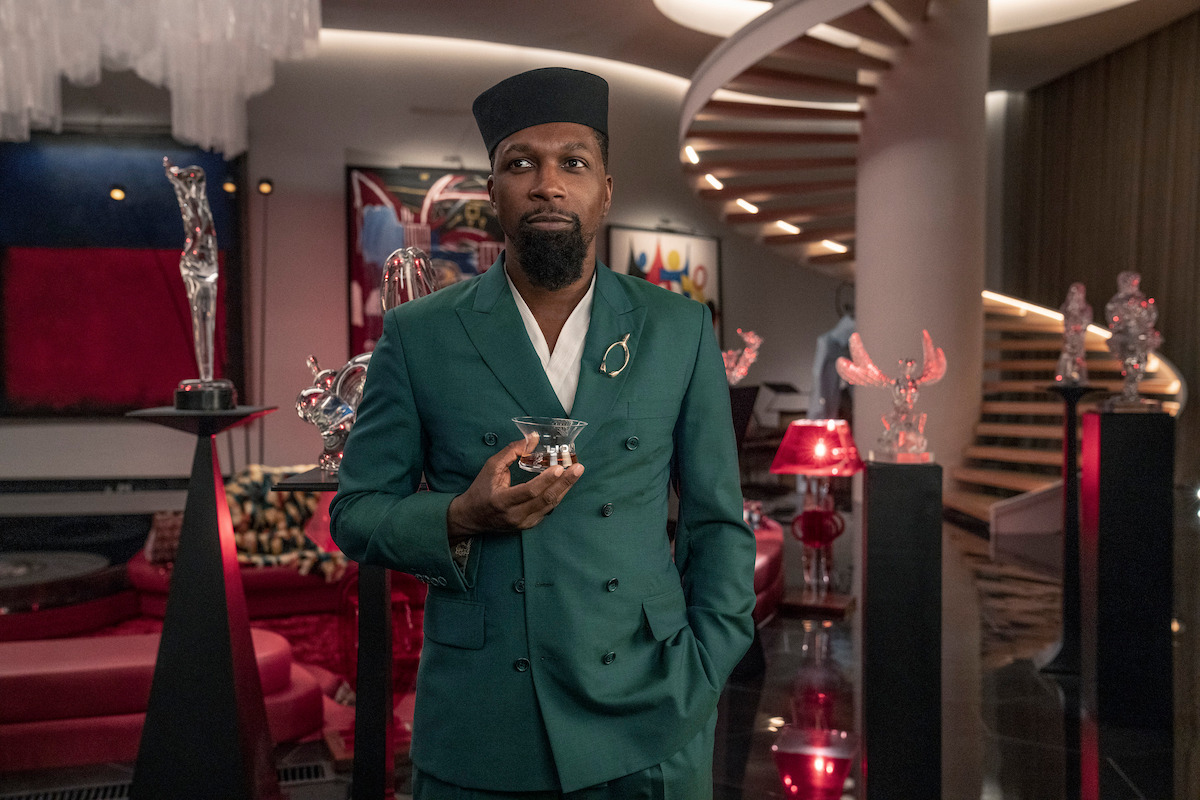
This was a Rothko called Red Above Blue. It’s not just that it happens to be wrong; it’s the name of the thing. Rian [Johnson] was like, “I think Miles would hang that upside down.” There’s many things like that, though. Rian’s sense of humor and his subversive little cookies are throughout the film.
It was intentional to populate [the atrium] in such a way that you felt a little overwhelmed. There were three things I was looking for. One was that Miles would buy something because it was by a famous artist –– he wants people to think of him in terms of fame. And that’s part of the next thing, which is power, and the ability to say that he’s wealthy and that money’s no object. The third thing is: he needs to hit the “disruptor” button. He’s subversive, he turns things on their heads. So there are a number of pieces, the Banksys, the Basquiats…
How did you source all these paintings?
We painted everything in oils and acrylics. You can really tell when something is a print, because the colors get affected by the lighting, there’s a flattened quality to it. We had such a great team of painters in Belgrade. There’s a real texture and rich color that they were able to achieve, including with the Mona Lisa, which we spent a great deal of time on.
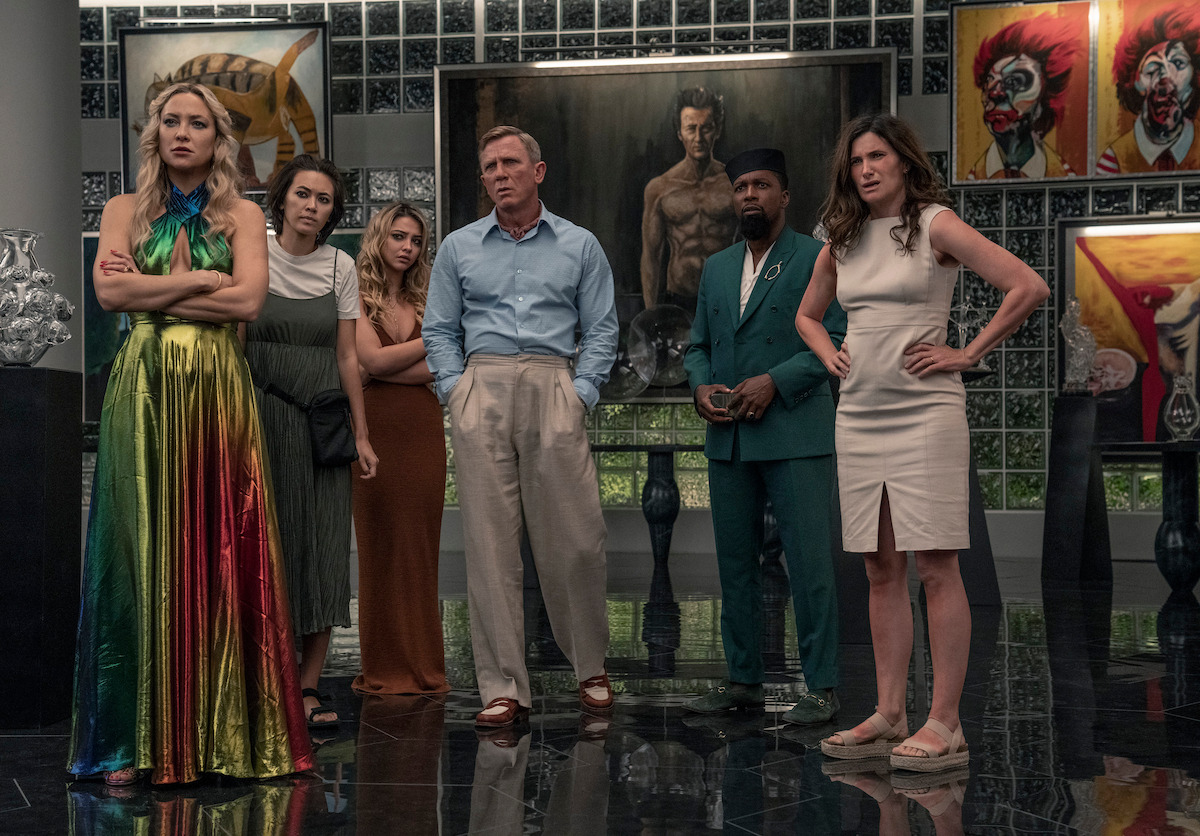
One painting that really stands out is the big canvas that appears to wink at Edward Norton’s character in Fight Club. How did that get up there?
We just wanted to have fun and do our own artwork. I hired an illustrator that I have worked with a lot, James Carson. We were playing around with artwork in the spirit of Hockney, or in the spirit of Philip Guston, and actually just coming up with our own versions of those. People call it “the Fight Club one” –– we had general reference [material] on Edward Norton, and that image is a combination of some different things in the spirit of Lucian Freud. The combination of all the elements really make it feel like Fight Club. Apparently, even Edward Norton said that, when he came in and saw it. It was great to see how amused he was by having such a place of importance within the environment, directly across from the Mona Lisa.
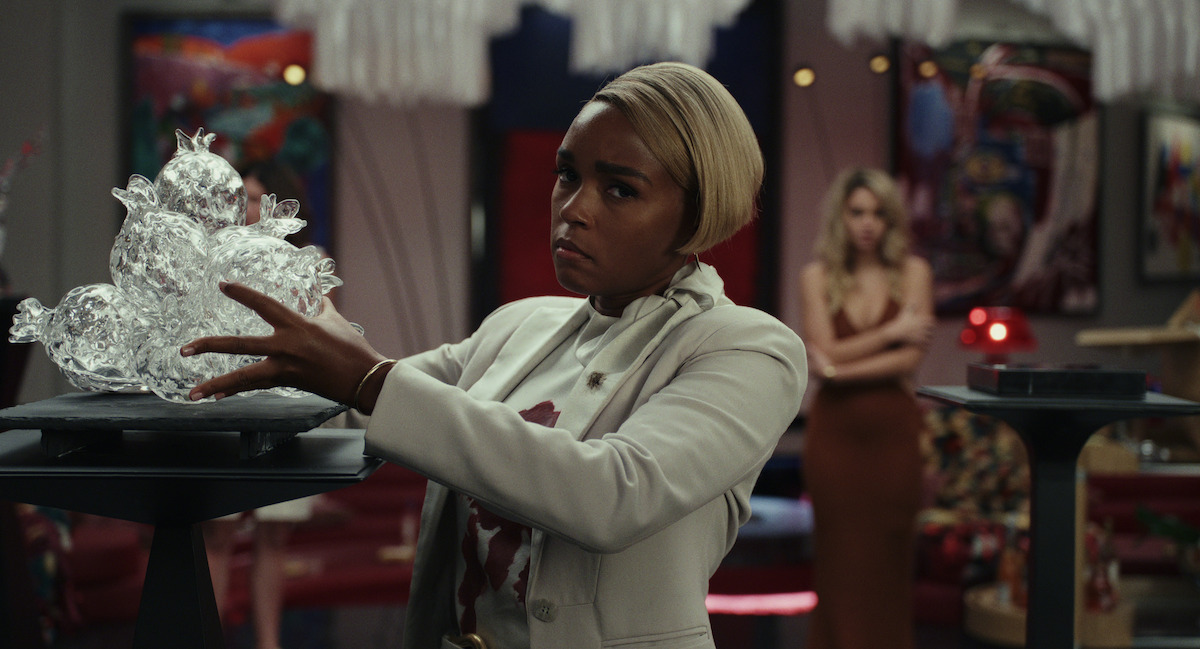
Miles has this collection of glass objects that get smashed at the end of the film. Were those made of real glass? And if so, how many did you have on hand to destroy?
More than anything, Rian was interested in what he described as “the forest of lenses.” He wanted to be able to pan across elements that create a distorted version, an almost surreal environment. At the same time, he wanted elements that had subject matter that would’ve interested Miles, and Miles was in a whole Beatles theme. The idea was to sculpt these and cast them out of breakable resin. Real glass is beautiful and has a lens-like quality. Resin is okay and can look pretty real. The glass knight was entirely resin; we also milled a version of it out of ice, which is the one that broke on camera.
A bunch of the smashes were real glass. We did make some duplicates. Sometimes, they were thrown down and someone would catch them in a mattress. Sometimes, when you see them going off-camera and you hear a smash, you just assume that glass is breaking. And then, of course, sometimes when you’re looking at something smashing on the floor, that’s a real glass artwork breaking.
So, what were all those shards on the floor made of? Was that real glass or resin?
It was starting to pile up, for sure. There probably is a lot of the resin in there, and there was candy glass as well, from the special effects. But there was a lot of real glass .
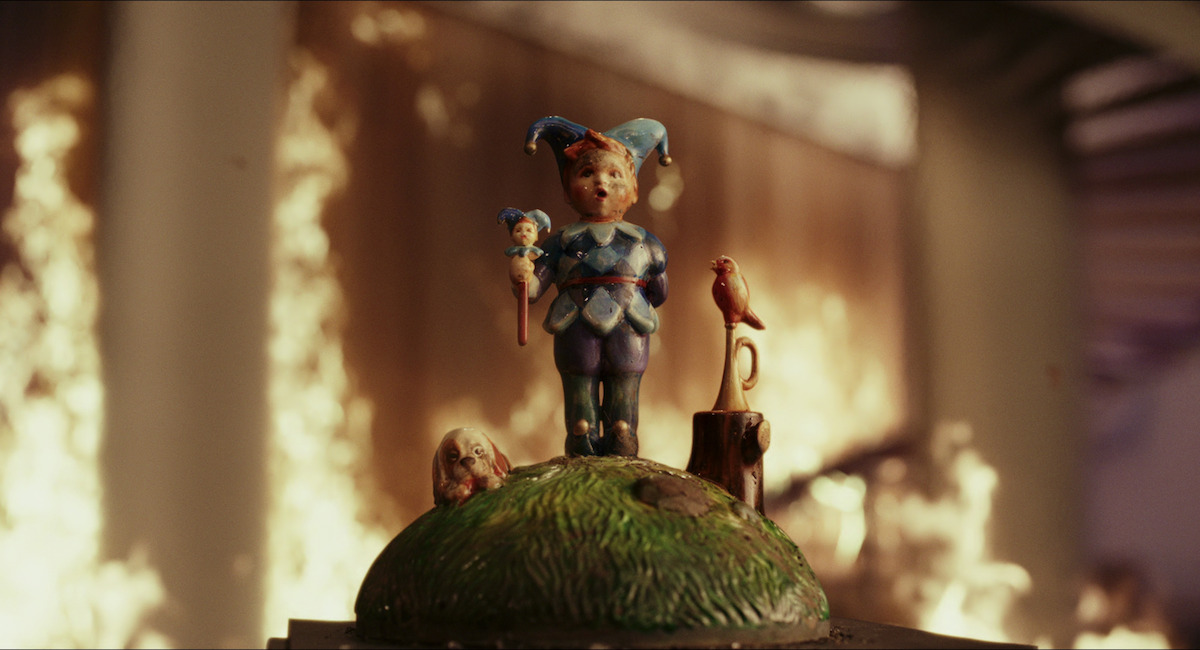
Can you give examples of some of the Beatles Easter eggs?
One was a bust of Lenin, the Communist leader, but he is wearing John Lennon glasses. There’s a Hummel figurine –– not glass –– which is the one that you pop on the head to make the protective glass for the Mona Lisa disappear. He’s the “Fool on the Hill.” There was a Lady Madonna.
OK, but really –– how hard was it to find a working fax machine?
We found all those on eBay. They are out there, which is what’s shocking. I just love that little note about Miles’ character. He himself is so non-tech, and yet he’s some kind of a disruptor genius. And of course, Rian uses that beautifully.