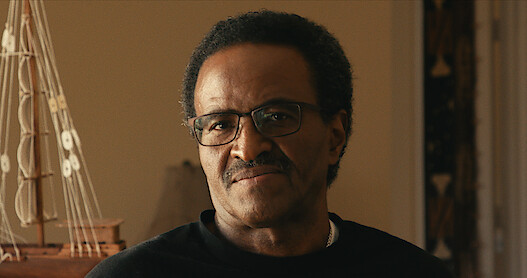
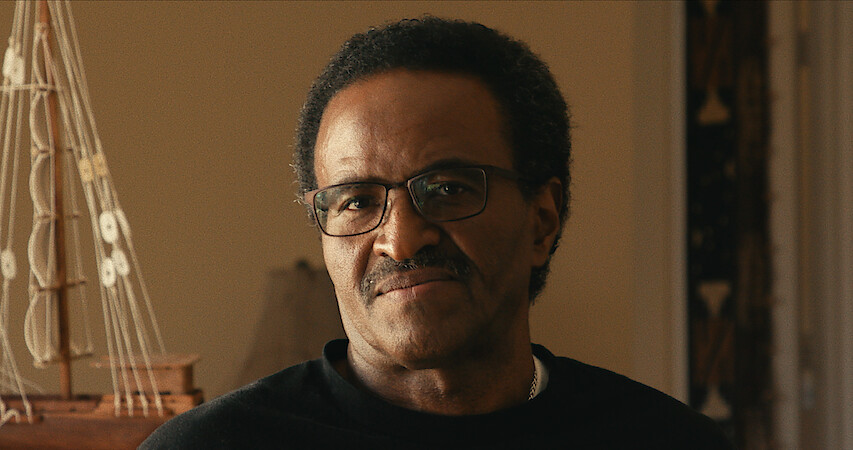
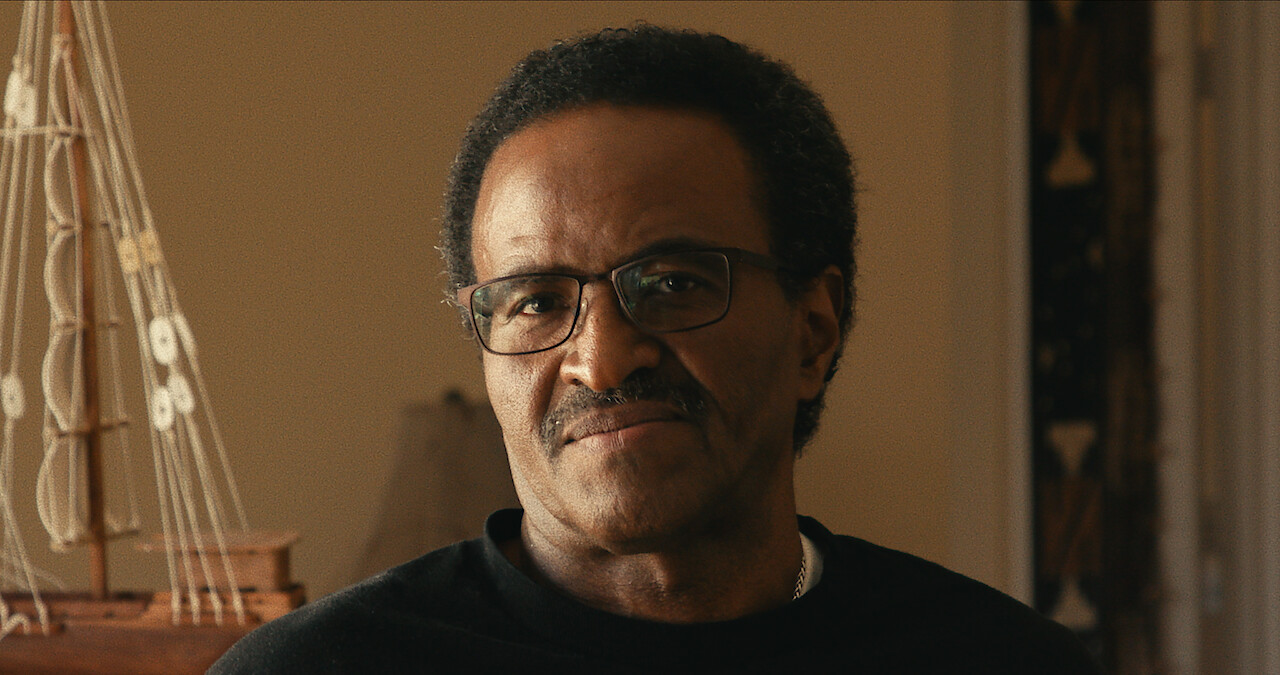
“It’s a spiritual sort of thing, being connected to the natural world,” says Kamau Sadiki at the beginning of Descendant. “It calms me, brings about a sense of peace and tranquility. I want to stay connected to the water as much as possible.” As he speaks, he’s seen loading his kayak onto a car after an outing on the water. Affixed to its rear windshield is a circular sticker featuring the logo of the National Association of Black Scuba Divers (NABS), of which Sadiki served as president for two years. Sadiki’s enthusiasm for the water takes on a deeper meaning as the documentary unfolds. The certified divemaster is integral to the underwater search and discovery of the Clotilda, the last known slave ship to arrive in the United States.
“We’ve got 12,000 vessels that participated in this horrendous activity over centuries. They made some 40,000 plus voyages from the continent of Africa throughout the Western world,” he tells Tudum. “Out of all those voyages, we know of about 1,000 or so wrecks that happened, ships that sank. Out of those 1,000 or so, less than 10 have been documented. Given this event that has affected you, me, the whole world globally; that has propelled particularly the European continent to a profound economic stability, we only know a handful of these stories.”
Since 2007, Sadiki has been working to unearth these stories, traveling all over the world to document shipwreck sites and honor those whose lives were lost. But his profound connection to the water first took root in a rural community called Greenwood in South Carolina, where he learned to swim as a child in lakes and a segregated pool, and later became a lifeguard. It was a chance encounter with a fellow diver at an airport that set him on the path to where he is today.
While waiting to board a plane, Sadiki met Albert Jose Jones, a co-founder of NABS who began scuba diving back in the 1950s. “To put Dr. Jones into context, Jacques Cousteau is the white Dr. Jones,” Sadiki says. Dr. Jones was wearing a jacket festooned with patches from his diving expeditions around the world, including one featuring the Henrietta Marie, the name of a slave vessel that Sadiki had recently read about. Ultimately Dr. Jones invited Sadiki to begin training for future expeditions. “I went over to the high school swimming pool where they were doing their training and, as they say, the rest is history,” he explains.
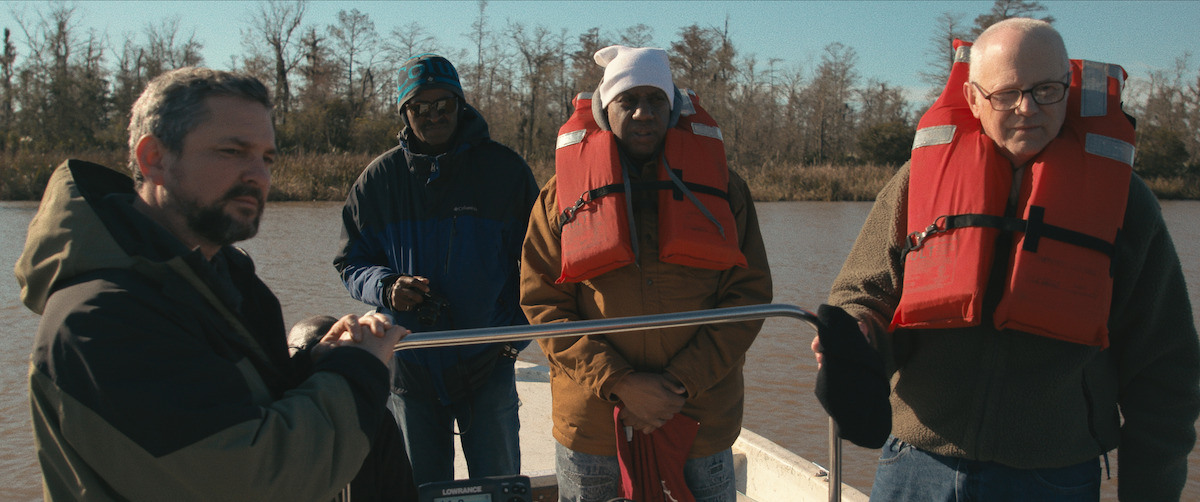
(From left) Ben Raines, Kamau Sadiki, Garry Lumbers and Michael Foster
Sadiki’s training coincided with the birth of Diving with a Purpose (DWP), an international nonprofit organization that grew out of NABS. “In 2007, I went to their first Maritime Underwater Archaeology Documentation and Survey Training, and that’s what lit the fire,” he recalls. “Once I took that training, I said, ‘Wow, this is it.’ Now I’m a lead instructor and a board member of the organization.” DWP is a partner of the National Museum of African American History and Culture’s Slave Wrecks Project, which is how Sadiki came to be involved with the efforts to find the Clotilda.
“The Clotilda is sitting in about 20 to 25 feet of water, and the water is very murky, [so] visibility is limited,” Sadiki says. “There [are] hazards at the wreck site, pointy edges, metal sharp edges, tree trunks and even snakes and alligators that you have to be aware of.” Beyond the physical challenges inherent in dives like this, there’s also an emotional toll to consider. The wreck sites of ships like the Clotilda and São José Paquete de Africa, which sank off the coast of Cape Town in 1794 and killed more than 200 enslaved people, are harrowing examples to the depths of human cruelty. “We do the science, we do the archaeology, but there’s a whole ’nother intangible dimension that we have to connect to,” Sadiki says. “Every time I engage these artifacts, I have this embodied experience of what [those on board these ships] experienced.”
When Sadiki found the Clotilda, he was emotionally transported. “Visibility was very limited, so I had to feel my way along the wreck,” he says. “I knew, just from doing the research, that I was looking for this wall called a bulkhead, and on the other side of this bulkhead was the cargo hold where these 110 individuals had suffered so horrendously.”
“When I got to that bulkhead, I grabbed the side of the ship called the gun wall, did a couple of kicks and went over into that hold. I’ve had about 1,400 dives. I know a little bit about being stable in the water, but when I got into that hold, I just started tumbling,” he remembers. “And it went on for several seconds until I could stabilize myself. The only way that I could understand it is that they wanted me to experience, to a very small extent, the turbulence — the horrible experience that is coming across the sea.”
Despite — or, rather because of — the dangers that come with being in the water, whether recreationally or on a dive, Sadiki is passionate about teaching young people how to swim. The Center for Disease Control found that, between the ages of 16 and 25, African American youth are more likely to drown than any other group. “The only way we can turn that around is to teach this life-saving skill.” While the United States has a long history of segregation and redlining that has kept Black people away from recreational waters for decades, the repercussions of these policies still resonate today. “We go down to these Florida communities right near the water and [most] of the community don’t even access the beach or go into [the] water,” Sadiki says.
In Descendant, Sadiki’s colleagues are seen teaching local youth how to be comfortable in the water. Ideally, some of the young people that they’re working with will be interested in becoming divers, too. “Can you imagine [someone from Africatown], a descendant of those 110 people who were on the Clotilda, learning to scuba dive and diving into the cargo hold of the space where their ancestors were? I mean, that would be monumental,” Sadiki says.
In just this year alone, Sadiki has traveled to the Maldives, Mozambique, Cuba and Grenada. As with Africatown, Sadiki makes sure to connect with descendant communities near each one of the shipwreck sites he visits. “The very first thing that should be done out of deep respect is reaching out to that community and saying, ‘We’ve found the location, or an artifact from where your ancestors perished. What do you think would be appropriate to memorialize this site?’ ” He also cautions adventurers against going rogue and trying to dredge up artifacts on their own. “When these wrecks occur, [the way] they lie in the water is the context. If anything is disturbed, it’s taken out of context and it affects the ability to find the truth,” he explains. “There’s a lot to be said about the power of place where things exist now, and its power to tell the story. But once that’s destroyed, it’s gone forever.”
Just as each wreck site has a story to tell, it’s clear that Sadiki doesn’t take the responsibility of sharing these stories lightly. Ahead of the first Clotilda dive, while discussing the challenges that lay ahead with a friend, Sadiki came up with the following “ancestral prayer,” calling out to the souls of the men, women and children who were brought over in the ship’s cargo hold: “Beloved ancestors, your voices have been quiet for 162 years, but your silence ends now,” he begins, his voice trembling with emotion. “Your voices and memories are lifted now from this wretched wreck through us, and we welcome you to speak through us. Our connection will never be broken. We are because of you. Thank you for reaching out to us. Blessings to your spirit, always.”