Control Room
The Beauty of Brutalism: the Design References in ‘Spiderhead’ Revealed
And yes, Daft Punk was involved.
June 24, 2022
What would a prison look like if it was also a spa in Big Sur?
To create the sleekly postmodernist and oppressively sterile environs of Spiderhead’s prison-laboratory, director Joseph Kosinski gave his team this prompt to help design the lair of Chris Hemsworth’s sociopathic pharma-bro, Steve Abnesti.
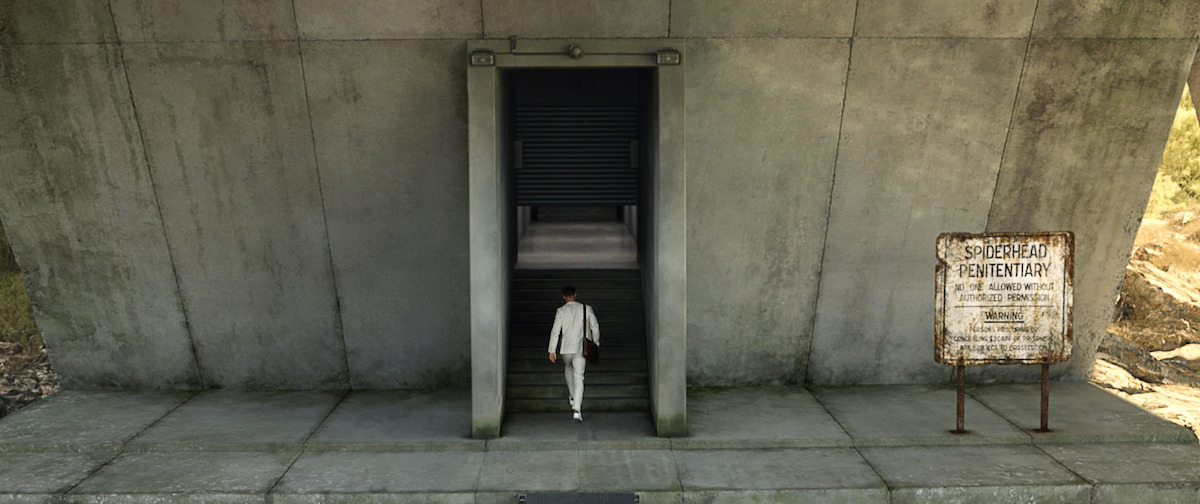
Like a steel-and-concrete tarantula, the eight-legged structure perches on a lush coastline overlooking waves flecked with golden sunshine. Inside, the windowless structure is all angles: Beams of sun shine from skylights, casting bars of light against raked-concrete walls. High-end espresso machines and mid-century modern office chairs populate the communal spaces, providing the prison in George Saunders’ short story, on which the film is based, with the dissonant charm of a co-working space.
Modernist architecture has long been the favorite of villains — from Blofeld’s pad in the Bond films to the Usonian compound in Hitchcock’s North by Northwest. In Spiderhead, Kosinski takes modernism to the next level. The director’s love of design shines through in his Daft Punk–propelled Tron: Legacy, the sci-fi thriller Oblivion and, yes, a little film called Top Gun: Maverick. As always, but especially in Spiderhead, Kosinski knows the devil is in the details.
Kosinski recently caught up with Tudum to talk about the film’s locations, its architectural inspirations and the design objects that appear in the film’s most pivotal scenes.

Where was Spiderhead filmed and how much of the exterior locations were renderings or graphics? The whole Spiderhead interior was built as one continuous set in an unused sports arena on the Gold Coast of Australia. [The scenes were] shot in the heart of the pandemic, so there were no sporting events going on. So, we essentially built it on a basketball court. The exterior shots were all shots on the Whitsunday Islands, which are right off the Great Barrier Reef. Hamilton Island was our base there. Using digital rendering, we were able to place the exterior of the Spiderhead, at least in its full form, on the islands.
The scenes where they go from inside to outside — where they come running out onto the dock — [were] shot on an artificially [dammed] lake near the Gold Coast. We had a partial build of the Spiderhead there. So, it’s a combination of the three different environments.
Your works really use architecture as a character unto itself. How did you apply that sensibility to Spiderhead? When you’re doing science fiction, one of the most fun parts is kind of building the world, a hermetically sealed environment, to tell your story inside of. I love collaborating with designers and building this stuff [out].
The interesting thing about the Spiderhead facility is it is a prison, to state it plainly, but Abnesti doesn’t want it to feel like a prison. He wants people to feel like this is an amazing opportunity they all get to have in exchange for their acknowledgement to participate in these drug studies. The building has no windows, but it’s filled with natural light, so that was a fun challenge to figure out how to get natural light into a building when [Abnesti doesn’t] want the people inside to know what time of year it is. It’s all done through skylights. [Abnesti’s] apartment is the only room [in the facility] that does have windows looking into the outside world.
All the walls are canted, which gives this sense of unease. There are no straight [up-and-down] lines in it. It has this panopticon in the center where Abnesti [sits] in a control room and can supervise over three experiments simultaneously.
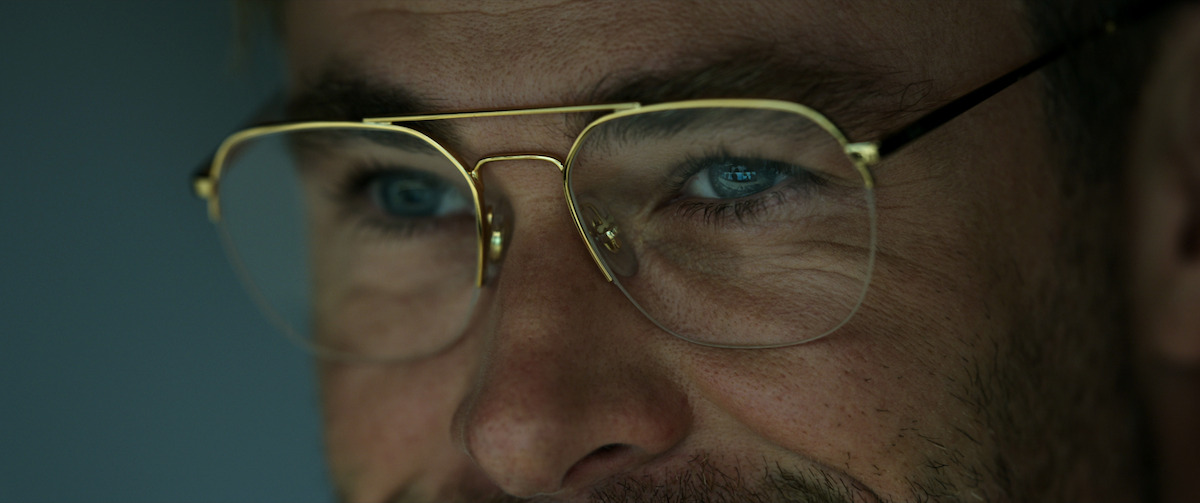
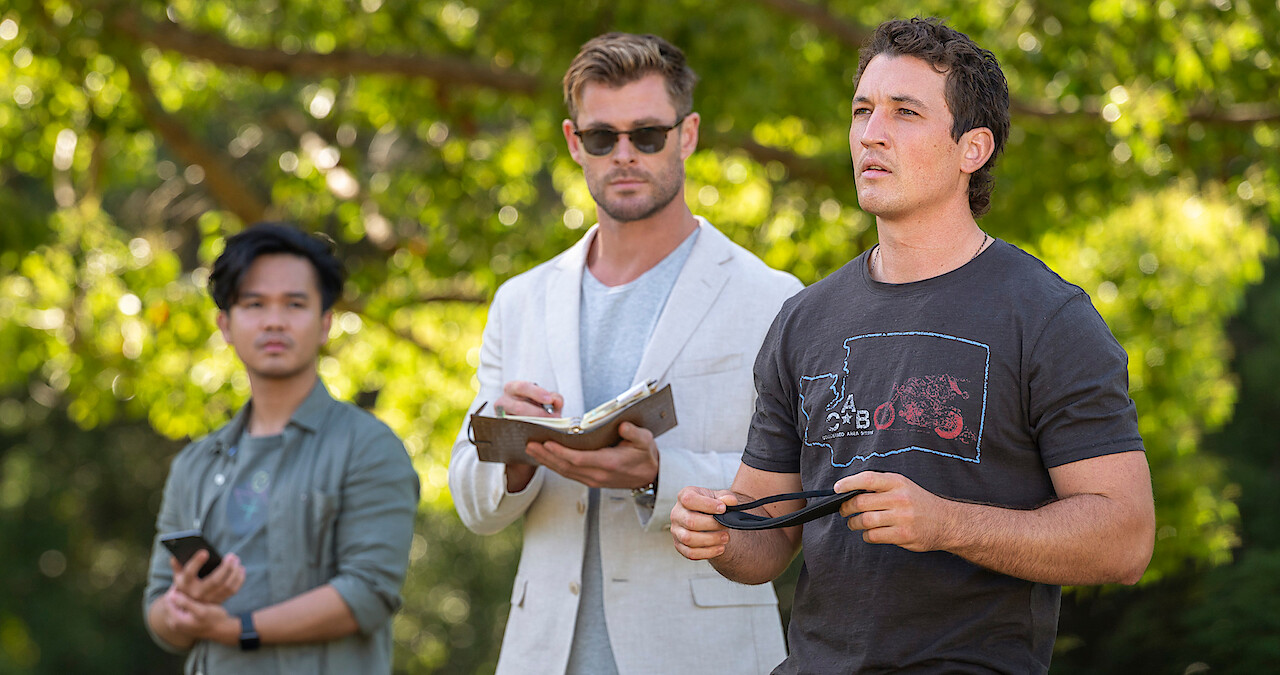
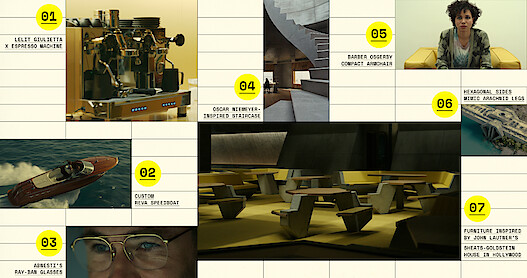
Cinematographer Claudio Miranda’s frequent close-ups of Abnesti’s Ray-Ban glasses literally frame the intensity of Hemsworth’s performance.
This notion of control pervades the entire film. The panopticon is designed to control and oversee, and that’s what Abnesti is essentially doing. It’s reflected in everything that has to do with Abnesti: the architecture, his wardrobe — his almost perfect grooming.
Jeff and Lizzy’s wardrobe is much more eclectic, and their haircuts are almost feral. Everything is control versus chaos, and, by the end, the film falls firmly in support of chaos as being the way forward.
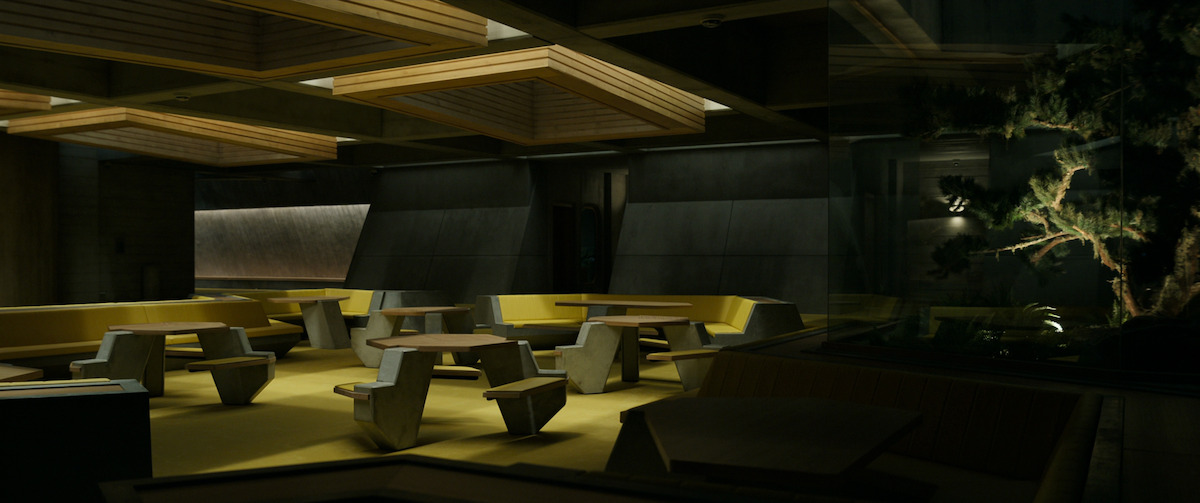
Architect John Lautner’s brutalist Sheats-Goldstein house in the Hollywood Hills inspired the Spiderhead’s concrete furniture.
Production designer Jeremy Hindle worked on Severance, too, where he constructed the alienating architecture of the office labyrinth. The Spiderhead building is a cheerfully demoralizing space, too. How did you two design it? Right before we had hired actors or even knew where we were shooting this, Jeremy and I spent about six weeks together designing the Spiderhead facility. We partnered with Polish digital architect Adam Spychała, who does these beautiful digital renderings of brutalist architecture that he designs himself.
The challenge was to design a facility that had all the spaces we needed to tell the story, but also [make it clear why it’s] called the Spiderhead. We gave it eight legs and multiple “eyes” on the top [via] skylights.
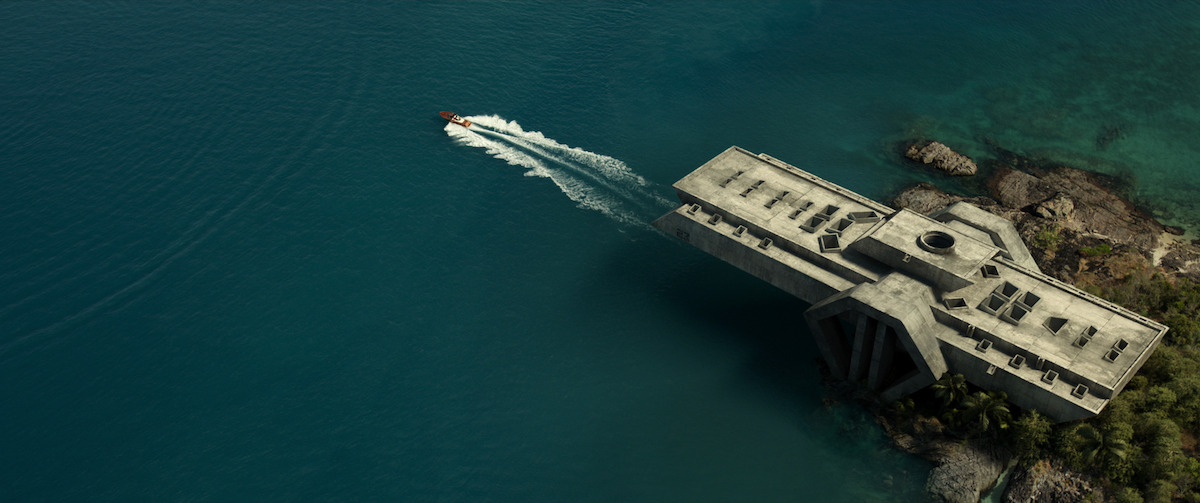
The hexagonal sides of the Spiderhead mimic arachnid legs.
How do you describe brutalist architecture to someone unfamiliar with it? Jeremy Hindle and I were fascinated with brutalist architecture, which was very en vogue in the ’60s and ’70s[, when] buildings were made out of concrete. You see it in a lot of university libraries and corporate headquarters built around that time. It’s a very specific type of architecture that was done by architects like Louis Kahn and Tadao Ando. That was the inspiration: Kahn and the buildings he built in India, [and] the architecture of Tadao Ando, particularly for the way sunlight comes in from the ceiling onto the walls.
For me it was like remembering some of the buildings I remember being in when I was in college.
[We] used color throughout it... I love this idea of that goldenrod yellow, which has this cheery quality to it. Anything we could do that would be a counterpoint to the true intentions of the facility was what Jeremy and I were interested in, and that juxtaposition of both the music that he plays, the nature of the design of the facility and what’s actually happening inside it was a real intriguing idea to us.
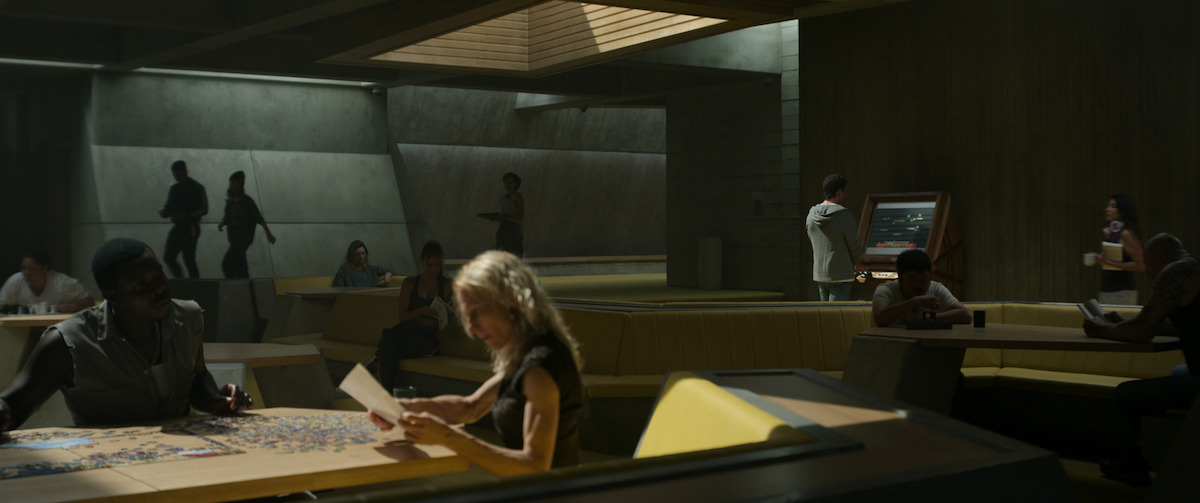
Light and shadows cut across the unsettling walls of the structure’s asymmetrical interior.
Brutalism essentially started as this utopian idea of affordable housing that was still accommodating. But if you look at some of those buildings now, they seem oppressive. How did this idea of twisted utopianism fit into the architecture of the film? That really sums up Abnesti. The building is a reflection of him. He’s got these utopian ideas of changing the world for the better by controlling how people behave. Abnesti talks about wanting to create true love and wanting to make people enjoy life more, but he’s doing it by controlling their actions and taking away their free will. He’s not aware of it in a way that a sociopath might not be aware of the damage [they’re] doing.
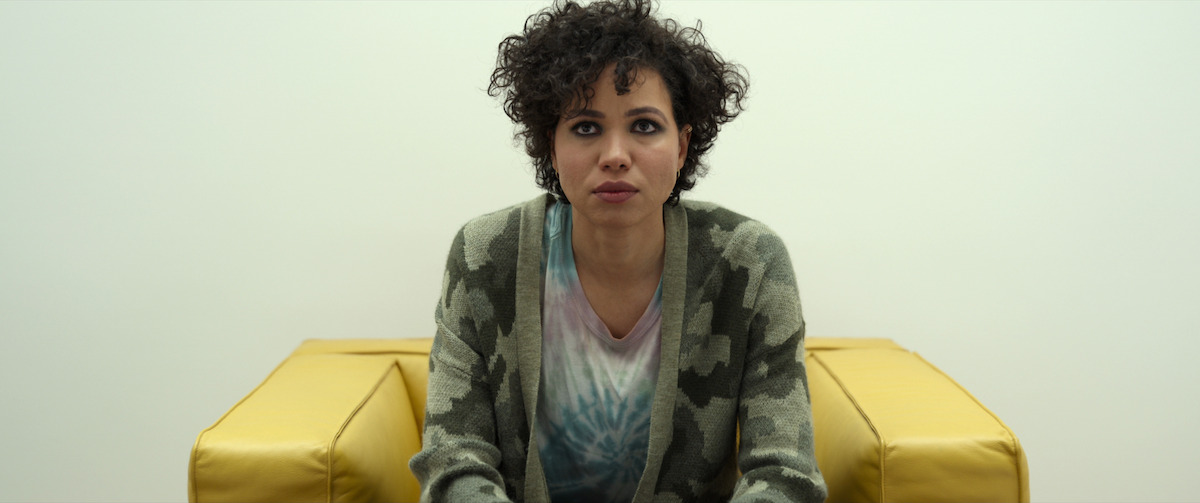
Lizzy (Jurnee Smollett) is interrogated in a Barber Osgerby compact armchair reupholstered in yellow.
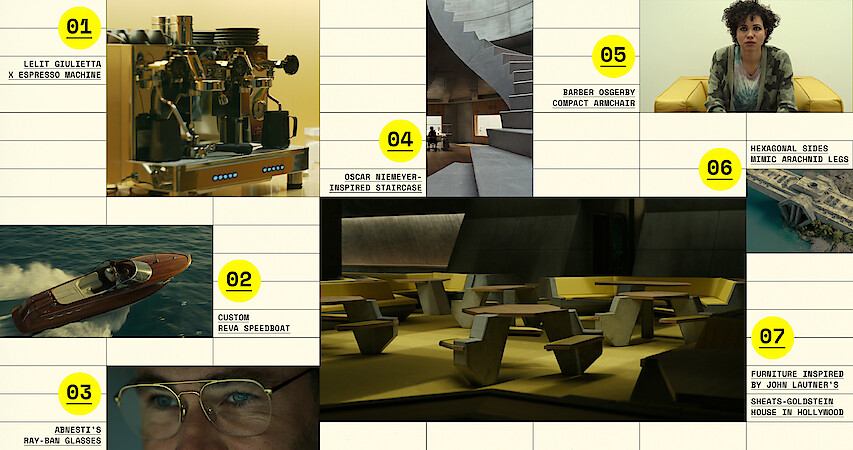
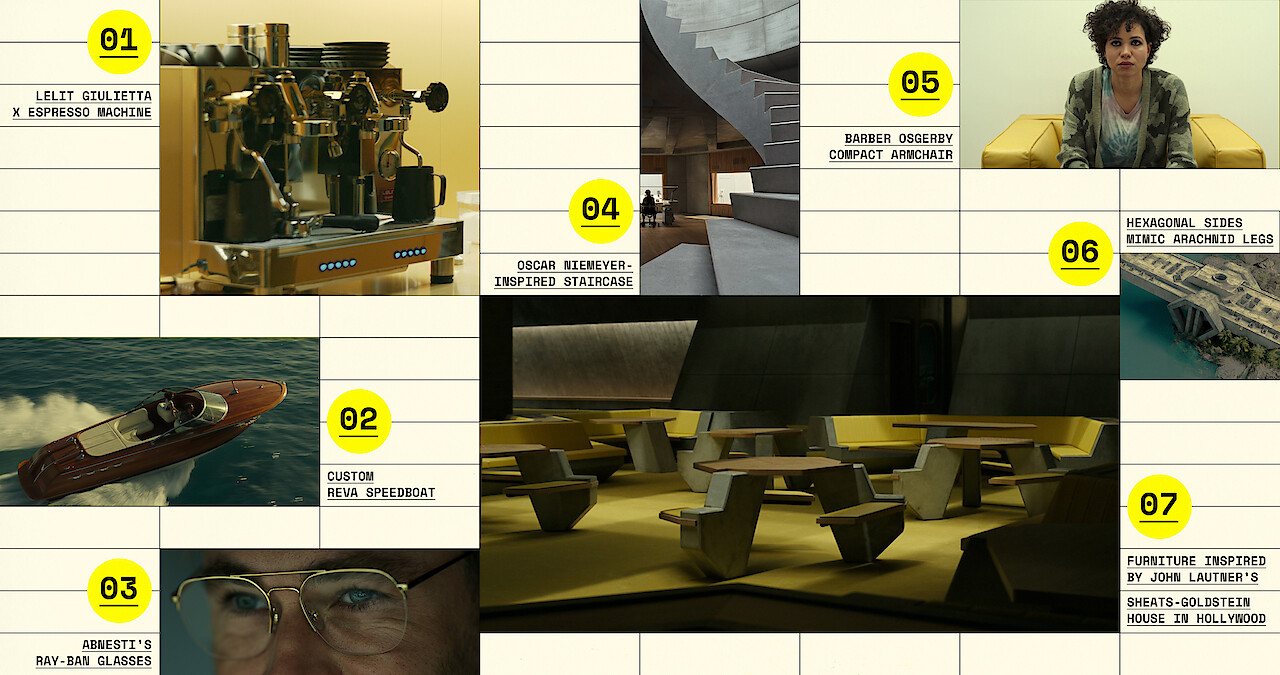
Architecture is a storytelling device in your films, but furniture also plays a character. In Spiderhead, we see pieces by European mid-century furniture designers, like the Ligne-Roset Togo chairs. The yellow Knoll chair gets a lot of screen time and gets battered as much as the prisoners. Could you talk a little bit about that? My background is in design. For Abnesti’s exquisite sense of taste and [desire to] control, I felt like the designer furniture was a great way to convey that. [In the film,] there’s a lot of American architect John Lautner, [whose] influence is definitely in the booth seating in the cafeteria. A lot of that was inspired by the Sheats–Goldstein Residence in Hollywood. [Editor’s note: The house makes a cameo in The Big Lebowski too.]
I wanted every single element in this thing to feel chosen by Abnesti. There could be nothing that was off-the-shelf.
For more design Easter eggs in Spiderhead, director Joseph Kosinski, production designer Jeremy Hindle and set decorator Nancy McIlvaney offered up some exclusive insights.
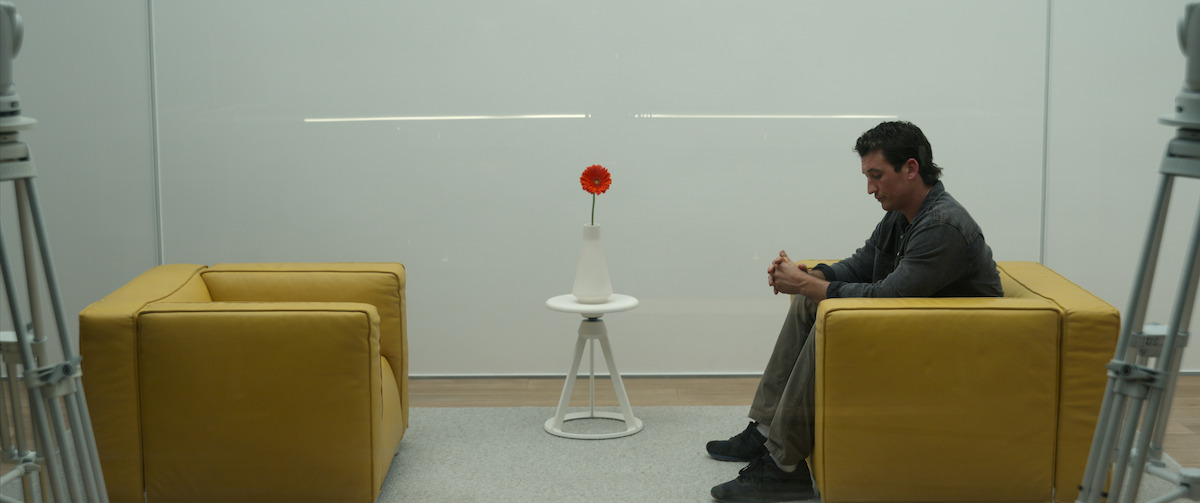
Jeff (Miles Teller) awaits another inmate to occupy a vacant, chunky yellow Knoll chair in the observation room.
“My direction from Jeremy was to find the perfect chair that would make the inmates feel comfortable during their drug experiments while also representing the world that Abnesti had created for them,” says McIlvaney. “We loved the Compact chair because of the lower back and the soft edges creating a deliberate space to relax in while still exposing the inmates to Abnesti's cameras. I reupholstered the chairs in a Spinneybeck Riva Leather to match the tone of the yellow carpet that runs throughout the set.”
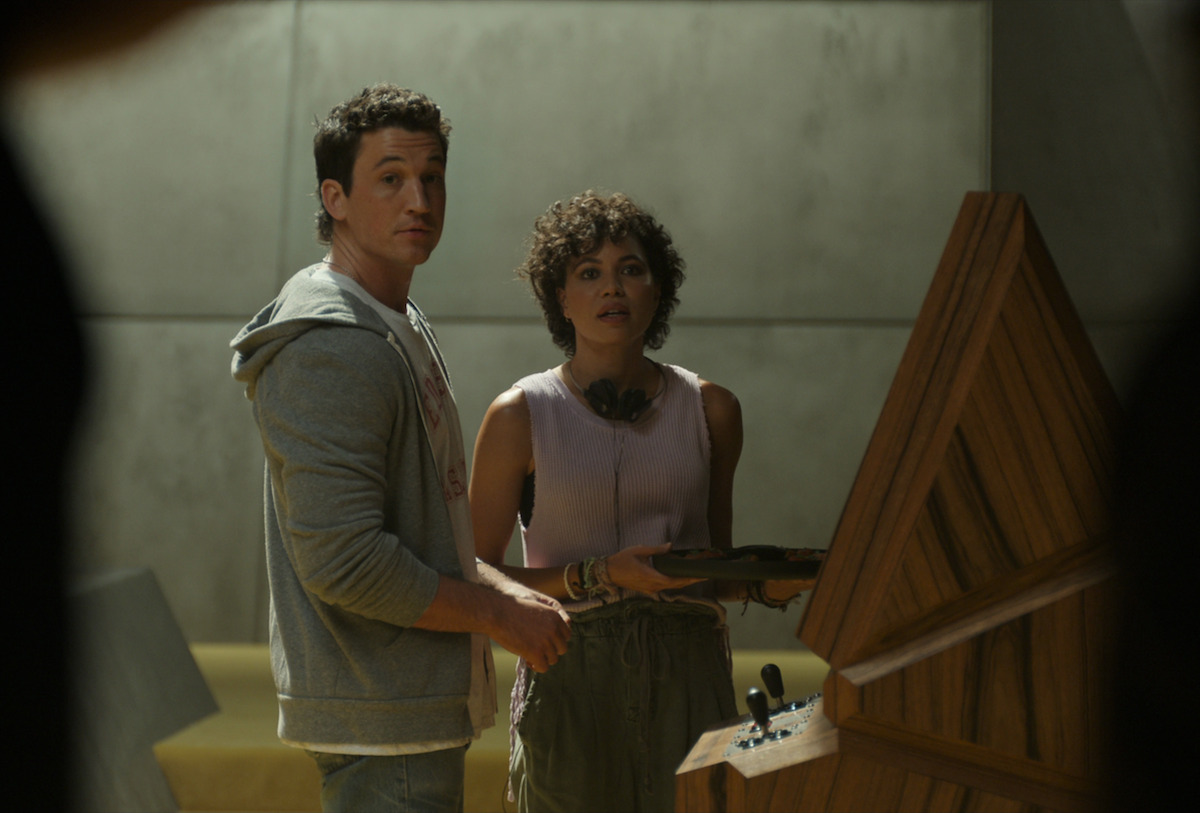
Jeff often plays ’80s video games on the Arcadia Multicade console.
“The multicade arcade machine was designed by the Daft Arts Crew,” says Kosinski, who worked with Daft Punk on Tron: Legacy. “Cédric Hervet, their creative director, designed a range of furniture that I got a catalog of, so I got their multicade from their collection and had it shipped down to Australia. It’s such a beautiful piece of furniture.” McIlvaney agrees: “Cedric and his cousin Nicolas design a beautiful collection of furniture that is made locally in France under Hervet Manufacturier. Coincidentally, Jeremy and I were also looking at their designs when Joe brought the arcade game to us. It was the perfect addition to the set.”
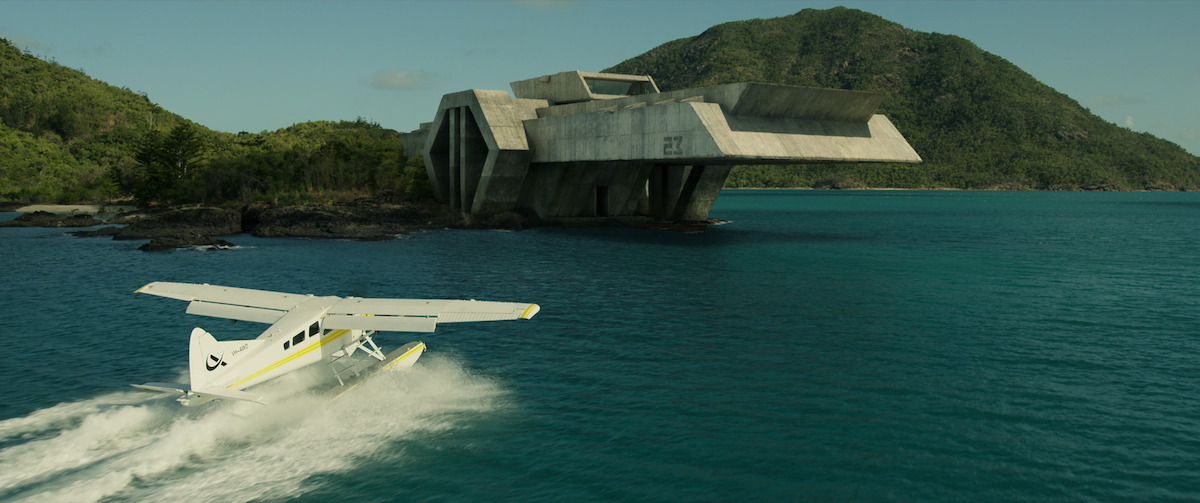
Abnesti arrives at the facility in a de Havilland plane painted with the Spiderhead’s recurring yellow hues.
“From an aeronautical point of view, the de Havilland Beaver is considered one of the most beautiful and functional designs that has ever existed. I mean, that’s a plane designed in the 1950s that’s the perfect floatplane,” says Kosinski. “That was obviously an iconic element.”
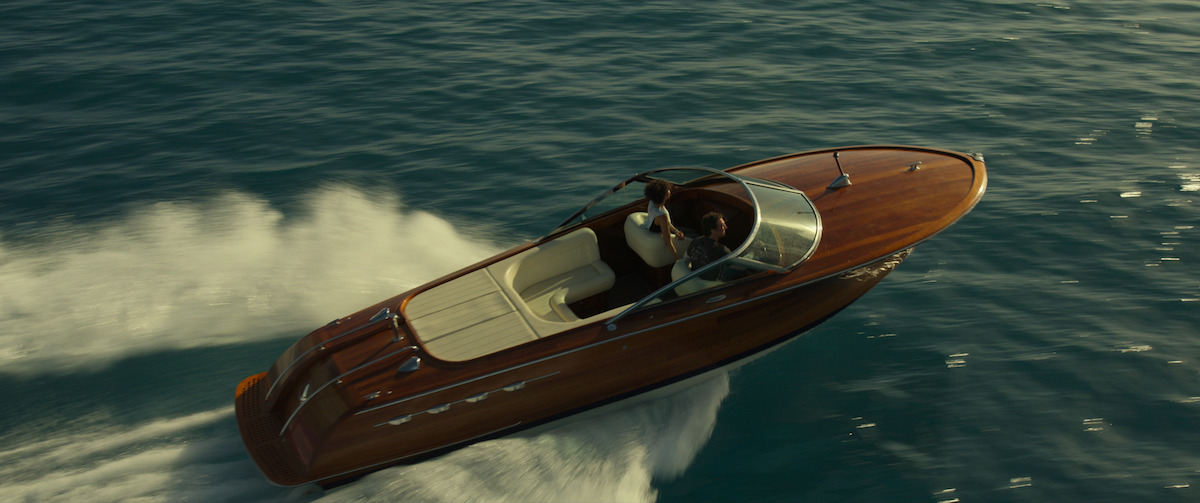
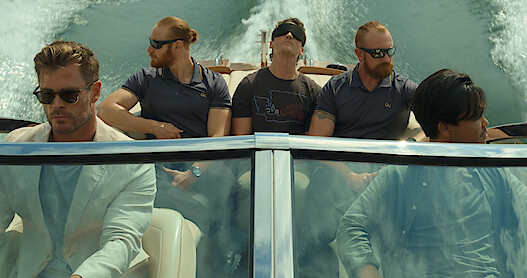
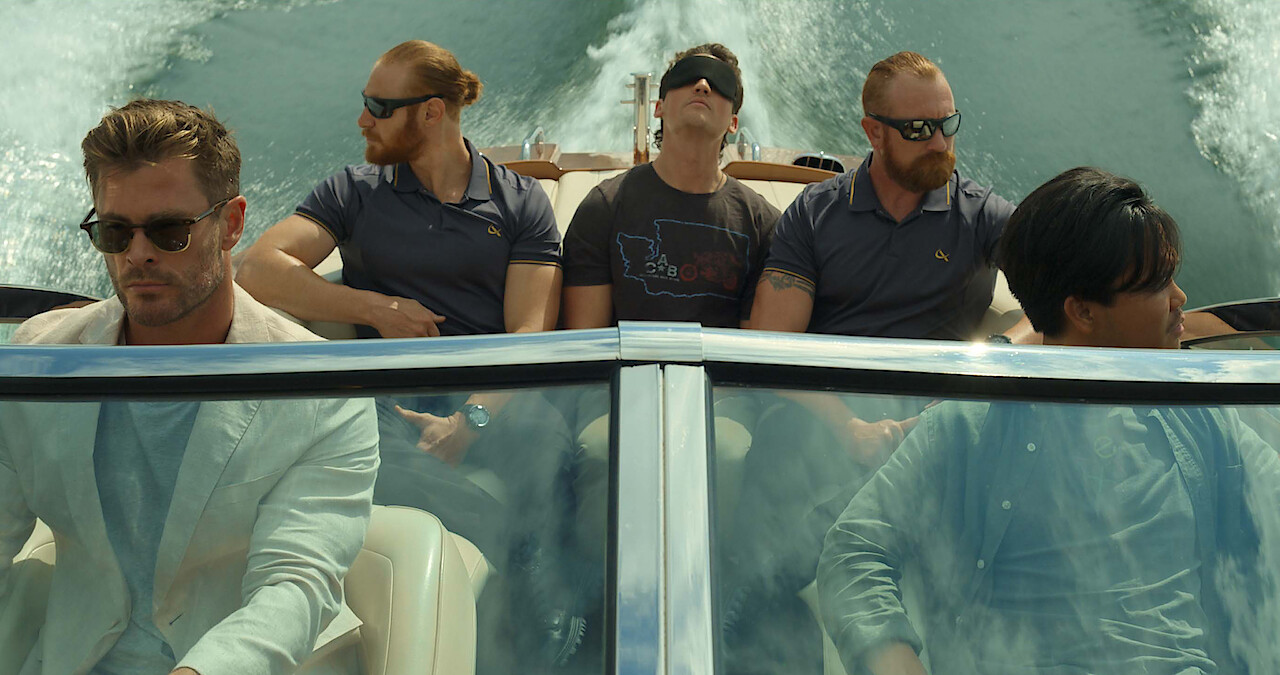
Abnesti’s lacquered wood speed boat cuts through the waves of Australia’s Gold Coast.
Carlo the speedboat was designed and manufactured by Italian boatmaker Carlo Reva, says Hindle. It was built in 2002 and inspired by Italian design of the ’60s and ‘70s. It was also entirely manufactured from one tree. “The speedboat was a hand-built, one-of-a-kind speedboat,” says Kosinski. “I think it’s worth about half a million dollars. The owner very kindly lent it to us in Australia.”
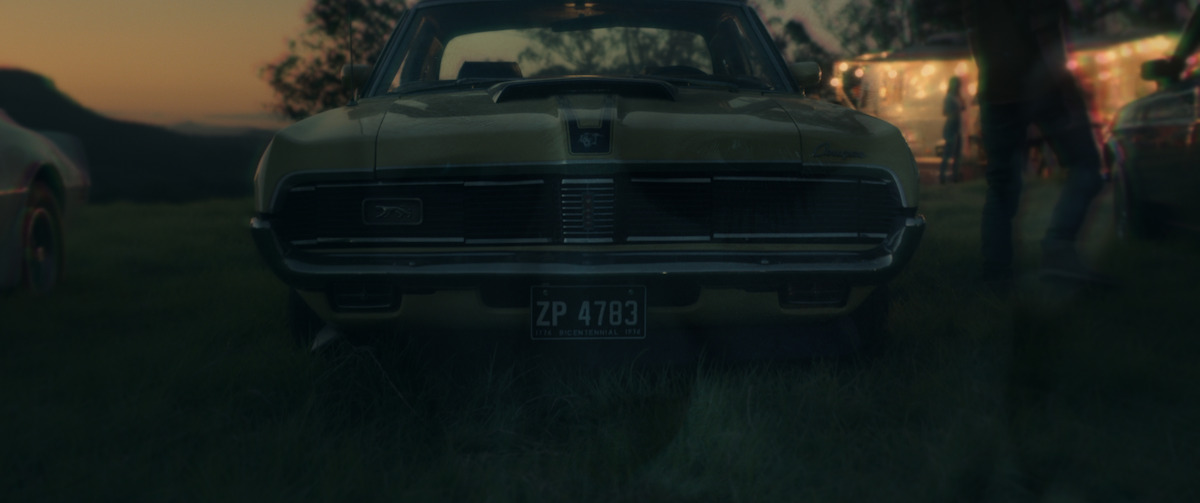
The goldenrod-yellow motif returns on Jeff’s Mercury muscle car.
Hindle reveals that the hot rod Jeff drives is a bumble bee black-and-yellow Mercury muscle car.
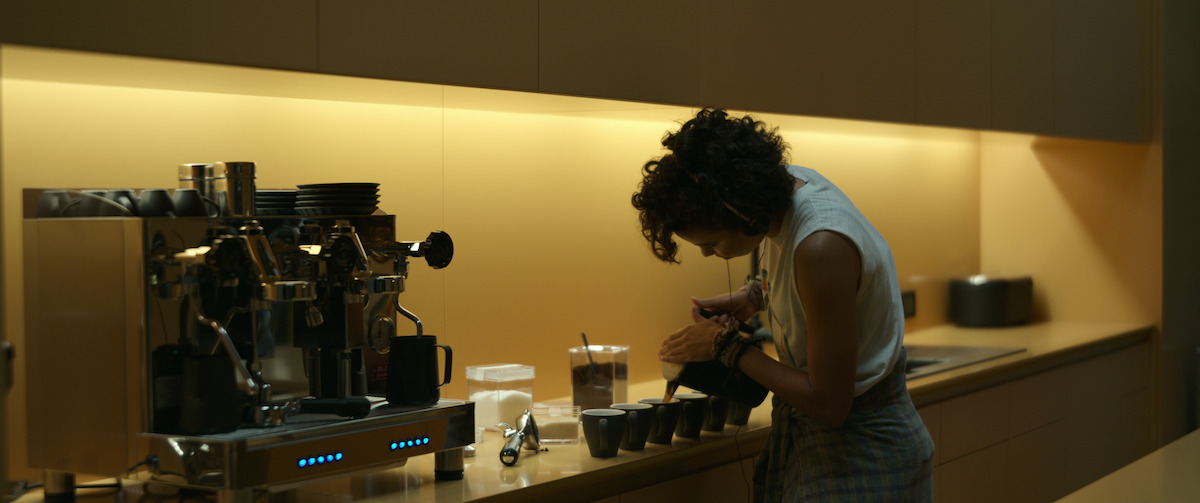
Lizzy makes coffee for fellow inmates from a high-end espresso machine.
The chrome coffee machine is the Rolls Royce of java makers. “Claudio Miranda, my director of photography, is a coffee aficionado and told me the espresso machine that someone like Abnesti would get was the Lelit Giulietta X,” says Kosinski.
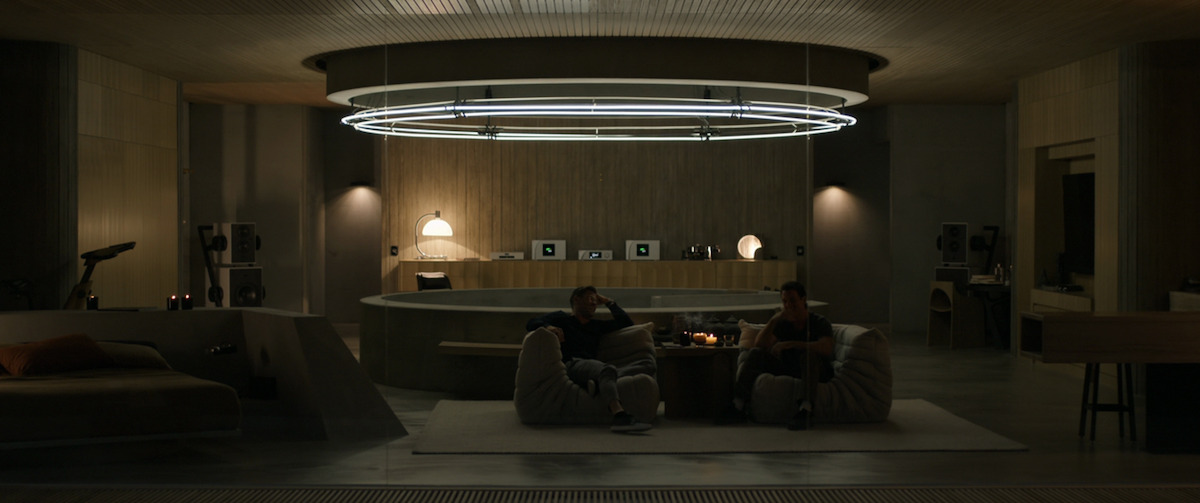
Abnesti’s living space flaunts uber-expensive audio gear and an open plan not unlike the rest of the facility.
“Abnesti had to have the best of everything, including his Swiss-made Goldmund Samadhi speakers,” says McIlvaney. Goldmund shipped the large-scale speakers from Switzerland to the Australian production. “The speakers in Abnesti’s apartment are about a half a million dollars,” Kosinski says. “They’re gorgeous, and they’re something that we were thrilled to be able to get to shoot that scene.”
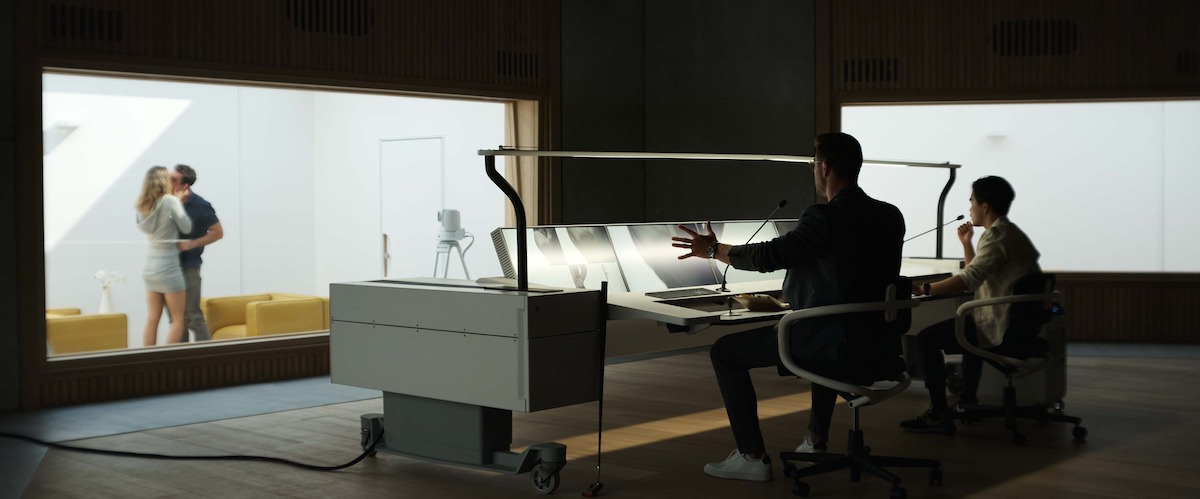
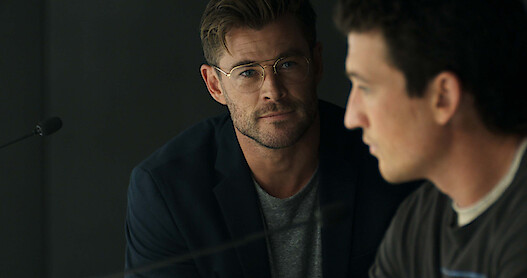
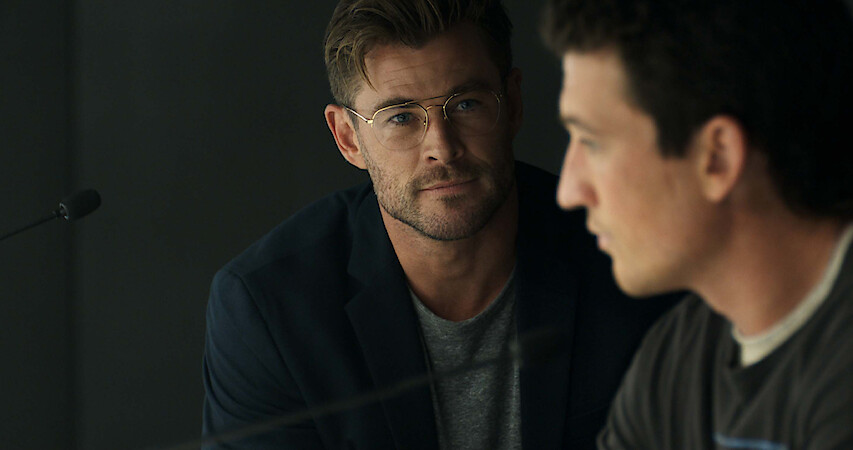
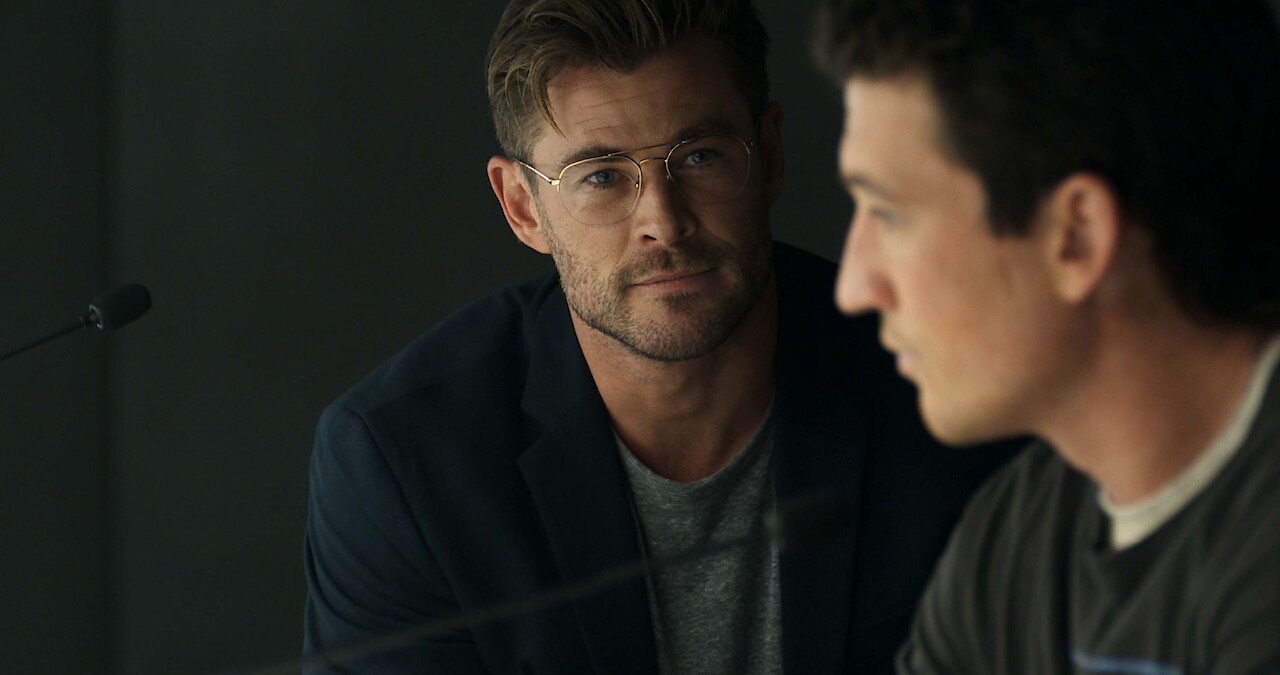
Abnesti observes inmates from his sleek control room.
The Spiderhead console chairs were VITRA Allstars, according to McIlvaney. They were created by German industrial designer Konstantin Grcic in 2014. “Jeremy designed the incredible console for the Spiderhead control room set,” says McIlvaney. “We wanted to find the perfect chair to complement and excel the design. We looked at so many amazing task chairs but the Vitra Allstar chair perfectly aligns with the same language as the console.”
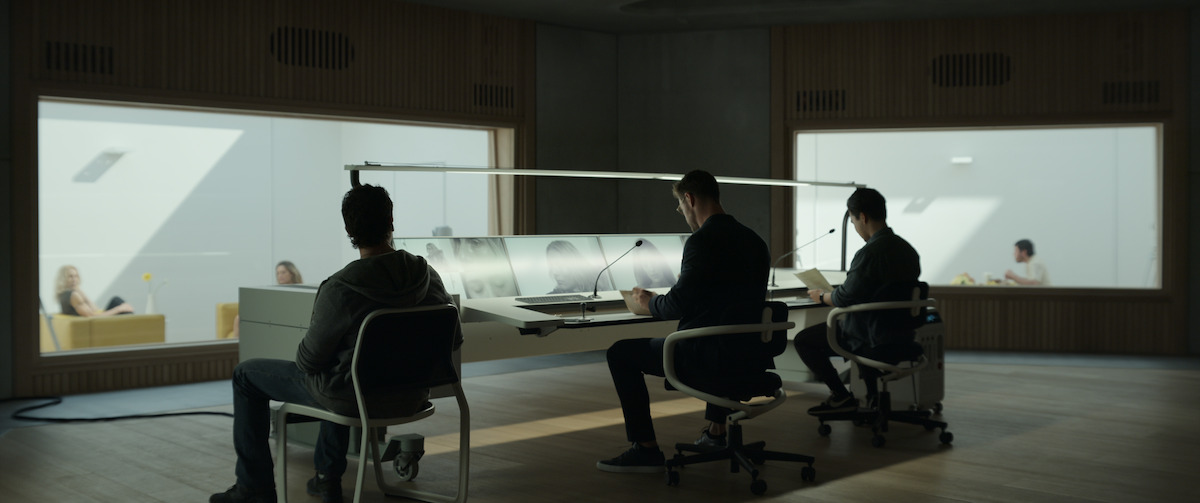
Jeff often views experiment participants alongside Abnesti in the control room.
Australian designer Marc Newson’s 2018 design makes a cameo in the Spiderhead office, says McIlvaney. “I have always loved Marc Newson designs. The Newson Aluminum Chair was the ideal Spiderhead control room addition, and the fact that he is from Australia was also a great opportunity to showcase a local designer in our set.”
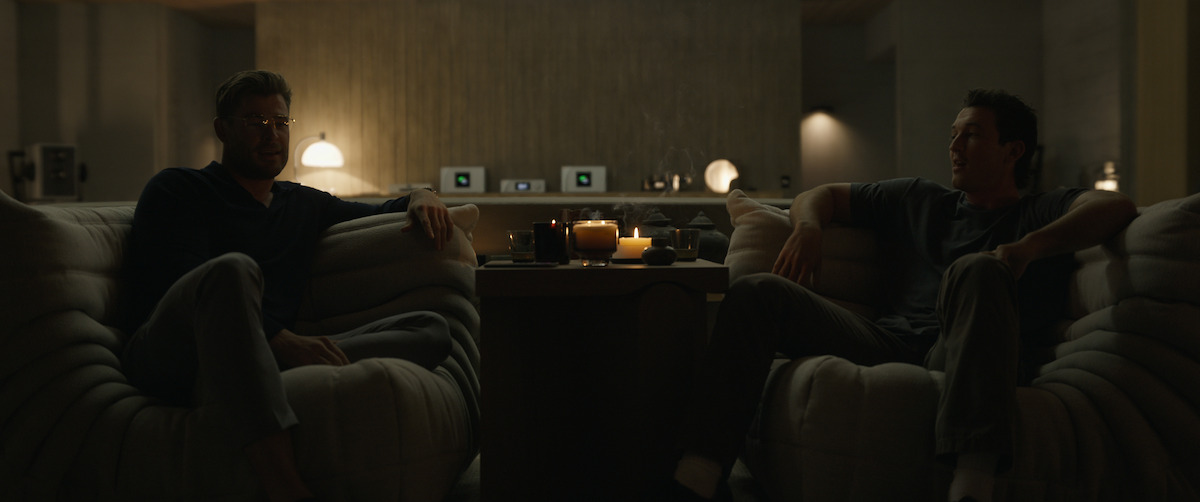
Jeff kicks back in the marshmallowy Togo chairs in Abnesti’s living space.
McIlvaney shares that the seating in Abnesti’s living quarters is the 1973 Ligne-Roset Togo chair from the French designer Michel Ducaroy. “Jeremy and I had these chairs in mind for Abnesti’s suite from the beginning, in part for the style within his brutalist design as well as the ultimate chair for the character, ” says McIlvaney. "It is a great visual chair for Abnesti to lounge in while he is experimenting with his own addictions.”
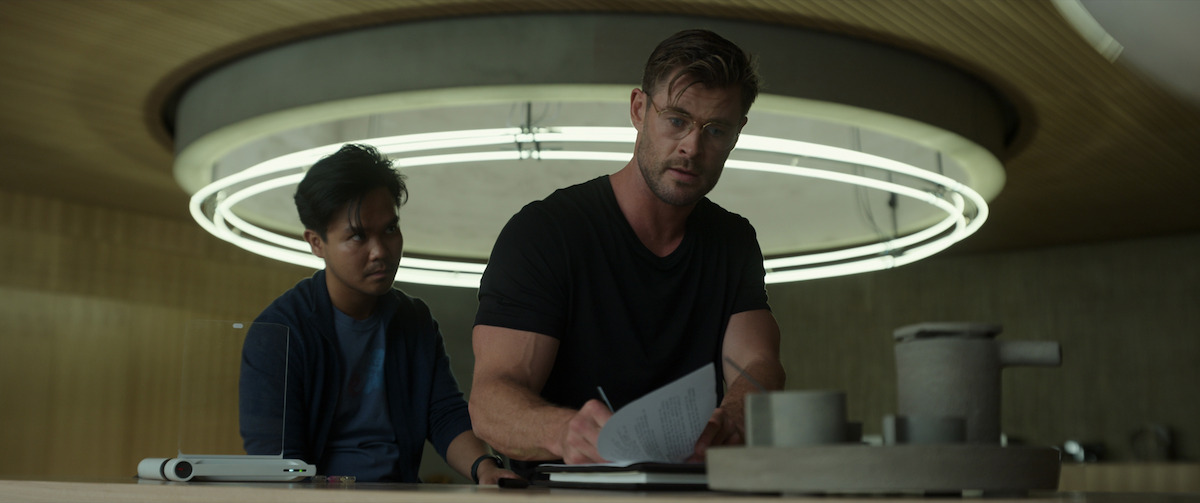
Even Abnesti’s concrete coffee pot showcases brutalist design.
Artist Frédérick Gautier’s concrete teapot, coffee cups and tableware were created as an homage to brutalism and its godfather, Le Corbusier. In an intense scene with Abnesti, they make a major cameo. “I found the coffee set in an incredible shop in Byron Bay,” says McIlvaney. "There is a lot of great design in Australia, even though there was still a pandemic, so we were also limited to what was available.”