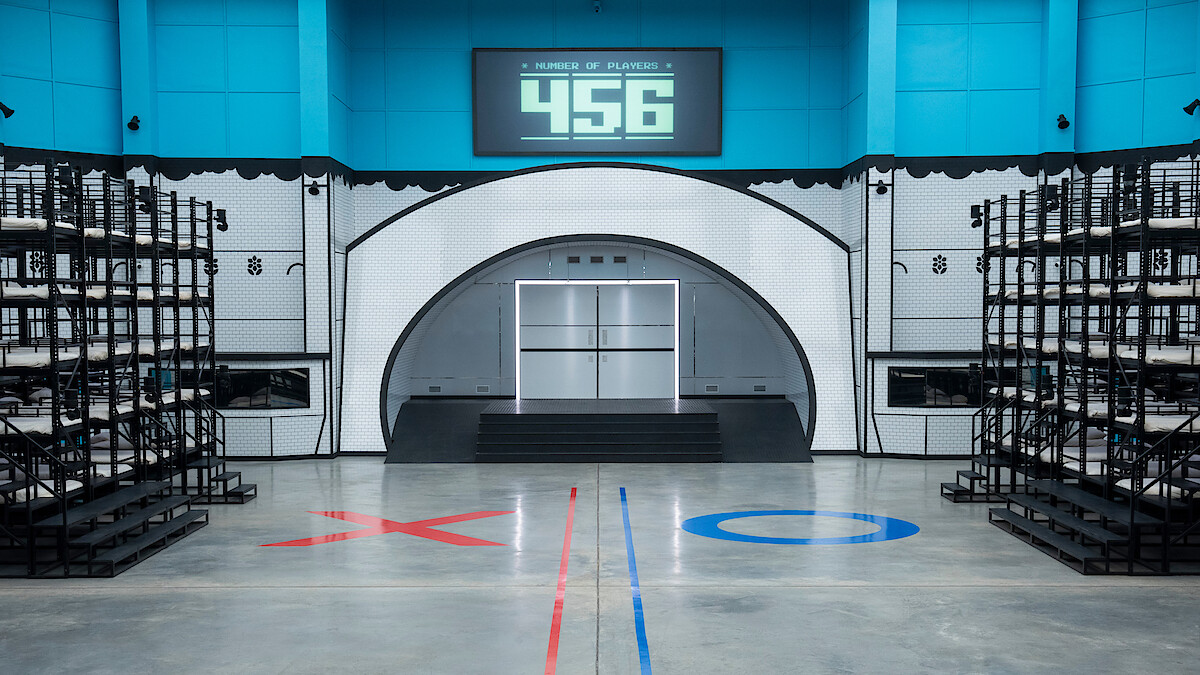
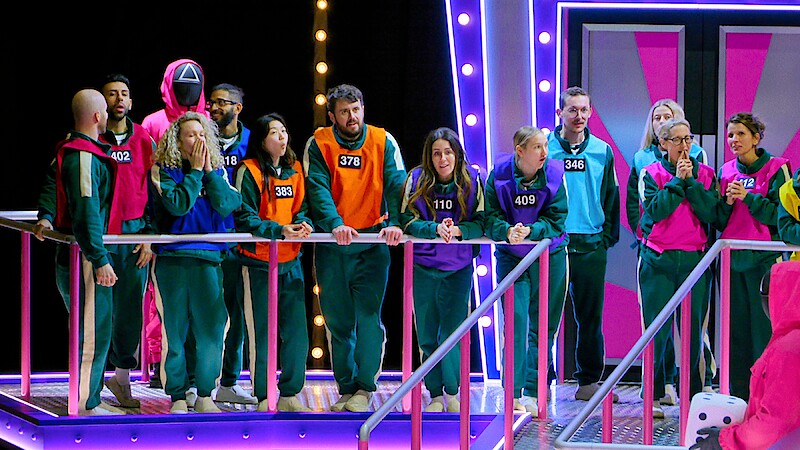
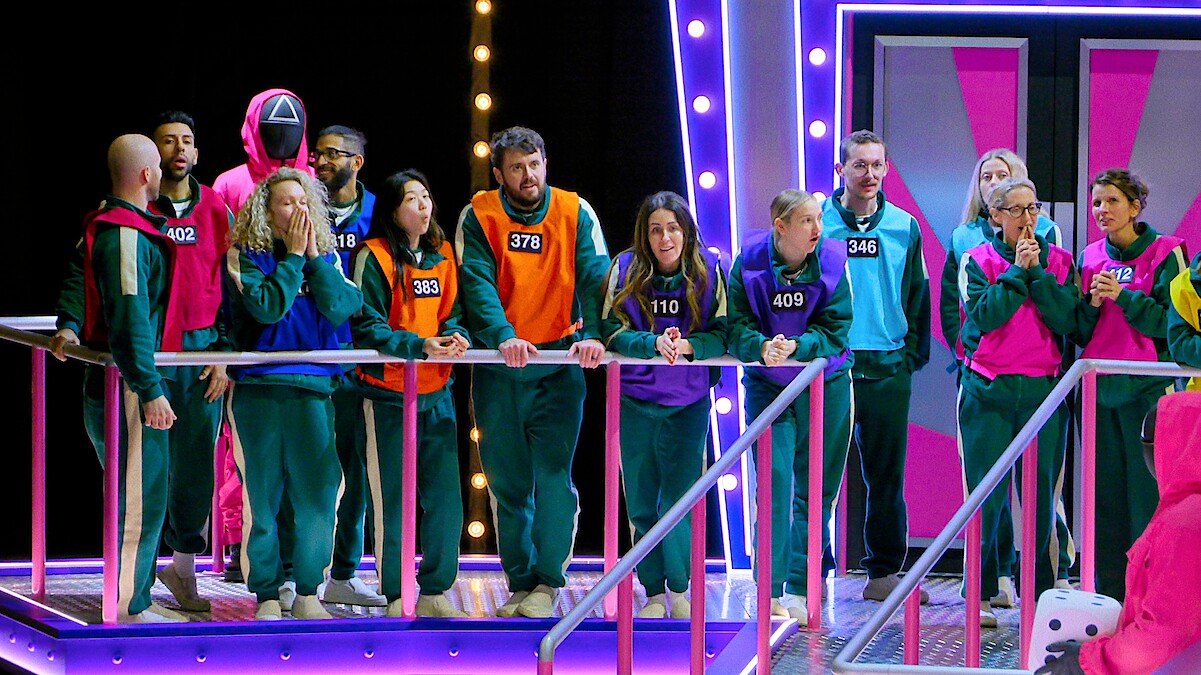
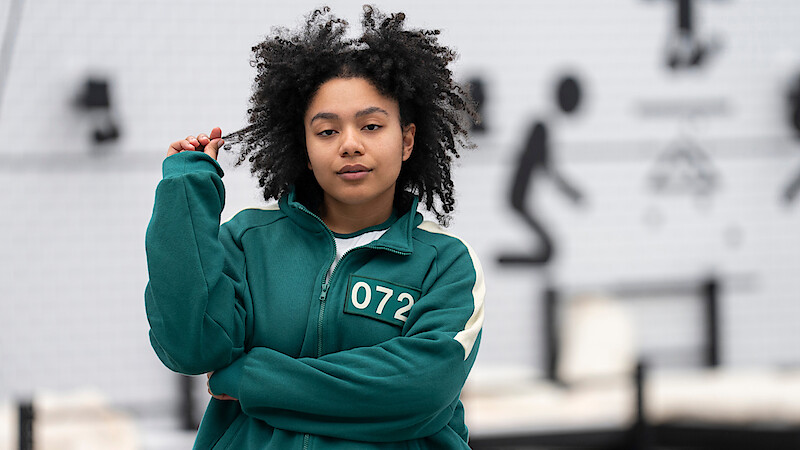
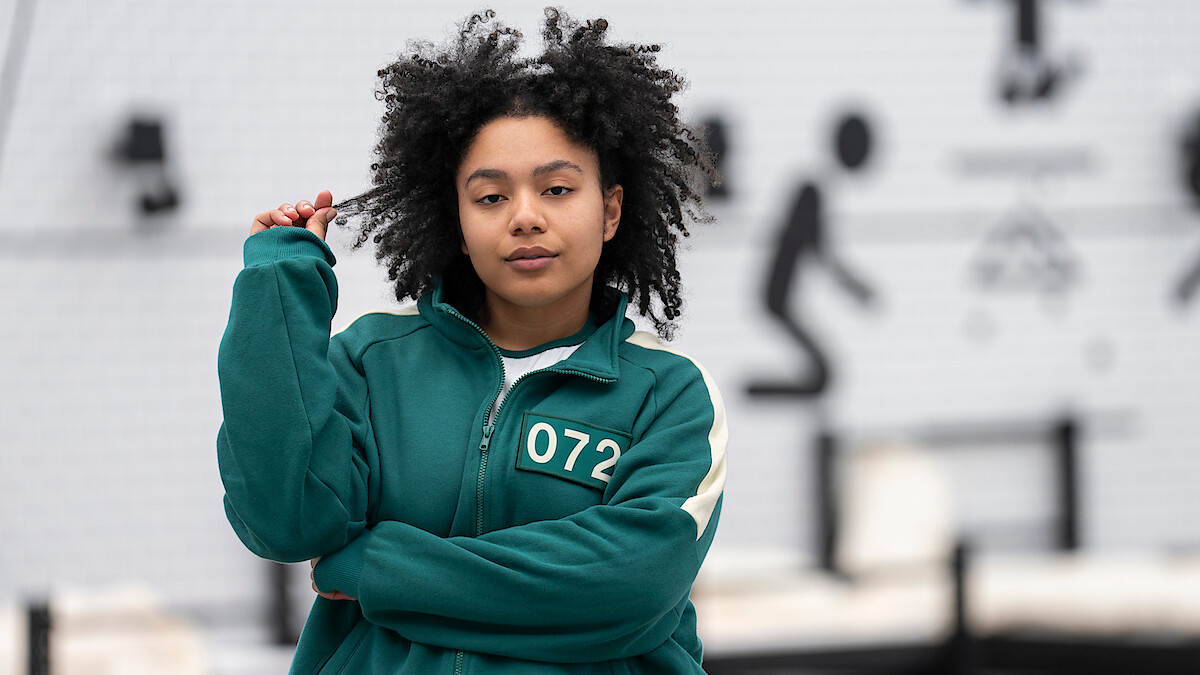
When the Squid Game: The Challenge Season 2 team began developing Mingle, no one realized just how complicated opening and closing a door could become.
Series Director Diccon Ramsay says the concept was lifted straight from a game in Season 2 of the scripted series, and presented one of the most daunting challenges of the season.
“Watching season two of the scripted drama,” Ramsay says, “the game that really stood out was Mingle, both because it looked incredible and because it looks terrifying to have to try and recreate.”
The setup
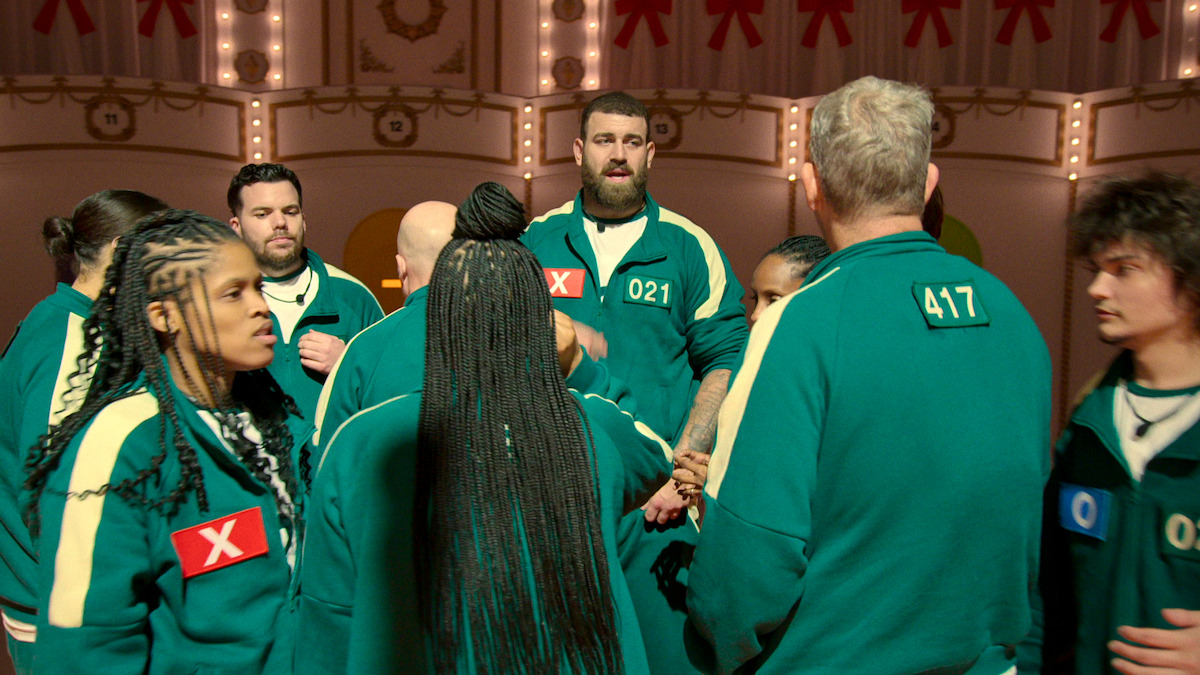
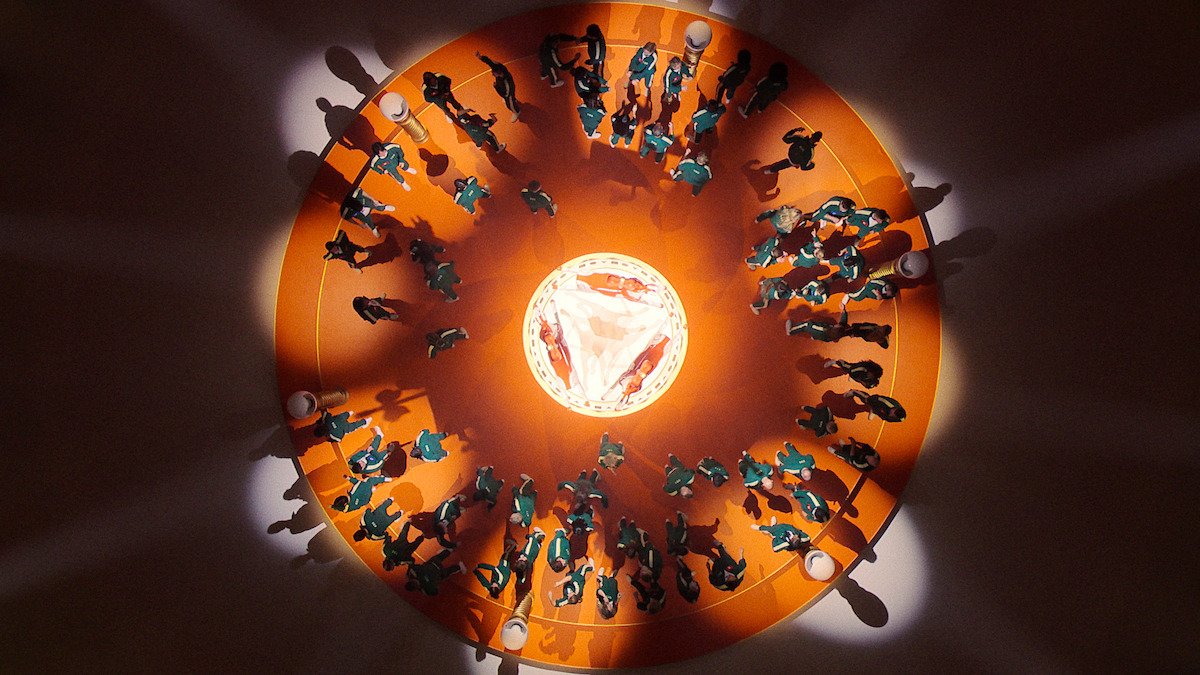
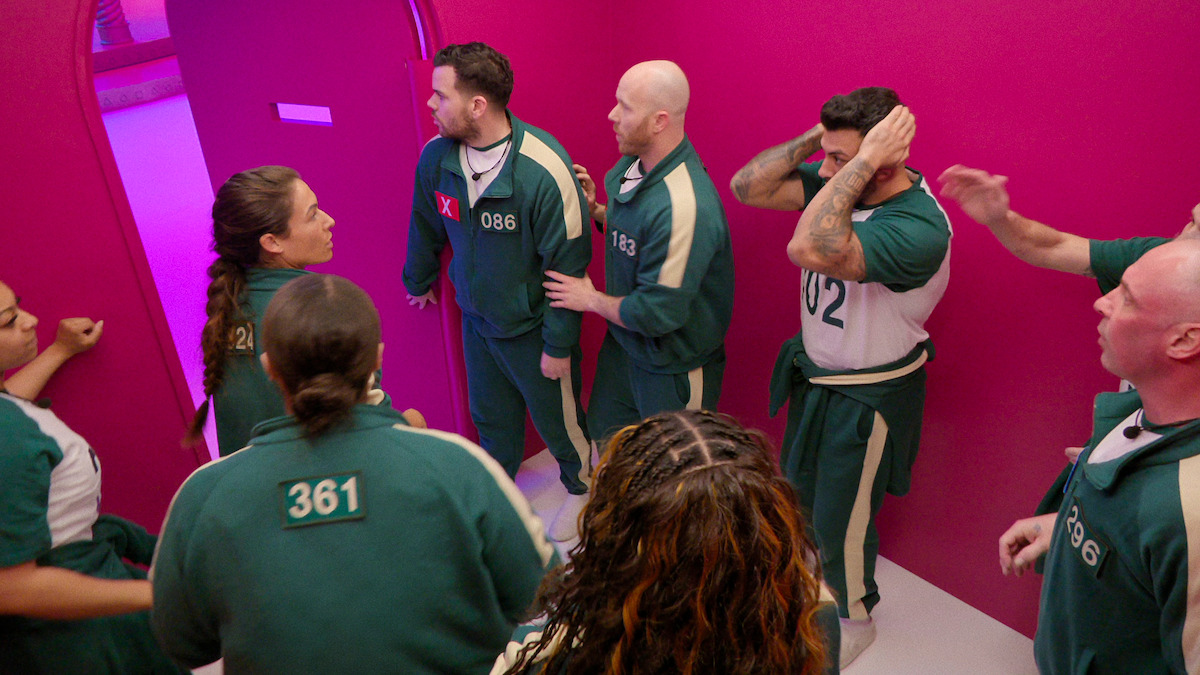
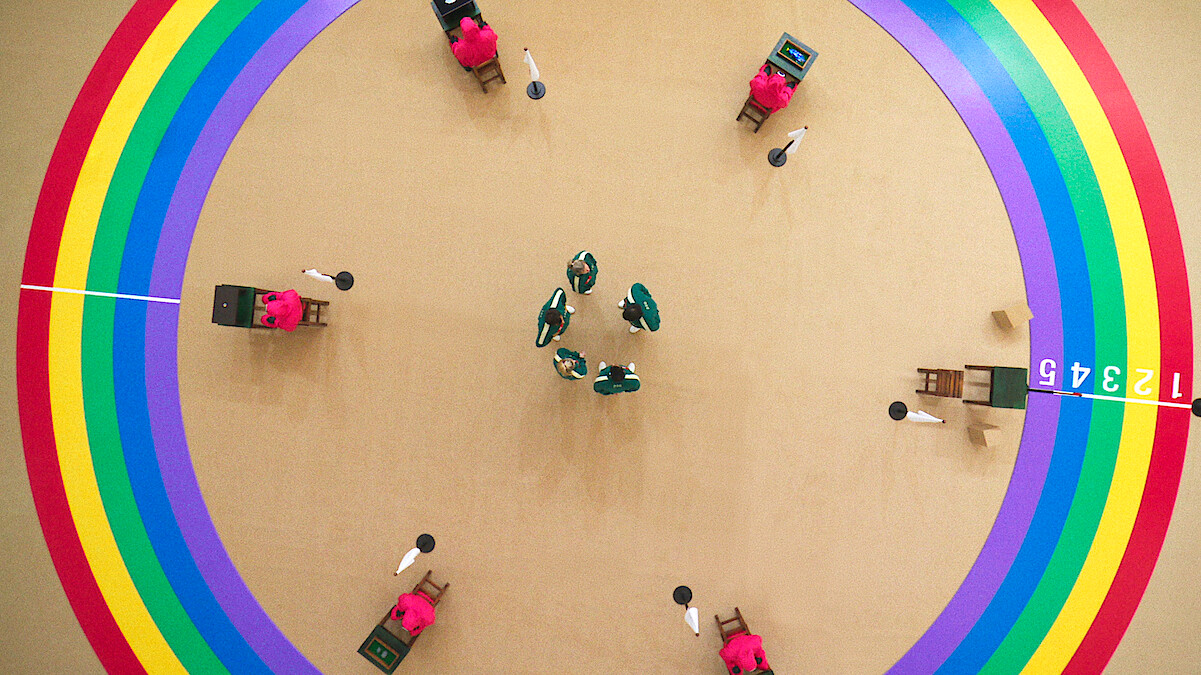
To play the game, contestants stood on a massive, rotating circular platform lined with bright, color-coded doors. When the carousel stopped, a number was announced: the exact number of players who had to quickly group together and step through one of the doors into an adjoining room. Anyone left outside, or in a room with the wrong total number of players, was instantly eliminated.
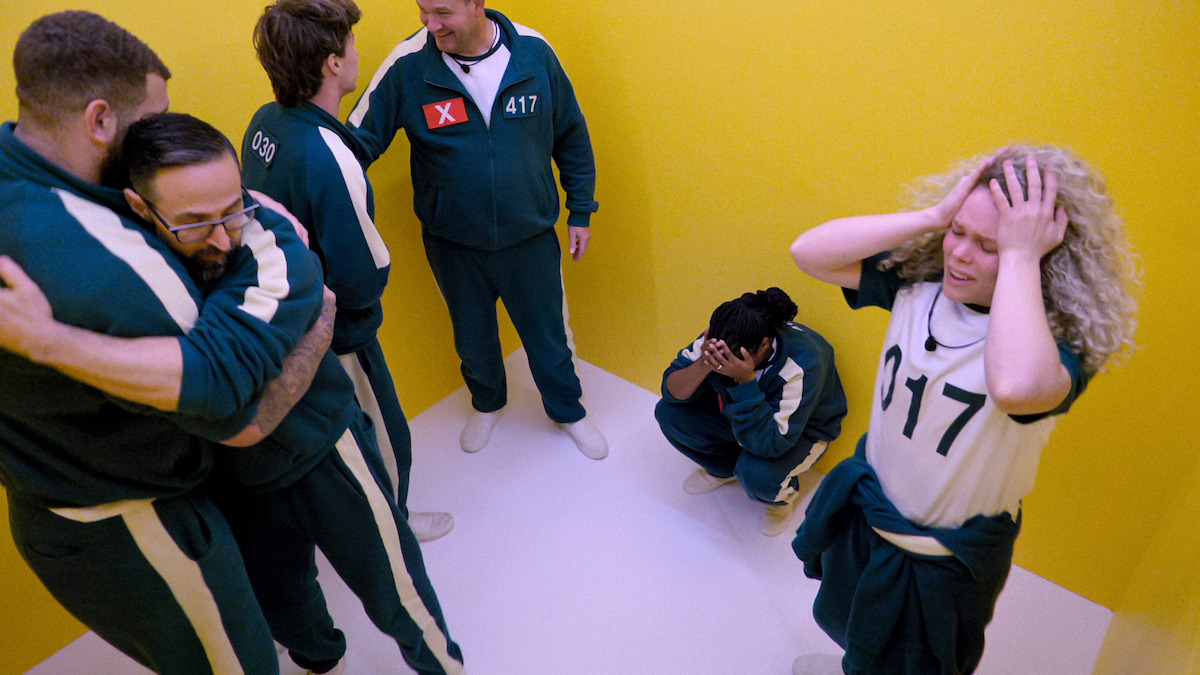
What sounds simple on paper became a logistical and emotional minefield in practice. As series producer Abi Lambrinos explains, “People are racing to get into a room with the right group size. Just opening and closing a door — something we do every day — suddenly becomes a risk when everything’s on the line.”
To keep players safe, the crew designed an entirely new door system.
“We put guards over the hinges, and we looked at dampeners to soften how the doors close,” Lambrinos says. “We built prototype doors in the workshop and sent our health and safety consultant to open and close and slam the door with the dampener hundreds of times to test.”
A 90-camera circus
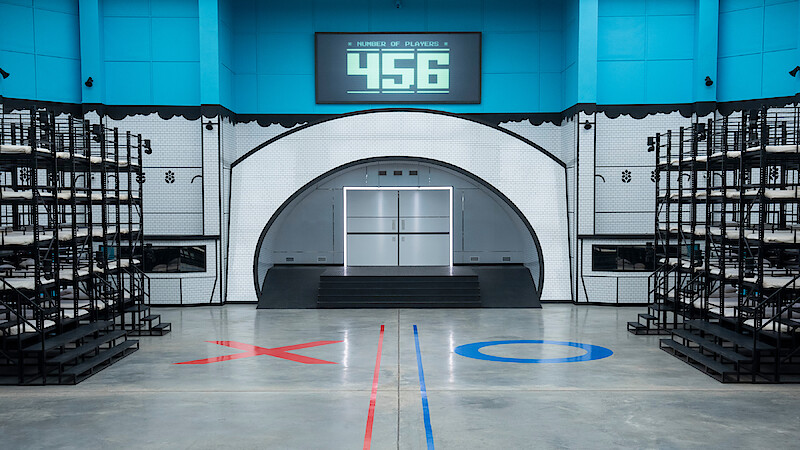
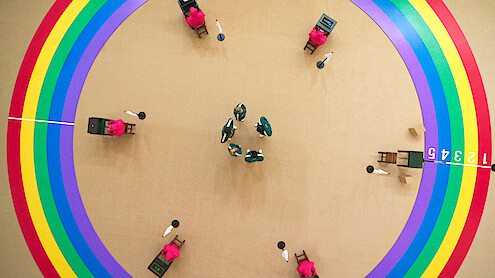
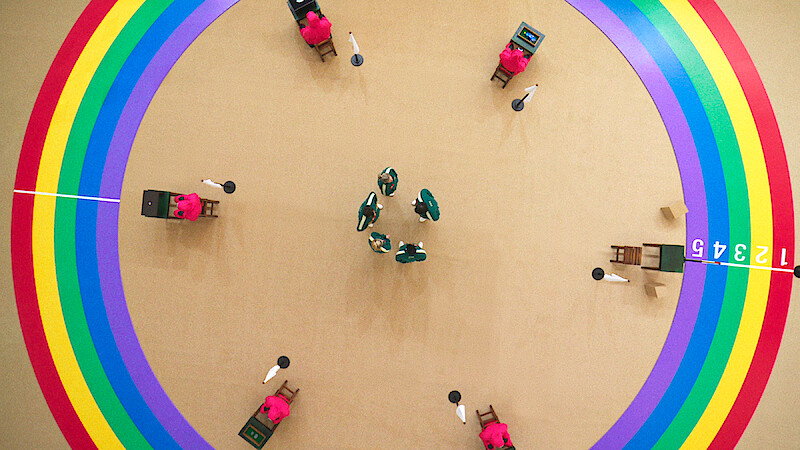
Mingle’s scale was staggering: 17 rooms, a spinning carousel, and dozens of contestants chasing millions.
“It had a total of 90 cameras on it,” Ramsay recalls. “It split over five different galleries and involved pretty much the entire editorial team.”
Executive games producer Anna Kidd remembers the challenge of keeping up with the action. “In a reality show, you have to be poised to find the drama and ready to follow it wherever it unfolds,” she says. “We had 90 cameras ready to film whatever happened, whenever it happened.”
At first, contestants arrived with alliances and careful strategies, none of which survived the first few rounds.
“Everybody had a plan until a number was called, and then suddenly you slip into survival mode,” Kidd says. “The players had real bonds, but those went out the window fast. People just wanted to protect themselves.”
“It was thrilling, scary, but fun all at the same time.”
For players, that survival instinct kicked in the moment the platform started to spin.
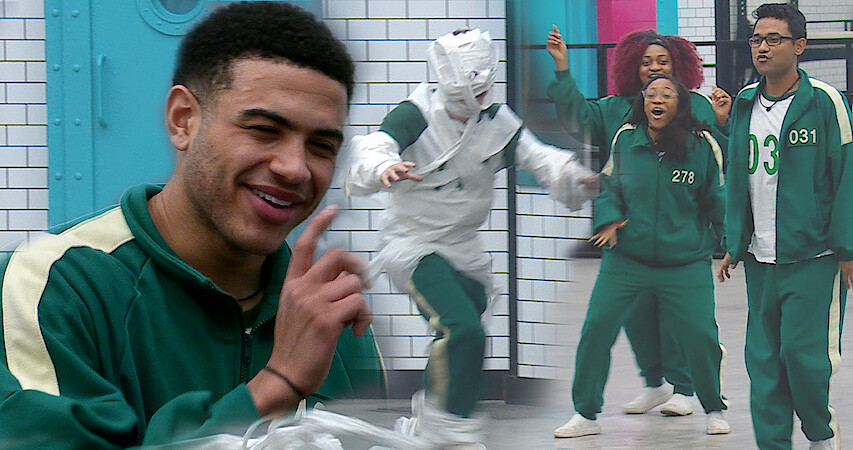
“Mingle was by far the most intense game ever,” says Zoe, Player 369. “I don’t think anyone was expecting it to get as physical as it did. I like to say you could send the B-roll footage of Mingle to a university study on human behavior because people were acting just so crazy.”
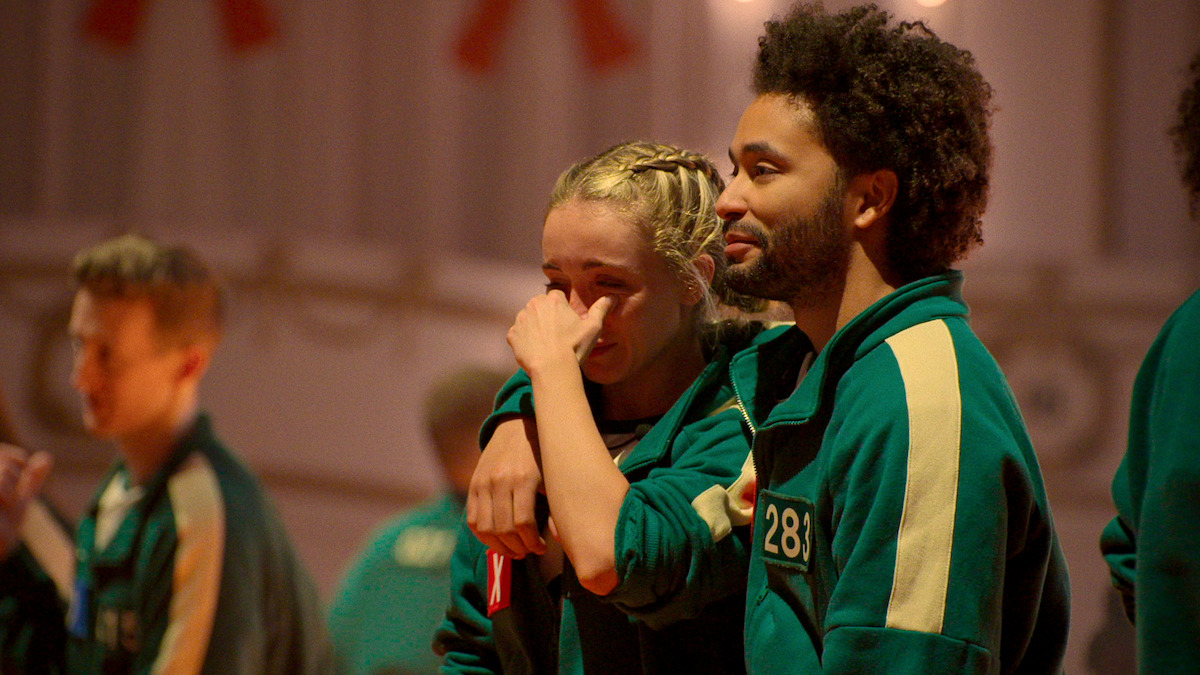
August, Player 111, agrees. “The chaos onscreen doesn’t even fully encapsulate the intense and overwhelming emotions the games brought out.” Faith, Player 361, meanwhile, describes the game as “the worst thing I’ve ever gone through in my entire life.” She adds, “I’ve never felt so scared, so panicked, so distrustful and unsure of what to do, where to go, and how to do it.”
Even seasoned athletes struggled to stay composed. “I had to remind myself to stay calm because that’s super important in Mingle,” says Claire, Player 409. “I knew I had to make myself useful to whatever group would take me. So I was trying to play the numbers game — counting how many people were eliminated in each round so I could figure out what potential numbers would be called. My heart was pumping the entire time.”
Melissa, Player 110, meanwhile, thrived on the chaos. “I was very excited for Mingle and I also was very prepared,” she says. “That morning before we played, I went around the dorms and inserted myself in a couple of different alliances. I remember looking up at the ceiling — they had the strobe lights going — and I was so excited. I wasn’t necessarily scared. I was one of the ones dancing on the carousel. For me, it was thrilling, scary, but fun all at the same time.”
Zoe entered the game alongside her father, Curt, Player 370. That partnership added both pressure and perspective.
“When we went through the first couple of rounds and hit our numbers, [we thought] ‘OK, we’re good,’ ” Curt recalls. “Then alliances started to break. People started stealing your people. Then it got more emotional. You started to get angry at people, you started blaming people — people accusing other people. It was a test of human character for sure.”
The revolt
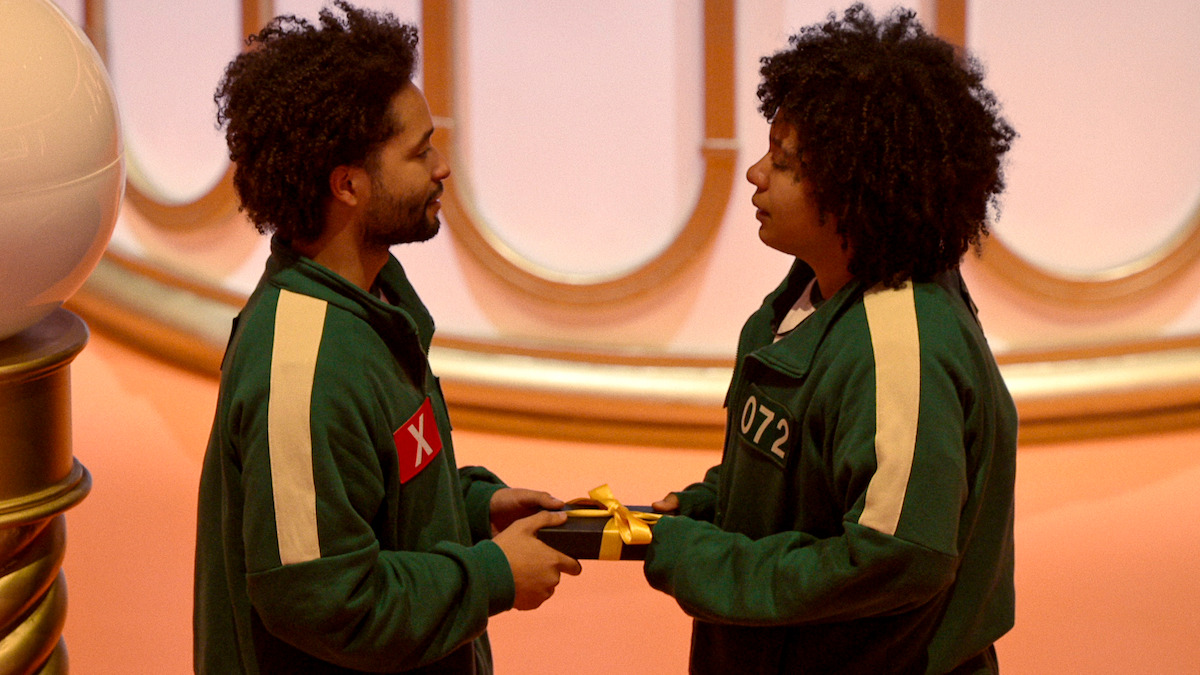
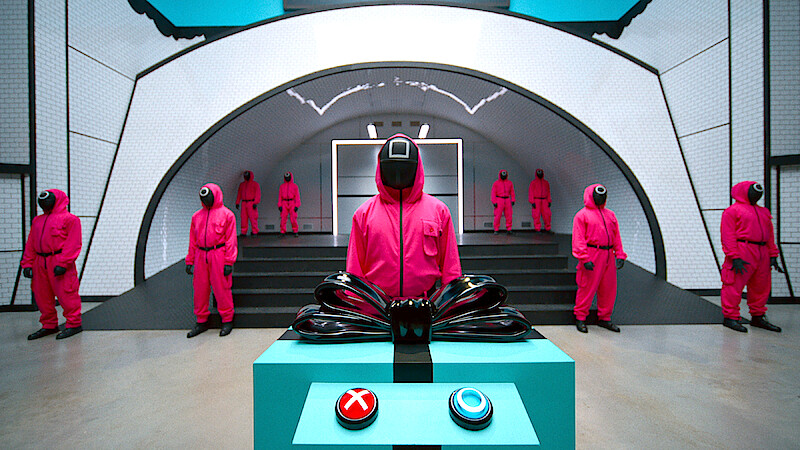
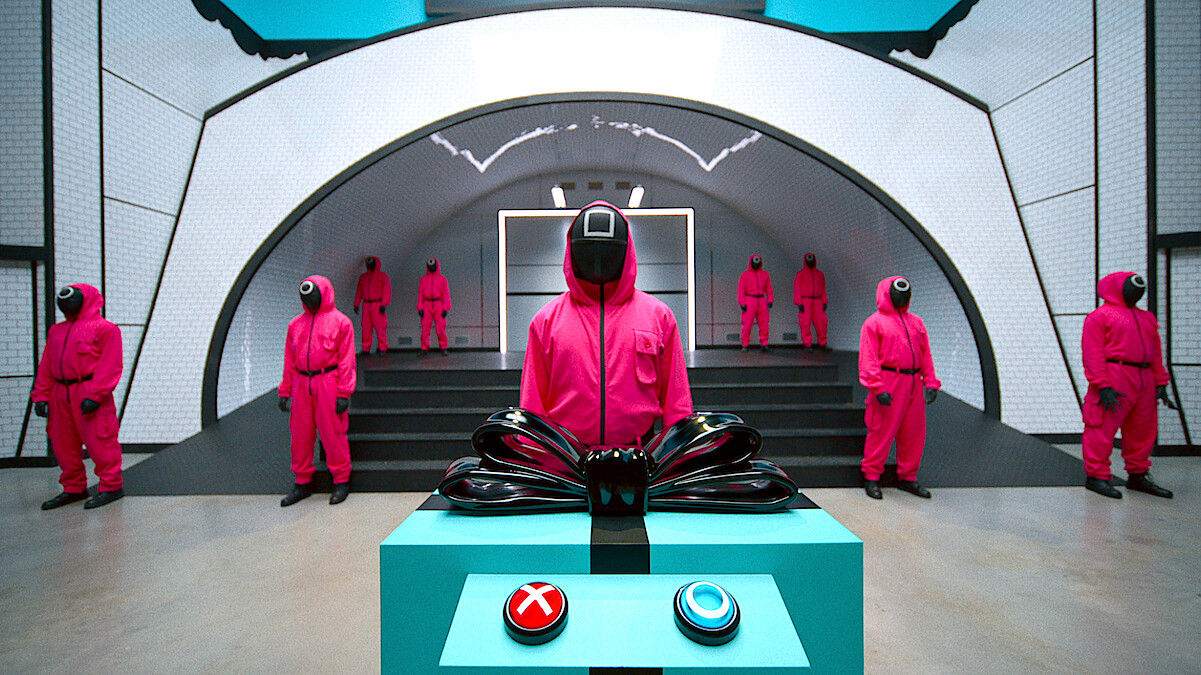
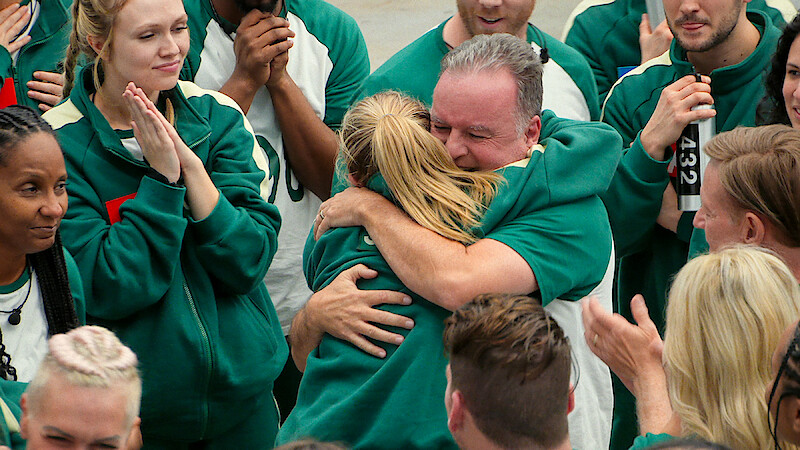
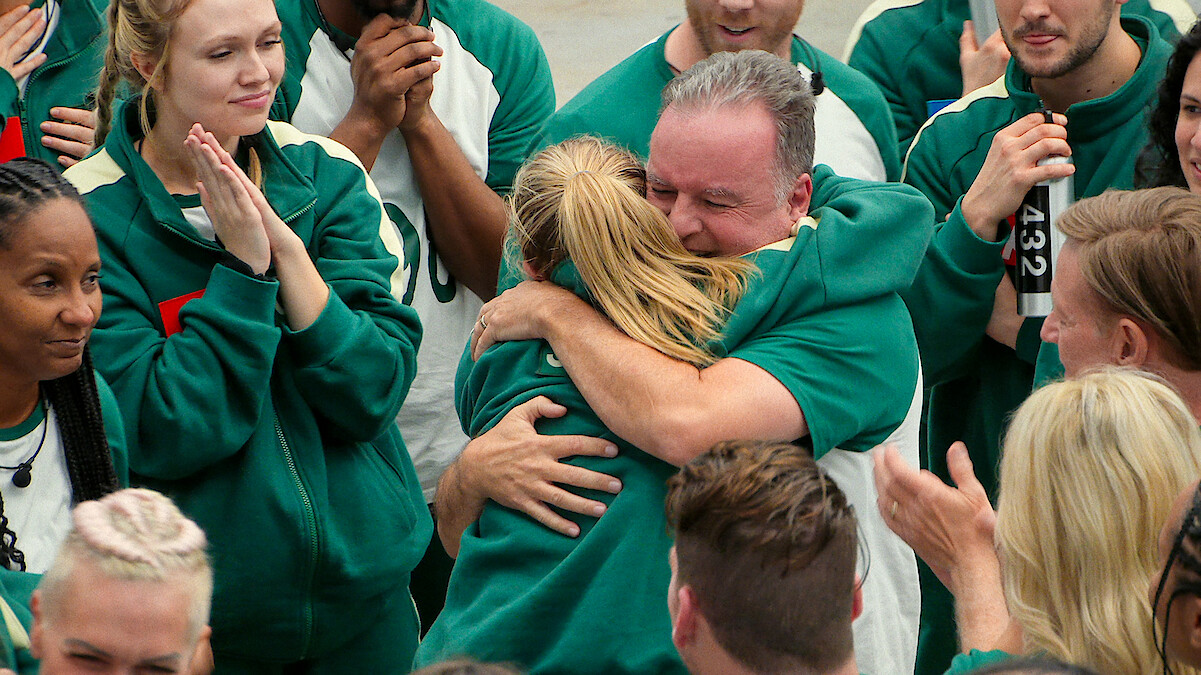
Round after round, contestants were eliminated, and those who remained grew increasingly tired and tense. Eventually, the players made a collective decision to stop: when the announcer called “2,” they joined hands and refused to continue, bringing the game to an end. “We were so gassed, mentally, physically and emotionally,” Karim, Player 437 recalls about the choice to stop the game. Their decision prompted the Front Man to appear in person, hand-delivering a gift that revealed the next challenge: Marbles.
But, while the players’ decision to stop the game was all their own, the unexpected moment laid the groundwork for the twist to come.
“It didn’t come as a surprise, because we could see the players’ growing frustration with the game and the difficult decisions they all faced playing it,” says executive producer Tim Harcourt. “The original intention had always been to bring out the Front Man and the guards with the marbles. However, the last round was meant to see all players pair up into twos and then run to a room. In these rooms they were all to have their box of marbles posted through the letter slot on the door.”
Harcourt says the team quickly adjusted their approach to instead introduce Marbles amid the player revolt.
“It was a powerful moment,” executive producer John Hay adds, of seeing the players band together. “We’re always looking for responses to the games that reveal character and this felt like a particularly heightened form of that.”
“In planning this season, we thought long and hard about how to make Marbles a surprise,” he adds. “No one was going to fall for the ‘picnic treat’ a second time around. Having the game come straight off Mingle was part of that, and would have been enough on its own. But in the end, the revolt proved even more of a distraction — and the pairings players chose in that dramatic moment made the games of Marbles that followed even more intense.”
Capturing the chaos
For the crew, filming that human unraveling was its own high-wire act.
“There’s no way of mirroring [test players’] behavior to the behavior of people who are in the middle of the game,” Ramsay says. “We had to put a whole series of processes in place to capture those conversations — both in the arena and in the rooms around the outside.”
Ultimately, the gameplay itself pushed contestants to their limits.
“In this game, the alliances you think you have might not necessarily help you,” Ramsay continues. “You have to play as an individual. If you need to jettison your friends to make sure you survive, then that decision has to be made at the spur of the moment.”
Production designer Mathieu Weekes oversaw the engineering of Mingle’s colossal carousel. “It had to revolve, power cameras … and we had to devise a way of getting cameras on that didn’t impair the look,” he says. The result was both technically and narratively intense.
When filming began, control gave way to chaos. “With best plans made, everything went out the window once they got on the revolve — it was almost survival of the fittest,” says Weekes.
Executive producer John Hay says that unpredictability is exactly what makes Mingle so fascinating to watch. “Mingle is a game where you go into it making all sorts of promises about who you’ll stick with, and in the moment of decision you split,” he says. “And that’s a fascinating human story.”