
Behind the Scenes
Gimme: The House from ‘The Adam Project’
When can we move in?
By Olivia Harrison
March 12, 2022
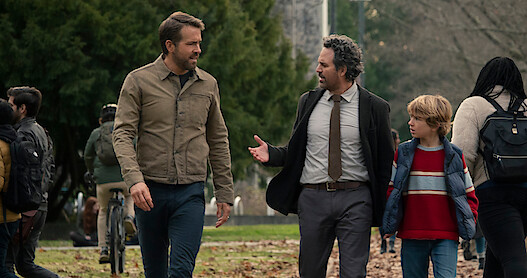
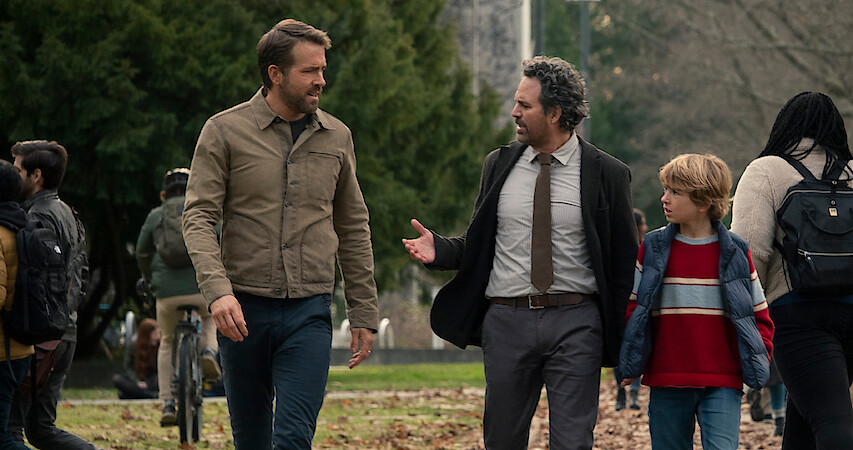
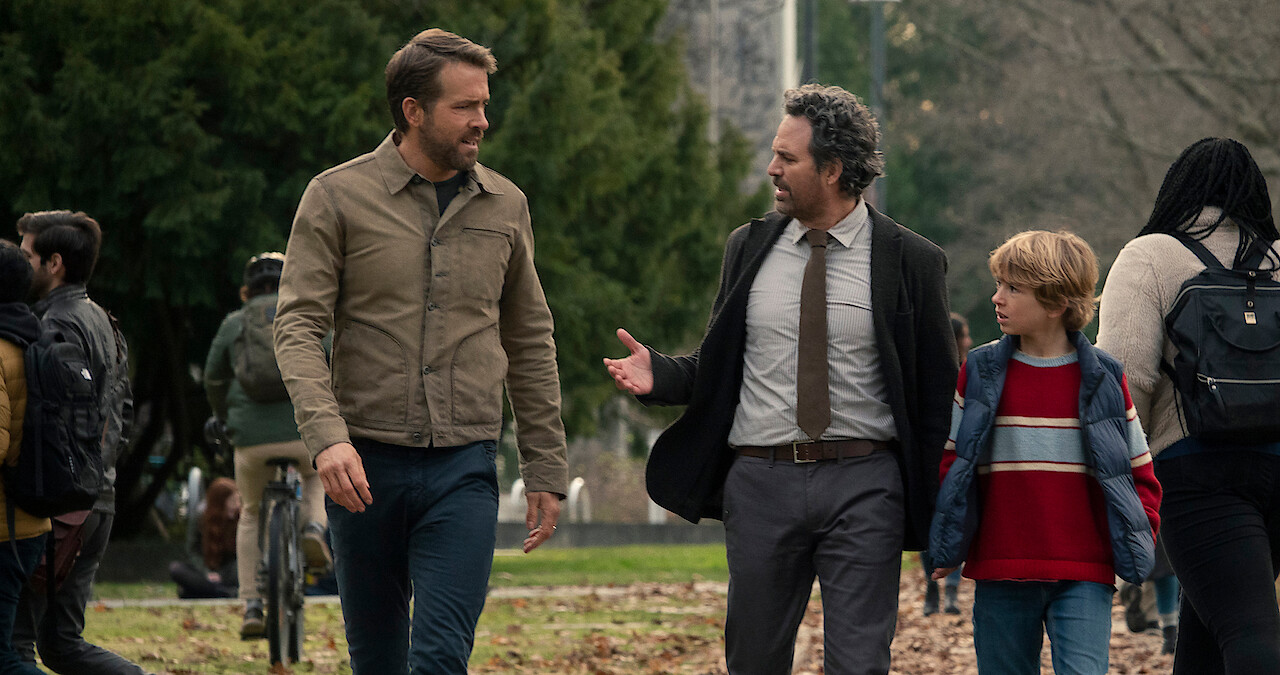
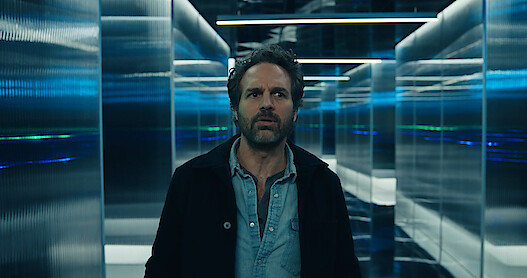
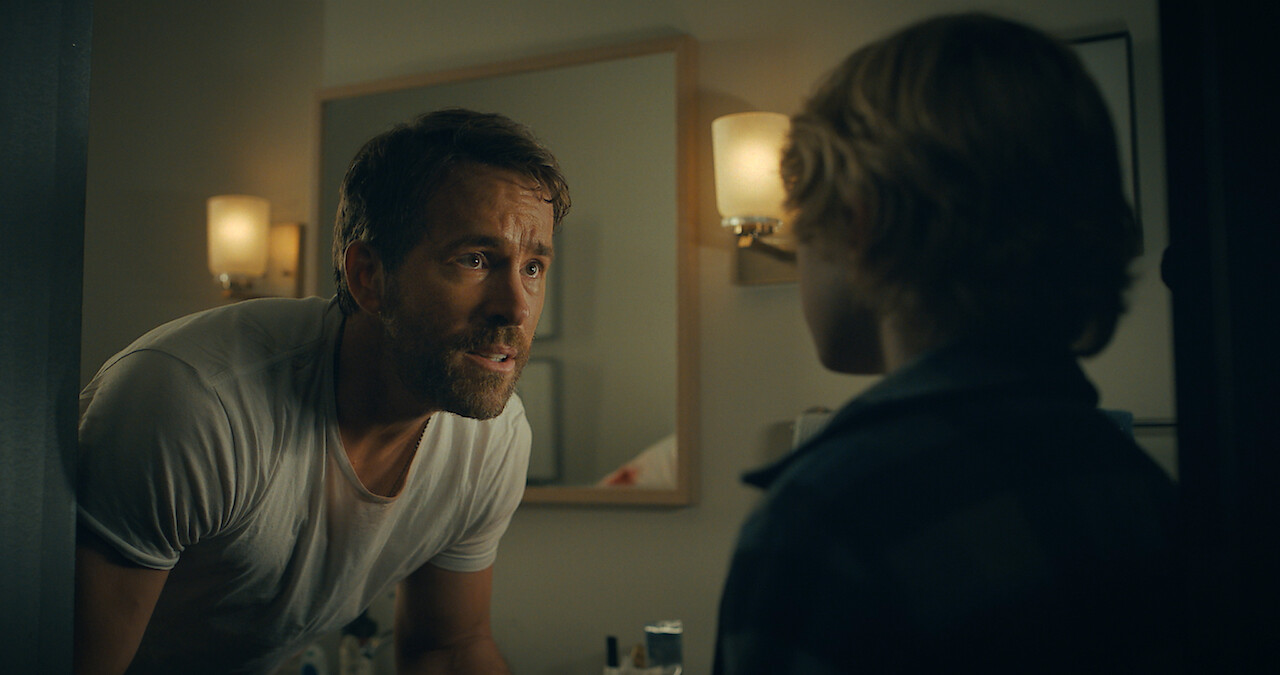
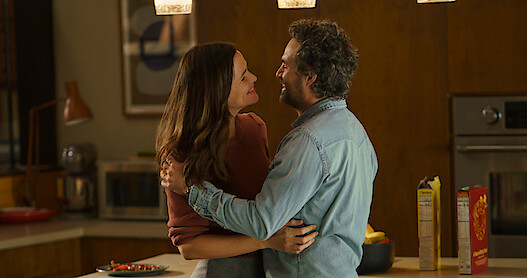
Ryan Reynolds. Jennifer Garner. Zoe Saldaña. Mark Ruffalo. There are a lot of big stars in the new sci-fi film The Adam Project, but one of the biggest might just be the mid-century modern house at the center of the story. Ruffalo, who plays physicist Louis Reed, father of the titular Adam, sure thinks so. The film’s production designer, Claude Paré, tells Tudum that the first time he and Ruffalo met, “Mark came to me, and he spoke to me in French, and he told me, ‘Claude, I thank you so much, because when I walked in my garage, I knew immediately who the character was.’” Ruffalo even got down on his knees in gratitude, thanking Paré for the set design.
This exchange isn’t just another example of Ruffalo’s enduring appeal. It also illustrates the vital role Paré’s designs play in The Adam Project. The Reed family’s garage, which Paré says he and his team filled with stuff that the physicist would’ve used to make his “lair,” is just one part of the charming home.
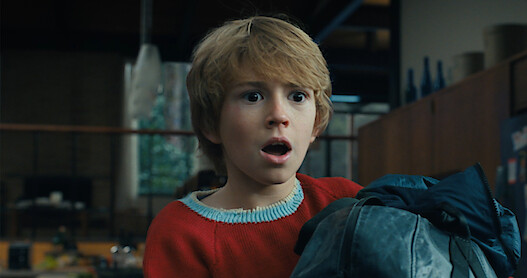
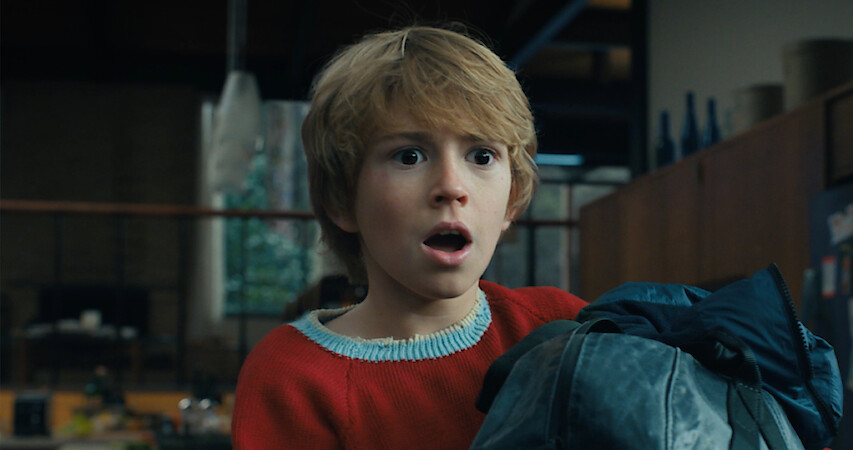
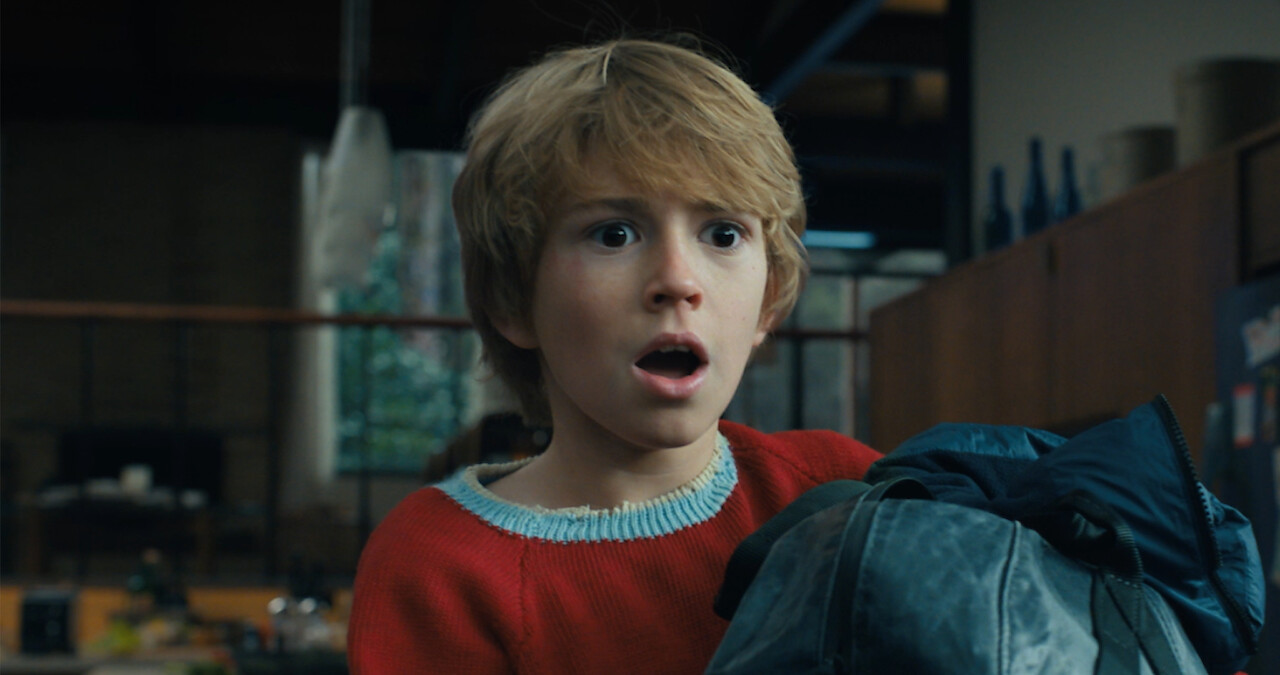
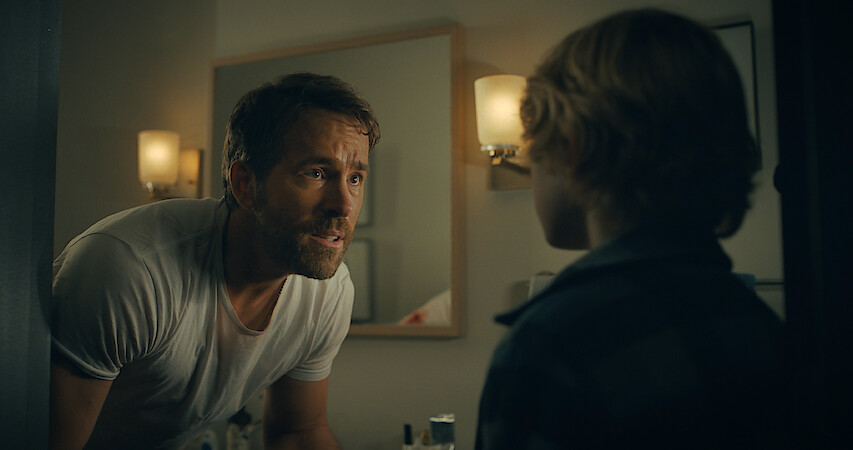
The open-concept, mid-century modern house features lots of wood grain and an architectural style that Paré describes as inherently “manly.” However, it’s complemented by the softer, yet still period-appropriate decor that the production designer imagines Louis’ wife, Ellie (Garner), picked out, like the George Nelson saucer bubble lamp hanging over the Saarinen Tulip table. There’s also a layer of melancholy that’s settled over everything that isn’t part of the aesthetic but explains a lot about the family who lives there. “We added real-life touches, like the laundry hamper, kids’ toys, school work and grocery bags,” Paré explains. “The idea was to make it look like the mom wasn’t quite on top of keeping the house together because of her busy life and because she’s been a single mom for a year or two.”
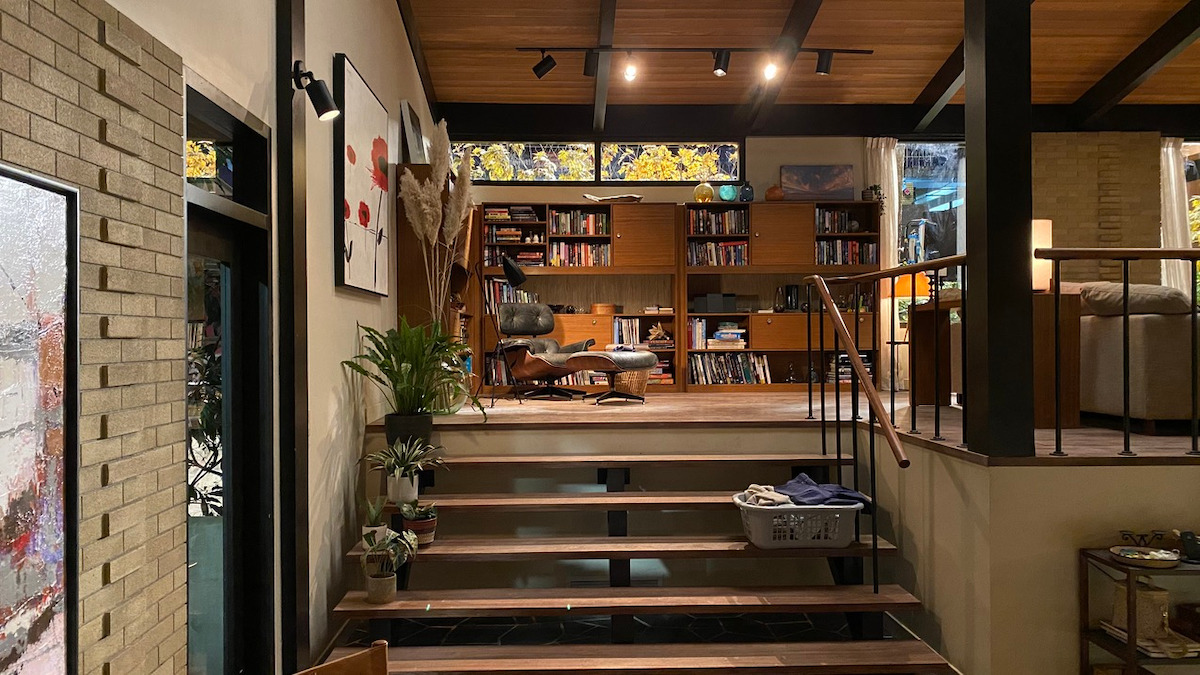
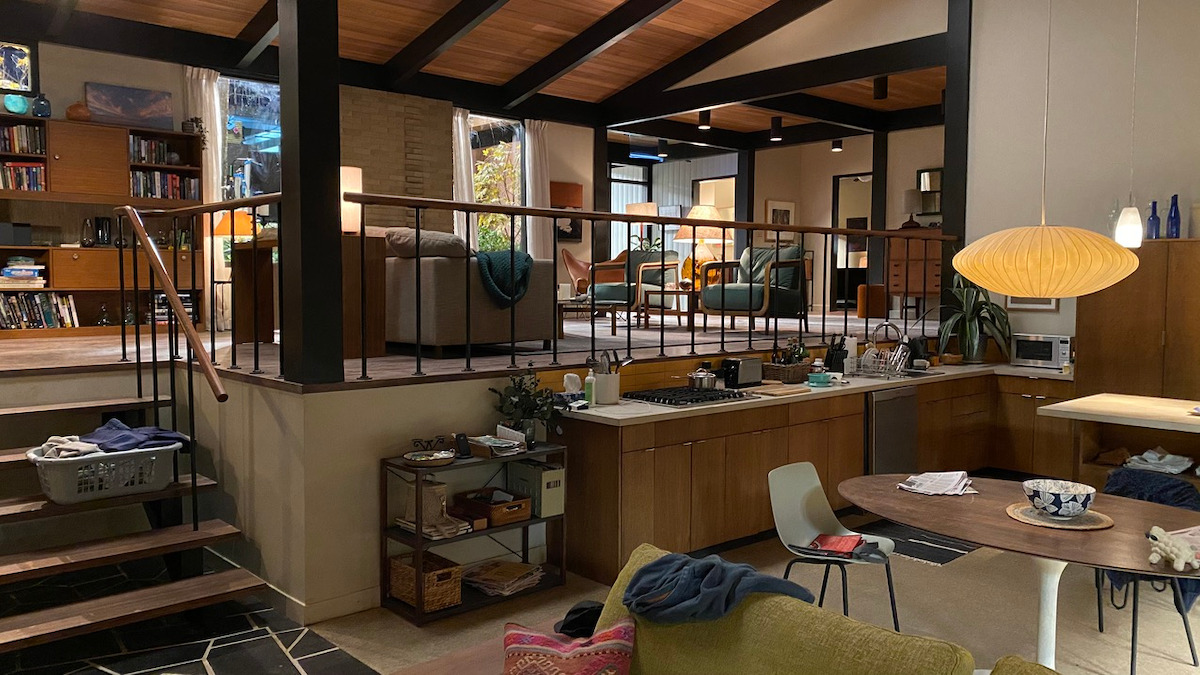
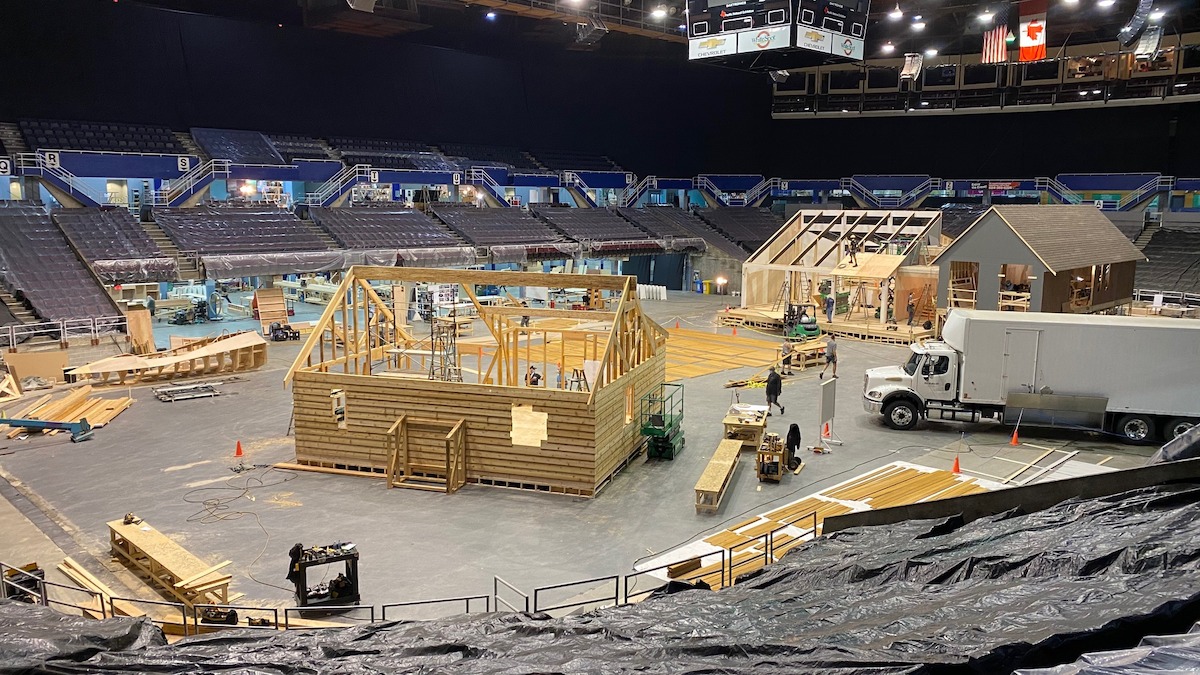
That lived-in quality was important to Paré and his team, and it’s why they chose not to fill the home with only highly curated pieces. “We threw in lots of real and human elements. Like for [Louis], we had his reading corner, and we shopped a lot on Craigslist and Facebook Marketplace,” Paré shares. “For the living room, we went to Pottery Barn, and we got some amazing secondhand furniture that we found to compose the actual dressing of the house.” This collection of different pieces came together to make the covetable house look like a home, which was key since the house actually wasn’t a house at all — it was a set constructed on a Vancouver soundstage in just two months.
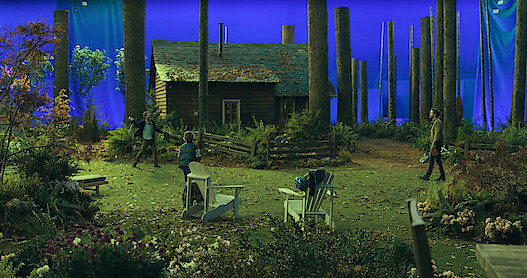
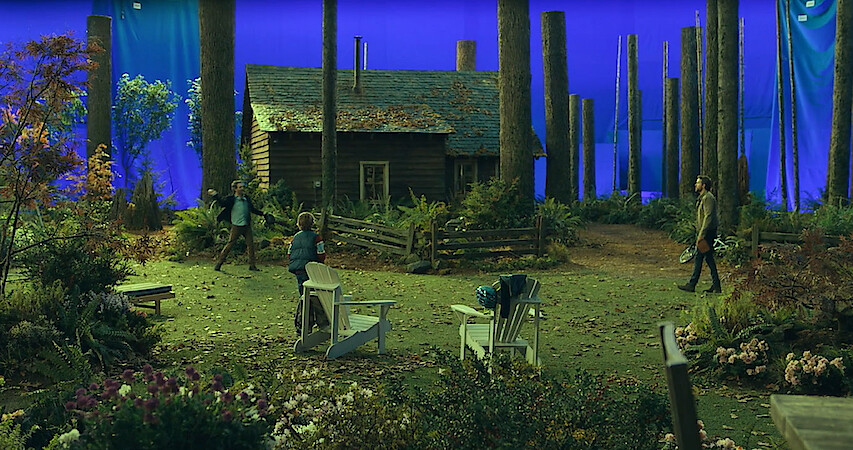
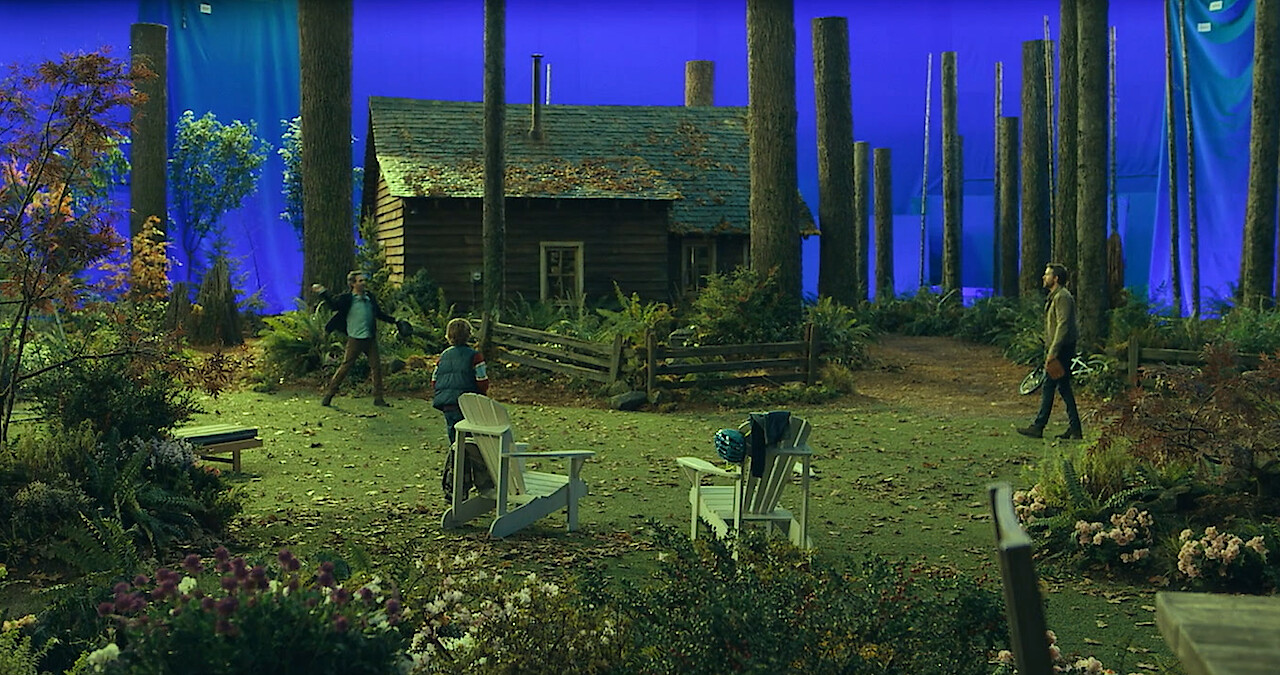
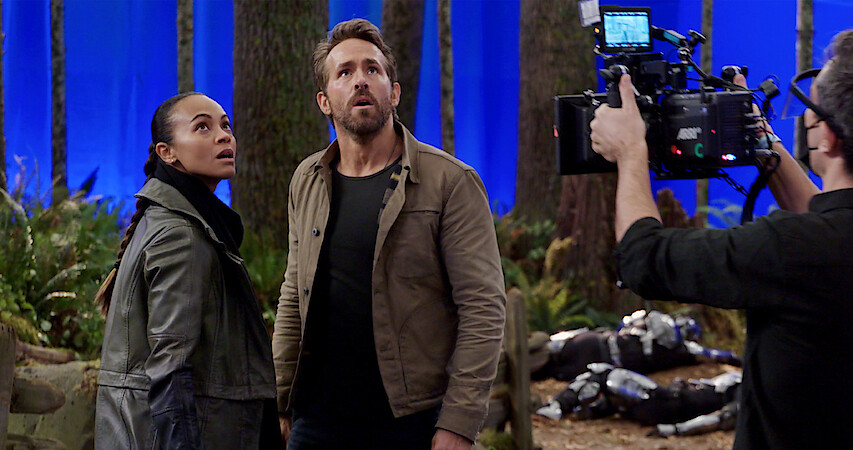
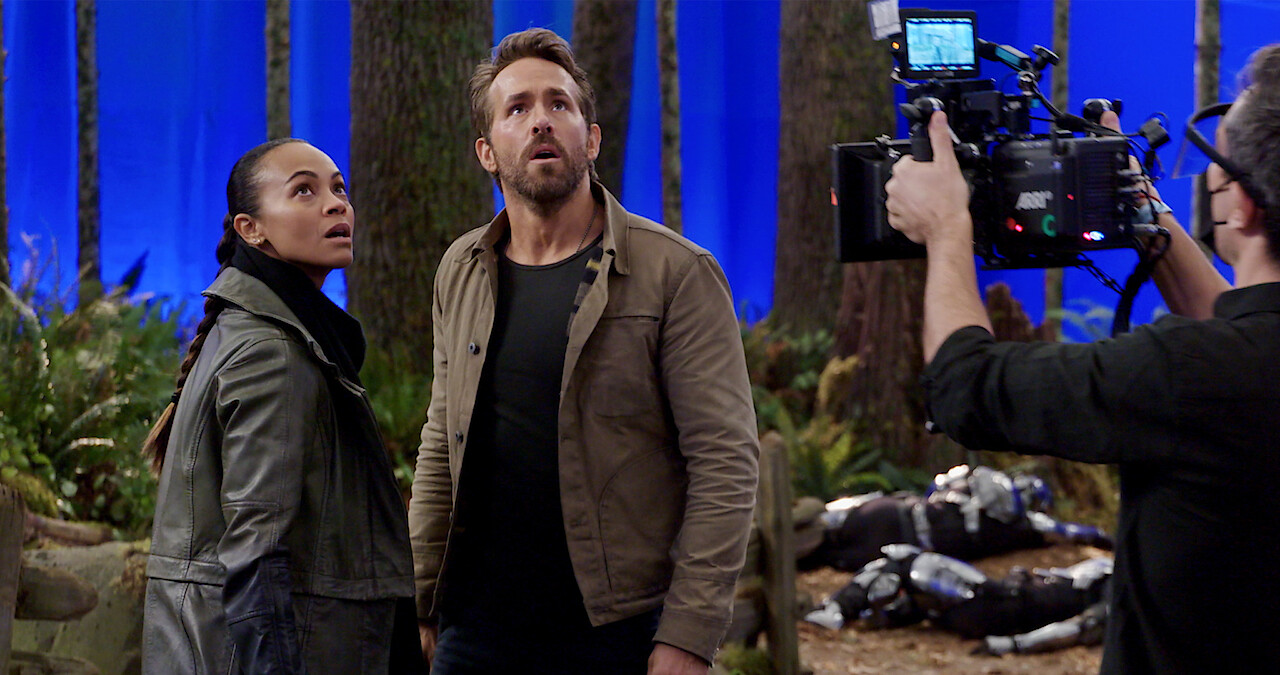
That’s right, if you’re among the many people dreaming about moving into the Reeds’ home (or one just like it), you’re in for a wake-up call. While real houses are often used on movie sets, Paré says he took this approach because so many of the film’s scenes were set at night, and it would be easier on the actors and crew if they were able to shoot the night scenes during the day. His prior experience creating entire locations on soundstages through his work on films like The Rise of the Planet of the Apes helped him know what was possible to achieve.
When it came to designing the house, Paré wanted the layout to be as open as possible for filming purposes, so he proposed a split-level configuration, which is “very cinematic,” he says, because it allows for a full view of the house from the outside and a full view of the yard from inside. “You see all the different levels from one standpoint,” he explains.
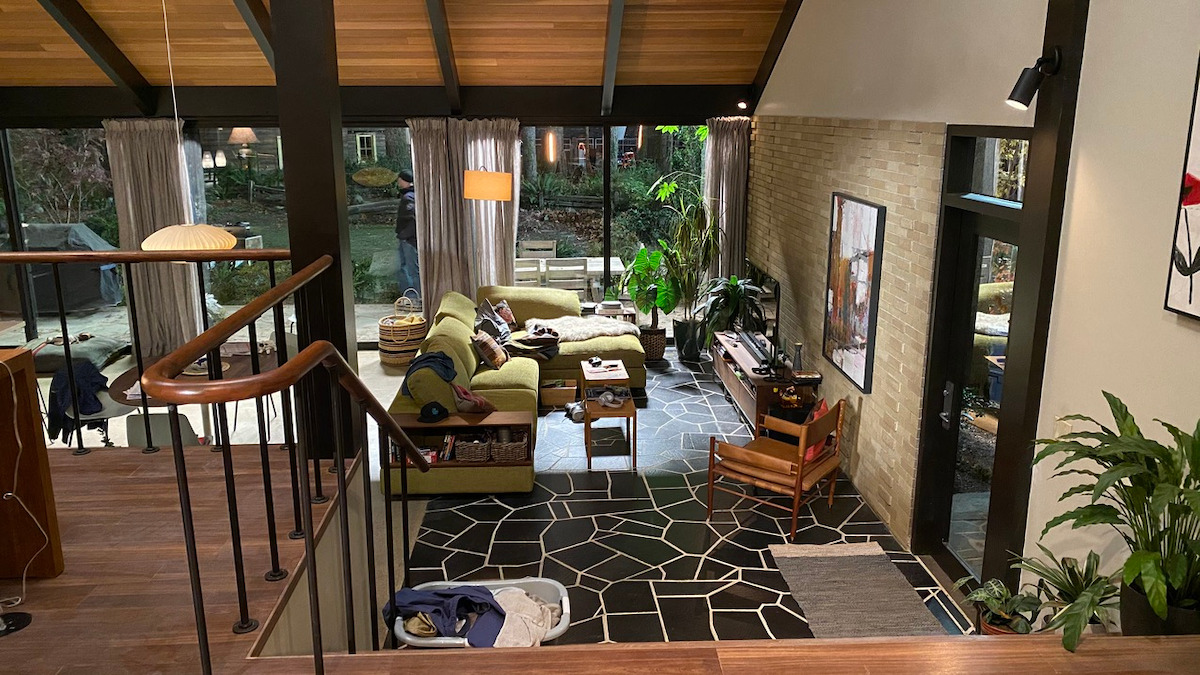
For inspiration, Paré and set decorator Elizabeth Wilcox did exactly what we do when looking for home inspo: They went online. “When I started in this business, you had to go to the library, you had to know which architect you were looking for and what style and so on. Nowadays, you just browse the web and you get millions of ideas,” Paré says. They found one house in Melbourne, Australia, that became a key reference point for furnishings; another in the north of England, designed in 1967, served as inspiration for all the rough-hewn wooden bookshelves and bedroom closet.
Even though there are very few scenes set in the bedrooms, Paré says he designed those rooms with the same level of detail as the rest of the house. “I still wanted to build the bedrooms because they were part of the volume that we had to create for the house to look real and to be well proportioned,” Paré explains. “All the closets were made with the same stained-wood-grain panels that we had in the kitchen and through the house, so it was all really well connected.”
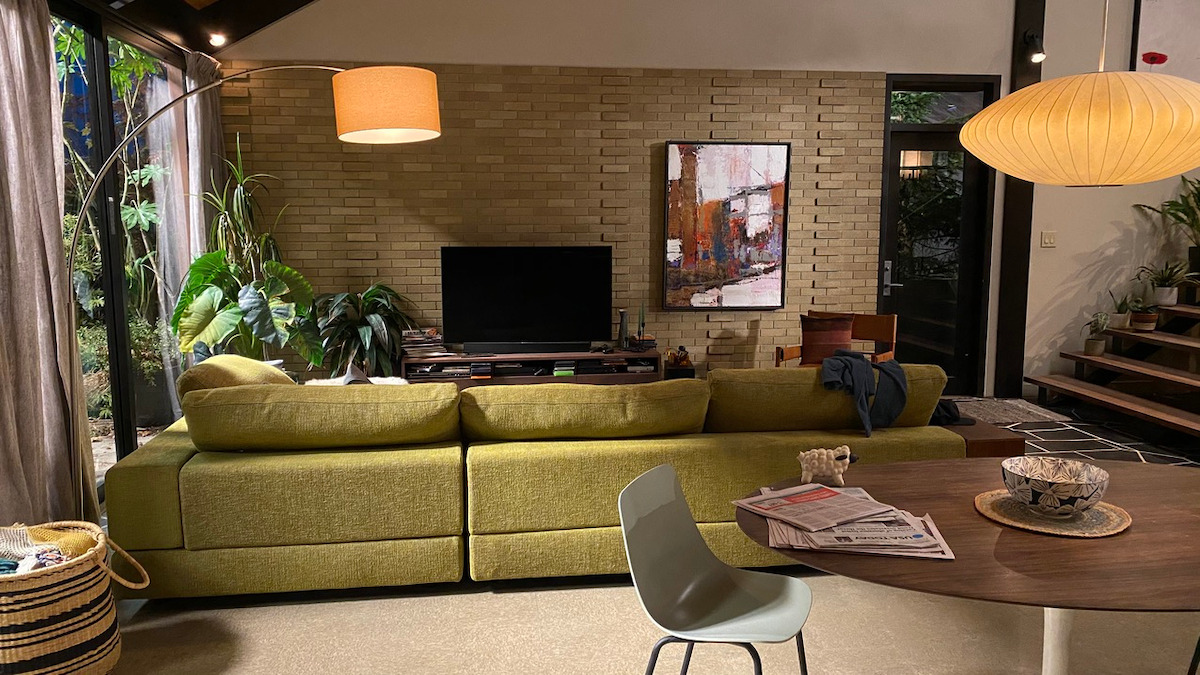
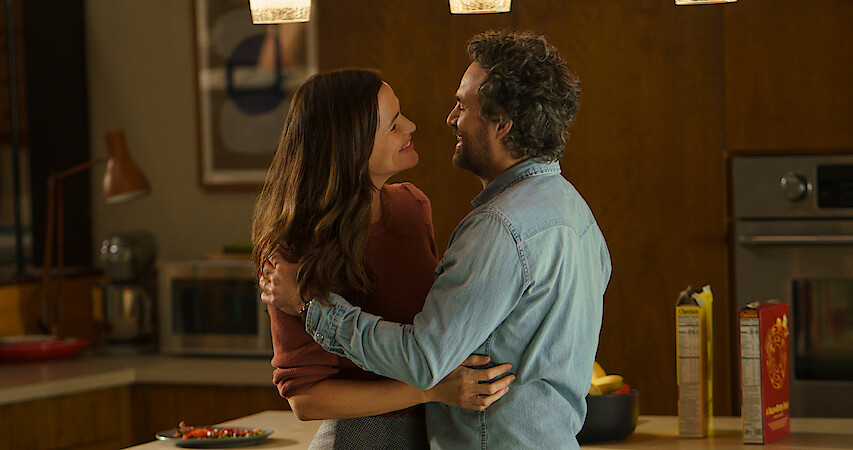
Though the house is modern, open and filled with windows, the wood keeps everything feeling cozy — especially the kitchen, which is an interesting contrast to, say, a Nancy Meyers kitchen, where everything looks white, bright and perfectly placed. But The Adam Project kitchen is still every bit as enviable. “It’s a mid-century style house, so it’s not going to be white tiles and fancy cupboards, it’s going to be warm,” Paré says. That warmth came from shades of beige, brown columns flanking the kitchen’s entrances, and the many plants that can be seen from that wall of windows, some of which were real and some of which were made by Paré’s team. “I think we built something like 20, 25 tree trunks, about 20 feet high,” he shares.
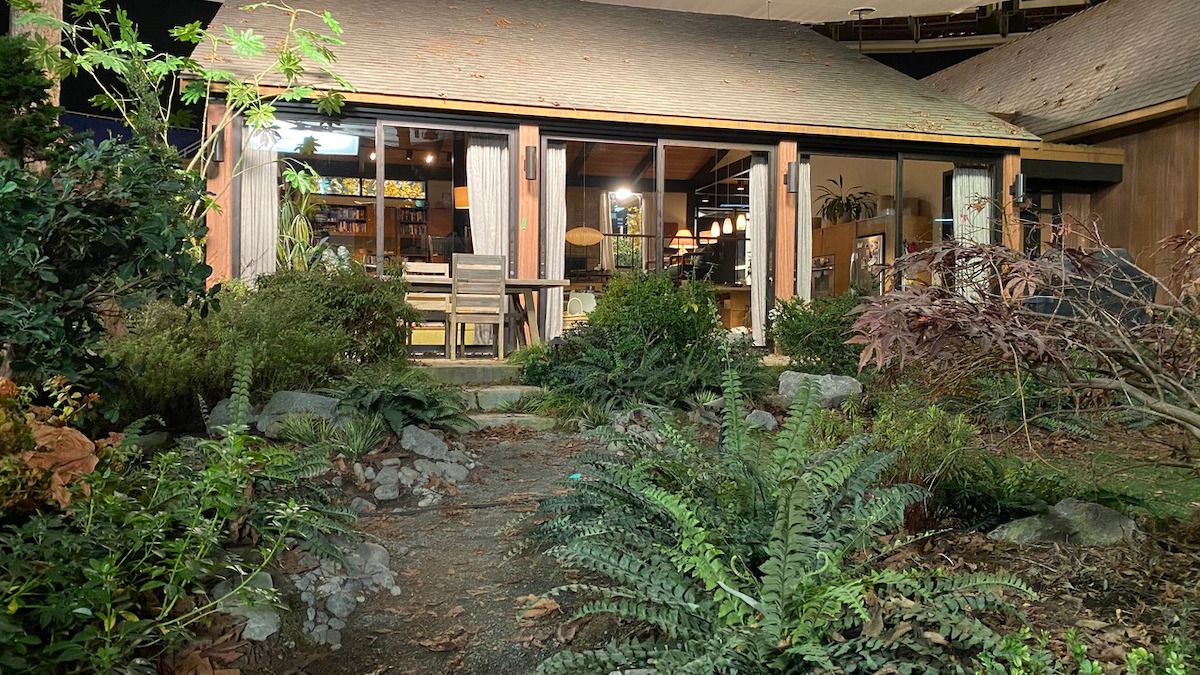
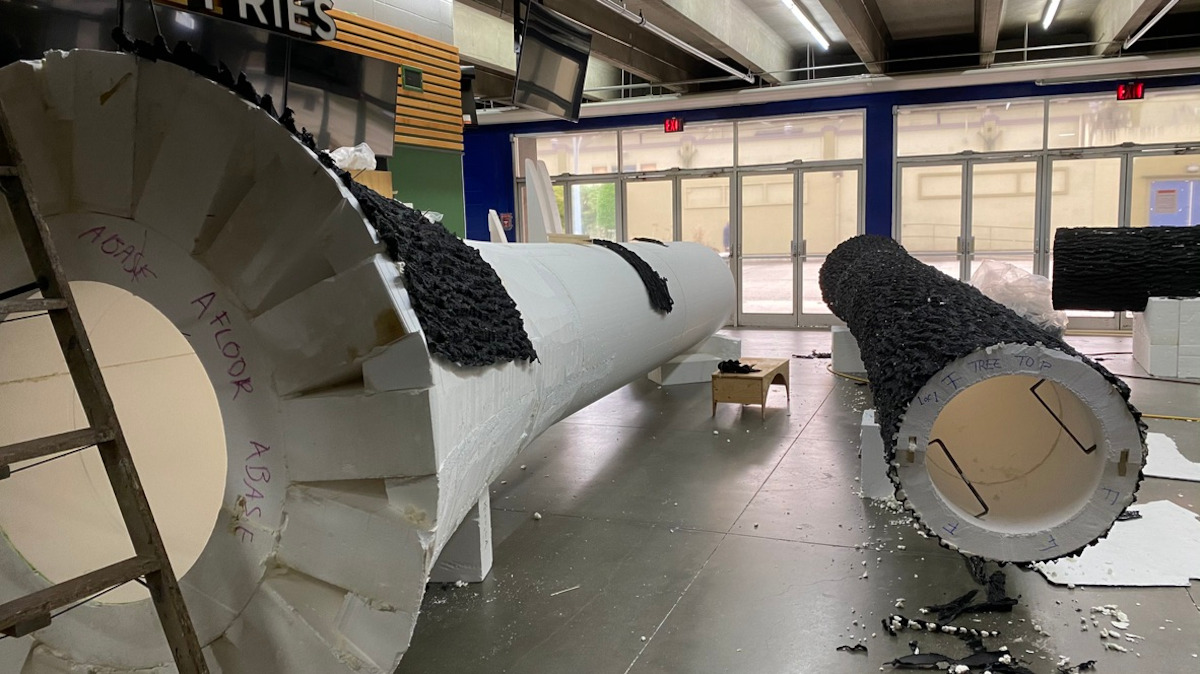
It’s this attention to detail (and cozy detail at that) that makes so many of us wish The Adam Project house was our own family home — a reaction that was Paré’s motivation all along. On his very first call with director Shawn Levy, Paré says, he was told, “I would like you to design the house that you would dream of living in.” Mission accomplished.