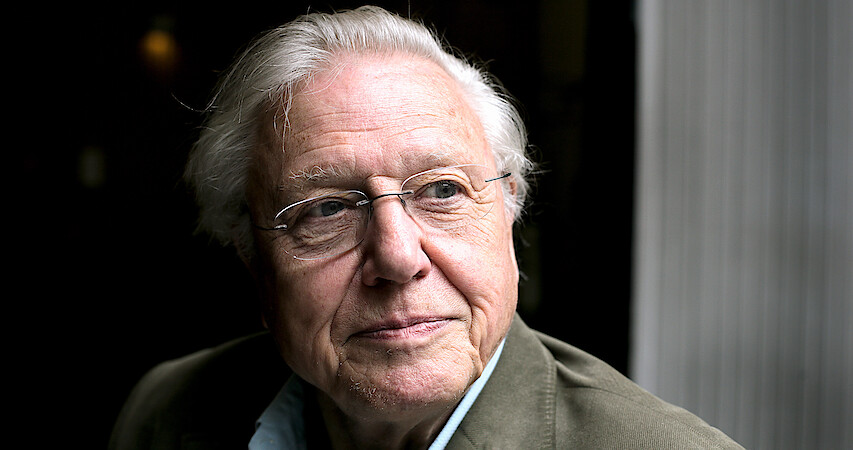
For more than six decades, Sir David Attenborough’s instantly recognizable lulling British lilt has brought faraway, never-before-seen corners of the earth right into our living rooms.
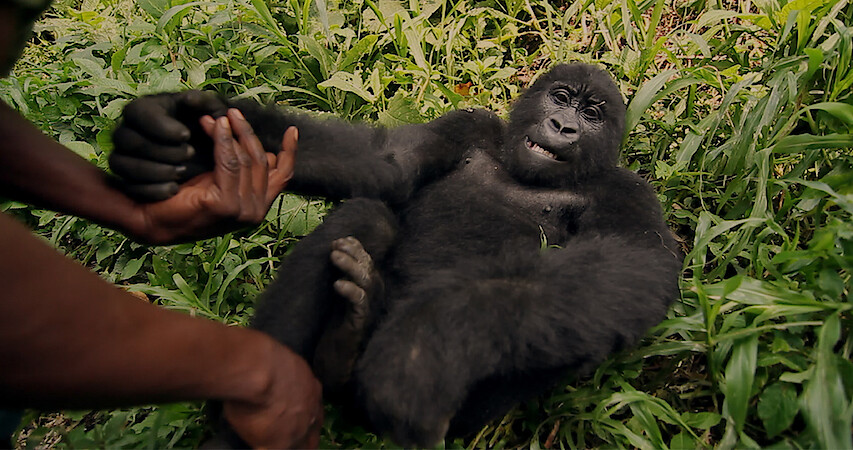
In the world of natural history filmmaking, he’s a living legend, knighted twice in the UK for his work in television broadcasting and conservation. Attenborough spent the early days of his career as a trainee at the BBC in 1952. In 1954, he produced a groundbreaking series called Zoo Quest, a documentary that followed zoologists traveling the world collecting animals for the London Zoo. The series combined live studio presentations with actual wildlife footage, and Attenborough’s career as a beloved television naturalist only grew exponentially from there. Through the many documentaries in which he has served as producer or narrator, he has inspired countless others to pursue careers in wildlife documentary filmmaking — including key members of the team responsible for Our Planet II, the brand-new installment of the series that captures some of the most compelling animal journeys around the world. Formed in 2012, Silverback Films has produced 29 nature documentary films and series, including Our Planet, Our Planet II, David Attenborough: A Life on Our Planet, Dancing with the Birds and many more.
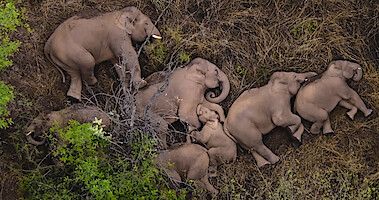
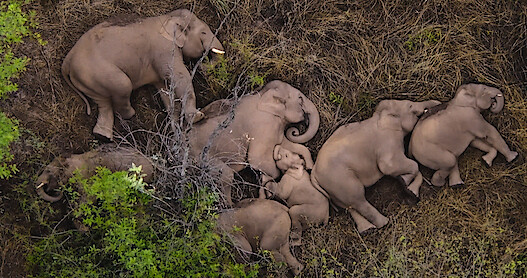
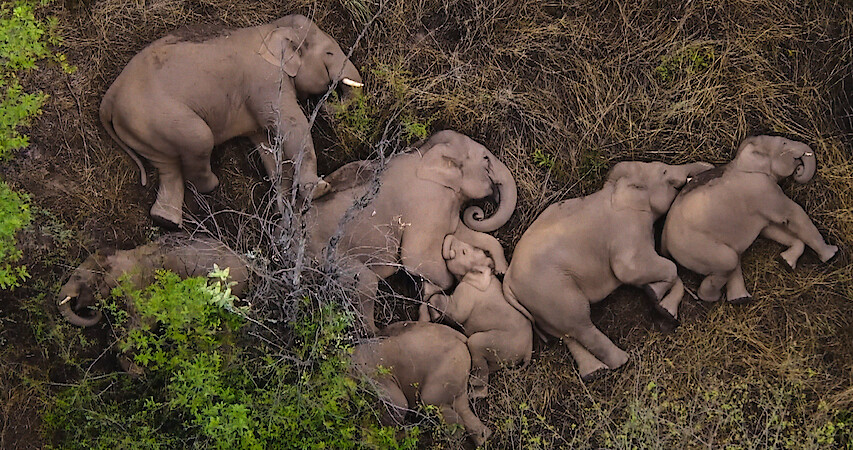
Below, five members of the Our Planet II Silverback team reflect on Attenborough’s influence on their jobs and lives. The voice we know from its descriptions of Luxembourg-size locust swarms, problem-solving orcas and elephant cuddle puddles has also become the voice guiding their careers, inspiring generations of nature lovers to venture outside and gently reminding us all that the natural world is worth listening to.
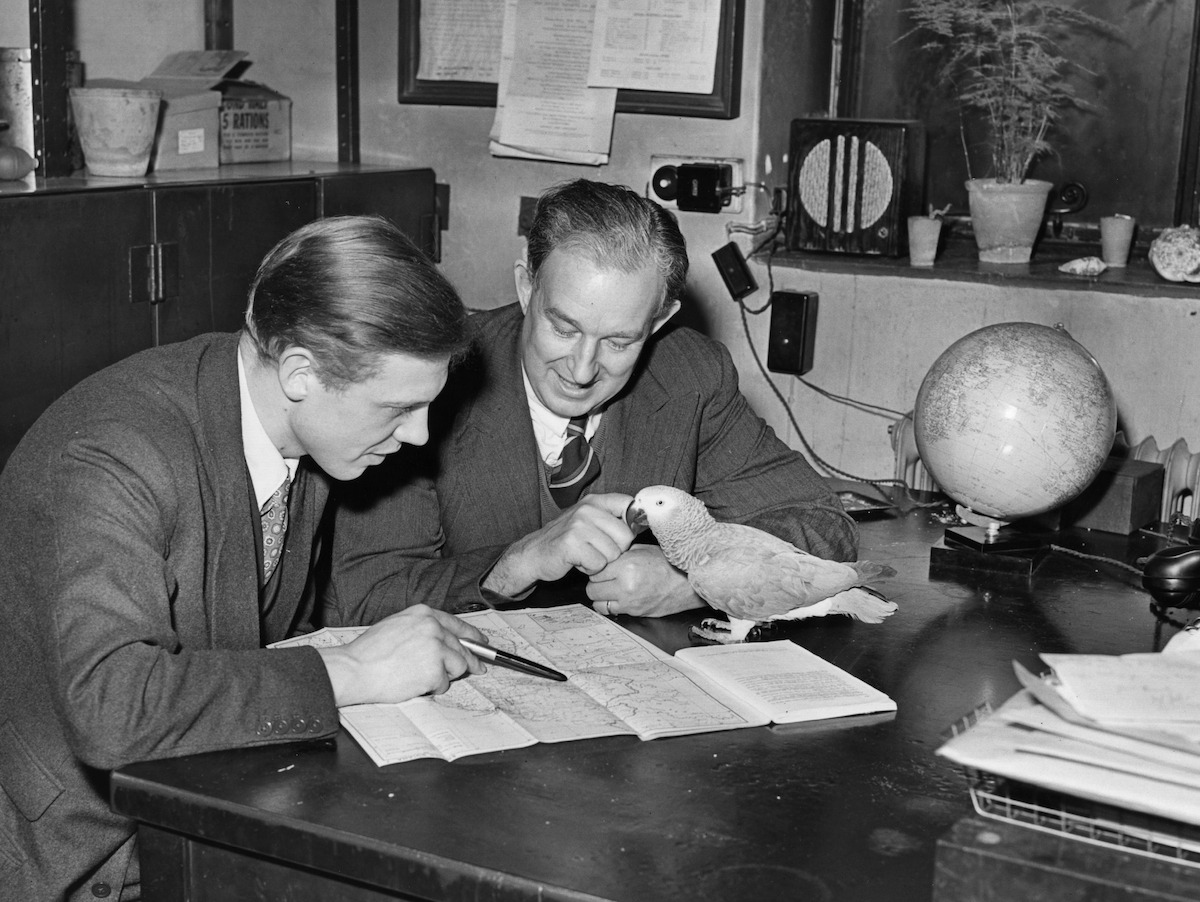
David Attenborough, producer of the BBC wildlife documentary 'Zoo Quest' series, and Jack Lester, curator of London Zoo's reptile house, plan their next expedition to what was then known as British Guiana with the help of Gregory the parrot (March 1st, 1955).
William Vanderson/Fox Photos/Getty Images
Keith Scholey, co-chief executive officer and director
I first met David when I was 24 and he was then in his mid-50s. He’s 97 now, but whenever you meet him and talk to him, it feels like you’re dealing with a guy in his early 50s or maybe late 40s. He’s so kept up on how the world has changed. For Our Planet and Our Planet II, David was to be the narrator. That said, David will never do a narration on a script unless he’s really worked on it himself. The script goes to him at least two weeks before we record, and he puts in a huge amount of time on it. We always know that when we’re writing for David, we have to do a good job to begin with, because he looks at it really, really hard. If he doesn’t like it, he’ll rewrite it.
When you listen to a David Attenborough narration, it sounds just so natural, so easy. But when you look at him in the box actually recording it, he’s really, really working at every sentence, every word. Quite a lot of narrators just read the script from the page, but David looks at the footage and his words and emotions hit the moment. His narrations are a work of art. I don’t know anyone who could narrate quite like that. He’s a genius.

Tim P. Whitby/Getty Images
Huw Cordey, executive producer
He’s a legend in the UK, and the audience knows they’re getting a totally authentic experience. You’re not just bringing in a famous face to read a script. Those emotive sequences, the drama — he’s acting it out. He’s got the power and the emotion in his voice to really carry those stories through in ways that probably no other natural history narrator can do, just as an actor. It’s incredible that he turned 97. Even at that age, we have these discussions with him about scripts and he’s arguing about words and about lines. And it is quite often the case where he’s changed one of your lines — you’ve thought out the line and you think it’s fantastic. David comes to it and he goes, “Can we change this to that?” And when you see his version you’re like, “Ah, that’s much better.”
He does have some quirks — there are certain things he likes to say, and one of them we encountered on Our Planet II. He doesn’t like saying the word mum. He likes to say mother. Whenever you write mum, he changes it to mother. It worked very, very well for the Christmas Island crab story when the adult crab was eating the babies.
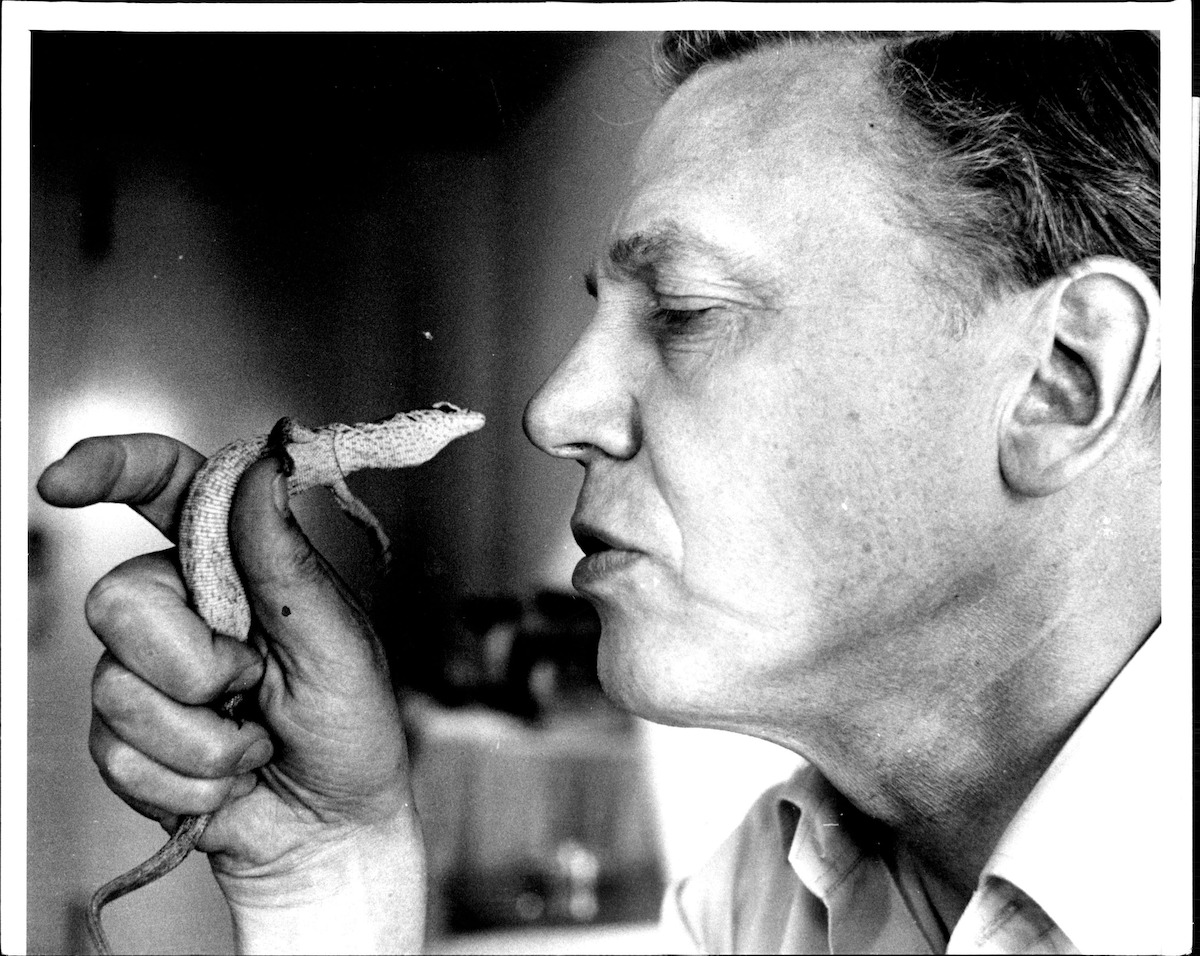
David Attenborough gets a closer look at an Australian pygmy mulga goanna (August 15, 1984).
Julian Kevin Zakaras/Fairfax Media via Getty Images
Ed Charles, producer
David is what got most of us into this industry. I remember growing up watching him, when I was the same age that my kids are now, and being inspired to get into the natural world. The first time I got to work with him, it was an incredible experience.
But I’ll be honest: This guy was an icon, my hero, and I was pretty intimidated. The series we were filming was called Life in the Undergrowth on the BBC. It was all about insects. David was doing this piece to camera with this beautiful moth on his hand. I forget the species. As he finished his line, the moth flew off — it was great, but he didn’t quite get the line right. Everyone was like, “Oh, that’s a shame.” I stood in the background just watching this moth fly off and land on a plant nearby, and unbeknownst to anyone, I saddled up to it and picked it up. I came back really sheepishly and shy — I was only 22 at the time — and I said to David and the producer, “If you want another go, I got the moth.” And David, in a very charming way, said, “Oh my goodness, look at this, I can tell you are going to go far.” I couldn’t string a sentence together. I was so in awe of David talking to me like that, I just mumbled and grunted some inane response and went back into the background.
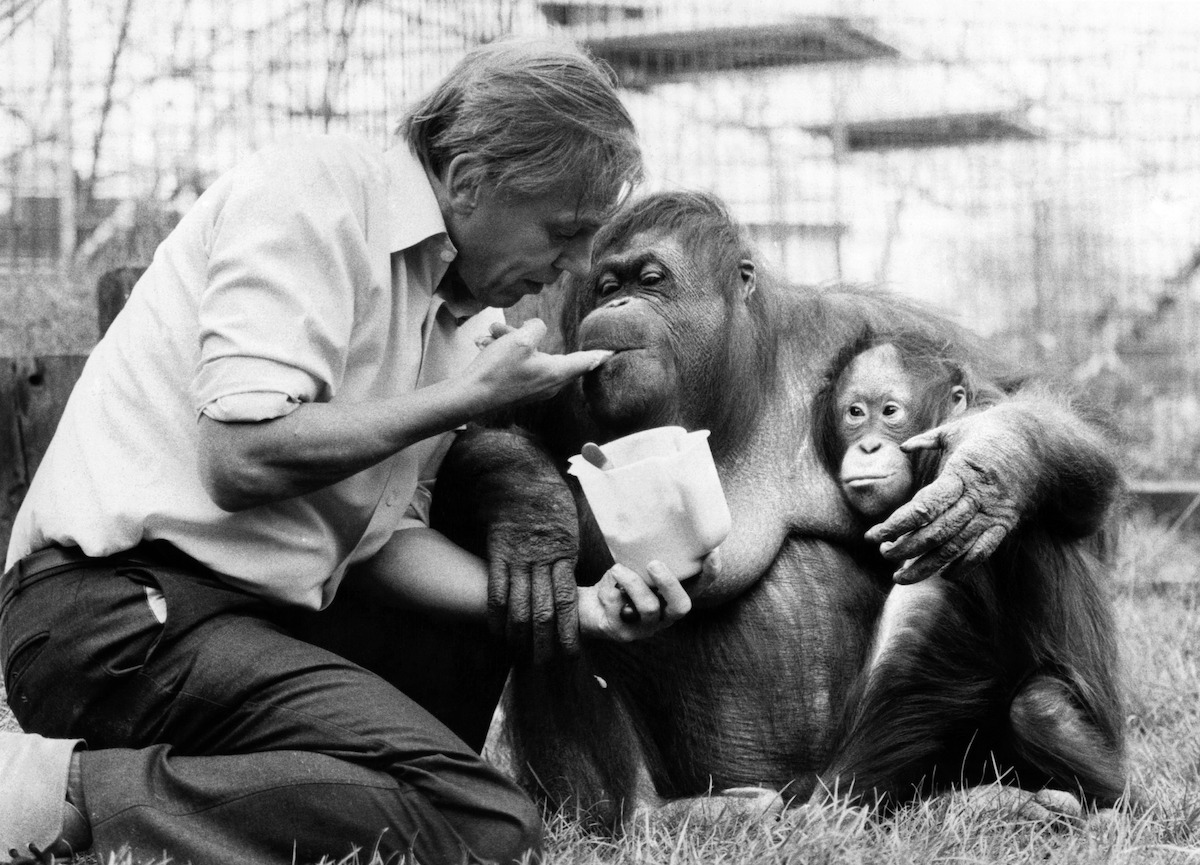
David Attenborough with an orangutan and her baby at London Zoo (April 1982).
Mirror/Mirrorpix/Getty Images
Emily Franke, assistant producer
I’ve been lucky enough to work with him [on a previous project with the BBC]. It was funny, actually: I’ve always really wanted to work with him — everyone does. So for this project, they needed to record sound for a promo, and I just put up my hand to do it. I hadn’t done much sound mixing, so I quickly signed up for a sound course to refresh myself. I really didn’t want to mess it up, I wanted to be super confident [with him]. I knew I had to go to great lengths to meet the man, to make it happen.
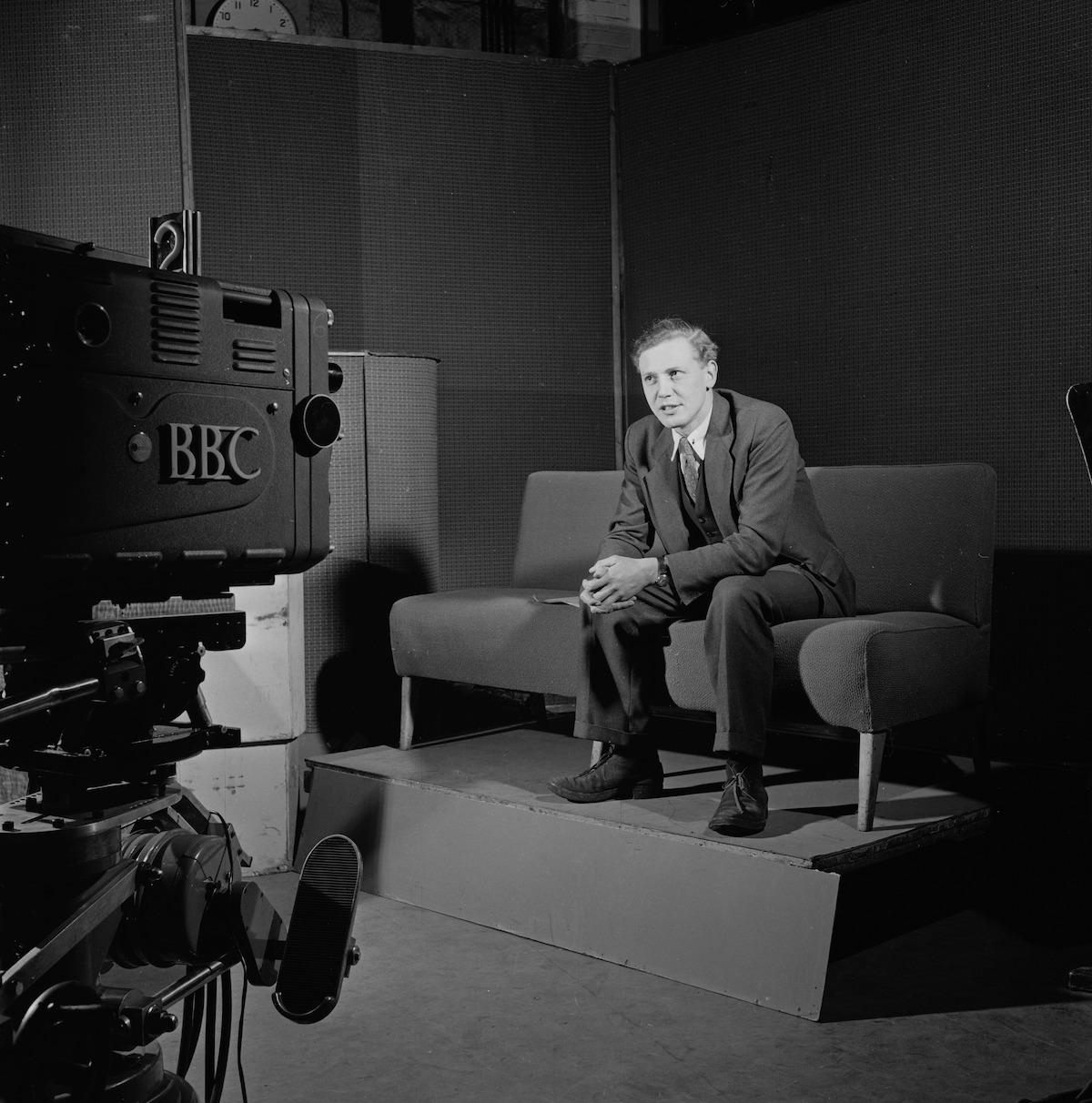
English broadcaster and naturalist David Attenborough at work in a BBC TV studio (March 3rd, 1956).
Paul Popper/Popperfoto via Getty Images
Toby Nowlan, director and producer
Sir David is the truest icon of our industry. He is, in my opinion, responsible for popularizing our entire genre and making wildlife filmmaking mainstream. It was those landmark series he made back when I was at university that truly inspired me to do whatever I could to become a wildlife filmmaker. I was always struck by his passion for the subject, and the way he’d give his complete attention to the creature or plant in front of him. I had all the DVDs and must have watched The Life of Birds (a favorite of mine) perhaps a hundred times. Without him, I don’t think I would do what I do. With David, it’s always about the subject rather than himself — he’s incredibly modest, and somehow always gives the time to listen. He is surely the greatest human ambassador for the natural world, and it is a complete privilege working with him.
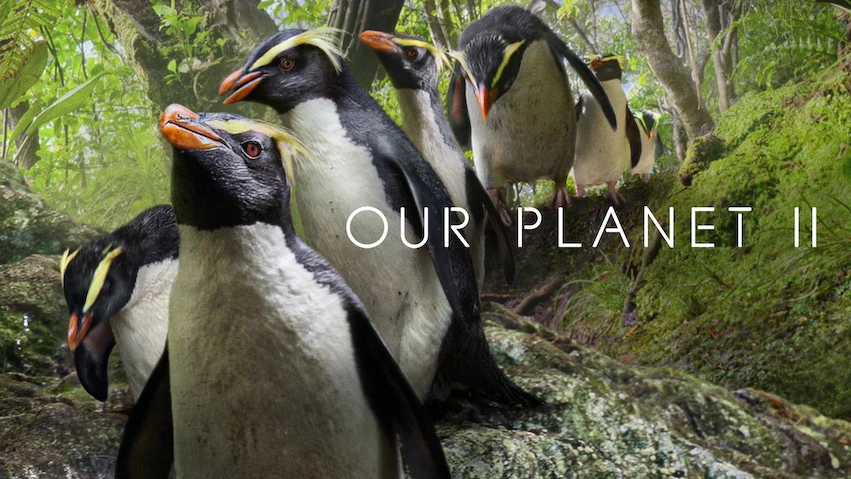
Our Planet II is available to watch now.